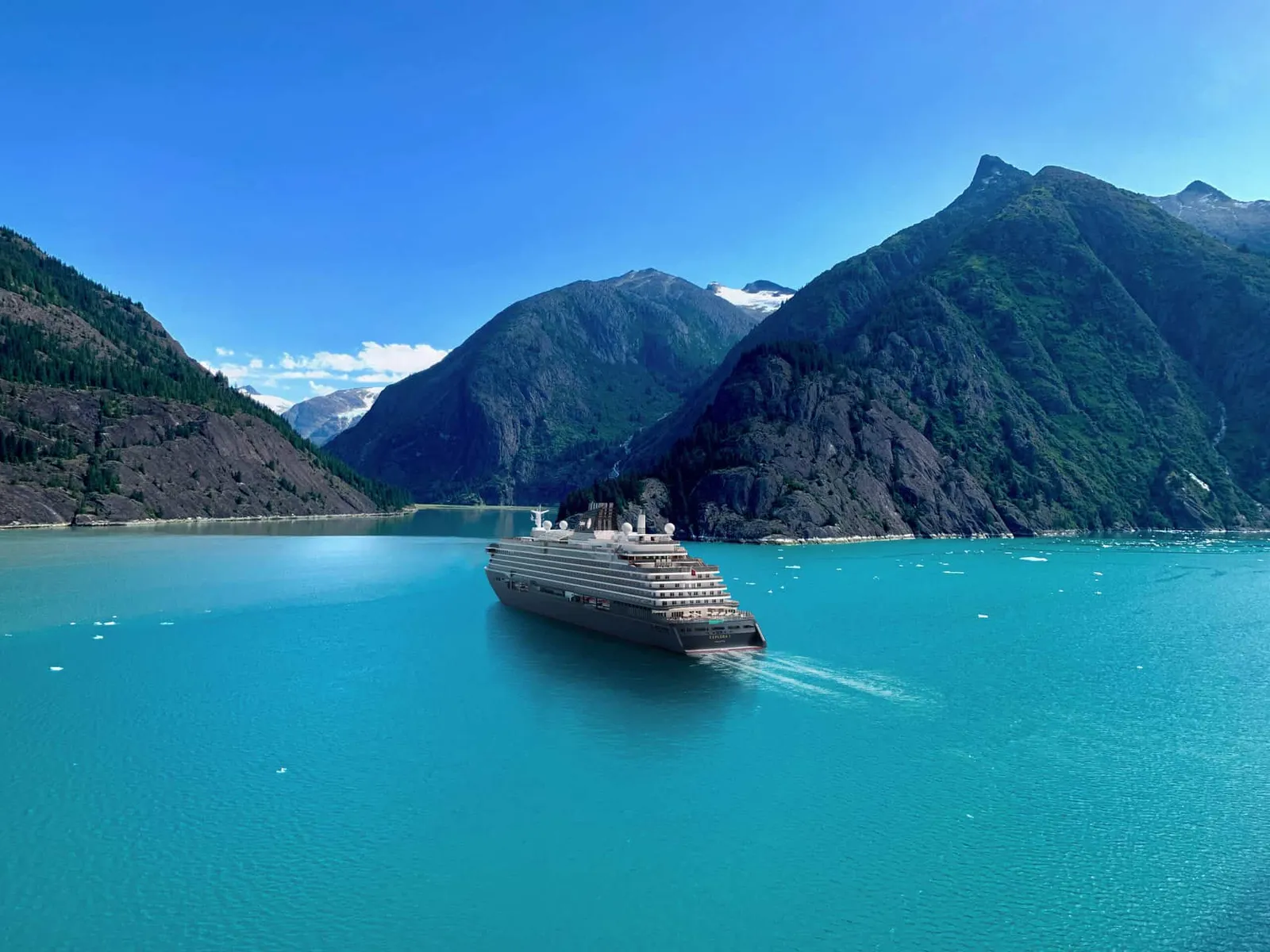
Explora Journeys
Luxury Cruising
Explora is the most exciting new entrant in ultra-luxury since Regent launched Explorer. The MSC pedigree gives them serious shipbuilding muscle, and it shows — the suites are enormous for the category, the four pools are a revelation on a 922-guest ship, and the nine dining venues are all included without surcharges. It's still finding its sea legs as a brand, but the hardware and the all-inclusive pricing already rival Silversea and Regent. Watch this one closely.
Explora Journeys is the ultra-luxury brand of the MSC Group, launched in 2023 with the debut of EXPLORA I and conceived as a contemporary alternative to the established players in luxury ocean cruising. The brand carries the tagline "Ocean State of Mind" and positions itself as a wellness-forward, design-driven experience that deliberately avoids the traditional formalities of cruising — no formal nights, no structured dining times, no black-tie events. It is backed by the Aponte family's EUR 3.5 billion investment across a planned six-ship fleet, all built by Fincantieri in Italy, which gives the brand a financial commitment that few new entrants in luxury travel can match.
What makes Explora interesting is what it is trying to be. Rather than replicating the established ultra-luxury model of Regent, Silversea, or Seabourn, the brand targets affluent travellers who are accustomed to luxury hotels and resorts but either have not cruised before or have found traditional cruise lines too formulaic. The interiors are designed by superyacht architects and feel closer to a Four Seasons than a conventional cruise ship. The atmosphere aboard is European and cosmopolitan, more resort than liner. Whether this positioning ultimately succeeds as a long-term proposition remains to be seen — the brand is still young — but the ambition is unmistakable, and the early recognition, including Cruise Critic's 2024 Editors' Choice Award for Best Luxury Cruise Line in just its second year of operation, suggests the industry is paying attention.
The brand's relationship to MSC Cruises generates understandable scepticism from some luxury travellers who associate the MSC name with mainstream, mass-market cruising. In practice, the two lines share nothing beyond a parent company. Different ships, different crew, different branding, different experience entirely. Once aboard, the connection to MSC is invisible.
Explora operates a single all-inclusive fare structure with no tiered pricing — every booking receives the same set of inclusions regardless of suite category or how the voyage is booked. The fare covers all dining venues without surcharges, premium wines and spirits (including champagne and cocktails), an in-suite minibar replenished daily to personal preferences, unlimited high-speed Starlink Wi-Fi across unlimited devices, all gratuities and service charges, complimentary thermal spa access, all fitness classes, port shuttle buses to the nearest city centre, 24-hour room service, and all onboard entertainment and enrichment programming.
What the fare does not cover is meaningful to understand, particularly if you are comparing against Regent Seven Seas. Shore excursions are additional, which is a notable gap — Regent includes unlimited excursions at every port, while Silversea includes one per voyage. Flights and airport transfers are not included (except for Owner's Residence guests and Diamond loyalty members), which is a significant consideration for Australian travellers facing long-haul airfares to European or Caribbean embarkation ports. Spa treatments, ultra-premium vintage wines, speciality culinary masterclasses, and valet laundry are also at extra cost. Self-service laundry, however, is complimentary.
In context, Explora's all-inclusive sits broadly on par with Silversea and Seabourn — generous for beverages, dining, and connectivity, but not the fully wrapped proposition that Regent delivers. The inclusion of Starlink Wi-Fi (genuinely fast and unlimited) and complimentary port shuttles at every call are nice touches that some competitors still charge for, and the absence of any surcharges across the dining venues is a genuine strength.
Dining is consistently cited as one of Explora's standout strengths, and it is where the brand most convincingly competes with the established ultra-luxury names. Each ship carries six restaurants plus additional casual concepts — all included in the fare with no cover charges or surcharges at any venue. There are no fixed dining times and no assigned seating, which reinforces the brand's relaxed, unscripted approach. Fil Rouge serves French-inspired international tasting menus, Sakura covers pan-Asian cuisine across Japanese, Thai, Vietnamese, and Malaysian traditions, Marble & Co. Grill is a European steakhouse with an in-house dry-ageing programme, Med Yacht Club offers Mediterranean cooking, and Anthology features elevated Italian cuisine with rotating guest-chef residencies and wine pairings.
The culinary programme is overseen by Franck Garanger, whose European luxury hospitality background has shaped the kitchens toward authentic, regionally inspired cooking rather than the generic "international buffet" approach that plagues many cruise lines. The Emporium Marketplace — technically the buffet — consistently receives praise for food quality well above what guests expect from a self-service venue. Casual options including Crema Cafe, a gelateria, and poolside dining round out the day, and full room service is available around the clock.
The wine programme is built around over 250 labels, curated by region and rotating to reflect the ship's itinerary. Mediterranean voyages feature Mediterranean producers; Caribbean sailings lean toward New World wines. A small ultra-premium list of rare vintages is available at additional cost, and there is a wine pairing experience at Anthology that carries a surcharge. Dietary requirements are well accommodated across all venues, with vegetarian, vegan, gluten-free, and allergen-specific options available throughout. The brand's commitment to flexible dining without reservation pressure makes it feel closer to dining at a destination resort than eating aboard a cruise ship.
Explora's target demographic is affluent travellers aged 35 to 65 — design-conscious, wellness-oriented, internationally minded, and likely more accustomed to luxury hotels than luxury cruise ships. The brand's marketing deliberately skews younger and more lifestyle-oriented than traditional ultra-luxury advertising. In practice, the actual passenger mix aboard the first two ships has trended toward 45 to 70, predominantly European — Italian, German, French, and British guests in particular — with Americans present but in smaller numbers than on Regent or Seabourn, and very few Australians to date.
The atmosphere aboard is consistently described as more akin to a high-end resort than a cruise ship. There are no napkin-folding classes, no bingo, no art auctions, and no Vegas-style revues. The evening vibe centres on live music across the lounges, cocktails, and organic socialising rather than structured group activities. The dress code is "elegant resort casual" at all times — no formal nights, no tuxedos — which appeals strongly to travellers who find traditional cruise formality stifling. The ships carry a notable art collection including works by Warhol and Lichtenstein, and the design aesthetic throughout uses natural materials, muted palettes, and superyacht-influenced lines.
It is worth being candid about who Explora is not for. Guests who enjoy production shows or structured evening entertainment will find the programming insufficient — this is the brand's most consistently criticised element. Travellers accustomed to Regent's fully inclusive model may find the additional cost of shore excursions and the absence of bundled airfare frustrating. Adults-only purists should be aware that Explora actively welcomes families, and during school holiday periods the number of children aboard can be significant. And guests expecting anticipatory butler-style service in every suite category will note that Explora reserves dedicated butlers for Residence-level accommodation and above — standard suites receive steward service, which is warm but not at the proactive level offered by Silversea and Seabourn across all categories.
The Explora Club launched in April 2025, relatively late for a brand that began sailing in 2023. It operates across five tiers — Classic, Silver, Gold, Platinum, and Diamond — with points earned through weighted nights at sea multiplied by suite category, plus additional points from shore excursions booked through Explora and eligible onboard spending including spa, culinary experiences, and boutique purchases.
Benefits escalate meaningfully through the tiers. Classic members receive personalised welcome amenities and exclusive access to new itinerary releases. Silver adds a welcome gift, birthday surprise, savings on future journeys, and a cocktail party with ship leadership. Gold introduces surprise turndown amenities and complimentary laundry. Platinum unlocks a Journey Experience Credit that can be used toward spa treatments or excursions, plus behind-the-scenes bridge and engine room tours. Diamond — the pinnacle tier — delivers a complimentary week-long journey for two, private airport transfers, a suite upgrade, a complimentary culinary experience, and a private shopping experience.
For travellers with existing loyalty status on other luxury cruise lines, Explora offers a one-time lifetime status match. Silversea, Regent, Seabourn, and MSC Voyagers Club members can all have their current tier recognised within the Explora Club at an equivalent level. The points do not transfer between programmes — it is a recognition of your existing tier status, not an ongoing conversion. Given that Explora is still a young brand competing for the loyalty of experienced luxury cruisers, this status match is a sensible incentive to trial the product without starting from scratch.
Explora Journeys does not currently operate a dedicated Australian office, nor does it offer any departures from Australian ports. All itineraries operate from European and Caribbean embarkation points, which means Australian travellers face return flights of AUD 1,800 to 3,500 in economy or AUD 6,000 to 14,000 in business class before they even board. This is a meaningful consideration when comparing against Regent, which bundles business-class air from Australian gateways on Concierge suites and above.
The brand does maintain an Australian portal on its website and is available in Australian dollars through local travel agencies. AUD pricing is published by several major Australian cruise retailers, and promotional rates have been advertised in the range of AUD 576 per day per person for entry-level Ocean Terrace Suites during sales periods. The first Australian port calls are planned for 2029, when Explora I visits seven Australian destinations including Sydney during a 128-day world voyage from Dubai to Barcelona. Until that voyage, Australian guests are effectively flying to the experience.
For the itineraries most likely to appeal to Australian travellers — Mediterranean, Northern Europe, and Caribbean — embarkation ports such as Barcelona, Rome, and Guadeloupe are well served by airlines operating through Dubai, Singapore, and Doha. The absence of included flights makes it worth engaging a specialist travel adviser who can package competitive airfares alongside the cruise booking, particularly during wave season when cruise pricing is most favourable.
Explora's entry-level per-diem pricing positions it as competitive with Silversea and Seabourn, and meaningfully below Regent Seven Seas. Ocean Terrace Suites typically come in at the lower end of the ultra-luxury range on a per-night basis, and extended sailings of fourteen nights or more can reduce per-diems further. Promotional pricing during wave season (January to March) has historically offered savings of up to 30 per cent, reduced deposits, and complimentary suite upgrades, making early booking on longer itineraries particularly attractive.
However, headline per-diem comparisons can be misleading. Regent's higher published fare includes business-class flights, unlimited shore excursions, transfers, and laundry — costs that Explora guests must cover separately. For an Australian traveller flying business class to Europe and booking excursions at each port, the total cost of an Explora voyage can approach or exceed the Regent equivalent despite the lower advertised fare. The value proposition is strongest for travellers who are booking their own flights anyway, prefer to explore ports independently rather than through organised excursions, and prioritise the newest hardware and most contemporary design in the luxury segment.
Solo travellers benefit from zero per cent supplement on select journeys for Ocean Terrace and Penthouse categories — genuinely competitive in a market where single supplements of 50 to 100 per cent are common. The cancellation policy offers a grace period for bookings made more than a year in advance, with a sliding scale of penalties thereafter. Explora maintains fare parity across all booking channels, meaning you will not find a lower published fare by booking direct, but specialist travel advisers can typically secure exclusive onboard credits and upgrades that add genuine value at no additional cost.
Share your dates and preferences and we will come back with Explora Journeys cabin options, pricing, and insider tips.