The Ritz-Carlton Yacht Collection
Yacht-Style Cruising
Ritz-Carlton has built something genuinely different here — no buffet, no announcements, no cruise director, no casino. Ilma has the highest space-per-guest ratio at sea and it shows. This is for clients who stay at Ritz-Carlton hotels and want that same hushed, anticipatory service on the water. Just note that the entry-level Terrace Suites on Ilma are more studio than suite, so I always recommend upgrading at least one category.
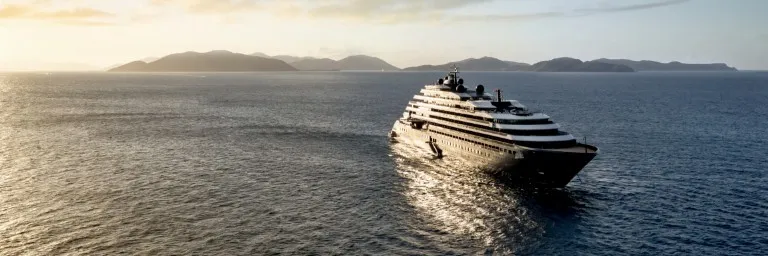
The Ritz-Carlton Yacht Collection is what happens when a hotel company decides to build a cruise line and then refuses to build a cruise line at all. Backed by a licensing arrangement with Marriott International's Ritz-Carlton Hotel Company, the collection operates three purpose-built superyachts that deliberately strip away every convention most people associate with cruising. There is no buffet, no public-address system, no cruise director, no casino, and no theatre. The ambition is simpler and more radical: to put a Ritz-Carlton resort on the water and let it move.
The brand had a difficult birth. Evrima, the first yacht, was delayed eight times before finally entering service in late 2022, three and a half years behind schedule, after the original Spanish shipyard proved unequal to the task. That rocky start coloured early perceptions, and some of it was deserved. But the second yacht, Ilma, was built by the vastly more experienced Chantiers de l'Atlantique in France and delivered on time in 2024. It went on to earn Cruise Critic's Luxury Ship of the Year and, in early 2026, became the first cruise vessel in history to receive a Forbes Travel Guide Five-Star rating. Luminara, the third yacht and Ilma's sister, followed in mid-2025. The narrative has shifted substantially, and the product being delivered today is a different proposition from the one that launched amid teething problems.
What distinguishes the Ritz-Carlton Yacht Collection from traditional ultra-luxury lines is not just the scale but the philosophy. The yachts are not smaller versions of a cruise ship; they are conceived as floating private estates where guests design their own day, eat when they want, and spend an afternoon kayaking from the stern marina or simply reading on their terrace with a glass of champagne. That freedom is the point, and it either appeals to you or it does not.
The most immediate difference between sailing on a Ritz-Carlton yacht and boarding even the finest ultra-luxury cruise ship is the absence of structure. There is no printed programme slipped under your door demanding attendance at anything. No announcements interrupt your morning. No cruise director rallies the pool deck. The atmosphere is closer to a house party hosted by a quietly wealthy friend than to anything recognisable as a cruise. Guests drift through beautifully designed public spaces — The Living Room for cocktails, The Observation Lounge for late-evening music and dancing — on their own schedule.
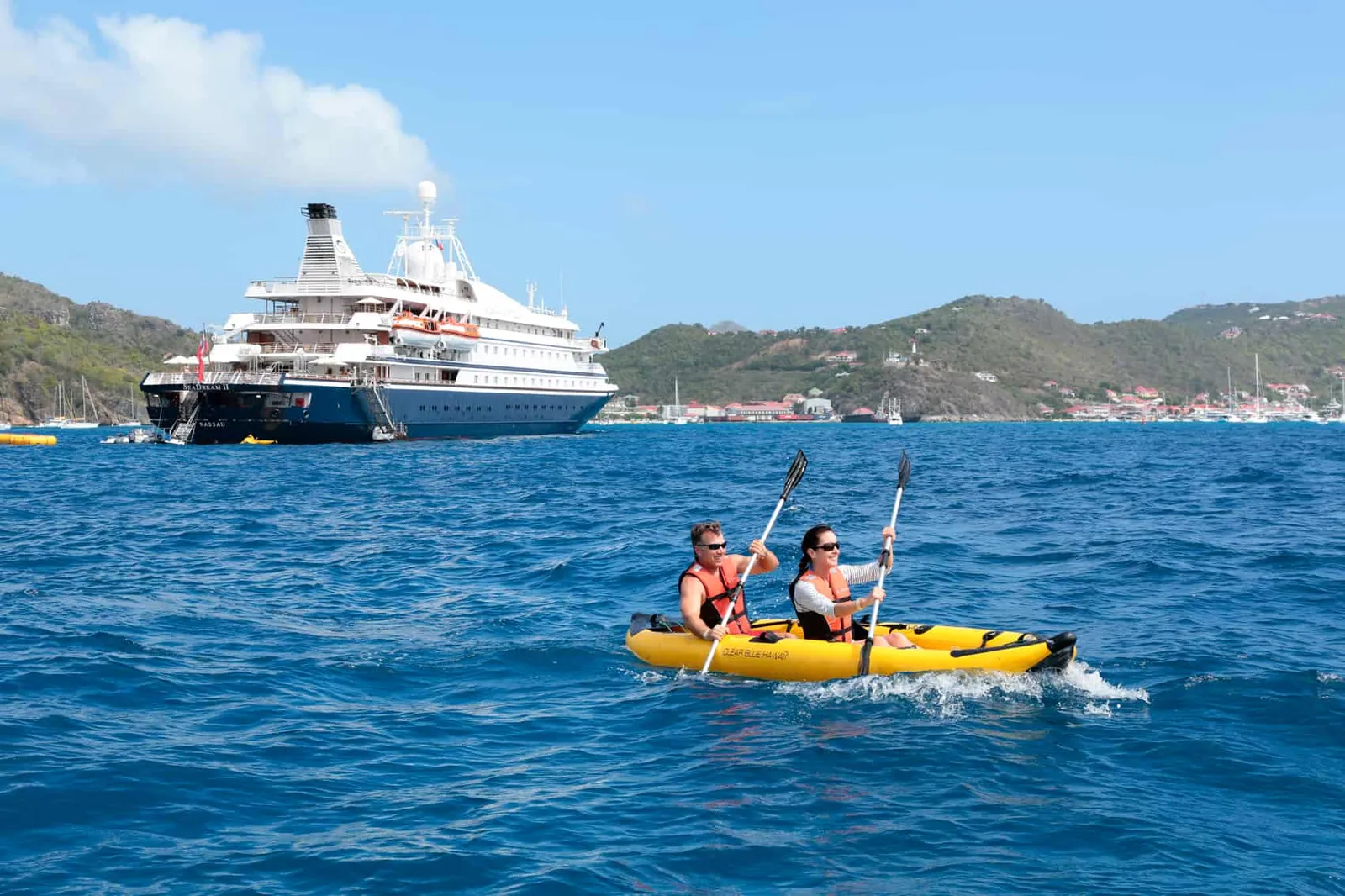
The marina platform is the centrepiece of the yacht experience and something no traditional ultra-luxury competitor can match. When the yacht drops anchor, the stern opens to reveal direct access to the sea. Kayaks, paddleboards, snorkelling gear, electric watercraft, and sailboats are all complimentary. In the Caribbean especially, the marina transforms an ordinary sea day into something genuinely memorable. The adjacent Marina Terrace Bar, with its retractable glass roof and 270-degree views, shifts from alfresco lounge by day to an atmospheric gathering point by evening.
The yachts' size also unlocks ports that larger ships cannot reach. Evrima at 190 metres is small enough to anchor in St Barts, slip into Mykonos harbour, or tuck alongside the quay in St Tropez. The larger Ilma and Luminara are closer to conventional small cruise ships in length, but the collection's itinerary planning still favours quieter coves and smaller harbours over busy cruise terminals. You are more likely to wake up anchored off a Corsican headland than berthed beside a concrete pier.
The fare is genuinely all-inclusive in the areas that matter most. All dining across five onboard restaurants is covered, along with premium wines, spirits, craft cocktails, speciality coffees, and a minibar that is restocked daily. Gratuities are included. Complimentary Starlink Wi-Fi extends to streaming and video calls, which is a meaningful step beyond what most competitors offer. Every suite comes with a personal concierge — functionally equivalent to butler service on Silversea, though Ritz-Carlton uses its hotel terminology — and 24-hour in-suite dining from any onboard restaurant menu.
What is not included is equally important to understand. Shore excursions are an additional cost, typically ranging from moderate to significant depending on the port and the experience chosen. This is a notable gap compared to Regent Seven Seas, which bundles unlimited excursions into the fare. Spa and salon treatments, the reserve wine list, and laundry services all carry charges. On Evrima, the flagship S.E.A. restaurant overseen by three-Michelin-star chef Sven Elverfeld carries a surcharge, which frustrates some guests paying top-of-market fares. On Ilma and Luminara, the chef-partnership restaurants are sensibly included.
The marina and water sports are where the inclusion package genuinely differentiates itself. No other ultra-luxury line offers complimentary kayaking, paddleboarding, snorkelling, and electric watercraft as part of the fare. For guests who value active experiences on the water, this is a tangible advantage that offsets some of the gaps elsewhere.
Dining is structured differently from almost every competitor. Each yacht offers five restaurants, and the philosophy leans toward intimate, destination-inspired venues rather than the large main dining room model. There is no buffet — not at breakfast, not at lunch, never. The main restaurant on each yacht serves seasonally rotating menus with regional influences drawn from the sailing itinerary. Alongside it, a Mediterranean venue, a Pan-Asian restaurant with sushi bar, a casual poolside option, and a signature chef-partnership restaurant round out the choices.
The chef partnerships are a cornerstone of the culinary programme. On Evrima, Sven Elverfeld of the three-Michelin-star Aqua at The Ritz-Carlton Wolfsburg oversees the S.E.A. restaurant. On Ilma and Luminara, Michelin-starred Fabio Trabocchi and James Beard Award-winning Michael Mina have each shaped dedicated venues. These are not mere name-licensing arrangements; the menus, plating, and culinary ambition reflect genuine involvement. Reviews of the dining on Ilma in particular have been overwhelmingly positive, with multiple guests comparing the food favourably to top land-based restaurants.
The wine programme includes a curated list of wines, champagnes, and sparkling options within the fare, and it is generous by any measure. A separate reserve list caters to connoisseurs willing to pay for premium vintages, and dedicated wine vaults on the newer yachts host tasting events and pairing dinners led by onboard sommeliers. In-suite dining is available around the clock from any restaurant menu, and it arrives properly plated rather than as an afterthought. For a product at this price point, the dining programme needs to be exceptional, and on the French-built yachts, it delivers.
The typical guest is an affluent traveller in their forties to sixties — often a professional, entrepreneur, or retiree who stays at Ritz-Carlton hotels regularly and has decided to try the brand on the water. The key demographic insight is that roughly half of guests on any sailing have never cruised before. They are not "cruise people" converting from another line; they are hotel people who would never consider a traditional cruise ship but trust the Ritz-Carlton name enough to try this. That creates a different social dynamic from what you find on Silversea or Regent, where many passengers are experienced cruisers with strong opinions about how things should work.
The dress code is genuinely casual. There are no formal nights, no black tie, no gowns. Evenings require shirts and shoes, and the speciality restaurants suggest collared shirts, but nobody enforces it with any vigour. The atmosphere is relaxed, social, and intimate. With only 298 to 450 guests, you will recognise faces by the second day. Staff learn your name on the first. The Living Room functions as a natural gathering point each evening, and the Observation Lounge — deliberately positioned away from suites — hosts live music and DJs that run late without disturbing anyone.
This product is emphatically not for everyone. If you enjoy production shows, casinos, or a bustling variety of structured activities, you will find the evenings quiet and the sea days underprogrammed. If you want the security of all-inclusive excursions and flights bundled into the fare, Regent is the better choice. And if you are uncomfortable in an intimate setting where anonymity is impossible, you may find the social intensity of a 300-guest yacht confronting rather than appealing. But for travellers who want the polish of a world-class hotel, the freedom to design their own day, and the quiet confidence of a brand that does not try to be everything to everyone, the Ritz-Carlton Yacht Collection is in a category of its own.
The Ritz-Carlton Yacht Collection opened a dedicated Asia-Pacific headquarters in Sydney's Australia Square Tower in mid-2025, staffed with a local team including Melbourne-based trade partnerships. This is not a token gesture — the five-year lease signals genuine commitment to the Australian market, and the brand has publicly stated its intent to double Asia-Pacific sales. Australian travel agents have access to AUD pricing across the full range of voyages, which removes the friction of booking in foreign currency.
For Australian guests, the most relevant deployments are Luminara's Asia-Pacific sailings from ports like Singapore, Hong Kong, and Tokyo — all reachable from Australia's eastern seaboard in eight to ten hours. French Polynesia sailings from late 2026, departing from Papeete, bring the collection within roughly nine hours of Sydney. These are materially more accessible than the Caribbean and Mediterranean voyages that have historically formed the bulk of the programme.
Marriott Bonvoy integration is particularly compelling for Australian travellers who already hold elite status through the extensive network of Marriott, Sheraton, W, and Ritz-Carlton properties across Australia and the Asia-Pacific region. Points and elite night credits earned on a yacht voyage feed directly into hotel status, and vice versa. Booking through a Marriott STARS-affiliated Australian advisor unlocks complimentary onboard credits, welcome amenities, and potential suite upgrades at no cost above the published fare.
The Ritz-Carlton Yacht Collection sits at the very top of the ultra-luxury cruise market on a per-night basis. Entry-level Terrace Suites start at a higher per-diem than Silversea, Regent, Seabourn, or Explora Journeys. That is the reality, and there is no way around it. The question for prospective guests is whether the yacht experience, the Ritz-Carlton service standard, and the Marriott Bonvoy flywheel justify the premium.
The honest answer is that it depends on what you value. Compared to Regent Seven Seas, which includes unlimited shore excursions, business-class flights on select routes, and valet laundry in its headline fare, Ritz-Carlton's inclusion package is narrower. Once you add excursions, the occasional reserve wine, and a spa treatment or two, the true cost gap widens further. What Ritz-Carlton offers in return is the marina and water sports programme, the no-cruise-ship atmosphere, Michelin-chef dining partnerships, and the only hotel loyalty integration in the sector. For guests already embedded in the Marriott ecosystem, the ability to earn elite night credits and accumulate points at five to eleven per dollar is genuinely valuable — a single voyage can contribute meaningfully to annual status requalification.
Solo travellers face a full 200 percent single supplement with no dedicated solo cabins, which is steep but consistent with the ultra-luxury norm. Deposits are 25 percent if booking more than 150 days out, with final payment due at the 150-day mark and a full-penalty window within 60 days of departure. Repeat guests benefit from a rebooking incentive when reserving a future voyage onboard or within fourteen days of disembarkation, and back-to-back consecutive voyages attract a modest saving. The product rarely discounts publicly — the small fleet and growing demand mean fire sales are uncommon — but booking through a well-connected luxury advisor remains the best route to preferred suite placement and any promotional offers that do surface.
Share your dates and preferences and we will come back with The Ritz-Carlton Yacht Collection cabin options, pricing, and insider tips.