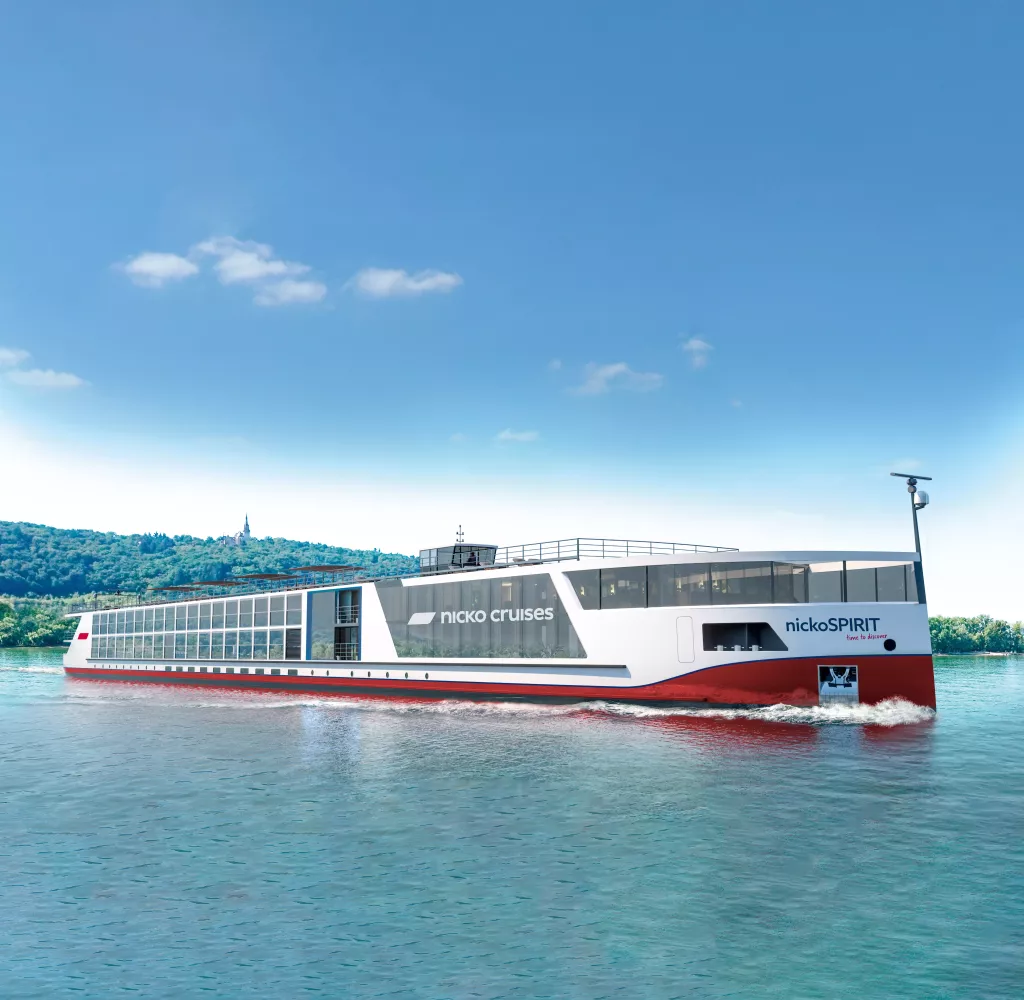
Nicko Cruises and Royal Caribbean International sit at opposite ends of the cruise spectrum — a German river operator with 20 intimate river ships and the world's largest ocean cruise line with 29 mega-ships including the largest passenger vessels ever built. This comparison helps Australian travellers choosing between a European river cruise and a big-ship ocean holiday. Jake Hower explains when each product delivers the better experience.
| Nicko Cruises | Royal Caribbean International | |
|---|---|---|
| Category | Mainstream / River | Mainstream |
| Rating | ★★★★☆ | ★★★★☆ |
| Fleet size | 20 ships | 29 ships |
| Ship size | River (under 200) | Mega (4,000+) |
| Destinations | European rivers — Danube, Rhine, Elbe, Moselle | Caribbean, Mediterranean, Alaska, South Pacific |
| Dress code | Smart casual | Resort casual |
| Best for | Value European river cruise enthusiasts | Families and adventure seekers |
Royal Caribbean is the world's largest cruise line, operating innovative mega-ships with unmatched family programming, Broadway entertainment, and the Icon-class vessels that redefine what a ship can be. Nicko is a German river cruise specialist offering value European river voyages at pricing well below Viking and AmaWaterways. These are not competing products. Choose Royal Caribbean for a big-ship ocean adventure with waterparks, surf simulators, and seasonal Australian departures. Choose Nicko for a slow-paced European river journey with daily town visits and cultural immersion. For Australian families, Royal Caribbean is the clear choice. For couples seeking an affordable European river cruise, Nicko delivers genuine value.
The core difference
Nicko Cruises is a German river cruise operator with three decades of experience on Europe’s inland waterways. The fleet of approximately 20 river ships, plus the ocean-going Vasco da Gama, sails the Danube, Rhine, Main, Moselle, Elbe, Douro, and Rhone. The flagship NickoVision carries 220 passengers — the largest ship in the river fleet.
Nicko’s guiding philosophy is “time to discover” — slow cruising with extended port stays, town-centre docking that places the gangway in the heart of European life, and the independence to explore on foot rather than in organised coach groups. Ships are classified by Nicko’s own wave rating system, roughly equivalent to four- to five-star hotel standards on land. The passenger base is predominantly German, with English-language sailings growing through specialist booking channels. The pricing undercuts premium river brands — Viking, Uniworld, AmaWaterways — by 20 to 40 per cent, making river cruising accessible to travellers who consider those brands too expensive.
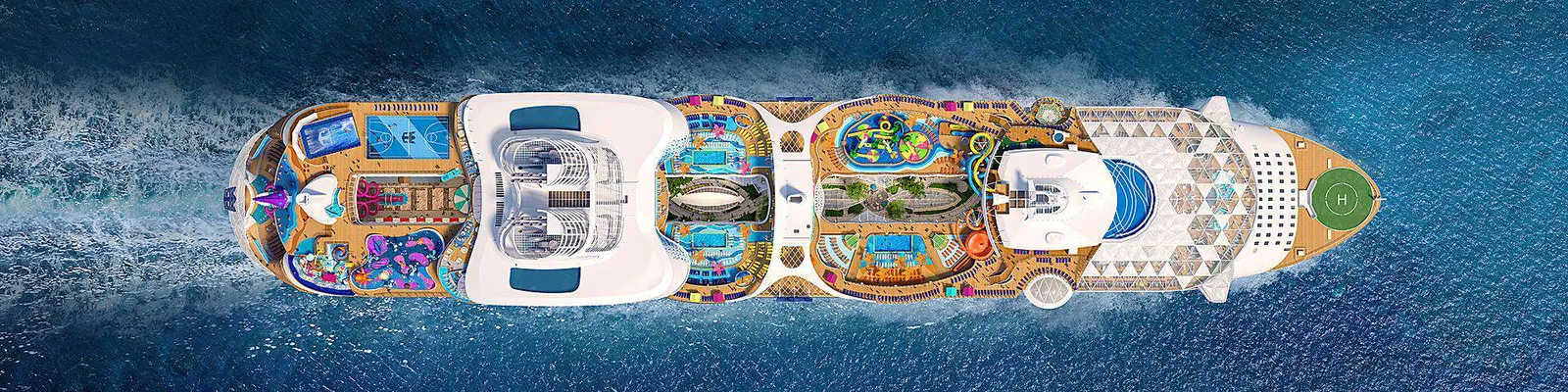
Royal Caribbean International is the world’s largest cruise line, operating 29 ships with a thirtieth arriving in 2026. The Icon-class ships — Icon of the Seas and Star of the Seas — are the largest passenger vessels ever built, exceeding 250,000 gross tonnes and carrying over 5,000 guests across eight distinct themed neighbourhoods.
The ships feature the largest waterpark at sea, FlowRider surf simulators, rock climbing walls reaching 40 feet, zip lines spanning the ship’s length, ice-skating rinks, Broadway-calibre shows with professional casts, and the Adventure Ocean kids’ programme that sets the industry standard for family cruising. Perfect Day at CocoCay is widely considered the best private island destination in the Caribbean. Royal Caribbean deploys multiple ships seasonally from Sydney and Brisbane, making it the most accessible international cruise line for Australian travellers. The line is publicly listed, headquartered in Miami, and builds its brand around the promise that there is always something new to discover.
This is a comparison between fundamentally different holiday types operating at fundamentally different scales. Nicko’s largest ship carries fewer guests than a single Royal Caribbean neighbourhood. A Nicko voyage is a quiet, cultural journey through European river landscapes — vineyards, castles, medieval towns, lock systems. A Royal Caribbean voyage is a floating adventure resort on the open ocean — waterparks, surf simulators, Broadway shows, global dining, and the energy of thousands of fellow travellers. The comparison serves travellers deciding which type of experience suits their style, not those choosing between similar products.
What is actually included
Nicko’s fare typically covers full board — breakfast, lunch, and dinner in the main restaurant — plus tea and coffee throughout the day. Alcoholic beverages, guided shore excursions, Wi-Fi, and gratuities are not included in the standard fare. Gratuities are suggested at 10 to 13 euros per passenger per night. Some promotional packages bundle excursions or drink packages at reduced rates. The pricing represents 20 to 40 per cent savings over Viking and AmaWaterways for comparable European river itineraries.
Royal Caribbean’s base fare covers main dining room meals, the Windjammer buffet, room service (with a small delivery fee for non-suite guests), pool access, the Adventure Ocean kids’ programme, fitness centre, and entertainment shows including Broadway-calibre productions. Speciality restaurants carry surcharges of USD $30 to $80 per person. The Deluxe Beverage Package runs approximately USD $70 to $90 per person per day. Wi-Fi starts from roughly USD $15 per day.
Royal Suite Class guests — particularly Star Class — receive complimentary speciality dining, premium beverages, and a Royal Genie personal concierge who orchestrates every detail of the onboard experience.
The inclusion models reflect different industry segments with different guest expectations. Nicko includes three meals daily at the base fare but charges separately for drinks and excursions. Royal Caribbean includes meals in the main dining room and buffet but offers extensive premium add-ons. For Australian travellers, the critical cost differentiator is not inclusions but accessibility — Royal Caribbean sails from Australian ports, while Nicko requires international flights to Europe that add AUD $2,000 to $4,000 per person to the total cost of any river cruise.
Dining and culinary experience
Nicko operates a single main restaurant on each river ship, serving all passengers in one or two sittings for breakfast, lunch, and dinner. The cuisine reflects the waterway with genuine regional authenticity — Austrian specialities including Wiener Schnitzel, Sachertorte, and Apfelstrudel on the Danube; Alsatian Flammkuchen and Gewurztraminer on the Rhine; Portuguese bacalhau and Douro Valley wines on the Douro. The kitchen sources local ingredients from the regions being visited wherever possible, and menus change daily. The communal format — shared tables, regional wines, conversation with fellow passengers — creates an intimate dining experience. By the third evening, every guest knows every other guest by name. There are no alternative restaurants, no speciality dining surcharges, no buffet options, and no 24-hour room service.
Royal Caribbean offers 15 to 25 dining venues on its larger ships, representing the broadest dining programme in mainstream cruising. The main dining room provides both traditional fixed-time seating and flexible My Time Dining. Speciality options include Wonderland (an immersive, multi-sensory experience where menus are themed by elements rather than courses), Chops Grille for prime steaks, Izumi Japanese including sushi and hibachi, Jamie’s Italian on select vessels, and Giovanni’s Table for family-style Italian.
The Windjammer buffet is one of the best at sea, with live-cooking stations and quality that consistently exceeds expectations. Icon-class ships organise dining across eight neighbourhoods, each with its own culinary identity and atmosphere — Central Park features fine dining, the Boardwalk offers casual options, and Surfside caters specifically to families.
The dining philosophies could not be further apart. Nicko offers a single, intimate experience rooted in regional cuisine that changes with the landscape passing outside — you eat Austrian food while sailing through Austria. Royal Caribbean offers a global food court of extraordinary variety where you can eat Japanese for lunch, American steak for dinner, and Italian for a late-night snack, all on the same ship. The choice is between regional authenticity at an intimate scale and global variety at a massive scale — and both deliver genuine culinary satisfaction for their respective audiences.
Suites and accommodation
Nicko’s river ship cabins are all outside-facing with river views through windows or French balconies — no river cruise ship has inside cabins, which is an immediate advantage over ocean cruise lines where the most affordable options are windowless. Standard cabins range from approximately 140 to 180 square feet. The NickoVision features a split-level design with extensive panoramic glass that creates a genuine sense of space and connection to the river landscape. Upper-deck suites offer more room and better views but remain modest in scale. The standard is comfortable European four-star — well-maintained, functional, and unpretentious. Every cabin has a view, which cannot be said for the most affordable ocean cruise staterooms.
Royal Caribbean’s accommodation spans the full spectrum from budget to ultra-luxury. Inside staterooms from approximately 150 square feet offer the most affordable entry point. Balcony cabins average 180 to 200 square feet plus a private balcony.
The Royal Suite Class on newer ships includes Junior Suites, Grand Suites, the Royal Loft Suite (a bi-level suite with floor-to-ceiling windows and separate living areas), and the Ultimate Family Suite (featuring an in-suite slide, gaming wall, and private cinema screen). Star Class suite guests receive a Royal Genie personal concierge. Icon-class ships introduce innovative categories including Surfside Family rooms purpose-designed for families with young children and AquaDome-view Interiors with floor-to-ceiling virtual ocean views that transform windowless cabins into immersive experiences.
The accommodation comparison reflects the categorical difference between these operations. Royal Caribbean’s suite programme alone encompasses more variety and more square footage than Nicko’s entire fleet combined. But Nicko’s guarantee of an outside cabin with a river view at the base fare — every cabin on every ship — is a genuine advantage for budget-conscious travellers who would otherwise book an inside stateroom on an ocean cruise ship. No river cruise passenger ever wakes up in a windowless room, which is not the case for the most affordable Royal Caribbean options.
Pricing and value
Nicko prices seven-night European river cruises from approximately EUR $800 to $1,500 per person (roughly AUD $1,300 to $2,500), including full board with breakfast, lunch, and dinner daily. This represents 20 to 40 per cent savings over Viking, Uniworld, and AmaWaterways for comparable itineraries on the Danube, Rhine, or Moselle. However, Australian travellers must add return flights to Europe — typically AUD $2,000 to $4,000 per person from Sydney, Melbourne, or Brisbane — bringing the total to approximately AUD $3,300 to $6,500 per person for a seven-night river cruise.
Royal Caribbean prices inside staterooms from approximately AUD $130 to $230 per person per night, with balcony cabins from AUD $180 to $330 on seven-night sailings. A seven-night cruise runs approximately AUD $1,000 to $2,300 per person before add-ons. From Australian ports, no flights are needed — a seven-night South Pacific cruise from Sydney at AUD $1,500 to $2,500 per person all-in, including accommodation, meals, entertainment, and kids’ programming, is dramatically less than any Nicko voyage once international flights are factored into the equation.
For Australian travellers, the pricing comparison heavily favours Royal Caribbean on accessibility and total cost from a local port. The comparison becomes fairer when both involve international travel — an Australian flying to Barcelona for a Mediterranean cruise on Royal Caribbean versus flying to Passau for a Danube cruise on Nicko would find total costs more comparable, with the difference reflecting the fundamentally different holiday types rather than different value levels. Both represent excellent value in their respective segments.
Spa and wellness
Nicko offers modest onboard wellness facilities — a small fitness area, occasionally a sauna on larger vessels, and sun loungers on the top deck. The genuine wellness on a Nicko river cruise comes from daily shore exploration: walking through cobblestoned town centres, climbing castle staircases (some of which involve hundreds of steps), cycling along riverbank paths, and exploring vineyard trails and market squares on foot. A typical port day involves 10,000 to 15,000 steps of walking through some of Europe’s most beautiful towns. The sun deck provides meditative open-air relaxation as the river landscape unfolds — watching the Rhine gorge or the Wachau vineyards pass from a lounger with a glass of regional wine is a form of wellness no gym can replicate.
Royal Caribbean’s Vitality Spa provides comprehensive treatments across the fleet — massages, facials, body treatments, and thermal suite access with steam rooms, saunas, and relaxation lounges.
The active recreation programme extends dramatically beyond the spa: FlowRider surf simulators, rock climbing walls reaching 40 feet, zip lines spanning the ship, the Thrill Waterpark on Icon-class ships featuring the tallest waterslide in North America, basketball courts, ice-skating rinks, and jogging tracks. The Solarium adults-only pool provides a tranquil retreat from the main pool’s energy. The breadth of physical activity options on a single Royal Caribbean ship exceeds what most land-based resorts offer.
The wellness comparison is between onboard recreation at an extraordinary, purpose-built scale and organic, destination-based activity through daily European exploration. Royal Caribbean offers more physical recreation facilities in a single ship than Nicko’s entire fleet contains. Nicko offers daily walking tours through some of Europe’s most historically significant and beautiful towns — a different kind of wellness entirely, but no less valid for physical health and mental restoration.
Entertainment and enrichment
Nicko’s entertainment is the destination itself. Local musicians may board briefly in port to perform folk music or regional repertoire. Cultural talks provide historical context — the story behind the Loreley rock, the Habsburg dynasty’s legacy along the Danube, the history of Rhine river commerce, the winemaking traditions of the Wachau and Moselle valleys. Evening entertainment is deliberately gentle: a pianist or small ensemble in the lounge, conversation over regional wines, a themed evening reflecting local culinary traditions. There are no production shows, no casinos, no gaming arcades, and no organised nightlife. The spectacle is external — the Wachau Valley, the Loreley gorge, the lock systems of the Main-Danube Canal, the illuminated skyline of Budapest at night.
Royal Caribbean is the industry leader in cruise ship entertainment, and the gap between Royal Caribbean and every competitor has only widened with each new ship class. Full-scale Broadway shows — Grease, Mamma Mia!, Hairspray, and others — perform on Oasis-class ships with professional casts, full orchestras, and elaborate sets. AquaTheater shows combine high-diving from platforms 20 metres above the water, synchronised swimming, and aerial acrobatics in a breathtaking open-air amphitheatre. Ice-skating shows in Studio B feature professional figure skaters.
Icon-class ships introduce the AquaDome — a multi-storey glass dome hosting aerial and aquatic performances by day that transforms into an immersive nightclub and entertainment venue by evening. The Royal Promenade hosts parade-style events, and Adventure Ocean provides age-appropriate entertainment for every group from six-month-olds to seventeen-year-olds.
The entertainment gap between these products is absolute and categorical. Royal Caribbean offers more entertainment on a single ship than Nicko’s entire fleet delivers across an entire season of sailings. But this comparison misses the essential point — Nicko guests chose the line precisely because they do not want production entertainment, waterparks, or ice-skating shows. They want the scenery, the towns, the cultural talks, and the quiet conversation over wine. Both lines deliver exactly what their guests seek, and both do so excellently.
Fleet and destination coverage
Nicko’s fleet of approximately 20 river ships operates on European rivers, with ship sizes varying to match the navigational requirements of each waterway — narrow vessels for the lock-restricted Main-Danube Canal, larger ships for the broad Danube. The ocean-going Vasco da Gama adds a single ocean vessel. Destinations are concentrated exclusively in European river systems — the Danube, Rhine, Main, Moselle, Elbe, Douro, and Rhone. There is no presence outside European waterways for the river fleet, no Caribbean sailing, no Pacific deployment, and no Australian operations.
Royal Caribbean’s fleet of 29 ships is the world’s largest and most diverse. Six ship classes span from the mid-size Radiance class to the record-breaking Icon class. The fleet covers the Caribbean, Mediterranean, Alaska, Northern Europe, South Pacific, Asia, and Australia — essentially every major cruise region globally. Perfect Day at CocoCay is the industry’s benchmark private island destination. Multiple ships deploy seasonally from Sydney and Brisbane, making Royal Caribbean the most accessible major cruise line for Australian travellers. A thirtieth ship joins in 2026, and the fleet continues to grow with new classes on order.
The fleet and destination comparison is not competitive — it is categorical. Royal Caribbean is a global ocean cruise operator with the world’s largest fleet. Nicko is a regional European river specialist with a fleet of small inland vessels. Australian travellers have direct access to Royal Caribbean from local ports any summer; reaching Nicko requires international flights, European transfer logistics, and planning around seasonal river cruise schedules.
Where each line excels
Nicko excels in affordable European river cruising — three decades of expertise on the Danube, Rhine, Moselle, and Elbe at pricing 20 to 40 per cent below the premium brands. Town-centre docking, extended port stays, independent exploration, and regional cuisine suit culturally curious travellers who value authenticity over entertainment. The German operator heritage and predominantly European passenger mix create a genuinely Continental atmosphere.
Royal Caribbean excels in mega-ship innovation at the industry’s largest scale. The Adventure Ocean kids’ programme is the benchmark for family cruising globally. Icon-class ships redefine what a cruise ship can be. Broadway-calibre entertainment is unmatched in variety and production value. Perfect Day at CocoCay sets the standard for private island experiences. The extensive, consistent Australian deployment — multiple ships annually from Sydney and Brisbane — provides local departure convenience that no other international cruise line matches.
Standout itineraries for Australian travellers
Nicko’s eight-day Danube cruise from Passau to Budapest — docking in the heart of Vienna for a full day, visiting Bratislava’s old town, cruising through the Wachau Valley with its terraced vineyards and Melk Abbey, and arriving in Budapest for an overnight with the illuminated Parliament building — is the classic European river itinerary and Nicko’s signature product. At pricing 20 to 40 per cent below Viking, it makes this iconic journey accessible to a broader range of travellers. The Rhine cruise from Amsterdam to Basel delivers the Loreley gorge, Cologne Cathedral, and the charming wine villages of the Moselle. Both require flights to Europe via Singapore, Dubai, or London from Australian gateways.
Royal Caribbean’s seasonal Australian deployment on Ovation of the Seas from Sydney is the standout local option — 12 to 14-night New Zealand itineraries visiting Fiordland (where the North Star observation capsule provides unforgettable views of the fjords), Dunedin, Wellington, and the Bay of Islands. South Pacific sailings of 10 to 12 nights visit New Caledonia, Vanuatu, and Fiji. For international travel, a seven-night Eastern Caribbean on Icon of the Seas from Miami is the most innovative cruise sailing available in the world today — the eight-neighbourhood concept, Thrill Waterpark, AquaDome, and Perfect Day at CocoCay stop must be experienced to be understood. Short three- and four-night breaks from Florida combine exceptionally well with family theme park holidays.
Ship-by-ship recommendations
NickoVision (220 passengers) is the flagship for the Danube with split-level design and panoramic glass, purpose-built for the signature Passau to Budapest itinerary. NickoSPIRIT (170 passengers) delivers a more intimate, boutique experience on the Rhine and Moselle. Choose by river and itinerary — the waterway determines the ship, and each vessel is designed specifically for the dimensions and character of the rivers it navigates.
Icon of the Seas (approximately 5,600 guests) is the world’s largest and most innovative cruise ship — eight neighbourhoods, the biggest waterpark at sea, the AquaDome, and Perfect Day at CocoCay calls. Best for Caribbean sailings from Miami. Ovation of the Seas (approximately 4,900 guests) is the ship Australian travellers know best from regular Sydney deployments — the North Star capsule, RipCord by iFLY, and Two70 make it a strong local-departure choice. Oasis-class ships (approximately 5,400 to 6,800 guests) remain excellent for Caribbean and Mediterranean sailings with Central Park, Boardwalk neighbourhoods, and AquaTheater shows.
For Australian travellers specifically
Royal Caribbean has the strongest Australian cruise presence in the entire industry. Multiple ships deploy seasonally from Sydney and Brisbane with itineraries to New Zealand, the South Pacific, and Australian coastal voyages. Pricing is in AUD with dedicated Australian-market promotions running throughout the year. The line maintains a dedicated Australian office with local staff. Ovation of the Seas has become a fixture of the Australian cruise season, deployed year after year with reliable consistency.
For Australians wanting to cruise from a local port with world-class entertainment and the best family programming afloat, Royal Caribbean is the most comprehensive and accessible choice available. The ability to book 12 to 18 months ahead with confidence about which ship will operate makes forward planning straightforward.
Nicko has no Australian operations whatsoever — no office, no local representative, no ships that visit Australian waters, and no realistic prospect of this changing. Every voyage requires flights to Europe, booking through specialist agents or European channels, and planning around the European river cruise season (typically April to October, when water levels and weather are suitable).
Nicko appeals specifically to Australian travellers who have experienced ocean cruising, know they enjoy European travel, and want to explore Europe’s cultural heartland by river at a competitive price. The German-language heritage and English-language sailings through specialist agents create a more authentically European atmosphere than the major English-language river brands — you cruise with Europeans rather than predominantly with Australians and Americans.
The combination approach is worth considering for Australian travellers planning a European holiday. A Nicko Danube river cruise followed by a Royal Caribbean Mediterranean cruise creates a holiday that covers both intimate cultural immersion and big-ship ocean adventure. The contrast between the two experiences makes each more memorable, and a specialist agent can coordinate flights, hotels, and transfers between the two embarkation points.
The onboard atmosphere
Nicko’s atmosphere is quiet, Continental, and deeply personal. Under 220 passengers per ship. Predominantly German passenger base with English-speaking guests as a growing minority on dedicated departures.
The pace is slow and deliberate — morning explorations through European towns, afternoon scenic sailing or relaxing on the sun deck, evening dining followed by gentle entertainment and conversation. Smart casual dress throughout with no formal expectations whatsoever. The social dynamic is intimate — everyone knows everyone by mid-cruise. The ship itself is unobtrusive and functional, designed to frame the landscape outside rather than to compete with it for attention.
Royal Caribbean’s atmosphere is energised, family-oriented, and large-scale in everything it does. Thousands of guests across multiple decks and neighbourhoods. Poolside DJs, FlowRider competitions, rock climbing challenges, Broadway shows, trivia contests, and parade-style events on the Royal Promenade create a sense of constant activity and discovery.
The passenger mix on Australian deployments is strongly local, giving Ovation of the Seas sailings from Sydney a distinctly Australian social dynamic — the pool deck energy, the dining preferences, and the relaxed camaraderie are recognisably Australian. The Solarium adults-only pool provides calm retreat from the main deck’s energy. The default energy level is high — but the ship is large enough that quiet spaces are always available for those who seek them.
The atmosphere comparison is between a small European village hotel and a large American resort city — between intimacy measured in dozens and variety measured in thousands. Both work brilliantly for their intended audiences. The choice depends entirely on whether your ideal holiday involves quiet morning walks through medieval towns followed by an afternoon watching vineyards pass from a sun lounger, or whether it involves surf simulators, waterparks, Broadway shows, and the buzz of a ship that never sleeps.
The bottom line
Nicko and Royal Caribbean are different species of cruise travel. One is a German river specialist offering affordable cultural journeys through Europe’s inland waterways. The other is the world’s largest ocean cruise line offering the most innovative ships, the strongest family programming, and the most ambitious entertainment ever put to sea.
Choose Nicko for an affordable European river cruise — the Danube, Rhine, or Moselle at pricing 20 to 40 per cent below the premium brands, with town-centre docking, regional cuisine that changes with the landscape, and the intimate atmosphere of a ship carrying under 220 guests where everyone knows everyone by name. Accept the flights to Europe from Australia, the modest onboard facilities, the predominantly German passenger mix, and the deliberately quiet entertainment philosophy.
Choose Royal Caribbean for big-ship ocean cruising at its most ambitious and innovative — Icon-class ships that are genuine floating cities, Adventure Ocean for the best family programming afloat, Broadway shows and AquaTheater spectacles, the FlowRider and Thrill Waterpark, and seasonal departures from Australian ports that eliminate international travel entirely. Accept the scale of thousands of guests, the add-on pricing for premium drinks and speciality dining, the high-energy atmosphere, and the unmistakably American personality.
For Australian travellers, the practical advice is clear. For your next cruise from a local port with family-friendly entertainment, world-class innovation, and maximum convenience, Royal Caribbean is the strongest and most accessible option available.
For a European cultural journey on the Danube or Rhine at genuinely competitive pricing — an entirely different holiday type that complements rather than competes with ocean cruising — Nicko is worth discovering. The two experiences sit at opposite ends of the cruise spectrum, and the well-travelled cruiser will find room for both in a lifetime of holidays on the water.