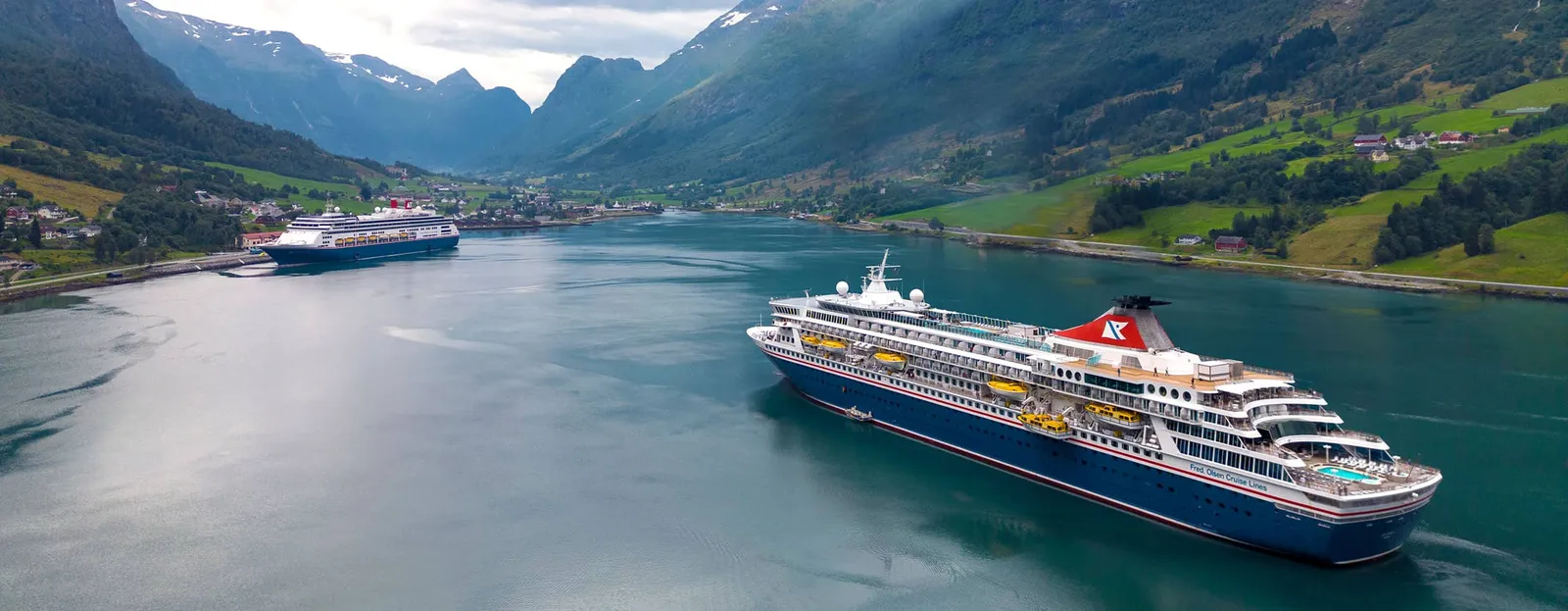
Fred. Olsen and Nicko Cruises are both niche European operators with loyal followings in their home markets — one a British ocean cruise line with Norwegian heritage, the other a German river cruise specialist with 30 years on Europe's waterways. Jake Hower compares what each offers and whether either belongs on an Australian traveller's shortlist.
| Fred. Olsen Cruise Lines | Nicko Cruises | |
|---|---|---|
| Category | Mainstream | Mainstream / River |
| Rating | ★★★★☆ | ★★★★☆ |
| Fleet size | 3 ships | 20 ships |
| Ship size | Mid-size (1,000-2,500) | River (under 200) |
| Destinations | Northern Europe, Norwegian Fjords, Mediterranean, Canary Islands | European rivers — Danube, Rhine, Elbe, Moselle |
| Dress code | Smart casual | Smart casual |
| Best for | British travellers seeking scenic itineraries | Value European river cruise enthusiasts |
This is a comparison between two fundamentally different cruise types — ocean and river — from two niche European operators. Fred. Olsen delivers traditional British ocean cruising on mid-size ships sailing from UK ports, with particular strength in Norwegian Fjords, scenic itineraries, and solo travel. Nicko Cruises delivers solid-value European river cruising on the Danube, Rhine, and beyond, with a slow-travel philosophy and competitive pricing below the premium river brands. For Australians, neither is a primary recommendation — both require travelling to Europe, and both have limited English-language marketing. Nicko offers the more unique proposition if you already plan a European river cruise. Fred. Olsen makes sense only if you are visiting the UK.
The core difference
Fred. Olsen Cruise Lines and Nicko Cruises are both niche European operators serving loyal home markets, but they operate in fundamentally different domains — ocean versus river — and comparing them requires acknowledging that the products are as different as a country estate and a canal boat. One sails the open seas with up to 1,300 guests aboard mid-size ships. The other glides along Europe’s rivers with fewer than 220 guests on purpose-built river vessels. The comparison is not about which is better — it is about which type of European cruise experience suits a particular traveller.
Fred. Olsen is a traditional British ocean cruise line with Norwegian heritage stretching back to 1848. The fleet of three ships — Bolette, Borealis, and Balmoral — sails from UK ports across Norwegian Fjords, the Mediterranean, Canary Islands, British Isles, Iceland, and beyond. The atmosphere is country-house warmth with enrichment lectures, two-sitting dinners, and an unhurried pace. Borealis is adults-only. Over 50 dedicated solo cabins serve one of the most developed solo traveller programmes in mainstream cruising. The ships are older and classic in design, with wraparound promenade decks and traditional public spaces.
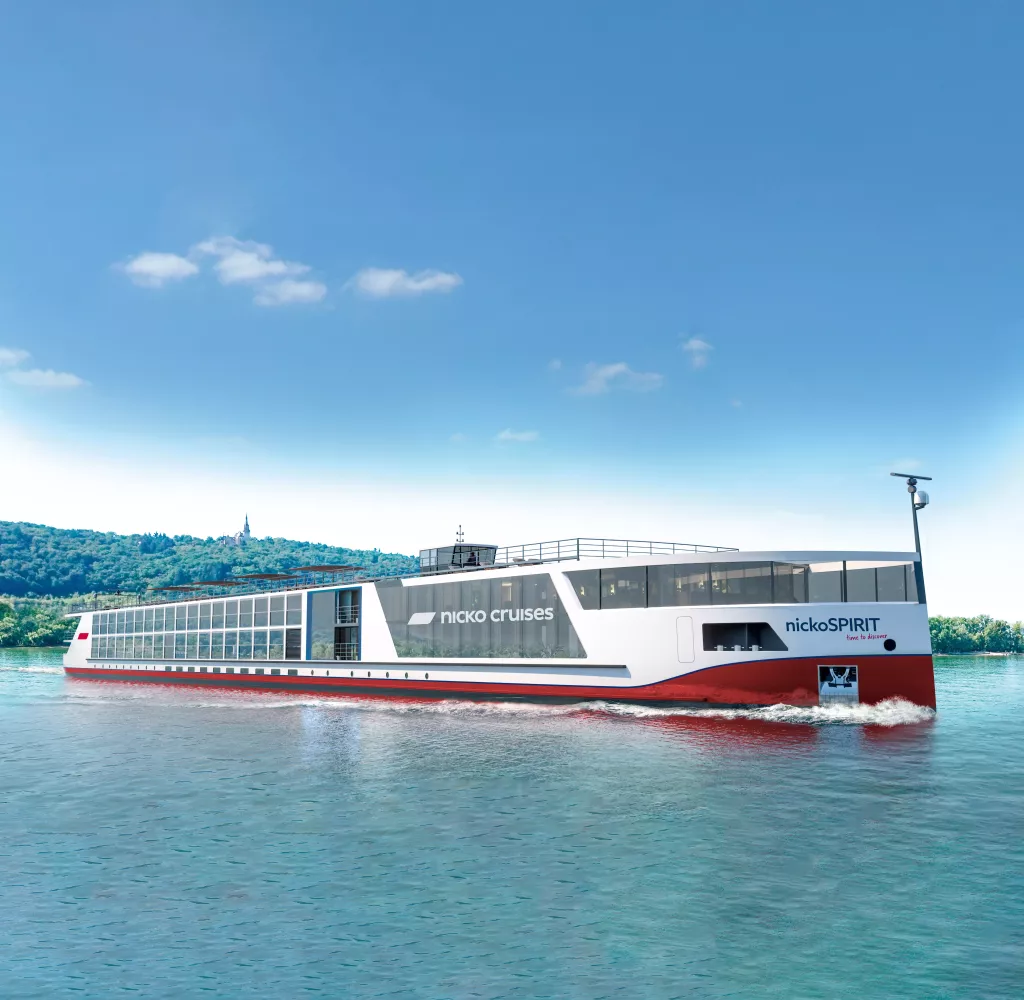
Nicko Cruises is a German river cruise operator that has been sailing Europe’s waterways since 1994. With a fleet of around 20 river ships plus the ocean-going Vasco da Gama, the company covers the Danube, Rhine, Main, Moselle, Elbe, Douro, Rhone, and other European rivers. Ships range from the flagship NickoVision (220 passengers on the Danube) to smaller vessels like NickoSPIRIT (170 passengers on the Rhine). Nicko’s philosophy is “time to discover” — slow cruising with extended port stays and ships that dock directly in town centres.
For Australian travellers, this comparison is relevant when deciding between a European ocean cruise and a European river cruise as part of a broader European trip. Neither line has Australian departures or dedicated Australian marketing. Both require international flights from Australia. The choice comes down to whether you want the open sea or the riverbank outside your window.
What is actually included
The inclusion models differ significantly and reflect the different economics of ocean and river cruising.
Fred. Olsen’s fare covers the cabin, all meals in the main dining rooms, and from 2026, drinks at mealtimes. Bar drinks outside meals, gratuities, shore excursions, and specialty dining are additional. Bar prices are notably lower than competitors. The ex-UK sailing model means no flights are needed for British travellers, though Australians must arrange their own international travel.
Nicko’s fare typically covers the cabin, all meals on board, and sometimes a welcome drink and captain’s dinner with wine. Excursions, drinks beyond what is specified, and gratuities are additional — Nicko suggests 10 to 13 euros per passenger per night for gratuities. Unlike the premium river cruise brands that include guided excursions and sometimes drinks, Nicko keeps its base fare lower and allows guests to add extras as desired.
Neither line is genuinely all-inclusive. For Australians calculating total cost, both require international flights — roughly AUD 2,000 to 3,500 to the UK for Fred. Olsen, or AUD 1,800 to 3,000 to a European river embarkation city for Nicko. The total holiday cost for a week on either line, including flights, the cruise, and reasonable onboard spending, falls in the AUD 5,000 to 8,000 per person range — though Nicko’s lower base pricing and shorter average voyage length can bring the total down.
Dining and culinary experience
The dining experiences are shaped by the different worlds these ships inhabit.
Fred. Olsen serves meals in traditional ocean cruise dining rooms with two sittings. Menus combine British comfort food with regional dishes reflecting the destinations — Norwegian salmon on fjord cruises, Mediterranean-influenced menus in the Med. The quality is honest and well-prepared without reaching premium levels. The dining room experience is social and traditional, with white-tablecloth service and waiters who learn your preferences over the course of a voyage.
Nicko serves meals in a single restaurant aboard each river ship, with open seating and a single sitting. The cuisine features regional dishes reflecting the river being sailed — Austrian specialities on the Danube, Alsatian dishes on the Rhine, Portuguese cuisine on the Douro. The kitchen sources locally where possible, and the connection between the landscape outside the window and the food on the plate is more immediate than on any ocean ship. Meals are communal affairs where fellow guests become dining companions across shared tables.
The dining comparison favours Nicko for destination connection — eating Austrian Tafelspitz while gliding past the Wachau Valley is a more complete sensory experience than eating the same dish at sea. Fred. Olsen wins on variety of dining spaces and the traditional cruise ship dinner experience. Neither line competes with dedicated culinary cruise brands, but both deliver solid meals that suit their respective audiences.
Suites and accommodation
The accommodation comparison requires understanding the fundamental constraints of river vessel design.
Fred. Olsen’s fleet offers a full range of ocean cruise cabins from inside singles to suites across multiple decks. Borealis and Bolette achieve space-per-guest ratios of 45.5 — genuinely spacious for a mid-market line. Cabins are classic in style with traditional furnishings. The 50-plus dedicated single cabins are a standout feature. Suites offer separate living areas and more generous floor plans, though nothing approaching luxury line standards.
Nicko’s river ships are constrained by the physical dimensions of European locks and waterways. Cabins are necessarily compact — typically 14 to 17 square metres — though all are outside-facing with windows or French balconies. The flagship NickoVision offers larger cabins on the upper deck with full French balconies and a split-level design that creates a sense of openness. There are no true suites in the ocean cruise sense, no single cabins, and no inside cabins — every room has a river view, which is a fundamental advantage of river ship design.
The comparison is not about size — ocean cabins are almost always larger than river cabins. It is about how you use the space. On a river ship, the cabin is primarily for sleeping; the destination outside the window changes constantly, and the ship docks in town centres where you step directly ashore. On an ocean ship, the cabin is a more significant part of the experience, with sea days and longer port transits meaning more time in the room. Fred. Olsen’s cabins are larger and more varied. Nicko’s cabins are compact but every single one has a view.
Pricing and value
Pricing is where Nicko’s value proposition becomes most apparent.
Fred. Olsen’s seven-night ex-UK sailings start from roughly GBP 1,000 to 1,800 per person — approximately AUD 2,000 to 3,600 — for standard cabins. Longer voyages and premium categories command more. The no-fly model saves British travellers the cost of flights, but Australians must add international airfare.
Nicko’s seven-night Danube or Rhine cruises start from approximately EUR 800 to 1,400 per person — roughly AUD 1,300 to 2,300 — sitting noticeably below the premium river brands like Viking (typically EUR 1,500 to 2,500 for equivalent sailings) and AmaWaterways. Nicko’s value proposition is a solid four-star river cruise at three-star pricing.
For Australian travellers, the per-night cost comparison favours Nicko, but the total cost depends heavily on airfare. Flights to European river embarkation cities (Budapest, Amsterdam, Basel) cost roughly AUD 1,800 to 3,000 return, comparable to flights to London for Fred. Olsen. A week on Nicko including flights comes to approximately AUD 3,500 to 5,500 per person. A week on Fred. Olsen including flights comes to approximately AUD 4,500 to 7,000 per person. Nicko delivers better value at the base level, though the experiences are sufficiently different that direct price comparison is of limited use.
Spa and wellness
Spa and wellness facilities on both lines are modest, reflecting their market positions and vessel types.
Fred. Olsen offers traditional spa facilities on all three ships — treatment rooms, saunas, and fitness centres. The spa is never crowded on ships carrying 1,300 guests or fewer. Treatments are standard — massages, facials, body treatments — without elaborate thermal suites. The fitness centre provides basic equipment with ocean views.
Nicko’s river ships have very limited spa facilities, as the compact dimensions of river vessels leave little room for dedicated wellness spaces. Some ships offer a small fitness room, sauna, or massage treatment room, but expectations should be calibrated to the size of the vessel. The wellness offering on a river cruise is the destination itself — walking through medieval towns, cycling along riverbanks, and exploring on foot. Nicko’s “time to discover” philosophy positions the port experience as the wellness programme.
Fred. Olsen wins on dedicated spa facilities by default. Nicko counters with the argument that a morning walk through a Danube-side village is worth more than any treatment room. Both perspectives have merit, but travellers who prioritise onboard spa access should choose Fred. Olsen.
Entertainment and enrichment
The entertainment and enrichment comparison highlights different approaches to how guests spend their time.
Fred. Olsen offers a structured enrichment programme with guest speakers covering history, science, and destinations. Scenic cruising is treated as an event with commentary. Evening entertainment includes production shows (refreshed through the RWS Global partnership), live music, and quiz nights. The bar is the social hub, and the atmosphere is convivial and conversational.
Nicko’s enrichment is the river itself. The constantly changing scenery outside the panoramic windows — castles, vineyards, medieval towns, locks, and bridges — provides a continuous visual narrative that no lecture can replicate. The ship docks in town centres, allowing guests to walk directly into the destination without tenders or transfers. Evening entertainment is minimal — a local musician might perform aboard, or the programme might feature a wine tasting reflecting the region being sailed. The social atmosphere is intimate, with 170 to 220 guests creating a family-like dynamic at communal meals.
Fred. Olsen provides more structured entertainment and enrichment programming. Nicko provides more immersive destination engagement. For intellectually curious travellers, both deliver, but through different mechanisms — Fred. Olsen through speakers and lectures, Nicko through direct, walkable access to the places being visited.
Fleet and destination coverage
The fleet comparison reveals fundamentally different models of European exploration.
Fred. Olsen operates three ocean ships — Bolette (1,360 guests), Borealis (1,360 guests, adults-only), and Balmoral (1,325 guests) — covering Norwegian Fjords, Canary Islands, British Isles, Iceland, Mediterranean, and expedition-style voyages up to 108 nights. All sail from UK ports. The mid-size ships access ports larger vessels cannot reach, and the geographic range is impressive for three ships.
Nicko operates around 20 river ships across Europe’s major waterways — Danube, Rhine, Main, Moselle, Elbe, Douro, Rhone, and others — plus the ocean-going Vasco da Gama. The fleet varies in size and style to suit different river dimensions, from the 220-passenger NickoVision on the broad Danube to smaller vessels navigating narrow locks. The river network covers Central Europe, Western Europe, Portugal, and seasonal extensions.
The destination coverage is complementary rather than competitive. Fred. Olsen offers coastal cities, islands, and open-ocean scenic cruising. Nicko offers inland cities, river valleys, and the heart of Europe’s cultural centres. An Australian traveller planning a European cruise holiday might well consider both — a Fred. Olsen coastal sailing combined with a Nicko river cruise would deliver a comprehensive European experience.
Where each line excels
Fred. Olsen excels in:
Scenic ocean cruising from UK ports without the need to fly. The Norwegian Fjords itineraries carry authentic Norwegian heritage. The adults-only Borealis offers refined, quiet cruising. Over 50 dedicated solo cabins and a structured programme make this among the best mainstream lines for single travellers. The enrichment programme appeals to intellectually curious guests. And the range of voyage lengths — from overnight tasters to 108-night world cruises — accommodates everything from curious first-timers to committed circumnavigators.
Nicko excels in:
Value European river cruising with genuine regional authenticity. The “time to discover” philosophy means extended port stays and ships that dock in town centres rather than industrial ports. The pricing undercuts premium river brands like Viking and AmaWaterways by a meaningful margin while delivering comfortable four-star accommodation. Regional cuisine reflecting the river being sailed creates a genuine connection between the journey and the destination. And the intimate scale of 170 to 220 guests fosters a convivial, family-like atmosphere that ocean ships of any size struggle to replicate.
Standout itineraries for Australian travellers
Fred. Olsen
Borealis: Norwegian Fjords from Southampton (7-14 nights, multiple departures) — The signature Fred. Olsen experience. The adults-only Borealis sails from Southampton into fjords with a Norwegian authenticity that no other line can match. For Australians visiting the UK, this is the compelling add-on — no additional flights beyond getting to Britain. Fly to London from Australian gateways and take the train to Southampton.
Bolette: Canary Islands from Southampton (14 nights, winter departures) — A warm-weather escape from the British winter. Two weeks sailing to the Canary Islands and back, with Madeira, Lisbon, and Atlantic island ports along the way. The longer duration suits travellers who want sea days for relaxation and enrichment.
Nicko
NickoVision: Classical Danube from Budapest (7-8 nights, multiple departures) — The flagship river ship sailing the Danube between Budapest, Vienna, Bratislava, and Passau. The split-level design creates impressive public spaces, and the Danube’s classic itinerary delivers Europe’s most iconic river cruise experience. Fly to Budapest from Australian gateways via the Middle East or London.
NickoSPIRIT: Rhine and Moselle from Amsterdam (7-10 nights, seasonal) — The Rhine corridor from Amsterdam to Basel, with detours into the Moselle wine country. The more intimate NickoSPIRIT carries 170 guests through some of Europe’s most famous vineyard landscapes, castle-topped hills, and medieval towns. Fly to Amsterdam from Australian east coast cities via Singapore, Kuala Lumpur, or the Middle East.
Ship-by-ship recommendations
Fred. Olsen
Borealis (1,360 guests, adults-only) — The top choice for the adults-only atmosphere and the best space-per-guest ratio in the fleet. Choose for Norwegian Fjords and scenic itineraries where a quiet environment complements the destination.
Bolette (1,360 guests) — Same hardware as Borealis, open to all ages. Choose when travelling with family or for itineraries Borealis does not cover.
Balmoral (1,325 guests) — The older ship with a loyal following. Choose when the itinerary is the priority.
Nicko
NickoVision (220 passengers) — The flagship with the most spacious public areas and the split-level design that creates a genuine sense of openness. Choose for the Danube, where the ship’s larger size suits the broad river.
NickoSPIRIT (170 passengers) — The more intimate option for the Rhine and Moselle. Smaller guest count creates a boutique feel. Choose for the Rhine corridor and wine-country itineraries.
Vasco da Gama (1,000 passengers) — Nicko’s ocean-going ship, a former Holland America and P&O Australia vessel. Offers ocean cruises with a European atmosphere. Choose if you want the Nicko approach on the open sea, though the ship is less distinctive than the river fleet.
For Australian travellers specifically
Neither Fred. Olsen nor Nicko should be a first-choice cruise line for Australians planning a holiday from home. Both require long-haul flights to Europe, neither has Australian departures or sales representation, and both serve markets — British and German respectively — that are not oriented toward Australian travellers.
Fred. Olsen makes practical sense only if you are already visiting the UK. The ex-UK departure model means you can add a cruise to a British holiday without additional flights. The Norwegian Fjords itineraries are the strongest option, particularly on the adults-only Borealis. Australian specialist agents can book Fred. Olsen, but the line’s UK focus means limited Australian-specific support.
Nicko makes practical sense if you are planning a European river cruise and want better value than the premium river brands. Nicko’s English-language sailings are growing but still limited — confirm the language of your sailing before booking. The Danube and Rhine itineraries are the core recommendations, offering classic European river cruising at competitive prices. Bookings for English-language departures go through specialist UK agent Light Blue Travel.
For Australians choosing between these two lines, the real question is whether you want an ocean or river experience in Europe. If you want scenic coastal cruising with enrichment and the classic cruise ship experience, Fred. Olsen delivers — from the UK. If you want to glide through the heart of Europe’s river valleys, docking in town centres and walking into medieval cities, Nicko delivers — at good value. Both are niche choices that suit specific circumstances rather than general recommendations.
The onboard atmosphere
The atmospheric difference between an ocean cruise ship and a river cruise ship is as fundamental as the difference between the environments themselves.
Fred. Olsen’s atmosphere is traditional British cruise ship life. The public spaces are designed for spending time aboard — libraries, lounges, bars, promenade decks, and dining rooms that are destinations in themselves. Sea days are part of the rhythm, and the ship is as much the experience as the ports. The guest demographic skews older and British, with conversation, enrichment, and convivial bar evenings forming the social fabric. Dress code is smart casual.
Nicko’s atmosphere is European river cruise intimacy. With 170 to 220 guests, everyone recognises everyone by the second evening. Communal dining at shared tables creates connections quickly. The ship’s public spaces are designed around the panoramic views — the lounge, the sun deck, and the dining room all frame the constantly changing riverscape. The guest demographic on German-language sailings is predominantly German; English-language sailings attract a British and international mix. The atmosphere is relaxed, unpretentious, and oriented around the destination rather than the ship.
Australian travellers accustomed to the larger, more diverse cruise ships sailing from Australian ports will find both lines quiet and niche. Fred. Olsen will feel like a traditional cruise ship scaled down. Nicko will feel like a floating boutique hotel moving through Europe’s most beautiful river valleys. Both reward travellers who are comfortable with smaller, more intimate social settings.
The bottom line
Fred. Olsen and Nicko Cruises are not competitors — they are different types of travel that happen to take place on water. One is an ocean cruise line with ships carrying over 1,000 guests across open seas. The other is a river cruise operator with vessels carrying under 220 guests along inland waterways. The comparison is useful for Australian travellers deciding between two niche approaches to European cruising, not for choosing between equivalent products.
Choose Fred. Olsen for traditional ocean cruising from UK ports with personal service, enrichment programming, and some of the best solo traveller provisions in mainstream cruising. Choose it for Norwegian Fjords with genuine Norwegian heritage, for the adults-only refinement of Borealis, and for the flexibility of voyage lengths from overnight to world cruise. Accept that you must travel to the UK to board, that ships are older and traditional, and that the line’s relevance to Australian travellers is limited to UK-visit add-ons.
Choose Nicko for value European river cruising with authentic regional character, extended port stays, and town-centre docking that puts you in the heart of every destination. Choose it for the Danube, Rhine, and Moselle at prices meaningfully below Viking and AmaWaterways. Accept that English-language sailings are limited, that cabins are compact by ocean standards, that spa and entertainment facilities are minimal, and that the German orientation of the brand requires Australian travellers to do more research before booking.
For Australian travellers planning a European holiday, these lines complement each other beautifully. A Fred. Olsen fjord cruise from Southampton followed by a Nicko Danube voyage from Budapest would deliver the best of both ocean and river cruising in a single trip — and both at price points that leave room in the budget for the flights that either choice requires.