P&O Cruises
Premium Cruising
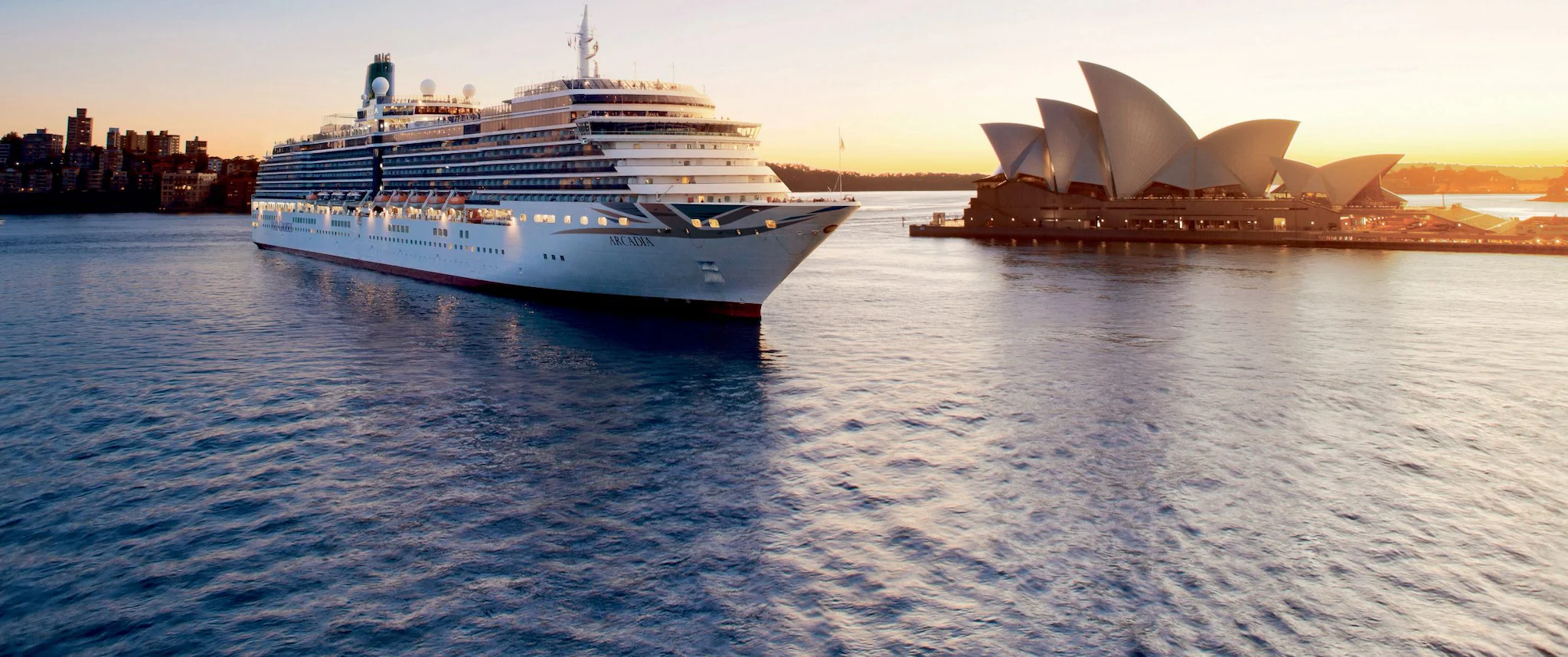
P&O is the sensible choice for British clients who want a proper cruise holiday without pretension. Iona and Arvia are genuinely impressive modern ships with over 30 restaurants and bars, and the food has improved enormously in recent years — the 6th Street Diner on Arvia is a real highlight. I also steer couples who want a quieter experience toward the adult-only Arcadia and Aurora, which are smaller, more traditional, and often overlooked. Just manage expectations on Wi-Fi costs and the lack of turndown service.
P&O Cruises traces its passenger shipping heritage back to 1837, when the Peninsular Steam Navigation Company won a contract to carry mail and passengers from England to the Iberian Peninsula. By the mid-nineteenth century, the company operated a vast network of routes to India, the Far East, and Australia, becoming one of the defining forces in global maritime travel. The phrase "POSH" — whether apocryphal or not — entered the English language through P&O's India route. Today the line operates as a subsidiary of Carnival Corporation within the Carnival UK division, which also manages Cunard. That corporate structure gives P&O significant buying power and fleet investment capacity while it maintains a distinctly British onboard identity that sets it apart from its international stablemates.
The fleet of seven ships covers an unusually wide range. At one end sit Iona and Arvia, LNG-powered mega-ships carrying over five thousand guests each with more than thirty bars and restaurants, retractable glass SkyDomes, and entertainment that rivals anything afloat. At the other end, the adult-only Arcadia and Aurora carry fewer than two thousand passengers and offer a quieter, more traditional cruising experience that suits couples and retirees. Britannia, Azura, and Ventura fill the middle ground with a well-rounded mix of family-friendly amenities and adult spaces. This breadth of offering within a single brand is unusual and genuinely useful — it means P&O can serve first-time family cruisers and retired world-voyage devotees from the same fleet.
One point of clarification that matters for Australian travellers: P&O Cruises is an entirely separate brand from the former P&O Cruises Australia, which was discontinued in March 2025 and rebranded as Carnival Cruise Line. The two shared historical heritage but operated independently with different ships, different itineraries, and different onboard cultures. The British P&O Cruises has a distinctly UK character — the onboard currency is pounds sterling, entertainment features British comedians and West End productions, and approximately ninety per cent of passengers are British. If your reference point is the old Pacific ships out of Sydney, expect something meaningfully different.
P&O is not an all-inclusive line at its base fare, and understanding the fare structure is important for managing expectations and total cost. Three fare types are available: Select (the most flexible, with cabin choice, dining priority, onboard spending money, and complimentary car parking at Southampton), Early Saver (a guaranteed cabin category at a lower price but without choosing the exact cabin), and Saver (last-minute deals with the lowest price but no flexibility and a fully non-refundable fare). All fares include accommodation, meals in the main dining rooms and buffet, onboard entertainment, kids' clubs, access to pools and fitness facilities, and — since 2024 — gratuities incorporated into the fare.
What costs extra is where the budget conversation begins. Speciality dining, alcoholic drinks, Wi-Fi, spa access, shore excursions, and fitness classes all carry separate charges. From March 2026, P&O introduced optional all-inclusive packages on cruises of five nights or longer: the Classic package bundles standard drinks, essential Wi-Fi, and speciality dining credit, while the Deluxe package upgrades to premium drinks and streaming-capable Wi-Fi. Standalone drinks packages are also available ranging from a soft drinks option up to a premium spirits and cocktails tier. One genuinely distinctive perk is P&O's BYO alcohol policy — you can bring your own wine and spirits on board, with a corkage charge only applying if consumed in restaurants. Very few major cruise lines permit this, and for passengers who enjoy a particular bottle of wine, it is a real saving.
The practical effect of this modular pricing model is that the headline fare can look very competitive — and it genuinely is at the entry level — but the true daily cost rises meaningfully once you add drinks, Wi-Fi, and a speciality dinner or two. Australian travellers should also factor in flights to the UK and the GBP exchange rate when comparing P&O against lines offering Australian departures with AUD pricing.
Dining is where P&O has invested most visibly over the past decade, and the improvement on the newer ships is genuine. Iona and Arvia each carry over thirty food and beverage venues, anchored by long-standing celebrity chef partnerships that lend credibility and quality to the programme. Marco Pierre White's collaboration with P&O now spans two decades, with his menus appearing across the fleet and special Food Heroes sailings offering exclusive dining events. Atul Kochhar created Sindhu, the first Indian restaurant at sea, which has expanded across multiple ships. Olly Smith curates The Glass House wine bar, and Jose Pizarro contributes a tapas menu alongside him. The Epicurean is the flagship speciality restaurant, serving modern British fine dining that consistently earns praise from reviewers. On Arvia, the 6th Street Diner adds a playful American diner concept, and Green & Co offers a plant-based and seafood menu that is a welcome addition for dietary diversity.
The main dining rooms serve a rotating British and international menu and are included in all fares. Quality here is the most debated aspect of P&O's food offering — some voyages receive strong marks, others less so, and long-term repeat passengers note inconsistency compared to five or ten years ago. The buffet restaurant, Horizon, draws the most criticism fleet-wide for repetitive menus and basic quality, though it remains functional for casual meals. Afternoon tea is served daily and retains the character you would expect from a line built on British tradition — finger sandwiches, scones, and pastries in a proper lounge setting.
P&O accommodates vegetarian, vegan, gluten-free, halal, and kosher diets, though kosher requests require ten weeks' advance notice. On the whole, the dining programme rewards passengers who are willing to explore the speciality venues. If you stick exclusively to the main dining room and buffet, the experience is adequate rather than exceptional. If you budget for two or three speciality dinners over a week-long cruise or take the all-inclusive package, P&O's culinary offering genuinely competes with lines priced considerably higher.
The atmosphere on a P&O ship is unmistakably, unapologetically British. Approximately ninety per cent or more of passengers are from the United Kingdom, which gives the ships a cultural homogeneity that is either comforting or insular depending on your perspective. Brodie's pub serves real ale, the entertainment features British comedians and quiz nights, the theatre runs West End-calibre productions, and the daily programme reads like a holiday resort in Cornwall transplanted to the Mediterranean. For British travellers and Anglophile Australians, it is familiar and relaxing. For those seeking a cosmopolitan, internationally mixed passenger base, P&O is not the right fit.
The dress code operates on two levels: Evening Casual is the standard on most nights, calling for smart restaurant attire. Black Tie or Celebration nights occur on longer voyages and expect dinner jackets, cocktail dresses, or dark suits. In practice, enforcement is stricter on the older, adult-only ships and increasingly relaxed on Iona and Arvia, where many passengers ignore the guidelines entirely — a source of frustration for traditionalists. Short-break cruises of two to five nights from Southampton tend to attract a younger, livelier crowd and can have a holiday-park energy that does not appeal to everyone. The adult-only Arcadia and Aurora, by contrast, are noticeably quieter, more refined, and populated primarily by couples and solo travellers aged fifty-five and above.
P&O is an excellent choice for multi-generational British families, first-time cruisers who want familiar surroundings, and couples seeking a relaxed pace without excessive formality. It is not the right line for travellers wanting an international atmosphere, a fully all-inclusive experience, ultra-luxury service levels, or the thrill-ride entertainment of Royal Caribbean and MSC. The honest assessment is that P&O does what it does well — accessible, value-led, British cruising — and the passengers who return year after year do so because the product delivers exactly what they expect.
The Peninsular Club is P&O's loyalty programme, enrolling members once they accumulate 150 points at ten points per cruise night — effectively fifteen nights at sea. The programme has six tiers: Pacific, Atlantic, Mediterranean, Caribbean, Baltic, and Ligurian. Benefits progress from a five per cent onboard spend discount at the Pacific tier to ten per cent at Caribbean, with cocktail party invitations, priority booking, and small gifts appearing along the way. The top two tiers — Baltic and Ligurian — require not only a points threshold but also eighty or two hundred and one cruise nights within a rolling three-year window, making them genuinely demanding to achieve and easy to lose through inactivity.
It is worth being straightforward: the Peninsular Club is modest by industry standards. There are no complimentary cruise nights, no suite upgrades, no free drinks packages, and no status matching from other cruise lines. The onboard spend discounts are practical but not transformative. Passengers who cruise frequently with P&O will accumulate useful savings over time, but the programme is not a compelling reason to choose P&O over a competitor whose product better suits your preferences. If you are weighing loyalty allegiance across multiple lines, the Peninsular Club's benefits are unlikely to tip the decision.
Booking P&O Cruises from Australia is entirely possible but comes with practical considerations that make it a niche proposition rather than an obvious choice. P&O does not maintain an Australian office or homeport in Australia, and the website prices exclusively in pounds sterling. There is no AUD booking portal. For most sailings, you will need to fly to Southampton — typically twenty-two to twenty-six hours via Singapore, Dubai, or Doha on carriers like Qantas, Emirates, or Singapore Airlines. Caribbean fly-cruise itineraries embark in Barbados, adding further complexity to the routing. P&O's fly-cruise packages cover flights from UK airports but do not extend to Australian departures, so you will arrange your own positioning flights separately.
The strongest case for an Australian traveller booking P&O is as an add-on to an existing UK trip — if you are already visiting family or travelling in Britain, a seven-night cruise from Southampton requires no additional long-haul flights and offers genuine value. P&O's world cruise programme is another pathway: Arcadia and Aurora sail annual circumnavigations that transit Australian and New Zealand ports, and bookable segments allow you to join for a portion of the voyage without committing to the full hundred-night itinerary. Expatriate Britons living in Australia who want a familiar British cruising experience also gravitate to P&O for obvious cultural reasons.
For Australian travellers with no particular connection to the UK, lines like Celebrity, Princess, Holland America, and Viking offer more practical alternatives with Australian departures, AUD pricing, and local offices. P&O is worth considering if the distinctly British atmosphere appeals to you, if a world cruise segment fits your plans, or if you are combining a cruise with a broader UK itinerary. Working with an Australian cruise specialist is advisable for managing the GBP transaction, coordinating flights, and ensuring the booking logistics are handled properly.
P&O is consistently among the most affordable premium lines in the UK market, and the value equation from a British perspective is strong. Inside cabin per-diem rates on a week-long Mediterranean or Norwegian Fjords sailing from Southampton start at competitive levels, and balcony cabins — the most popular category — sit comfortably in the premium range without approaching luxury territory. The no-fly convenience of Southampton departures is a genuine cost saving for UK residents, eliminating airfares entirely on the majority of itineraries. Caribbean fly-cruise packages, which include flights from UK airports to Barbados, are priced all-in and represent fair value during the winter season.
For Australian travellers, the pricing picture requires more careful calculation. The GBP/AUD exchange rate is a meaningful variable — at recent rates, a fourteen-night Mediterranean cruise in a balcony cabin converts to roughly five thousand to eight thousand Australian dollars per person before flights. Return airfares from Australia to Southampton add a further fifteen hundred to three thousand dollars depending on class and routing, pushing the total per-person cost comfortably above what you might pay for a comparable cruise departing from Sydney or Melbourne on a line with AUD pricing. This does not make P&O poor value — the product is strong and the GBP fare genuinely competitive — but it does mean the total outlay is higher than the headline fare suggests.
Solo travellers benefit from P&O's dedicated single cabins on five ships, which carry no supplement. Standard double-occupancy cabins attract a supplement of around sixty per cent when booked by a solo passenger, and P&O periodically runs no-supplement promotions on selected sailings. Cancellation terms are tiered: Select and Early Saver fares forfeit the deposit beyond ninety days, with penalties escalating closer to departure, while Saver fares are fully non-refundable from booking. Wave season from January to March delivers the strongest promotional pricing and onboard spending money offers, and booking twelve to eighteen months ahead on Early Saver fares secures the best combination of price and flexibility.
Share your dates and preferences and we will come back with P&O Cruises cabin options, pricing, and insider tips.