Fred. Olsen Cruise Lines
Mainstream Cruising
Fred. Olsen is the line I recommend for British clients who find P&O too big and Saga too restrictive. The ships are proper classic cruise ships — wraparound promenade decks, two-sitting dinners, and a genuine country-house warmth. Borealis going adult-only is a smart move, and with over 50 solo cabins across the fleet, they're one of the best options for single travellers. The Norwegian Fjords and Canary Islands itineraries from UK ports are their sweet spot.
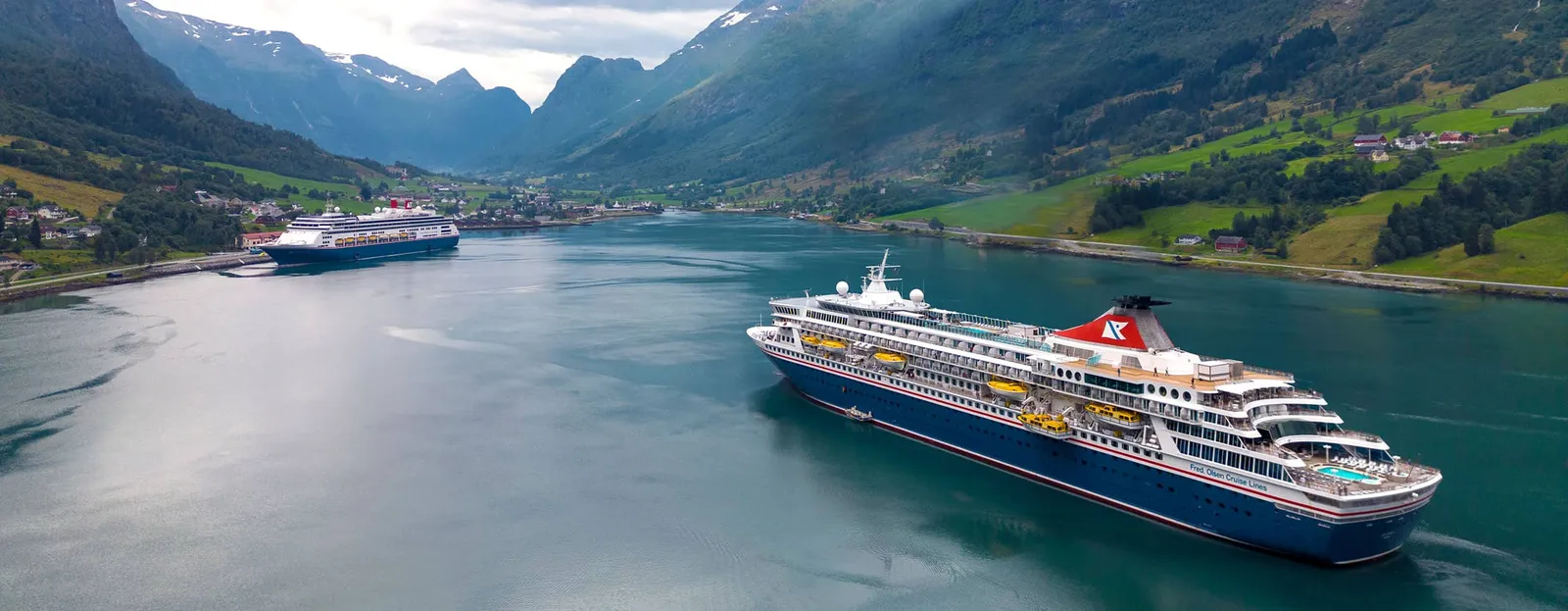
Fred. Olsen Cruise Lines traces its maritime heritage to 1848, when three Norwegian brothers established a shipping business on the shores of Oslofjord. More than 175 years and five generations of Olsen family ownership later, the company remains one of the last genuinely family-controlled cruise lines in the world. That Norwegian pedigree lends an authenticity to the brand that purely corporate competitors cannot replicate, and it is most visible in the line's deep expertise in Scandinavian waters, where smaller ships navigate fjords and coastal passages that larger vessels simply cannot reach.
Despite the Norwegian ownership, the onboard experience is thoroughly British. Fred. Olsen Cruise Lines Limited is headquartered in Ipswich, England, and the passenger base is approximately 95 per cent British. English is the sole language of service, the currency onboard is sterling, and the ships depart from UK ports — Southampton, Liverpool, Dover, Edinburgh, Newcastle, and several others. The fleet of three mid-size ships carries no more than 1,400 guests each, a deliberate choice that keeps the atmosphere intimate and the service noticeably personal. Borealis and Bolette, both former Holland America Line vessels acquired in 2020, brought a significant upgrade in ship quality and space ratios, while the adult-only designation on Borealis has given the line a distinct product within its own fleet. The result is a cruise experience that sits in an interesting position — categorised as mainstream by industry standards, but with service warmth, dining quality, and space-per-guest ratios that lean toward premium.
What makes Fred. Olsen distinctive is not any single headline feature but the combination of elements. Smaller ships accessing ports and waterways that larger vessels bypass. Wraparound promenade decks built for scenic cruising rather than poolside spectacle. A country-house atmosphere where conversation flows naturally and the crew know your name within a day or two. Over 150 dedicated solo cabins across the fleet. An itinerary range spanning one-night taster cruises to 100-night world voyages, all departing from UK ports without requiring a single flight. For the right traveller, it is a formula that inspires remarkable loyalty — repeat booking rates among the highest in the industry.
From January 2026, Fred. Olsen introduced significantly more inclusive pricing under the Freedom Fare, and the improvements are meaningful. The standard fare now covers full-board dining across all included restaurants, selected house wines, beers, and soft drinks with lunch and dinner, gratuities for all onboard staff, entertainment and enrichment programming, shuttle buses at ports more than a mile from the ship, complimentary guided walks ashore, and all port fees and taxes. The inclusion of mealtime beverages and gratuities is a notable step forward for a line at this price point, and it brings the day-to-day onboard experience closer to what passengers on more expensive lines receive.
What remains outside the fare is equally important to understand. Drinks outside mealtimes — the pre-dinner aperitif, the afternoon poolside beer, the nightcap — are not included and must be purchased individually or covered by an optional drinks package starting from around twenty-five pounds per person per night. Wi-Fi is paid separately and the speeds are adequate for email and social media but not for streaming or video calls. Speciality dining at Colours and Tastes carries a modest cover charge, and shore excursions, spa treatments, and laundry are all additional. For travellers who want everything wrapped into a single price, Saga offers a more comprehensive all-inclusive model, but for the Fred. Olsen demographic, the 2026 improvements have struck a sensible balance between value and flexibility.
Each ship features a main dining room serving a five-course a la carte menu each evening, with cuisine that blends reliable British favourites — roasts, fish and chips, traditional puddings — alongside international dishes that rotate to reflect the destinations being visited. The main restaurant operates with both open and assigned seating options, and on sailings of six nights or longer, a two-sitting dinner format applies. Breakfast and lunch are also served in the main restaurant, with a casual buffet venue (Palms Cafe or The View) available for lighter meals throughout the day. The buffet is largely staff-served from behind the counter rather than fully self-service, which keeps standards higher than the typical cruise ship free-for-all.
Beyond the main dining room, Colours and Tastes is the signature speciality restaurant across all three ships, offering rotating menus spanning gourmet grill, Italian, and Asian fusion cuisines. Bolette's version was completely transformed during a 2026 drydock with new global-inspired menus. Vasco, available on Bolette and Borealis, serves authentic Goan cuisine prepared by Goan chefs onboard — a distinctive and well-regarded addition that speaks to the line's willingness to do something different rather than defaulting to the standard steakhouse-and-Italian formula. The Chef's Table offers an intimate multicourse experience with paired wines for those wanting a special-occasion evening.
The honest assessment is that Fred. Olsen's food is a genuine strength relative to the price point. Reviewers consistently describe it as honest, well-prepared cooking with generous portions and a willingness to accommodate dietary requirements. It is not haute cuisine and does not pretend to be, but the main dining room delivers a level of quality that frequently exceeds passenger expectations. The one caveat is menu repetition on longer voyages, where the rotating selection can feel limited after two or three weeks — a common challenge for smaller fleets without the scale to support endless menu variation.
Fred. Olsen attracts a specific type of traveller, and understanding who that is matters more here than with most cruise lines. The typical passenger is British, aged between 55 and 80, well-travelled, and values quality, tradition, and destination access over onboard spectacle. Couples make up the majority, but there is a significant solo traveller contingent — around 15 to 20 per cent of guests — supported by the fleet's extensive solo cabin inventory and a dedicated social programme. The atmosphere is social without being forced. The smaller passenger numbers and communal dining create an environment where genuine friendships form naturally, and the extraordinary repeat booking rate means there is almost a members' club feel on many sailings.
The dress code reflects the traditional character. Daytime is casual, but evenings on cruises of six nights or longer include formal nights where the dining room dress code is taken seriously — men in dark suits or black tie, women in cocktail dresses or evening wear. It is not as regimented as Cunard, but guests who resent being told what to wear after six o'clock will find it restrictive. Entertainment has historically been Fred. Olsen's weakest area, though a 2025 partnership with RWS Global is refreshing the programming with new theatre productions and themed events rolling out across 2026. The enrichment programme, by contrast, is a genuine highlight — guest speakers, Journey Navigators covering nature, culture, history, and maritime heritage, and themed cruises built around specialist interests.
Who should not book Fred. Olsen? Families with young children — there are effectively no kids' facilities. Travellers under 50 seeking a vibrant social scene or late-night energy. Anyone wanting contemporary ship design, cutting-edge technology, or mega-ship attractions. Passengers expecting an international, cosmopolitan mix. If any of those describe you, look elsewhere. If what appeals is a traditional, intimate, genuinely friendly cruise on a classic ship with excellent food and destinations that reward rather than overwhelm, Fred. Olsen delivers that experience with a consistency that larger competitors struggle to match.
Fred. Olsen is a niche proposition for Australian travellers, and I want to be straightforward about that. The line has no Australian office, no Australian departures, and no AUD pricing — everything is priced in British pounds and sails from UK ports. The ships do not deploy to Australian waters, and the brand maintains no direct Australian sales presence. This is, by design, a British cruise line for the British market.
That said, there are practical scenarios where Fred. Olsen makes genuine sense for Australians. If you are spending time in the UK — visiting family, taking an extended holiday, or based there for part of the year — adding a Fred. Olsen cruise from Southampton, Liverpool, or Dover is a seamless way to experience the Norwegian Fjords, Canary Islands, or British Isles without the additional flights and transfers that a Mediterranean cruise from a European port would require. The world cruise, departing Southampton each January and running 80 to 106 nights, can be booked in sectors, allowing Australians to join for a portion of the voyage without committing to the full circumnavigation. For anyone with the time and inclination, the Norwegian Fjord itineraries in particular are worth the journey — the combination of smaller ships, Norwegian family heritage, and access to waterways that larger vessels cannot navigate creates an experience that no Australian-departing cruise line replicates.
Fred. Olsen sits above the mainstream mass-market lines on price but below the true premium tier. Entry-level interior cabins start from around eighty to one hundred and forty pounds per person per night depending on voyage length and season, with ocean view and balcony suites scaling upward from there. Short itineraries — particularly the popular Norwegian Fjord cruises — command higher per-diem rates, while longer voyages and world cruise sectors bring the daily cost down considerably. All pricing is in GBP, and exchange rate fluctuations are a genuine consideration for Australian travellers planning twelve or more months ahead.
The 2026 inclusive improvements have materially changed the value equation. With mealtime beverages and gratuities now built into the Freedom Fare, the gap between what you pay and what you actually spend onboard has narrowed meaningfully. Fred. Olsen is more expensive per night than P&O or Cunard at the Britannia level, but the smaller ships, better space ratios, and more intimate atmosphere represent a tangible upgrade in the cruising experience. Solo travellers booking dedicated single cabins receive strong value with no supplement, though those occupying twin cabins face a supplement that reviewers consistently describe as steep. Deposits are required at booking, with balance due typically 90 days before departure. Cancellation charges escalate from deposit-only at 91 days out to 100 per cent within 15 days. Saver Fares offer lower headline prices but are fully non-refundable from the moment of booking — an important detail that is easy to overlook.
Share your dates and preferences and we will come back with Fred. Olsen Cruise Lines cabin options, pricing, and insider tips.