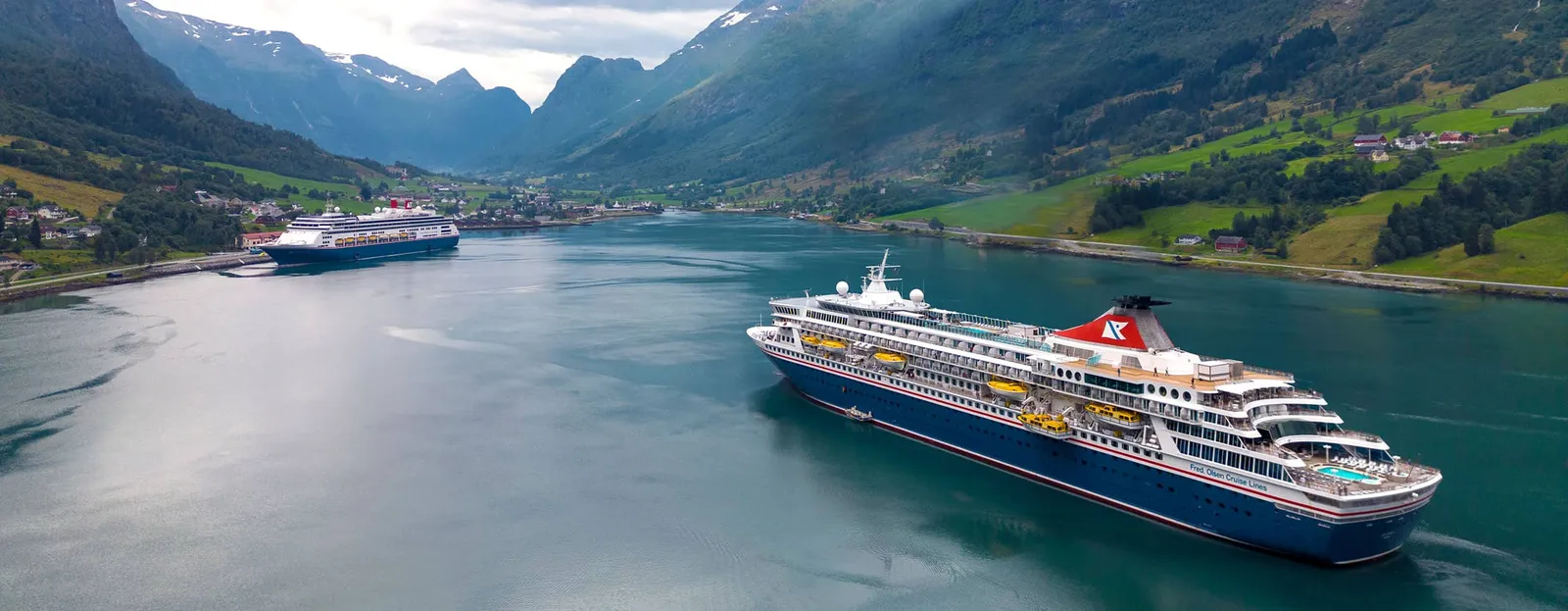
Fred. Olsen Cruise Lines and Royal Caribbean International sit at opposite ends of the mainstream cruise world — a three-ship traditional British line carrying 1,300 guests from UK ports, versus the world's largest cruise company with 29 mega-ships carrying over 5,000 passengers. Jake Hower compares both and explains why the choice matters differently for Australian travellers.
| Fred. Olsen Cruise Lines | Royal Caribbean International | |
|---|---|---|
| Category | Mainstream | Mainstream |
| Rating | ★★★★☆ | ★★★★☆ |
| Fleet size | 3 ships | 29 ships |
| Ship size | Mid-size (1,000-2,500) | Mega (4,000+) |
| Destinations | Northern Europe, Norwegian Fjords, Mediterranean, Canary Islands | Caribbean, Mediterranean, Alaska, South Pacific |
| Dress code | Smart casual | Resort casual |
| Best for | British travellers seeking scenic itineraries | Families and adventure seekers |
These lines are not competing for the same guest. Fred. Olsen is for mature British travellers who value traditional, unhurried cruising on smaller ships with personal service, enrichment programming, and the convenience of sailing from home ports. Royal Caribbean is for families, first-time cruisers, and anyone who wants a floating resort with boundless entertainment and global destination coverage. For Australians, Royal Caribbean is the overwhelming practical choice — it sails from Sydney, offers South Pacific itineraries, and delivers unmatched variety. Fred. Olsen makes sense only as part of a UK visit. If you are visiting Britain and want a fjord cruise, Fred. Olsen delivers beautifully. For everything else, Royal Caribbean's scale and accessibility win.
The core difference
Fred. Olsen Cruise Lines and Royal Caribbean International represent the widest gap in mainstream cruising — a comparison that illustrates not just different products but different conceptions of what a cruise holiday can be. One line operates three ships carrying no more than 1,300 guests each from UK ports. The other operates 29 ships — soon to be 30 — including the largest passenger vessels ever built, carrying over 5,000 guests across eight themed neighbourhoods at 250,000 gross tons.
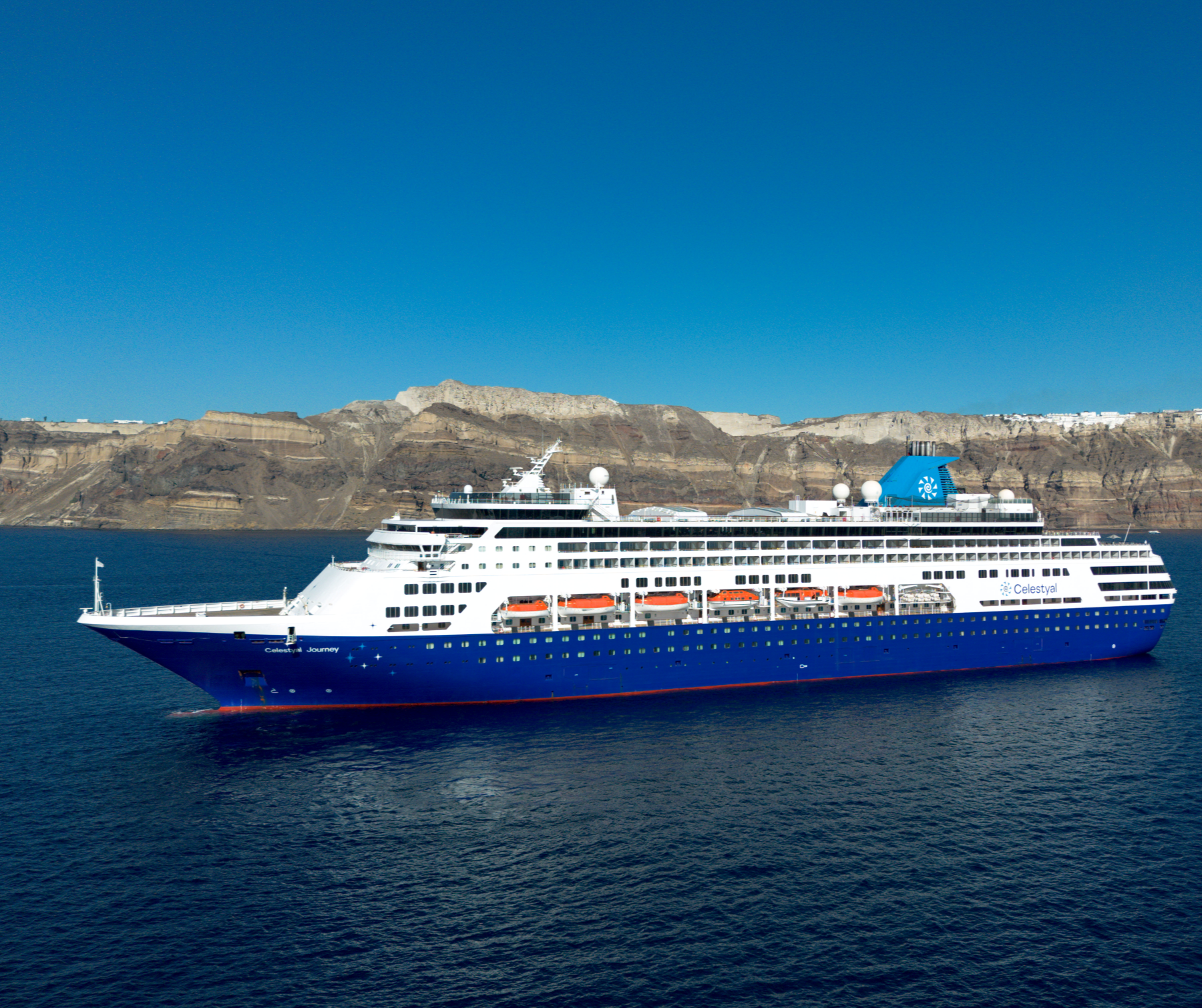
Fred. Olsen was founded in Norway in 1848 and operates as a traditional British cruise line. The fleet — Bolette, Borealis, and Balmoral — consists of older, classic ships with wraparound promenade decks, two-sitting dinners, enrichment lectures, and a country-house warmth. Borealis is adults-only. The fleet carries over 50 dedicated solo cabins. Sailings depart from UK ports — Southampton, Liverpool, Dover, Edinburgh — and the itinerary range spans Norwegian Fjords, Canary Islands, British Isles, Iceland, and Mediterranean to world cruise. The guest demographic is mature, British, and values scenic cruising and personal service above all else.
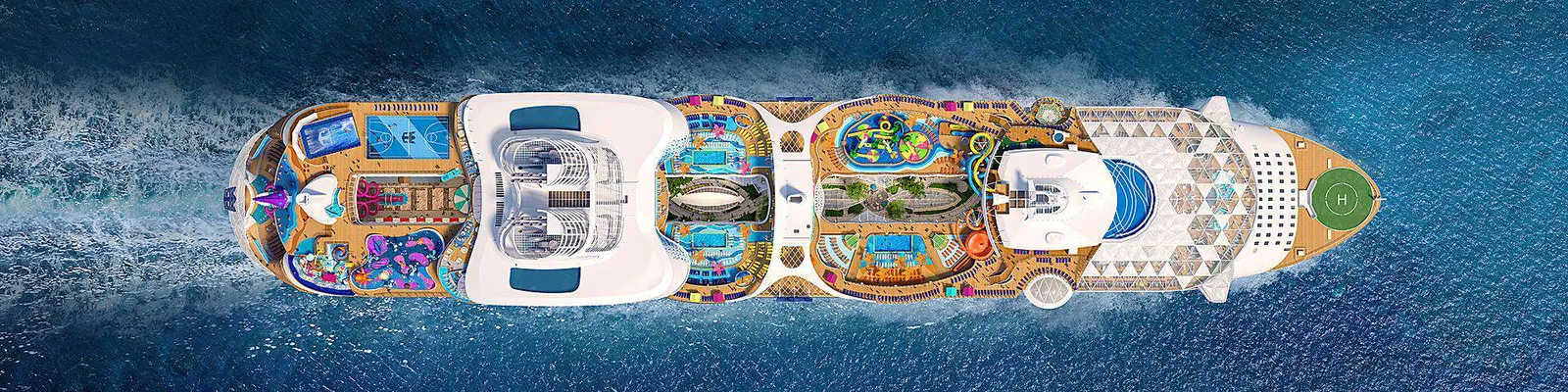
Royal Caribbean is the world’s largest cruise line, and its ambition is visible in every ship. Icon of the Seas and Star of the Seas top 250,000 gross tons with waterparks, surf simulators, rock climbing walls, zip lines, ice-skating rinks, and Central Park-style gardens. The Oasis class ships — Allure, Symphony, Wonder — remain among the most popular vessels afloat. The line sails everywhere from the Caribbean and Mediterranean to Alaska, the South Pacific, and Northern Europe, with private island experiences at Perfect Day at CocoCay. For families, Royal Caribbean is the gold standard, with Adventure Ocean kids’ programming that caters to every age group.
For Australian travellers, the comparison has a practical dimension that overrides almost everything else: Royal Caribbean sails from Sydney. Fred. Olsen does not sail from anywhere outside the United Kingdom. That single fact shapes the entire recommendation.
What is actually included
The inclusion models reflect different market strategies at different price points.
Fred. Olsen’s fare covers the cabin, all meals in the main dining rooms, and from 2026, drinks at mealtimes. Bar drinks outside meals, gratuities, shore excursions, spa treatments, and specialty dining are additional. Bar prices are notably lower than competitors. The ex-UK departure model means no airfare for British travellers — a significant saving.
Royal Caribbean’s base fare covers the cabin, meals in the main dining room, Windjammer Buffet, and select other complimentary venues, basic entertainment, and pool access. Drinks, Wi-Fi, specialty dining, gratuities, and shore excursions are additional. Royal Caribbean offers various add-on packages — the Deluxe Beverage Package typically runs USD $70 to $90 per person per day, and the Royal Up bidding system allows cabin upgrades at auction-style pricing. Gratuities are automatically charged at approximately USD $18 to $21 per person per day.
The total-cost comparison for Australians is instructive. A seven-night Royal Caribbean South Pacific cruise from Sydney in a balcony cabin with a drink package runs approximately AUD 2,500 to 4,000 per person — no flights needed. A seven-night Fred. Olsen cruise from Southampton costs roughly AUD 2,000 to 3,600 for the cruise, plus AUD 2,000 to 3,500 for return flights from Australia, plus drinks outside mealtimes and gratuities. For the same total spend, an Australian gets a mega-ship experience from their doorstep on Royal Caribbean, versus a traditional cruise that requires 24 hours of flying each way on Fred. Olsen.
Dining and culinary experience
The dining comparison is one of breadth versus depth, variety versus tradition.
Fred. Olsen serves meals in traditional dining rooms with two sittings and assigned tables. Menus blend British comfort food with regional dishes reflecting the ports being visited. Waiters learn your preferences over the voyage. The quality is honest and well-prepared — not award-winning, but consistently satisfying and served with genuine warmth. From 2026, mealtime drinks are included. The dining experience is social and structured, with the shared table and regular waiter creating a rhythm that builds relationships over the voyage.
Royal Caribbean offers a far broader dining programme. Complimentary options include the main dining room (with My Time Dining for flexible scheduling), Windjammer Buffet, and various casual eateries. Specialty restaurants — typically 8 to 15 per ship on newer vessels — include celebrity chef partnerships and cover Italian, steakhouse, Asian, seafood, and more, with supplements of roughly USD $30 to $80 per person. The Coastal Kitchen is reserved for suite guests. On Icon class ships, the dining programme spans eight neighbourhoods, each with its own culinary identity.
Fred. Olsen wins on personal dining service and the traditional cruise ship dinner experience. Royal Caribbean wins overwhelmingly on choice, variety, and the quality of specialty dining venues. Australian travellers who value a new restaurant experience every night will prefer Royal Caribbean. Those who value knowing their waiter and having a consistent, traditional dinner will prefer Fred. Olsen.
Suites and accommodation
The accommodation comparison spans the full range of what is possible in cruise ship design.
Fred. Olsen’s fleet offers cabins from inside singles to suites. Borealis and Bolette achieve space-per-guest ratios of 45.5 — spacious for their market segment. The 50-plus dedicated single cabins are purpose-built for solo travellers. Suites offer traditional layouts with separate living areas. Cabins are classic in style — comfortable, well-maintained, and unpretentious.
Royal Caribbean’s accommodation ranges from compact inside cabins to the Royal Suite Class — some of the most extravagant suites at sea. The Icon class ships feature the Ultimate Family Townhouse (a multi-level suite with a slide between floors), the Surfside neighbourhood for families, and suites spanning over 1,600 square feet. The Star Class suite experience includes a Royal Genie personal assistant, priority everything, and access to the exclusive Suite Sun Deck. Standard balcony cabins on Oasis and Icon class ships are well-designed and modern. Studio cabins for solo travellers are available on some ships.
Fred. Olsen’s solo cabins are superior to anything Royal Caribbean offers for single travellers — purpose-built and priced fairly. Royal Caribbean’s suite programme is in a different universe from Fred. Olsen’s, with accommodations that approach the scale and service of luxury hotels. For Australian travellers, Royal Caribbean’s cabin variety means there is something for every budget, from a budget inside cabin at AUD 150 per night to a Royal Suite at AUD 2,000 or more per night.
Pricing and value
The pricing comparison favours Royal Caribbean for Australian travellers, primarily because of departure port proximity.
Fred. Olsen’s seven-night sailings start from roughly GBP 1,000 to 1,800 per person — approximately AUD 2,000 to 3,600. The 108-night world cruise can exceed GBP 10,000 per person. Longer voyages and the adults-only Borealis command premium pricing. The value proposition for British travellers is the no-fly convenience from UK ports and the mealtime drinks inclusion from 2026.
Royal Caribbean’s pricing is competitive and varies enormously by ship, cabin, and season. Seven-night South Pacific cruises from Sydney start from approximately AUD 1,000 to 2,000 per person in an inside cabin, AUD 1,500 to 3,000 in a balcony. Mediterranean and Caribbean sailings from international ports are similarly competitive. Icon class ships command a premium. Three- and four-night getaways from Florida are among the best-value cruise experiences available anywhere.
For Australian travellers, the value equation is dominated by the flight question. Royal Caribbean’s Australian departures eliminate the single biggest cost variable — international airfare. A family of four can cruise the South Pacific from Sydney for roughly AUD 6,000 to 12,000 total. The same family attempting a Fred. Olsen cruise would spend AUD 8,000 to 14,000 on flights alone before the cruise fare. Royal Caribbean is not merely better value for Australians — it is in a completely different cost category for anyone sailing from local ports.
Spa and wellness
The spa and wellness comparison reflects the scale difference in every dimension.
Fred. Olsen offers traditional spa facilities on all three ships — treatment rooms, saunas, and fitness centres. The advantage is accessibility — on a ship of 1,300 guests, treatments are easy to book and the spa is never crowded. Facilities are basic but adequate.
Royal Caribbean operates the Vitality Spa across its fleet, with facilities that expand dramatically on newer ships. Icon of the Seas features a multi-deck spa with thermal suites, relaxation lounges, salon services, and a comprehensive treatment menu. The Solarium — an adults-only pool area with retractable roof on many ships — provides a wellness-oriented retreat. Fitness centres are large, modern, and offer a full class schedule. The scale of Royal Caribbean’s wellness offering dwarfs Fred. Olsen’s — the spa on a single Icon class ship is larger than all Fred. Olsen spa facilities combined.
Royal Caribbean wins on facilities, variety, and innovation. Fred. Olsen wins on the simple pleasure of a quiet spa where you do not need to book weeks in advance. For Australian travellers who prioritise onboard wellness, Royal Caribbean delivers at a level that Fred. Olsen’s older ships cannot approach.
Entertainment and enrichment
The entertainment comparison is perhaps the most dramatic contrast in this entire pairing.
Fred. Olsen offers enrichment lectures, scenic cruising commentary, modest production shows (refreshed through the RWS Global partnership), live music, quiz nights, and convivial bar evenings. The entertainment is the destination and the company of fellow guests. There are no waterslides, no rock walls, no Broadway shows, no laser tag. The programme is designed for guests who consider a stimulating lecture and a good conversation to be a perfect evening.
Royal Caribbean delivers entertainment on a scale that competes with shore-based theme parks and theatres. Icon of the Seas features the largest waterpark at sea, a surf simulator, rock climbing walls, a zip line, and an ice-skating rink. Broadway-calibre shows perform nightly — productions that cost millions to develop and rival West End and Broadway staging. AquaTheater shows combine diving, acrobatics, and water effects. Go-kart tracks, bumper cars, laser tag, escape rooms, and virtual reality experiences fill the days. The onboard programming never stops, and there is genuinely more to do on a single Royal Caribbean ship than in most regional towns.
This is not a comparison of better or worse — it is a comparison of fundamentally different philosophies. Fred. Olsen’s enrichment rewards the mind. Royal Caribbean’s entertainment rewards the senses. Australian families will overwhelmingly prefer Royal Caribbean. Retired couples visiting the UK who want to cruise the fjords may well prefer Fred. Olsen’s gentler approach. Both deliver exactly what they promise.
Fleet and destination coverage
The fleet comparison is not competitive — Royal Caribbean operates in a different league entirely.
Fred. Olsen operates three ships — Bolette (1,360 guests), Borealis (1,360 guests, adults-only), and Balmoral (1,325 guests) — from UK ports. Despite the small fleet, itineraries span Norwegian Fjords, Canary Islands, British Isles, Iceland, Mediterranean, and world cruise. The mid-size ships access smaller ports. All departures are from UK ports.
Royal Caribbean operates 29 ships — soon to be 30 — across every major cruise region. The fleet spans five classes from the mid-size Radiance class to the Icon class mega-ships. Destinations include the Caribbean, Mediterranean, Alaska, Northern Europe, South Pacific, Asia, Australia, and New Zealand. Private island experiences at Perfect Day at CocoCay and Labadee add exclusive destinations. The line offers over 300 destinations across 100 countries.
For Australian travellers, Royal Caribbean’s Australian deployment is the decisive advantage. Ships sail from Sydney on South Pacific and New Zealand itineraries, offering domestic departures that Fred. Olsen cannot match. Beyond Australian waters, Royal Caribbean’s global coverage means an Australian can fly to almost any major port city in the world and find a Royal Caribbean ship waiting. Fred. Olsen offers UK-departure cruises only.
Where each line excels
Fred. Olsen excels in:
Traditional, personal cruising where crew know your name. The adults-only Borealis delivers a quieter, more refined experience than anything on Royal Caribbean outside the suite-class programme. Over 50 dedicated solo cabins and a structured programme make this among the best mainstream lines for single travellers. Norwegian Fjords itineraries from UK ports carry genuine Norwegian heritage. Enrichment programming rewards intellectually curious guests. The no-fly ex-UK model is genuinely valuable for British travellers. And the intimate scale — 1,300 guests maximum — creates a community atmosphere that no mega-ship can replicate.
Royal Caribbean excels in:
Everything that scale enables. The broadest entertainment offering in cruising, from Broadway shows to waterparks to surf simulators. The deepest dining programme, with up to 15 specialty restaurants per ship. Family facilities that set the industry standard. Global destination coverage across 29 ships. Australian departures from Sydney. Private island experiences. Suite-class accommodation that approaches luxury hotel standards. And pricing that, from Australian ports, delivers extraordinary value per dollar for the sheer volume of experience included.
Standout itineraries for Australian travellers
Fred. Olsen
Borealis: Norwegian Fjords from Southampton (7-14 nights, multiple departures) — The signature Fred. Olsen experience. Adults-only Borealis sails from Southampton into Norwegian fjords on the most authentic fjord cruising programme from any UK departure port. Mid-size ships access narrow channels that Royal Caribbean’s mega-ships cannot enter. For Australians visiting the UK, this is the standout Fred. Olsen experience. Fly to London, train to Southampton.
Bolette: Iceland and Northern Lights (14 nights, ex-Liverpool or Dover) — Fred. Olsen’s Iceland programme covers Reykjavik, Akureyri, and the Westfjords on ships small enough for intimate port access. Enrichment lectures provide context for the dramatic landscapes. A unique add-on for Australians with a fortnight to spare during a UK visit.
Royal Caribbean
Ovation of the Seas or Quantum of the Seas: South Pacific from Sydney (7-12 nights, seasonal) — Royal Caribbean’s Australian deployment offers South Pacific island-hopping, New Zealand, and repositioning itineraries from Sydney. No flights required. The Quantum class ships deliver the full Royal Caribbean experience — surf simulators, RipCord by iFLY skydiving, SeaPlex entertainment complex, and multiple specialty restaurants. This is the most accessible Royal Caribbean experience for Australians.
Icon of the Seas: Caribbean from Miami (7 nights, year-round) — The largest cruise ship ever built, featuring eight neighbourhoods, the largest waterpark at sea, and entertainment that redefines what is possible on a vessel. The ultimate Royal Caribbean experience for Australians willing to fly to Miami. Fly from Sydney via Dallas, Los Angeles, or Houston.
Voyager or Explorer of the Seas: Mediterranean (7-12 nights, Barcelona or Rome, seasonal) — The mid-size Voyager class ships offer a balanced Royal Caribbean experience with less intensity than the mega-ships. Mediterranean itineraries from Barcelona or Rome suit Australians wanting a European cruise without the overwhelming scale of the Icon class.
Ship-by-ship recommendations
Fred. Olsen
Borealis (1,360 guests, adults-only) — The flagship. Adults-only atmosphere, the best space-per-guest ratio, and dedicated solo cabins. Choose for Norwegian Fjords and scenic itineraries where the quiet environment enhances the destination.
Bolette (1,360 guests) — Same hardware as Borealis, open to all ages. Choose for family-inclusive sailings or itineraries Borealis does not cover.
Balmoral (1,325 guests) — The older ship with a loyal following. Choose when itinerary is the priority.
Royal Caribbean
Icon of the Seas (5,610 guests, 2024) — The largest and newest. Eight neighbourhoods, the biggest waterpark at sea, and the most complete Royal Caribbean experience. Choose for the ultimate mega-ship holiday.
Ovation of the Seas (4,905 guests) — The Quantum class ship most frequently deployed to Australia. RipCord by iFLY, North Star observation capsule, and SeaPlex. Choose for Australian departures.
Symphony of the Seas or Wonder of the Seas (5,518-5,734 guests) — Oasis class ships delivering the proven Royal Caribbean mega-ship formula at slightly lower pricing than the Icon class. Choose for Caribbean and Mediterranean at the best value.
Voyager or Explorer of the Seas (3,114-3,286 guests) — The mid-size options in the fleet. Less overwhelming than the mega-ships, with surf simulators and solid entertainment. Choose for travellers who want the Royal Caribbean brand without the largest-ship intensity.
For Australian travellers specifically
The Australian perspective on this comparison has one overriding factor: Royal Caribbean sails from Sydney.
Royal Caribbean’s Australian deployment means Australians can board a world-class cruise ship without setting foot in an airport. South Pacific and New Zealand itineraries depart from Sydney with the full Royal Caribbean entertainment and dining programme aboard Quantum class ships. The line maintains dedicated Australian sales and marketing, AUD pricing, and strong travel agent support. The Crown and Anchor Society loyalty programme functions globally and is well-supported in Australia.
Fred. Olsen has no Australian presence whatsoever. No Australian departures, no local sales representation, no AUD pricing. Every Fred. Olsen cruise requires flying to the UK — typically 22 to 24 hours and AUD 2,000 to 3,500 per person — before even reaching the departure port. The line is designed for British travellers sailing from British ports, and its appeal to Australians is limited to those already visiting the UK.
The practical recommendation for most Australians is unambiguous: Royal Caribbean delivers more entertainment, more dining variety, more destination choice, and far lower total cost when sailing from local ports. A family of four spending AUD 10,000 on Royal Caribbean from Sydney gets a week of waterparks, Broadway shows, and Pacific islands. The same AUD 10,000 on Fred. Olsen barely covers the flights.
However, the specific Australian traveller visiting Britain who wants a traditional, quiet, scenic cruise from UK ports — particularly to the Norwegian Fjords — should genuinely consider Fred. Olsen. The experience is entirely different from Royal Caribbean, and that difference is the point. Borealis’s adults-only fjord sailings offer an intimacy and authenticity that no Royal Caribbean mega-ship can match in those waters. The 50-plus solo cabins are relevant for Australian solo travellers visiting the UK. And the old-school British cruise ship atmosphere appeals to a specific type of traveller who finds mega-ships exhausting rather than exhilarating.
The onboard atmosphere
The atmospheric contrast could not be more extreme.
Fred. Olsen’s atmosphere is village-scale traditional British cruising. With a maximum of 1,360 guests, the ship feels like a community. The average guest is retired, British, and values quiet pleasures — a book on the promenade deck, a lecture on fjord geology, a conversation over a pre-dinner drink. Evenings are gentle, dress code is smart casual, and the pace of life aboard is deliberately unhurried. There are no crowds, no queues for entertainment, and no competition for sun loungers. The social dynamic is warm and inclusive, particularly for solo travellers.
Royal Caribbean’s atmosphere is resort-scale international cruising. With 3,000 to 5,000-plus guests, the ship is a floating city with distinct neighbourhoods, each offering a different vibe. Families dominate during school holidays, with children visible and audible throughout the ship. The energy level is high — pool parties, live music, Broadway shows, and late-night clubs run simultaneously. The Solarium provides an adults-only quiet zone. Suite-class guests can retreat to exclusive areas. The atmosphere is diverse, vibrant, and occasionally overwhelming in the best holiday tradition.
Australian travellers will find Royal Caribbean’s atmosphere immediately familiar — similar in energy and diversity to P&O Australia, though on a much larger scale. Fred. Olsen will feel like stepping into a different world — smaller, quieter, older in demographic, and distinctly British in character. Both deliver exactly what they promise to the audience they serve.
The bottom line
Fred. Olsen and Royal Caribbean are not competitors. They are different answers to different questions about what a cruise should be. Fred. Olsen asks: what if a cruise were an intimate, enriching, scenic voyage on a smaller ship where everyone knows your name? Royal Caribbean asks: what if a cruise were the most ambitious, entertaining, and varied holiday experience available at any price?
Choose Fred. Olsen for traditional British cruising on smaller ships with personal service, enrichment programming, and the best solo cabin provision in mainstream cruising. Choose it for adults-only tranquillity on Borealis, for Norwegian Fjords with authentic Norwegian heritage, and for the experience of sailing from UK ports at an unhurried pace. Accept that ships are older, entertainment is modest, and the line is practical for Australians only as part of a UK visit.
Choose Royal Caribbean for the broadest, most innovative cruise experience available. Choose it for Australian departures from Sydney, for family holidays with waterparks and Broadway shows, for global destination coverage across 29 ships, and for the sheer ambition of ships like Icon of the Seas. Choose it for the best value per dollar from Australian ports. Accept that ships carry thousands of guests, that the atmosphere is high-energy, and that intimacy comes only at the suite-class level.
For most Australian travellers, Royal Caribbean is the practical, value-driven recommendation. For the Australian traveller visiting Britain who craves the antithesis of a mega-ship — a quiet, scenic, traditional voyage on a 1,360-guest ship through Norwegian fjords — Fred. Olsen delivers an experience that Royal Caribbean’s largest vessels make literally impossible. Both are excellent at what they do. They simply do very, very different things.