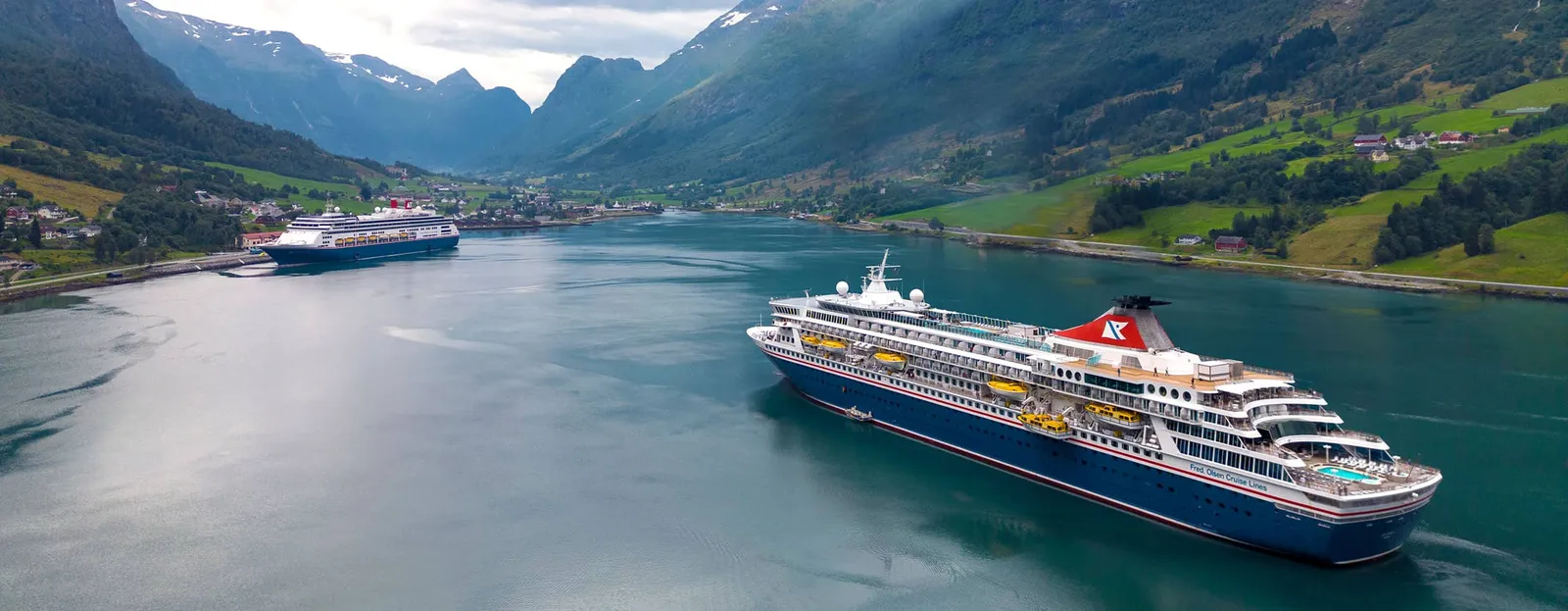
Fred. Olsen and Marella Cruises both serve the British cruise market with mid-size ships, but one is a traditional, Norwegian-owned line sailing from UK ports with a loyal older following, and the other is TUI's all-inclusive holiday brand with flights bundled in. Jake Hower compares what each delivers and whether either makes sense for Australian travellers.
| Fred. Olsen Cruise Lines | Marella Cruises | |
|---|---|---|
| Category | Mainstream | Mainstream |
| Rating | ★★★★☆ | ★★★★☆ |
| Fleet size | 3 ships | 5 ships |
| Ship size | Mid-size (1,000-2,500) | Mid to Large (1,800–2,200) |
| Destinations | Northern Europe, Norwegian Fjords, Mediterranean, Canary Islands | Mediterranean, Caribbean, Canary Islands |
| Dress code | Smart casual | Smart casual |
| Best for | British travellers seeking scenic itineraries | All-inclusive British holiday cruisers |
These are two distinctly British cruise lines that rarely appear on Australian radar, and honestly, neither should be a first choice for travellers flying from Sydney or Melbourne. Fred. Olsen suits mature British travellers who value scenic itineraries, solo-friendly cabins, and sailing from their doorstep without flying. Marella suits budget-conscious British holidaymakers who want everything included with no surprises. For Australians specifically, neither line offers local departures or dedicated Australian representation. If you find yourself in the UK and want a short cruise, Fred. Olsen delivers the more refined experience; Marella delivers the better value all-inclusive package.
The core difference
Fred. Olsen Cruise Lines and Marella Cruises both serve the British cruise market, and both operate mid-size ships that feel manageable compared to the mega-ships dominating the industry. But the similarities largely end there. These are fundamentally different propositions — one is a traditional cruise line with Norwegian heritage and a loyal following of mature British travellers, the other is a mass-market holiday brand owned by TUI that happens to deliver its holidays on ships rather than in hotels.
Fred. Olsen is the older, more traditional operator. Founded in Norway in 1848 and still Norwegian-owned, it operates three ships — Bolette, Borealis, and Balmoral — carrying no more than 1,300 guests each. The line sails almost exclusively from UK ports, offering a no-fly proposition that appeals to British travellers who dislike airports. The atmosphere is country-house warmth: wraparound promenade decks, two-sitting dinners, enrichment lectures, and a pace of life that rewards patience over excitement. Borealis is now adults-only, and the fleet boasts over 50 dedicated solo cabins — a genuine differentiator in the industry.
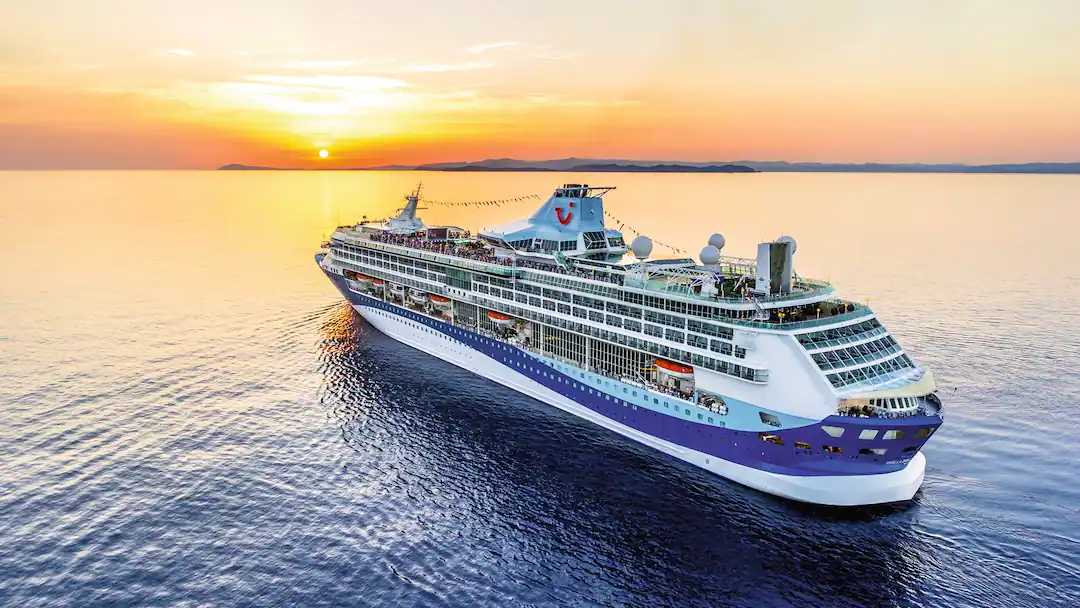
Marella Cruises is TUI UK’s cruise division, formerly Thomson Cruises, rebranded in 2017. It operates five ships — Discovery, Discovery 2, Explorer, Explorer 2, and Voyager — and the entire proposition is built around all-inclusive simplicity. Flights from 22 regional UK airports, all meals, selected drinks, entertainment, and gratuities are bundled into a single price. There is no bill to settle at the end of the voyage. The ships are older vessels acquired and refurbished rather than purpose-built, but TUI keeps them in reasonable condition and the pricing undercuts most competitors significantly.
For Australian travellers, neither line has meaningful local relevance. Both are UK-focused, both sail from British ports, and neither offers Australian departures or dedicated Australian sales teams. This is a comparison that matters primarily if you are visiting the UK and considering a cruise as part of a broader trip, or if you are an expat with ties to the British cruise market.
What is actually included
The inclusion models are fundamentally different and reveal different philosophies about what a cruise fare should cover.
Marella’s all-inclusive model is the more comprehensive of the two. The fare covers return flights from 22 regional UK airports, transfers, all meals in the main restaurants, selected alcoholic and non-alcoholic drinks throughout the day, entertainment, kids’ clubs, and gratuities. The only meaningful extras are specialty dining upgrades, premium drinks beyond the included selection, spa treatments, and shore excursions. For budget-conscious travellers, the appeal is genuine transparency — the price you see is very close to the price you pay.
Fred. Olsen’s fare covers the cabin, all meals in the main restaurants, and, from 2026, drinks at mealtimes — a meaningful addition that narrows the gap with Marella. However, drinks outside mealtimes, flights, transfers, gratuities, specialty dining, and shore excursions remain additional. Bar prices aboard Fred. Olsen are notably lower than many competitors, which softens the impact, but the total cost is less predictable than Marella’s bundled approach.
For an Australian traveller, neither line’s inclusion model is straightforward. Marella’s bundled flights are from UK airports only — useless if you are flying from Sydney. Fred. Olsen’s ex-UK sailing model means you need to arrange your own travel to Southampton, Liverpool, or Dover. In both cases, the international airfare from Australia to the UK will likely exceed the cost of the cruise itself, making these options practical only as add-ons to a broader UK visit.
Dining and culinary experience
Dining aboard these lines reflects their different market positions — one aspiring to traditional cruise ship standards, the other delivering reliable holiday fare.
Fred. Olsen has quietly improved its culinary offering in recent years. The main dining rooms serve a mix of British favourites and regional dishes reflecting the destinations being visited — expect Norwegian salmon on fjord sailings and Mediterranean-influenced menus in the Med. Two-sitting dinner remains the norm, lending a traditional structure to evenings. Specialty dining options exist but are modest compared to larger lines. The quality is honest rather than exceptional — well-prepared comfort food with occasional flourishes, served by attentive staff in classic dining room settings.
Marella has invested in dining through the 2025 launch of Piccadilly’s, a complimentary 250-seat gastropub restaurant rolled out across the entire fleet. This serves traditional British comfort food from early morning through evening and has been well received. The main buffet and dining room offerings are standard all-inclusive fare — adequate and plentiful, though unlikely to win culinary awards. Explorer 2’s adults-only Dining Club offers a more refined experience with a la carte menus and a quieter atmosphere.
Neither line will satisfy serious food enthusiasts accustomed to the culinary programmes of premium or luxury cruise lines. Fred. Olsen’s dining is the more traditional and slightly more polished of the two. Marella’s dining is more casual and quantity-focused. Both deliver perfectly acceptable meals that suit their respective markets without challenging them.
Suites and accommodation
The accommodation comparison reveals the practical realities of operating older, refurbished ships.
Fred. Olsen’s fleet offers a range from inside cabins to suites, with the former Holland America vessels Borealis and Bolette providing notably better space-per-guest ratios than the older Balmoral. Borealis achieves a ratio of 45.5 — genuinely spacious for a mid-market line. The ships retain classic cruise ship cabin layouts with traditional furnishings. The standout feature is the fleet’s 50-plus dedicated single cabins, purpose-built for solo travellers rather than doubles sold at a premium. Suite options are available but modest compared to luxury lines.
Marella’s ships offer standard cabin categories from inside to balcony and suite, with accommodation that is functional rather than luxurious. The ships were designed for different operators and have been adapted to Marella’s requirements — cabin sizes vary across the fleet. Explorer 2’s adults-only positioning means a generally quieter, more refined cabin experience, while the Discovery ships cater to families with interconnecting options.
Neither line competes on accommodation quality with the premium or luxury segment. Fred. Olsen offers the more characterful cabin experience with its classic ship interiors. Marella offers the more standardised holiday-hotel feel. For Australian travellers accustomed to P&O Australia or Royal Caribbean, both will feel somewhat dated but perfectly serviceable.
Pricing and value
Pricing is where the comparison becomes most interesting, though the Australian context adds complexity.
Marella is consistently one of the cheapest ways to cruise from the UK. A seven-night Mediterranean fly-cruise including flights, all meals, drinks, and gratuities can start from as little as GBP 800 to 1,200 per person — roughly AUD 1,600 to 2,400. This is genuine value that few competitors can match at the same level of inclusion. The catch for Australians is that these prices assume UK departure, and the bundled flights cannot be substituted for Australian connections.
Fred. Olsen sits slightly higher in pricing, with seven-night ex-UK sailings typically starting from GBP 1,000 to 1,800 per person — roughly AUD 2,000 to 3,600 — before drinks outside mealtimes and gratuities. The longer expedition-style voyages and world cruises command significantly more. Fred. Olsen’s value proposition is not rock-bottom pricing but rather the quality of itineraries and the no-fly convenience from UK ports.
For Australians, the total cost calculation must include return flights to the UK — typically AUD 2,000 to 3,500 per person — which fundamentally changes the value equation. A Marella Mediterranean cruise that costs GBP 900 all-inclusive from Manchester becomes AUD 4,400 or more once you add international airfare. At that price point, Australian travellers have access to far more compelling options sailing from closer to home.
Spa and wellness
Spa and wellness facilities on both lines are functional rather than destination-worthy.
Fred. Olsen offers spa facilities on all three ships with treatment rooms, saunas, and fitness centres. The offerings are traditional — massages, facials, body treatments — without the elaborate thermal suites or hydrotherapy pools found on newer ships. The smaller ship size means the spa is rarely crowded, and treatments can often be booked at short notice.
Marella provides spa services across the fleet with similar treatment menus. The newer Voyager offers the most modern facilities, while the older Discovery ships have more basic spa areas. Fitness centres are available on all ships with standard gym equipment and occasional fitness classes.
Neither line should be chosen for its wellness programme. Australians seeking a spa-focused cruise experience would be far better served by lines with purpose-built wellness facilities. However, for a relaxing massage after a day exploring a Norwegian fjord or Mediterranean port, both lines deliver adequately.
Entertainment and enrichment
The entertainment philosophies diverge noticeably, reflecting the different audiences each line serves.
Fred. Olsen leans heavily toward enrichment over entertainment. Guest speakers deliver lectures on history, nature, and destinations. Scenic cruising is treated as an event in itself, with commentary provided during fjord passages and coastal sailings. Evening entertainment includes shows in the main theatre, live music, and quiz nights, but the pace is gentle and the atmosphere conversational. A new partnership with RWS Global is refreshing the production shows, though Fred. Olsen will never attempt Broadway-scale productions. The bar is where the real evening entertainment happens — convivial, sociable, and unpretentious.
Marella offers a more familiar mainstream entertainment programme with West End-style shows, live bands, quiz nights, comedians, and themed party nights. The atmosphere is holiday-camp sociable — think karaoke nights, poolside entertainment, and family-friendly activities during the day. Explorer 2’s adults-only programme is more refined, with cocktail-making classes and acoustic sets replacing the family-oriented activities.
Fred. Olsen’s enrichment programme is the clear winner for intellectually curious travellers. Marella’s entertainment is the better fit for holidaymakers who want to be actively entertained. Neither line competes with the production values of Royal Caribbean, NCL, or MSC.
Fleet and destination coverage
The fleet and itinerary range reveals Fred. Olsen’s surprisingly ambitious programming for a three-ship line.
Fred. Olsen operates three ships — Bolette (1,360 guests), Borealis (1,360 guests, adults-only), and Balmoral (1,325 guests) — but programmes them across an impressive range of destinations. Sailings span from 1-night tasters to the 108-night world voyage, covering Norwegian Fjords, Canary Islands, British Isles, Iceland, Mediterranean, Caribbean, and expedition-style voyages to remote destinations. The ships’ mid-size dimensions allow access to ports that larger vessels cannot reach. All sailings depart from UK ports — Southampton, Liverpool, Dover, and Edinburgh — eliminating the need for flights.
Marella operates five ships — Discovery (1,830 guests), Discovery 2 (1,836 guests), Explorer (1,924 guests), Explorer 2 (1,814 guests, adults-only), and Voyager (2,198 guests) — focused on sun destinations. Mediterranean, Canary Islands, Caribbean, and North Africa dominate the programme, with itineraries typically running 7 to 14 nights. All sailings include flights from UK airports, with embarkation at the destination port.
Fred. Olsen’s destination range is genuinely more diverse and adventurous. Marella’s programme is more focused on reliable sun-and-sea holidays. Neither line sails in Australian waters or the South Pacific.
Where each line excels
Fred. Olsen excels in:
Traditional British cruising with a personal touch. The ships are small enough that crew recognise you by name within days. The enrichment programme rewards curious minds. The no-fly ex-UK model is unbeatable for British travellers who dislike airports. The 50-plus solo cabins and dedicated solo programme make this one of the best mainstream lines for single travellers. The adults-only Borealis offers a quieter, more refined experience. And the itinerary range — from overnight tasters to 108-night world voyages — is remarkable for a three-ship fleet.
Marella excels in:
Value and simplicity. The all-inclusive pricing that bundles flights, meals, drinks, and gratuities removes virtually all financial uncertainty. First-time cruisers appreciate knowing exactly what they will pay before boarding. The adults-only Explorer 2 is a genuine hidden gem for couples wanting a grown-up atmosphere without premium pricing. And the TUI booking ecosystem allows seamless bundling with pre-cruise hotels, transfers, and travel insurance.
Standout itineraries for Australian travellers
Fred. Olsen
Borealis: Norwegian Fjords from Southampton (7-14 nights, multiple departures) — Fred. Olsen’s signature itinerary and the one most likely to interest Australian visitors to the UK. The adults-only Borealis sails from Southampton into the Norwegian fjords, with the line’s Norwegian heritage lending genuine authenticity to the experience. Mid-size ships access narrower fjord channels that mega-ships cannot enter. If you are visiting the UK and want a fjord cruise without flying to Norway, this is ideal. Fly to London from Australian gateways, take the train to Southampton.
Bolette: Iceland and the Land of the Northern Lights (14 nights, ex-Liverpool) — Fred. Olsen’s Iceland sailings are among the best-value ways to experience the North Atlantic. The longer duration allows proper exploration, and the enrichment programme provides excellent context for the landscapes. For Australians with two weeks to spare during a UK visit, this is a compelling option.
Marella
Explorer 2: Mediterranean from Palma (7 nights, multiple departures) — The adults-only ship sailing the western Mediterranean offers the most refined Marella experience. Fly-cruise from the UK includes flights to Mallorca, but Australians could book flights to Palma independently and join the cruise portside. Seven nights visiting Italian and French Riviera ports at all-inclusive pricing.
Voyager: Canary Islands from Tenerife (7 nights, year-round) — Marella’s newest ship on a year-round sunny itinerary. The Canary Islands offer warm weather, volcanic landscapes, and easy access. Like the Mediterranean option, Australians would need to arrange independent flights to Tenerife.
Ship-by-ship recommendations
Fred. Olsen
Borealis (1,360 guests, former Holland America Borealis, adults-only) — The flagship choice. Adults-only status means a quieter, more refined atmosphere. The space-per-guest ratio of 45.5 is excellent for a mid-market ship. Wraparound promenade deck, traditional two-sitting dining, and dedicated solo cabins. Choose for Norwegian Fjords and scenic itineraries where the adults-only atmosphere complements the destination.
Bolette (1,360 guests, former Holland America Rotterdam) — Borealis’s sister ship with the same generous public spaces but open to all ages. Choose for the same quality of ship when travelling with family or when Borealis itineraries do not suit.
Balmoral (1,325 guests) — The older ship in the fleet with a lower space-per-guest ratio but a loyal following. Choose when the itinerary is the priority and Balmoral sails where the others do not.
Marella
Explorer 2 (1,814 guests, adults-only) — The standout Marella ship. Adults-only atmosphere, The Dining Club restaurant, and cocktail bars that feel a step above the fleet. Choose for the most refined Marella experience.
Voyager (2,198 guests, former Mein Schiff Herz) — The newest and largest ship in the fleet with the most modern facilities. Choose for the best hardware and broadest onboard amenities.
Discovery and Discovery 2 — The family-oriented ships with kids’ clubs, rock climbing walls, and escape rooms. Choose for family holidays.
For Australian travellers specifically
This is a comparison where honesty is more useful than salesmanship. Neither Fred. Olsen nor Marella is a natural fit for Australian travellers, and recommending either as a primary cruise choice from Australia would be misleading.
Both lines are designed specifically for the British market. Fred. Olsen sails from UK ports to destinations that British travellers want to visit from their doorstep. Marella bundles UK airport flights into its pricing model. Neither has Australian departures, Australian sales representation, or itineraries designed with Australian travellers in mind. The flight from Sydney to London alone — 22 to 24 hours and AUD 2,000 to 3,500 — makes either line an expensive proposition relative to what is available closer to home.
That said, there are specific scenarios where these lines make sense for Australians. If you are visiting family in the UK and want to add a cruise to your trip, Fred. Olsen’s ex-UK sailings require no additional flights. If you are an Australian expat in Britain, Marella’s all-inclusive value is hard to beat. And if you are a solo traveller visiting the UK, Fred. Olsen’s 50-plus dedicated solo cabins and structured social programme are among the best in mainstream cruising.
The loyalty programmes on both lines are standalone with no cross-brand recognition relevant to Australian programmes. Neither line offers AUD pricing, and booking is typically through UK-based agents. Australian specialist cruise agents like Pan Australian Travel can assist with arrangements, but the practical barriers remain — these are UK products best enjoyed from the UK.
The onboard atmosphere
The atmospheric difference between these lines is generational and cultural, and it matters more than the brochures suggest.
Fred. Olsen’s atmosphere is genteel, traditional, and unmistakably British in the classic sense. The average guest age is higher than most mainstream lines — predominantly retirees and mature couples with time for longer voyages. Conversation over dinner is expected and welcomed. The enrichment programme creates shared talking points. The bar in the evening is convivial without being rowdy. Dress code is smart casual, interpreted conservatively — you will see jackets at dinner, though they are not required. The pace is unhurried, the service is warm, and the overall feeling is of a well-run country house that happens to float.
Marella’s atmosphere is holiday-resort sociable — livelier, younger on average, and oriented around fun rather than refinement. Families set the daytime tone on most ships, with poolside entertainment, kids’ activities, and a general buzz of holiday energy. Evenings are themed party nights, karaoke, and West End shows. Explorer 2 breaks the mould with its adults-only calm, but the broader fleet is firmly in holiday-camp territory. Dress code is relaxed to the point of near-irrelevance.
For Australian travellers accustomed to P&O Australia’s casual atmosphere, Marella will feel familiar though more overtly British. Fred. Olsen will feel a step more formal and significantly quieter. Neither matches the energy of American-style cruise lines or the sophistication of premium lines sailing from Australian ports.
The bottom line
Fred. Olsen and Marella serve the same national market but fundamentally different travel philosophies. Fred. Olsen is for the British traveller who sees a cruise as a voyage — scenic, enriching, unhurried, and departing from home soil. Marella is for the British traveller who sees a cruise as a holiday — sunny, affordable, all-inclusive, and hassle-free.
Choose Fred. Olsen for traditional cruising with character, scenic itineraries through fjords and the North Atlantic, the best solo cabin programme in mainstream cruising, and the adults-only refinement of Borealis. Accept that ships are older, dining is honest rather than exceptional, and the pace suits those who find modern mega-ships overwhelming.
Choose Marella for all-inclusive value that is hard to beat in the British market, a transparent pricing model with no end-of-cruise surprises, and a holiday atmosphere that works for families and first-time cruisers. Accept that ships are refurbished rather than new, culinary ambitions are modest, and the experience is designed for relaxation rather than enrichment.
For Australian travellers, these are lines to consider as part of a UK visit rather than a standalone cruise holiday. The distance, the cost of flights, and the lack of local presence make both lines impractical as primary options for Australians who have Royal Caribbean, Norwegian, MSC, and others sailing from their own waters. But for the right circumstance — a UK family visit, an expat booking, a solo traveller’s fjord adventure — both deliver genuine value within their respective niches.