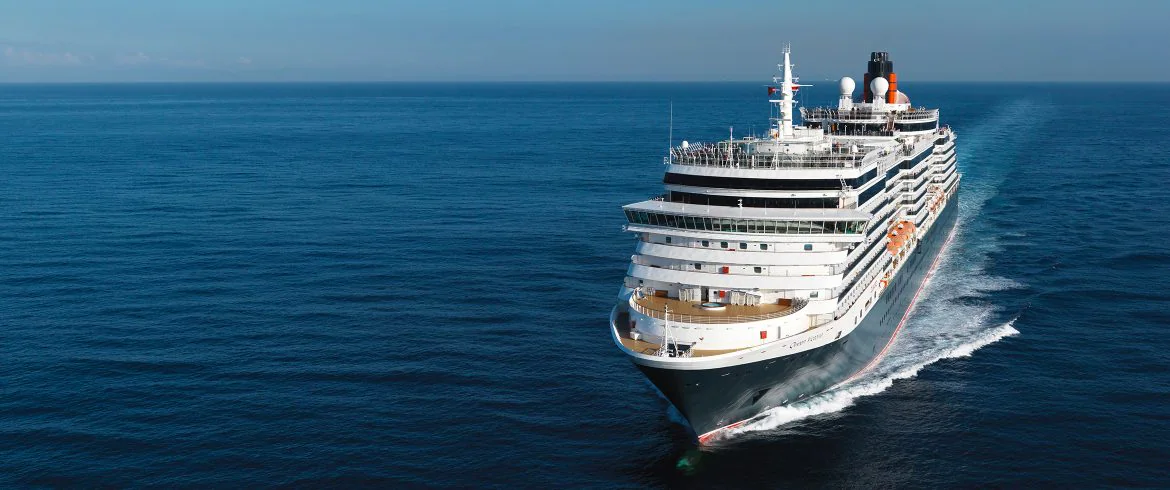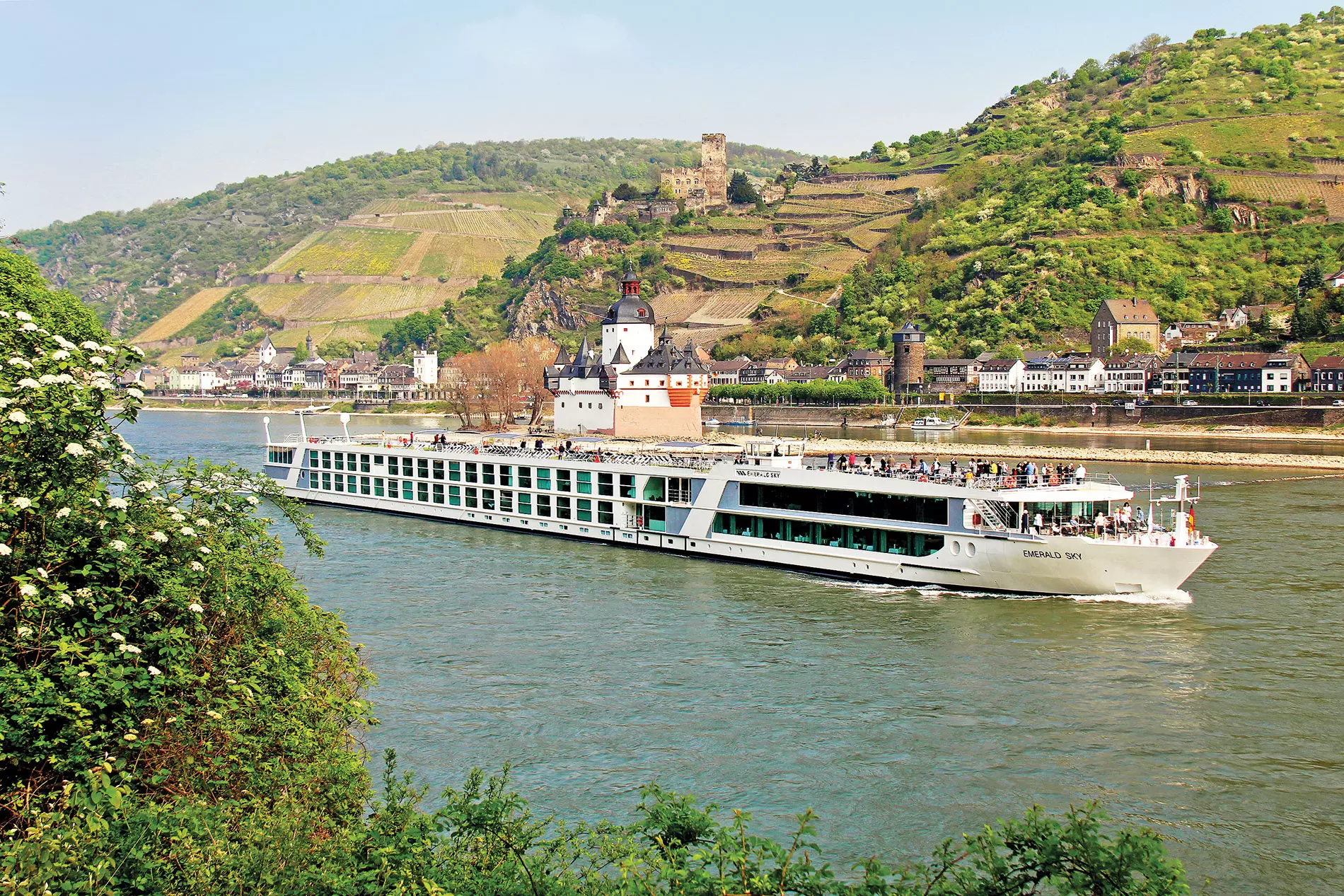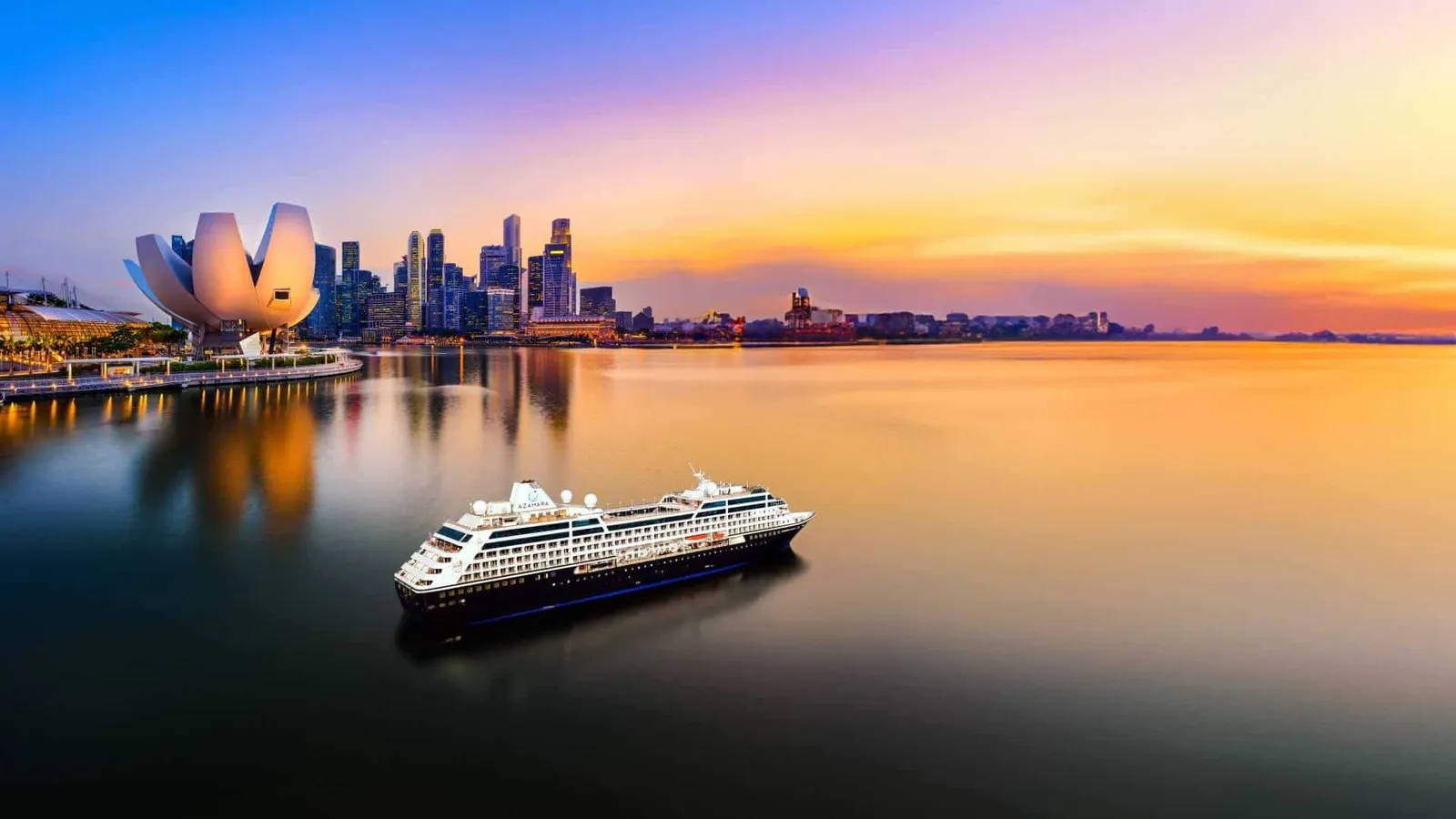
Azamara Cruises and Viking Ocean Cruises are the two premium lines most often compared by Australian travellers seeking smaller ships, destination depth, and an adults-oriented atmosphere. Both reject the mega-ship formula in favour of intimate vessels and culturally rich itineraries — but their approaches to immersion differ in ways that genuinely shape the holiday. Jake Hower explains.
| Azamara Cruises | Viking Ocean Cruises | |
|---|---|---|
| Category | Luxury | Premium |
| Rating | ★★★★☆ | ★★★★★ |
| Fleet size | 4 ships | 12 ships |
| Ship size | Small (under 1,000) | Small (under 1,000) |
| Destinations | Mediterranean, Asia, Northern Europe, South America | Mediterranean, Scandinavia, Asia, Caribbean |
| Dress code | Smart casual | Smart casual |
| Best for | Destination-immersive port-intensive travellers | Destination-focused culturally curious adults |
Both Azamara and Viking deliver outstanding destination-focused cruising on smaller ships, but they solve the immersion question differently. Viking is the stronger choice for travellers who want cultural enrichment woven into the onboard experience — Resident Historian lectures, included shore excursions, complimentary speciality dining, and a serene Scandinavian atmosphere on the newest small ships afloat. Azamara is the stronger choice for travellers who want to spend more time actually in port — late-night departures, overnight stays, and the signature AzAmazing Evenings ashore — with spirits included in the fare and a loyalty programme that genuinely rewards repeat cruising. For Australians, Viking's established local presence, Companion Fly Free programme, and larger fleet provide greater flexibility, while Azamara's growing commitment to Australian waters and more intimate 694-guest ships offer a boutique alternative.
The core difference
Azamara Cruises and Viking Ocean Cruises occupy the same corner of the cruise market — smaller ships, destination-focused itineraries, adults-oriented atmospheres, and a premium price point that sits between mainstream lines and true ultra-luxury. They share more DNA with each other than with any mega-ship operator. Both reject casinos, water slides, and formal nights. Both attract well-travelled couples over 50 who would rather explore a Dalmatian fishing village than watch a Broadway show. Both deploy to Australian waters each summer.
Yet the onboard experience differs in ways that genuinely matter, and the difference comes down to a single question: how should a cruise line immerse you in a destination?
Azamara’s answer is time. The line’s philosophy — “Destination Immersion” — centres on keeping you in port longer. Late-night departures (often 10pm or midnight), overnight stays, and double-overnight calls (two consecutive nights in a single port) mean you can dine ashore, explore evening markets, watch the sunset from a harbour-side cafe, and experience a city after the day-trippers have left. Roughly 51 per cent of Azamara’s total port time occurs during late-night or overnight stays. For the 2025-26 season, the line programmed 246 exclusive evening and overnight tours. The summer 2027 schedule promises 89 overnight stays and 381 late departures across 68 sailings. This is not a marketing gimmick — it fundamentally changes the way you experience a destination.
Viking’s answer is preparation. The line’s philosophy — often described as “the thinking person’s cruise” — centres on intellectually preparing you for each port before you arrive. A Resident Historian delivers university-style lectures tailored to the itinerary. Destination speakers — archaeologists, authors, former diplomats — provide expert context. TED Talks screenings and Metropolitan Opera performances enrich sea days. Destination Performances bring local musicians and performers aboard — flamenco in Spain, opera in Italy, folk music in Scandinavia. And when you arrive in port, a complimentary shore excursion provides a structured introduction guided by local experts. You arrive informed, and you explore with purpose.
Both approaches are excellent. Neither is wrong. But they create meaningfully different holidays, and understanding which resonates with you is the key to choosing the right line.
What is actually included
The inclusions comparison matters enormously here because both lines include more than most premium competitors, but the mix is different — and the difference shapes total cost.
Azamara includes in every fare: select spirits, international beers, a rotating wine selection (two red, two white, one rose, one sparkling by the glass), bottled water, specialty coffees and teas, and soft drinks throughout the day. Gratuities are fully included — no daily service charge is added to your account. One complimentary AzAmazing Evening cultural event ashore per voyage of nine or more nights (onboard version for seven to eight-night voyages). Shuttle buses to town centres in select ports. Unlimited self-service laundry with complimentary detergent. Dining at Discoveries Restaurant, Windows Cafe, The Patio, Mosaic Cafe, The Living Room, and 24-hour room service. Fitness centre, pool, and group fitness classes.
Azamara does not include: speciality dining at Prime C and Aqualina (US$49.95 per person surcharge, waived for suite guests). Wi-Fi (purchased separately unless in Veranda Plus or suite categories). Premium spirits and wines beyond the included selection. Shore excursions beyond the AzAmazing Evening and shuttle buses. Spa treatments and Sanctum Spa Terrace access (US$24 per day or US$100 per cruise for non-suite guests).
Viking includes in every fare: a private veranda — every cabin has one, as no inside staterooms exist. All dining venues including Manfredi’s Italian and The Chef’s Table five-course tasting menu, with zero surcharges. Beer and wine at lunch and dinner. Specialty coffees, teas, soft drinks, and bottled water around the clock. One complimentary shore excursion in every port of call (typically a two to three-hour walking or panoramic bus tour). Unlimited basic Wi-Fi on multiple devices. Complimentary access to the LivNordic Spa thermal suite — sauna, steam room, snow grotto, hydrotherapy pool, cold plunge, and heated tile loungers. A heated main pool with retractable roof. Self-service laundry. 24-hour room service. Enrichment lectures and Resident Historian programme.
Viking does not include: gratuities (approximately US$17 per person per day, charged to the onboard account). Cocktails and premium spirits (US$8-15 per drink, or the Silver Spirits Beverage Package at approximately US$27 per person per night). The Kitchen Table cooking experience (US$180-260 per person). Spa treatments. Premium shore excursions beyond the included one. Flights and transfers.
The practical difference is this: Azamara’s strength is beverages and gratuities. If you enjoy a gin and tonic by the pool, a glass of wine before dinner, and a cocktail after, those spirits are in the fare. And you will never see a gratuity charge on your account. Viking’s strength is broader in scope — an included shore excursion in every port (worth US$50-100 or more per person per port), all speciality dining without surcharges, unlimited Wi-Fi, and daily access to a thermal spa facility that most lines charge US$40-60 per day for. For a spirit drinker who values having tips settled upfront, Azamara absorbs more of the daily costs. For a traveller who wants a guided excursion at every stop, unrestricted restaurant access, and complimentary spa facilities, Viking delivers more total value.
Dining and culinary experience
Both lines serve quality food in intimate settings, but the dining models create different experiences — and different bills.
Azamara offers six dining venues per ship. Discoveries Restaurant is the main dining room with open seating and elegantly plated multi-course dinners reflecting the destinations visited. Windows Cafe provides a casual buffet for all three meals. The Patio transforms from a poolside grill by day into a sit-down al fresco restaurant in the evening, serving grilled strip loin, lamb tenderloin, pork ribs, and salmon steak by candlelight — complimentary and one of the most enjoyable dining experiences on any small ship. Mosaic Cafe serves artisanal coffees and pastries throughout the day. The Living Room offers tapas, small bites, and afternoon tea.
Then there are the two speciality restaurants. Prime C is a premium steakhouse featuring dry-aged beef, chops, and seafood at a US$49.95 per person surcharge. Aqualina serves Italian-inspired cuisine with handmade pastas and Mediterranean specialties at the same US$49.95 surcharge. Both surcharges are waived for guests in Club Continent Suite and above. Azamara Onward also features the exclusive Atlas Bar with artisanal cocktails and small plates not found on the other three ships.
Viking offers nine dining venues per ship — all included. The Restaurant is the main dining room with open seating, a daily-changing menu reflecting the itinerary, and always-available classics including Norwegian salmon and the Viking steak. Manfredi’s — named after Silversea founder Manfredi Lefebvre, a friend of Viking founder Torstein Hagen — serves authentic regional Italian with housemade pasta, osso buco, and an open-kitchen atmosphere. No surcharge. The Chef’s Table offers a five-course tasting menu with wine pairings that rotate every three days through Asian, French bistro, Norwegian, and thematic menus. No surcharge. Mamsen’s, named after Hagen’s mother, serves Norwegian waffles, open-faced sandwiches, and Scandinavian pastries — a venue with a genuine cult following. The World Cafe is an elevated market-style buffet with made-to-order stations and themed dinner nights. Wintergarden hosts traditional afternoon tea with three-tiered stands and live music. The Pool Grill and Aquavit Terrace round out the casual options. The only surcharge venue on any Viking ship is The Kitchen Table — a two-part experience where you shop for ingredients at a local market with Viking chefs and cook a multi-course meal together (US$180-260, limited to 12 guests).
In my experience, both lines serve reliably good food. Azamara’s Discoveries Restaurant menus reflect the destinations visited more explicitly, which suits the line’s immersive philosophy. Viking’s Manfredi’s and Chef’s Table are standout experiences that rival shoreside restaurants. Mamsen’s has no equivalent on Azamara — the Norwegian waffles and open sandwiches are a unique Viking touch that passengers love.
The financial difference is real. A couple dining at Prime C and Aqualina once each during a 10-night Azamara cruise will spend an additional US$200 before drinks. On Viking, every restaurant every night is included without signing a bill. For food-motivated travellers who want unrestricted access to every dining venue, Viking’s all-inclusive model is clearly more generous.
Suites and accommodation
The accommodation philosophies differ fundamentally. Azamara offers a traditional range from inside cabins to suites. Viking offers a single product standard: every cabin has a private veranda.
Azamara’s stateroom categories span seven levels. Club Interior starts at approximately 158 square feet with no window or balcony. Club Oceanview offers approximately 143 square feet with a fixed picture window. Club Veranda provides approximately 175 square feet of interior space plus a 40-square-foot private balcony. Club Veranda Plus adds enhanced amenities including Wi-Fi minutes, complimentary laundry, and one speciality dining evening for two per seven nights. Approximately 55 per cent of Azamara’s staterooms have private balconies.
At the top end, Azamara’s suites include dedicated butler service — packing and unpacking, priority check-in, dining reservations, in-suite afternoon tea, and personal errand service. The Club Continent Suite offers approximately 266 square feet plus a 60-square-foot veranda. The Club Spa Suite (approximately 414 square feet plus veranda) sits adjacent to the Sanctum Spa with spa-themed decor and daily healthy snacks. The Club Ocean Suite reaches approximately 440-501 square feet plus a 173-233 square foot veranda. The Club World Owner’s Suite — just two per ship — spans approximately 560-603 square feet with the largest private veranda aboard at 233 square feet.
From April 2026, enhanced suite inclusions take effect for World Owner’s, Ocean, and Spa Suite guests: unlimited premium alcohol, unlimited high-speed Starlink Wi-Fi, unlimited laundry, the exclusive Acamar Experience Dinner, complimentary Thalassotherapy Pool access, and complimentary speciality dining at all venues.
Viking’s stateroom categories are simpler and more consistent. The Veranda Stateroom (270 square feet including veranda) is the entry level — and it is worth noting this is already larger than Azamara’s Club Veranda. The Deluxe Veranda (270 square feet, identical layout, adds a minibar) is the most popular category with 272 per ship. Penthouse Veranda (338 square feet) adds an upgraded minibar with alcoholic beverages, welcome champagne, an espresso machine, cashmere blanket, and priority dining reservations. Penthouse Junior Suite (405 square feet) adds a separate living area, complimentary laundry and dry cleaning, and early stateroom access. Explorer Suite (757 square feet) is the only category with a bathtub. The Owner’s Suite — one per ship, 1,319 square feet — features a personal sauna, wet bar, and kitchenette.
A critical distinction: Viking does not offer butler service in any category. The highest suites receive concierge service and enhanced amenities, but there is no dedicated personal butler. Azamara’s suite guests receive genuine butler service from the Club Continent Suite upward — a meaningful advantage for travellers accustomed to this level of personal attention.
The other key difference is Viking’s all-veranda approach. There is no economy tier, no inside cabin, no windowless option. Every Viking guest has an outdoor balcony. Azamara’s inside and oceanview categories provide lower entry price points for budget-conscious travellers, but the trade-off is a cabin without natural light or private outdoor space.
Pricing and value
Comparing headline fares between Azamara and Viking requires nuance because the inclusions — as detailed above — are materially different.
Azamara’s base fares tend to sit lower than Viking’s for comparable itineraries and durations. A 10-12 night Mediterranean voyage in a Club Veranda cabin starts from approximately US$2,500-4,500 per person depending on season, with promotions such as the 2026 Wave Offer (30 per cent off) and Flash Sales (up to 15 per cent off) bringing prices down further. Azamara also offers inside and oceanview categories that provide lower entry points with no Viking equivalent.
Viking’s fares for a comparable Mediterranean voyage start from approximately US$2,500-4,200 per person for a Veranda Stateroom (their entry level), with longer voyages yielding better per-night value.
But the total cost tells a different story. Here is an illustrative comparison for a 10-night Mediterranean voyage, per person:
Azamara’s base fare in a veranda cabin runs approximately US$3,000. Add shore excursions at approximately US$500-800 if you want a guided experience at each port. Add two speciality dining evenings at approximately US$100. Add Wi-Fi at approximately US$100-200. Add Spa Terrace access at approximately US$100 for the cruise. Gratuities and spirits are included. The approximate total reaches US$3,800-4,200.
Viking’s base fare in a veranda cabin runs approximately US$3,500. Add gratuities at approximately US$170. Add the Silver Spirits Beverage Package at approximately US$200 if you want premium spirits beyond the included beer and wine at meals. Shore excursions, speciality dining, Wi-Fi, and thermal spa access are all included. The approximate total reaches US$3,870-3,870.
The convergence is real — and depending on how many excursions you book and how often you dine at speciality restaurants on Azamara, Viking can work out comparable or even less expensive once all costs are tallied. Azamara retains a clear price advantage for travellers who do not want shore excursions, do not plan to dine at Prime C or Aqualina, and are comfortable without Wi-Fi — their base fare with included spirits and gratuities is genuinely lower.
For Australian travellers, Viking’s Companion Fly Free programme adds significant value on international sailings — economy flights worth up to AU$2,500 per person from Australian gateways when booked through Viking Air. Azamara does not offer an equivalent recurring flight promotion, though periodic discounts and Wave sales apply globally.
Spa and wellness
This comparison has a clear winner, and it is Viking.
Viking’s LivNordic Spa is a genuine differentiator in the cruise industry. Designed by Stockholm-based consultancy Raison d’Etre, the spa is rooted in the Scandinavian wellness tradition of alternating hot and cold treatments — the Nordic Bathing Ritual. The headline feature is that the thermal suite is complimentary for every guest on every sailing.
The thermal suite includes a hydrotherapy pool with underwater benches and mineral-rich saltwater, a traditional Finnish sauna, a eucalyptus-scented steam room, heated ceramic tile loungers, a cold plunge pool, a relaxation room with ocean views, and Viking’s signature snow grotto — a sub-zero room with gently falling snowflakes that delivers the cold phase of the bathing cycle. Viking was the first cruise line to feature a snow grotto at sea, debuting the concept on Viking Star in 2015. Most cruise lines charge US$40-60 per day for equivalent thermal suite access. Viking includes it for all guests, all day, every day.
The fitness centre features treadmills, ellipticals, free weights, and an outdoor gym on the Sports Deck. Most group fitness classes are complimentary. Two pools — the heated main pool with retractable glass roof and the infinity pool on the Aquavit Terrace — complete the wellness offering. Paid spa treatments include Swedish massage (approximately US$139-209), facials, and body treatments.
Azamara’s Sanctum Spa follows a more traditional cruise-ship model. Treatments are professionally delivered using Elemis products, and the range is comprehensive — hot stone massage, deep tissue massage, seaweed wraps, facials, acupuncture, and medispa treatments including Botox and fillers. The fitness centre is compact but adequate with floor-to-ceiling windows.
The Sanctum Spa Terrace is an outdoor relaxation area with loungers, shaded daybeds, and a saltwater Thalassotherapy pool with massaging jets. However, it is not complimentary for most guests. Non-suite passengers pay US$24 per day, US$100 per person per cruise, or US$160 per couple per cruise to access it. Suite guests receive complimentary access. There is no equivalent of Viking’s snow grotto, cold plunge, or Finnish sauna included in the fare.
The distinction is stark. Viking gives every guest daily access to a world-class thermal suite at no additional cost — arguably the best complimentary spa facility at sea. Azamara’s spa treatments are quality, but the pay-per-use model for the Spa Terrace and the absence of a comparable thermal suite mean the wellness offering trails Viking’s by a meaningful margin. For travellers who would use a sauna, steam room, or hydrotherapy pool regularly — and I find most guests over 50 do — Viking’s complimentary access represents genuine daily value worth hundreds of dollars over a voyage.
Entertainment and enrichment
Both lines eschew the mega-ship entertainment model — no Broadway spectaculars, no ice-skating shows, no aqua theatres. But the replacement philosophies differ significantly, and this is where personal preference matters most.
Azamara’s entertainment leans social and celebratory. The signature event is the White Night Deck Party — a lavish alfresco dinner and dancing event held on nearly every voyage of seven or more nights. Decks transform with white linens and festive lighting. Officers and crew serve a barbecue spread — grilled steak, lobster tails, turkey skewers, crepes suzette — while boutique wines flow freely and live music keeps the dancing going late into the night. Everyone dresses in white. It is the single most memorable social event on any premium line I have experienced.
AzAmazing Evenings are equally distinctive — complimentary, one-of-a-kind cultural celebrations held ashore in extraordinary venues. Past events have included private concerts inside Gibraltar’s St. Michael’s Cave, performances at Helsinki’s concert hall, and Tlingit dance in Alaska. Azamara has announced 35 new AzAmazing Evenings for 2026, the most in the line’s history. These events are only possible because Azamara’s ships stay in port late enough to host them.
Onboard shows include rock tribute performances, themed revues (Aerosmith, Beatles, Queen), cabaret acts, and local performers brought aboard for cultural immersion. The Cabaret Lounge hosts nightly entertainment in an intimate setting. The Den — the social hub that replaced the casino space — features live music and piano. The Living Room hosts acoustic performances, destination speakers, and art exhibitions. The atmosphere is convivial and lively without being rowdy.
The Destination Immersion Elevated programme, launched in May 2025, represents Azamara’s most ambitious enrichment initiative. Over 250 Destination Speakers — native to the regions visited — sail fleet-wide, leading cultural talks and experiences. “Stories Under the Stars” offers fireside-style poolside evenings with regional folklore and storytelling, served with s’more-themed desserts and spiked hot chocolate.
Viking’s entertainment leans intellectual and cultural. The Resident Historian programme is unique in the cruise industry — a university-style curriculum of lectures, roundtable discussions, and daily office hours for one-on-one conversations, all tailored to the specific itinerary being sailed. This is not a casual guest speaker giving a PowerPoint presentation; it is a genuine academic programme delivered by qualified historians who build a narrative arc across the entire voyage. For intellectually curious travellers, it is extraordinary.
Destination speakers include archaeologists, authors, scientists, and cultural experts. TED Talks screenings and Metropolitan Opera “Live in HD” performances with backstage interviews provide sea-day programming that no other premium line matches. Destination Performances bring local musicians and performers aboard — Portuguese fado, Greek folk dance, Italian opera — showcasing the performing arts of each region visited.
The Explorers’ Lounge — a two-level space with floor-to-ceiling glass at the bow — is Viking’s signature gathering space, housing a library, Mamsen’s deli, and cocktail service with panoramic views. Torshavn is the late-night venue, though evenings on Viking tend to wind down earlier than on Azamara. Resident musicians — pianist, guitarist, violinist, cellist — perform in multiple venues simultaneously. There are no production shows in the traditional sense, no deck parties, and no themed costume evenings.
The divide is genuine. Azamara gives you a buzzy night out — deck parties, rock tributes, dancing under the stars. Viking gives you a quiet evening with a glass of wine, a lecture on Renaissance art, and a conversation about tomorrow’s port. In my experience, neither approach is wrong — they serve fundamentally different preferences. But if you find yourself gravitating toward one description over the other, that instinct is worth trusting.
Fleet and destination coverage
The fleet comparison reveals different philosophies around age, size, consistency, and growth.
Azamara operates four ships — all former Renaissance Cruises R-class vessels built between 1999 and 2001 at Chantiers de l’Atlantique in France. Azamara Journey, Azamara Quest, Azamara Pursuit, and Azamara Onward are sister ships at 30,277 gross tonnes, approximately 181 metres long, carrying 694 guests with approximately 390-400 crew. The passenger-space ratio of approximately 44 and the crew-to-guest ratio of roughly 1:1.8 deliver an intimate, well-attended experience.
The ships are showing their age at 25-27 years old, but Azamara is investing seriously in their future. All four completed dry-dock maintenance in the second half of 2024, and the $80 million Azamara Forward refurbishment programme begins with Quest entering dry dock in late 2026, followed by Onward in 2027 and Journey and Pursuit in subsequent years. The refurbishment includes refreshed cabins throughout, a new Chef’s Table restaurant, USB charging outlets, and — for Quest — a new Penthouse Suite Deck with 10 Grandview Suites and two Panorama Suites built above the bridge.
Azamara has no new-build orders. The investment strategy is to refurbish and modernise the existing fleet rather than commission new ships.
Viking operates 11 ocean ships as of early 2026, growing to 15 by the end of 2028. Nine Star-class ships (Viking Star through Viking Saturn, built 2015-2023) at 47,800 gross tonnes carry 930 guests with 465 crew. Two Vela-class ships (Viking Vela, December 2024; Viking Vesta, July 2025) at approximately 54,300 gross tonnes carry 998 guests, with four more Vela-class vessels on order through 2028. All are built by Fincantieri in Italy and registered in Norway.
Viking’s identical-ship strategy is a core brand pillar. Every ocean vessel has the same deck layout, restaurant names, cabin categories, and public spaces. A guest who has sailed Viking Star knows exactly what to expect on Viking Neptune or Viking Vela. The Vela-class ships are slightly larger but maintain the same design language and amenities. This consistency is a powerful selling point — you can book based on itinerary and dates without worrying about ship quality.
Viking’s fleet is significantly newer, meaningfully larger per ship, and growing rapidly. The modern construction provides better fuel efficiency, a quieter ride, and more contemporary design. Azamara’s R-class ships have a classic, traditional character that some passengers genuinely prefer — they feel like intimate ocean liners rather than modern hotels.
Destination coverage overlaps substantially — both lines serve the Mediterranean, Northern Europe, Asia, the Caribbean, Alaska, Australia and New Zealand, and world voyage itineraries. Azamara visits destinations across more than 70 countries on six continents. Viking’s fleet size allows more departure dates and itinerary combinations in its core regions, particularly Scandinavia and the Mediterranean. Both lines access boutique ports that mega-ships cannot reach, though Azamara’s smaller tonnage gives a slight edge for the most restricted harbours.
Where each line excels
Azamara excels in:
- Extended port time. Late-night departures, overnight stays, and double-overnight calls give you more hours in port than any competitor. Experiencing a destination after dark — dining ashore, exploring evening markets, watching sunset from a harbour cafe — is genuinely transformative.
- AzAmazing Evenings. Complimentary cultural events ashore in extraordinary venues — private concerts in caves, performances in historic amphitheatres — are unique to Azamara and only possible because the ships stay late.
- Included spirits and gratuities. Select spirits, beers, wines, and coffees are included throughout the day, and crew gratuities are fully covered in the fare. No daily service charge appears on your account.
- Intimacy. At 694 guests, Azamara’s ships are among the smallest in the premium segment. Crew members learn your name quickly, the atmosphere is club-like, and the social connections between guests feel genuine.
- Loyalty programme depth. Azamara Circle’s five-tier structure offers escalating benefits including complimentary cruise nights, onboard savings, and spa discounts — genuinely rewarding frequent cruisers.
- White Night party. The signature alfresco deck party with barbecue, live music, and dancing is the most memorable social event in premium cruising.
- Butler service. Available from the Club Continent Suite upward — a level of personal service Viking does not offer.
Viking excels in:
- Cultural enrichment. The Resident Historian programme, TED Talks, Metropolitan Opera screenings, and destination speakers create an intellectually stimulating environment that no other premium line matches.
- All-inclusive dining. Every restaurant on every ship — including Manfredi’s Italian and The Chef’s Table tasting menu — is included without surcharges.
- Complimentary shore excursions. One guided excursion in every port of call, included in the fare, worth US$50-100 or more per person per port.
- Spa and wellness. The complimentary LivNordic thermal suite — sauna, steam room, snow grotto, hydrotherapy pool, cold plunge, heated loungers — is available to every guest daily at no cost.
- Modern fleet. Ships built between 2015 and 2025, with four more on order. Contemporary Scandinavian design, quiet engines, and energy-efficient technology.
- Fleet consistency. Know one Viking ship, know them all. The identical-ship strategy eliminates guesswork when rebooking.
- Unlimited Wi-Fi. Included on all devices, all the time, without restrictions or upgrades.
- Guaranteed adults-only. Strict minimum age of 18 — no exceptions, no children permitted aboard.
Standout itineraries for Australian travellers
Azamara
Australia and New Zealand (16-18 nights, Sydney to Auckland or reverse). Azamara deploys primarily Onward and Pursuit to the region, with ports including Milford Sound, Fiordland, Cairns, and Kangaroo Island. The smaller ship size suits New Zealand’s intimate harbours, and Azamara’s late-night stays allow you to experience ports like Auckland and Sydney beyond daylight hours.
Japan Cherry Blossom Season (Azamara Pursuit). An accessible fly-cruise from Australia visiting Hiroshima, Kanazawa, Tokyo, and Kobe during peak cherry blossom season. Azamara’s overnight port stays give you time to explore beyond the tourist crowds, and the smaller ship accesses ports that larger vessels cannot.
Mediterranean with Overnight Seville (Azamara Journey or Quest). A standout Mediterranean itinerary featuring a double-overnight stay in Seville — two full nights in port, allowing you to experience flamenco shows, evening tapas culture, and the illuminated Alcazar. Florence (Livorno) and the Amalfi Coast (Salerno) also feature overnight stays on select departures.
Africa Circumnavigation (Azamara Onward). A unique itinerary visiting Madagascar, Seychelles, Mauritius, South Africa, and Tanzania. Few premium lines of this size offer this depth of African coverage.
World Voyage 2026 (155 nights, Azamara Onward, departing Miami). 36 countries, 55 overnight and late-night port stays, 60 Extended Destination Days with 10-plus hours in port. For Australian travellers with the time, Azamara’s world voyage maximises the overnight-stay philosophy on a grand scale.
Viking
Grand Australia Circumnavigation (32 days, roundtrip Sydney). A full loop of the Australian coast on Viking Orion with included excursions at every stop — a unique offering at this ship size in the premium segment. No international flights required.
Australia and New Zealand (15 days, Sydney to Auckland or reverse, Viking Orion). The core Australian-season itinerary covering both countries with ports including Geelong and multiple New Zealand ports. An included shore excursion at every stop provides structured introductions without additional cost.
Viking Homelands (15 days, Stockholm to Bergen). Viking’s signature itinerary through the Baltic capitals — the cruise that best showcases the Resident Historian programme, Scandinavian design, and Nordic cultural authenticity. Eight countries, multiple overnights. Accessible from Australia via a direct flight to Stockholm or London connections.
Into the Midnight Sun (15 days, London to Bergen). Above the Arctic Circle in summer with Norwegian fjords, Lofoten Islands, Tromso, and the North Cape. Twenty-four-hour daylight, spectacular fjord scenery, and a destination that plays to every Viking strength.
Iconic Western Mediterranean (7 days, Barcelona to Rome). Viking’s benchmark short Mediterranean sailing — an efficient way to experience the western Mediterranean with included excursions at every port. Can be combined with other Mediterranean itineraries for 14-22 day voyages. A practical fly-cruise option from Australia.
Ship-by-ship recommendations
Azamara
Azamara Onward is the best introduction to the line for Australian travellers. The most recently refurbished ship in the fleet (originally built 1999, acquired by Azamara 2021), Onward features modern bathroom layouts with walk-in showers, dual sinks, and a guest WC. Deck 8 is almost entirely suites, and the exclusive Atlas Bar — found only on this ship — serves artisanal cocktails with innovative techniques. Onward is the ship most frequently deployed to Australian waters and offers the most contemporary Azamara experience.
Azamara Pursuit is the other ship commonly deployed to Australia and New Zealand, sharing the modern bathroom layout of Onward. For the 2027/28 season, Pursuit is deployed to the region from August 2027 through April 2028, featuring new Australian ports including Fraser Island (K’gari) and Gladstone, plus a two-night stay in Hobart over New Year’s Eve.
Azamara Quest will become the flagship after the Azamara Forward refurbishment (dry dock October-November 2026). The new Penthouse Suite Deck will add 10 Grandview Suites and two Panorama Suites with 270-degree views directly above the bridge. If you can wait, Quest post-refurbishment will be the most premium Azamara ship by a significant margin.
For a first Azamara experience, book Onward or Pursuit. Their more modern cabin configurations provide the best representation of the line today.
Viking
Viking Orion is the primary ship for Australian and New Zealand seasons. If you want to sail Viking from Sydney without flying internationally, Orion is your ship. It is also one of only two Viking ships with an onboard planetarium — a small but unique space.
Viking Vela or Viking Vesta are the newest ocean ships (2024-2025) and the first of the Vela class. Slightly larger than Star-class siblings with hybrid engines and solar panels but the same deck layout and amenities. Book these for the newest hardware in the fleet on European or global itineraries.
Any Star-class ship delivers an identical experience. Because Viking deliberately builds virtually identical vessels, the experience on Viking Star (2015) is functionally the same as Viking Saturn (2023). The crew can transfer between ships without retraining, and every public space, restaurant, and cabin layout is consistent. This means you can choose based on itinerary and dates without worrying about ship quality — a genuine advantage for first-time bookers.
For Australian travellers specifically
Both lines serve the Australian market with growing commitment, but the practical details differ in ways that matter.
Viking’s Australian presence is more established. Viking Orion deploys annually to Sydney and Auckland from December to March, with 14 to 32-night itineraries including the unique 32-day Grand Australia Circumnavigation. Sixty-seven sailings are available between February 2026 and March 2028 across Viking’s global programme, with 17 touching Australian or New Zealand waters per season. The dedicated Australian website (vikingcruises.com.au) prices in AUD. Viking runs Australian Explorer Society events in Sydney and Melbourne. Brand awareness in Australia is strong, driven partly by television advertising and partly by the established reputation of Viking river cruises — many Australian ocean cruise guests come to Viking via prior river experiences.
Viking’s Companion Fly Free programme is a significant benefit for Australian travellers booking international sailings. Economy flights for one guest worth up to AU$2,500 are included when booked through Viking Air from gateways including Adelaide, Brisbane, Cairns, Canberra, Darwin, Gold Coast, Hobart, Launceston, Melbourne, Perth, and Sydney. However, it is important to note that Australia and New Zealand, Grand Australia Circumnavigation, and Komodo itineraries are excluded from this promotion — so the benefit applies primarily to European, Asian, and other international departures.
Azamara’s Australian commitment is growing. Azamara deploys primarily Onward and Pursuit to Australian waters during the Southern Hemisphere summer, with Sydney as the primary departure port. Twenty-five cruises are scheduled between February 2026 and January 2028 in the region. The 2027/28 season represents an expanded deployment, with Azamara Pursuit in the region from August 2027 through April 2028 featuring new Australian ports including Fraser Island (K’gari) and Gladstone — ports that most premium lines do not visit. Melbourne is offered as a pre- and post-cruise City Stay option. Azamara does not maintain a dedicated Australian office, and distribution is through travel agent partnerships.
Nationality mix is worth considering. Australians and New Zealanders make up approximately 11 per cent of Azamara’s passenger mix — the third-largest nationality group after North Americans (60 per cent) and British (18 per cent). This means you will find compatriots aboard and staff familiar with Australian preferences. Viking’s passenger base is predominantly North American on most global itineraries, though the Australian-season sailings naturally attract a higher proportion of Australians.
Loyalty programmes from an Australian perspective. Azamara Circle’s multi-tiered structure offers genuinely escalating benefits for repeat cruisers — complimentary cruise nights, onboard savings of up to 10 per cent, and spa and beverage discounts of up to 25 per cent at the highest tier. The programme rewards loyalty with tangible value. Viking’s Explorer Society is simpler — a US$200 travel credit for rebooking within one year, US$100 within two years, and a referral programme. Viking argues that its base product already includes what other lines offer as loyalty rewards, and there is truth in this — but for a traveller planning multiple voyages, Azamara Circle delivers more cumulative value.
Azamara does not offer an equivalent fly-free programme for Australian travellers, though global promotions such as the 2026 Wave Offer (30 per cent off) and Flash Sales (up to 15 per cent off) apply to Australian bookings. Booking through an Australian travel agent typically yields AUD pricing and local support.
The onboard atmosphere
Neither Azamara nor Viking has a casino — Azamara removed its last one in 2020, and Viking has never had one. Neither has a children’s programme. Neither has formal nights. Neither has water slides, rock-climbing walls, or pool deck entertainment. Both attract well-travelled adults in their 50s to 70s who prioritise destination experiences over onboard spectacle. On paper, they sound identical.
In practice, the feel is meaningfully different.
Azamara’s atmosphere is warm, social, and convivial. The ships are described as having a “country club casual” feel — relaxed, welcoming, and intimate. With just 694 guests, the crew-to-guest ratio (approximately 1:1.8) allows genuinely personalised service. Staff learn your name quickly. Many repeat guests describe boarding as “coming home.” The social atmosphere encourages mingling — conversations at the bar, friendships forged at dinner, laughter on the pool deck. The White Night party exemplifies this spirit: officers and crew serve alongside guests, everyone dresses in white, and the dancing goes late. Azamara’s entertainment programme — rock tributes, cabaret acts, The Den piano bar — keeps evenings lively without being raucous. The dress code is resort casual every night, no exceptions. The line does not have a formal adults-only policy, but the absence of any children’s facilities, combined with the higher price point and destination-heavy itineraries, means it is exceptionally rare to see children aboard.
Viking’s atmosphere is calm, intellectual, and quietly refined. The Scandinavian design — blonde wood, neutral tones, clean lines, natural light — creates a space that feels more residential than resort. The Explorers’ Lounge at the bow, with its two storeys of panoramic glass and a library, sets the cultural tone. The Living Room at the ship’s centre offers puzzles, board games, and reading nooks. Conversations at dinner tend to focus on the day’s port, tomorrow’s itinerary, or the morning’s Resident Historian lecture. The absence of casino noise, children’s activities, and production show announcements creates a quietude that some find deeply restorative and others find too still. Evenings wind down earlier than on Azamara. The ship rewards readers, thinkers, and travellers who are genuinely interested in where they are going. Viking enforces a strict 18-plus policy — no children under any circumstances — which guarantees the serene atmosphere. The dress code is smart casual every evening, never changing.
The atmosphere distinction is the single most important factor in choosing between these two lines. Both are excellent. Both attract quality travellers. But Azamara skews livelier and more social, while Viking skews quieter and more contemplative. I recommend that clients uncertain between the two trust whichever description resonates more with how they want to spend their evenings at sea.
The bottom line
Azamara and Viking are both outstanding destination-focused premium lines that reject the mega-ship formula in favour of smaller ships, culturally rich itineraries, and adults-oriented atmospheres. Choosing between them is not a question of quality — both deliver. It is a question of philosophy.
Choose Azamara when you want to spend more time in the destination itself. Choose it for late-night departures and overnight stays that let you dine ashore, explore evening markets, and experience a city after dark. Choose it for the AzAmazing Evenings cultural events in extraordinary venues. Choose it for included spirits and gratuities that simplify your onboard account. Choose it for the White Night deck party — the most memorable social event in premium cruising. Choose it for butler service in suites. Choose it for a loyalty programme that genuinely rewards repeat cruising with complimentary nights and escalating discounts. Accept that the ships are older (built 1999-2001), that speciality dining carries surcharges, that Wi-Fi costs extra in most categories, and that the spa wellness offering trails Viking’s.
Choose Viking when you want to arrive at each port intellectually prepared and culturally enriched. Choose it for the Resident Historian programme, TED Talks, and Metropolitan Opera screenings. Choose it for the all-inclusive dining model where every restaurant is in the fare. Choose it for a complimentary shore excursion in every port. Choose it for the LivNordic Spa thermal suite — sauna, steam room, snow grotto, hydrotherapy pool — available to every guest every day at no charge. Choose it for the newest, most consistent fleet in the premium segment. Choose it for the guaranteed adults-only atmosphere. Choose it for unlimited Wi-Fi included in every fare. Accept that the ships are larger (930-998 guests versus 694), that premium spirits and cocktails cost extra, that gratuities are not included, and that the evenings tend toward quiet contemplation rather than deck parties and dancing.
For Australian travellers, both lines deploy to Sydney each summer and both are bookable through local agents. Viking’s established Australian presence, Companion Fly Free programme on international sailings, and rapidly growing fleet offer greater scale and flexibility. Azamara’s smaller ships, extended port stays, and expanding Australian deployment — including new ports like Fraser Island for 2027/28 — offer a more boutique, intimate alternative.
The question is not which line is better. It is which philosophy suits the way you travel.