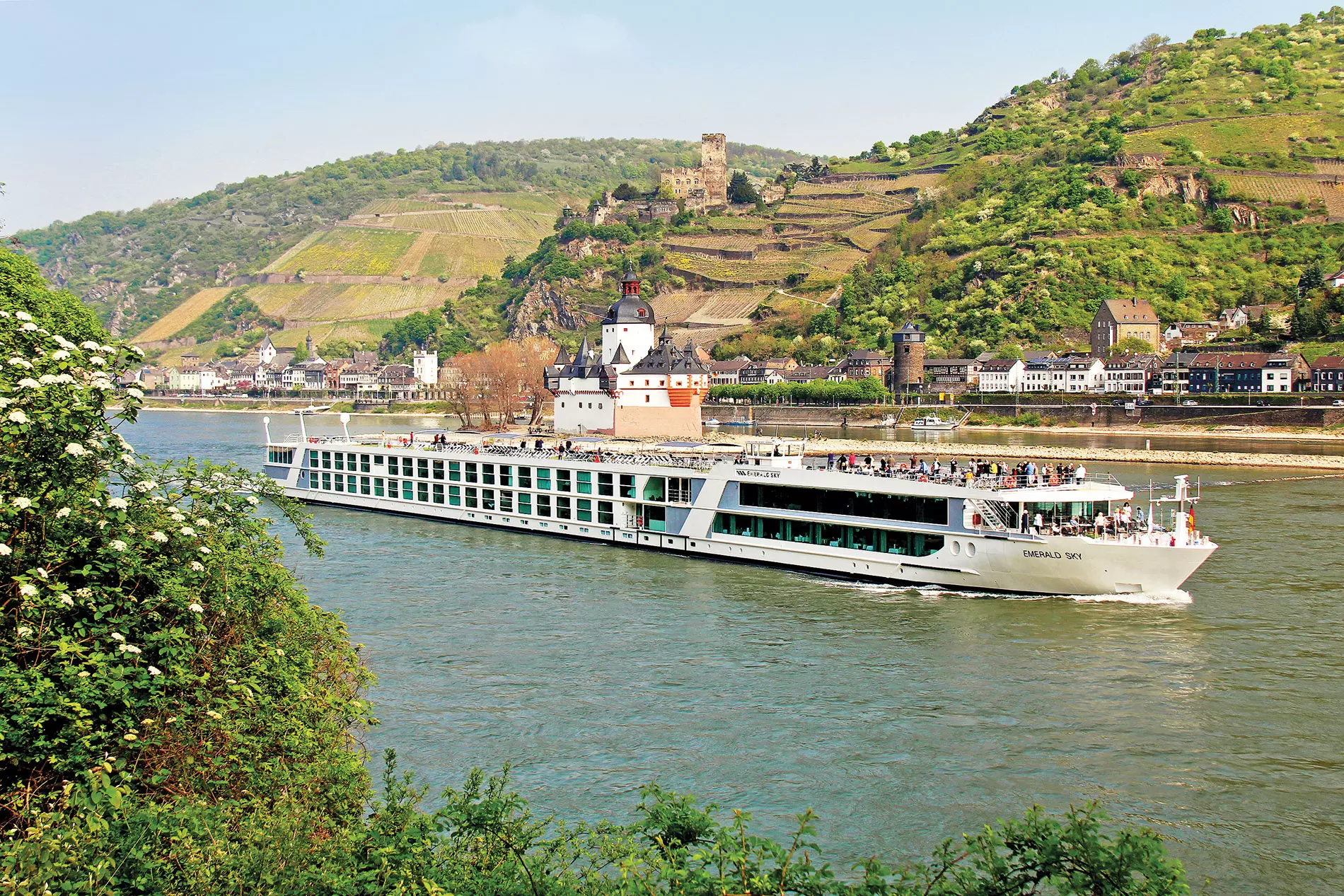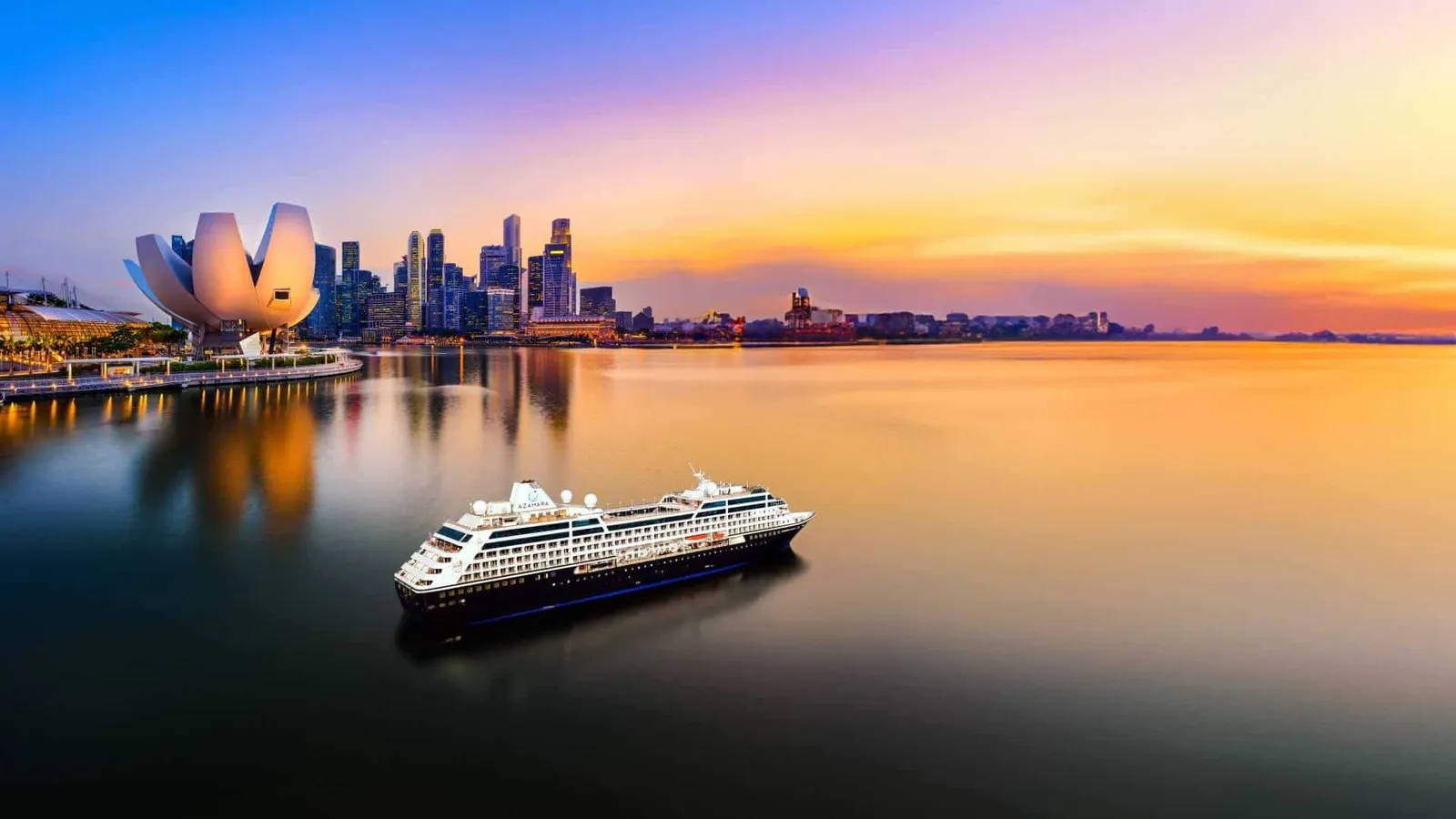
Azamara and Cunard represent two fundamentally different visions of ocean travel. Azamara delivers intimate destination immersion on 690-guest ships with late-night port stays, included drinks, and no formal nights. Cunard offers 185 years of British ocean liner heritage, grand Queens Room ballrooms, Gala Evenings, and the world's only scheduled Transatlantic Crossing. Jake Hower explains which suits Australian travellers.
| Azamara Cruises | Cunard Line | |
|---|---|---|
| Category | Luxury | Luxury |
| Rating | ★★★★☆ | ★★★★★ |
| Fleet size | 4 ships | 4 ships |
| Ship size | Small (under 1,000) | Mid to Large |
| Destinations | Mediterranean, Asia, Northern Europe, South America | Global |
| Dress code | Smart casual | Formal evenings |
| Best for | Destination-immersive port-intensive travellers | Tradition lovers |
These are genuinely complementary lines, not direct competitors. Azamara is the better choice for Australians who prioritise destinations over the ship, prefer casual dress codes, want included drinks and gratuities, and value the growing number of sailings departing from Sydney. Cunard is the better choice for travellers drawn to heritage, formality, intellectual enrichment, ballroom dancing, and the bucket-list Transatlantic Crossing aboard Queen Mary 2. With Cunard withdrawing homeport operations from Australia in 2026 while Azamara expands its ANZ deployment, practical accessibility increasingly favours Azamara for travellers who want to board close to home. For the adventurous, sailing Azamara for a Mediterranean destination voyage and Cunard for the Transatlantic is an entirely valid strategy — and one I recommend regularly.
The core difference — Intimate destination immersion versus heritage ocean liner tradition
Azamara and Cunard could hardly be more different, and understanding that difference is the first step to choosing correctly. These are not two lines competing for the same passenger — they are two lines serving fundamentally different desires.
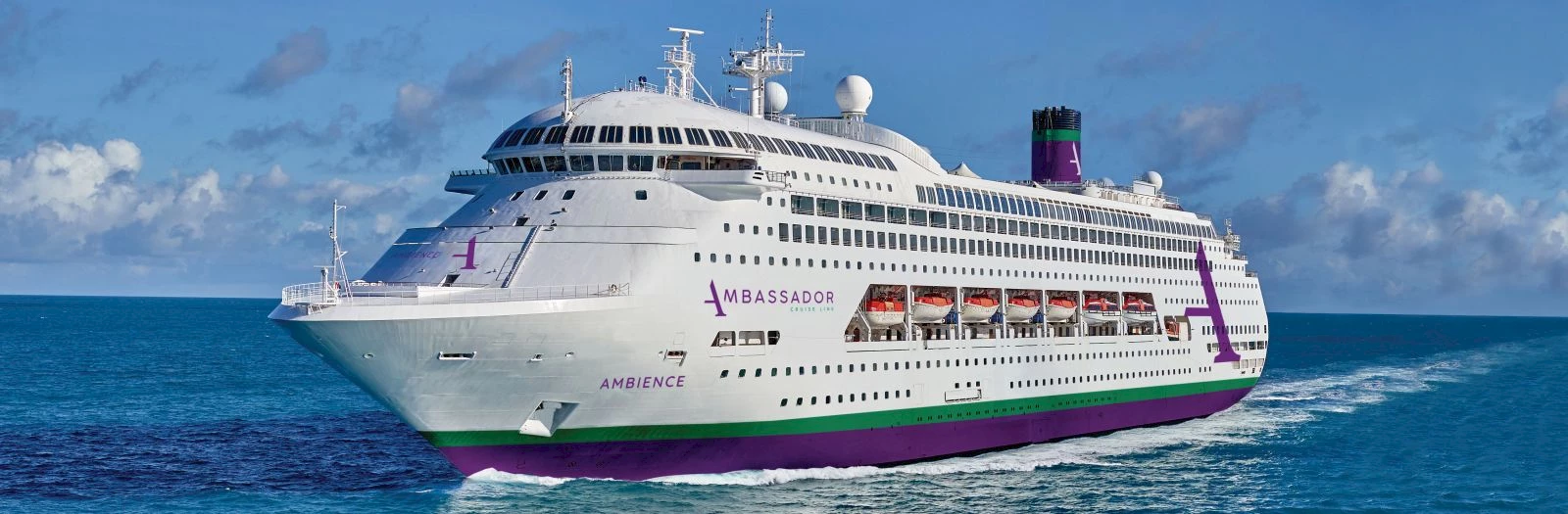
Azamara was founded in 2007 when Royal Caribbean Group launched a boutique brand around two former Renaissance Cruises R-class ships. The line was sold to Sycamore Partners, a New York-based private equity firm, in 2021 for US$201 million, and a fourth ship joined the fleet in 2022. Today Azamara operates four virtually identical ships of 30,277 gross tonnes, each carrying approximately 694 guests. The brand philosophy is “Destination Immersion” — the ports are the product, and everything about the itinerary design supports that proposition. Late-night departures, overnight stays, boutique harbours inaccessible to larger vessels, and AzAmazing Evenings (complimentary cultural events ashore) define the Azamara experience. The dress code is resort casual throughout. There are no formal nights, no children’s programme, and no pretence about what the line is: a floating country club for well-travelled adults who care more about where they wake up than what they wear to dinner.
Cunard Line was founded in 1840 by Sir Samuel Cunard. It is one of the oldest and most recognised maritime brands in existence — 185 years of transatlantic service, from Britannia to Lusitania to Queen Mary to QE2 to today’s four Queens. Cunard is now a subsidiary of Carnival Corporation, but the heritage permeates every aspect of the product: Gala Evenings in black tie, white-gloved afternoon tea in the Queens Room, the world’s only planetarium at sea, a class-based dining system echoing first, second, and third class, and Queen Mary 2 — the only purpose-built ocean liner in active service, reinforced for North Atlantic crossings. Where Azamara says “the destination is the product,” Cunard says “the voyage is the product.” Cunard does not even use the word “cruise” — they are “voyages.”
For Australian travellers, the choice between these two lines is less about quality and more about identity. Do you travel to see the world, or do you travel for the romance of the journey itself? Are you packing a pair of smart chinos and deck shoes, or a dinner jacket and patent leather? The answer will almost certainly determine your line.
What is actually included
The inclusion gap between Azamara and Cunard is one of the largest in the premium segment, and it catches many Australian travellers off guard — particularly those accustomed to Cunard’s heritage reputation and assuming the fare covers more than it does.
Azamara includes in every fare, regardless of cabin category: select standard spirits, international beers, and a rotating selection of wines by the glass; bottled water, soft drinks, specialty coffees, and teas; all gratuities (hotel and dining service charges are fully included — nothing is added to your onboard account); one AzAmazing Evening cultural excursion per voyage on sailings of nine nights or longer; shuttle bus service to and from port communities where available; self-service laundry; concierge services for independent shore planning; dining at four of six restaurants plus 24-hour room service; onboard entertainment and enrichment; and fitness centre access including group classes.
Azamara does not include: Wi-Fi (unless booked in Club Veranda Plus or a suite category); premium spirits and wines beyond the included selection; specialty dining surcharges at Prime C and Aqualina (US$49.95 per person each); spa treatments; shore excursions beyond the AzAmazing Evening and shuttle buses; and valet laundry pressing and dry cleaning.
Cunard’s Britannia fare (the entry-level tier) includes: accommodation; breakfast, lunch, and dinner in the assigned Britannia Restaurant; buffet dining at King’s Court or Lido; daily afternoon tea in the Queens Room; Golden Lion pub food (most items); tea, coffee, water, and fruit juice in buffet areas; all entertainment, enrichment lectures, and shows; fitness centre and pool access; children’s club access; and room service breakfast between 7am and 10am.
Cunard does not include at Britannia level: any alcoholic or premium soft drinks; gratuities (US$17 per person per night for Britannia, US$19 for Grills); Wi-Fi; specialty dining (US$31.50 to US$58.50 per person depending on venue); shore excursions; spa treatments; and — since June 2025 — room service outside breakfast hours for Britannia guests, a controversial change that generated significant passenger backlash.
The practical effect of this gap is considerable. An Australian couple on a 14-night Mediterranean voyage will find their Azamara fare covers drinks at dinner, a cocktail before the show, morning coffees by the pool, and the crew gratuity — all without signing a single chit. The same couple on Cunard at Britannia level will face a drinks bill, a gratuity charge of approximately US$476 per person for the fortnight, and supplements for any specialty dining or room service beyond breakfast. When I walk clients through the total cost comparison, Azamara’s higher headline fare frequently represents better value at the balcony level once Cunard’s extras are added.
That said, Cunard’s Queens Grill experience — when factoring in current promotional packages that include complimentary drinks and waived gratuities — delivers a genuinely all-inclusive product at the suite tier. And what the Queens Grill buys you is something Azamara cannot replicate: exclusive dining rooms, private lounges, a dedicated sun terrace, butler service, and a class hierarchy refined over nearly two centuries. The Grills ship-within-a-ship concept is unique in cruising.
Dining and culinary experience
Dining on these two lines reflects their broader philosophies perfectly — intimate and personal on Azamara, grand and hierarchical on Cunard.
Azamara’s dining is built for 694 guests across six venues. Discoveries Restaurant is the main dining room, offering open seating with no assigned tables or set dining times — you arrive when you like, sit where you choose, and the menu changes nightly with Mediterranean-inspired specialties. The atmosphere is smart casual with white tablecloths at dinner. Windows Cafe provides a more relaxed buffet option for breakfast, lunch, and themed dinner evenings. The Patio transforms from a casual poolside grill by day into a sit-down al fresco dining venue by evening, with tablecloths and candles and a menu featuring grilled specialties — bone-in strip loin, tournedos of lamb tenderloin, salmon with pink peppercorns. Mosaic Cafe serves artisanal coffees and pastries throughout the day. These four venues are included in the fare.
Two specialty restaurants carry a surcharge of US$49.95 per person: Prime C, a premium steakhouse featuring dry-aged beef; and Aqualina, an Italian-Mediterranean restaurant with handmade pastas and seafood. Suite guests dine at both without surcharges. Club Veranda Plus guests receive one complimentary specialty dining evening for two per every seven nights. Azamara Onward also features the Atlas Bar with artisanal cocktails and small plates. And looking ahead, the Azamara Forward refurbishment programme will introduce a Chef’s Table restaurant on all ships, featuring rotating themed menus, guest chefs, and a market-to-menu concept.
Room service is complimentary and available around the clock for all cabin categories.
Cunard’s dining is grander in scale and structured by class. Your stateroom category determines where you eat, and this is a deliberate echo of the historic ocean liner tradition. Britannia Restaurant is the main dining room for Britannia stateroom guests — a two-storey venue on Queen Mary 2 seating approximately 1,300 — with fixed seating at assigned tables and multi-course menus that change nightly. Britannia Club guests enjoy a smaller, dedicated restaurant with flexible dining times and a reserved table throughout the voyage. Princess Grill offers an intimate a la carte experience for Princess Grill suite guests, with tableside preparations and enhanced menus. Queens Grill — the pinnacle — provides fully bespoke dining for Queens Grill suite guests: any dish, any time, with white tablecloth service and menus designed by Michelin-starred chef Michel Roux.
The Golden Lion pub serves complimentary British pub fare including the legendary fish and chips, with menus also designed by Michel Roux. King’s Court (QM2) and Lido restaurants provide buffet dining for breakfast, lunch, and themed evening service.
Cunard’s specialty dining varies by ship. Queen Anne — the newest, launched in 2024 — introduced the most adventurous dining in Cunard’s history: Sir Samuel’s Steakhouse and Grill (US$58.50 dinner), Aranya for innovative Indian cuisine (US$35), Aji Wa for Japanese fusion (seven-course tasting at US$62), and Tramonto for Mediterranean fare (US$20). The older Queens feature Steakhouse at The Verandah (US$45 dinner). All specialty venues carry surcharges for all guests regardless of cabin class.
And then there is afternoon tea. Cunard’s daily afternoon tea in the Queens Room is one of cruising’s great rituals — white-gloved waiters in formal uniforms, fine bone china, finger sandwiches, warm scones with clotted cream, a selection of cakes and patisseries, and live harp or piano accompaniment. It is complimentary, it is served daily between 3:30 and 4:30 pm, and it has no genuine equivalent on Azamara or, for that matter, on most other cruise lines. For many Cunard passengers, afternoon tea alone justifies the choice of line.
The fundamental difference is this: Azamara offers dining where the staff know your name by the second evening and the open seating means you eat when and with whom you choose. Cunard offers dining as theatre — the grand entrance down the staircase, the assigned table with your regular waiter, and a class structure that creates genuine aspiration between Britannia and the Grills.
Suites and accommodation
The accommodation comparison reveals two completely different approaches to hierarchy, space, and the role of cabin category in shaping the overall experience.
Azamara uses a flat hierarchy. Every guest aboard an Azamara ship has access to the same restaurants, the same entertainment, and the same public spaces. The differences between cabin categories are primarily about space, view, and incremental inclusions rather than access to exclusive areas. Club Interior cabins start at approximately 158 square feet with no window. Club Oceanview provides a fixed picture window at around 143 square feet. Club Veranda — the most popular category — offers 175 square feet of interior space plus a 40-square-foot private balcony. Club Veranda Plus adds enhanced inclusions: 120 free Wi-Fi minutes, one bag of complimentary laundry per seven nights, one specialty dining evening for two per week, and priority embarkation.
At the suite level, Azamara offers four categories. Club Continent Suites provide 266 square feet plus a 60-square-foot veranda, with butler service, complimentary specialty dining, and a marble bathroom with soaking tub. Club Spa Suites (414 square feet plus veranda) sit adjacent to the Sanctum Spa with daily healthy snacks and spa-themed amenities. Club Ocean Suites range from 440 to 501 square feet of interior space with verandas up to 233 square feet. And the Club World Owner’s Suite — only two per ship — tops out at approximately 836 square feet total with the largest private veranda aboard. All suite categories receive butler service, and from April 2026, enhanced inclusions for World Owner’s, Ocean, and Spa suites include unlimited premium alcohol, unlimited Starlink Wi-Fi, unlimited laundry, and complimentary access to the Thalassotherapy Pool.
Cunard uses a deliberate class hierarchy. Your stateroom determines your dining room, your level of service, and your access to exclusive spaces — and this is by design. It echoes the first, second, and third class structure of the great ocean liners, and it creates genuine differentiation between tiers.
Britannia Inside cabins start at approximately 152 square feet. Britannia Oceanview ranges from 133 to 201 square feet. Britannia Balcony cabins offer 228 to 472 square feet with a private balcony. Britannia Club Balcony adds dedicated restaurant access, flexible dining times, a reserved table, pillow concierge, velour bathrobes, and 24-hour complimentary room service — benefits that would be standard inclusions on Azamara but represent meaningful upgrades within Cunard’s tiered system.
Princess Grill Suites (335 to 513 square feet) unlock the exclusive Princess Grill restaurant, the Grills Lounge and Terrace, the Grills Courtyard on Queen Victoria and Queen Elizabeth, a dedicated concierge, and priority services. Queens Grill Suites start at 484 square feet and extend to the Grand Duplex on QM2 at an extraordinary 2,249 square feet across two levels. Queens Grill benefits include the exclusive Queens Grill restaurant with bespoke menus, butler service, a complimentary in-suite minibar with spirits and wine, fresh flowers, laundry and pressing, and priority everything — tender, embarkation, dining.
The critical conceptual difference: Cunard’s Grills experience is a genuine ship-within-a-ship. Princess and Queens Grill guests occupy exclusive spaces — separate dining rooms, a private lounge, a private sun terrace — that Britannia guests cannot access. This creates aspiration and exclusivity that Azamara’s flatter structure does not replicate. On Azamara, the World Owner’s Suite guest and the Club Interior guest share the same dining room and the same pool deck. On Cunard, the Queens Grill guest inhabits a different world from the Britannia guest. Whether you find this appealing or elitist is a matter of personal philosophy — and it is another factor that quickly sorts prospective passengers between the two lines.
Pricing and value
Comparing headline fares between Azamara and Cunard is misleading without accounting for inclusions, and I walk clients through this exercise regularly.
At the entry level, Cunard appears significantly cheaper. A Britannia Inside cabin on a 7-night Mediterranean voyage starts from approximately US$140 per night, while Azamara’s Club Interior starts from approximately US$215 per night. That is a meaningful gap. But Cunard’s entry fare excludes drinks, gratuities, and specialty dining entirely. Add gratuities at US$17 per person per night (US$119 per week), a basic drinks package, and the gap narrows substantially. Azamara’s fare already covers select spirits, beer, wine, soft drinks, specialty coffees, gratuities, and the AzAmazing Evening excursion.
At the balcony level, the lines often converge. A Cunard Britannia Balcony on a 7-night itinerary runs from approximately US$300 to US$430 per person per night before extras. An Azamara Club Veranda sits at approximately US$200 to US$350 per person per night with drinks and tips already included. When you add Cunard’s drinks package and gratuities to equalise the comparison, the total cost for comparable balcony accommodation is frequently within a few hundred dollars per voyage.
At the suite level, the comparison becomes complex. Azamara’s Club Continent Suite starts from approximately US$350 to US$600 per person per night. Cunard’s Princess Grill starts from approximately US$500 to US$785 per person per night. Cunard’s Queens Grill begins higher still. But the Queens Grill experience buys something Azamara fundamentally cannot deliver: exclusive restaurants, private lounges, a separate sun terrace, and butler service within a ship carrying 2,000 to 3,000 guests. The premium buys exclusivity at scale, and for travellers who value that distinction, the price is justified.
For Australian travellers specifically, currency matters. Both lines price through Australian travel agents in AUD, but onboard accounts are denominated in US dollars. Azamara’s inclusive fare structure reduces onboard spending exposure to currency fluctuations. Cunard’s add-on model means more spending in USD during the voyage, which can create budget uncertainty when the Australian dollar is volatile.
Promotional pricing on both lines can substantially alter the equation. Cunard’s Grills promotions frequently include complimentary drinks packages and waived gratuities, making the Queens Grill genuinely all-inclusive during promotional windows. Azamara’s wave offers, early booking bonuses, and flash sales can reduce fares by 15 to 30 per cent on select sailings. The smartest approach is always to compare total cost for your specific voyage, factoring in every extra you plan to use, rather than relying on headline per-diems.
Spa and wellness
Both lines offer spa facilities operated by well-established partners, though the scale and approach differ in line with their respective ship sizes.
Azamara’s Sanctum Spa is operated by Steiner with Elemis products, located on Deck 9 of all four ships. The treatment menu covers massages (hot stone, deep tissue, Swedish, and exotic treatments), acupuncture, facials, body sculpting, and medispa treatments including Botox and fillers. Separate male and female changing rooms include showers and steam rooms, and there is a relaxation lounge.
The standout feature is the Sanctum Spa Terrace — an exclusive outdoor spa deck with loungers, shaded daybeds, and a Thalassotherapy pool with massaging salt-water jets. Suite guests receive complimentary access. All other guests can purchase access at US$24 per day, US$100 per person per cruise, or US$160 per couple per cruise. From April 2026, enhanced suite inclusions extend complimentary Thalassotherapy Pool access to all World Owner’s, Ocean, and Spa suite guests.
The fitness centre is compact but functional, with floor-to-ceiling ocean views, free weights, machines, treadmills, and elliptical trainers. Complimentary group classes include yoga on deck, Pilates, cycling, and core workouts. The pool deck features one rectangular outdoor pool, two whirlpool hot tubs, and a sunbathing area — never crowded with only 694 guests aboard.
Cunard’s Mareel Wellness and Beauty was developed in partnership with Canyon Ranch and rolled out across all four ships. Queen Anne offers the most comprehensive facilities in the fleet: an infrared sauna with sea views, a Himalayan salt sauna, dry sauna, steam room, cold room, a private couples’ suite with steam room and soaker bath, and cryo-body therapy — a first for Cunard at sea. The Pavilion Wellness Studio hosts yoga and meditation with ocean views, and the Harper’s Bazaar Wellness at Sea programme offers structured wellness packages.
Cunard’s Thermal Suite and Aqua Therapy Centre includes a hydrotherapy pool, saunas, steam room, ice room, foot spas, and experience showers. Access is charged: US$49 per two-hour session on Queen Victoria and Queen Elizabeth, US$59 on QM2 and Queen Anne, with weekly passes at approximately US$179.
The fitness centres across Cunard’s fleet are significantly larger than Azamara’s, reflecting the ship size difference. Each ship features state-of-the-art cardio equipment, free weights, and a sprung floor. Queen Anne adds a dedicated spin class studio. All fitness facilities are complimentary.
On balance, Cunard offers more comprehensive spa facilities — particularly on Queen Anne — with greater variety of thermal experiences. Azamara offers a more intimate spa experience where the Thalassotherapy Pool provides a genuine outdoor wellness feature. Neither includes spa treatments in the fare. For travellers who use thermal facilities daily, Cunard’s thermal suite is more elaborate but carries a per-session charge; Azamara’s Thalassotherapy Pool requires a cruise pass or suite-level booking for complimentary access.
Entertainment and enrichment
This is where the two lines diverge most dramatically, and where personal preference matters more than any objective measure of quality.
Azamara’s entertainment philosophy is destination-first. The line’s signature programme — AzAmazing Evenings — takes entertainment off the ship entirely. Available on nearly every voyage of nine nights or longer, these are complimentary, exclusive cultural events held ashore in remarkable settings: private performances in ancient amphitheatres, concerts in historic churches, cultural celebrations in temples. Thirty-five new AzAmazing Evenings were announced for 2026 alone — the most in the programme’s history. For voyages of seven to eight nights, an onboard version is provided. There is simply no Cunard equivalent to this programme.
In May 2025, Azamara launched “Destination Immersion Elevated” — its most ambitious enrichment initiative to date. This includes over 250 Destination Speakers (native to the regions visited) sailing fleet-wide, “Stories Under the Stars” fireside-style poolside evenings with regional folklore and storytelling, and onboard performances by local entertainers from ports visited.
Onboard entertainment in the Cabaret Lounge features professional musical revues, classical soloists, live bands, and comedians in an intimate nightclub atmosphere. The Living Room hosts acoustic music, destination speakers, and cocktail hours with tapas. Evening entertainment is sophisticated but deliberately low-key — live jazz, cabaret shows, themed parties. There are no West End-scale productions, no full orchestra, and no grand ballroom.
Cunard’s enrichment programme is arguably the finest in the cruise industry. The Cunard Insights speaker programme delivered over 2,000 exclusive talks across the fleet in 2024, featuring 430 notable speakers — acclaimed historians, explorers, diplomats, scientists, authors, filmmakers, and cultural figures. These are complimentary, require no booking, and represent a core reason many passengers choose Cunard — particularly on sea days, of which Cunard schedules more than Azamara by deliberate design.
The RADA (Royal Academy of Dramatic Art) partnership is unique in cruising — short theatrical productions on selected voyages plus acting workshops available to guests. The Royal Court Theatre seats 830 on Queen Mary 2 and hosts West End-style production shows, full cast musicals, comedians, and variety acts. And then there is the Queens Room ballroom — the heart of every Cunard ship. Nightly ballroom dancing with a full orchestra or big band, Dance Hosts for unpartnered guests, dance lessons for all levels, and themed Gala Evenings create an atmosphere that no other cruise line replicates.
Queen Mary 2 adds the only planetarium at sea — Illuminations, a 150-seat dome theatre with daily shows like “Cosmic Collisions” and “Stars Over the Atlantic.” Tickets are free but sell out quickly each morning.
The divide is clear. Azamara’s strength is experiential — the AzAmazing Evening gives every passenger a shared cultural moment ashore that simply does not exist on Cunard. Cunard’s strength is intellectual and theatrical — 430 speakers, RADA workshops, a planetarium, a grand ballroom, and production shows create an enrichment environment that Azamara’s intimate ships cannot match. For travellers who value sea days as time for learning, Cunard wins decisively. For travellers who want immersive experiences in port, Azamara leads.
Fleet and destination coverage
The fleet comparison is not just about numbers — it reveals fundamentally different approaches to the purpose of a ship.
Azamara operates four virtually identical R-class boutique ships. All four were built between 1999 and 2001 by Chantiers de l’Atlantique in Saint-Nazaire for the defunct Renaissance Cruises. They share the same dimensions: 30,277 gross tonnes, 181 metres in length, 25 metres beam, approximately 694 guests, and around 390 to 400 crew. They are sister ships to Oceania Cruises’ Regatta, Nautica, and Insignia — purpose-designed for port-intensive itineraries with shallow drafts and modest size that allow access to harbours larger ships cannot reach.
Journey, Quest, Pursuit, and Onward were all refurbished in the second half of 2024, and the Azamara Forward programme — an US$80 million fleet-wide investment announced in January 2026 — will further transform the ships through 2029. Quest enters dry dock first in late 2026, emerging with a new Penthouse Suite Deck featuring Grandview and Panorama Suites, a new Chef’s Table restaurant, and refreshed cabins throughout. No newbuilds are on order.
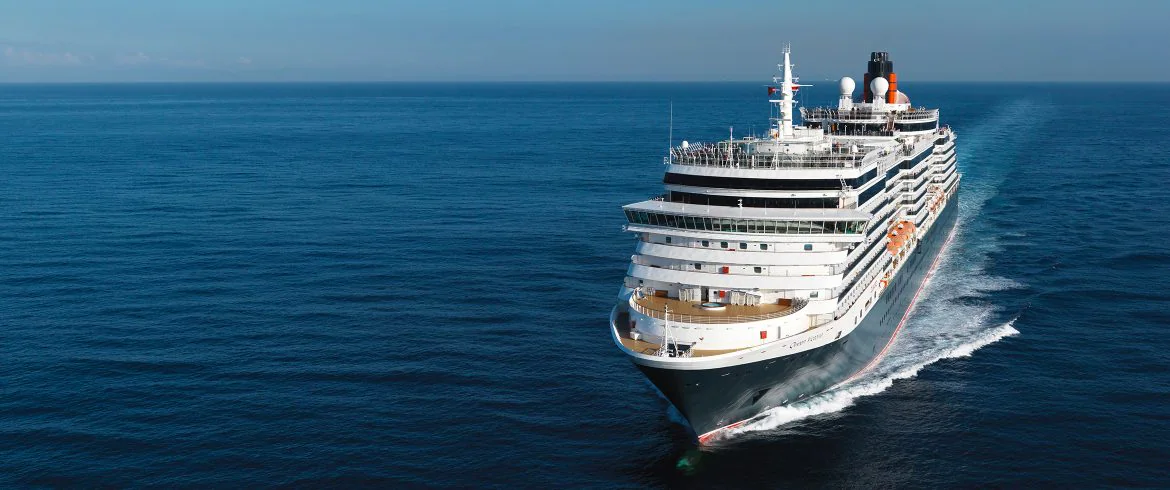
Cunard operates four Queens of vastly different character. Queen Mary 2 (2004, 148,528 gross tonnes, 2,691 guests) is the flagship — and the world’s only purpose-built ocean liner in active service. Her hull is reinforced with 40 per cent more steel than a standard cruise ship of equivalent size, four 70-tonne stabilisers reduce roll by 90 per cent, and she can maintain schedule in sea states that would slow or divert conventional cruise ships. She holds the designation RMS — Royal Mail Ship — the only vessel afloat to carry this title.
Queen Victoria (2007, 90,049 gross tonnes, 2,061 guests) and Queen Elizabeth (2010, 90,400 gross tonnes, 2,092 guests) are purpose-built cruise ships sharing a similar platform. Queen Anne (2024, 113,000 gross tonnes, 2,996 guests) is the newest — the first new Cunard ship in 14 years, and the largest by passenger capacity.
The size difference is profound. Queen Mary 2 is nearly five times the tonnage of an Azamara ship and carries nearly four times the passengers. Even Cunard’s smaller Queens are three times the size. This affects everything: Azamara can call at boutique ports like Hvar, Kotor, and Giardini Naxos that Cunard’s Queens cannot access. Azamara guests are off the ship in minutes at embarkation; Cunard guests may wait considerably longer. But Cunard’s larger ships offer facilities Azamara physically cannot house — a full-wrap promenade deck (one-third of a mile per lap on QM2), a planetarium, an 8,000-volume library, a bookshop, a grand ballroom, and multiple swimming pools.
The Transatlantic Crossing has no Azamara equivalent. QM2’s scheduled Southampton-to-New-York crossing — seven nights with no ports of call, aboard the only ocean liner afloat — is Cunard’s defining product and one of the most iconic voyages in all of cruising. Nothing in Azamara’s programme comes close to this. Azamara offers transatlantic repositioning voyages that cross the ocean as part of longer port-intensive itineraries, but the QM2 Transatlantic is a fundamentally different proposition: seven uninterrupted days at sea aboard a ship built specifically for the purpose. For many travellers, this single voyage justifies choosing Cunard at least once.
Destination coverage overlaps substantially — both lines serve the Mediterranean, Northern Europe, Caribbean, Asia, South America, Alaska, and Australia/New Zealand. But the approach differs. Azamara’s fleet visits over 300 ports in 70-plus countries with a focus on extended stays: 51 per cent of port time involves late nights or overnights, with 28 double-overnight stays fleet-wide. Cunard’s 184 destinations in 70 countries emphasise the voyage itself, with more sea days by design. Azamara’s 2026 World Voyage covers 36 countries in 155 nights with 55 overnight and late-night port stays. Cunard’s 2026 QM2 World Voyage covers 30 ports in 108 nights including the line’s first-ever Panama Canal transit.
Where each line excels
Azamara excels in:
- Port access and time ashore. Smaller ships reach harbours larger vessels cannot, and the commitment to late-night and overnight stays is industry-leading. No other line gives you as much time in port.
- Inclusive pricing. Drinks, gratuities, cultural excursions, and shuttle buses are all bundled. You board knowing the cost.
- Casual, personal atmosphere. No formal nights, 694 guests, and staff who learn your name by the second day create a floating country club that feels like your own.
- AzAmazing Evenings. Complimentary cultural events ashore in remarkable settings — a genuinely unique programme with no equivalent on any other line.
- Australian accessibility. Growing ANZ deployment with 25 cruises departing Australian ports between 2026 and 2028 means you can board without flying internationally.
Cunard excels in:
- Heritage and tradition. One hundred and eighty-five years of maritime history, formal Gala Evenings, white-gloved afternoon tea, and the only RMS designation afloat create an atmosphere steeped in occasion.
- The Transatlantic Crossing. Queen Mary 2’s scheduled Southampton-to-New-York service aboard the world’s only ocean liner is a bucket-list experience with zero competition.
- Intellectual enrichment. Four hundred and thirty speakers delivering 2,000 talks, RADA workshops, a planetarium, and a nightly ballroom with full orchestra — the finest enrichment programme in mainstream cruising.
- The Grills ship-within-a-ship. Exclusive dining rooms, private lounges, a separate sun terrace, and dedicated butler service create a genuine class differentiation refined over generations.
- Grand occasion atmosphere. If you want to dress for dinner, dance in a ballroom, attend the finest afternoon tea at sea, and feel the romance of ocean travel, no line delivers this more convincingly than Cunard.
Standout itineraries for Australian travellers
Azamara
15 to 22-night Australia Intensive Voyages (Azamara Onward or Pursuit, departing Sydney, southern hemisphere summer). These are Azamara’s core ANZ product — deep dives along the Australian and New Zealand coastlines with the late-night and overnight stays that define the brand. Ports include Milford Sound, Fiordland, Cairns, and Kangaroo Island. No international flight required.
Japan Cherry Blossom Season (Azamara Pursuit, spring). Azamara’s Japan itineraries time port calls to coincide with cherry blossom season, visiting Hiroshima, Kanazawa, Tokyo, and Kobe. The small ship size allows access to ports that larger vessels skip. Accessible via a fly-cruise from Australian east coast cities to Tokyo.
Africa Circumnavigation with Indian Ocean Islands (various departures). An itinerary covering South Africa, Madagascar, Seychelles, Mauritius, Tanzania, and Namibia — destinations that Cunard does not serve with comparable frequency. Extended overnight stays in multiple ports bring the Indian Ocean to life in a way that a brief morning call cannot.
155-Night World Voyage (Azamara Onward, departing Miami). Thirty-six countries, 55 overnight and late-night port stays, and 60 Extended Destination Days of ten or more hours in port. A comprehensive circumnavigation that plays to every Azamara strength. Sector bookings available from Sydney when the ship calls in Australian waters.
Cunard
QM2 Transatlantic Crossing (7 nights, Southampton to New York or reverse). The quintessential Cunard experience and the only scheduled transatlantic liner service in the world. Seven sea days aboard a purpose-built ocean liner. Fly one way, sail the other. Many Australians combine this with a European or North American holiday — fly to London, explore for a few days, then cross the Atlantic by sea before returning home via New York.
QM2 World Voyage 2026 (108 nights from Southampton). Queen Mary 2’s first-ever Panama Canal transit, calling at 30 ports across five continents including an overnight in Sydney. Australian travellers can book the sector from Sydney onwards. A historic sailing.
Queen Elizabeth Alaska from Seattle (7 to 12 nights, May to September 2026). Fifteen roundtrip voyages from Seattle covering Ketchikan, Glacier Bay, Juneau, and Sitka. Extended voyages of up to 42 nights combine Alaska with Caribbean and Panama Canal. These are described as among the final Alaska sailings on Queen Elizabeth before she is redeployed.
Queen Anne Northern Europe and Norwegian Fjords (various, 7 to 14 nights from Southampton). The newest Cunard ship exploring the Baltic capitals and Norwegian fjords — a strong pairing of a modern vessel with enrichment-rich itineraries. Cunard made 19 maiden calls in this region during the 2025 season.
Ship-by-ship recommendations
Azamara
Azamara Onward — The best choice for Australian travellers seeking ANZ departures. Onward is one of the primary ships deployed for Australia and New Zealand seasons and features the Atlas Bar (exclusive to this ship) with artisanal cocktails and small plates. Also the ship sailing the 2026 World Voyage.
Azamara Pursuit — The other primary ship for ANZ seasons and the vessel sailing expanded Alaska programmes in 2026. Pursuit also handles the popular Japan Cherry Blossom itineraries. A solid all-rounder.
Azamara Quest — Will be the first ship to undergo the Azamara Forward refurbishment, entering dry dock in late October 2026 and emerging in late November with the new Penthouse Suite Deck (Grandview and Panorama Suites), Chef’s Table restaurant, and refreshed cabins. For travellers who want the newest hardware in the Azamara fleet, Quest post-refit will be the ship to watch from December 2026 onwards.
Azamara Journey — Functionally identical to the rest of the fleet. Because all four ships share the same R-class platform and layout, the experience on Journey is the same as on Quest, Pursuit, or Onward. Book based on itinerary and dates, not ship name — the consistency is a genuine strength.
Cunard
Queen Mary 2 — If you are booking Cunard, start here. QM2 is the line’s reason for being — the only ocean liner afloat, purpose-built for the Transatlantic Crossing. The planetarium, the 8,000-volume library, the grand Queens Room ballroom, and the full-wrap Promenade Deck are all experiences specific to this ship. Book QM2 for the Transatlantic or a World Voyage sector.
Queen Anne — The newest ship (2024) and the most contemporary in the fleet. Four specialty restaurants (including Aranya Indian and Aji Wa Japanese), the most comprehensive Mareel Wellness spa, cryo-body therapy, and 162 Britannia Club staterooms — more than double any other Cunard ship. The best choice for travellers who want the Cunard heritage experience without dated hardware.
Queen Victoria — The primary Mediterranean ship, refreshed in 2024. At 90,049 gross tonnes and 2,061 guests, she is the most intimate of the four Queens. A good choice for travellers who want the Cunard formality in a slightly smaller setting.
Queen Elizabeth — Now redeployed to year-round North American operations from Seattle (Alaska) and Miami (Caribbean) following her 2025 refit. No longer homeporting in Australia. The 2025 refit added a Pavilion Wellness Cafe, refreshed the Queens Room and Commodore Club, and introduced Michel Roux Gala Evening menus. Book for Alaska or Caribbean departures.
For Australian travellers specifically
The Australian market dynamics for these two lines are moving in opposite directions, and this shift fundamentally shapes the recommendation.
Cunard is withdrawing from Australian homeporting. Queen Elizabeth’s final Australian season concluded in February 2025, when the ship departed Australian waters for the last time as a homeport vessel. She has been redeployed to year-round North American operations — Alaska from Seattle in summer, Caribbean from Miami in winter. This was a controversial decision that disappointed many Australian cruisers who had come to regard the annual Cunard season from Sydney as a fixture of the local cruise calendar.
Going forward, Cunard ships will visit Australia only on World Voyage segments. QM2 arrived in Sydney on her 108-night World Voyage in March 2026. Queen Anne visited during her 2025 World Voyage. Cunard has stated publicly that “world voyages are key and will always include Australia,” but the practical reality is clear: there are no more roundtrip sailings departing from Sydney or Melbourne. Australian travellers who want to sail Cunard must fly to Southampton, New York, Seattle, Miami, or another international departure port — adding the cost and complexity of international flights, jet lag, and pre-cruise accommodation.
Azamara is expanding its ANZ deployment. Twenty-five cruises are scheduled to depart Australian ports between 2026 and 2028, with 16 visiting New Zealand during the same period. Sydney is the primary departure port, with Melbourne featured as a pre and post-cruise City Stay option. Azamara ships call regularly at Cairns, Kangaroo Island, and various New Zealand ports. The southern hemisphere summer season (November to March) sees dedicated ship deployments — primarily Azamara Onward and Azamara Pursuit — to Australian waters.
For Australian travellers who want to cruise from home without flying internationally, Azamara is the clear choice from this pairing. The growing ANZ deployment means more itinerary options, more departure dates, and the convenience of boarding in Sydney.
There is also the nationality mix to consider. Australians and New Zealanders make up approximately 11 per cent of Azamara’s global passenger mix — the third-largest nationality group after North Americans (60 per cent) and British (18 per cent). On ANZ season sailings, the Australian proportion is considerably higher. Cunard’s passenger base is predominantly British, with a strong Anglophile following from the United States, Canada, and Australia. Both lines attract international passengers, but Australians will find more compatriots aboard Azamara during the local sailing season.
Neither line maintains a dedicated Australian head office. Both are bookable through major Australian cruise retailers and CLIA-accredited travel agents. Onboard accounts are denominated in US dollars on both lines, though pricing through Australian agents is quoted in AUD.
The onboard atmosphere
For all the discussion of inclusions, pricing, and itineraries, the factor that most often determines whether an Australian traveller rebooks is the atmosphere — and this is where the dress code becomes the single biggest differentiator.
Azamara’s atmosphere is intimate, social, and deliberately unstressed. The resort casual dress code means no formal nights, no anxiety about packing the right outfit, and no last-minute wardrobe decisions before dinner. Men are recommended to wear sport coats in the dining room but are not required to. Women wear dresses, skirts, or smart casual — whatever they are comfortable in. The White Night deck party — Azamara’s signature event where everyone dresses in white for a lavish outdoor buffet dinner and dancing under the stars — is the closest the line comes to a dress-up occasion, and even that is festive rather than formal.
With 694 guests and a crew-to-guest ratio of approximately 1:1.7, the small-ship dynamic creates genuine relationships. Staff learn your name quickly. By mid-voyage, the ship feels like a private yacht. There is no children’s programme, no kids’ club, and no water slides — the atmosphere is adult-oriented throughout. The entertainment is low-key, the evenings are quiet, and the emphasis is on conversation, live music, and looking forward to tomorrow’s port. Many passengers describe the feeling as “coming home.”
Cunard’s atmosphere is grand, traditional, and built around ceremony. Gala Evenings — at least one per voyage of three or more nights — require black tie or dark suits for men and gowns or cocktail dresses for women. Most non-Gala evenings mandate Smart Attire from 6pm: jacket and tie for men, cocktail dress or trouser suit for women. The Queens Room ballroom, with its double-height ceiling and chandeliers, hosts nightly dancing with a full orchestra or big band. Dance Hosts are provided for unpartnered guests. Afternoon tea is a daily ritual of white gloves, fine china, and live music. The grand staircase, the art collection, the well-stocked library, and the Commodore Club with its forward-facing ocean views all contribute to an atmosphere that feels like a floating Edwardian country house.
The class system adds another layer. Queens Grill guests inhabit a different social world from Britannia guests — exclusive restaurants, private lounges, and a separate sun terrace create a hierarchy that some find aspirational and others find uncomfortable. The onboard culture reflects this: Grills guests describe the experience as “impeccable,” while some Britannia guests have noted a feeling of being in a secondary tier.
For Australian travellers — who research consistently shows prefer casual dress codes on cruises — Cunard’s formality is the most polarising factor in this comparison. Travellers who enjoy the theatre of dressing for dinner, who relish the ritual of afternoon tea, and who find the grand staircase entrance genuinely exciting will love Cunard in a way that Azamara cannot replicate. Travellers who find formal nights uncomfortable, who pack light by preference, and who see dress codes as an imposition rather than an occasion will be far happier on Azamara.
My recommendation to clients who are uncertain: ask yourself honestly whether you enjoy getting dressed up for dinner. Not whether you can tolerate it — whether you genuinely enjoy it. The answer almost always determines the line.
The bottom line
Azamara and Cunard are not competing for the same traveller. They serve different desires, different definitions of what makes a great cruise, and different visions of the relationship between ship and shore.
Choose Azamara if the destination is the primary reason you cruise. Choose it for late-night port stays and overnight calls that let you experience cities after the day-trippers have gone. Choose it for the inclusive fare that covers drinks, gratuities, and a cultural excursion ashore. Choose it for the intimate 694-guest ships where the crew know your name and the atmosphere feels like a floating country club. Choose it for no formal nights and no dress code anxiety. Choose it for the growing Australian deployment — 25 sailings from local ports between 2026 and 2028 — that lets you board in Sydney without an international flight. Accept that the ships are 25 years old (though being substantially refurbished), that onboard facilities are modest compared to Cunard’s grand Queens, and that entertainment is intimate rather than theatrical.
Choose Cunard if the voyage itself is the experience you are seeking. Choose it for 185 years of heritage, for Gala Evenings where you dress for dinner because you want to, for nightly ballroom dancing in the Queens Room with a full orchestra. Choose it for the Transatlantic Crossing aboard Queen Mary 2 — the only scheduled ocean liner service in the world and a bucket-list voyage with no equivalent on any other line. Choose it for the Cunard Insights enrichment programme with 430 speakers and 2,000 talks, for RADA workshops, for the only planetarium at sea. Choose it for the Queens Grill ship-within-a-ship experience — exclusive dining, butler service, private lounges — refined over generations. Accept that you will need to fly internationally to board most sailings now that Australian homeporting has ended, that the base fare excludes drinks and gratuities, that the formal dress code polarises Australians, and that the class hierarchy creates a stratified onboard culture.
For many of my clients, the answer is not one or the other — it is both, for different trips. Azamara for a Mediterranean destination-immersion voyage from Sydney or a Japan Cherry Blossom sailing. Cunard for the Transatlantic Crossing or a World Voyage sector. These are complementary lines serving different moods, and recommending both is one of the most rewarding things I do as an advisor. The question is not which line is better. It is which line is better for the voyage you are planning right now.