Windstar Cruises
Yacht-Style Cruising
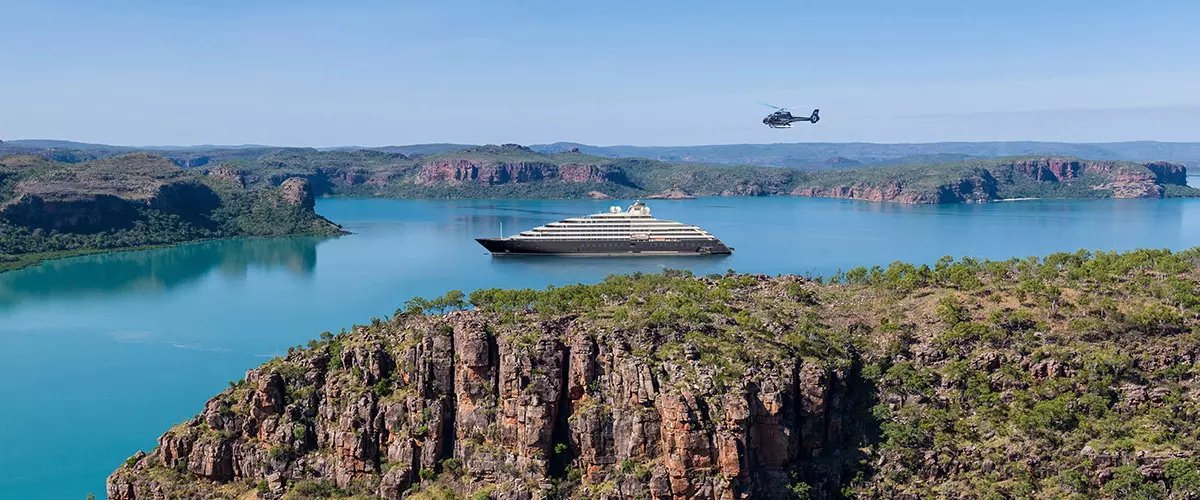
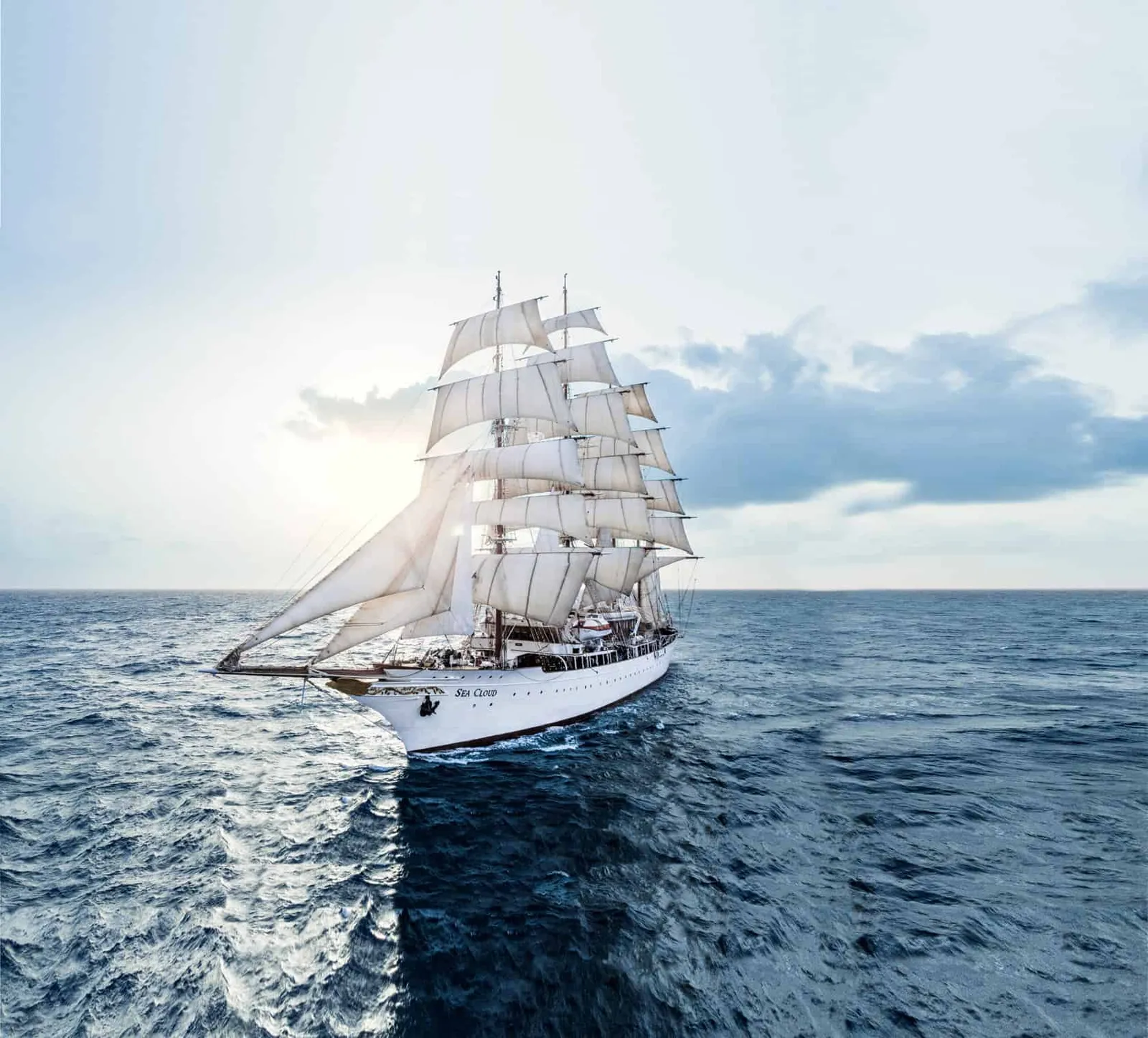
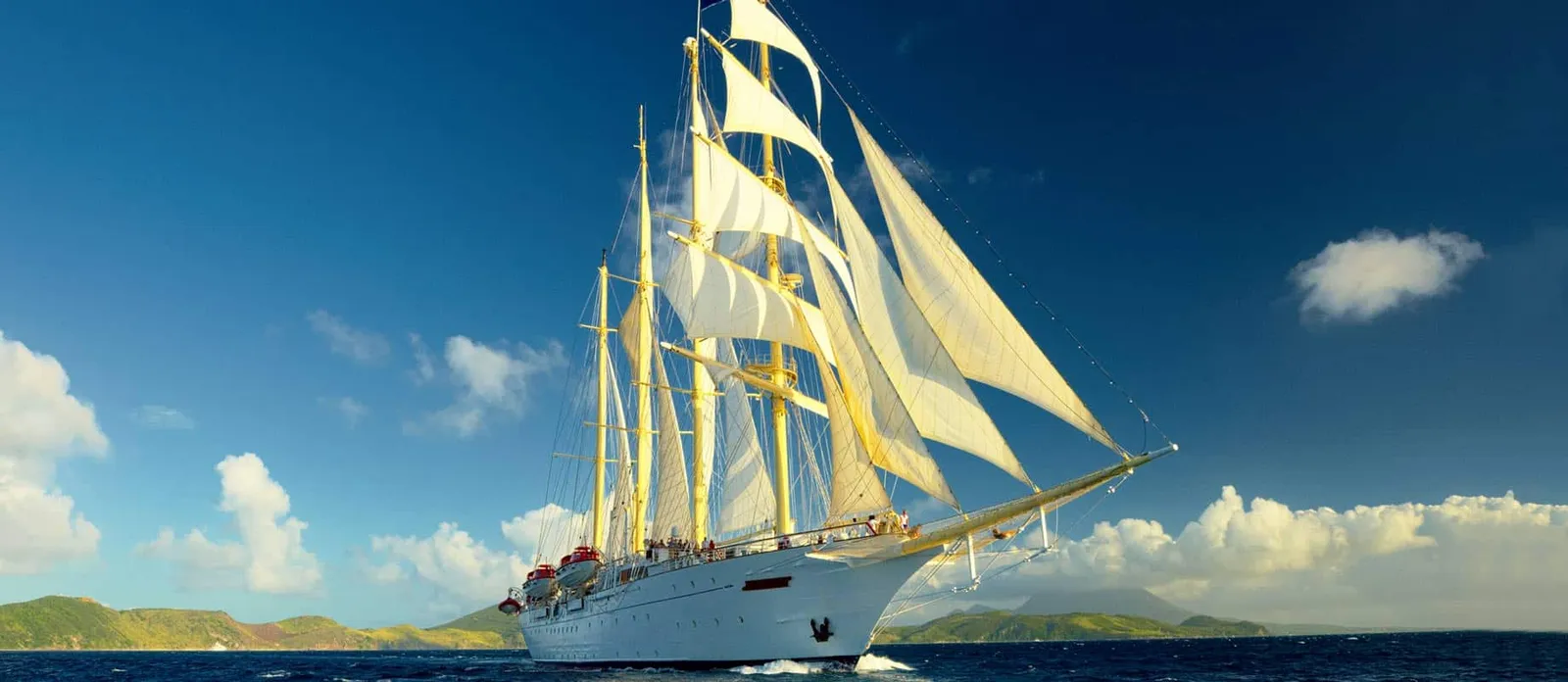
Windstar occupies a sweet spot between the barefoot adventure of Star Clippers and the formality of a Silversea. The sailing yachts are stunningly beautiful under canvas, and the all-suite motor vessels punch well above their size in dining and service. The 180 Under the Stars deck barbecue is one of cruising's great evenings. I recommend the Wind Surf for the most space and the best watersports platform, though clients should know she's getting a cabin refresh in 2026 and the new Star Seeker will debut later that year.
Windstar Cruises was born from a genuinely radical idea. When Swedish entrepreneur Karl Andren and French naval architect Jean-Claude Potier launched the line in 1984, their vision was to build purpose-designed motor-sailing yachts with computer-controlled sails — vessels that married the romance of wind-powered travel with every modern comfort. The first ship, Wind Star, entered service in 1986 carrying just 148 guests beneath four towering masts. Nothing like it had existed before, and the concept created an entirely new category of cruising that endures four decades later.
Today Windstar operates a fleet spanning three distinct classes: the original Wind-class sailing yachts, the Star Plus motor yachts (former Seabourn vessels transformed through a quarter-billion-dollar renovation programme), and the brand-new Star-class all-suite yachts. The sailing ships remain the emotional heart of the brand, but the motor yachts have expanded Windstar's reach into more diverse itineraries and given the line a broader appeal. Ownership sits with the Anschutz Corporation through its Xanterra Travel Collection subsidiary, the same company that operates lodges in Yellowstone and the Grand Canyon, and that stewardship ethos is apparent in how the fleet is managed.
What makes Windstar fundamentally different from every other cruise line is scale, informality, and a genuine sailing heritage. No ship carries more than 342 guests. There is no casino, no production theatre, no cruise director orchestrating poolside games. The ships slip into harbours, anchorages, and island bays that no large vessel could approach, and the onboard atmosphere is closer to a friend's yacht than a floating resort. Windstar's long-standing tagline — "180 Degrees from Ordinary" — is not mere marketing. It is an accurate description of what the experience actually feels like.
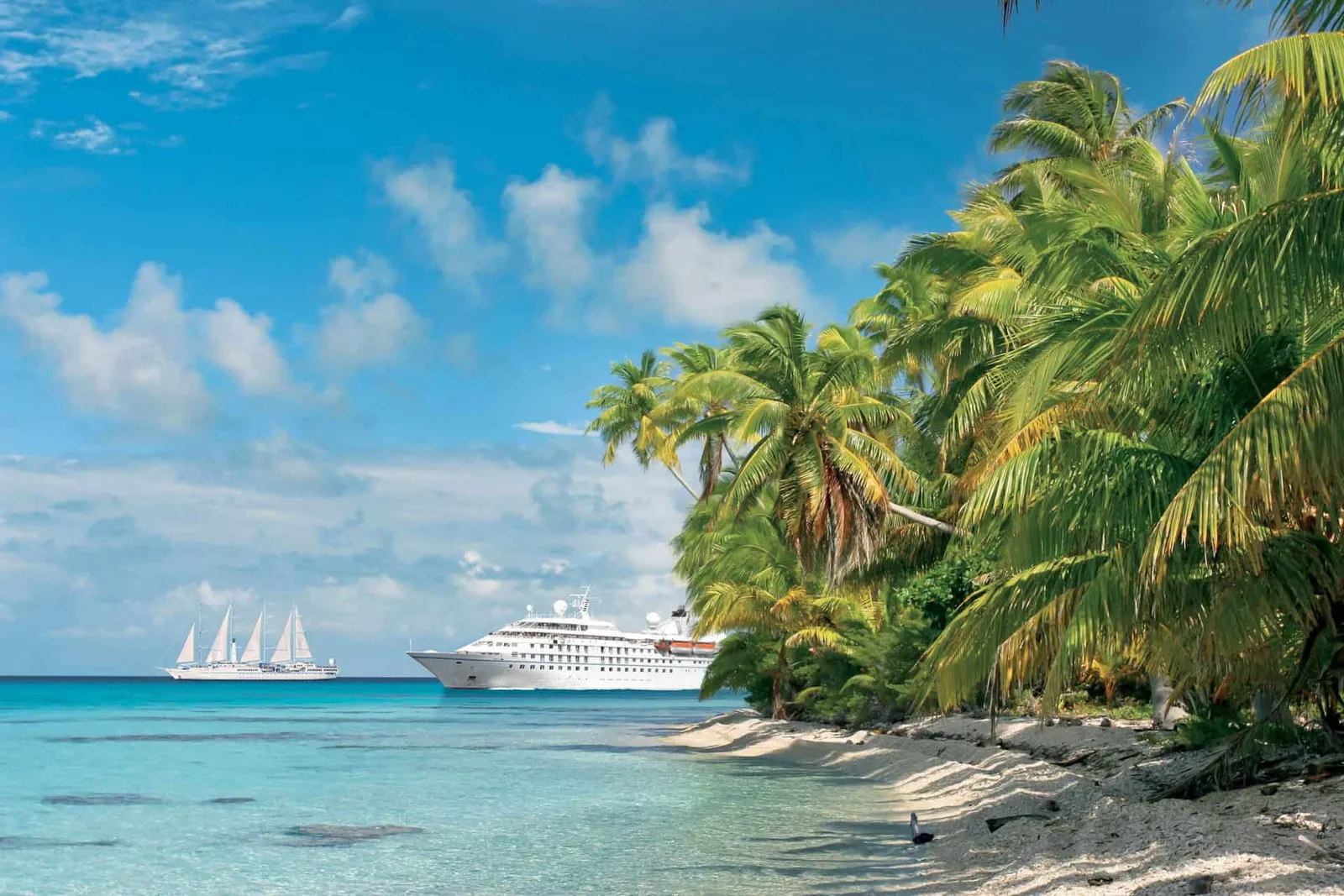
Sailing on a Wind-class yacht is one of cruising's most distinctive experiences. As the ship departs port, the computer-controlled sails unfurl one at a time to the accompaniment of dramatic orchestral music, rising to over 220 feet above the waterline on Wind Surf. Standing on deck as those vast white sails billow against a Caribbean sunset or a Mediterranean dawn is the kind of moment that stays with you. The sails do provide genuine auxiliary propulsion and fuel savings, though guests should understand that these ships are primarily engine-driven. This is not hands-on sailing in the Star Clippers tradition; it is sailing as romance, beauty, and atmosphere.
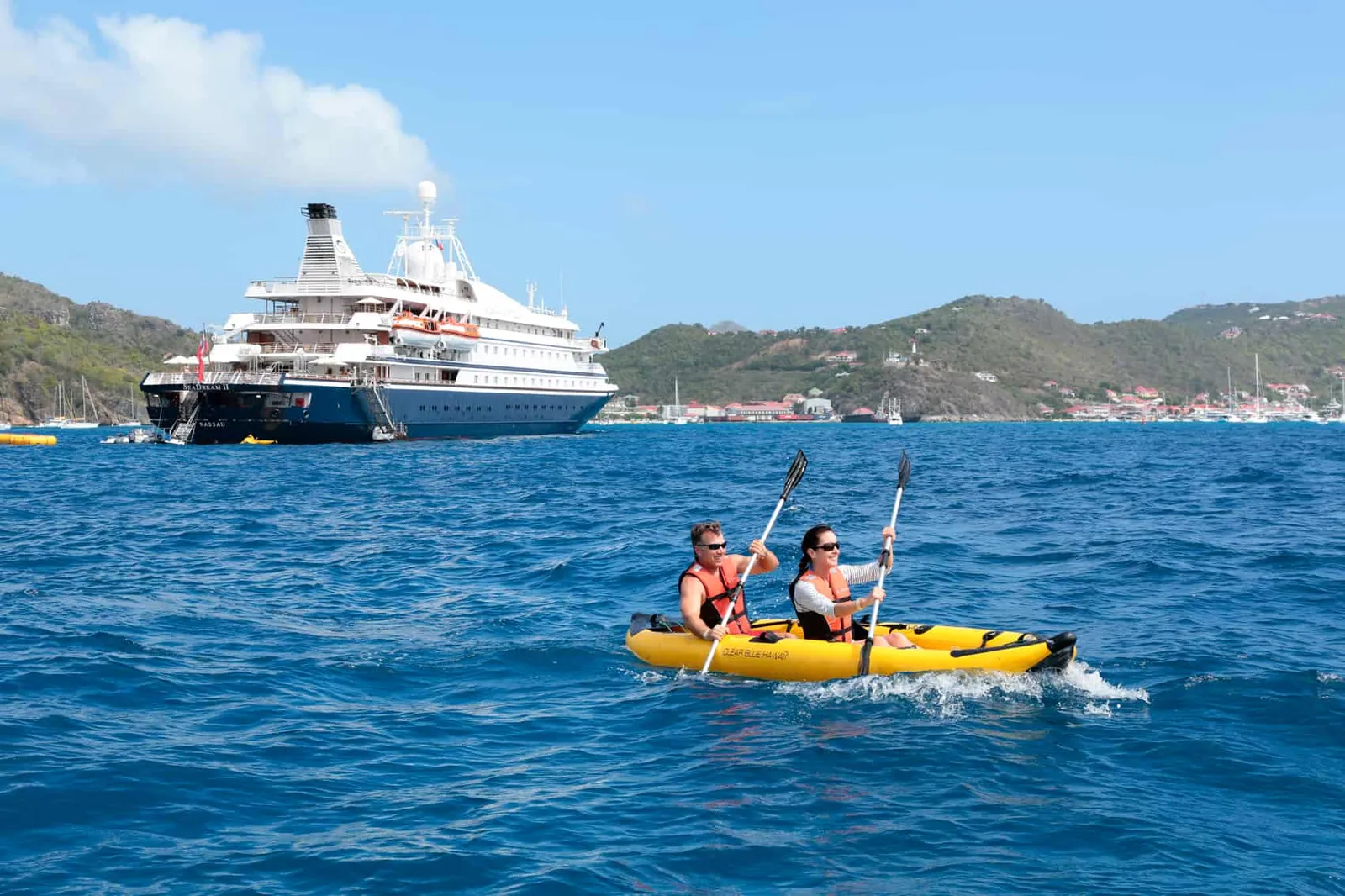
The watersports marina is the other defining feature. A hydraulic platform at the stern lowers to water level whenever the ship anchors, creating a swim deck and launch point for complimentary kayaking, paddleboarding, sailing, windsurfing, snorkelling, and water trampolines. In the Caribbean and Tahiti, the marina opens multiple times per voyage, and the experience of stepping off the back of your ship into warm turquoise water is something no large cruise vessel can offer. PADI diving is available at additional cost in select regions.
The intimacy is real and tangible. With 148 to 342 guests, crew learn your name by the second day. There are no PA announcements, no photography gauntlets, no art auctions, no towel-saving battles for sun loungers. The captain maintains an open bridge policy — guests can visit the bridge morning, noon, or night to chat with officers about navigation, weather, and seamanship. The pool deck feels like a friend's backyard rather than a crowded resort. On a seven-night voyage, you will recognise most of your fellow guests by mid-week, and the social dynamic is convivial without being forced. Windstar's shallow draft gives access to small ports and anchor-off-beach locations across the Mediterranean, Caribbean, South Pacific, and Alaska that larger ships can only dream of visiting.
Windstar's base fare covers all dining across every restaurant on board, 24-hour room service, non-alcoholic beverages, full use of the watersports marina, fitness centre access, port lectures and destination briefings, and the Signature Deck Barbecue evening. There are no cover charges or surcharges at any restaurant. In-suite amenities include L'Occitane toiletries, waffle-weave robes and slippers, and fresh fruit. Complimentary Discovery Events — cultural shore experiences such as beach barbecues and local performances — are offered on select sailings.
What is not included in the base fare: alcoholic beverages, Wi-Fi, gratuities (a Hotel Service Fee of USD 16 per person per day), shore excursions beyond the complimentary Discovery Events, spa treatments, and laundry. This puts Windstar's base model closer to Oceania or Azamara than to the fully inclusive fares of Silversea or Regent Seven Seas.
The optional All-Inclusive Package bridges that gap. It adds unlimited wines, spirits, and cocktails by the glass, Starlink Wi-Fi, and covers all gratuities and beverage service charges. Windstar periodically offers this package complimentarily on promotional sailings, and when the upgrade is included the overall value proposition becomes genuinely competitive with lines charging significantly more. It is worth asking about current promotions at the time of booking.
Windstar punches well above its weight in dining, and the reason is a genuine partnership with the James Beard Foundation that has been running since 2016. This is not a logo on a menu. More than 45 JBF-recognised chefs have participated in chef-hosted voyages, and three rotating James Beard Foundation dishes appear on the AmphorA dinner menu at all times. The culinary programme has been materially elevated by this relationship, and it shows in the ambition and quality of what arrives at the table.
AmphorA, the main dining room, operates on an open-seating, no-reservation basis with menus that change nightly and draw on regional ingredients from the current itinerary. Candles transforms the outdoor Veranda space each evening into a candlelit steakhouse under the stars — white tablecloths, premium cuts, serious wine service, and an ambience that is difficult to replicate anywhere, let alone at sea. Book early; it fills quickly. On the Star Plus and Star-class ships, the Star Grill by Steven Raichlen adds an outdoor barbecue venue, and Basil + Bamboo offers Mediterranean-Asian fusion. The Signature Deck Barbecue, held once per voyage on the upper decks with live music and local ingredients, is one of Windstar's most beloved traditions and regularly ranks as a voyage highlight.
Dietary accommodation is handled well. Vegetarian and pescatarian options are available across all venues. Guests with allergies, coeliac requirements, or other dietary needs should notify Windstar in advance, and the galley will prepare accordingly. The wine list is extensive, with sommelier service at dinner, and quality is solid across all price points.
Windstar attracts a well-travelled, intellectually curious crowd. The core demographic sits between 45 and 70, with a sweet spot around the 50s and 60s, though romantic couples in their 30s and 40s are a notable presence, particularly on Caribbean and Tahiti sailings. The passenger mix is predominantly North American, with British, European, and Australian guests comprising a smaller but consistent segment. Most guests have cruised before and have deliberately chosen not to sail on a large ship. Many are repeat Windstar travellers — the return rate is notably high.
The informality is genuine, not performative. Windstar calls the dress code "Casual Elegance," which in practice means sundresses, linen trousers, and collared shirts in the evening. No ties, no gowns, no black-tie anything, ever. During the day, shorts, swimwear, and bare feet are standard. The atmosphere is quiet — no blaring pool music, no game-show hosts, no PA announcements beyond safety information. Conversations at dinner tend toward travel, culture, food, and local history rather than where the next trivia session is. Guests who thrive here consider a sunset from the deck with a glass of wine to be the finest entertainment at sea.
This is an important distinction: Windstar is not for everyone, and the line makes no apology for it. There are no production shows, no casino, no children's programme, no nightclub. The entertainment is live acoustic music, local cultural performers brought aboard in port, guest lecturers, culinary demonstrations, and the open bridge. If you need structured evening activities, Windstar will disappoint. If you consider the destination, the sails, and the company of like-minded travellers to be entertainment enough, you will understand why so many guests return year after year.
Windstar's Yacht Club is a four-tier, points-based loyalty programme with automatic enrolment after your first sailing. Points accumulate based on cruise fare, cabin category, and voyage length, and they never expire. Once a tier is achieved, it is retained permanently — a generous policy compared to programmes that require annual requalification.
The tiers run from One Star through Four Star. All members receive a five percent fare discount on future bookings, increasing to ten percent for sailings booked within 60 days of departure. From Two Star onward, benefits include onboard credits (USD 50 per person, rising to USD 100 at Four Star) and discounts on shore excursions, beverages, and merchandise. The Four Star tier unlocks complimentary Wi-Fi and laundry — meaningful per-voyage savings for regular cruisers.
The programme is honest rather than headline-grabbing. It does not rival the deep perks of Silversea's Venetian Society or Seabourn Club, but the permanent tier status and non-expiring points are appreciated, and for guests who sail Windstar regularly the cumulative value is worthwhile. Designated Yacht Club Member sailings periodically offer an additional 20 percent fare discount, which can make repeat bookings genuinely attractive.
Windstar's strongest Australian proposition is the year-round Tahiti programme aboard Star Breeze, sailing continuously from Papeete through the Society Islands, Tuamotus, and Marquesas. For east coast Australians, Tahiti is a natural fit: the flight from Sydney is approximately nine hours via Air Tahiti Nui, the time zone difference is minimal, and the French Polynesian islands are among the most beautiful destinations accessible from Australia. Windstar offers fly-cruise packages in partnership with Air Tahiti Nui, including return economy flights from Sydney, Brisbane, and Melbourne with supplementary pricing from other Australian cities.
The Mediterranean itineraries also appeal to well-travelled Australians who have already seen the major European ports on larger ships and want to reach places like Portofino, Korcula, Bonifacio, and the Grenadines that only small vessels can access. For these sailings, Australians typically book cruise-only and arrange their own flights. Star Seeker's inaugural Alaska season introduces Zodiac-based exploration and an ice-strengthened hull that may attract Australian expedition enthusiasts looking for a softer alternative to full polar voyaging.
Windstar maintains an Australian-specific booking website and a local phone line, and the brand is distributed through specialist cruise travel agents. Brand awareness in Australia is lower than for Ponant, Silversea, or Viking, so working with a specialist agent — particularly one familiar with the sailing yacht experience — is the best way to navigate the fleet, choose the right ship class, and secure any active promotions.
Windstar sits in a distinctive pricing band: above premium lines like Azamara and well below ultra-luxury lines like Seabourn or Silversea. Per-night rates for a standard cabin on a seven-night Mediterranean or Caribbean sailing start in the mid-hundreds and climb into the low thousands for higher suite categories and peak-season Tahiti or Alaska departures. The base fare is not all-inclusive, which means the true cost depends on whether you add the All-Inclusive Package and how much you spend on shore excursions and spa treatments.
In comparative terms, Windstar's base fare is noticeably higher than Star Clippers — which offers a more rustic, hands-on sailing experience at accessible pricing — but significantly lower than SeaDream, which delivers a fully inclusive mega-yacht experience for a smaller guest count. When Windstar's All-Inclusive Package is factored in (or offered complimentarily during promotions), the per-diem value moves closer to what you would expect from a small-ship line with this level of dining, service, and destination access.
Solo travellers should budget for a single supplement of 150 to 200 percent of the double-occupancy fare, though periodic promotions may reduce this. Deposit and cancellation terms are standard for the segment, with final payment typically due 90 days before departure and a sliding cancellation scale. The best pricing tends to appear during wave season (January to March) and for last-minute bookings within 60 days, where Yacht Club members receive an additional fare discount. As with any cruise line, booking through a specialist agent who knows the Windstar fleet will ensure you are matched to the right ship, the right cabin category, and the best available promotion.
Share your dates and preferences and we will come back with Windstar Cruises cabin options, pricing, and insider tips.