Viva Cruises
River Cruising
Viva is the best river cruise line most Australians haven't heard of yet. Backed by Scylla, which has been building and operating river ships since 1974, the product punches well above its weight — three full restaurants on a 190-guest ship is unheard of, and the all-inclusive package genuinely covers everything including the minibar. The international passenger mix and the boutique-hotel design give it a very different feel to the American-dominated lines. Watch for their new VIVA Boutique offshoot on the Seine in 2026.
Viva Cruises launched in 2018 and most Australians still have not heard of it. That is changing, and for good reason. The brand is the consumer-facing arm of Scylla AG, a Swiss shipping company that has been building and operating river vessels since 1974. Scylla owns over 40 ships and builds vessels for some of the biggest names in the industry — Tauck, Riviera Travel, Phoenix Reisen — so the engineering and operational pedigree behind Viva is substantial, even if the brand name is relatively new. The Dusseldorf-based team started with a single chartered ship and now operates a fleet of 10 vessels across Europe's major waterways, with 325 departures scheduled for 2026.
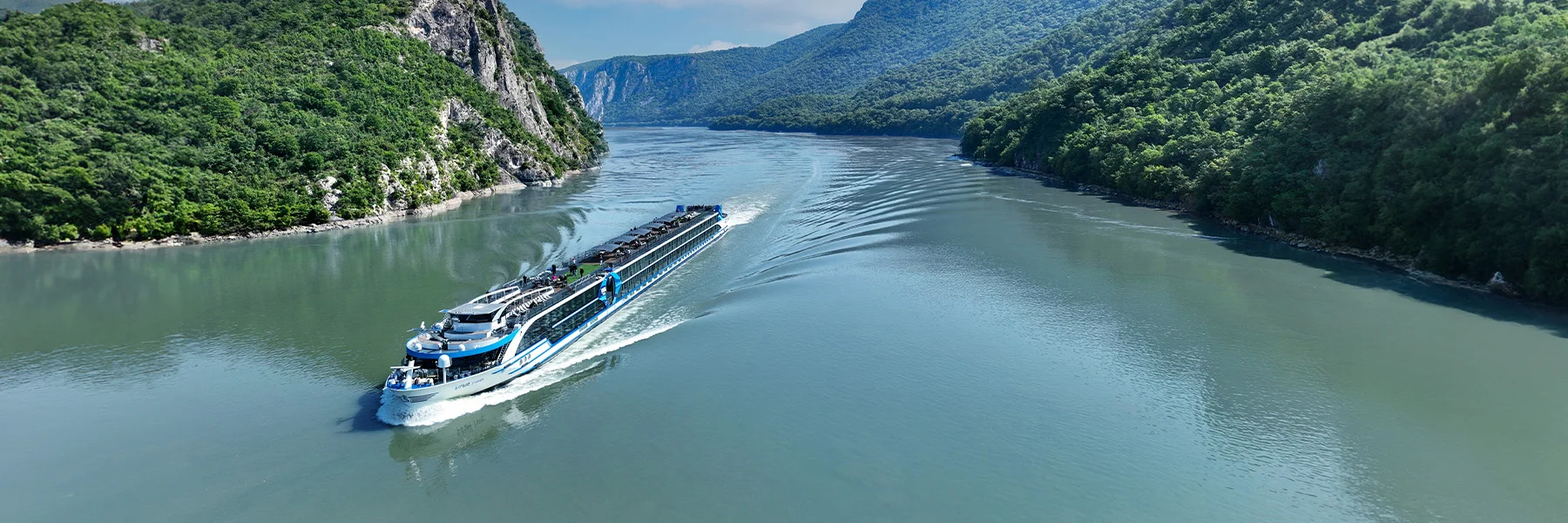
What sets Viva apart in a crowded European river cruise market is the combination of genuinely comprehensive all-inclusive pricing, a boutique-hotel design philosophy, and the flexibility to let guests set their own pace. The newest ships — Viva One, Viva Two and Viva Enjoy — feature an innovative half-deck layout that creates impressively tall public spaces flooded with natural light, a standalone bar separate from the lounge, and three full-service restaurants on a ship carrying fewer than 200 guests. That last point is worth underscoring: three restaurants with no surcharges on a 190-passenger river ship is virtually unheard of. The upcoming Viva Boutique sub-brand, debuting on the Seine in May 2026 with the all-suite Viva Beyond, signals that ambition is not in short supply.
Cruise Critic has called Viva "the best river cruise line you've never heard of," and that assessment holds up. The product sits firmly in the premium segment — above CroisiEurope and A-ROSA, competitive with Viking on price but with markedly better inclusions. It is not ultra-luxury and does not pretend to be. But for travellers seeking an international, contemporary European river cruise experience with genuine substance behind the all-inclusive promise, Viva delivers.
Viva's all-inclusive model is one of the most comprehensive in European river cruising, and it is worth understanding exactly what that covers because it materially changes the value equation against competitors.
The fare includes full board across every restaurant on the ship — breakfast with a cooked-to-order egg station, multi-course lunch, pre-dinner canapes, a gourmet multi-course dinner, late-night snacks, and a high tea once per cruise. All alcoholic drinks throughout the day are included: beer, wine, champagne, cocktails, spirits, liqueurs. Non-alcoholic beverages, speciality coffees and teas are covered as well. The cabin minibar is restocked daily with water, soft drinks, beer and wine at no additional charge. Wi-Fi is included across all ships. All crew gratuities are covered. One guided shore excursion per port is included with audio headsets provided. Complimentary bicycle hire — including e-bikes on newer ships — is available for independent port exploration. Guests also receive a reusable water bottle, Rituals beauty products, bathrobes and slippers, and 24-hour access to the fitness centre.
What is not included: premium excursions beyond the one per port, spa treatments, laundry service, onboard shop purchases, flights, airport transfers, pre- and post-cruise hotels, and travel insurance. These are standard extras for the category.
The practical impact of this package is significant. On Viking — Viva's closest competitor on price — complimentary beverages are restricted to wine, beer and soft drinks at lunch and dinner only. The minibar is not included. Gratuities are extra for most markets. When you calculate the true all-in cost of a week on the water, Viva's headline fare frequently represents better value than competitors advertising a lower starting price.
Dining is consistently the highest-rated aspect of the Viva experience, and the line has invested accordingly. On the 135-metre newbuilds, three distinct restaurants operate without surcharges or restrictions — guests can eat wherever they choose, as often as they like.
Riverside is the main dining room, serving an international gourmet menu with regional European specialties that change to reflect the river being sailed. Austrian schnitzel and goulash on the Danube, Normandy cuisine on the Seine, Rhenish specialties on the Rhine. The breakfast buffet includes a cooked-to-order station, and lunch is a multi-course affair. Moments, seating around 60 guests in the stern, offers five-course wine-paired Italian-influenced dinners in a fine-dining setting. Reservations are recommended but there is no surcharge. Viva's Bistro, an intimate 30-seat venue in the bow, features an open kitchen serving comfort food with Asian and Mediterranean themed evenings.
The philosophy is flexibility first. There are no fixed dining times — dinner orders are accepted until approximately 9 PM. There are no assigned tables. Open seating naturally encourages interaction with fellow guests, and menus do not repeat across a seven-night voyage. Reviewers consistently praise the standard of the main courses — "juicy beef tenderloin," "perfectly crispy fish skin every time" — alongside the pre-dinner canapes, cheese and charcuterie tastings featuring local produce, and an afternoon tea service with live piano.
Dietary requirements including vegetarian, vegan, and gluten-free are accommodated with advance notice. Viva states they handle "all common food allergies or intolerances" and guests should register needs at booking rather than waiting until embarkation. For dedicated food enthusiasts, themed gourmet voyages — such as the Falstaff Edition cruise featuring a bread sommelier, master coffee roaster and Master of Wine — take the culinary programme further.
Where reviews occasionally flag concerns: the Bistro's 30-seat capacity means it fills quickly, wine lists could feature more German selections given the company's origins and deployment, and the odd dish does not land. But the overall dining standard is a genuine strength, and three complimentary restaurants on a sub-200-guest river ship remains an exceptional proposition.
The passenger mix on Viva is notably different from most river cruise lines marketed in Australia. Roughly half the guests on any given sailing are German-speaking, with another 45 per cent drawn from across Europe — Scandinavia, Israel, Belgium, the Netherlands, Spain — and a small but growing North American contingent. This creates a cosmopolitan, multilingual atmosphere that some travellers find enriching and others find challenging. All service, announcements and menus are bilingual in German and English, and shore excursions operate in separate language groups.
Viva intentionally targets a younger demographic than the traditional river cruise market, aiming at passengers aged 45 to 55 rather than the 65-plus norm. The result is a noticeably more energetic social atmosphere than you find on Viking or Scenic. Open seating in restaurants fosters conversation, the smaller ship size of 80 to 190 guests creates genuine intimacy, and the separate bar and lounge spaces give guests options for different energy levels. Reviews consistently describe evenings as more social and lively than the industry standard, with DJ sets, dancing, and late-night conversations in the Panorama Bar Lounge.
The dress code is casual throughout with no formal nights — long trousers for men in the restaurant and classic-casual attire in the evening. Daily surprises including sunset canapes, late-night snacks and chocolates on the pillow add personal touches that passengers frequently cite. The crew delivers warm, attentive service without the formality of ultra-premium competitors, and several reviewers note that staff remember guests by name from the first day.
This is not the right line for travellers who want an exclusively English-speaking environment, structured regimented programming, or the contemplative Scandinavian calm of a Viking sailing. But for those comfortable in an international setting who appreciate a sociable, flexible and distinctly European atmosphere, the experience has real personality.
Viva Cruises is still building its presence in the Australian market. There is no Australian office, no AUD-denominated website, and no included air programme from Australian gateways. A country manager covering the UK, Ireland, Australia and New Zealand exists, and CLIA membership since 2023 supports growing trade awareness. Booking through a specialist Australian river cruise agent with access to Viva's trade portal is the most practical approach.
Given the long-haul flight required to reach any European embarkation port, the strategic advice is straightforward: combine your Viva cruise with a broader European itinerary. Dusseldorf, Vienna, Paris and Porto are all well-served by one-stop connections from Sydney and Melbourne via Singapore, Dubai or Doha. Viva's year-round sailing programme is a particular advantage here. If you are travelling during the Australian summer, the winter Danube and Seine cruises and the superb Christmas market programme offer experiences that most competitors simply cannot provide because their fleets are in dock from November through March.
The language consideration is worth addressing honestly. You will be sailing with a predominantly European passenger base, and on some departures you may be one of relatively few English speakers beyond the core crew. For travellers who embrace that as cultural immersion, it enhances the experience. For those who would find it isolating, it is worth discussing with your agent to identify sailings with a stronger English-speaking contingent. All currency on board is in euros, and comprehensive travel insurance from an Australian provider is essential.
Viva's pricing philosophy is refreshingly transparent. Published brochure prices do not change throughout the year — what appears in the brochure is the price year-round, without the dynamic pricing fluctuations common across the industry.
For a standard seven-night cruise, entry-level Emerald Deck cabins with fixed windows start from approximately EUR 1,250 to EUR 1,395 per person (roughly AUD 2,050 to AUD 2,285 at current rates). Upper-deck cabins with French balconies on the Ruby or Diamond Deck range from approximately EUR 1,600 to EUR 2,000 per person (AUD 2,620 to AUD 3,275). Short three-to-four-night cruises start from around EUR 495 per person (AUD 810), while the grand 15-night Danube voyage to the Black Sea starts from EUR 2,500 per person (AUD 4,095). Solo travellers pay a supplement of 25 to 45 per cent of the double-occupancy fare.
The value proposition becomes clearest when you compare the true all-in cost against the competition. Viva's fare includes all-day drinks, minibar, gratuities and one excursion per port. On Viking — the most comparable line on headline price — drinks beyond mealtimes, the minibar and gratuities are all extras. When those costs are added to Viking's base fare, the gap typically closes or reverses in Viva's favour. Against premium operators like AmaWaterways, Avalon, Uniworld, Scenic and Tauck, Viva sits at a lower price point while delivering a comparable or superior all-inclusive scope.
The fleet quality distinction is worth noting. The 2022 to 2024 newbuilds — Viva One, Two and Enjoy — deliver the full three-restaurant, split-level boutique-hotel experience that earns the strongest reviews. The older refurbished ships from the mid-2000s are well maintained but lack the design innovation and carry occasional age-related niggles. If you are booking Viva for the first time, I would steer you toward the newer ships. The difference in hardware is noticeable, even though the service philosophy and all-inclusive scope are consistent across the fleet.
Share your dates and preferences and we will come back with Viva Cruises cabin options, pricing, and insider tips.