Viking River Cruises
River Cruising
Viking wrote the playbook for modern river cruising. The Longships are beautifully designed — light, airy and consistent — and the included excursion in every port plus the cultural enrichment programme make the overall value hard to beat. I always tell clients to book a Veranda stateroom or higher so they can sit on a real balcony with their morning coffee and watch Europe drift past. The Explorer Suites at the stern are some of the best accommodation on any river.
Viking River Cruises is the world's largest river cruise line by a considerable margin, operating approximately 90 purpose-built vessels across Europe's major waterways, Egypt's Nile, Southeast Asia's Mekong, and the American Mississippi. Founded in 1997 by Norwegian entrepreneur Torstein Hagen with four ships, the company reached its 100th vessel across all divisions in October 2025. That scale translates directly into more itinerary options, more departure dates, and greater operational flexibility when things go wrong on the water.
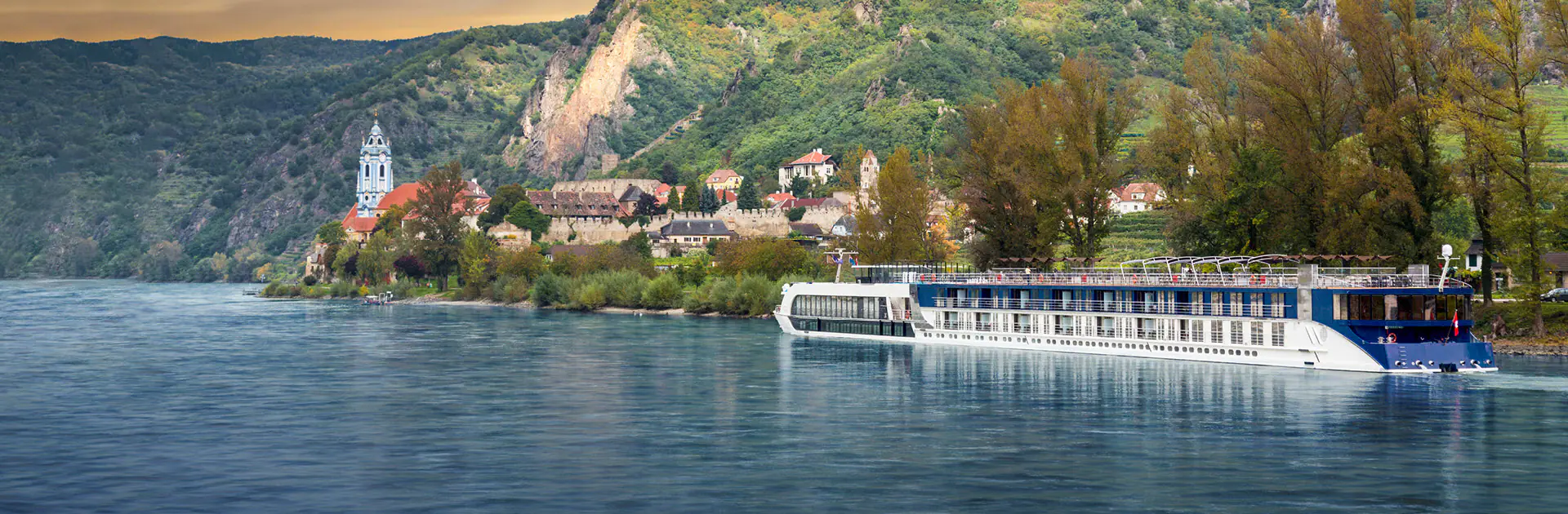
The signature Viking Longship, introduced in 2012 and built by Germany's Neptun Werft, remains the gold standard for European river vessel design. At 135 metres with 95 all-outside cabins across three passenger decks plus a Sun Deck, the Longships carry around 190 guests in clean, light-filled Scandinavian interiors. Fleet consistency is remarkable — whether you board a 2012 vessel or one christened in 2025, the layout and finish are virtually identical. That predictability is a feature, not a limitation.
Viking positions itself as "The Thinking Person's Cruise" — adults only, no casino, no production shows, and a deep emphasis on destination immersion. Every port includes a complimentary guided excursion, evening port talks prepare guests for the next day, local performers board for Destination Performances, and the enrichment lecture programme provides genuine academic depth. For culturally curious adults who want to see Europe from its historic waterways with substance rather than spectacle, Viking remains the benchmark.
Viking's inclusion model sits in the upper-premium tier — more generous than entry-level operators but short of the true all-inclusive lines like Scenic, Uniworld, and Tauck. Understanding exactly what you are paying for matters.
Included in the base fare: all meals in the main restaurant and Aquavit Terrace, wine, beer, and soft drinks at lunch and dinner, one guided shore excursion per port, complimentary Wi-Fi, port charges and taxes, one Destination Performance featuring local musicians, onboard enrichment lectures, daily bottled water, speciality coffee and tea around the clock, and a welcome cocktail reception.
What is not included: gratuities at a suggested US$20 per person per day, drinks outside meal times, optional shore excursions from US$40 to over US$200 per person, the Silver Spirits beverage package at US$27 per night, spa treatments, laundry, travel insurance, and flights — though Fly Free promotions regularly offset airfare for Australian bookings. Suite guests receive welcome champagne, daily fruit and cookies, priority restaurant seating, and premium bathroom amenities.
Viking's dining is built around destination-inspired cuisine, and it is one of the areas where the line genuinely delivers. The main restaurant operates with open, unreserved seating — arrive when you wish, sit wherever you like, and mix naturally. Dinner is a multi-course affair with three to four starters, four to five mains, desserts and cheese, with menus that change daily and track the landscape outside. Expect schnitzel and strudel on the Austrian Danube, goulash through Hungary, pasteis de nata on the Douro, and classic French cuisine along the Seine.
The Aquavit Terrace at the bow of each Longship is Viking's signature dining space — floor-to-ceiling glass walls that open to the outdoors in good weather, serving the same menu in a more relaxed, often quieter setting. It is genuinely one of the better spots on any river ship for a meal with a view.
Included wines at lunch and dinner are sourced from local vineyards along the sailing route and sit several cuts above basic house pour. The Sun Deck herb garden supplies fresh herbs directly to the kitchen, and cooking demonstrations — the Austrian apple strudel and Rudesheim Coffee sessions are guest favourites — reinforce the destination connection.
Where Viking's dining draws occasional criticism is the variance between sailings. Different chefs can produce noticeably different quality, and longer voyages may see menu repetition. But on balance, the food quality, regional authenticity, and generous portions earn consistently positive reviews.
Viking attracts a mature, educated, well-travelled crowd. The typical passenger is aged between 60 and 80, with the average around 70. The strict adults-only policy — no guests under 18 — is consistently cited as a top reason guests choose the line. There is no casino, no kids' club, and no attempt to replicate ocean-ship entertainment. This is a destination-focused, early-to-bed, early-to-rise product.
The nationality mix on European sailings leans heavily North American at roughly 60 to 70 per cent, with Australians and New Zealanders at 10 to 15 per cent and British guests a similar proportion. All announcements, lectures, menus, and excursions are conducted in English.
With 190 guests on a standard Longship, the social dynamic is intimate without feeling claustrophobic. Communal dining encourages mixing, the daily excursion programme creates natural conversation starters, and solo travellers find it easy to connect. Evening entertainment is low-key — local musicians in the lounge, port talks, and quiet socialising at the bar. The ship quietens down by nine or ten. If you want vibrant nightlife, this is not the line for you. If you want thoughtful conversation, a glass of regional wine, and an early start to explore the next port, it is exactly right.
Viking takes the Australian market seriously. The company operates a dedicated office in Surry Hills, Sydney, with a local phone line at 138 747, weekday hours from 9am to 6pm, and a website displaying all pricing in AUD. The regular Fly Free promotions — economy flights valued at up to A$2,500 per person — represent genuine value for Australians making the long journey to Europe.
The Rhine Getaway, Romantic Danube, and Grand European Tour are the most popular itineraries among Australian travellers. Christmas market cruises in November and December hold particular appeal — an iconic Northern Hemisphere winter experience timed with the Australian summer holiday period. The Douro and Seine are gaining traction among repeat cruisers looking beyond the Rhine-Danube corridor.
Most Australian clients combine a river cruise with independent land touring. Viking offers optional extensions including Prague, Amsterdam, the Swiss Alps, and Paris, though a local travel agent can often coordinate a more tailored arrangement. One consistent piece of advice: avoid booking flights through Viking Air if possible. Australian travellers report better outcomes arranging their own airfare or working with a specialist who can optimise routing and frequent flyer points.
Viking sits in the upper-premium segment — competitively priced against AmaWaterways and Avalon, but not in the same all-inclusive bracket as Scenic, Uniworld, or Tauck. On an eight-day European cruise, expect approximately A$4,000 to A$5,600 per person for a Standard Stateroom, A$4,800 to A$6,800 for a French Balcony, A$5,600 to A$8,000 for a Veranda, and upwards of A$8,000 for suites. The fifteen-day Grand European Tour ranges from A$8,000 to A$14,000 depending on cabin and season.
The headline fare does not tell the whole story. Add gratuities at around A$30 per day, the Silver Spirits package at roughly A$40 per day, and a couple of optional excursions, and the effective daily cost climbs A$100 to A$200 above the base fare — approaching what the all-inclusive lines charge upfront.
Where Viking's value proposition shines for Australians is the Fly Free promotions. An A$2,500 per person saving on flights is meaningful, and when factored into the total trip cost, it can bring Viking below competitors without equivalent airfare support. Wave Season from January through March is the best window. Book twelve to eighteen months ahead for the best selection, and lock in Christmas market sailings at least a year in advance — they are among the fastest-selling departures in river cruising.
Share your dates and preferences and we will come back with Viking River Cruises cabin options, pricing, and insider tips.