SeaDream Yacht Club
Yacht-Style Cruising
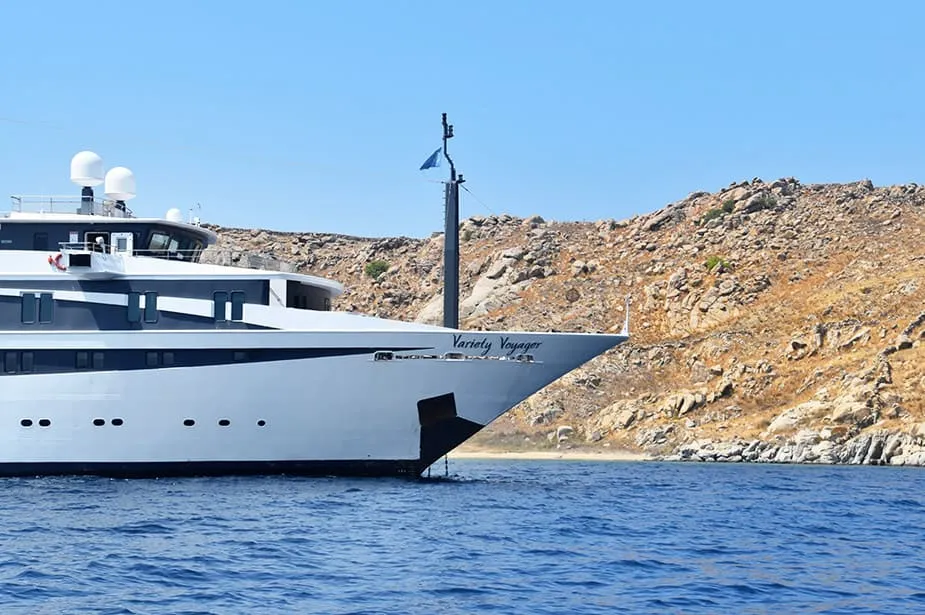
SeaDream is the closest thing to being on a private yacht without actually owning one. With just 112 guests and a crew that learns your drink order by lunchtime on day one, the personalisation is extraordinary. The Champagne and Caviar Splash on the beach is legendary, and sleeping under the stars on Balinese dream beds as the ship sails through the night is genuinely unforgettable. These twin yachts access tiny harbours that bigger ships cannot reach — it is the antithesis of mass-market cruising.
SeaDream Yacht Club was founded in 2001 by Norwegian entrepreneur Atle Brynestad, who had previously created Seabourn Cruise Line and served as Chairman of Cunard. The twin mega-yachts he acquired — originally built in the mid-1980s as Sea Goddess I and II — were the very vessels that introduced boutique ultra-luxury cruising to the world. Under Brynestad's family ownership, they were reimagined around a deceptively simple proposition: yachting, not cruising. Twenty-five years later, the tagline has not changed, and neither has the philosophy. SeaDream remains privately held, family-run, and stubbornly resistant to the trends that drive the rest of the industry.
What makes SeaDream feel different from every other cruise line is the scale and the deliberate absence of cruise conventions. With just 112 guests aboard and a crew-to-guest ratio approaching one-to-one, the level of personalisation is immediate and genuine — staff learn your name and your drink order within hours. There is no cruise director, no PA system interrupting your afternoon, no captain's gala to dress up for, and no structured programme dictating your day. The atmosphere is closer to being invited aboard a well-connected friend's yacht than anything resembling an ocean liner. It is a hard concept to explain until you have experienced it, and an even harder one to leave behind once you have.
That intimacy has created one of the most fiercely loyal followings in the industry. Repeat guests describe SeaDream not as a cruise line but as a second home, returning year after year to the same yachts, the same crew, and often the same fellow guests. The company celebrated its 25th anniversary in 2026 — a remarkable milestone for a two-yacht operation that has never sought outside investment, never chased fleet expansion for its own sake, and never compromised on what it does best.
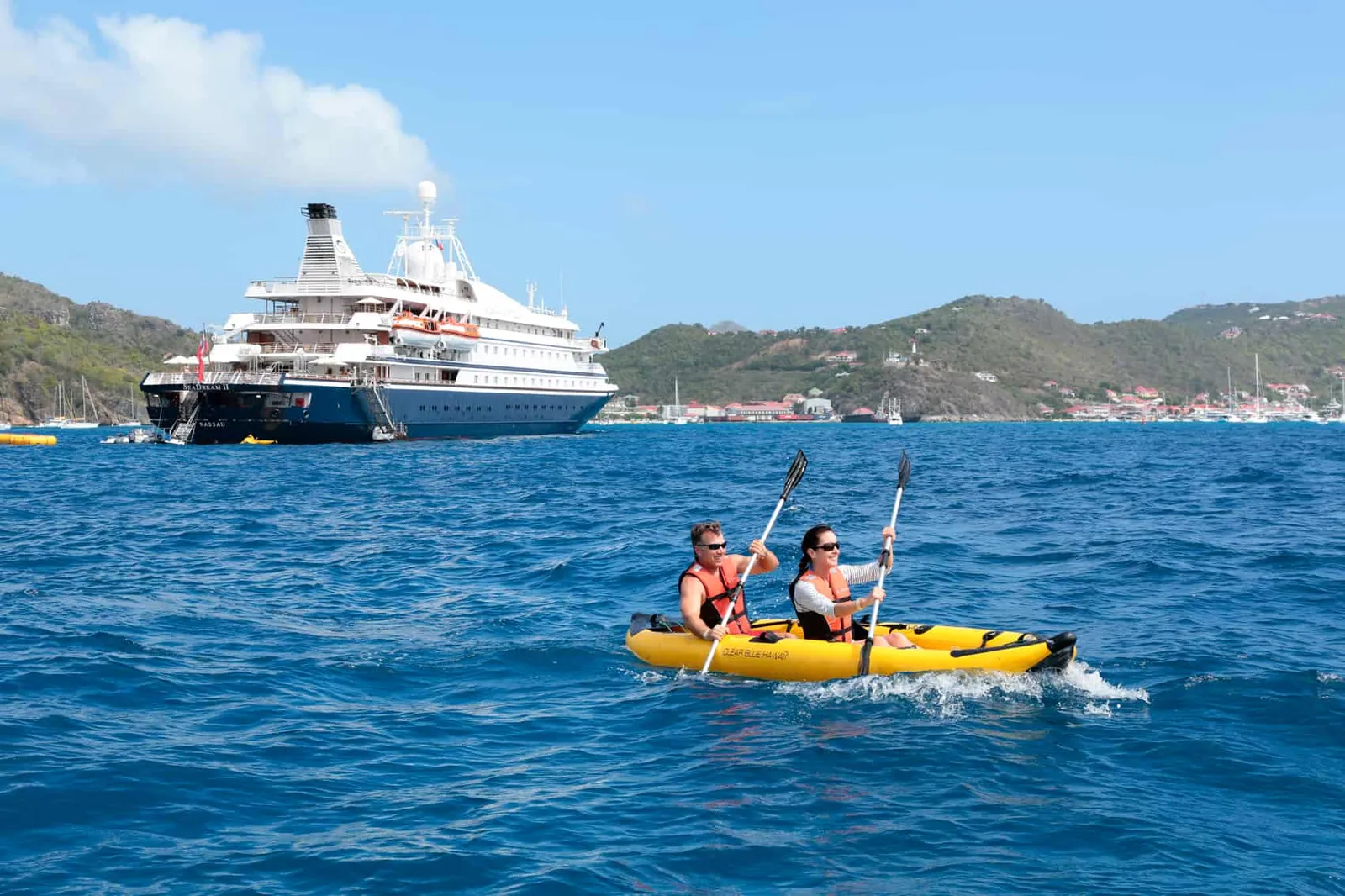
The centrepiece of the SeaDream experience is the retractable marina platform at the stern. When the yacht anchors in a sheltered bay — and at just 104 metres in length, it anchors in bays that virtually no other cruise vessel can access — the hydraulic platform folds down to water level and the crew deploys an arsenal of complimentary water sports equipment. Jet skis, sailing catamarans, laser sailboats, kayaks, stand-up paddleboards, water skis, a banana boat, snorkelling gear, an inflatable waterslide, and a floating ocean trampoline are all included in the fare. SeaDream is one of the only operators in the world to offer complimentary jet skis, and the marina gets more use than any comparable vessel's because the intimate guest count means there is never a queue.
The yacht's outdoor spaces are as central to the experience as the marina. The top deck features the signature Balinese Dream Beds — handcrafted mahogany daybeds with Loro Piana Italian upholstery that, each evening, the crew transforms into proper sleeping berths with Belgian linens and monogrammed pyjamas. Falling asleep under the stars with the gentle motion of the yacht sounds like a marketing contrivance, but it is one of the most genuinely memorable experiences available at sea. Elsewhere on deck, hammocks, designer TUUCI loungers, two couples' Jacuzzis with unobstructed views, and outdoor rain showers provide the kind of open-air living that larger ships attempt to replicate but cannot match at this ratio of space per guest.
The yacht's compact draught allows it to anchor off beaches and inside harbours that are completely inaccessible to larger vessels. In the Caribbean, that means tucking into pristine coves in the Grenadines and anchoring directly off Gustavia in St Barts. In the Mediterranean, it means entering the inner harbour at Hvar or pulling into tiny Provencal fishing villages. The open bridge policy — guests are welcome to visit the bridge at any time and chat with the officers — completes the sense that you are genuinely aboard a private yacht rather than a floating hotel following a predetermined route.
SeaDream operates one of the more genuinely comprehensive all-inclusive models in the yacht and ultra-luxury segment. The fare covers all dining, an open bar running at all hours with select premium spirits, wines, signature cocktails, and beers, all crew gratuities, Starlink high-speed Wi-Fi, port charges, and the full suite of water sports equipment from the marina. Twenty-four-hour room service from the Small Bites menu, daily yoga and Tai Chi classes, crew-led hiking and cycling excursions ashore, beach barbecues, the Champagne and Caviar Splash beach event in the Caribbean, and use of the golf simulator, fitness centre, pool, and hot tubs are all included. It is a package that genuinely eliminates the need to reach for your wallet once aboard.
What is not included is worth noting so expectations are set correctly. Spa treatments at the Thai-certified spa carry additional charges, as do premium Wine Cellar selections curated by the sommelier. Formal guided shore excursions with local experts are sold separately — though the complimentary crew-led activities are surprisingly good. Flights, transfers, laundry, and travel insurance sit outside the fare. Compared to Regent, which bundles business-class flights and unlimited excursions, SeaDream's package is narrower in scope — but the overall voyage cost typically comes in well below Ritz-Carlton and remains competitive with Silversea, particularly once the included water sports and port charges are factored in.
SeaDream takes a single-restaurant approach to dining and does it exceptionally well. The Dining Salon on Deck 3 operates on an open-seating basis — no assigned tables, no fixed dining times, no reservation required. You eat when you want, where you want, and with whom you want, whether that is a candlelit table for two or a communal evening with new friends. Breakfast and lunch move outdoors to the Topside Restaurant on Deck 5 whenever the weather permits, served as plated courses rather than a buffet line. The Top of the Yacht Bar offers light fare and cocktails with live music in the evening, and beach barbecues at scenic anchorages extend the dining experience onto the sand.
The culinary programme earned a Forbes Travel Guide Four-Star restaurant rating in 2025 — one of only three restaurants at sea to achieve this distinction. Menus change daily, built around seasonal ingredients sourced at local markets in each port of call. On select voyages, the executive chef takes guests shopping at the morning market, which is a memorable touch that underscores how seriously SeaDream takes provenance and freshness. All cuisine is prepared a la minute, with multi-course dinner menus designed in lighter, more elegant portions so guests can enjoy the full progression without excess. A dedicated plant-based menu and a unique raw food menu — the only one of its kind at sea — are available at every meal.
The wine programme deserves specific mention. The included wines paired at lunch and dinner are consistently praised as superior to what comparable luxury lines offer as standard. The sommelier curates daily pairings and is available for recommendations at every meal. For connoisseurs, a separate Wine Cellar Menu features rare and premium selections at additional cost, and themed Wine Voyages with visiting winemakers and vineyard excursions run on select sailings through European wine regions.
The typical SeaDream guest is a well-travelled couple in their late fifties to early seventies, often retired or semi-retired professionals who have sailed on larger luxury lines and found them wanting. The nationality mix skews predominantly American, with a meaningful European contingent — particularly British, German, and Scandinavian guests — on Mediterranean voyages. Very few Australians sail SeaDream, largely because the yachts do not deploy in the Asia-Pacific. The social atmosphere aboard is convivial and intimate in a way that 112 guests makes inevitable: you will know most of the other passengers by name within two days, and the crew will know you by your preferences before that.
The dress code is yacht casual throughout, and this is not a euphemism for dressing up. Daytime means resort wear, shorts, and sundresses. Evenings call for slacks and a collared shirt for men, a dress or elegant trousers for women — smart but never formal. There are no black-tie evenings, no captain's gala, and no tuxedos at any point during the voyage. The deliberate absence of formality is one of the things that SeaDream's regulars value most, and it reflects the Scandinavian ownership's preference for understated simplicity over choreographed grandeur.
It is worth being honest about who SeaDream is not for. Guests who want production shows, a casino floor, a dedicated spa deck, multiple dining venues, or a private balcony will not find any of those things here. Families with children will find no facilities or programming for them. Anyone uncomfortable on very small ships that move in rough seas should choose carefully — the 1984-vintage hull lacks modern stabilisation, and open-water passages can be uncomfortable. But for the traveller who wants peace, freedom, unstructured days, direct access to the sea, and a crew that treats you like family rather than a transaction, SeaDream occupies a niche that nobody else has convincingly replicated.
SeaDream does not sail in Australian or Asia-Pacific waters and has no plans to do so. All fares are quoted in US dollars with no Australian-dollar pricing option, and there is no Australian office or local sales team. For Australian travellers, SeaDream is a destination cruise line — you travel to it rather than having it come to you.
The most accessible option from Australia is a Mediterranean voyage, with flights routing through Middle Eastern hubs such as Dubai, Doha, or Singapore to embarkation ports in Athens, Nice, Barcelona, or along the Adriatic coast. Caribbean departures require routing through US hubs and involve longer total travel times. Transatlantic repositioning crossings are worth considering as a way to combine two regions in a single trip and often carry reduced solo supplements. Whichever deployment you choose, budget for international flights in addition to the cruise fare and consider building a land stay around the embarkation port to offset the long-haul travel.
Working with an experienced Australian cruise advisor — rather than booking direct through Miami — makes particular sense for SeaDream. The fares are identical either way, but the logistics of international flights, pre- and post-cruise accommodation, travel insurance that meets Australian requirements, and navigating currency considerations benefit from local expertise. A good advisor will also know which specific departures and stateroom categories are best suited to your priorities.
SeaDream sits at the upper end of the luxury segment, priced below Ritz-Carlton and broadly on par with Silversea for comparable voyage lengths. The all-inclusive nature of the fare — open bar, gratuities, water sports including jet skis, Starlink Wi-Fi, and port charges — delivers genuine value when you account for what would be extra on other lines. For Australian travellers, fares typically translate to a wide range depending on season, itinerary, and stateroom category, with Caribbean voyages representing the most accessible entry point and peak Mediterranean departures commanding a premium.
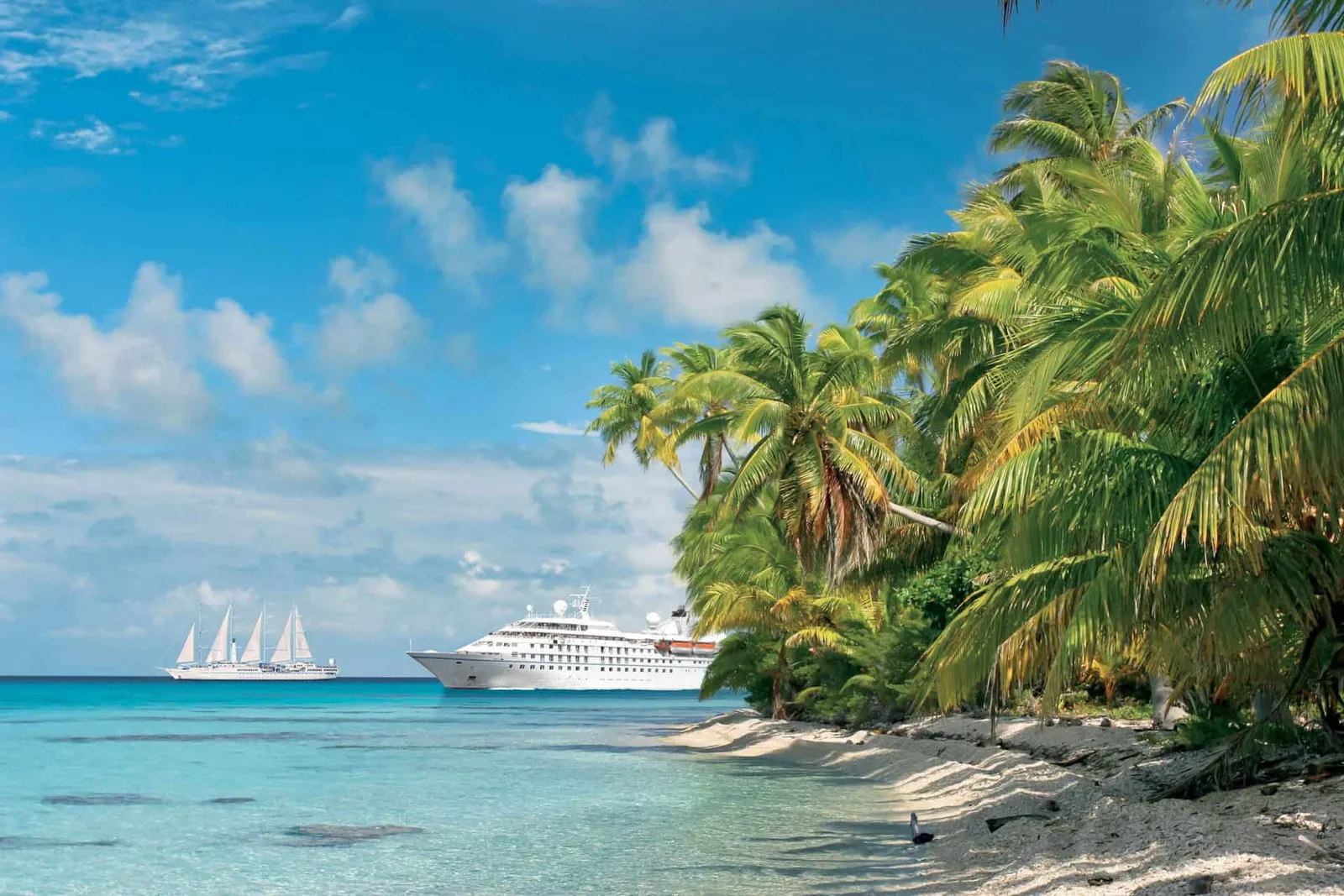
Against its closest competitors, SeaDream's value proposition is distinctive rather than directly comparable. Windstar offers a lower per-diem but with fewer inclusions and a less intimate atmosphere. Ritz-Carlton charges more for newer hardware, larger suites with private terraces, and multiple dining venues. Silversea includes butler service and, on select sailings, shore excursions and flights. SeaDream's counter-argument is that none of those lines can replicate 112 guests, complimentary jet skis, Balinese Dream Beds, or the ability to anchor in harbours that no competitor can access. The value lies in the experience itself, not in the square footage of the stateroom.
Solo travellers face a 200 per cent single supplement on most voyages — effectively paying the full double-occupancy fare — which is steep by industry standards. Transatlantic crossings have historically offered reduced or waived supplements, making them the best entry point for solo guests. Deposits sit at 25 per cent of the full fare, with final payment due 90 days before departure and a cancellation schedule that escalates from a modest fee at 120 days out to full forfeiture within 30 days. Comprehensive travel insurance is essential, particularly for Australian guests managing international flight connections and currency exposure.
Share your dates and preferences and we will come back with SeaDream Yacht Club cabin options, pricing, and insider tips.