Sea Cloud Cruises
Yacht-Style Cruising
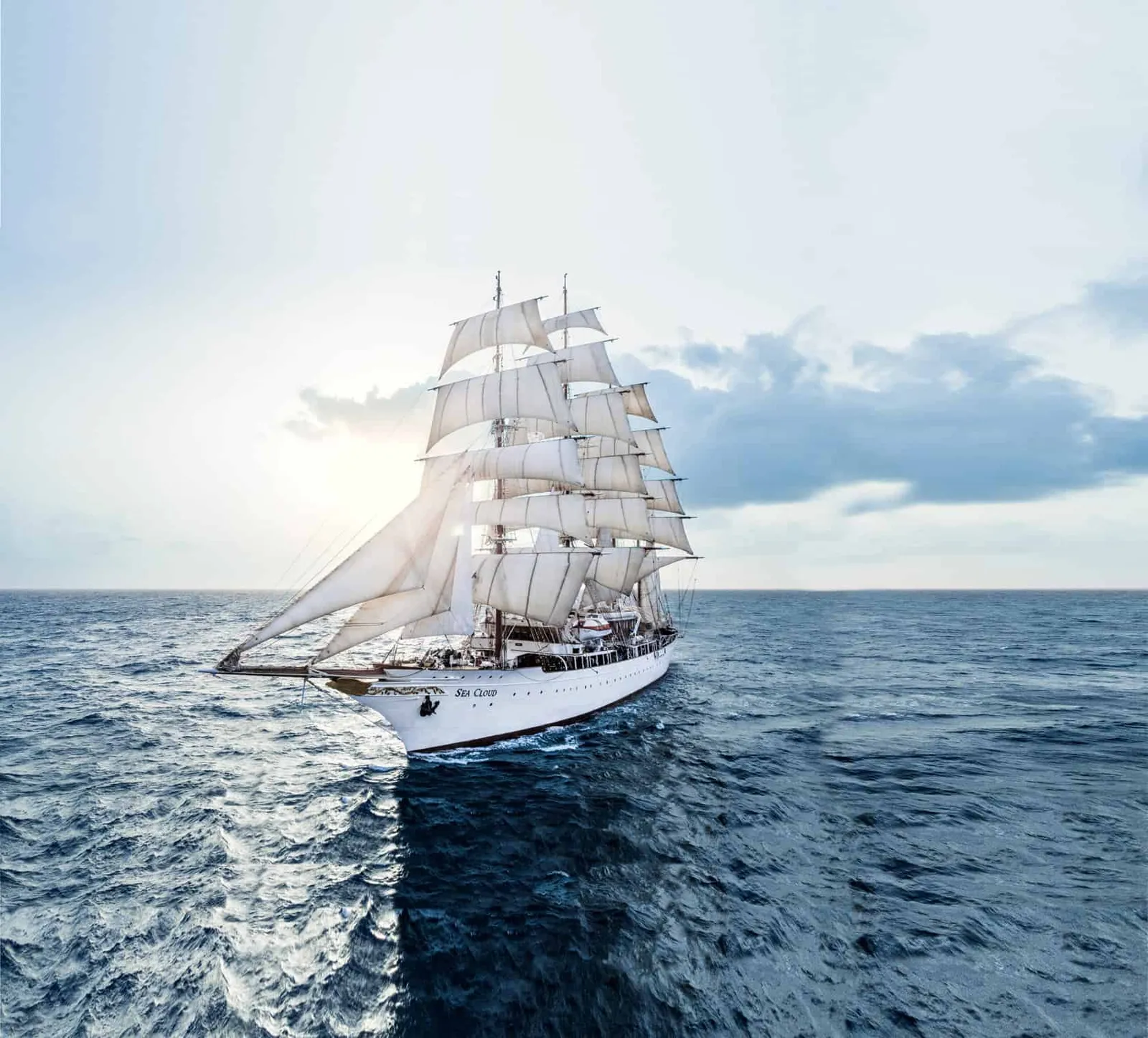
There is nothing else like Sea Cloud in the cruise industry. The original ship was built in 1931 as the world's largest private yacht, and watching the crew hand-set 29 sails on a vessel with that kind of history is genuinely moving. Sea Cloud Spirit added modern comforts like balcony cabins and a spa, but the magic is the same — you are sailing, under canvas, with just 64 to 136 fellow guests. This is for people who find conventional cruising too predictable and want something with soul.
Sea Cloud Cruises occupies a position in the cruise industry that no other company can replicate, because no other company owns a vessel with this kind of history. The original Sea Cloud was built in 1931 as the world's largest private sailing yacht, commissioned by Wall Street financier E.F. Hutton and decorated by his wife Marjorie Merriweather Post — the cereal heiress who drew the ship's interiors at full scale on the floor of a Brooklyn warehouse, then filled them with French antiques, Louis XIV beds, white Carrara marble fireplaces, and gold-plated fixtures. The yacht served the US Coast Guard during the Second World War, passed through the hands of a Dominican dictator, and spent years rusting in Panama before German investors rescued her in 1978 and painstakingly restored her to sailing condition. That story alone sets Sea Cloud apart from every other vessel afloat.
Today the Hamburg-based company operates three tall ships: the legendary Sea Cloud carrying 64 guests, Sea Cloud II accommodating 94, and the newest addition Sea Cloud Spirit with capacity for 136. All three are genuine barque-rigged sailing vessels with every sail raised and furled entirely by hand. There is no casino, no production theatre, no children's programme, and no pool in the conventional sense. The focus is on the wind, the heritage, and the quiet luxury of travelling aboard a ship with genuine soul. For travellers who find mainstream cruising too predictable, Sea Cloud is not merely an alternative — it is a different medium altogether.
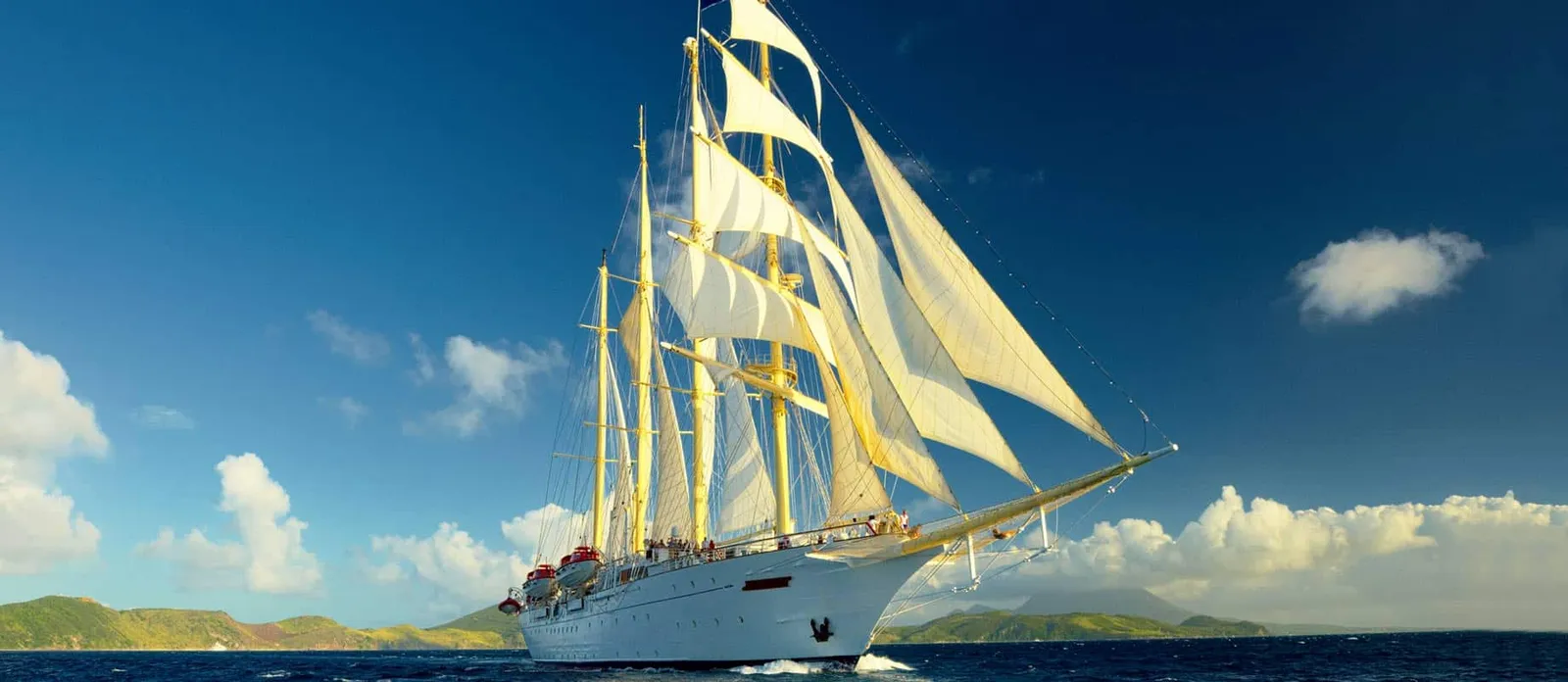
What separates Sea Cloud from every other sailing cruise line is the authenticity of what happens on deck. On Windstar, the sails are computer-controlled. On Sea Cloud, eighteen crew members climb rope ladders to heights of fifty metres, shimmy along horizontal yards suspended over the ocean, and physically tie and release thousands of square feet of canvas. There are no hydraulics, no buttons, and no automation. The raising of all sails takes nearly an hour, and it is one of the most captivating spectacles in travel — a living display of seamanship that has been performed this way for centuries and has vanished from nearly every other commercial vessel on earth.
When conditions align and the engines fall silent, the ship moves under wind alone. The only sounds are water against the hull, wind through the rigging, and the occasional crack of canvas filling. Passengers who have experienced this moment describe it as transcendent — the single most memorable part of their voyage. Sea Cloud's itineraries are deliberately designed to maximise time under sail, and on sea days you can expect several hours of genuine wind-powered travel. This is not guaranteed on every sailing — weather dictates what is possible — but when it happens, there is nothing else like it.
On the original Sea Cloud, guests who pass a fitness test can climb to the first platform at fourteen metres. Standing on the ratlines above the deck, looking down at the ship cutting through the water below, is an experience that connects you to the vessel's history in a way no photograph or lecture ever could. On Sea Cloud II and Spirit, the experience is more observational, but watching the crew work the rigging from the teak deck with a drink in hand and the sun on your face is hardly a hardship.
Sea Cloud's fare is substantially all-inclusive and more generous than most competitors in the yacht and tall-ship space. Meals are fully covered across breakfast, lunch, afternoon tea, and four-course dinners. Fine wines and beer are included at both lunch and dinner, curated by the head sommelier to reflect the sailing region. An open bar operates throughout the day — spirits, cocktails, beer, and soft drinks are all complimentary. Gratuities are included in the fare. Port charges are included. Wi-Fi is provided via Starlink with ten gigabytes of complimentary data. Watersports equipment — snorkelling gear, paddleboards, towable tubes — is included when weather permits, and beach barbecues at select anchorages are part of the programme at no extra charge.
Shore excursions are included on select sailings, particularly in the Caribbean, but on most Mediterranean and European voyages they are at additional cost. Spa and beauty treatments carry a surcharge. Laundry is extra except in junior suites and owner suites aboard Sea Cloud Spirit, where it is complimentary. When you compare the total inclusion against competitors like Windstar, where drinks and gratuities are separate charges, or Star Clippers, where virtually nothing beyond the cabin and meals is included, Sea Cloud's fare represents notably stronger embedded value.
Dining on Sea Cloud reflects the tradition of entertaining aboard a private yacht: one restaurant, open seating, white tablecloths, silver service, and no reservations required. Dinner is a four-course affair with multiple options per course, candlelit and unhurried, with a five-course gala menu on Captain's Dinner night. Lunch is often served al fresco on the teak deck when weather permits, and fresh seafood is a daily feature. The head chef sources locally at ports of call, and the menus change to reflect the sailing region — you will eat differently in the Grenadines than you will along the Croatian coast.
The wine programme is one of the quiet strengths of the experience. The sommelier selects vintages from France, Italy, Greece, Spain, and Germany to complement each itinerary's geography, and what arrives at the table is a genuine step above the house-pour approach of most sailing competitors. Red and white wines are included at dinner, with white and rose options at lunch. Premium bottles are available by the glass or bottle at additional cost for those who want to explore further. Dietary requirements including vegetarian, vegan, and gluten-free options can be accommodated with advance notice, though the small galley and single-restaurant format mean the range of alternatives is more limited than on a larger ship.
The scale of a Sea Cloud voyage is difficult to overstate. With 64 to 136 guests depending on the vessel, the crew knows every passenger by name within hours. The captain dines with guests. The bar feels like a private club. Conversations at dinner tend toward travel, history, art, and sailing rather than the sort of small talk that fills larger ships. The atmosphere is that of a well-hosted house party aboard a billionaire's yacht — warm, convivial, and intellectually curious without being stuffy or exclusive.
The typical guest is well-educated, well-travelled, and between their late fifties and mid-seventies, with a genuine interest in maritime heritage and cultural depth. The passenger mix is notably international: European sailings tend to split roughly evenly between German speakers and English speakers, while Caribbean departures bring a broader blend of American, British, German, and other European guests. All onboard communications are bilingual in English and German, which is a distinctive feature that works well for most guests but can feel German-dominant on certain sailings.
This is emphatically not the right choice for everyone, and honesty here serves clients better than salesmanship. There are no production shows, no casino, no organised evening activities beyond live piano music, occasional themed nights, and port lectures. Cabins on the older ships are compact by modern standards. The ships are not accessible for wheelchair users. If you need constant entertainment, extensive dining options, or a large modern cabin, Sea Cloud will disappoint. But for guests who consider a sunset under sail with a glass of included wine to be the finest entertainment at sea, nothing else comes close.
Sea Cloud Cruises does not deploy anywhere near Australia, and the brand carries far lower awareness here than Ponant, Silversea, or Windstar. There is no Australian office, no local phone line, and no AUD-specific pricing — fares are quoted in US dollars and euros, so exchange rate fluctuations are a genuine consideration. Despite all of that, this line holds real appeal for a specific type of Australian traveller: the well-travelled cruiser who has already seen the major Mediterranean and Caribbean ports on larger ships and is looking for something fundamentally different.
The Mediterranean programme is the most natural fit for Australians combining a Sea Cloud sailing with broader European travel. Embarkation ports such as Dubrovnik, Venice, Athens, and Palma de Mallorca are all reachable from the Australian east coast in roughly twenty to twenty-four hours via hubs like Singapore, Dubai, or London. Caribbean sailings from Barbados or San Juan add a few hours of transit. Booking through a specialist cruise travel agent or Virtuoso-affiliated advisor is the best approach, as they can navigate the bilingual sailing calendar, secure any active early-bird promotions, and advise on which vessel and cabin category suits your expectations.
Sea Cloud sits in the upper-luxury tier for small-ship and yacht cruising. Entry-level per-diem rates start from around the mid-four-hundreds for transatlantic crossings and climb above a thousand for peak Mediterranean sailings in premium cabin categories. That places it well above Star Clippers, which offers a more rustic tall-ship experience at roughly half the nightly cost, and above Windstar's base fares, though the gap narrows considerably once Windstar's drink packages and gratuities are factored in. SeaDream operates at a similar price band with a motor-yacht proposition rather than sails. The key difference is that Sea Cloud's fare is substantially all-inclusive — meals, wine, open bar, tips, Wi-Fi, and watersports are all embedded — so the published rate is much closer to the true cost of the voyage than it is with less inclusive competitors.
Solo travellers should note that single supplements of 50 to 100 percent apply on Sea Cloud and Sea Cloud II. Sea Cloud Spirit's two dedicated single cabins are bookable without supplement, and periodic promotions have waived single supplements fleet-wide on advance bookings. Early-bird discounts of up to 25 percent are offered on sailings booked well ahead, and a loyalty discount of five percent applies from your second booking onward — modest, but combinable with other offers. Deposits are 20 percent of the cruise fare due within a week of booking, with the balance due four weeks before sailing. Given the niche positioning, popular sailings and the original cabins on Sea Cloud sell out months in advance. If this experience appeals to you, booking early is not merely advisable — it is essential.
Share your dates and preferences and we will come back with Sea Cloud Cruises cabin options, pricing, and insider tips.