Saga River Cruises
River Cruising
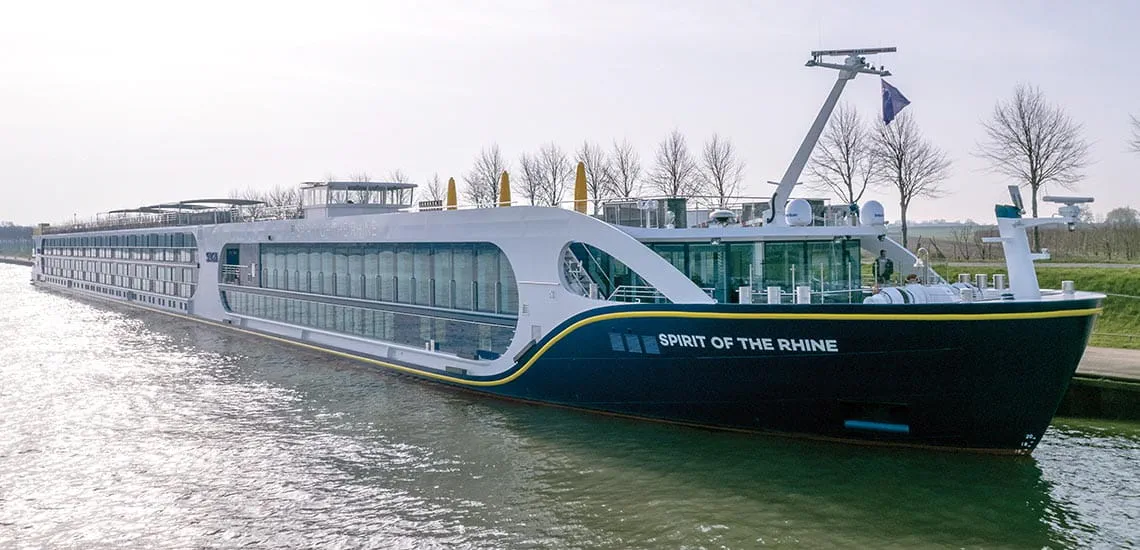
Saga's river ships are purpose-built for their audience and it shows. The Spirit of the Rhine and Spirit of the Danube carry around 170 guests, the food is consistently excellent, and the all-inclusive package genuinely means all-inclusive — right down to the chauffeur picking you up from home. It's particularly strong for solo travellers, with dedicated single cabins and social events designed to help people connect.
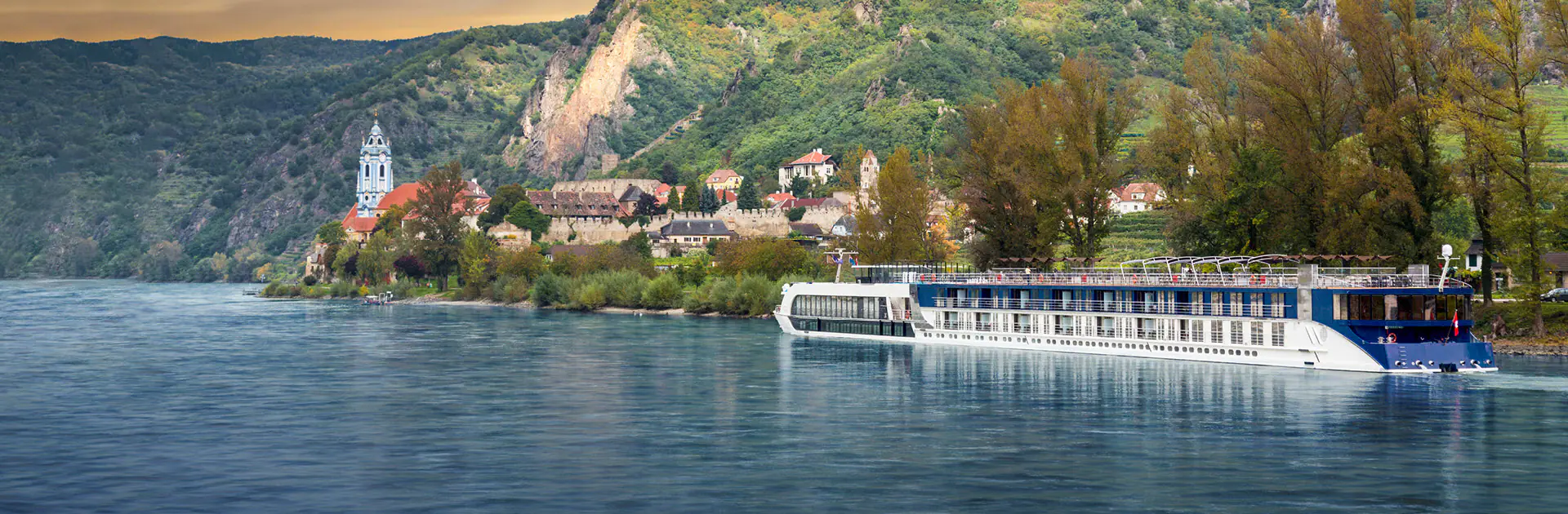
Saga River Cruises brings the same over-50s exclusivity and all-inclusive philosophy that has defined the Saga brand since 1951 to the rivers of Europe. Founded by Sidney De Haan as a holiday business for retirees, Saga has spent seven decades refining what it means to travel without friction — and the river cruise division, now operating purpose-built tonnage, is the purest expression of that philosophy. The Spirit of the Rhine (2021), Spirit of the Danube (2022), and the newest Spirit of the Moselle (2025) each carry 182 guests through some of Europe's most celebrated waterways. A fourth vessel, the chartered Spirit of the Douro, adds Portugal's Douro Valley to the portfolio with a 126-passenger ship originally built by Mystic Cruises.
These are boutique vessels designed specifically for a British audience. Every ship in the purpose-built fleet features original commissioned artwork tied to its home river — Rhine legends and Lorelei motifs on the Rhine ship, Art Nouveau and migratory bird themes on the Danube vessel, Romantic-era landscapes and misty vineyard imagery on the Moselle. The ships are built at Vahali Shipyards in Serbia, a Dutch-founded firm established in 1923, and they echo the aesthetic DNA of Saga's larger ocean fleet while being scaled for the intimacy that river cruising demands.
What sets Saga apart in the European river market is the depth of the all-inclusive proposition. This is not a line that includes drinks at dinner and calls it inclusive. The fare covers everything from the chauffeur who collects you at your front door, to the flights, transfers, meals, drinks throughout the day, Wi-Fi, gratuities, guided excursions in every port, and even travel insurance. For the right traveller — British, over 50, seeking a completely organised European river experience among like-minded company — Saga is one of the most thoughtful and complete offerings on the continent's waterways.
Saga's all-inclusive package is among the most comprehensive in European river cruising, and it genuinely earns the label. Starting from your front door: a nationwide chauffeur service collects you at home and delivers you to the departure airport or Eurostar terminal — private car for journeys up to 75 miles, shared service for 76 to 250 miles. Return flights from a choice of UK regional airports or Eurostar from London St Pancras are included, along with all transfers between airport, station, and ship.
Onboard, all meals are covered — buffet breakfast, plated or buffet lunch, and waiter-served multi-course dinner in the main Panorama Restaurant. The intimate speciality restaurant, seating around 34 guests, is included at no surcharge, with tasting menus crafted by Michelin-starred chefs Nick Nairn and Paul Rankin. Drinks are included throughout the day: selected wines at lunch and dinner, house spirits with mixers or selected cocktails, draught lager, soft drinks, tea, and coffee. All onboard gratuities are pre-paid. Complimentary Wi-Fi runs throughout the ship. From 2026, every port of call includes a guided excursion — a significant upgrade from previous seasons. Audio headsets and interactive maps support those who prefer to explore independently.
Saga also bundles its own cruise travel insurance, underwritten by Astrenska Insurance. For UK residents, this removes yet another task from the booking process. The critical caveat for Australian travellers: this insurance may not cover non-UK residents, so you would need to arrange your own policy.
What is not included: premium or top-shelf spirits and wines beyond the house selection, optional upgrade excursions, spa treatments on the Spirit of the Douro, laundry service, shoreside tipping for local guides and drivers, and visa fees where applicable.
Dining on Saga's purpose-built ships centres on the Panorama Restaurant, a bright space with panoramic river views that seats all guests in a single open sitting. Breakfast is buffet service, lunch alternates between buffet and waiter-served options depending on the day's schedule, and dinner is a formal multi-course affair served by waiters. British favourites feature regularly alongside Continental and regional European dishes, and the kitchen makes a genuine effort to reflect the rivers and countries being sailed through.
The real culinary distinction is the speciality restaurant — the Rheinfels Restaurant on the Rhine ship, the Delta Restaurant on the Danube. This intimate venue of 34 to 36 seats offers four- to five-course tasting menus designed in partnership with celebrity chefs Nick Nairn and Paul Rankin, both Michelin-starred. The speciality restaurant is included in the fare at no additional charge, and guests can dine here at least once during a seven-night cruise by reservation. Reviews consistently single this out as the dining highlight: "a memorable six-course meal to rival any top restaurant" is a representative comment.
The lounge — the Lorelei Lounge on the Rhine, Belvedere Lounge on the Danube — serves early-riser breakfast, afternoon tea, and all-day beverages. Self-service tea, coffee, and light snacks are available around the clock. When weather cooperates, the sun deck opens for alfresco barbecue dining — a casual alternative that passengers enjoy on warm cruising days through the Rhine Gorge or along the Danube.
Where honesty is required: breakfast is the one meal that draws consistent criticism across multiple review sources. Reports of cold plates, unsuitable bread, and long-life milk for tea appear regularly. Dinner quality is broadly positive but occasionally described as variable. The speciality restaurant is genuinely excellent, but the main restaurant can be uneven. For a line that gets so much right, the breakfast issue is a notable gap that has persisted over several seasons.
The passenger profile on Saga river cruises is remarkably homogeneous. The over-50s age restriction is enforced, and in practice the median age skews well into the late sixties and seventies. The ship is almost entirely British. Saga does not market outside the UK, and the logistics — UK chauffeur service, UK airport departures — reinforce the demographic. You will hear English accents from bow to stern.
With only 182 passengers on the purpose-built ships, the atmosphere is intimate in a way that larger river vessels struggle to replicate. Passengers report knowing fellow guests by name within two or three days. The lounge and sun deck function as the social hubs, and evenings are warm but quiet — most guests retire by half past ten. Entertainment is appropriately scaled: local musicians and performers board the ship at various ports and are consistently praised, a mid-week crew show adds lighthearted variety, and the lounge hosts music and dancing most evenings. There is no casino, no production show, and no nightclub. This is a floating country house hotel, not a resort ship.
Solo travellers are particularly well served. The 12 dedicated solo cabins per ship, the Singles Mingle cocktail party early in each cruise, the solo dining table, and the organised meet-ups for port days all signal that travelling alone on Saga is not a compromise — it is a genuinely supported experience. Saga won Cruise Critic's Best for Solo Travellers in the River Category in 2024, and that recognition is earned.
The dress code is smart casual for evenings — open-neck shirts and trousers for men, dresses or elegant tops for women. No formal nights, no black tie. Polo shirts, T-shirts, shorts, and denim stay in the cabin at dinner. Daytime is comfortably casual.
I want to be straightforward here: Saga River Cruises is overwhelmingly a UK product, and its relevance for Australian travellers is limited. There is no Australian office, no Australian sales team, no AUD pricing, and no CLIA Australasia representation. The signature chauffeur service operates within mainland Britain only. Included flights depart from UK airports. The bundled travel insurance is designed for UK residents and may not cover Australians. Booking is technically possible through the UK website or by phone, but the entire process assumes you are based in Britain.
That said, there is a specific scenario where Saga could work for an Australian. If you are already travelling in the UK, are over 50, and want to add a European river cruise to your trip, Saga's all-inclusive model and intimate British atmosphere may appeal. You would need to arrange your own flights to the UK departure point, forgo the chauffeur service benefit, and organise your own travel insurance — which means you are paying for inclusions you cannot use.
For most Australians looking at European river cruising, lines with local representation will be more practical. APT, Scenic, Emerald, AmaWaterways, and Viking all offer Australian sales teams, AUD pricing, and in many cases included flights from Australian gateways. If the British over-50s atmosphere is specifically what draws you, give us a call and we can talk through whether Saga makes sense for your situation or whether a locally supported alternative would deliver a similar experience with less logistical friction.
Saga's fares sit in the premium tier of European river cruising, and the headline numbers are higher than several competitors. A seven-night Rhine or Danube sailing starts from around GBP 1,730 per person — roughly AUD 3,360 at current exchange rates — for the lowest cabin category with early booking savings of up to 25 per cent applied. The Douro and Moselle itineraries start from approximately GBP 2,100 to GBP 2,250 per person.
The critical point is what those numbers include. When you strip out the chauffeur service (worth GBP 100 to 300 or more depending on distance), flights, transfers, insurance, gratuities, drinks, and a full excursion programme, the effective per-diem value is competitive with operators whose headline fares look lower but stack up extras. A like-for-like comparison with Riviera Travel or Viking — adding back flights, tips, insurance, and drinks — often shows Saga at a comparable or better total cost.
Solo travellers benefit from Saga's dedicated solo cabins with no single supplement, starting from around GBP 280 to 380 per night. These sell out early, and once they are gone, reduced supplements apply to standard double cabins. Deposits are GBP 250 or 15 per cent of the cruise cost, whichever is greater, with the balance due 90 days before departure.
For Australian travellers paying in AUD, the currency conversion adds a layer of cost, and the inability to use the chauffeur service or included UK flights diminishes the value proposition. If you are considering Saga from Australia, we can run the numbers against locally priced alternatives to ensure you are making a sound comparison.
Share your dates and preferences and we will come back with Saga River Cruises cabin options, pricing, and insider tips.