Pandaw
River Cruising
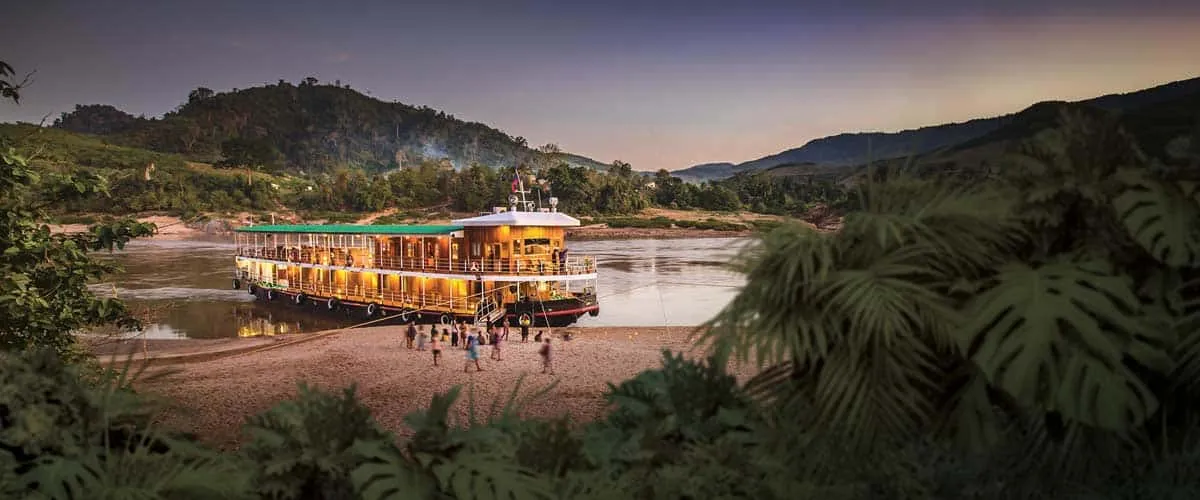
Pandaw is the real deal for Southeast Asian river cruising — they pioneered the Mekong route and still run itineraries no one else can reach, including shallow-water stretches in Laos and the route to Siem Reap via Tonle Sap Lake. The ships are deliberately old-fashioned with teak and brass everywhere, and with only 20-40 guests aboard, the atmosphere feels more like a private expedition than a cruise. Just be aware: this is adventurous travel with bamboo jetties and sandy riverbanks, not polished European-style river cruising.
Pandaw's story begins not in the 1990s but in 1865, when Scottish merchants in Rangoon founded the Irrawaddy Flotilla Company — the largest privately owned fleet of river vessels in the world, operating over 600 paddle steamers on Burmese waterways before the entire fleet was scuttled in 1942 to prevent capture during the Japanese advance. Paul Strachan, a Scottish historian whose great-grandfather worked for the original company, moved to Burma to research that history and in 1995 organised the first foreign tourist river expedition on the Irrawaddy since the war. Three years later he discovered and restored an original Clyde-built steamer named Pandaw, and the modern company was born.
That pioneering spirit still defines the brand. In 2003, Strachan launched the first Western-style cruise on the lower Mekong from Vietnam to Cambodia, opening a route that has since become one of the world's great river journeys. Pandaw now operates across six river systems — the Mekong through Vietnam, Cambodia, Laos, and Thailand; the Red River and Halong Bay in Vietnam; the Ganges, Brahmaputra, and Kerala Backwaters in India — with a fleet of purpose-built shallow-draught vessels that can navigate stretches no other cruise operator can reach. With draughts as low as one metre, these ships access remote villages, slip under low bridges, and dock at bamboo jetties rather than purpose-built terminals.
The company navigated a genuinely existential crisis between 2020 and 2022. COVID suspended all operations, the Myanmar military coup permanently closed the Irrawaddy routes that had defined Pandaw for 26 years, and by October 2021 the company announced it was ceasing operations entirely. An outpouring of support from loyal passengers — and several would-be investors — allowed the Strachan family to secure new funding and restart in September 2022. By the 2025-2026 season, Pandaw had over 5,500 passengers booked and two new ships under construction. It remains family-owned with no corporate parent or private equity involvement, and Paul's son Antoni joined the leadership team in 2025 as the company marked its 30th anniversary.
Pandaw's fare is substantially inclusive by river cruise standards — more generous, in fact, than most European operators in the same price bracket. The base fare covers all accommodation, all meals, locally produced beer and spirits, soft drinks, tea, coffee, bottled water, and a daily complimentary cocktail. All daily guided shore excursions with English-speaking local guides are included, as are entrance fees, sampan boat tours, airport-to-ship transfers, and crew gratuities. Mountain bikes are available on many vessels for independent exploration, and onboard enrichment — lectures, cooking classes, cultural performances — comes at no extra charge.
What costs extra is worth understanding clearly. International wines are available at roughly US$5 per glass and are not included in the standard Mekong fare, though house wine is included at lunch and dinner on India routes. Premium imported spirits carry a surcharge. Optional Free Flow Drinks packages can be pre-purchased for those who prefer an open-bar arrangement. Spa treatments, laundry for non-suite guests, and the optional Pandaw Activities programme — covering food experiences, wellness, adventure, and wildlife excursions — all sit outside the fare. A four per cent surcharge applies to credit card payments onboard, so carrying some cash is practical. International flights, visas, and travel insurance are the traveller's own responsibility.
Compared to the broader river cruise market, Pandaw's inclusions sit closer to what luxury-tier European operators like Scenic and Uniworld bundle into their fares than to what mid-range lines typically offer. The key gap versus true luxury is the absence of premium wines and imported spirits in the standard package — but for the price point, the value proposition is strong.
Pandaw's approach to food is destination-driven and locally sourced in a way that European river cruises rarely match. Nearly all ingredients are purchased fresh at local markets along the route, and the cuisine shifts to reflect the region being sailed — Khmer curries in Cambodia, pho and spring rolls in Vietnam, Laotian specialities in Laos, Bengali and North Indian dishes on the Ganges. Western options are available at every meal for passengers who prefer familiar fare, but the real pleasure here is eating what the river offers.
Each vessel has a single dining room — open-air on smaller K-class ships, enclosed and air-conditioned with an outdoor extension on larger P-class vessels. Seating is open throughout, with tables for four, six, or eight. There are no fixed sittings and no assigned places — you sit where you like with whomever you choose, which suits the convivial atmosphere Pandaw cultivates. Breakfast runs as a semi-buffet with fresh pastries from the onboard bakery, cooked items, and tropical fruit. Lunch is a lighter semi-buffet or a la carte affair mixing Asian and Western dishes. Dinner is a waiter-served four-course meal with themed menus reflecting that day's cruising region.
Every vessel has its own onboard bakery producing fresh breads, rolls, and pastries daily — a genuine point of difference and something passengers consistently praise. Cooking classes led by the ship's chef give you hands-on experience with local ingredients, and fruit carving demonstrations offer a lighter cultural touch. Vegetarian options are available at every meal, and most dietary requirements can be accommodated with advance notice. Pandaw cannot, however, provide Halal or Kosher meals — that limitation must be communicated clearly to any enquiring client.
The atmosphere aboard a Pandaw ship is unlike anything else in river cruising. With passenger counts between 20 and 60 — many sailings carry fewer than 30 guests — the experience feels closer to a private expedition than a cruise. The teak-and-brass colonial aesthetic, deliberately evoking the 1920s paddle steamers of the Irrawaddy Flotilla Company, creates a warmth and character that contemporary vessels simply do not possess. Cabins open onto shared promenade decks via floor-to-ceiling French windows rather than private balconies, and the sun deck offers the highest passenger-to-deck-space ratio you will find on any cruise ship.
The typical Pandaw passenger is between 55 and 75, well-travelled, culturally curious, and drawn to this product precisely because it is not a European river cruise with an Asian backdrop. British guests historically form the largest single nationality group, with growing Australian and New Zealand representation particularly on Mekong sailings. The 45 per cent repeat passenger rate tells you everything you need to know about how this product connects with people — these are travellers who come back across multiple rivers and regions, often forming lasting friendships with fellow guests.
The dress code is casual throughout with no formal nights. Evenings wind down gently after dinner — conversation on the sun deck, board games in the lounge, a documentary screening, or quiet reading in the library. There is no production entertainment, no nightclub, and no casino. The deliberate absence of televisions, telephones, and in-cabin internet is a conscious design choice, not a cost-cutting measure, and it encourages engagement with the destination and fellow passengers rather than retreat into a screen.
This is not for everyone. Passengers who need reliable Wi-Fi, want a private balcony, or prefer to spend evenings being entertained will find Pandaw too stripped back. But for travellers who see the lack of modern intrusions as liberating rather than limiting, the Pandaw Spirit — that convivial, slightly eccentric sense of shared adventure — is something genuinely rare.
The proximity of Pandaw's operating regions to Australia is arguably the strongest reason for Australian clients to choose Asian river cruising over European. Direct flights from Sydney or Melbourne to Ho Chi Minh City take eight to nine hours — compare that to 22-plus hours to Budapest or Amsterdam. There is virtually no jet lag, the time zone difference is minimal, the climate is warm year-round, and Australian purchasing power in Southeast Asia and India stretches further than in Europe.
Pandaw maintains an Australian contact number and prices in AUD on its website, removing currency risk for direct bookings. The company is also stocked by established Australian agencies including Cruiseco, BlueSun Cruises, and Helloworld Travel. An agent portal is available for Australian travel advisors at pandaw.com.
The most popular itinerary for Australian travellers is the seven-night Classic Mekong from Saigon to Siem Reap — a natural fit for combining with a broader Vietnam or Cambodia holiday. The ten-night Halong Bay and Red River route appeals to Australians who have already done the Mekong and want something different within Vietnam. The Brahmaputra in India's Assam region is attracting growing interest from more adventurous Australian travellers seeking genuinely off-the-beaten-path experiences. Pandaw's Land and River combination packages — pairing a cruise with guided land touring through Vietnam, Cambodia, Laos, Thailand, or India — are particularly appealing for Australians who want a single-booking holiday rather than assembling components independently.
Pandaw's per-diem rates range from approximately A$450 to A$1,100 depending on itinerary and season, with the flagship seven-night Classic Mekong starting from around US$2,986 per person. The Ganges and Brahmaputra itineraries tend to sit at the lower end of the range, while the Kerala Backwaters and extended multi-country journeys command higher fares. Suite supplements apply on the vessels that offer them — the award-winning 430-square-foot suites on RV Tonle Pandaw, complete with private balcony and butler service, represent the top of the range.
For what is included — all excursions, local drinks, crew gratuities, transfers, and enrichment — Pandaw represents strong value against the broader river cruise market. European premium operators like Viking and AmaWaterways charge comparable or higher per-diems with fewer inclusions. Asian luxury competitors such as Aqua Expeditions run at two to three times the price. The value proposition is particularly compelling on the Indian itineraries, where Pandaw has limited competition and includes house wine at meals.
Solo travellers benefit from Pandaw's no-single-supplement policy on selected dates, including some peak-season departures. Early booking can secure savings of 10 to 20 per cent on selected sailings, and the small ship sizes mean popular dates do sell out — booking six to twelve months ahead is sensible for peak-season and solo-friendly departures. The cancellation policy is strict: all deposits are non-refundable, and cancellations within 60 days of departure forfeit the full fare. Given the operational realities of Asian river cruising, comprehensive travel insurance with cruise cancellation cover is non-negotiable.
Share your dates and preferences and we will come back with Pandaw cabin options, pricing, and insider tips.