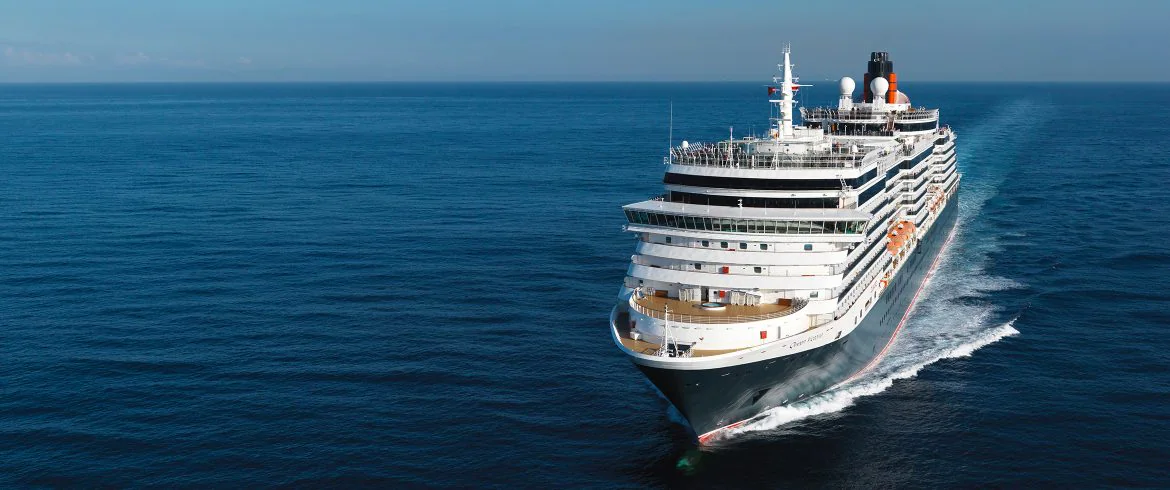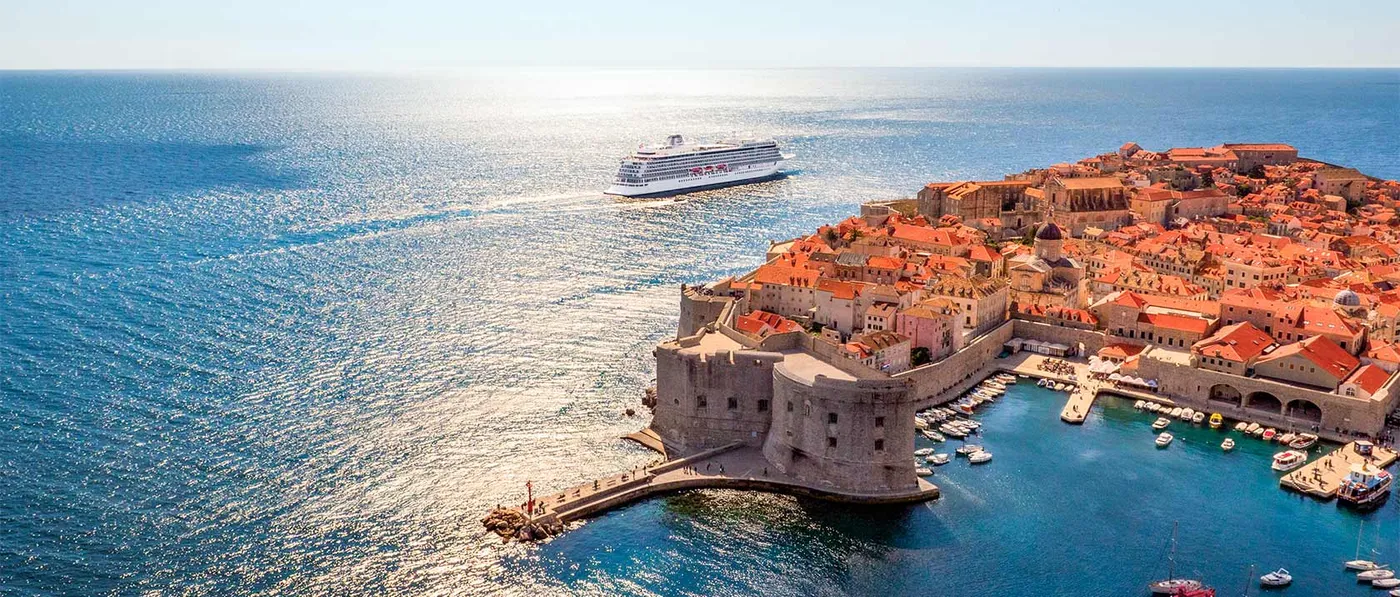
Viking Ocean Cruises and Virgin Voyages are both adults-only but for opposite reasons — Viking for cultural immersion and quiet refinement, Virgin for nightlife and modern energy. Both reject traditional cruise conventions, yet the onboard experience could not be more different. Jake Hower unpacks the Scandinavian calm versus Miami energy for Australian travellers.
| Viking Ocean Cruises | Virgin Voyages | |
|---|---|---|
| Category | Premium | Premium |
| Rating | ★★★★★ | ★★★★☆ |
| Fleet size | 12 ships | 4 ships |
| Ship size | Small (under 1,000) | Mid-size (1,000-2,500) |
| Destinations | Mediterranean, Scandinavia, Asia, Caribbean | Caribbean, Mediterranean, Northern Europe, South Pacific |
| Dress code | Smart casual | Relaxed |
| Best for | Destination-focused culturally curious adults | Adults-only modern cruise explorers |
Viking and Virgin are both adults-only and both reject traditional cruising conventions, but they could not be more different in atmosphere. Viking is the better choice for culturally curious couples over 55 who want an enrichment-focused voyage with included shore excursions, speciality dining, Wi-Fi, and thermal spa access on intimate 930-guest ships — with no casino, no nightclub, and the Resident Historian programme as the intellectual anchor. Virgin is the better choice for adults in their 30s to 50s who want all dining included across 20-plus restaurants, genuine nightlife with The Manor and Scarlet Night, zero dress code, and energy that builds through the evening. For Australians, Viking's consistent Sydney deployment and Companion Fly Free programme from 14 domestic gateways offer stronger local relevance, while Virgin's intermittent Australian presence requires international flights for most sailings.
The core difference
Viking Ocean Cruises and Virgin Voyages are both adults-only cruise lines that reject traditional cruise conventions — and that is where the similarities end. Comparing them is like comparing a university library and a nightclub: both are open to adults, both serve a purpose, and both have their devotees, but the experience of spending an evening in each could not be more different.
Viking is “the thinking person’s cruise.” Founded by Norwegian entrepreneur Torstein Hagen, Viking builds virtually identical 930-guest ships with Scandinavian design — blonde wood, muted tones, clean lines, and the Explorers’ Lounge at the bow with floor-to-ceiling glass and a library. There is no casino, no nightclub, no pool deck DJ. The entertainment is the destination itself, supported by a Resident Historian programme, TED Talks screenings, Metropolitan Opera performances, and cooking classes. The base fare includes a shore excursion in every port, all speciality dining, Wi-Fi, beer and wine at meals, and complimentary thermal spa access. Viking has won over 450 industry awards and been ranked number one by Conde Nast Traveler and Travel + Leisure for five consecutive years. The passenger base is predominantly couples in their 60s to 80s who read, think, and travel with genuine curiosity about where they are going.
Virgin is “not a cruise.” Founded by Richard Branson’s Virgin Group, Virgin builds four identical ships carrying approximately 2,700 adults each with bold contemporary design — bright colours, house music, hammocks on every balcony, and a tattoo parlour. There is no main dining room, no buffet, no formal nights. Instead, 20-plus dining venues are all included. The Manor is a genuine nightclub with DJ sets past midnight. Scarlet Night transforms the entire ship into a themed party. The fare includes all dining and gratuities but excludes all drinks. Virgin was named Travel + Leisure’s World’s Best Mega Ship three years running. The passenger base is predominantly couples and friend groups in their 30s to 50s who want their holiday to feel like a Saturday night that lasts a week.
Both lines are adults-only. Both reject casinos. Both have deployed ships to Australian waters. But the gap between Viking and Virgin is the widest philosophical divide in the cruise industry — Scandinavian calm versus Miami energy, enrichment versus entertainment, 930 guests versus 2,700, a book in the Explorers’ Lounge versus a dance floor in The Manor.
What is actually included
The inclusion models differ in important ways that favour different types of travellers.
Viking includes in every fare: a private veranda (every cabin has one — no inside staterooms exist); all dining venues including Manfredi’s Italian, The Chef’s Table five-course tasting menu, the World Cafe, and Mamsen’s Norwegian deli; beer, wine, and soft drinks at lunch and dinner; speciality coffees, teas, and filtered water around the clock; one shore excursion per port; basic Wi-Fi on multiple devices; access to the LivNordic Spa thermal suite (sauna, steam room, snow grotto, hydrotherapy pool, cold plunge, and heated tile loungers); self-service laundry; 24-hour room service; and all enrichment lectures.
Viking does not include: gratuities (approximately US$17 per person per day); cocktails and premium spirits; The Kitchen Table cooking experience (US$180–$260); spa treatments; and flights.
Virgin includes in every fare: all dining across 20-plus restaurants without surcharges; basic Wi-Fi; group fitness classes including yoga, cycling, and HIIT; all tips and gratuities; and essential room service.
Virgin does not include: any alcoholic beverages (no packages — every drink purchased individually at approximately US$12–$18 per cocktail); premium Wi-Fi; shore excursions; spa treatments; or the Redemption Spa thermal suite.
The comparison reveals a philosophical split. Viking’s inclusion model is broader — covering dining, drinks at meals, shore excursions, and thermal spa access — designed for travellers who want the equation settled before they board. Virgin’s inclusion model is narrower but deeper in dining, covering 20-plus restaurants versus Viking’s six venues. Viking includes wine and beer at lunch and dinner; Virgin includes no drinks at all. Viking includes a shore excursion at every port; Virgin includes no excursions. Viking includes thermal spa access; Virgin charges for it.
In my experience, Viking’s all-inclusive model provides better value for most travellers over 50 who explore ports with guided tours, enjoy wine at dinner, and use the thermal spa daily. Virgin’s model provides better value for travellers who eat adventurously, drink moderately, and prefer to explore ports independently. The shore excursion inclusion alone — worth US$80–$200 per port — gives Viking a significant edge for destination-focused itineraries.
Dining and culinary experience
Both lines take dining seriously but from opposite directions — Viking through refined consistency, Virgin through exuberant variety.
Viking’s dining is included, intimate, and deliberately consistent. The Restaurant serves a daily-changing menu reflecting the itinerary’s regions with always-available classics. Manfredi’s serves authentic Italian with housemade pasta, osso buco, and regional wines in an intimate open-kitchen setting — included every evening without reservation fees. The Chef’s Table delivers a five-course tasting menu with wine pairing rotating through Asian, French bistro, Norwegian, and thematic menus — also included. Mamsen’s serves Norwegian waffles, open-faced sandwiches, and Scandinavian pastries. The World Cafe is an elevated market-style buffet with themed dinner nights. Wintergarden hosts traditional afternoon tea with three-tiered stands and live music. The only surcharge venue is The Kitchen Table cooking experience (US$180–$260, limited to 12 guests). Six dining venues, all included except one, consistent quality across every ship in the fleet.
Virgin’s dining is included, diverse, and deliberately unconventional. Twenty-plus venues, no main dining room, no buffet — a deliberate rejection of cruise dining conventions. The Wake is an upscale steakhouse. Gunbae serves Korean barbecue cooked communally at the table. Pink Agave delivers modern Mexican. Razzle Dazzle is vegetarian-forward brunch. Extra Virgin serves Italian and Mediterranean. The Test Kitchen is an experimental multi-course experience. The Galley is a food-hall collection of made-to-order stations. Every venue is included. The variety is genuinely impressive — on a seven-night sailing, you could eat at a different restaurant every meal and not repeat.
The comparison reveals different strengths. Viking’s dining peaks at Manfredi’s and The Chef’s Table — intimate venues where the food, wine pairing, and service create a refined experience. The included wine at lunch and dinner means you never sign a drinks bill with your meal. Virgin’s dining peaks in breadth — 20-plus venues create a culinary adventure that Viking’s six cannot match. But Virgin charges for every glass of wine, every cocktail, every beer. A couple sharing a bottle of wine at dinner on Viking pays nothing extra. The same couple on Virgin might spend US$40–$60 on wine with dinner.
For food-adventurous travellers who love trying new cuisines, Virgin’s variety is extraordinary. For food-quality-focused travellers who prefer a refined restaurant with included wine, Viking’s Manfredi’s and Chef’s Table are hard to beat. Both serve excellent food. The choice is variety versus refinement.
Suites and accommodation
The cabin philosophies differ as sharply as everything else — Viking offers Scandinavian simplicity; Virgin offers contemporary playfulness.
Viking’s cabin categories are built on a single principle: every guest gets a private veranda. The Veranda Stateroom (270 square feet including veranda) is the entry level. Deluxe Veranda (270 square feet, better location, adds minibar) is the most popular with 272 per ship. Penthouse Veranda (338 square feet) adds an upgraded minibar, espresso machine, and cashmere blanket. Penthouse Junior Suite (405 square feet) adds a separate living area and complimentary laundry. Explorer Suite (757 square feet) is the only category with a bathtub. The Owner’s Suite (1,319 square feet) features a personal sauna and kitchenette. Design is Scandinavian — pale timber, neutral linens, understated elegance.
Virgin’s cabin categories reflect its contemporary ethos. The Sea Terrace (approximately 225 square feet plus balcony with hammock) is the standard balcony. The Inside cabin (approximately 145 square feet) is the budget entry. Mega RockStar Suites (up to approximately 2,150 square feet) are flamboyant spaces with hot tubs, guitars, vinyl record players, and access to Richard’s Rooftop. Every cabin features tablet-controlled mood lighting, air conditioning, and entertainment through the ship’s app. The hammock on every balcony is a detail guests consistently love.
Two critical differences. First, Viking has no inside cabins — every guest gets a veranda, with the smallest cabin at 270 square feet. Virgin offers inside cabins from 145 square feet, providing a lower entry point but a significantly smaller space. Second, Viking does not offer butler service in any category. Virgin’s RockStar Suites include access to Richard’s Rooftop with its exclusive sundeck, bar, and DJ — an experience that is more social club than private service. Neither line matches the butler-service suite experience of Celebrity’s Retreat or traditional luxury lines, but the top-tier experience is different: Viking’s Owner’s Suite is a private sanctuary with a sauna; Virgin’s RockStar Suite is a party pad with a guitar.
Pricing and value
The pricing comparison requires understanding not just what each fare includes, but how your personal spending habits interact with each inclusion model.
Viking’s directional pricing for a seven-night Mediterranean cruise (Veranda Stateroom, per person, at time of writing): approximately US$350–$600 per night. This includes the veranda cabin, all dining, beer and wine at meals, Wi-Fi, one shore excursion per port, thermal spa access, and self-service laundry. Gratuities at approximately US$17 per day are additional.
Virgin’s directional pricing for a seven-night Mediterranean cruise (Sea Terrace balcony, per person, at time of writing): approximately US$200–$400 per night. This includes the balcony cabin with hammock, all dining, basic Wi-Fi, group fitness, and gratuities. Drinks, shore excursions, and spa are entirely additional.
The headline difference suggests Viking is significantly more expensive. But add Virgin’s extras: drinks at US$50–$100 per person per day for moderate consumption; shore excursions at US$80–$200 per port across four to five ports; and the total often approaches or exceeds Viking’s all-inclusive rate. The break-even calculation depends almost entirely on how much you drink and whether you buy guided tours at ports.
For Australian travellers, Viking’s Companion Fly Free programme from 14 domestic gateways provides economy flights worth up to AU$2,500 per person on select international sailings — a meaningful saving that Virgin has no equivalent to. Viking’s dedicated Australian website prices in AUD; Virgin does not. At the time of writing, Viking runs early booking discounts of up to US$4,000 per couple and periodic free Silver Spirits package promotions. Virgin runs seasonal promotions but without the same Australia-specific programmes.
Spa and wellness
Both lines offer wellness facilities but with fundamentally different inclusion philosophies.
Viking’s LivNordic Spa is rooted in Scandinavian wellness tradition. The headline differentiator: the thermal suite is complimentary for every guest. Facilities include a hydrotherapy pool, Finnish sauna, eucalyptus steam room, heated tile loungers, cold plunge pool, and Viking’s signature snow grotto — a sub-zero room with gently falling snowflakes. Viking was the first cruise line to feature a snow grotto at sea. Most cruise lines charge US$40–$60 per day for equivalent access; Viking includes it for all 930 guests. The fitness centre and group classes are also complimentary.
Virgin’s Redemption Spa features a mud room, salt room, cold plunge pool, hydrotherapy pool, and ice room. Thermal access requires an additional charge — day passes are available. Where Virgin differentiates is the complimentary Athletic Club — boxing, yoga, cycling, HIIT, and outdoor training at no extra cost. The rooftop athletic area with outdoor equipment is a standout feature for fitness-focused travellers.
The inclusion gap matters. On Viking, a couple using the thermal suite daily on a seven-night cruise receives approximately US$560–$840 in value that they would pay for on most other lines — including Virgin. For relaxation-focused travellers who gravitate toward saunas, steam rooms, and hydrotherapy pools, Viking’s complimentary access is a genuine daily benefit. For fitness-focused travellers who prefer intense workouts and group classes, Virgin’s Athletic Club is the stronger offering.
Entertainment and enrichment
This is the section that should decide your booking — because the gap between Viking and Virgin’s evening experiences is the widest in the cruise industry.
Viking delivers enrichment. The Resident Historian programme is unique — university-style lectures, roundtable discussions, and daily office hours tailored to the specific itinerary. Historians travel aboard for four to eight weeks providing genuinely academic-quality content. Destination speakers include archaeologists, authors, and cultural experts. Destination Performances bring local musicians aboard — flamenco in Spain, opera in Italy, folk music in Scandinavia. The Metropolitan Opera “Live in HD” screenings and TED Talks provide intellectual stimulation no other line matches. Viking Orion and Viking Jupiter feature planetariums. The Explorers’ Lounge at the bow — two storeys of panoramic glass, a library, and a telescope — sets the cultural tone for the entire ship. Torshavn is the late-night venue, though “late night” on Viking means winding down by ten o’clock. There are no production shows, no nightclub, and no DJ sets.
Virgin delivers nightlife. Scarlet Night transforms the entire ship into a coordinated event — pool deck becomes a dance floor, performers appear throughout the vessel, lighting shifts ship-wide, and guests dress in the night’s theme. The Manor is a genuine nightclub with a sprung dance floor, DJ booth, and sets running past midnight. Duel Reality is an interactive gameshow. Shows at the Red Room are edgy and contemporary — circus acrobatics, immersive performances, and musical acts leaning toward pop and electronic. The pool deck pulses with DJ-driven energy during sea days. The evening builds and peaks late — this is a ship designed for people who come alive after ten o’clock.
The divide is absolute. Viking’s evening experience is a glass of wine, a conversation about tomorrow’s port, perhaps a Resident Historian lecture, and an early night with a book. Virgin’s evening experience is a restaurant crawl, cocktails, a themed event, and a nightclub. Viking rewards intellectual curiosity. Virgin rewards social energy. Viking guests go to bed early and wake for the dawn in port. Virgin guests stay up late and sleep through breakfast.
I cannot overstate how different these two evening experiences are. Booking the wrong one is not a minor inconvenience — it is a fundamentally disappointing cruise. If you want to learn something, choose Viking. If you want to dance, choose Virgin. If you are genuinely uncertain, consider how you spend evenings on holiday at home. That answer is your guide.
Fleet and destination coverage
Viking’s fleet advantage is substantial in both size and global reach.
Viking operates 12 ocean ships (growing to 15 or more by end of 2028) sailing the Mediterranean, Scandinavia, Northern Europe, Alaska, Asia, Australia/New Zealand, the Caribbean, South America, and extended world voyages of up to 170 days. The fleet is built on deliberate consistency — nine Star-class ships and two newer Vela-class ships all share the same deck layout, restaurant names, and cabin categories. Viking also operates two expedition ships reaching Antarctica and the Arctic, and approximately 80 river ships.
Virgin operates four ships sailing primarily the Caribbean from Miami, the Mediterranean from Barcelona and Athens, with seasonal Northern Europe and South Pacific deployments. The four ships are also identical in design.
The destination gap is significant. Viking sails to regions Virgin does not — Alaska, Asia, South America, polar expedition routes, and extended world voyages. Viking’s smaller 930-guest ships can dock directly in most ports, while Virgin’s 2,700-guest ships occasionally require tendering. For travellers whose cruise ambitions extend beyond the Caribbean and Mediterranean, Viking provides dramatically more options.
For Australian travellers, Viking deploys Orion annually to Sydney with 14 to 32-day itineraries — a consistent, predictable programme. Virgin’s Australian deployments have been less regular. The 32-day Grand Australia Circumnavigation on Viking has no Virgin equivalent.
Where each line excels
Viking excels in:
- Cultural enrichment. The Resident Historian programme, TED Talks, Metropolitan Opera screenings, destination speakers, and destination performances create an intellectually stimulating environment no other cruise line matches.
- All-inclusive breadth. Speciality dining, shore excursions, Wi-Fi, beer and wine at meals, and thermal spa access — all included. The broadest inclusion model in the premium segment.
- Smaller ship intimacy. At 930 guests versus Virgin’s 2,700, Viking ships are calmer, with shorter queues and a more personal relationship with crew.
- Destination coverage. Twelve ships sailing globally — Mediterranean, Scandinavia, Alaska, Asia, Australia, Antarctica, and world voyages. Virgin’s four ships cover a fraction of this territory.
- Consistent fleet product. Every ship has the same layout, same restaurants, same quality. Book on itinerary, not on ship anxiety.
- Scandinavian wellness. The complimentary LivNordic Spa thermal suite with snow grotto is available to every guest daily.
- Australian presence. Annual Sydney deployment, Companion Fly Free from 14 gateways, dedicated Australian website with AUD pricing.
Virgin excels in:
- Dining variety. Twenty-plus included restaurants spanning Korean, Mexican, Italian, steakhouse, vegetarian, and more. The most restaurant options in the premium segment.
- Nightlife. Scarlet Night, The Manor nightclub, and late-night energy that no other cruise line — including Viking — attempts. For travellers who want to dance, Virgin is the only choice.
- Total informality. No dress code, no formal nights, no main dining room. The most casual premium cruise experience available.
- Design aesthetic. Bold, contemporary, Instagram-ready interiors with hammocks on every balcony and tablet-controlled cabins.
- Fitness programme. Complimentary group classes, boxing, outdoor training, and the Athletic Club surpass Viking’s included fitness offering.
- Gratuities included. Tips baked into the fare with no daily service charge on your account.
- Appeal to non-cruisers. Virgin is specifically designed to overcome cruise scepticism. If you have never cruised and think you would hate it, Virgin is built for you.
Standout itineraries for Australian travellers
Viking
32-Day Grand Australia Circumnavigation (Viking Orion, roundtrip Sydney). A full loop of the Australian coast on a 930-guest ship with included excursions at every port. A unique offering in the premium segment at this intimate size.
15-Day Viking Homelands (Stockholm to Bergen). Viking’s signature Baltic itinerary — eight countries, multiple overnights. The cruise that best showcases the Resident Historian programme and Scandinavian cultural authenticity. Accessible from Australia via Viking’s Companion Fly Free programme.
15-Day Into the Midnight Sun (London to Bergen). Above the Arctic Circle in summer with Norwegian fjords, Lofoten Islands, Tromso, and the North Cape. Twenty-four-hour daylight and spectacular scenery. London is an easy connection from Australian gateways.
15-Day Australia and New Zealand (Sydney to Auckland or reverse, Viking Orion). The core Australian season itinerary on a smaller ship better suited to New Zealand’s intimate harbours, with included excursions at every port.
170-Day Viking World Voyage III (Fort Lauderdale to Stockholm). Six continents, 41 countries, 82 guided tours. Promotions include free business-class airfare — a significant consideration for Australians facing long-haul positioning flights.
Virgin
South Pacific from Sydney (Resilient Lady, when deployed). Virgin’s Australian deployment offers Pacific island-hopping through an adults-only, nightlife-forward lens. Watch for deployment announcements.
7-Night Mediterranean from Barcelona (Valiant Lady). Western Mediterranean with Ibiza, Toulon, Ajaccio, and Palma de Mallorca. Mediterranean port nightlife paired with Virgin’s onboard energy is a strong combination.
8-Night Greek Island Glow (Brilliant Lady, from Athens). Santorini, Mykonos, Rhodes, and Bodrum. Greek island nightlife and Virgin’s onboard nightlife make natural companions.
Dominican Daze (Scarlet Lady, from Miami). A shorter Caribbean sailing including the Beach Club at Bimini — Virgin’s private beach club with DJ sets, cabanas, and included dining. The quintessential Virgin experience.
Ship-by-ship recommendations
Viking
Viking Orion — The primary ship for Australian and New Zealand seasons. If you want to sail Viking from Sydney without flying internationally, Orion is the ship. Features the onboard planetarium.
Viking Vela or Viking Vesta — The newest ocean ships (2024–2025), first of the Vela class with hybrid engines and solar panels. Book for the newest hardware.
Any Star-class ship — Because Viking builds identical ships, the experience on Viking Star (2015) is functionally the same as Viking Saturn (2023). Book based on itinerary and dates, not ship name. This consistent fleet product is one of Viking’s greatest strengths.
Virgin
Brilliant Lady — The newest ship and most refined iteration. If you want the freshest hardware, Brilliant Lady is the choice.
Resilient Lady — The ship most likely to appear in Australian waters. Watch for deployment announcements.
Scarlet Lady — The original, based in Miami. Includes the Beach Club at Bimini experience.
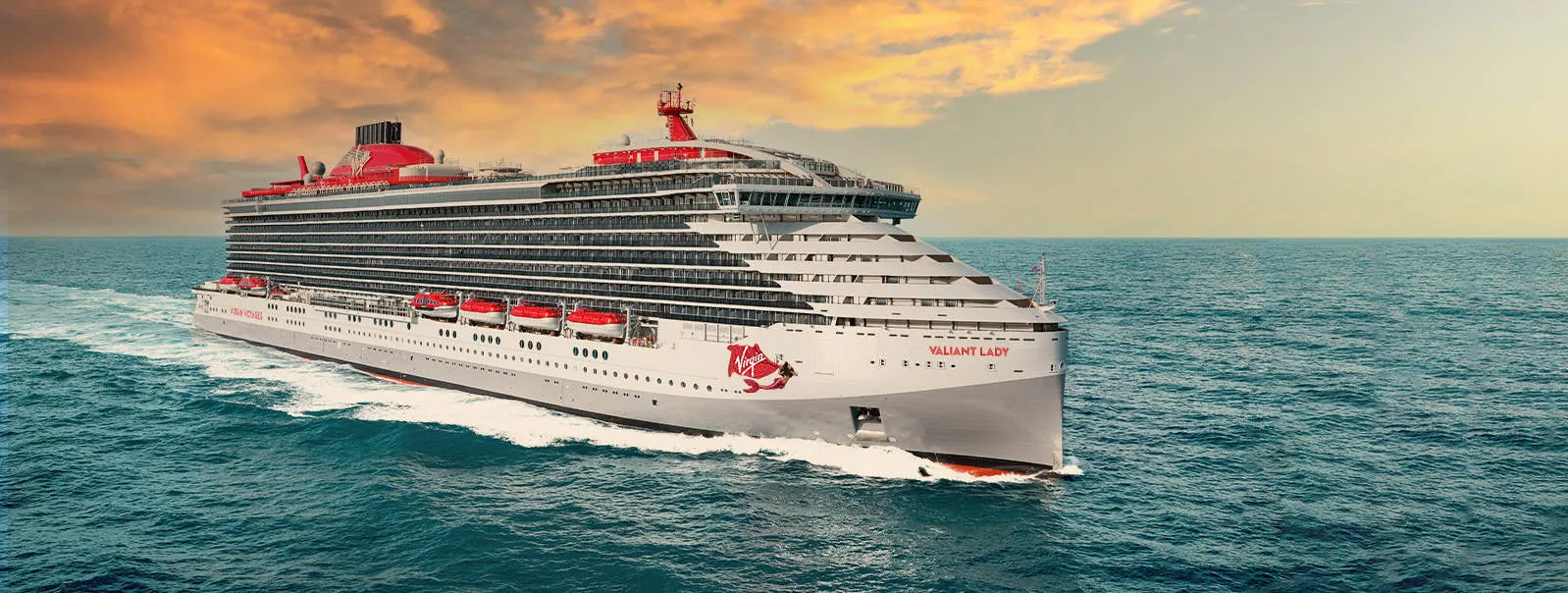
Valiant Lady — The Mediterranean specialist from Barcelona.
Because Virgin also builds identical ships, the experience is consistent across the fleet. Book on itinerary and departure port.
For Australian travellers specifically
The Australian relevance gap between these two lines is significant and favours Viking.
Viking’s Australian presence is consistent and well-supported. Viking Orion deploys annually to Sydney from December to March with 14 to 32-day itineraries. Sixty-seven sailings are available between February 2026 and March 2028, with 17 touching Australian or New Zealand waters per season. The Companion Fly Free programme from 14 Australian gateways — Adelaide, Brisbane, Cairns, Canberra, Darwin, Gold Coast, Hobart, Launceston, Melbourne, Perth, and Sydney — provides economy flights worth up to AU$2,500 per person on select international sailings. The dedicated Australian website (vikingcruises.com.au) prices in AUD. Viking runs Australian Explorer Society events in Sydney and Melbourne. Brand awareness is strong, driven by television advertising and the established reputation of Viking river cruises — many Australian ocean cruise guests come to Viking via prior river experiences.
Virgin’s Australian presence has been intermittent. Resilient Lady’s deployment to Australia introduced the brand to local waters with South Pacific itineraries. However, with only four ships covering Caribbean, Mediterranean, and seasonal deployments globally, Australia competes for limited fleet capacity. Most Virgin sailings require Australians to fly to Miami, Barcelona, or Athens. Virgin does not have a dedicated Australian website with AUD pricing, an Australian office, or an Australian frequent flyer partnership.
The loyalty pathway: Viking’s Explorer Society is simple — one tier, a US$200 travel credit for rebooking within a year, and a referral programme. Viking argues the base product already includes what other lines offer as loyalty rewards. Virgin’s Sailing Club offers perks including loyalty rates and onboard credits. Neither programme is particularly deep, but Viking’s counter-argument — that Wi-Fi, dining, excursions, and thermal spa are already included for everyone — has genuine merit.
Gratuities: Viking charges approximately US$17 per person per day. Virgin includes all gratuities in the fare. For Australians who find daily service charges uncomfortable, Virgin’s approach is simpler. However, Viking’s broader inclusion model means the total out-of-pocket spending is often lower despite the visible gratuity charge.
The onboard atmosphere
The atmosphere comparison between Viking and Virgin is the most extreme in the cruise industry — and it is the single factor that should drive your decision above all others.
Viking’s atmosphere is calm, intellectual, and quietly refined. The Scandinavian design creates a residential feeling — blonde wood, neutral tones, muted lighting, clean lines. The Explorers’ Lounge at the bow, with two storeys of panoramic glass, a library, and reading nooks, sets the cultural tone. Conversations at dinner focus on the day’s port, tomorrow’s excursion, or the morning’s Resident Historian lecture. The passenger base is predominantly couples in their 60s to 80s. The absence of casino noise, nightclub music, and pool deck DJs creates a peace that regular Viking guests find deeply restorative. Evenings wind down early. The ship rewards readers, thinkers, and travellers genuinely interested in where they are going. Staff are described across reviews as “incredibly kind, helpful, and attentive,” and the 1:2 crew-to-passenger ratio supports a personal standard of service.
Virgin’s atmosphere is energetic, informal, and deliberately provocative. The ships feel like boutique hotels designed for social media — bold colours, contemporary art, house music at the pool, and a crowd that skews 30s to 50s. Scarlet Night builds communal energy throughout the evening until the entire ship is participating. The Manor nightclub operates past midnight. The tattoo parlour is busy. Conversations at dinner are as likely to be about the DJ set as the port. The absence of children and traditional cruise conventions creates a space that feels like an adult festival rather than a voyage. The energy can be exhilarating for its target audience and overwhelming for everyone else.
I want to be direct about this: Viking and Virgin have the most incompatible atmospheres of any two lines I compare. A Viking guest on a Virgin ship would likely find the noise, energy, and late nights exhausting. A Virgin guest on a Viking ship would likely find the quietness, early evenings, and lecture-focused programming dull. There is no middle ground here. If you enjoy a quiet evening with a glass of wine and a good book, choose Viking. If you enjoy a loud evening with a cocktail and a dance floor, choose Virgin. Do not book the wrong one.
The bottom line
Viking and Virgin are both adults-only premium lines that reject traditional cruise conventions — but they reject them in opposite directions, and the right choice depends entirely on what kind of traveller you are.
Choose Viking when you want a culturally immersive voyage where the destination is the main event. Choose it for the Resident Historian programme, TED Talks, and Metropolitan Opera screenings that make every sea day intellectually stimulating. Choose it for the all-inclusive model covering shore excursions, speciality dining, Wi-Fi, thermal spa, and wine at meals. Choose it for 930-guest ships that create intimacy and calm. Choose it for 12 ships sailing globally including Alaska, Asia, and world voyages. Choose it for the annual Australian deployment from Sydney and the Companion Fly Free programme. Accept that evenings are quiet, that there is no nightclub, that the passenger demographic skews significantly older, and that the ship’s calm may feel too still for energetic travellers.
Choose Virgin when you want a modern adults-only experience with genuine nightlife, all dining included across 20-plus restaurants, zero dress code, and a ship that feels nothing like a traditional cruise. Choose it for Scarlet Night, The Manor, and an evening energy no other line attempts. Choose it if you have never cruised and suspect you would hate a traditional cruise. Choose it for the Athletic Club fitness programme and the bold contemporary design. Accept that drinks are not included and add up quickly, that shore excursions cost extra, that the four-ship fleet limits destinations, that the Australian presence is inconsistent, and that the ship’s energy is relentless.
For Australian couples over 55 seeking cultural enrichment, included excursions, and quiet refinement, Viking is the clear choice — and the annual Sydney deployment makes it easy. For Australian adults in their 30s and 40s who want their cruise to feel like a week-long night out with world-class food, Virgin is the revelation. These two lines serve audiences that barely overlap, and the happiest guests are the ones who choose honestly based on who they are, not who they think they should be.