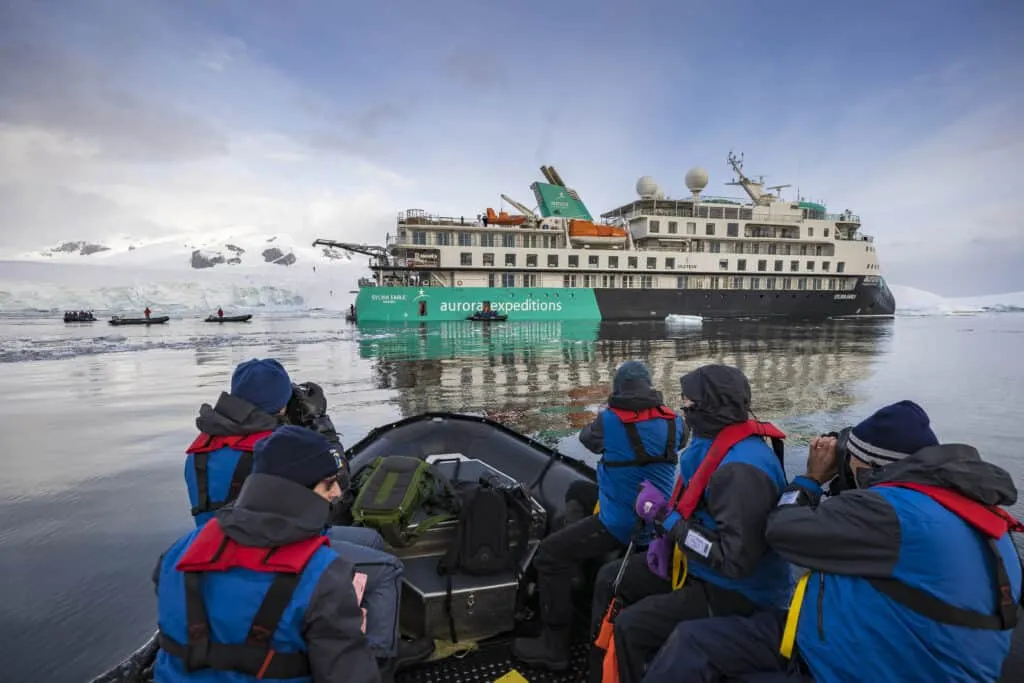
Silversea Cruises and Swan Hellenic both carry fewer than 200 passengers to Antarctica, both deploy purpose-built expedition hardware, and both target the educated, culturally curious traveller — yet they approach expedition cruising from fundamentally different directions. Jake Hower compares their ships, inclusions, enrichment programmes, and value for Australian expedition travellers.
| Silversea Cruises | Swan Hellenic | |
|---|---|---|
| Category | Expedition / Ultra-Luxury | Expedition |
| Rating | ★★★★★ | ★★★★☆ |
| Fleet size | 12 ships | 3 ships |
| Ship size | Small (under 1,000) | Small (under 200) |
| Destinations | Mediterranean, Antarctica, Asia-Pacific, Arctic | Polar, Mediterranean, South America, Asia |
| Dress code | Casual elegance | Relaxed |
| Best for | Ultra-luxury all-inclusive travellers | Cultural expedition and enrichment travellers |
Silversea is the established ultra-luxury expedition brand — four ships, butler service in every suite, a dedicated Galapagos vessel, fly-the-Drake charter flights, Royal Geographical Society partnership, and the backing of Royal Caribbean Group's global infrastructure. Swan Hellenic is the value-luxury disruptor — three brand-new purpose-built ships, a genuinely all-inclusive fare that covers boots, shore excursions, and pre-cruise hotels, a SETI Institute space science partnership, JRE Maris culinary programme, citizen science through Cruising4Oceans, and Cruise Critic's highest expedition ratings at 4.7 out of 5. Choose Silversea when you want butler service, the Galapagos, fly-the-Drake, and Kimberley departures from Australian ports. Choose Swan Hellenic when you want the newest fleet, deeper cultural enrichment, dramatically better value, and a more inclusive fare with fewer surcharges.
The core difference
Silversea Cruises and Swan Hellenic target the same traveller — educated, well-travelled, culturally curious, and seeking expedition experiences that go beyond wildlife watching. Both carry fewer than 200 passengers on their key ships. Both are IAATO members operating genuine polar expeditions. Both have offices in Sydney. Both reject the mega-ship model in favour of intimate, expert-led exploration.
The difference is in philosophy, heritage, and what each line considers non-negotiable.
Silversea is ultra-luxury expedition. Founded in 1994 by the Lefebvre family of Rome, the company pioneered all-inclusive cruising and launched its expedition division in 2008 — the world’s first ultra-luxury expedition line. Now 100% owned by Royal Caribbean Group (acquired for approximately US$1 billion), Silversea operates four expedition ships: the PC6-rated Silver Endeavour (200 guests, built 2021), Silver Cloud (254 guests, built 1994, converted 2017), Silver Wind (274 guests, built 1995, refitted 2021), and the Galapagos-dedicated Silver Origin (100 guests, built 2020). Every cabin across every ship is classified as a suite with butler service — the only expedition line to offer this. The brand promise is “exploration without compromise” — genuine expedition activities during the day, ultra-luxury comfort from the moment you step off the Zodiac. Royal Geographical Society partnership for curated content, fly-the-Drake charter flights bypassing the Drake Passage, six dining venues on the flagship, and a Venetian Society loyalty programme that rewards cumulative sailing days. This is established, corporate-backed expedition luxury with global infrastructure and three decades of operational history.
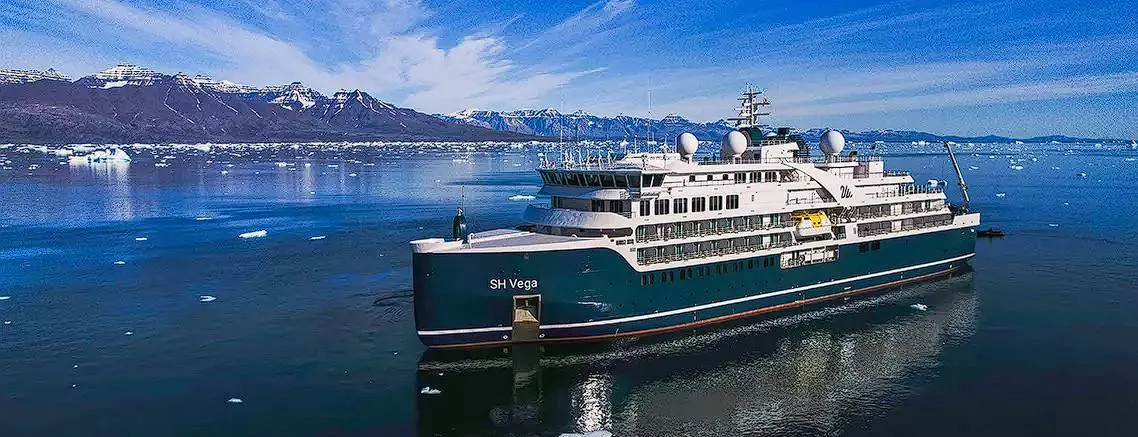
Swan Hellenic is cultural expedition. The brand traces its origins to the 1950s, when W.F. Swan organised cruises carrying members of the Hellenic Society to ancient Greek sites with Oxford academics as guest lecturers. After passing through P&O, Carnival Corporation, bankruptcy, and G Adventures, the brand was resurrected in 2020 by CEO Andrea Zito — a former Silversea executive — with a private European investment group. Three purpose-built ships were delivered between 2021 and 2023 from Helsinki Shipyard: SH Minerva (152 guests, PC5), SH Vega (152 guests, PC5), and SH Diana (192 guests, PC6). Swan Hellenic’s defining proposition is not luxury hardware but intellectual depth — a SETI Institute partnership bringing space scientists aboard, guest lecturers from leading universities, a JRE-Jeunes Restaurateurs culinary programme, citizen science through Cruising4Oceans, and itineraries designed around the “why” of a destination rather than just the “what.” The fare includes shore excursions, charter flights, pre-cruise hotels, boots, and gratuities — arguably the most inclusive base fare in expedition cruising. At a dramatically lower price point than Silversea. Andrea Zito won Seatrade Cruise Personality of the Year 2025 for revitalising the brand.
For Australian travellers, the choice distils to this: Silversea offers the established luxury pedigree, butler service, Galapagos access, fly-the-Drake, and Kimberley sailings from Australian ports. Swan Hellenic offers the newest fleet, the deepest cultural enrichment programme, a genuinely all-inclusive fare, and a price point that makes expedition cruising accessible to a wider audience without sacrificing quality. Both are excellent. They are excellent in different ways.
Expedition team and guides
The quality of the expedition team determines the quality of the voyage. Ships can be compared on paper. Expedition teams can only be compared at sea.
Silversea’s expedition teams are among the most experienced in the industry, led by Conrad Combrink — Senior VP of Expeditions — who has been with the company since the expedition division’s founding in 2008 and has personally visited Antarctica more than 80 times. Team sizes vary by ship: Silver Endeavour carries up to 28 specialists (approximately 1:7 guide-to-guest ratio), Silver Wind up to 28 (approximately 1:10), and Silver Cloud 20 to 22 (approximately 1:12). Disciplines include marine biologists, physical geographers, historians, ornithologists, ecologists, and photographers. The Royal Geographical Society partnership provides bespoke, itinerary-focused scientific and historical content curated specifically for each voyage — a content partnership rather than a staffing arrangement, but one that enriches the lecture programme with RGS archival material and expertise. Expedition leaders plan each day’s activities in collaboration with the Captain, and lectures are described as conversational rather than academic. Across all review platforms, the expedition team is the most consistently praised element of the Silversea experience — even negative reviews routinely single out the guides as outstanding.
Swan Hellenic’s expedition teams carry 12 to 15 specialists per ship, yielding a guide-to-guest ratio of approximately 1:10 to 1:12 — comparable to Silversea’s Silver Wind and Silver Cloud, though behind Silver Endeavour’s 1:7. Where Swan Hellenic distinguishes itself is in the composition and cultural depth of its team. Alongside the standard marine biologists and naturalists, Swan Hellenic’s team includes historians, archaeologists, anthropologists, and regional cultural experts tailored to each specific itinerary — a reflection of the brand’s 70-year heritage as a cultural cruising company. Guest lecturers include Oxford professors, published authors, and subject-matter experts who deliver lectures as a core daily programme, not background entertainment. On designated SETI Institute voyages, a scientist from the institute sails aboard delivering approximately five lectures on astronomy, astrophysics, and astrobiology — accompanied by stargazing sessions using an advanced onboard telescope. No other expedition line offers anything comparable to this space science programme. Expedition team members routinely dine with guests, breaking down the hierarchy between expert and passenger.
The comparison: Silversea’s team is larger on Silver Endeavour (28 versus 12 to 15) and benefits from deeper institutional continuity under Combrink’s long tenure. Swan Hellenic’s team is broader in disciplinary range — the historians, archaeologists, and SETI scientists expand the intellectual scope beyond wildlife biology. Both are excellent. The difference is emphasis: Silversea’s team delivers polished naturalist-led polar expedition. Swan Hellenic’s team delivers culturally layered expedition enrichment.
Ships and expedition hardware
This is where the comparison becomes most concrete. Hardware determines capability, and these two lines have invested in fundamentally different fleets.
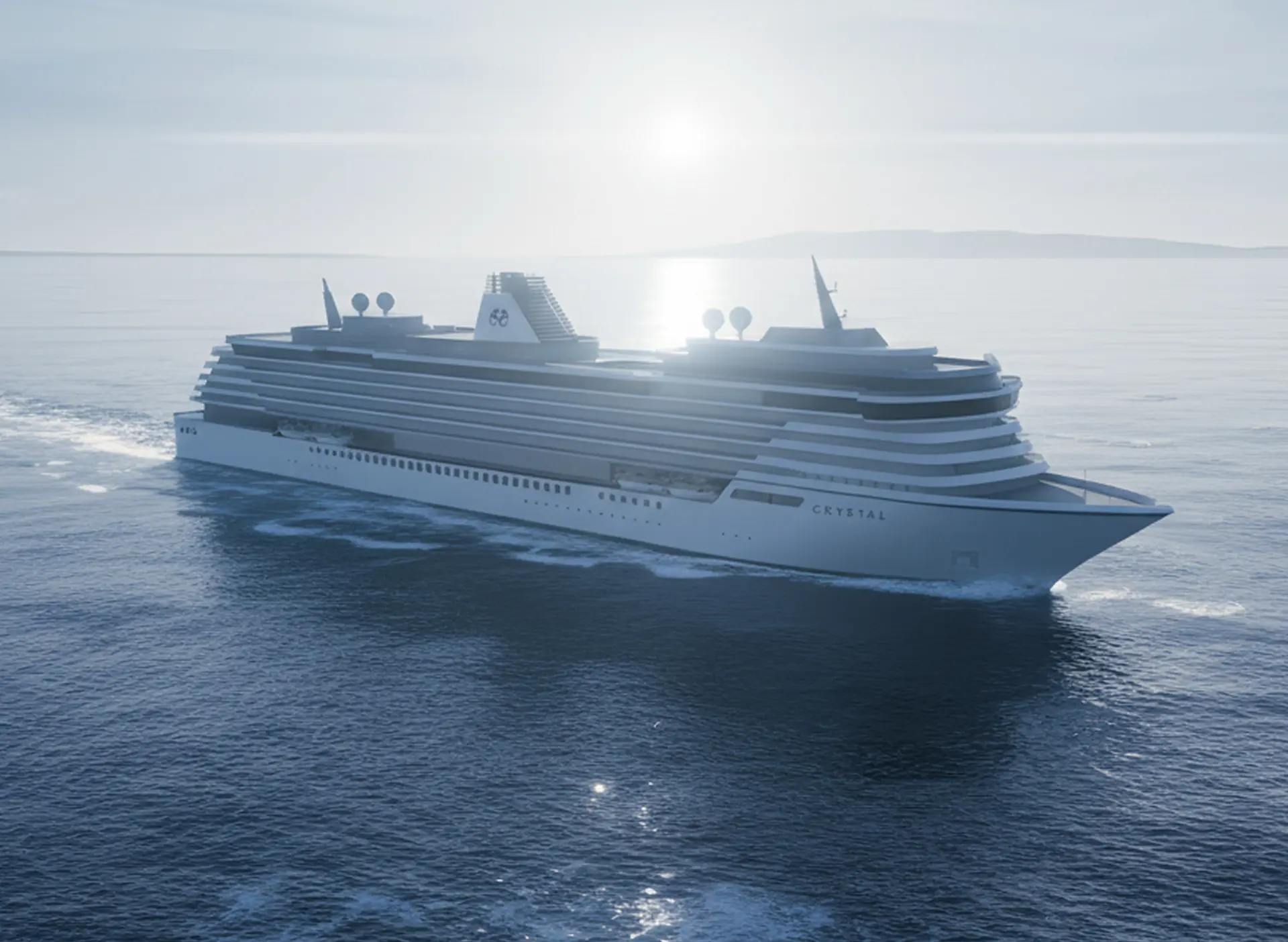
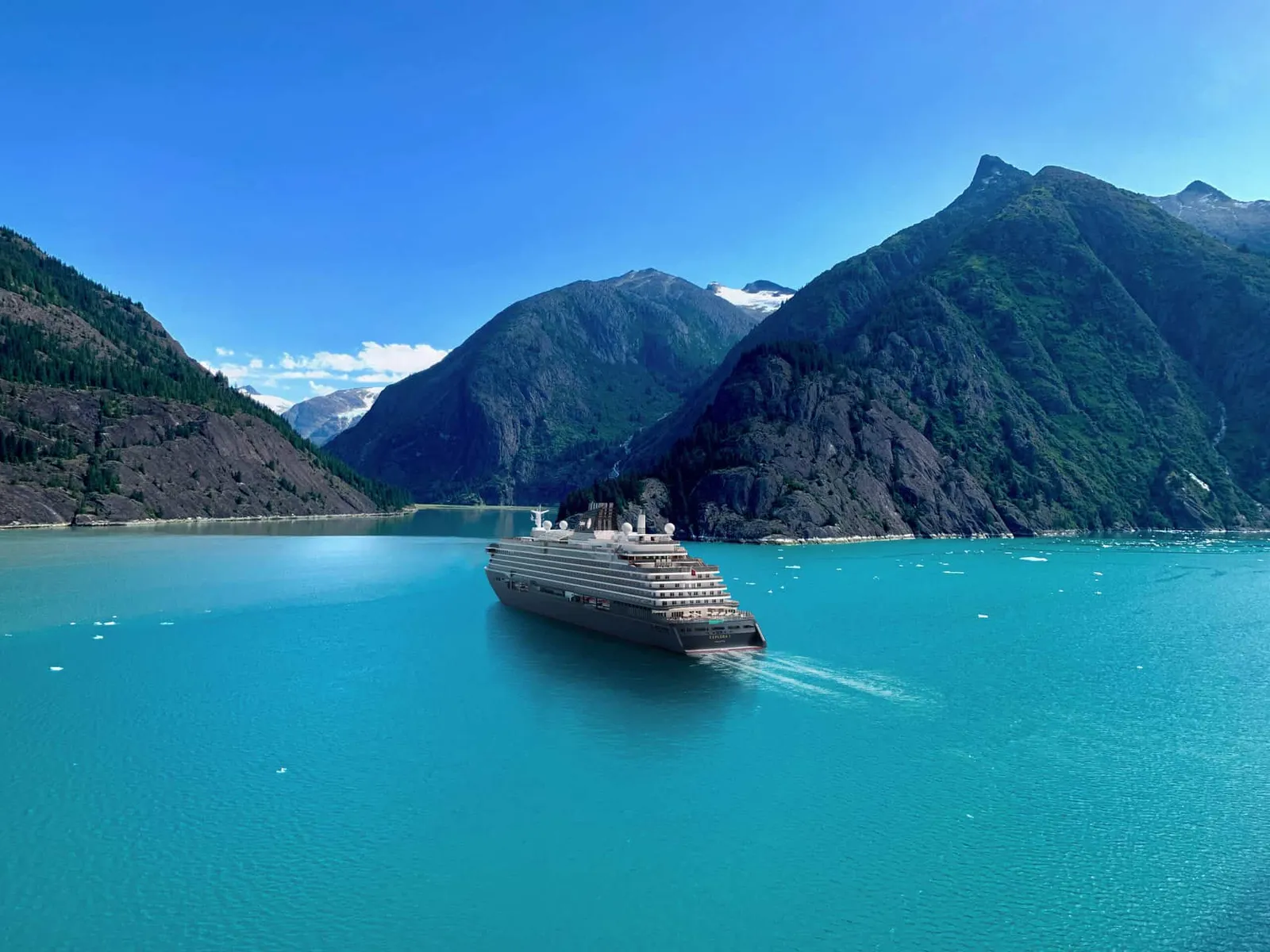
Silversea’s four expedition ships span a wide range. Silver Endeavour — the flagship — is a 20,449 GT, 200-guest vessel with PC6 ice class, 18 Zodiacs, 14 kayaks, a 1:1 crew-to-guest ratio, and the distinction of being purpose-built in 2021 (originally as Crystal Endeavor, acquired from Crystal Cruises’ bankruptcy in 2022). She carries the most hardware per passenger of any ultra-luxury expedition ship. Silver Cloud (1994, converted 2017, ice class 1C) and Silver Wind (1995, refitted 2021, ice class 1C) are converted ocean liners — functional expedition ships but showing their age, particularly Silver Cloud, which multiple Cruise Critic reviewers describe as needing comprehensive refurbishment. Silver Origin (2020, 100 guests) is purpose-built for Galapagos only, with dynamic positioning and a dedicated snorkelling deck. No Silversea expedition ship carries a helicopter, submarine, or ROV.
Swan Hellenic’s three ships are purpose-built sisters from Helsinki Shipyard, all delivered between 2021 and 2023. SH Minerva and SH Vega are identical — 10,617 GT, 152 guests, 76 cabins, PC5 ice class, 12 Zodiacs. SH Diana is the larger variant — 12,255 GT, 192 guests, 96 cabins, PC6 ice class, 14 Zodiacs plus two 48-seat tender boats. Every ship features Tillberg-designed Scandinavian interiors, a signature Swan’s Nest forward observation platform (a glass-enclosed circular space directly over the bow), hybrid diesel-electric propulsion, and dynamic positioning. All three are battery-ready, designed to receive a 3 MW battery package. No helicopters, submarines, or ROVs.
Ice class matters. Swan Hellenic’s SH Minerva and SH Vega hold PC5 — rated for year-round operation in medium first-year ice including old ice inclusions. This is a higher rating than most expedition ships and allows access to more challenging polar waters with a greater safety margin. Silversea’s Silver Endeavour holds PC6 — summer/autumn operation in medium first-year ice — the same rating as SH Diana. Silver Cloud and Silver Wind hold the lower Finnish-Swedish 1C class. For deep polar operations, Swan Hellenic’s smaller ships have a structural ice-class advantage over every Silversea expedition vessel.
Fleet age and condition. This is where Swan Hellenic’s advantage is most pronounced. All three Swan Hellenic ships are less than five years old — purpose-built, consistently designed, and in pristine condition. Silversea’s fleet is split: Silver Endeavour (2021) and Silver Origin (2020) are excellent, but Silver Cloud (1994) and Silver Wind (1995) are over 30 years old. Community sentiment around Silver Cloud in particular is declining — pipes leaking into cabins, sewage odour, and dated fixtures are recurring themes in 2024 and 2025 reviews. No comprehensive refit has been announced. The gap between Silver Endeavour and Silver Cloud is the gap between two different eras of shipbuilding.
Observation spaces. Swan Hellenic’s signature Swan’s Nest — the circular glass platform at the very front of the bow — is genuinely unique in expedition cruising, offering an unobstructed forward view directly over the water. Silversea’s Silver Endeavour has a Panorama Lounge and Observation Lounge for scenic viewing, but no equivalent bow-front immersive space. Both fleets have ample exterior deck areas for wildlife watching.
Landing experience and shore programme
Both lines deliver the core expedition promise: Zodiac landings with expert guides in remote locations. The operational details differ in important ways.
IAATO classification and landing efficiency. All ships from both lines carry fewer than 500 passengers, meaning all guests can make landings at Antarctic Treaty sites. More importantly, both lines’ key polar ships carry fewer than 200 passengers — placing them in IAATO Category C1 where all guests can go ashore simultaneously without group rotation. Silver Endeavour at 200 guests, SH Diana at 192, and SH Minerva/Vega at 152 all land passengers efficiently. The smaller Swan Hellenic ships have a marginal advantage in landing speed — 152 guests require fewer Zodiac runs than 200 — but the practical difference is modest.
Landings per day. Both lines typically conduct two landings or Zodiac excursions per day when conditions permit — one morning, one afternoon. Expedition leaders on both lines retain full flexibility to adapt the programme based on weather, ice, and wildlife sightings.
Activity options — a divergence. Silversea includes Zodiac cruising, guided hikes, kayaking, and snowshoeing at no extra charge. Stand-up paddleboarding is available on select itineraries. SCUBA diving, camping, and climbing are not offered. Swan Hellenic includes Zodiac cruising, guided hikes, snowshoeing, and snorkelling on tropical itineraries. Kayaking is available but at additional cost and must be pre-booked — a notable exception to the otherwise comprehensive all-inclusive model. Neither line offers camping, diving, or helicopters.
Shore excursions beyond expedition landings. This is where Swan Hellenic delivers clearly superior value. One escorted shore excursion per port of call is included in every Swan Hellenic fare — cultural tours, historical site visits, and guided explorations are part of the base price. Silversea includes expedition landings (Zodiac cruises, hikes, and wildlife-viewing excursions) but does not bundle cultural shore excursions in the same way. For culturally rich itineraries in the Mediterranean, Asia-Pacific, or South America, Swan Hellenic’s included excursion per port represents meaningful value.
What is actually included
The “all-inclusive” label is applied liberally in expedition cruising. The details matter enormously, and this is where Swan Hellenic and Silversea diverge most sharply.
Parka. Both lines provide a complimentary branded expedition parka on polar voyages that guests keep. No meaningful difference.
Boots — a telling distinction. Swan Hellenic loans rubber boots (Muck boots) for the duration of every polar voyage at no charge. Fitted in advance at the onboard Basecamp. Returned at disembarkation. Silversea charges USD 98 per cruise plus a USD 100 refundable deposit for boot rental. On an expedition where every guest needs waterproof boots for every landing, this surcharge on a product marketed as “all-inclusive” is a consistent point of criticism from Silversea passengers. Swan Hellenic’s approach — boots are part of the expedition, so they are part of the fare — is more philosophically consistent and saves guests approximately AUD 150 per person.
Beverages. Silversea includes champagne, premium wines, spirits, beer, cocktails, soft drinks, and a daily-restocked in-suite mini-bar. This is genuinely comprehensive — the finest drinks programme in expedition cruising. Swan Hellenic includes house wines, beer, selected spirits, coffee, tea, and soft drinks available 24 hours. Premium spirits and wines from the Aficionado Menu are extra. Silversea wins on beverage breadth and quality — champagne and premium spirits are a step above Swan Hellenic’s house selection.
Dining. Silversea includes all restaurants except La Dame, which carries a USD 60 per person supplement. Swan Hellenic includes all dining venues with no supplements. A surcharge on a fine-dining restaurant aboard a ship marketed as all-inclusive ultra-luxury is, at minimum, philosophically inconsistent.
Gratuities. Both include all onboard gratuities in the fare. No difference.
Wi-Fi. Silversea includes complimentary Wi-Fi (limited in polar regions). Swan Hellenic includes entry-level Silver Connect Wi-Fi (messaging apps only at 1 Mbps). Upgraded browsing (Gold Connect, USD 25 per day) and streaming (Platinum Connect, USD 37 per day) are extra on Swan Hellenic. Both are satellite-based and both degrade significantly in Antarctica. Silversea’s included tier is more usable.
Charter flights and transfers. Swan Hellenic includes the Buenos Aires to Ushuaia charter flight and a pre-cruise hotel night with breakfast on Antarctic voyages — a substantial value inclusion. Silversea includes charter flights, hotel stays, and transfers under the All-Inclusive Plus fare (but not the base All-Inclusive fare). Swan Hellenic bundles these by default; Silversea offers them as an upgrade.
Butler service. Silversea includes butler service in every suite category on every ship — the only expedition line to do this. Butlers manage in-suite dining, mini-bar, unpacking, packing, and special requests. Swan Hellenic does not offer butler service. For travellers who value personalised in-suite service, this is Silversea’s single strongest differentiator.
The net picture. Silversea offers more luxurious inclusions — butler service, champagne, premium spirits. Swan Hellenic offers more practical inclusions — boots, shore excursions, charter flights, pre-cruise hotels. Silversea’s all-inclusive model has more exclusions (La Dame, boots, enhanced Wi-Fi options). Swan Hellenic’s all-inclusive model has fewer surcharges. The guest who values luxury polish chooses Silversea. The guest who values comprehensive, transparent pricing chooses Swan Hellenic.
Destination coverage and itinerary depth
Both lines operate globally, but their deployment strategies reveal different priorities.
Antarctica. Both deploy multiple ships to the Antarctic Peninsula from November to March. Silversea sends three ships (Silver Endeavour, Silver Cloud, Silver Wind) with approximately 38 to 40 voyages per season — one of the largest Antarctic programmes of any expedition line. Itinerary types include fly-cruise (6 nights), classic Peninsula (10 to 12 days), and comprehensive Falklands/South Georgia/Peninsula (18 to 20 days). Swan Hellenic sends all three ships with approximately 12 departures per season — a smaller programme reflecting the line’s smaller fleet. Itinerary types include classic Peninsula (9 to 11 nights) and comprehensive Shackleton’s Footsteps voyages (18 to 19 nights) including Falklands and South Georgia. Silversea offers more departure dates and greater Antarctic flexibility.
Fly-the-Drake — Silversea only. Silversea offers charter flights between Puerto Williams and King George Island, bypassing the Drake Passage entirely. Fly-cruise voyages are typically six nights aboard ship. Swan Hellenic does not offer fly-the-Drake — all Antarctic voyages cross the Drake Passage by sea, requiring approximately two days each way. For time-pressed Australian travellers or those concerned about sea conditions, Silversea’s fly-the-Drake is a genuine exclusive.
Galapagos — Silversea only. Silver Origin is the only purpose-built ultra-luxury expedition ship dedicated exclusively to the Galapagos. Year-round operations, 100 guests, dynamic positioning to protect the seabed, Ecuadorian naturalist guides at a 1:10 ratio, and Horizon Balconies that convert between open-air and enclosed. Swan Hellenic does not visit the Galapagos. If the Galapagos is on your list, Silversea is the only choice between these two lines.
Arctic. Both lines operate Arctic programmes from May to September. Silversea sends Silver Endeavour and Silver Wind to Svalbard, Greenland, Arctic Canada, and the Northwest Passage — with 21 voyages announced for 2026. Silver Endeavour completed its inaugural Northwest Passage transit in 2025. Swan Hellenic sends SH Vega to Svalbard, Iceland, Greenland, and the Norwegian coast, including maiden calls to remote islands like Vaeroy in the Lofoten chain. Comparable Arctic coverage, with Silversea offering more departure dates and Swan Hellenic offering more unusual ports.
Kimberley — Silversea only (for now). Silver Cloud makes her Kimberley debut in 2026 with seven departures from Darwin and Broome between May and August. This is significant for Australian travellers — Kimberley sailings from domestic ports, no international flights required. Swan Hellenic has no Australian departure ports in the current programme.
Mediterranean and cultural destinations — Swan Hellenic’s heritage. Swan Hellenic’s cultural expedition cruises in the Mediterranean, Africa, and the Middle East are the direct descendants of the company’s 1950s Aegean voyages. SH Diana can dock directly in Venice city centre — a privilege denied to larger ships. Itineraries include Sicily to Venice, the Spanish coast, West Africa (Ghana, Gabon, Angola), and South Africa including a maiden call to Hermanus. Silversea’s ocean fleet covers the Mediterranean extensively, but the expedition fleet does not operate dedicated Mediterranean cultural programmes.
Asia-Pacific — Swan Hellenic’s expansion. Swan Hellenic’s 2026 Asia-Pacific debut is a major development — SH Minerva sails five sequential cruises through the Solomon Islands, Papua New Guinea, Indonesia, Philippines, and Japan from April 2026, combinable into a 55-day grand voyage. No port is repeated. For Australian travellers, this positions Swan Hellenic within practical reach from Brisbane and Sydney. Silversea’s Silver Cloud sails the South Pacific but the expedition fleet’s Asia-Pacific presence is more limited.
Cabins and accommodation
The cabin experience reflects each line’s broader philosophy — Silversea wraps expedition travel in ultra-luxury trimmings, while Swan Hellenic delivers thoughtful, modern comfort without the butler and the marble.
Silversea’s all-suite concept. Every cabin on every Silversea ship is designated a “suite” — even the entry-level Classic Veranda at 304 square feet on Silver Endeavour. Standard features include a private balcony, butler service, marble bathroom, walk-in wardrobe, pillow menu, and a complimentary mini-bar restocked daily. Silver Endeavour’s 2023 refit added Master Suites (1,163 square feet with 270-degree views) and Signature Suites (721 to 850 square feet). The Owner’s Suite on Silver Endeavour runs to 1,868 square feet with two bedrooms. This is materially more spacious and luxurious than anything in the sub-200-passenger expedition market.
Swan Hellenic’s cabin range. Entry-level Oceanview cabins are 19 to 20 square metres (approximately 205 to 215 square feet) with large fixed windows but no balcony. Balcony cabins run to 28 square metres (approximately 300 square feet) with a 6 square metre (65 square feet) balcony. Suites reach 44 to 49 square metres (approximately 473 to 527 square feet) with a 12 square metre balcony. Approximately 80 per cent of cabins across the fleet feature private balconies. No butler service, no marble, no walk-in wardrobes — but every cabin includes an espresso machine, select categories include binoculars, and all feature a faux holographic fireplace that reviewers describe as a charming touch. Premium toiletries, flatscreen TV with media library, and ample storage. The Basecamp on Deck 3 provides one locker per stateroom for storing expedition gear — keeping cabins clutter-free.
The comparison. Silversea’s cabins are objectively more luxurious — more spacious at comparable categories, more amenities, butler service as standard. Swan Hellenic’s cabins are newer, well-designed, and include thoughtful expedition-specific details (the Basecamp lockers, the espresso machine, the binoculars). At the entry level, Silversea’s Classic Veranda (304 square feet with balcony and butler) is a step above Swan Hellenic’s Oceanview (205 square feet with window and no butler). At the suite level, both deliver premium accommodation, but Silversea’s Master Suite and Owner’s Suite are in a different class entirely.
The question for most expedition travellers is whether the cabin difference justifies the price difference — and when you are spending 14 hours a day on deck, in Zodiacs, and ashore, the answer is less clear than it would be on an ocean cruise where the cabin is your primary living space.
Pricing and value
This is the comparison’s most decisive dimension. The price gap between these two lines is substantial, and it compounds when you factor in what each fare actually includes.
Swan Hellenic’s directional pricing. Entry-level Antarctic Peninsula voyages (9 to 11 nights) on SH Minerva or SH Vega start from approximately USD 11,000 per person in an Oceanview cabin — roughly AUD 17,000 to 18,000 at current exchange rates. Longer Antarctic voyages including South Georgia and Falklands range from approximately USD 22,000 to 25,000 per person (approximately AUD 34,000 to 39,000). These fares include charter flights from Buenos Aires to Ushuaia, one night’s pre-cruise hotel with breakfast, rubber boots, one shore excursion per port, gratuities, house beverages, and the expedition parka. Promotional discounts of 20 to 30 per cent off brochure rates are frequently available through Australian agents.
Silversea’s directional pricing. Silver Endeavour fly-cruise voyages (6 nights) start from approximately USD 16,100 per person for a Classic Veranda — roughly AUD 25,000. Traditional 10 to 12 day Antarctic Peninsula sailings range from approximately USD 10,600 to 18,500 per person depending on departure date and suite category. Comprehensive Falklands/South Georgia/Peninsula voyages (18 to 20 days) command higher fares. These prices include butler service, premium beverages, gratuities, and the expedition parka — but not boot rental (USD 98 plus deposit), La Dame dining (USD 60 per visit), or enhanced shore excursions beyond expedition landings.
The value equation. On a like-for-like Antarctic Peninsula voyage, Swan Hellenic is approximately 30 to 40 per cent cheaper than Silversea at entry level, and that gap widens when you add Silversea’s not-included extras. Swan Hellenic achieves this while sailing newer ships, including more in the base fare, and maintaining Cruise Critic ratings of 4.7 out of 5. The trade-off is the absence of butler service, champagne, and the ultra-luxury polish that defines Silversea. For the Australian traveller who prioritises the expedition experience itself over in-suite luxury, Swan Hellenic represents exceptional value.
Solo supplements. Silversea’s standard solo supplement is 25 per cent above double-occupancy fare, with promotional rates occasionally dropping to 10 per cent or even zero on select sailings. Swan Hellenic’s solo supplement ranges from 0 to 75 per cent depending on the sailing — with zero-supplement promotions running regularly. Neither line offers dedicated solo cabins. For solo travellers, both lines warrant checking current promotions at time of booking.
Per diem comparison. Swan Hellenic’s entry-level per diem on an Antarctic Peninsula voyage works out to approximately AUD 1,900 to 2,000 per day. Silversea’s entry-level fly-cruise per diem on Silver Endeavour is approximately AUD 2,700 to 3,800 per day. The gap is meaningful — it is the difference between a premium expedition and an ultra-luxury one.
Onboard enrichment and science
Both lines invest in enrichment, but their approaches reveal fundamentally different priorities — and Swan Hellenic’s programme is the more distinctive of the two.
Swan Hellenic’s intellectual depth. Enrichment is not a supplementary feature on Swan Hellenic — it is the product. The SETI Institute partnership (“Explore Space at Sea”) places institute scientists aboard nine designated voyages across the 2025-2026 programme, delivering lectures on astronomy, astrophysics, astrobiology, and the search for extraterrestrial life. An advanced telescope is installed onboard for guided stargazing sessions. Guests participate in citizen science projects through the Cruising4Oceans programme, contributing to real research. Guest lecturers are curated for each itinerary — professors from Oxford and other leading universities, published authors, archaeologists for Mediterranean voyages, regional cultural experts for Asia-Pacific and African itineraries. The lecture programme is held in the Observation Lounge and treated as a core daily event, not optional background programming. This is the legacy of 70 years of cultural cruising — the enrichment is the reason many guests choose Swan Hellenic over any other expedition line.
Silversea’s enrichment programme. Silversea’s expedition team delivers daily lectures covering wildlife, glaciology, history, and upcoming destinations — described as conversational rather than academic. The Royal Geographical Society partnership provides bespoke content curated for each voyage route, drawing on RGS archival material. A Photo Studio is available on Silver Wind. Enrichment on Silversea is professional and enjoyable, but it is one component of the expedition experience rather than the defining element. Silversea does not operate a citizen science programme, a space science partnership, or a culinary discovery programme comparable to Swan Hellenic’s offerings. The S.A.L.T. culinary enrichment programme operates on Silversea’s ocean fleet only — not on any expedition ship.
The comparison. Swan Hellenic’s enrichment programme is deeper, more diverse, and more central to the brand identity. The SETI partnership is unique in the expedition market. The guest lecturer programme draws from a broader academic pool. The Cruising4Oceans citizen science programme gives passengers the opportunity to contribute to genuine research. Silversea’s RGS partnership and expedition team lectures are excellent — but enrichment on Silversea serves the luxury expedition experience, whereas on Swan Hellenic it defines the experience.
Dining on expedition
Food quality matters on expedition ships — long days on Zodiacs and ashore demand substantial, well-prepared meals. Both lines take dining seriously, but their approaches differ.
Silversea’s dining programme offers more venues and more choice. Silver Endeavour has six dining options: The Restaurant (main dining, open seating, a la carte), Il Terrazzino (Italian, handmade pasta), La Dame (fine French, 20 seats, reservations required, USD 60 supplement), The Grill (poolside, salads and grilled seafood), Arts Cafe (casual light meals), and 24-hour in-suite dining delivered by the butler on white tablecloths. Silver Cloud and Silver Wind each offer five venues including La Terrazza (Italian) and La Dame. The breadth is impressive. Food quality reviews, however, are polarising in the post-Royal Caribbean era — some guests rate it highly, others describe disappointment. A prominent cruise vlogger who sailed Silver Endeavour in 2024 praised the expedition team but noted that food quality “has some way to go to reach that of the rest of the fleet.”
Swan Hellenic’s dining programme is smaller but punches above its weight. Three venues on all ships: the Swan Dining Room (main restaurant, international and regional cuisine, open seating, white tablecloths at dinner), the Club Lounge (all-day casual dining with Piemonte-style pizza, tapas, small plates, and a feature fireplace), and the Pool Grill (al fresco grilled classics). Menus are created by Chef Andrea Ribaldone (Italian) and Chef Sang Keun Oh (Korean). No dining supplements — everything is included. On designated voyages, the JRE-Jeunes Restaurateurs Maris programme brings a celebrated young chef aboard to create a nightly signature dish, host cooking demonstrations, lead gastronomic shore excursions, and prepare an extraordinary Gala Dinner. Multiple Cruise Critic reviewers describe Swan Hellenic’s food as “the best on any cruise line” — a remarkable assessment for a line positioned below ultra-luxury.
The comparison. Silversea offers more dining venues, more variety, and butler-delivered in-suite dining — but charges USD 60 for La Dame and receives mixed food reviews. Swan Hellenic offers fewer venues, no supplements, and consistently higher food praise from reviewers. The JRE Maris programme on select Swan Hellenic voyages elevates the culinary experience to a level that arguably matches Silversea’s best — without the surcharge. For the food-focused expedition traveller, Swan Hellenic’s quality-to-value ratio is striking.
Standout itineraries for Australian travellers
Silversea Cruises
Silver Endeavour Antarctic Fly-Cruise (6 nights, from Puerto Williams) — Skip the Drake Passage entirely with a charter flight direct to King George Island. Maximum Antarctica time in minimal days. Butler service, PC6 ice class, 1:7 guide ratio, 200 guests. From approximately AUD 25,000 per person. Fly Sydney to Santiago or Buenos Aires, then to Puerto Williams. The Cormorant at 55 South — Silversea’s own 150-room hotel in Puerto Williams — opens October 2026 as the fly-cruise staging point.
Silver Cloud Kimberley (10 days, Darwin to Broome, May to August 2026) — Silversea’s first Kimberley deployment. 20 Zodiacs, daily excursions, cultural encounters, marine biologists and ornithologists aboard. The only way to experience Silversea’s expedition product from an Australian port without international flights. Seven departures across the season.
Silver Origin Galapagos (7 days, year-round from San Cristobal or Baltra) — The only purpose-built ultra-luxury ship dedicated exclusively to the Galapagos. 100 guests, Ecuadorian naturalist guides at 1:10 ratio, dedicated snorkelling deck, dynamic positioning. Horizon Balconies that convert between open-air and enclosed. From approximately AUD 18,000 per person. Fly Sydney to Guayaquil or Quito via Santiago or Dallas.
Falklands, South Georgia and Antarctic Peninsula (18 to 20 days, from Ushuaia) — The comprehensive polar voyage. King penguin colonies numbering in the hundreds of thousands at South Georgia, Shackleton’s grave at Grytviken, Falklands wildlife, and the Antarctic Peninsula. Silver Endeavour, Silver Cloud, or Silver Wind. For the Australian traveller with time, this is the definitive Antarctic expedition.
Swan Hellenic
Antarctic Peninsula on SH Minerva or SH Vega (9 to 11 nights, from Ushuaia via Buenos Aires) — The best-value Antarctic expedition from a quality operator. 152 guests, PC5 ice class (higher than most competitors), charter flight from Buenos Aires, pre-cruise hotel, boots included, shore excursion per port. From approximately AUD 17,000 per person. Cruise Critic rated 4.7 out of 5. Fly Sydney to Buenos Aires on Qantas or LATAM (approximately 14 to 15 hours direct).
In Shackleton’s Footsteps (18 to 19 nights, from Buenos Aires) — Falklands, South Georgia, and the Antarctic Peninsula with Swan Hellenic’s cultural enrichment overlay — historical context on Shackleton, the whaling era, and Antarctic exploration woven through every landing and lecture. From approximately AUD 22,000 to 25,000 per person in an Oceanview cabin. Dramatically cheaper than Silversea’s equivalent itinerary.
Asia-Pacific Hidden Heritage (combinable voyages, April to May 2026, SH Minerva) — Swan Hellenic’s debut in the Asia-Pacific. Solomon Islands and Papua New Guinea (13 nights from Honiara), Papua New Guinea and Indonesia (10 nights), Raja Ampat and Philippines (11 nights), Philippines to Japan (11 nights), Hiroshima to Otaru (10 nights). No port repeated. All five combinable into a 55-day grand voyage. Honiara is accessible from Brisbane and Sydney. Charter flights and hotels included on remote embarkation cruises.
SETI Explore Space at Sea (various itineraries across the programme) — Nine designated voyages where a SETI Institute scientist sails aboard, delivering lectures on astronomy and astrobiology with guided stargazing through the onboard telescope. Destinations include Chile, Peru, Iceland, and polar regions. The only space science programme at sea. For the intellectually curious Australian traveller, this is an experience no other cruise line can offer.
For Australian travellers specifically
Getting to the ship. For Antarctic voyages on either line, the primary routing from Australia is Sydney or Melbourne to Buenos Aires — approximately 14 to 15 hours on Qantas, LATAM, or Aerolineas Argentinas. Swan Hellenic includes the Buenos Aires to Ushuaia charter flight in the fare; Silversea includes it under the All-Inclusive Plus fare. For Silversea’s Kimberley sailings, embarkation is from Darwin or Broome — domestic flights only, a significant convenience. For Silversea’s Galapagos programme, routing goes through Santiago or Dallas to Ecuador. For Swan Hellenic’s Asia-Pacific 2026 programme, Honiara is accessible from Brisbane and Sydney, and Manila and Hiroshima are well served by direct or one-stop flights. Universal advice: arrive a day early. A missed expedition ship is unrecoverable.
Currency and booking. Silversea prices in multiple currencies and has a full Australian office at 8 Spring Street, Sydney (phone 02 9255 0600). Swan Hellenic’s website displays USD by default, but Australian specialist agents — including Expedition Cruise Specialists, Cruise Traveller, and Antarctica Travel Centre — display AUD pricing and often hold promotional allocations. Booking through a Virtuoso-affiliated advisor can secure up to USD 150 onboard credit per person on Swan Hellenic. For both lines, Australian travellers are best served by booking through a local specialist who understands the expedition market.
Australian deployments. Silversea has the clear advantage here — Silver Cloud’s 2026 Kimberley season offers seven departures from Darwin and Broome between May and August, plus the broader ocean fleet regularly cruises Australian and New Zealand waters. Swan Hellenic has no Australian departure ports, though the 2026 Asia-Pacific programme positions SH Minerva in the broader region and suggests future expansion toward Australia. The Sydney office and growing Australian trade relationships indicate the Australian market is a strategic priority for Swan Hellenic.
Travel insurance. Standard policies often exclude expedition cruise activities in polar regions. Specialist expedition insurance with minimum AUD 500,000 medical coverage and AUD 250,000 evacuation coverage is essential — both lines require mandatory travel insurance, and adequate medical facilities can be 72-plus hours away from any Antarctic position.
Loyalty programmes. Silversea’s Venetian Society is a single-tier programme with milestone rewards at 100, 250, 350, and 500 cumulative sailing days — including complimentary voyages at higher tiers and a cross-brand status match with Royal Caribbean International and Celebrity Cruises. Swan Hellenic does not operate a formal loyalty programme as of February 2026. For repeat expedition travellers, Silversea’s loyalty structure (and the cross-brand points system launching in 2026) offers tangible long-term value that Swan Hellenic cannot yet match.
The onboard atmosphere
Both lines create the atmosphere that expedition travellers seek — intimate, intellectually stimulating, structured around shared discovery rather than onboard entertainment. Neither has a casino, a Broadway show, or a formal dress code. Both build community through the daily rhythm of briefings, landings, lectures, and stories over drinks.
Silversea’s atmosphere sits firmly on the luxury end of the expedition spectrum. This is not a rubber-boot, bunk-bed operation. The guiding principle is “exploration without compromise” — adventure during the day, ultra-luxury in the evening. Dress code is “Elegant Casual” with no formal nights on expedition ships. The demographic skews 55-plus, well-travelled, and affluent — with a high proportion of repeat Silversea guests through the Venetian Society. Approximately 60 to 70 per cent of passengers are couples, with a growing solo segment. Evenings centre on the Show Lounge and Venetian Lounge for nightly entertainment (smaller-scale than the ocean fleet), the daily expedition recap, and drinks at the bar. The bar scene is intimate and convivial — bartenders learn preferences quickly on a small ship, and all drinks are included. The atmosphere is more “exclusive country club” than “adventure camp.”
Swan Hellenic’s atmosphere is described by passengers as “refreshingly adult” and more akin to a “floating university” than a floating hotel. The Observation Lounge is the social and intellectual hub — lectures by day, cocktails and live piano by evening. The Club Lounge provides a more casual alternative with its feature fireplace. Conversations naturally gravitate toward the day’s discoveries and upcoming lectures. The demographic skews 55-plus, well-educated, and intellectually curious — readers and museum-goers who prioritise learning over entertainment. No formal dress code — “the wish is that guests feel comfortable without being expected to dress to impress anyone.” Solo travellers report finding it easy to connect with like-minded passengers. The ship quiets early as guests rise for morning landings. The atmosphere is more “after-dinner conversation at a good friend’s home” than “cocktail party at a five-star hotel.”
The difference in feel. Silversea’s expedition ships carry the DNA of an ultra-luxury cruise line — the butler at the door, the champagne at the bar, the marble in the bathroom. Swan Hellenic’s ships carry the DNA of a cultural institution — the lecture in the lounge, the telescope on deck, the professor at the dinner table. Both are intimate. Both foster the camaraderie that only shared expedition travel creates. Silversea wraps that camaraderie in cashmere. Swan Hellenic wraps it in curiosity.
The bottom line
Silversea Cruises and Swan Hellenic represent two compelling but distinct answers to the same question: how should educated, culturally curious travellers experience the world’s most extraordinary destinations?
Choose Silversea when you want the established ultra-luxury expedition brand — butler service in every suite, champagne at the bar, a 1:1 crew-to-guest ratio on the flagship, fly-the-Drake charter flights to skip the Drake Passage, the only dedicated ultra-luxury Galapagos ship, Kimberley departures from Australian ports, and the financial security of Royal Caribbean Group ownership. Choose Silversea when the cabin is part of the experience, when personalised in-suite service matters, and when you want the reassurance of a 30-year expedition track record. Accept that this comes at a premium price point, that the fleet includes two ships over 30 years old, that boots cost extra on a product marketed as all-inclusive, and that the fine-dining restaurant charges a supplement.
Choose Swan Hellenic when you want the newest expedition fleet in the market, a genuinely all-inclusive fare with fewer hidden costs, the deepest cultural enrichment programme at sea (SETI Institute scientists, Oxford lecturers, JRE chefs), citizen science participation, Cruise Critic’s highest expedition ratings, and a price point approximately 30 to 40 per cent below Silversea for a comparable Antarctic voyage. Choose Swan Hellenic when the enrichment is the reason you travel, when value matters alongside quality, and when a brand founded on intellectual curiosity resonates more than one built on ultra-luxury trimmings. Accept that there is no butler service, no Galapagos, no fly-the-Drake, no Australian departures (yet), and a shorter operational track record under current ownership.
For the Australian expedition traveller weighing both lines, the most clarifying question is this: do you want the most luxurious expedition ship at sea, or do you want the most intellectually enriching one? Silversea’s Silver Endeavour is the answer to the first question. Swan Hellenic’s fleet — with its SETI scientists, cultural historians, and brand-new purpose-built ships — is the answer to the second. Both deliver outstanding polar expeditions. Both have offices in Sydney. Both will change the way you see the world. The difference is whether that change comes wrapped in cashmere or in curiosity.