Quark Expeditions and Silversea Cruises represent opposite philosophies applied to the same frozen landscapes — one an adventure-first polar specialist with twin helicopters, the other ultra-luxury expedition cruising with butler service in every suite. Jake Hower compares their ships, expedition hardware, inclusions, guide ratios, and value for Australian travellers choosing between these two fundamentally different approaches to expedition travel.
| Quark Expeditions | Silversea Cruises | |
|---|---|---|
| Category | Expedition | Expedition / Ultra-Luxury |
| Rating | ★★★★☆ | ★★★★★ |
| Fleet size | 4 ships | 12 ships |
| Ship size | Small (under 500) | Small (under 1,000) |
| Destinations | Antarctica, Arctic, Greenland, Svalbard | Mediterranean, Antarctica, Asia-Pacific, Arctic |
| Dress code | Relaxed | Casual elegance |
| Best for | Polar expedition adventure travellers | Ultra-luxury all-inclusive travellers |
Quark Expeditions is the polar purist — exclusively Arctic and Antarctic for over three decades, twin Airbus H145 helicopters on Ultramarine enabling Snow Hill Emperor penguin access and included flightseeing, a claimed 1:6 guide ratio, complimentary drinks fleet-wide, and North Pole voyages aboard a nuclear icebreaker. Silversea Cruises counters with the only ultra-luxury expedition fleet afloat — butler service in every suite, six dining venues on Silver Endeavour, a dedicated Galapagos ship in Silver Origin, Kimberley deployments from Australian ports, and the polish of Royal Caribbean Group's resources. Choose Quark when the expedition itself is the priority and helicopter access, polar expertise, and value matter most. Choose Silversea when you want the most luxurious expedition experience available and destinations beyond the poles, including the Galapagos and Australia's own Kimberley coast.
The core difference
Quark Expeditions and Silversea Cruises both send ships into polar waters, both carry expert expedition teams, and both deliver Zodiac landings on Antarctic shores. But they approach the same frozen landscapes from fundamentally opposite directions, and understanding that difference is the key to choosing between them.
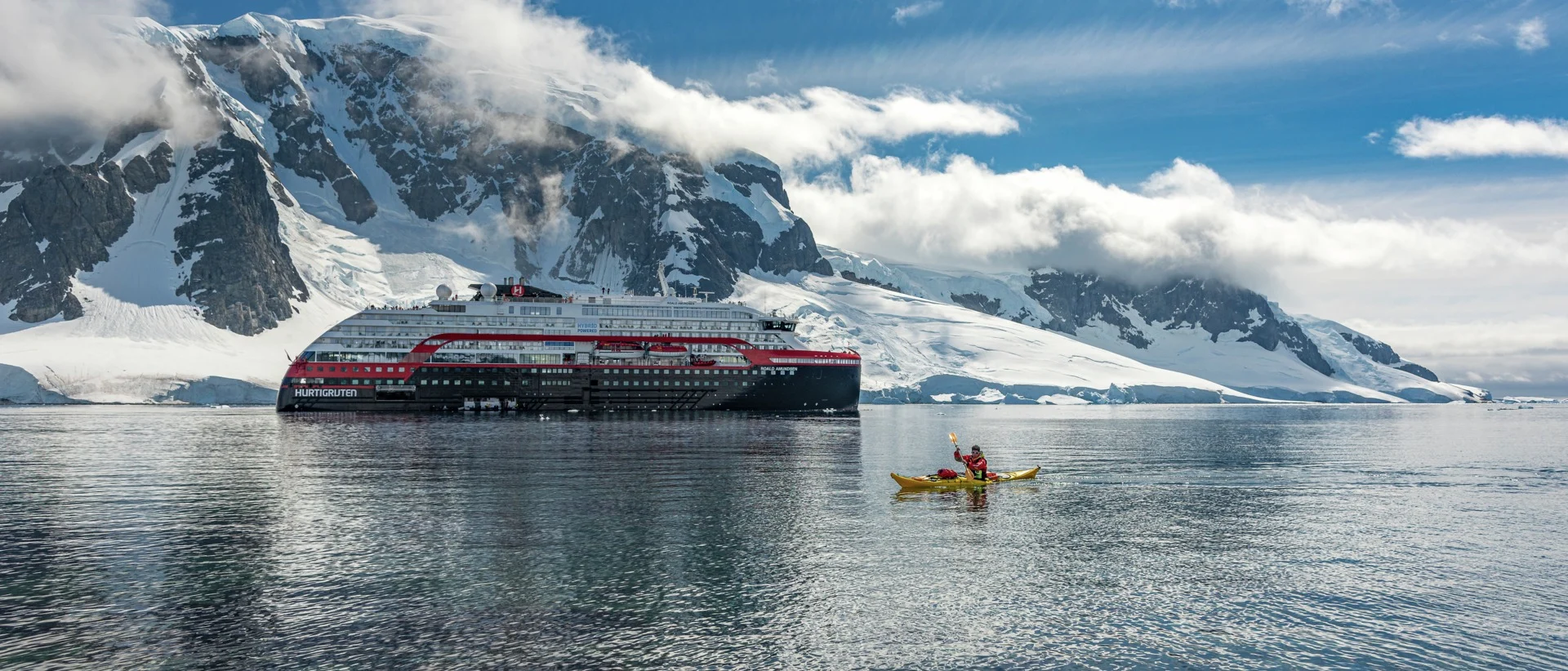
Quark Expeditions is the polar purist. Founded in 1991 by Mike McDowell and Lars Wikander — who led the first commercial voyage to the North Pole aboard a nuclear icebreaker — Quark has operated exclusively in polar waters for over three decades. Headquartered in Seattle and owned by Travelopia (itself owned by private equity firm KKR), Quark was one of the seven founding members of IAATO. The company’s defining asset is Ultramarine — a 199-passenger purpose-built expedition ship carrying twin Airbus H145 helicopters that enable Snow Hill Emperor penguin colony access, included flightseeing, and heli-landings that no other sub-200-passenger polar ship can offer. Quark also charters the nuclear icebreaker 50 Years of Victory for Geographic North Pole voyages — one of only two operators in the world offering this journey. Since November 2024, all Quark voyages include complimentary drinks and Wi-Fi fleet-wide. The company does not operate outside the Arctic and Antarctic. There is no Galapagos ship, no Kimberley season, no Mediterranean repositioning. Polar is the entire business.
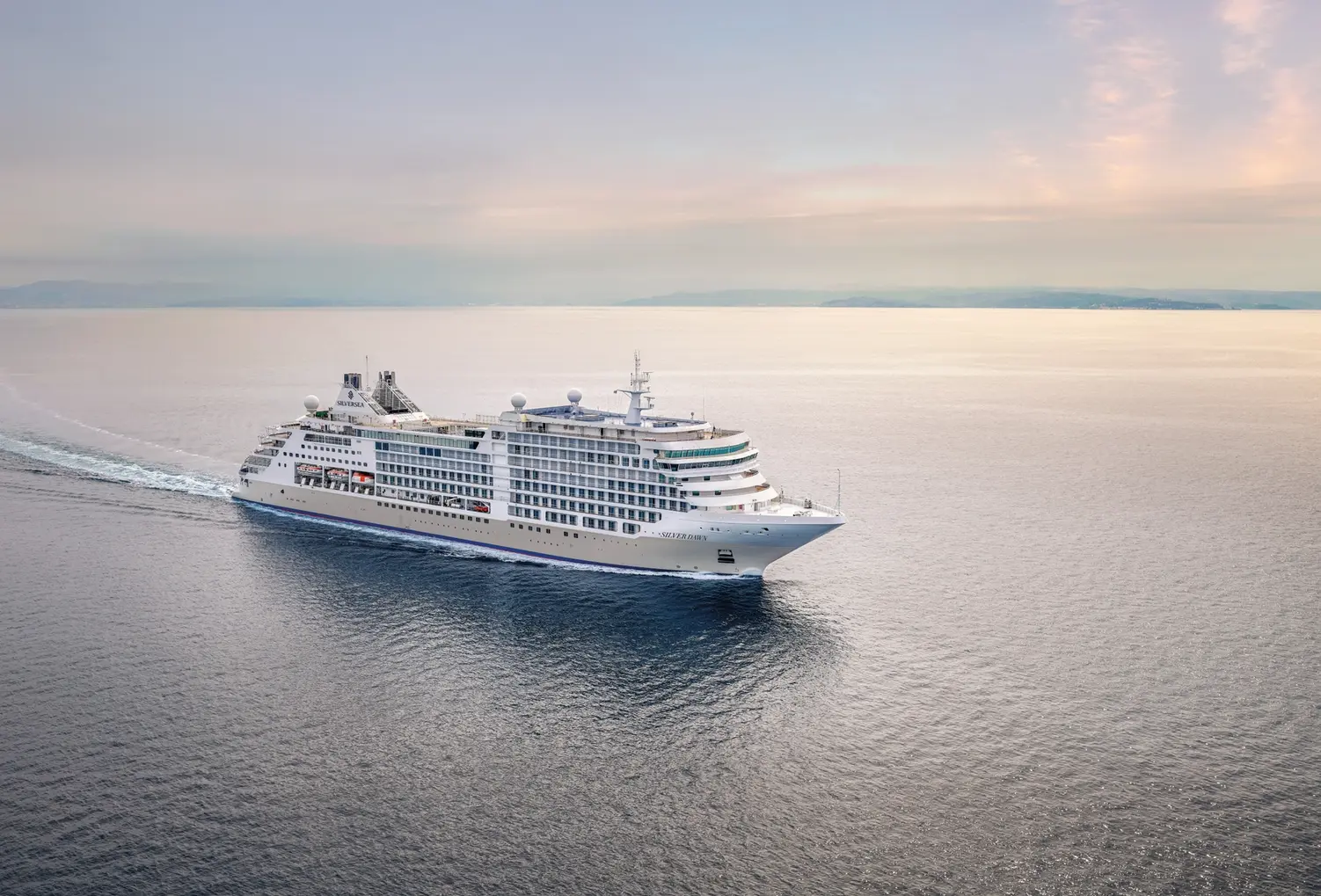
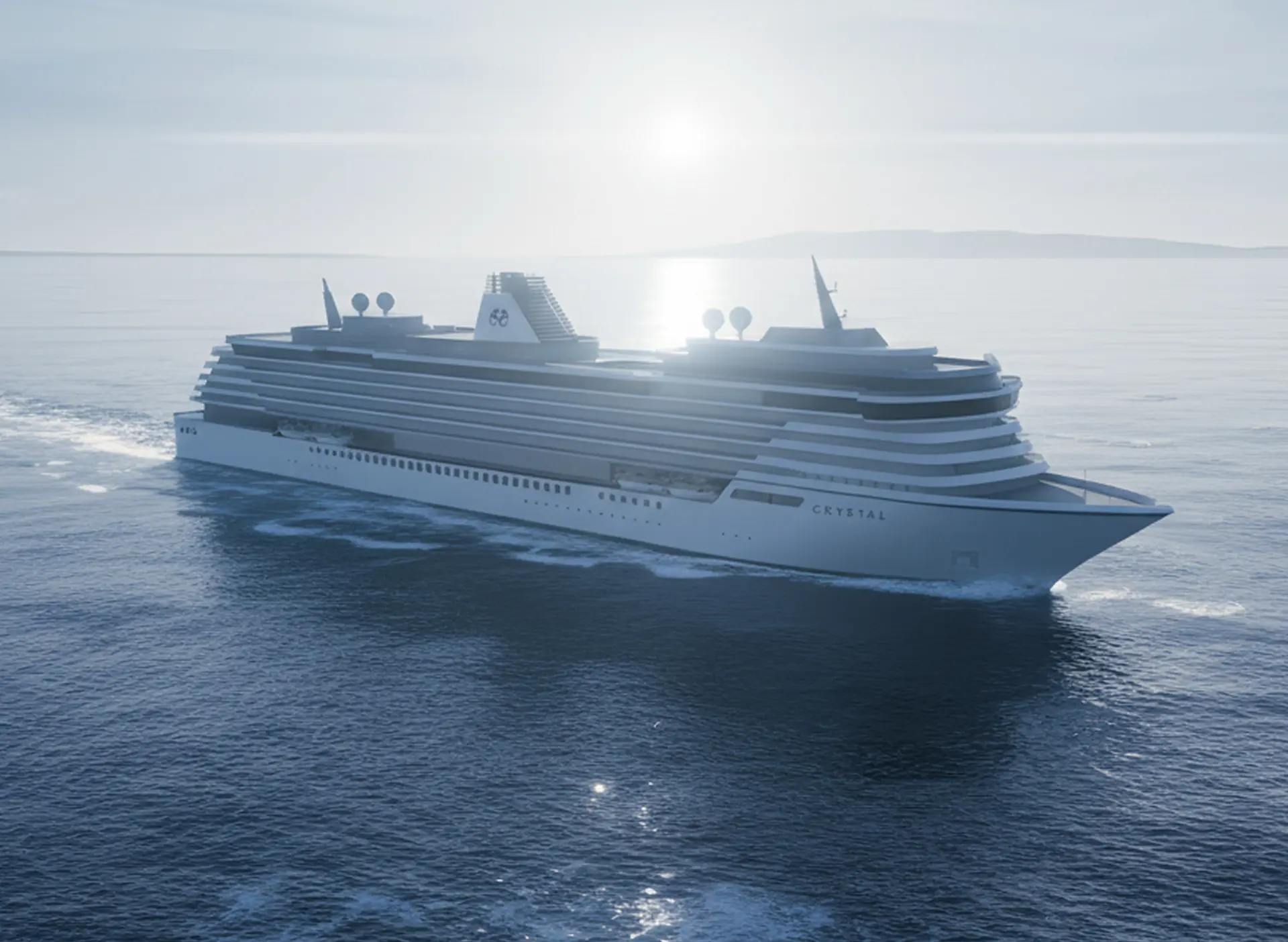
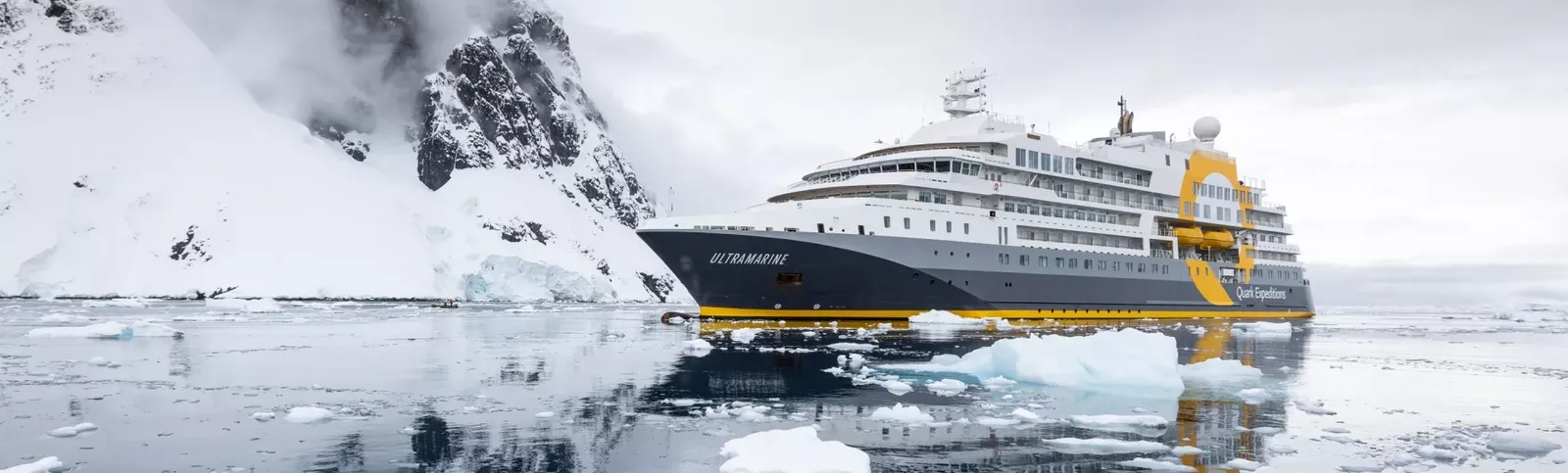
Silversea Cruises is the ultra-luxury expedition line. Founded in 1994 by the Lefebvre family of Rome and now wholly owned by Royal Caribbean Group (acquired for approximately US$1 billion in 2018, with full ownership from 2020), Silversea launched its expedition division in 2008 — the world’s first ultra-luxury expedition line. The fleet of four expedition ships spans Silver Endeavour (200 guests, PC6 ice class, purpose-built in 2021 as Crystal Endeavor), Silver Cloud (240 to 254 guests, built 1994, converted 2017), Silver Wind (274 guests, built 1995, refitted 2021), and Silver Origin (100 guests, purpose-built for the Galapagos). Every suite on every ship comes with butler service. Gratuities, all beverages including champagne, Wi-Fi, and kayaking are included. La Dame fine dining carries a US$60 supplement. Six dining venues operate on Silver Endeavour alone. The positioning is unambiguous: exploration without compromise, expedition by day, ultra-luxury by evening.
For Australian travellers, the choice distils to a single question: do you want the most capable polar expedition hardware and the most focused polar expertise available, or do you want the most luxurious expedition experience afloat with destinations that extend well beyond the ice? Quark gives you helicopters, a nuclear icebreaker, and three decades of exclusively polar operations at a significantly lower price point. Silversea gives you butler service, champagne at every meal, the Galapagos, the Kimberley from Australian ports, and the polish of a company backed by a US$65 billion cruise conglomerate. Both deliver Antarctica. How you experience it differs profoundly.
Expedition team and guides
The expedition team determines the quality of every landing, every lecture, and every wildlife encounter. Both lines invest in serious expedition expertise, but their team structures and ratios differ materially.
Quark’s expedition team claims the best guide-to-guest ratio in the industry at approximately 1:6. On a reported Greenland voyage aboard Ultramarine, 37 expedition guides sailed with approximately 199 passengers. The team includes marine biologists, glaciologists, geologists, ornithologists, cetologists, polar historians, and outdoor educators, many holding PhD-level qualifications. The Quark Academy — the only proprietary polar training programme in expedition cruising — ensures all staff pass IAATO and AECO examinations before deployment. Specialist whale researchers from the Friedlaender Lab at UC San Diego and HappyWhale sail on select itineraries. Team members routinely dine with passengers, dissolving the barrier between expert and guest. Photography workshops run on most voyages, though Quark does not guarantee a dedicated staff photographer on every sailing.
Silversea’s expedition team varies by ship. Silver Endeavour carries up to 28 specialists for 200 guests — a ratio of approximately 1:7, strong by any measure. Silver Wind also fields up to 28 specialists, but for 274 guests the ratio drops to approximately 1:10. Silver Cloud carries 20 to 22 specialists for 240 to 254 guests — approximately 1:12. Silver Origin maintains a 1:10 ratio with 8 to 10 certified Ecuadorian naturalists, the highest in the Galapagos. Teams include marine biologists, geographers, historians, anthropologists, ecologists, ornithologists, filmmakers, and photographers. Silversea’s partnership with the Royal Geographical Society provides bespoke, itinerary-focused scientific and historical content for each voyage — a content enrichment arrangement that adds depth to the lecture programme. Conrad Combrink, who founded the expedition division in 2008 and has over 80 personal visits to Antarctica, provides continuity and credibility at the leadership level.
The practical comparison: Quark’s 1:6 ratio is consistently better across its fleet than Silversea’s best of 1:7 on Silver Endeavour and considerably better than the 1:10 to 1:12 on Silver Wind and Silver Cloud. On shore landings, this translates to smaller groups with more dedicated guide attention. Where Quark’s larger team becomes most tangible is during simultaneous operations — when helicopter flights, Zodiac cruises, and shore excursions all run at once, more guides means more parallel programming and less waiting. Silversea’s Royal Geographical Society partnership adds an enrichment layer that Quark does not replicate, and the expedition team on Silver Endeavour is genuinely excellent. But if guide ratio is the deciding factor, Quark leads this category.
Ships and expedition hardware
This is where the comparison becomes most consequential. The ships these two lines deploy represent entirely different philosophies of expedition cruising, and the hardware gap on specific dimensions is substantial.
Passenger capacity: Quark’s Ultramarine carries 199 passengers, Ocean Explorer 138, and World Voyager 168. All three fall within IAATO Category C1 (under 200 passengers). Silversea’s Silver Endeavour carries 200 passengers (just within the IAATO Category 1 threshold), Silver Cloud carries 240 to 254, and Silver Wind carries 274 — all still permitted to land passengers, but the larger numbers on Cloud and Wind mean longer Zodiac rotations and less cumulative time ashore per landing. IAATO limits shore landings to 100 passengers at a time — Ultramarine’s 199 passengers need two rotations, but Silver Wind’s 274 passengers need three. On a standard landing day with two excursions, this difference compounds. Quark’s smaller vessels deliver more time on the ice.
Ice class: Silver Endeavour holds PC6 — the same Polar Class rating as Quark’s Ultramarine (which also carries the slightly higher Finnish-Swedish 1A+ classification). Both can navigate metre-thick first-year ice. Silver Cloud and Silver Wind both hold the lower 1C Finnish-Swedish ice class — adequate for standard Antarctic Peninsula and Arctic operations but less capable in heavy ice conditions. Quark’s chartered 50 Years of Victory is in a league of its own — a nuclear icebreaker capable of smashing through 2.5 metres of multi-year ice. For polar ice capability, Quark’s fleet has the edge.
Hull design: Quark’s Ocean Explorer features the Ulstein X-BOW — an inverted bow design that splits wave energy, reducing slamming, vibration, and seasickness in rough seas. This is a genuine advantage on the Drake Passage. Ultramarine uses a conventional bow, as do all Silversea expedition ships. Neither Ultramarine nor Silver Endeavour offers the X-BOW comfort advantage, so on the flagship-versus-flagship comparison, hull design is a draw. For passengers specifically dreading the Drake, Quark’s Ocean Explorer has the smoothest ride in the comparison.
Helicopters — Quark’s defining advantage: Ultramarine carries two twin-engine Airbus H145 helicopters, the fastest and most fuel-efficient in their category. Every passenger receives at least two complimentary 15-minute flightseeing excursions (where regulations allow) and one heli-landing per voyage in groups of 12 (maximum 48 guests per landing). The helicopters unlock the Emperor penguin colony at Snow Hill Island — accessible only by helicopter transfer across sea ice — and enable heli-hiking and heli-skiing on select Arctic itineraries. This is Quark’s single biggest differentiator. Silversea removed the helicopter and submarine from Silver Endeavour after acquiring the ship from Crystal Cruises’ bankruptcy in 2022 — the former hangar was converted into six new suites. No Silversea expedition ship currently carries helicopters. If helicopter access, flightseeing over glacial landscapes, or Snow Hill Emperor penguins are priorities, the choice is Quark alone.
Submarines and ROVs: Neither line operates submarines on expedition ships. Silversea’s decision to remove the submarine from Silver Endeavour (inherited from Crystal) was based on limited underwater visibility in cold polar waters and the small number of guests it could serve per day. Neither line offers guest-facing ROVs or underwater cameras. For submarine experiences, look to Scenic Eclipse or Seabourn.
Fleet age and condition: Quark’s active expedition fleet is substantially newer. Ultramarine was purpose-built in 2021, Ocean Explorer launched in 2021, and World Voyager was built in 2020. Silver Endeavour was also built in 2021 (as Crystal Endeavor) and is in excellent condition following a 2023 suite refit. However, Silver Cloud dates to 1994 and Silver Wind to 1995. Silver Cloud in particular draws persistent criticism in 2024 and 2025 reviews for leaking pipes, occasional sewage odour, and dated fixtures — described by multiple Cruise Critic reviewers as “in desperate need of a refurbish/refit.” Silver Wind fared better following its US$40 million 2021 ice-class conversion. No major Silver Cloud refit has been announced. If ship condition matters — and on an expedition lasting ten to twenty days, it should — Quark’s fleet average is newer and more consistently maintained.
Zodiac operations: Quark’s Ultramarine carries 20 Zodiacs stored in a water-level internal hangar with four embarkation points — a purpose-built system enabling ultra-rapid deployment that is a genuine engineering achievement. Silver Endeavour carries 18 Zodiacs, Silver Wind carries 24, and Silver Cloud carries 20. All four ships deliver efficient Zodiac operations, but Ultramarine’s hangar system means faster turnaround and more time at landing sites.
Landing experience and shore programme
Both lines deliver the core expedition promise — daily landings with expert guides in the most remote places on earth. The details, however, reflect their different priorities.
Landings per day: Both Quark and Silversea typically conduct two landings or Zodiac excursions per day, weather and ice permitting — one morning, one afternoon. The difference lies in time ashore. With fewer passengers to rotate through Zodiac runs, Quark’s ships generally yield more cumulative landing time. Ultramarine’s 199 passengers and rapid-deployment Zodiac hangar mean efficient rotations of approximately 1.5 to 2.5 hours per landing. Silversea’s Silver Endeavour at 200 passengers is comparable, but Silver Cloud (240 to 254) and Silver Wind (274) require more rotations and may yield closer to 1 to 1.5 hours per landing at busier sites where IAATO’s 100-person shore limit applies.
Activity options — Quark’s adventure breadth: Included at no extra cost: Zodiac cruises, guided hikes, snowshoeing, the polar plunge, and — on Ultramarine — helicopter flightseeing and one heli-landing per voyage. Available at extra cost: sea kayaking (approximately USD 1,995 for the full voyage programme), stand-up paddleboarding (approximately USD 295), and Antarctic camping (approximately USD 295, once per voyage, maximum 50 participants, early season only). Quark does not offer SCUBA diving, climbing, or camping as included activities — camping is paid and limited.
Activity options — Silversea’s included kayaking: Silversea includes kayaking in the base fare at no extra charge — a notable inclusion given that most expedition lines charge extra for paddling programmes. All equipment is provided: dry suit, kayak skirt, booties, and life vest. Silver Endeavour carries 14 kayaks, Silver Cloud 10, Silver Wind 10 to 14. Zodiac cruises, guided hikes, and nature walks are also included. Silversea does not offer camping, stand-up paddleboarding, SCUBA diving, or helicopter activities on any expedition ship. Snorkelling is available on Silver Origin in the Galapagos with a dedicated snorkelling deck and all equipment provided.
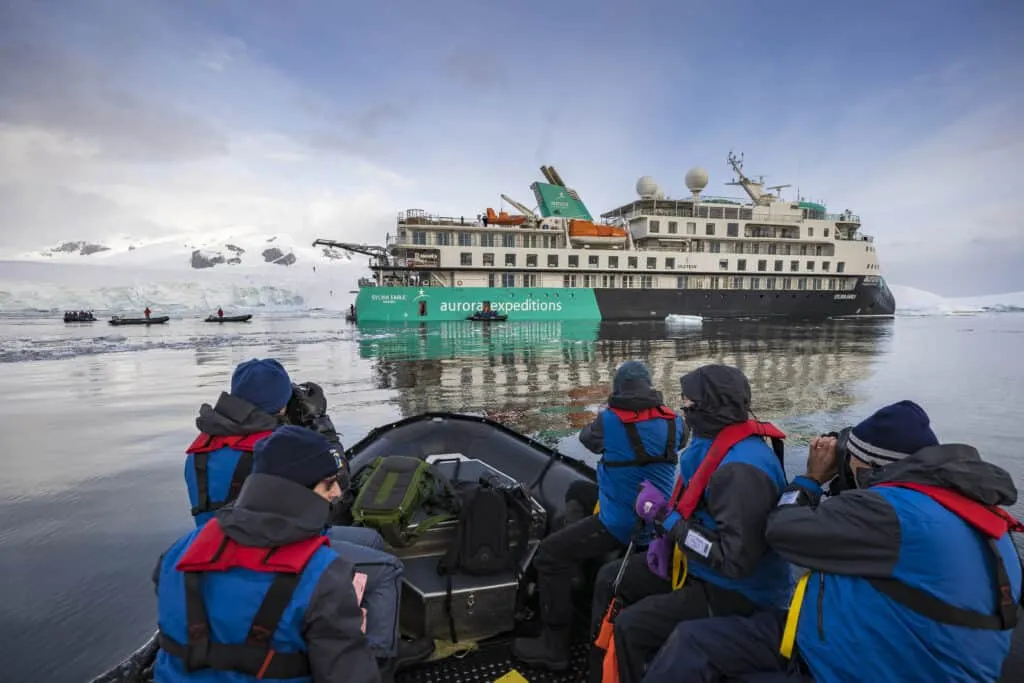
The landing atmosphere differs profoundly. On a Quark landing, you step off the Zodiac in your loaned muck boots, your complimentary parka zipped against the wind, and you walk among penguins with an expedition guide in a group small enough to feel personal. On a Silversea landing, the same essential experience unfolds — Zodiac transfer, wet landing, penguin colonies — but you return to butler-drawn baths, La Dame French tasting menus, and champagne in the Connoisseur’s Corner. The ice is the same. What you return to is not.
What is actually included
Inclusions matter enormously on expedition voyages, where the base fare already runs into five figures and every add-on compounds the total cost. The two lines take meaningfully different approaches.
Parka: Both lines provide a complimentary expedition parka on polar voyages that guests keep after the voyage. No meaningful difference.
Boots: Quark loans insulated waterproof muck boots for the duration of the voyage at no charge — returned at disembarkation. Silversea charges US$98 per cruise plus a US$100 refundable deposit for boot rental. Guests may bring their own. On a line billing itself as all-inclusive at ultra-luxury prices, charging nearly US$200 for essential expedition equipment is a sore point that appears consistently in Silversea reviews. Quark’s free loan is the better arrangement.
Beverages: Silversea includes all beverages — champagne, premium wines, spirits, beer, cocktails, soft drinks — in every fare, in every venue, throughout the day. The mini-bar is restocked daily. This is genuinely all-inclusive. Quark includes complimentary beer, wine, spirits, and cocktails at all bars and during dinner throughout the voyage — a policy introduced in November 2024 that brought the line significantly closer to all-inclusive. The practical daily experience is similar: open bar on both lines. Silversea edges ahead with champagne as standard and the daily-restocked in-suite mini-bar, but the gap is narrower than it was before Quark’s November 2024 policy change.
Gratuities: Silversea includes gratuities in the fare — fully included, no tipping expected or solicited. Quark recommends discretionary gratuities of USD 10 to 15 per person per day, collected anonymously at voyage end. On an 11-day voyage, that adds approximately USD 110 to 165 per person — not included in the fare. Silversea’s included gratuities are the cleaner arrangement.
Butler service: Silversea includes butler service in every suite on every ship — even the entry-level Classic Veranda Suite. Butlers manage in-suite dining (24-hour room service with white tablecloth service), mini-bar, unpacking and packing, laundry coordination, and special requests. This is unique in expedition cruising. Quark does not offer butler service on any ship. For travellers who value personalised in-suite service, Silversea is the only option.
Wi-Fi: Both lines include complimentary satellite Wi-Fi. Both suffer the same limitations in deep polar regions — degraded speeds, intermittent connectivity, and no reliable streaming. Silversea has introduced Starlink on newer deployments, improving performance in temperate waters. A functional draw in practice.
Kayaking: Silversea includes kayaking at no extra charge with all equipment provided. Quark charges approximately USD 1,995 for the full voyage kayaking programme or approximately USD 295 for a single paddling excursion. Silversea’s included kayaking is a clear advantage for paddlers.
Helicopter flights (Quark only): On Ultramarine, complimentary helicopter flightseeing (minimum two 15-minute flights per guest) and one heli-landing per voyage are included in the base fare. Comparable experiences on other lines (when available at all) cost hundreds to thousands of dollars extra. Silversea does not carry helicopters. This is a substantial value inclusion that exists only on Quark.
Door-to-door transfers (Silversea only): Silversea’s All-Inclusive Plus fare includes private chauffeured transfers via Blacklane up to 50 miles from home to airport — available in over 200 cities across 50-plus countries, including major Australian cities. This is a genuinely useful inclusion for Australian travellers connecting through Sydney, Melbourne, or Brisbane airports. Quark does not offer any equivalent programme.
The net inclusion picture: Silversea includes more at the base level — butler service, gratuities, champagne, kayaking, and door-to-door transfers create a seamlessly all-inclusive experience where the only extras are La Dame dining, boot rental, spa treatments, and medical consultations. Quark’s inclusions are strong for its price point — drinks, Wi-Fi, parka, boots, and helicopter flights on Ultramarine — but gratuities, kayaking, and camping are extra. The critical question is not which line includes more, but which inclusions matter to you. If butler service and included gratuities define the experience, Silversea. If included helicopter flights and free expedition boots define it, Quark.
Destination coverage and itinerary depth
This is where the comparison diverges most dramatically. One line goes everywhere. The other goes only to the poles.
Quark’s destination coverage is exclusively polar — the Arctic and Antarctic, full stop. In Antarctica: Peninsula voyages from Ushuaia, South Georgia and Falklands combinations, Antarctic Circle crossings, Snow Hill Emperor penguin colony (helicopter-accessed from Ultramarine), Essential Patagonia, Antarctic Express Fly-the-Drake from Punta Arenas, and dedicated science-focused itineraries including Antarctic Marine Mammals co-developed with the Friedlaender Lab at UC San Diego. In the Arctic: Svalbard circumnavigation, Greenland (east, south, and west coast), Northwest Passage through the Canadian High Arctic, Iceland transits, and multi-destination Arctic voyages. The crown jewel: North Pole voyages aboard the nuclear icebreaker 50 Years of Victory — 14 days to the Geographic North Pole, one of only two operators in the world offering this. Quark’s 2025-2026 Antarctic season offers 41 departure dates across five destination regions. There are no Galapagos voyages, no Kimberley seasons, no tropical expeditions.
Silversea’s expedition coverage spans both poles and beyond. In Antarctica: Silver Endeavour, Silver Cloud, and Silver Wind deploy approximately 38 to 40 voyages per season, including fly-cruise options from Puerto Williams (replacing Punta Arenas from 2026), classic Peninsula sailings from Ushuaia, and grand expeditions combining Falklands, South Georgia, and Antarctica over 18 to 24 days. Silver Endeavour completed its inaugural Northwest Passage transit during the 2025 Arctic season, and 21 Arctic voyages are scheduled for 2026 covering Svalbard, Greenland, and Arctic Canada. Beyond the poles: Silver Origin sails the Galapagos year-round — the only purpose-built ultra-luxury expedition ship dedicated exclusively to those islands. Silver Cloud makes her Kimberley debut in 2026 with seven departures from Darwin and Broome between May and August, covering 10-, 16-, and 17-day itineraries. Additional expedition deployments cover the South Pacific, Central America, British Isles, Norway, and Japan.
For Australian travellers, two destinations matter. First, Silversea’s Kimberley sailings depart from Australian ports — Darwin and Broome — requiring no international flights. This is a significant advantage for Australian expedition travellers who want world-class expedition cruising without leaving the country. Quark has no Australian deployments whatsoever. Second, Silversea’s Galapagos offering is entirely unmatched — Silver Origin is purpose-built for the islands, carries just 100 guests, holds every available landing permit, and features certified Ecuadorian naturalist guides. If your expedition ambitions extend beyond the poles to the equator, Silversea covers both; Quark covers neither.
Fly-the-Drake comparison: Both lines offer charter flight options to bypass the Drake Passage. Silversea’s fly-cruise operates between Puerto Williams and King George Island — approximately two hours versus two days by sea — with charter flights, hotel stays, and transfers included in the All-Inclusive Plus fare. Typical fly-cruise duration is six nights aboard Silver Endeavour. Quark’s Antarctic Express is an 8-day programme from Punta Arenas, starting from approximately USD 14,370 per person, using Ocean Explorer or World Voyager (not Ultramarine, meaning no helicopter programme on Fly-the-Drake sailings). Both note that charter flights are weather-dependent. Silversea’s purpose-built staging hotel — The Cormorant at 55 South in Puerto Williams (opening October 2026) — is designed to eliminate the stress of airport terminal waits during weather delays, a thoughtful touch that reflects the ultra-luxury approach.
Cabins and accommodation
The cabin experience is where the luxury gap between these two lines becomes most tangible.
Silversea’s all-suite concept means every cabin on every ship is classified as a suite, and every suite includes a private balcony, butler service, marble bathroom, walk-in wardrobe or ample closet space, pillow menu, and a complimentary mini-bar restocked daily. On Silver Endeavour, the entry-level Classic Veranda Suite measures 304 square feet plus a 50-square-foot balcony — a generous starting point. The range extends through Silver Suites (457 square feet), the new Signature Suites (721 to 850 square feet, added in the 2023 refit), Master Suites (1,163 square feet with 312-square-foot balcony and 270-degree panoramic views), Grand Suites (1,668 square feet), and the Owner’s Suite (1,868 square feet — nearly ten times the entry cabin). Silver Cloud and Silver Wind carry similar hierarchies including Vista Suites (no balcony on Silver Cloud), Silver Suites, Grand Suites, and Owner’s/Royal Suites.
Quark’s cabin range on Ultramarine spans from the Solo Panorama (132 square feet, floor-to-ceiling windows) and Explorer Suite (285 square feet — the largest entry-level cabin in polar expedition cruising) to the Ultra Suite (563 square feet with two walk-in closets and three distinct living zones). Ultramarine carries 102 suites across 9 categories, with the popular Balcony Suite at 226 square feet of interior plus a 52-square-foot balcony. Ocean Explorer offers 72 cabins across 8 categories with a Scandinavian design aesthetic, and World Voyager provides 84 all-balcony cabins across 5 categories.
The space comparison at entry level slightly favours Silversea. Silver Endeavour’s Classic Veranda at 304 square feet plus balcony edges out Ultramarine’s Explorer Suite at 285 square feet without balcony. Move to the balcony level and they converge — Quark’s Balcony Suite at 278 total square feet versus Silversea’s 354 total. At the top end, Silversea’s Owner’s Suite on Silver Endeavour at 1,868 square feet dwarfs Quark’s Ultra Suite at 563 square feet. But the meaningful comparison is not square footage alone — it is what comes with the space. Silversea’s entry-level suite includes butler service, marble bathroom, daily-restocked mini-bar, and pillow menu. Quark’s entry-level Explorer Suite is comfortable, well-appointed, and genuinely spacious for an expedition ship — but it does not include butler service, room-service dining, or the luxury finishes that define Silversea’s product.
Solo cabins: Quark offers 6 Solo Panorama Suites on Ultramarine (132 square feet) and 7 solo cabins on Ocean Explorer. The cabin-share programme waives the supplement if no match is found. Solo supplements are periodically waived entirely on select sailings. Silversea’s standard solo supplement is 25 per cent above the double-occupancy fare, with promotional rates as low as 10 per cent and occasional zero-supplement offers. Silversea does not offer dedicated solo cabins on expedition ships. For solo travellers, Quark’s dedicated solo cabins and supplement-waiver programme represent better structural value.
Pricing and value
The price gap between Quark and Silversea reflects the fundamental difference in positioning — adventure expedition versus ultra-luxury expedition. Both represent genuine value within their categories, but they serve different budgets.
Quark’s directional pricing for an 11-day Antarctic Peninsula voyage on Ultramarine ranges from approximately USD 10,000 to 13,000 per person for an Explorer Triple or Explorer Suite (with early booking discounts of up to 30 per cent) to approximately USD 30,000 to 40,000-plus for the Ultra Suite. Ocean Explorer entry-level fares start from approximately USD 10,000 to 12,000. The 8-day Antarctic Express Fly-the-Drake starts from approximately USD 14,370. At current exchange rates, that translates to approximately AUD 16,000 to 20,000 per person for an entry-level Ultramarine sailing, with included drinks and helicopter flights.
Silversea’s directional pricing for an Antarctic fly-cruise on Silver Endeavour (6 nights) starts from approximately US$16,100 per person for a Classic Veranda in double occupancy — approximately AUD 25,000. Traditional Antarctic Peninsula sailings (10 to 12 days) start higher. Silver Origin Galapagos voyages (7 days) start from approximately US$11,600 per person. Silversea’s pricing includes butler service, all beverages, gratuities, and kayaking — a more comprehensive inclusion set that partially justifies the premium.
Per-day cost comparison: Quark’s entry-level Antarctic Peninsula voyage works out to approximately AUD 1,000 to 1,400 per day. Silversea’s comparable product sits at approximately AUD 2,700 to 3,800 per day on a fly-cruise, or approximately AUD 1,500 to 2,000 per day on a traditional 10- to 12-day sailing. The daily rate gap is substantial — roughly double on the fly-cruise format. Some of that premium buys genuine luxury (butler service, champagne, marble bathrooms, six dining venues). Whether it buys a proportionally better expedition experience — more penguins, better landings, deeper ice — is the question each traveller must answer for themselves.
Total cost for a comparable Antarctic experience: A Quark Ultramarine 11-day Antarctic Peninsula voyage at entry level with included drinks, included helicopter flights, paid kayaking (approximately USD 1,995), and recommended gratuities (approximately USD 150) totals approximately AUD 19,000 to 23,000 per person all-in. A Silversea Silver Endeavour 6-night fly-cruise at entry level with all inclusions (butler, drinks, gratuities, kayaking) plus boot rental (US$98) totals approximately AUD 25,000 to 27,000 per person — for fewer nights in Antarctica. The value equation favours Quark for budget-conscious expedition travellers who prioritise time in the ice. Silversea’s premium buys luxury, not necessarily more Antarctica.
Booking timing: Both lines offer the best selection 6 to 12 months before departure and the best discounts during early-booking promotions. Quark offers early-booking bonuses of up to 30 per cent off select sailings. Silversea’s Fare Guarantee Programme ensures that if the price drops after booking, the difference is reimbursed — a useful safety net at these price points.
Onboard enrichment and science
Both lines invest in onboard enrichment, but their programmes reflect different philosophies — Quark leans toward citizen science, Silversea toward curated cultural content.
Quark’s enrichment programme centres on active scientific participation. The exclusive Friedlaender Lab partnership with UC San Diego places whale researchers onboard select voyages, where portable hydrophones allow guests to listen to underwater whale sounds in real time — a genuinely transformative experience. HappyWhale research associates guide guests in fluke photography for global whale tracking databases. Seabird surveys run during Drake Passage crossings in collaboration with the Polar Collective. The dedicated “Antarctic Marine Mammals: The World of Whales and Seals” itinerary, co-developed with the Friedlaender Lab, represents the most science-focused commercial polar voyage available. The Ambassador Theatre on Ultramarine features a high-resolution LED screen for lectures, documentaries, and daily recap presentations. A media lab supports photo processing. Evening lectures from the expedition team are the primary entertainment — not production shows or casino nights.
Silversea’s enrichment programme is curated rather than participatory. The Royal Geographical Society partnership provides bespoke scientific and historical content tailored to each voyage route — access to archival material and specialist knowledge that enriches the lecture programme. Expedition team lectures are described as conversational rather than academic, with daily briefings that prepare guests for upcoming excursions. Silver Origin in the Galapagos features certified Ecuadorian naturalist guides who deliver destination-specific enrichment at the highest level permitted by the Galapagos National Park. Silversea does not operate citizen science programmes — there are no HappyWhale collaborations, no hydrophone sessions, no seabird surveys where guests contribute to active research.
The comparison: Quark offers more opportunities for guests to participate in genuine science — contributing data, listening to whale communications, counting seabirds. Silversea offers more polished, curated content delivered in the context of ultra-luxury comfort. Neither approach is objectively superior; they serve different guest motivations. If you want to feel like a participant in polar research, Quark delivers that. If you want to feel like a privileged observer with the finest possible briefing materials, Silversea delivers that.
Dining on expedition
Dining is where the luxury gap shows most consistently — not because Quark’s food is poor (it is not), but because Silversea has invested in multiple dining venues and fine-dining experiences that Quark’s expedition-focused approach does not attempt to match.
Silversea’s dining programme on Silver Endeavour offers six options: The Restaurant (main dining, open seating, a la carte), La Dame (fine French dining with tasting menu, 20-seat capacity, US$60 per person supplement), Il Terrazzino (Italian, handmade pastas), The Grill (poolside, salads and grilled seafood), Arts Cafe (casual light meals), and 24-hour in-suite dining via butler service with white tablecloth service. Silver Cloud and Silver Wind each offer five venues: The Restaurant, La Terrazza (Italian), La Dame, The Grill, and in-suite dining. All dining except La Dame is included in the fare. Dietary requirements are accommodated across all venues. The La Dame supplement on an already ultra-premium product is a consistent criticism in reviews — at this price point, many guests feel it should be included.
Quark’s dining programme on Ultramarine features Balena Restaurant (main dining, open seating, floor-to-ceiling windows at the bow, international cuisine for breakfast, lunch, and dinner) and Bistro 487 (lighter fare, healthy options, afternoon tea, late-night snacks). Ocean Explorer adds a private dining room seating 36. World Voyager operates a single main restaurant plus an observation lounge. Quark’s signature culinary experience is Tundra to Table — an Inuit culinary programme developed with Greenlandic collective Igapall, featuring a four-course modern fusion dinner hosted by Inuit or Icelandic chefs on select Arctic voyages at additional cost. This is the only exclusively Inuit culinary experience in expedition cruising — a genuinely unique cultural offering. Food quality across the Quark fleet is consistently praised as a highlight, with variety and freshness that surprises guests given the remote operating environment.
The comparison: Silversea offers three to six times the dining venue options of Quark, including formal fine dining, Italian, poolside grill, and 24-hour in-suite service. The breadth and formality of Silversea’s dining programme is unmatched in expedition cruising. Quark’s one to two venues serve quality expedition food without pretension — hearty, varied, and genuinely good, but not fine dining and not intended to be. Both lines now include all beverages (champagne on Silversea, beer/wine/spirits/cocktails on Quark), so the bar experience is broadly comparable. If multiple dining venues and La Dame-calibre French cuisine are priorities, Silversea is the clear choice. If you are happy with a single excellent restaurant where the conversation matters more than the courses, Quark delivers.
Standout itineraries for Australian travellers
Quark Expeditions
Classic Antarctic Explorer on Ultramarine (11 days, Ushuaia round trip) — Quark’s signature voyage with the full helicopter programme. Twin H145 flightseeing over glaciers and penguin colonies (minimum two flights included), heli-landing on an otherwise unreachable location, plus standard Zodiac landings and shore excursions. Included drinks throughout. From approximately AUD 16,000 per person. Fly Sydney or Melbourne to Buenos Aires or Santiago, then to Ushuaia.
Snow Hill Emperor Penguins (14 days, dedicated Ultramarine itinerary, October to November) — The rarest wildlife encounter in expedition cruising. Helicopter transfer across sea ice to the Emperor penguin colony at Snow Hill Island — a destination no Zodiac can reach. Limited departures, sells out early. For the penguin-obsessed Australian traveller, this is the holy grail. No Silversea vessel can replicate this experience.
Ultimate Arctic Adventure: North Pole (14 days, aboard 50 Years of Victory nuclear icebreaker, June/July) — One of only two operators offering the Geographic North Pole. A 75,000-horsepower nuclear icebreaker smashing through 2.5 metres of Arctic ice. Bucket-list in the truest sense. Complex routing from Australia via Helsinki or Oslo to Murmansk.
Antarctic Express: Fly the Drake (8 days, Punta Arenas) — Quark’s time-efficient Antarctica option. Charter flights eliminate the Drake Passage, maximising Peninsula time in just 8 days. From approximately USD 14,370. Uses Ocean Explorer or World Voyager (no helicopter programme). Ideal for time-pressed Australian travellers who want Antarctica without the three-week commitment.
Falklands, South Georgia and Antarctica (18 to 23 days, Ushuaia) — The comprehensive polar voyage combining the Falklands’ British colonial character, South Georgia’s king penguin colonies and Shackleton’s grave, and the Antarctic Peninsula. Extended itinerary for those with the time and budget.
Silversea Cruises
Silver Endeavour Antarctic Fly-Cruise (6 nights, Puerto Williams) — The most luxurious way to reach Antarctica from the air. Charter flight to King George Island, six nights of butler-serviced suites, multiple daily landings, and return flight. From approximately AUD 25,000 per person all-inclusive. When The Cormorant at 55 South hotel opens (October 2026), the pre-voyage staging will be seamless.
Silver Origin Galapagos (7 days, year-round from San Cristobal or Baltra) — An experience Quark simply cannot offer. The only purpose-built ultra-luxury Galapagos ship, carrying 100 guests with certified Ecuadorian naturalist guides, dynamic positioning, and a dedicated snorkelling deck. Horizon Balconies convert between open-air and enclosed at the touch of a button. From approximately AUD 18,000 per person.
Silver Cloud Kimberley: Darwin to Broome (10 days, May to August 2026) — Silversea’s Kimberley debut, departing from Australian ports with 20 Zodiacs, 10 kayaks, and a full expedition team. Daily excursions into remote gorges, waterfalls, and Indigenous rock art. No international flights required. Seven departures, 10- to 17-day itineraries including a Darwin to Fremantle extended voyage.
Falklands, South Georgia and Antarctic Peninsula (18 to 20 days, Ushuaia) — Silversea’s grand Antarctic voyage with butler service, champagne, and six dining venues across the full wildlife circuit. Silver Endeavour’s PC6 ice class ensures capable navigation, and the 1:1 crew-to-guest ratio delivers service that no other expedition line matches.
Arctic: Svalbard and Northwest Passage (Silver Endeavour, May to September) — Following the inaugural Northwest Passage transit in 2025, Silversea’s 2026 Arctic programme includes 21 voyages covering Svalbard, Greenland, and Arctic Canada. Silver Endeavour is the most luxurious ship navigating these waters.
For Australian travellers specifically
Getting to the ship: For Quark’s Antarctic voyages, Australian travellers fly to Buenos Aires or Santiago (approximately 14 to 16 hours from Sydney or Melbourne via Qantas, LATAM, or Aerolineas Argentinas), then connect to Ushuaia (approximately 3.5 hours domestic). For Quark’s Fly-the-Drake, route through Santiago to Punta Arenas. For Arctic voyages with either line, route through European hubs to Longyearbyen, Reykjavik, or Tromso — 22 to 24-plus hours from Australia. Silversea’s Antarctic routing is similar for traditional sailings from Ushuaia, but fly-cruise departures from Puerto Williams simplify the Chilean gateway. Silversea’s Kimberley sailings depart from Darwin and Broome — no international flights required, domestic connections only. This is a genuine and significant advantage for Australian travellers.
Australian office presence: Silversea operates from Level 6, 8 Spring Street, Sydney NSW 2000 — a dedicated Australian office with local phone support on (02) 9255 0600. Australian guests can book directly through the Sydney office or via accredited Australian travel advisors. Silversea runs Australian-market promotions including Kimberley-specific packages. Quark has no Australian office. Operations run from Seattle and Toronto, with sales through a global team and Australian-based expedition cruise specialists such as Expedition Cruise Specialists and Chimu Adventures. Quark prices exclusively in USD. For Australian travellers who value local support, Australian booking hours, and a company that understands the domestic market, Silversea has the clear structural advantage.
Door-to-door transfers: Silversea’s All-Inclusive Plus fare includes private chauffeured transfers via Blacklane from home to airport — available in major Australian cities, covering up to 50 miles (80 kilometres). This is a genuinely useful inclusion that smooths the journey from doorstep to ship. Quark offers no equivalent programme.
Travel insurance: Standard travel insurance policies often exclude Antarctic and expedition cruise activities. Specialist expedition insurance with minimum AUD 500,000 medical coverage and AUD 250,000 evacuation coverage is strongly recommended for both lines. Adequate medical facilities can be 72-plus hours away from any polar position. Both lines require mandatory travel insurance. Budget AUD 500 to 1,000 per person for comprehensive expedition cover.
Loyalty programmes: Silversea’s Venetian Society is a single-tier lifetime programme with milestone rewards — 5 per cent savings from day one, escalating to 10 per cent at 250 days, with complimentary voyages unlocking at 350 and 500 days. The Royal Caribbean Group cross-brand status match (since May 2024) means existing Royal Caribbean or Celebrity Cruises loyalty members receive automatic Venetian Society recognition — a meaningful benefit for Australian families who may have sailed with Royal Caribbean. Quark’s Shackleton Club offers USD 750 off any voyage, USD 1,500 off if rebooked within 14 days of disembarkation, USD 150 shipboard credit, and automatic cabin upgrades 60 days before departure. Both programmes reward repeat guests. Silversea’s cross-brand integration gives it an edge for travellers already in the Royal Caribbean Group ecosystem.
Currency and pricing: Quark prices in USD globally. Silversea prices in multiple currencies and the Australian office can assist with AUD pricing and Australian-market packages. At current exchange rates (approximately AUD 1.55 to USD 1), Quark’s entry-level Antarctic voyage at USD 10,000 translates to approximately AUD 15,500; Silversea’s fly-cruise at US$16,100 translates to approximately AUD 25,000. Exchange rate fluctuations can meaningfully shift the comparative value, so locking in a fare during favourable currency conditions is worth considering.
The onboard atmosphere
These two lines create fundamentally different social environments, and understanding what you will live in for one to three weeks matters as much as any specification comparison.
Quark’s atmosphere is international, informal, and expedition-obsessed. With up to 199 passengers on Ultramarine, the ship feels intimate without being claustrophobic. The demographic spans 35 to 64, well-travelled and educated, with dedicated expedition cruisers and repeat polar travellers prominent among the passenger mix. The dress code is entirely casual — sweatpants, hoodies, and Gore-Tex pants at dinner are the norm. A jacket or smart top is suggested for the Captain’s Welcome and Farewell evenings, but not required. Expedition team members dine with passengers, creating organic connections over shared wildlife sightings and landing stories. The Panorama Lounge — glass-enclosed with unobstructed views — is the social hub after dinner, with included cocktails, board games, and a dance floor for later evenings. The Ambassador Theatre hosts daily recap presentations and lectures on a high-resolution LED screen. There is no casino, no production show, no formal night. The entertainment is the expedition itself — the 5am wildlife announcement, the collective gasp at a breaching whale, the quiet awe of standing on Antarctic ice for the first time.
Silversea’s atmosphere is refined, convivial, and structured around the interplay of expedition adventure and evening elegance. The demographic skews 55-plus, affluent, well-travelled, with a high proportion of repeat Silversea guests (Venetian Society members). The dress code on expedition ships is “Elegant Casual” — smart trousers with a nice top, no tuxedos or ball gowns required, but after 6pm indoor venues prohibit jeans, shorts, trainers, and flip-flops. The evening atmosphere centres on intimate bars where bartenders learn guest preferences quickly (a benefit of small ships), champagne over shared expedition stories, and a Connoisseur’s Corner for premium spirits on Silver Endeavour. Evening recaps by the Expedition Leader review the day’s discoveries. The Show Lounge provides smaller-scale entertainment. There is no casino on expedition ships. The overall feel is convivial rather than glamorous — the shared expedition experience creates camaraderie — but the setting is unmistakably more polished than Quark’s expedition-forward informality.
The difference in feel: Quark feels like a well-equipped base camp that happens to float — the ship serves the expedition. Silversea feels like a luxury hotel that happens to visit Antarctica — the expedition enhances the ship. Neither characterisation is pejorative. They simply serve different guest expectations. If you want to collapse into the bar after a landing in your expedition gear and order a whisky without changing, Quark is your ship. If you want to return from the ice, hand your parka to the butler, shower in a marble bathroom, and dress for a French tasting menu, Silversea is your ship. Both create genuine expedition communities united by the transformative power of polar travel.
The bottom line
Quark Expeditions and Silversea Cruises represent the two poles of expedition cruising itself — one dedicated entirely to the adventure, the other combining adventure with ultra-luxury comfort. Choosing between them is not about which is better. It is about which version of expedition travel matches your priorities.
Choose Quark when the expedition itself is the priority — when twin Airbus H145 helicopters enabling Snow Hill Emperor penguin access and included flightseeing matter more than butler service, when the Geographic North Pole aboard a nuclear icebreaker is the bucket-list goal, when a claimed 1:6 guide ratio and three decades of exclusively polar expertise represent the credentials you value, and when the entry-level pricing of approximately AUD 16,000 for an 11-day Antarctic Peninsula voyage with included drinks and helicopter flights represents the value equation you are seeking. Accept that Quark has no Australian office, no Galapagos offering, no Kimberley sailings, no butler service, and no warm-water itineraries. Accept that dining venues are limited to one or two per ship, that gratuities are not included, and that the onboard experience prioritises expedition function over luxury finish. What Quark delivers is the most focused, most capable, and most hardware-rich polar expedition product available — at a price point roughly half of what Silversea charges per day.
Choose Silversea when you want the most luxurious expedition experience afloat — butler service in every suite, champagne at every meal, six dining venues on the flagship, marble bathrooms, and a crew-to-guest ratio of 1:1 that delivers personalised service unmatched in expedition cruising. Choose Silversea when destinations beyond the poles matter — the purpose-built Silver Origin in the Galapagos year-round, the Kimberley coast from Australian ports aboard Silver Cloud, and warm-water expedition itineraries spanning the South Pacific, Central America, and beyond. Choose Silversea when a Sydney office, door-to-door chauffeured transfers, and Australian-market support matter for the booking experience. Choose Silversea when you want to hand your wet expedition gear to a butler, dine at La Dame, and return to a suite where the mini-bar has been silently restocked during your shore landing. Accept that this luxury comes at approximately double the per-day cost of Quark, that no Silversea ship carries helicopters (they were removed from Silver Endeavour), that Silver Cloud is showing her age, and that the boot rental fee on an all-inclusive product continues to grate.
For the Australian traveller who refuses to choose, the most complete expedition portfolio would combine a Quark Ultramarine Antarctic Peninsula voyage for the helicopter programme, included drinks, and the industry’s best guide ratio with a Silversea Silver Origin Galapagos voyage for the equatorial counterpoint and a Silver Cloud Kimberley sailing for a domestic expedition that requires no passport. Together, these three voyages would deliver the full spectrum of expedition cruising — from polar ice to tropical islands to ancient Australian gorges — and represent two companies that, despite their radically different approaches, share a genuine commitment to showing their guests the most remarkable places on earth.