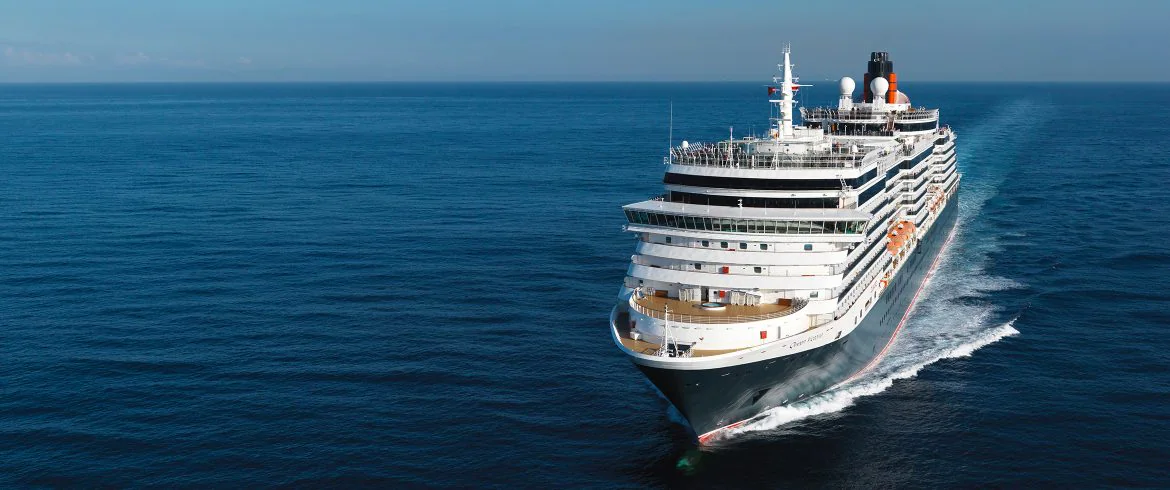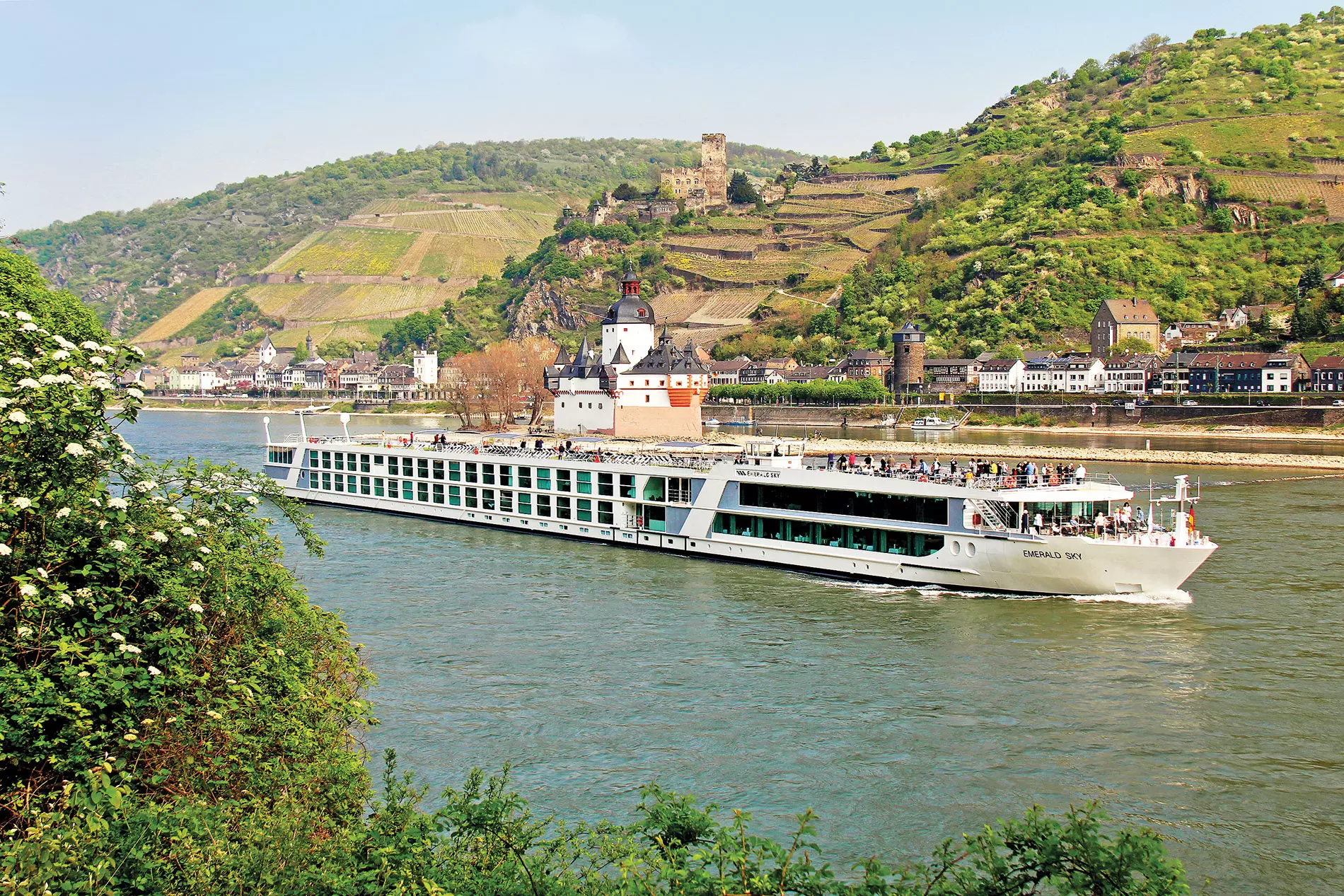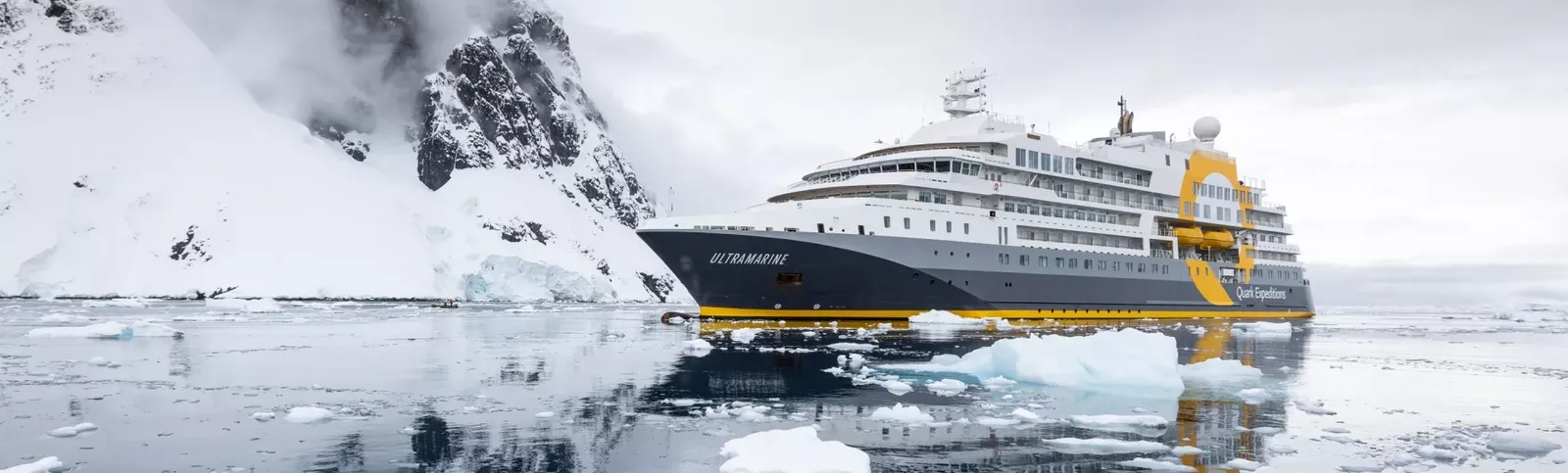
Quark Expeditions and Scenic Ocean Cruises both carry helicopters, both sail under 200 passengers in Antarctica, and both operate at IAATO Category C1 — but the resemblance is surface-level. One is a polar-only adventure operator built around ice. The other is an Australian-owned ultra-luxury line built around comfort. Jake Hower compares two fundamentally different philosophies of expedition cruising.
| Quark Expeditions | Scenic Ocean Cruises | |
|---|---|---|
| Category | Expedition | Expedition / Luxury |
| Rating | ★★★★☆ | ★★★★☆ |
| Fleet size | 4 ships | 2 ships |
| Ship size | Small (under 500) | Yacht (under 300) |
| Destinations | Antarctica, Arctic, Greenland, Svalbard | Mediterranean, Antarctica, Arctic, Northern Europe |
| Dress code | Relaxed | Casual elegance |
| Best for | Polar expedition adventure travellers | Ultra-luxury all-inclusive ocean travellers |
Quark Expeditions is the polar purist — exclusively Arctic and Antarctic for over three decades, twin Airbus H145 helicopters on Ultramarine with included flightseeing and heli-landings, a claimed 1:6 guide ratio, the Friedlaender Lab cetacean research partnership, complimentary drinks fleet-wide, and the only commercial North Pole voyages aboard a nuclear icebreaker. Scenic Ocean Cruises is the ultra-luxury Discovery Yacht — Australian-owned, helicopters and a submarine on every ship, ten dining venues, butler service in every suite, a wine programme curated by a Master of Wine, and the most comprehensive all-inclusive model in expedition cruising. Choose Quark when the expedition is the point — when you want included helicopter access, the deepest polar expertise afloat, and adventure-first pricing. Choose Scenic when luxury is non-negotiable — when you want a submarine, ten restaurants, a butler, and the refinement of a floating boutique hotel that happens to visit Antarctica.
The core difference
Quark Expeditions and Scenic Ocean Cruises both carry helicopters to Antarctica. Both operate under 200 passengers in polar waters. Both hold IAATO Category C1 status, permitting full shore landings. Both sail through the Drake Passage from Ushuaia. On a features spreadsheet, these two companies look closer than almost any other expedition pairing — twin helicopters, similar passenger counts, overlapping Antarctic itineraries.
The spreadsheet is misleading. These are fundamentally different companies built on fundamentally different philosophies, and the experience of sailing on each is as different as a mountaineering base camp is from a luxury alpine lodge. Both get you to the summit view. One prioritises the climb. The other prioritises the champagne at the top.
Quark Expeditions is the polar purist. Founded in 1991 by Mike McDowell and Lars Wikander — who led the first commercial voyage to the Geographic North Pole aboard a nuclear icebreaker — Quark has operated exclusively in polar waters for over three decades. Headquartered in Seattle and owned by Travelopia (a KKR-backed company), Quark was one of the seven founding members of IAATO. The company’s fleet centres on Ultramarine — a 199-passenger purpose-built expedition ship carrying twin Airbus H145 helicopters that enable included flightseeing, heli-landings, and access to the Emperor penguin colony at Snow Hill Island. Quark also charters the nuclear icebreaker 50 Years of Victory for Geographic North Pole voyages — one of only two operators in the world offering this journey. The Quark Academy is the only proprietary polar training programme in expedition cruising. Since November 2024, all voyages include complimentary drinks and Wi-Fi fleet-wide. Quark does not operate outside polar regions. There is no Mediterranean season, no Kimberley deployment, no warm-water programme. The ice is all there is.
Scenic Ocean Cruises is the luxury disruptor. Founded in 1986 by Glen Moroney — an Australian entrepreneur from Newcastle, New South Wales — Scenic grew from Great Ocean Road coach tours into one of Australia’s most recognised luxury travel brands, launching European river cruises in 2008 before entering ocean expedition cruising with Scenic Eclipse in 2019. Scenic deliberately calls its ships “Discovery Yachts” rather than expedition ships — a strategic choice signalling that luxury comes first and expedition capability second. The two Discovery Yachts — Scenic Eclipse and Scenic Eclipse II — are the only expedition vessels in the world carrying both helicopters and a submarine on every voyage. They offer up to ten dining venues, butler service in every suite category from entry level upward, a wine programme curated by one of approximately 400 Master of Wine holders globally, and an all-inclusive fare covering premium spirits, daily-restocked mini-bars, and complimentary laundry. At 200 passengers in polar waters, the ships are intimate. At approximately AUD 30,000 or more for Antarctic voyages, they are unambiguously premium.
For Australian travellers weighing these two lines, the choice is not about which is better — it is about which kind of traveller you are. If the expedition is the point and the ship is the platform, Quark. If the ship is the point and the expedition is the backdrop, Scenic. Both deliver Antarctica. They deliver it in entirely different wrappers.
Expedition team and guides
The expedition team shapes every landing, every Zodiac cruise, and every evening lecture. Both Quark and Scenic field multi-disciplinary teams — but the scale and philosophy differ meaningfully.
Quark’s expedition team claims a guide-to-guest ratio of approximately 1:6 — among the best in polar expedition cruising. On a reported Greenland voyage aboard Ultramarine, 37 expedition guides sailed with approximately 199 passengers. The team draws from marine biologists, glaciologists, geologists, ornithologists, cetologists, polar historians, photographers, and outdoor educators, many holding PhD-level qualifications. All staff must pass through the Quark Academy — the only proprietary polar training programme in the industry — and complete IAATO and AECO examinations before deployment. Specialist whale researchers from the Friedlaender Lab at the University of California, San Diego, and HappyWhale sail on select itineraries. Expedition team members routinely dine with passengers, creating organic connections between expert and guest. Photography workshops run on most voyages, though Quark does not place a dedicated staff photographer on every sailing.
Scenic’s Discovery Team deploys up to 20 specialists on Expedition Voyages — marine biologists, historians, geologists, glaciologists, ornithologists, naturalists, archaeologists, and photographers. With 200 passengers in polar waters, this yields an approximate guide-to-guest ratio of 1:10 — competitive by industry standards but noticeably less concentrated than Quark’s claimed 1:6. Team members are IAATO and AECO trained, and expeditions in the Kimberley are led by specialists such as Mike Cusack, who brings over thirty years of guiding experience in Australia’s northwest. However, Scenic does not operate a publicly disclosed formal training academy comparable to Quark’s proprietary programme, and the team is structured for a luxury-expedition hybrid rather than a pure polar operation.
The practical difference shows during simultaneous operations. When Quark runs helicopters, Zodiac cruises, and shore landings concurrently — which happens frequently on Ultramarine — the larger team ensures each activity has dedicated guide coverage without pulling resources from another. On Scenic, the smaller team must manage the same range of concurrent activities (helicopters, submarine, Zodiacs, and shore landings) across a similar passenger count. The result is that Quark typically offers more parallel programming with more expert attention per group. Scenic compensates with the quality of its onboard luxury experience — the guides may be fewer, but the butler is waiting when you return to the suite.
Ships and expedition hardware
This is the comparison that looks closest on paper and feels most different in practice. Both lines deploy similar-sized ships with similar passenger counts and similar headline hardware. The details, however, reveal opposing design philosophies.
Passenger capacity and IAATO status: Quark’s Ultramarine carries 199 passengers. Scenic Eclipse and Eclipse II carry 228 passengers total but reduce to 200 in polar waters. Both fall within IAATO Category C1, meaning all passengers may land. The IAATO rule limiting shore landings to 100 passengers at any one time applies equally — both ships run split operations with half ashore and half on Zodiac cruises, then rotate. At these closely matched numbers, the landing logistics are essentially identical.
Hull design — Scenic’s advantage: Both Scenic Discovery Yachts feature the patented Ulstein X-BOW — an inverted bow design that reduces slamming, spray, noise, and vibration in heavy seas. The benefits are particularly valuable in the Drake Passage, where conventional bows punch through swells while the X-BOW parts them. Quark’s Ocean Explorer also features the X-BOW (SunStone Infinity-class), but the flagship Ultramarine uses a conventional bow design. For Drake Passage comfort specifically, Scenic’s fleet-wide X-BOW is a genuine structural advantage over Ultramarine. Passengers who dread the Drake should note this — though neither hull design eliminates side-to-side rolling.
Ice class: All vessels in this comparison hold Ice Class 1A-Super or equivalent PC6 polar class — sufficient for summer operations in first-year ice. Quark’s nuclear icebreaker 50 Years of Victory, used for North Pole voyages, operates in a different category entirely — smashing through 2.5 metres of multi-year ice with 75,000 horsepower. No Scenic vessel approaches this capability, nor does it need to for its itineraries.
Helicopters — same category, opposite models: Both lines carry two helicopters per ship — but the comparison ends there. Quark’s Ultramarine carries twin Airbus H145 helicopters (eight passengers plus pilot, twin-engine). Helicopter flightseeing is included in the fare — every passenger receives at least two 15-minute flights per voyage where regulations allow. One heli-landing per voyage is also included, with groups of twelve accessing remote locations that no Zodiac can reach. The helicopters operate from two helidecks with an advanced hangar system. They do not operate on Svalbard voyages due to regulatory restrictions. Scenic’s Discovery Yachts carry two Airbus H130 helicopters (six passengers plus pilot, single-engine). Flights are not included — a 30-minute scenic flight costs approximately USD 695 to 750 per person, and specialist flights such as Emperor penguin access cost approximately USD 1,500. Flights are booked and paid onboard, subject to weather, regulatory approval, weight restrictions, and availability. On promotional sailings, Scenic occasionally offers one complimentary helicopter flight — but this is a marketing promotion, not a standard inclusion. The distinction matters enormously: on Quark, every passenger flies. On Scenic, flying is an optional purchase that weather may cancel before you reach the front of the queue.
Submarine — Scenic’s unique asset: Scenic Neptune is a U-Boat Worx submersible carrying six guests plus one pilot to a maximum depth of 300 metres. Two acrylic viewing spheres provide near-360-degree underwater visibility, and the ultra-clear acrylic has a refractive index matching seawater — the hull visually disappears underwater. A 40-minute dive costs approximately USD 775 per person. Eclipse II features the redesigned Neptune II with improved entry and exit. Quark does not carry a submarine on any vessel. This is Scenic’s singular hardware advantage — no other competitor in this comparison offers anything comparable. For travellers who dream of seeing Antarctic ice formations from below, the submarine is available nowhere else between these two lines.
Zodiac fleet: Quark’s Ultramarine carries 20 Zodiacs stored in a water-level internal hangar with four embarkation points — a purpose-built system enabling ultra-rapid deployment that is a genuine engineering achievement. Scenic carries 12 Zodiacs per ship. The difference in Zodiac count and deployment speed means Quark typically gets passengers ashore faster, translating to more cumulative time at landing sites.
Stabilisation: Scenic’s oversized zero-speed stabiliser fins — claimed to be fifty per cent larger than comparable ships — provide effective stabilisation even at rest, which matters during Zodiac operations and submarine launches. Both lines use dynamic positioning systems to maintain position without anchoring, protecting sensitive seabeds.
Landing experience and shore programme
Both lines deliver the core expedition promise — daily landings with expert guides in the most remote places on earth. The differences lie in programme breadth, activity pricing, and how each company balances expedition time against onboard experience.
Landings per day: Both Quark and Scenic typically conduct one to two landings or Zodiac excursions per day when conditions permit. With closely matched passenger counts (199 versus 200), the IAATO-mandated split operations are similar — 100 ashore while 100 cruise by Zodiac, then swap. Time ashore varies by site, typically 1.5 to 3 hours per landing.
Quark’s activity programme centres on polar adventure. Included at no extra charge: Zodiac cruising, guided hikes, snowshoeing, the polar plunge, expert lectures, and — on Ultramarine — helicopter flightseeing and one heli-landing per voyage. Available at additional cost: sea kayaking (approximately USD 1,995 for the full-voyage programme), stand-up paddleboarding (approximately USD 295), and Antarctic camping (approximately USD 295, limited to 50 participants, once per voyage, early season only). Quark does not offer SCUBA diving, ski touring, or climbing. The activity menu is focused rather than broad — polar adventure, helicopters, and Zodiac operations form the core.
Scenic’s activity programme reflects the luxury-expedition hybrid. Included at no charge: Zodiac cruises, guided nature walks, kayaking (eight tandem kayaks, twice daily), stand-up paddleboarding, e-bikes in port, snowshoes, trekking poles, and snorkelling gear where appropriate. Available at additional cost: helicopter flights (approximately USD 695 to 1,500 per person), submarine dives (approximately USD 775 per person), and spa treatments. Scenic includes several activities — kayaking, paddleboarding, e-bikes — that Quark charges extra for or does not offer. The trade-off is that Scenic’s headline hardware (helicopters and submarine) costs extra, while Quark’s headline hardware (helicopters) is included.
The camping comparison: Quark offers Antarctic camping at approximately USD 295 per person — one night, once per voyage, limited to 50 participants in early season when snow conditions are optimal. Scenic does not offer Antarctic camping. For travellers who want to sleep on Antarctic ice under the midnight sun, Quark is the only option between these two lines.
Physical fitness: Both lines require guests to board and exit Zodiacs independently, walk on uneven and potentially icy terrain, and participate in safety drills without assistance. Neither line is wheelchair accessible for expedition activities. Scenic’s wording is slightly gentler — “a reasonable level of fitness” — reflecting its luxury-first positioning. The actual physical demands of Antarctic shore landings are identical regardless of which ship brings you there.
What is actually included
The inclusion models of these two lines require careful examination — because both use language suggesting comprehensive coverage, and both have notable exclusions that change the value calculation.
Scenic’s “truly all-inclusive” model is the broadest in expedition cruising. Included: all meals across up to ten dining venues with no surcharges, 24-hour in-suite dining, all beverages (premium spirits, wines, champagnes, cocktails, speciality coffees), a daily-restocked mini-bar personalised to preference, butler service in every suite, all shore excursions, Zodiac landings, kayaking, paddleboarding, e-bikes, snorkelling, Starlink Wi-Fi, all gratuities (onboard and onshore), complimentary laundry (self-service and butler-assisted), port charges and taxes, and charter flights between Buenos Aires and Ushuaia on Antarctic voyages. Not included: helicopter flights (approximately USD 695 to 1,500 per person), submarine dives (approximately USD 775), spa treatments, Chairman’s Cellar premium wines, international flights, and travel insurance. The helicopter and submarine exclusions are the most consequential — these are Scenic’s most heavily marketed features, and many guests arrive expecting them to be part of the “truly all-inclusive” experience.
Quark’s inclusion model is less comprehensive in luxury terms but more generous on expedition hardware. Included: all meals, complimentary alcoholic beverages (beer, wine, spirits, cocktails — added November 2024), complimentary Wi-Fi (added November 2024), shore landings and Zodiac excursions, expert lectures, a complimentary 3-in-1 parka (yours to keep), loaned waterproof boots, a reusable water bottle, and — on Ultramarine — helicopter flightseeing (minimum two flights per guest) and one heli-landing per voyage. Not included: international flights, travel insurance, gratuities (recommended USD 10 to 15 per person per day), sea kayaking (approximately USD 1,995), stand-up paddleboarding (approximately USD 295), Antarctic camping (approximately USD 295), spa treatments, premium wines beyond the complimentary selection, and laundry.
The net value comparison: Scenic includes butler service, laundry, gratuities, premium spirits, mini-bar, and charter flights that Quark does not. Quark includes helicopter flights that Scenic charges approximately USD 695 to 1,500 for. On an 11-day Antarctic voyage, Scenic’s additional inclusions (gratuities, laundry, mini-bar) are worth perhaps USD 300 to 500 per person. Quark’s included helicopter flights are worth approximately USD 1,400 or more per person (two flights at Scenic’s pricing). The helicopter inclusion tips the expedition-value calculation in Quark’s favour, while Scenic’s broader lifestyle inclusions tip the luxury-value calculation in its direction. Neither model is objectively superior — it depends entirely on whether you value flying over glaciers or having your laundry pressed.
Destination coverage and itinerary depth
Both lines visit Antarctica and the Arctic. Beyond that shared ground, their geographic footprints diverge completely — and the divergence reveals each company’s identity.
Quark’s destination coverage is exclusively polar. In Antarctica: Peninsula voyages from Ushuaia, South Georgia and Falkland Islands combinations, Antarctic Circle crossings, Snow Hill Emperor penguin colony expeditions (helicopter-accessed from Ultramarine), Antarctic Express Fly-the-Drake from Punta Arenas, and dedicated science-focused itineraries including the Antarctic Marine Mammals voyage co-developed with the Friedlaender Lab at UC San Diego. In the Arctic: Svalbard circumnavigation, Greenland (east, south, and west coast), Northwest Passage through the Canadian High Arctic, Iceland transits, and multi-destination voyages. The crown jewel: North Pole voyages aboard the nuclear icebreaker 50 Years of Victory — 14 days to the Geographic North Pole, one of only two operators in the world offering this journey. Quark’s 2025-2026 Antarctic season offers 41 departure dates across five destination regions. The company does not operate in non-polar waters. There is no Mediterranean, no Kimberley, no warm-water deployment.
Scenic’s destination coverage spans the globe. In Antarctica: Peninsula voyages, South Georgia, Falkland Islands, and select Ross Sea and East Antarctica itineraries. In the Arctic: Svalbard, Greenland, Iceland, Norwegian Fjords, and select Northwest Passage voyages. Beyond the poles: the Kimberley Coast (Eclipse II, the only ship in the Kimberley with two onboard helicopters), Mediterranean, Japan, South Pacific (New Zealand, Papua New Guinea), Panama Canal, and Central America. Both Discovery Yachts follow seasonal migration patterns — Southern Hemisphere from November to March, Northern Hemisphere from April to October — calling at over 500 ports across 63 countries and all seven continents. Scenic Eclipse II returns to the Kimberley in 2028 after a gap in 2026-2027.
The critical distinction: Quark’s polar exclusivity means three decades of accumulated polar expertise — every operational decision, every crew training programme, every itinerary refinement is filtered through the lens of polar expedition. Scenic’s global programme means greater flexibility for travellers who want to experience the ship across different destinations — an Antarctic Peninsula voyage followed by a Mediterranean Discovery Voyage, for instance. For a traveller who cares only about Antarctica, Quark’s singular focus is an advantage. For a traveller who wants to explore the ship across multiple worlds, Scenic’s range is unmatched.
Fly-the-Drake options: Quark offers the Antarctic Express Fly-the-Drake — an 8-day programme from Punta Arenas with charter flights to King George Island, starting from approximately USD 14,370 per person. This operates on Ocean Explorer and World Voyager (not Ultramarine, so no helicopter programme). Scenic does not offer a fly-over-Drake option — all Antarctic sailings involve a full Drake Passage crossing from Ushuaia. For Australian travellers short on leave time or anxious about the Drake, Quark’s fly option is a meaningful advantage.
Cabins and accommodation
This is where the two philosophies become most visible. Quark’s cabins are designed as expedition base camps — comfortable, functional, and secondary to what lies outside. Scenic’s suites are designed as destinations in themselves — luxury spaces that happen to have Antarctic icebergs outside the window.
Quark’s cabin range on Ultramarine spans 9 categories across 102 suites. The entry-level Explorer Suite at 285 square feet is genuinely spacious — among the largest entry-level cabins in polar expedition cruising — with large windows but no balcony. The popular Balcony Suite offers 226 square feet of interior plus a 52-square-foot balcony. At the top, the Ultra Suite spans 563 square feet with two walk-in closets and three distinct living zones. Six Solo Panorama Suites at 132 square feet with floor-to-ceiling windows cater specifically to solo travellers. Not all Ultramarine cabins have balconies — the entry-level Explorer Suites and Explorer Triples have large windows only. Ocean Explorer offers 72 cabins across 8 categories with a Scandinavian design aesthetic and an X-BOW library, while World Voyager provides 84 all-balcony cabins across 5 categories. No butler service is offered in any cabin category on any Quark ship.
Scenic’s suite range is all-veranda, all-suite, with butler service in every category. The entry-level Verandah Suite at 345 square feet with a private veranda is already larger and more luxurious than Quark’s entry level. Deluxe Verandah Suites reach 366 square feet. Grand Deluxe Verandah Suites offer 431 square feet with generous closets. The Spa Suites — 495 to 538 square feet — feature Philippe Starck or circular spa baths, four-poster king beds, and steam showers with light therapy. The Panorama Suites at 667 square feet of interior plus a 517-square-foot wraparound balcony are genuinely spectacular. And the Owner’s Penthouse Suite at 1,453 square feet of interior plus a 646-square-foot terrace — with a private spa pool, dual steam shower, and his-and-hers walk-in wardrobes — is the largest accommodation afloat in the expedition space. Every suite includes a Scenic Slumber Bed, complimentary mini-bar restocked daily, illy coffee machine, Dyson hairdryer, L’Occitane amenities, and a dedicated butler.
The practical comparison: At entry level, Scenic’s Verandah Suite (345 square feet with balcony and butler) significantly outclasses Quark’s Explorer Suite (285 square feet, no balcony, no butler). At mid-range, Scenic’s Grand Deluxe (431 square feet) is substantially larger and more refined than Quark’s Balcony Suite (278 square feet total). At the top, Scenic’s Owner’s Penthouse at 2,099 total square feet dwarfs Quark’s Ultra Suite at 563 square feet. The gap is not subtle — Scenic’s accommodation is in a different category. The question is whether that category matters when you are spending twelve hours a day on ice and only returning to the suite to sleep, shower, and review photographs. For some travellers, the suite is simply a warm bed after a long day of landings. For others, sinking into a four-poster king with a spa bath after a morning on the ice is part of the expedition itself.
Solo travellers: Quark offers 6 Solo Panorama Suites on Ultramarine and 7 solo cabins on Ocean Explorer, plus a cabin-share programme that waives the single supplement if no match is found. Scenic has no dedicated solo cabins — all suites are designed for twin-share, with a single supplement that can be reduced by 55 to 75 per cent on select promotional departures (maximum 2 waived-supplement cabins per departure, entry-level categories only). For solo travellers, Quark is the more accommodating line.
Pricing and value
These two lines occupy different pricing universes — and the gap is wider than it first appears once you factor in the extras that each model includes or excludes.
Quark’s directional pricing for an 11-day Antarctic Peninsula voyage on Ultramarine ranges from approximately USD 10,000 to 13,000 per person for an Explorer Triple or Explorer Suite with early booking discounts of up to 30 per cent, rising to approximately USD 30,000 to 40,000 for the Ultra Suite. Ocean Explorer entry-level fares start from approximately USD 10,000 to 12,000. The 8-day Antarctic Express Fly-the-Drake starts from approximately USD 14,370. At current exchange rates, entry-level Ultramarine pricing translates to approximately AUD 16,000 to 20,000 per person. This includes complimentary drinks, Wi-Fi, helicopter flights, parka, and boots. It excludes gratuities (approximately USD 110 to 165 for 11 days), adventure add-ons, international flights, and insurance.
Scenic’s directional pricing for comparable Antarctic itineraries (typically 13 to 21 nights from Buenos Aires) starts from approximately AUD 15,000 to 30,000 or more per person depending on duration, suite category, and departure date. For a direct-comparison 13-night Antarctic Peninsula voyage, entry-level Verandah Suite fares typically run AUD 22,000 to 30,000 per person. Higher categories escalate rapidly — Spa Suites from approximately AUD 40,000, Panorama Suites from approximately AUD 60,000, and the Owner’s Penthouse suite into six figures. This includes butler service, all dining, premium drinks, mini-bar, laundry, gratuities, charter flights Buenos Aires to Ushuaia, and Wi-Fi. It excludes helicopter flights (approximately USD 695 to 1,500 per person per flight), submarine dives (approximately USD 775 per dive), spa treatments, and international flights.
The total cost comparison: For a comparable Antarctic Peninsula experience at entry level, Quark runs roughly AUD 16,000 to 20,000 all-in (including drinks and helicopter flights but adding gratuities). Scenic runs roughly AUD 22,000 to 30,000 including butler and laundry but before any helicopter or submarine charges. If a Scenic passenger books two helicopter flights and one submarine dive — reasonable for a traveller drawn by Scenic’s hardware marketing — that adds approximately USD 2,200 (roughly AUD 3,400) to the fare. On a per-day basis, Quark’s entry-level sits at approximately AUD 1,400 to 1,800 per day including helicopter flights. Scenic sits at approximately AUD 1,700 to 2,300 per day before helicopter and submarine charges. The luxury premium for Scenic is real — approximately forty to seventy per cent more per day at entry level, escalating dramatically in higher suite categories.
The value question: Quark offers more expedition value per dollar — included helicopters, more guides per guest, faster Zodiac deployment, and lower fares. Scenic offers more luxury value per dollar — butler service, ten dining venues, premium spirits, a suite that is a genuine retreat rather than a functional cabin. Neither represents poor value. Both represent fair pricing for what they deliver. The question is whether your expedition budget is best spent on a better guide ratio and included helicopter access, or on a butler and a spa bath. The answer is entirely personal.
Onboard enrichment and science
Both lines invest in onboard education — expert lectures, wildlife briefings, and daily recaps form the evening backbone of any expedition cruise. But the depth of science engagement differs considerably.
Quark’s enrichment programme is anchored by its exclusive partnership with the Friedlaender Lab at UC San Diego — Professor Ari Friedlaender’s Biotelemetry and Behavioral Ecology Lab. On select itineraries, the research team sails aboard, using portable hydrophones to allow guests to listen to underwater whale sounds — a transformative, deeply moving experience. HappyWhale research associates guide guests in photographing whale flukes for individual identification, contributing to a global tracking database. Seabird surveys run during Drake Passage crossings in collaboration with the Polar Collective, and Seabird Watch uses time-lapse cameras to monitor colonies in Arctic waters. The dedicated “Antarctic Marine Mammals: The World of Whales and Seals” itinerary, co-developed with the Friedlaender Lab, is the most science-focused commercial polar voyage available. The Ambassador Theatre on Ultramarine features a high-resolution LED screen for lectures and recaps. A media lab supports photograph processing. Quark’s science engagement is focused rather than broad — cetacean research and seabird monitoring rather than a dozen parallel projects — but what it does, it does at genuine research depth.
Scenic’s enrichment programme includes expert lectures during Expedition Voyages, led by Discovery Team specialists covering wildlife, glaciology, history, and the destinations visited. Scenic lists “Citizen Science” as an included expedition activity. However, the programme is informal and guide-led rather than structured with defined research partnerships or published outcomes. There are no publicly disclosed institutional research collaborations, no dedicated onboard science centres, and no formal citizen science curricula. Photography support is integrated into the broader expedition programme rather than offered as a specialist stream — no dedicated photography-themed voyages comparable to those offered by other expedition operators. Scenic’s enrichment is competent and appropriate for its luxury-expedition hybrid positioning, but it does not approach the research depth or institutional partnerships of Quark’s Friedlaender Lab work.
The comparison: Quark takes science seriously at a programmatic level — its Friedlaender Lab partnership produces genuine research data, not just guest entertainment. Scenic takes enrichment seriously as one of many onboard experiences — alongside the sushi counter, the spa, and the submarine. For travellers who want to contribute to polar research, listen to whales through hydrophones, and engage with working scientists, Quark’s programme is substantively deeper. For travellers who want knowledgeable guides to explain what they are seeing without requiring active scientific participation, Scenic delivers comfortably.
Dining on expedition
This is the comparison where the gap between Quark and Scenic is widest — and where the luxury-versus-adventure distinction becomes impossible to ignore.
Quark’s dining programme on Ultramarine features two venues: Balena Restaurant (main dining on Deck 4, open seating, floor-to-ceiling bow windows, international cuisine for breakfast, lunch, and dinner) and Bistro 487 (Deck 7, lighter fare, healthy options, early riser breakfast, afternoon tea, and late-night snacks). Ocean Explorer adds a private dining room seating 36 for more intimate meals. Dinner is a multi-course affair — appetiser, main, and dessert — with rotating menus. Vegetarian, gluten-free, and allergy-specific diets are accommodated. The signature culinary experience is Tundra to Table — an Inuit programme developed with Greenlandic collective Igapall featuring a four-course modern fusion dinner hosted by Inuit or Icelandic chefs (select Arctic voyages, additional cost). All alcoholic beverages are complimentary throughout the day. Food quality is consistently praised — reviewers frequently describe it as a genuine highlight, with impressive variety and freshness given the remote operating environment. But two venues is two venues. There is no sushi bar, no French fine dining, no teppanyaki grill.
Scenic’s dining programme operates on an entirely different scale. Up to ten dining experiences across approximately seven distinct venues, all included in the fare with no surcharges or reservations required (except Chef’s Table, which is invitation-only). Elements is the relaxed main restaurant featuring Italian, steaks, and seafood. Lumiere offers traditional French fine dining with dishes including frog legs, lamb chops, and lobster with cream sauce. Koko’s houses three experiences in one venue — Asian fusion dining, an 18-seat sushi bar where chefs prepare fresh sushi counter-side (frequently cited as guests’ favourite venue), and Night Market featuring teppanyaki and night market dishes from Asia, India, and the Middle East. The Chef’s Table seats 8 to 10 guests for multi-course molecular gastronomy-influenced degustation — by invitation only, reserved for top-suite guests or loyalty members. Azure Bar and Cafe offers all-day tapas and grazing. Yacht Club provides poolside grill and buffet. And 24-hour in-suite dining delivers full meals via butler service, not merely a limited late-night menu. The wine programme is curated by Keith Isaac, one of approximately 400 Master of Wine holders globally, with fifty wines on the pouring list and over 100 whiskies at the complimentary Whisky Bar. The Chairman’s Cellar offers reserve wines including Penfolds Grange and first-growth Bordeaux for purchase.
The honest comparison: Scenic’s dining programme would be impressive on a mainstream luxury cruise ship. On a 200-passenger expedition vessel, it is extraordinary. Quark’s dining is solid expedition fare — well-executed, satisfying, and appropriate for a ship where the focus is outside the hull. If you care deeply about culinary variety, Scenic is not just better — it is in a completely different category. If you care primarily about fuelling yourself for the next landing, Quark delivers everything you need. The question, as always, is whether you are sailing for the sushi counter or the penguin colony.
Standout itineraries for Australian travellers
Quark Expeditions
Classic Antarctic Explorer on Ultramarine (11 days, Ushuaia round trip) — Quark’s signature voyage with the full helicopter programme. Twin H145 flightseeing over glaciers and penguin colonies (minimum two flights included), heli-landing on remote terrain, plus standard Zodiac landings and expert-led shore excursions. Complimentary drinks throughout. From approximately AUD 16,000 per person. Fly Sydney or Melbourne to Buenos Aires or Santiago, then connect to Ushuaia — allow two to three days transit each way.
Emperor Penguin Quest: Expedition to Snow Hill (14 days, Ultramarine) — The rarest wildlife encounter in expedition cruising. Helicopter transfer across Weddell Sea ice to the Emperor penguin colony at Snow Hill Island — a destination no Zodiac can reach. October to November departures only, when chicks are large enough to observe. Limited capacity, sells out early. For the penguin-obsessed traveller, this is the holy grail.
Ultimate Arctic Adventure: North Pole (14 days, aboard 50 Years of Victory nuclear icebreaker, June or July) — One of only two operators offering the Geographic North Pole. A 75,000-horsepower nuclear icebreaker smashing through 2.5 metres of Arctic ice. Limited departures, bucket-list in the truest sense. Complex routing from Australia via Helsinki or Oslo to Murmansk.
Antarctic Express: Fly the Drake (8 days, Punta Arenas) — Quark’s time-efficient Antarctica option. Charter flights eliminate the Drake Passage crossing, maximising Peninsula time in just 8 days. From approximately USD 14,370. Uses Ocean Explorer or World Voyager (no helicopter programme). Ideal for time-pressed Australian travellers.
Falklands, South Georgia and Antarctica: Explorers and Kings (18 to 23 days, Ushuaia) — The comprehensive polar voyage combining the Falklands’ character, South Georgia’s cathedral king penguin colonies and Shackleton’s grave, and the Antarctic Peninsula. Extended duration for those with the time and budget.
Scenic Ocean Cruises
Antarctic Peninsula Discovery (approximately 13 to 15 nights, Buenos Aires) — Scenic’s core Antarctic offering. Included charter flight Buenos Aires to Ushuaia, full Drake Passage crossing with X-BOW comfort, multiple landing days on the Peninsula, helicopter and submarine available at extra cost. Butler service, ten dining venues, all-inclusive drinks. From approximately AUD 22,000 per person for a Verandah Suite.
Falklands, South Georgia and Antarctic Peninsula (approximately 21 nights, Buenos Aires) — The comprehensive voyage adding the wildlife riches of South Georgia and the British character of the Falklands. Premium itinerary, premium duration, premium pricing. Helicopter flights over South Georgia’s king penguin colonies (at extra cost) are a legitimate highlight.
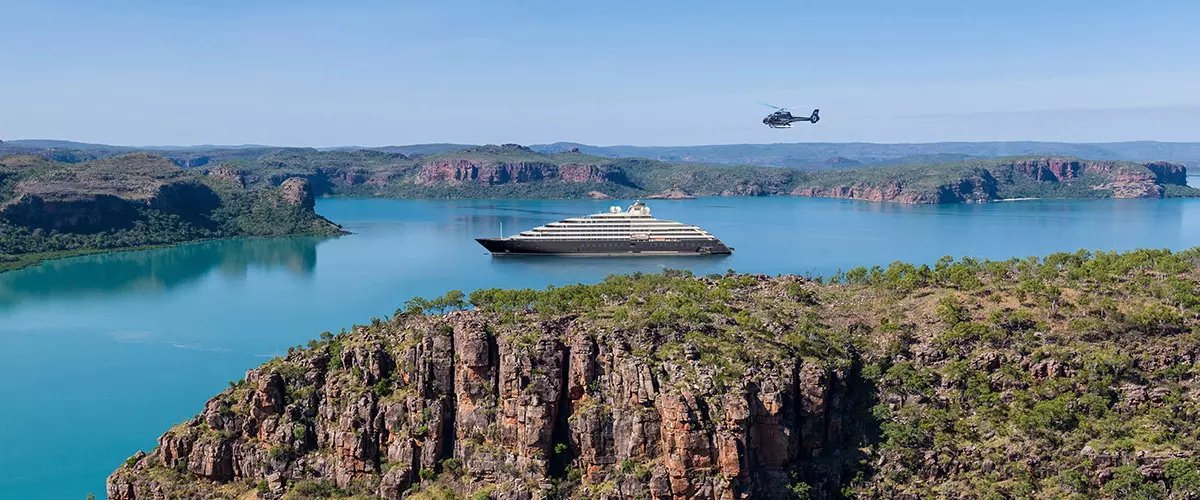
Kimberley Coast: Broome to Darwin (10 to 11 nights, Scenic Eclipse II) — An Australian-exclusive offering. Eclipse II is the only ship in the Kimberley with two onboard helicopters, enabling heli-fishing for barramundi and aerial access to remote landscapes that even zodiacs cannot reach. Led by Mike Cusack with thirty years of northwest Australia expertise. Returns 2028 after a gap in 2026-2027. From approximately AUD 12,000 to 25,000 per person.
Svalbard and Arctic Norway (approximately 12 to 15 nights) — Summer expedition voyages to the polar bear archipelago halfway between Norway and the North Pole. Discovery Team of up to 20 specialists. X-BOW comfort in Arctic seas. Helicopter access to remote glaciers and wildlife sites (at extra cost). Submarine dives in clear Arctic waters.
For Australian travellers specifically
Getting to the ship: For Quark’s Antarctic Peninsula voyages, Australian travellers fly to Buenos Aires or Santiago (approximately 14 to 16 hours from Sydney or Melbourne via Qantas, LATAM, or Aerolineas Argentinas), then connect to Ushuaia (approximately 3.5 hours domestic). For the Fly-the-Drake option, routing goes through Santiago to Punta Arenas. For Scenic’s Antarctic voyages, the routing is similar — fly to Buenos Aires, where Scenic includes a pre-night hotel stay and charter flight to Ushuaia. Scenic’s included Buenos Aires hotel and charter flight simplifies the logistics meaningfully compared to Quark’s self-arrange model. For Arctic voyages with either line, routing goes through European hubs to Longyearbyen or Reykjavik — 22 to 24 hours from Australia with connections. Universal advice for both lines: arrive a day early. A missed expedition ship is unrecoverable, and the financial loss is total.
Australian brand presence: Scenic is one of the most recognised luxury travel brands in Australia — Australian-owned, Australian-headquartered in Newcastle, with a local phone number (1300 173 812), a website pricing in AUD, heavy advertising presence in Australian media, and an established customer base from decades of river cruising. The Scenic brand resonates powerfully with Australian travellers, particularly those who already know the company from European river cruises. Quark has no Australian office, no local phone number, and prices exclusively in USD. Australian travellers book through Quark’s global team or through Australian-based expedition specialists such as Expedition Cruise Specialists and Chimu Adventures. For travellers who value booking in AUD with a company that understands Australian school holiday timing, flight routing, and cultural expectations, Scenic has a significant structural advantage.
Currency and pricing: Scenic prices in AUD on scenic.com.au, which eliminates foreign exchange uncertainty. Quark prices in USD globally — Australian travellers must convert mentally and accept exchange rate risk between booking and final payment. At the time of writing, with the Australian dollar sitting below USD 0.65, this makes Quark’s USD pricing feel more expensive in AUD terms than headline numbers suggest. Scenic’s AUD pricing is a genuine convenience for Australian budgeting.
Onboard demographics: On Scenic, expect a significant proportion of Australian passengers on most sailings — the brand’s Australian heritage, local marketing, and Kimberley programme ensure a strong domestic contingent alongside North Americans and British. The Australian influence creates a more relaxed, less formal atmosphere than some European luxury lines. On Quark, the passenger mix is more internationally diverse — North American, European, and Australian travellers united by polar ambition. Australians are present but are not the dominant demographic in the way they are on Scenic.
Travel insurance: Both lines require mandatory travel insurance. Standard policies often exclude Antarctic expedition activities. Specialist expedition insurance with minimum AUD 500,000 medical coverage and AUD 250,000 evacuation coverage is strongly recommended. Adequate medical facilities can be 72 or more hours away from any Antarctic position — insurance must cover helicopter evacuation from polar regions, not merely a hospital transfer in a capital city.
Loyalty programmes: Quark’s Shackleton Club offers USD 750 off any expedition, USD 1,500 off if rebooked within 14 days of disembarkation, USD 150 shipboard credit, and automatic cabin upgrades 60 days before departure. The 14-day rebooking bonus is a clever incentive to commit while the Antarctic glow is still fresh. Scenic’s recently launched Scenic and Emerald Rewards programme (February 2026) features four tiers — Gold, Diamond, Emerald, and Chairman’s Club — with benefits including complimentary suite upgrades, private transfers, and from April 2028, one complimentary helicopter or flightseeing experience on select departures. Both programmes reward repeat guests meaningfully.
The onboard atmosphere
Both ships create intimate environments by expedition standards — under 200 passengers, no casino, no Broadway shows, no formal nights. But the atmospheres they create are distinctly different, and choosing the wrong one will shape the entire experience.
Quark’s atmosphere is expedition-first. The dress code is entirely informal — sweatpants, hoodies, and Gore-Tex at dinner are the norm. A jacket or “something dressy” is suggested for Captain’s Welcome and Captain’s Dinner, but not required. The Panorama Lounge on Ultramarine is glass-enclosed with unobstructed views, a dance floor for later evenings, and board games alongside the included cocktails. The Ambassador Theatre hosts daily recap presentations and evening lectures. Expedition team members routinely dine with passengers, creating organic social connections. The demographic spans 25 to 80 with the strongest representation in the 35 to 64 range — educated, well-travelled, and united by polar ambition rather than luxury expectations. The bar scene is social but not party-oriented — conversations tend toward wildlife sightings, camera settings, and plans for tomorrow’s landing. Most evenings wind down by 10pm, because tomorrow’s 6am wildlife announcement will have everyone on deck. The energy is collaborative — strangers become expedition companions by day two.
Scenic’s atmosphere is luxury-first. The dress code is “elegant casual” — women in dresses or slacks with a blouse, men in collared shirts and trousers. No formal nights, but the tone is noticeably more refined than Quark’s expedition informality. The ship feels like a boutique luxury hotel rather than a cruise ship — multiple intimate bars and lounges for pre- and post-dinner drinks, live music in select venues, expert lectures in the theatre, and sundowner drinks in the 270-degree Observation Lounge. The demographic skews older — predominantly couples aged 50 and above, well-travelled and accustomed to luxury. The atmosphere is quiet, refined, and intimate — more wine bar than expedition camp. The Australian ownership creates a more relaxed ambience than some European luxury lines, but this is still a five-star environment where a butler delivers morning coffee and evening turndown.
The difference in feel: Quark feels like a well-funded scientific expedition with excellent food and comfortable cabins. Scenic feels like a luxury yacht that happens to visit Antarctica. On Quark, the highlight of your evening is a glaciologist explaining how the ice shelf you landed on today is connected to global ocean currents. On Scenic, the highlight might be the same lecture — or it might be the omakase at Koko’s followed by a whisky from the hundred-bottle collection. Both create genuine community among passengers. Quark’s community is forged in shared adventure — the scramble to the observation deck at 5am, the collective gasp at a breaching whale. Scenic’s community is forged in shared luxury — the pre-dinner champagne on the terrace, the quiet satisfaction of watching icebergs from a heated spa pool. Both are valid. Both are memorable. They are simply different.
The bottom line
Quark Expeditions and Scenic Ocean Cruises represent the two ends of the expedition cruising spectrum more clearly than almost any other pairing. They share hardware categories — helicopters, sub-200-passenger ships, IAATO C1 status — but deploy them in service of opposite philosophies.
Choose Quark when the expedition is the purpose and the ship is the means. Quark offers included helicopter flightseeing and heli-landings on Ultramarine — every passenger flies, no extra charge. It delivers the industry’s claimed best guide-to-guest ratio at 1:6, a proprietary polar training academy, genuine cetacean research through the Friedlaender Lab partnership, complimentary drinks fleet-wide, the Emperor penguin colony at Snow Hill Island, and the Geographic North Pole aboard a nuclear icebreaker. Quark’s 20 Zodiacs deploy from a purpose-built water-level hangar for maximum time ashore. Entry-level pricing starts from approximately AUD 16,000 per person for 11 days with drinks and helicopter flights included. Accept that there are two dining venues, no butler, no submarine, no Australian office, and no non-polar destinations. The cabins are comfortable but not luxurious. The dress code is Gore-Tex. The reward is the most dedicated polar-only expedition experience afloat.
Choose Scenic when luxury is inseparable from the expedition. Scenic offers the only ships in the world carrying both helicopters and a submarine, ten dining venues including an 18-seat sushi bar and French fine dining, butler service in every suite from entry level upward, a wine programme curated by a Master of Wine, the broadest all-inclusive model in expedition cruising, and accommodation ranging from a 345-square-foot Verandah Suite to a 2,099-square-foot Owner’s Penthouse with a private spa pool. Australian ownership, AUD pricing, Kimberley deployments, and a brand heritage that Australian travellers know and trust from decades of river cruising add local relevance that Quark cannot match. Accept that helicopter flights cost approximately USD 695 to 1,500 extra, submarine dives cost approximately USD 775, the guide ratio is 1:10 rather than 1:6, there is no fly-the-Drake option, and the food quality — while excellent — divides luxury cruise veterans on whether it matches the price point. The reward is Antarctica without surrendering a single comfort.
For the Australian traveller who values both, the ideal sequence may be a Quark Ultramarine voyage for the helicopter programme, the guide ratio, and the pure polar focus, followed by a Scenic Eclipse voyage for the submarine, the sushi, and the suite. Together, these two lines represent the full breadth of what expedition cruising can be — from base camp to boutique hotel, from included flightseeing to included butler, from the ice as the destination to the ice as the view from the spa bath.