Ponant and Swan Hellenic are both genuine expedition lines with ice-class ships, Zodiac fleets, and polar operations — but they differ profoundly in fleet scale, language, pricing, and enrichment philosophy. Jake Hower compares their ice capability, expedition teams, inclusions, and total value for Australian travellers choosing between French expedition heritage and British cultural discovery.
| Ponant | Swan Hellenic | |
|---|---|---|
| Category | Luxury / Expedition | Expedition |
| Rating | ★★★★★ | ★★★★☆ |
| Fleet size | 13 ships | 3 ships |
| Ship size | Small (under 500) | Small (under 200) |
| Destinations | Antarctica, Mediterranean, Arctic, South Pacific | Polar, Mediterranean, South America, Asia |
| Dress code | Smart casual | Relaxed |
| Best for | French-inspired luxury expedition travellers | Cultural expedition and enrichment travellers |
Ponant is the expedition fleet at scale — thirteen ships reaching the Geographic North Pole, French Polynesia year-round, and the Kimberley across sixteen annual sailings, backed by Ducasse-trained cuisine, an included open bar with Henri Abelé champagne, and partnerships with National Geographic and the Explorers Club. Swan Hellenic counters with a comprehensively all-inclusive fare covering excursions, gratuities, pre-cruise hotel, and transfers on three purpose-built ice-class ships with PC5 ratings exceeding Ponant's Explorer-class, an English-only onboard language, and the SETI Institute partnership. For Australians wanting fleet flexibility and French culinary finesse, choose Ponant. For all-inclusive value, intellectual enrichment without a language barrier, and the Asia-Pacific season from Brisbane, choose Swan Hellenic.
The core difference
Ponant and Swan Hellenic are both genuine expedition lines — both carry Zodiacs, both hold ice-class ratings, both reach Antarctica, and both deploy onboard expedition teams with naturalists, historians, and marine biologists. This is not a comparison between a conventional cruise line and an expedition specialist. This is a comparison between two fundamentally different visions of what expedition cruising should be.
Ponant is French expedition heritage at scale. Founded in 1988 by Jean-Emmanuel Sauvée and twelve merchant navy officers, the line was rebranded as Ponant Explorations Group in March 2025 and now operates thirteen ships — from the 32-guest sailing yacht Le Ponant to the 245-guest Le Commandant Charcot, the only luxury icebreaker afloat with PC2 ice class capable of reaching the Geographic North Pole. Owned by Groupe Artémis (the Pinault family investment holding that also controls Kering, Christie’s, and Château Latour), Ponant is unambiguously French — in language, culinary philosophy, and passenger mix. The Ducasse Conseil culinary partnership brings Michelin-star heritage to Le Commandant Charcot’s NUNA restaurant. The open bar pours Henri Abelé champagne across every ship. Announcements are delivered in French first, then English. Six Explorer-class ships carry the Blue Eye underwater multi-sensory lounge. The fleet deploys simultaneously across eight to ten regions with over three hundred departures per year. This is expedition cruising filtered through the lens of a French luxury house.
Swan Hellenic is British cultural discovery reborn. The heritage stretches to 1954, when Swan’s Tours began carrying guests to Greek archaeological sites with onboard scholars — pioneering the concept of intellectually enriched cruising decades before the term “expedition” entered the luxury vocabulary. After a turbulent history of ownership changes — P&O, Carnival Corporation, All Leisure Holidays, G Adventures — the brand was relaunched in 2020 under CEO Andrea Zito with three purpose-built ice-class expedition ships from Helsinki Shipyard: SH Minerva (2021, 152 guests), SH Vega (2022, 152 guests), and SH Diana (2023, 192 guests). The tagline — “The World’s Most Intriguing Cruise” — captures the distinction from adventure-first expedition lines: Swan Hellenic’s expeditions are as much about understanding civilisations as they are about reaching remote coastlines. The onboard language is English throughout. The fare is genuinely all-inclusive. And the 2026 inaugural Asia-Pacific season was designed specifically with Australian travellers in mind.
For Australian travellers, the choice between these lines is more nuanced than most expedition comparisons. Both go to Antarctica. Both carry Zodiacs. Both deliver quality accommodation. The differences lie in fleet scale, language, pricing, ice capability, enrichment philosophy, and where each line has chosen to invest its identity. Ponant offers global expedition range, French culinary finesse, and the deepest polar penetration afloat. Swan Hellenic offers boutique intimacy, intellectual enrichment without a language barrier, and a value proposition that is difficult to match at any scale.
Expedition team and guides
The expedition team defines every landing, every Zodiac cruise, and every evening lecture — it is the single most important element of any expedition voyage, more consequential than the ship itself. Both Ponant and Swan Hellenic invest seriously in multi-disciplinary teams, but the depth, structure, and philosophy of their programmes diverge.
Ponant’s expedition team operates at a ratio of approximately 1:15 to 1:18 on the six Explorer-class ships — 10 to 12 naturalist guides and experts for 184 passengers. On Le Commandant Charcot, the team doubles to approximately 20 specialists for 200 to 245 guests, improving the ratio to roughly 1:10 to 1:12. Teams draw from marine biologists, ornithologists, historians, geologists, botanists, underwater diving instructors, cultural specialists, and photographers on select voyages. All expedition staff are bilingual in French and English — briefings, lectures, and landing instructions are delivered in both languages, with French typically first. On Le Commandant Charcot, visiting scientists engage guests in genuine data collection across dedicated wet and dry laboratories — in a recent season, 70 scientists participated in 23 research projects aboard Charcot voyages. The institutional partnerships elevate specific sailings: National Geographic Expeditions places photographers and filmmakers aboard select departures, Smithsonian Journeys brings museum curators and geologists, and the Explorers Club partnership (expanded in late 2025) features speakers including mountaineer Peter Hillary. The Ponant Science Expedition Grants programme provides multi-week research berths aboard Charcot for affiliated scientists. Ponant’s approach is brand-driven rather than personality-driven — specific expedition leaders are not prominently marketed, but the institutional credibility is formidable.
Swan Hellenic’s expedition team carries 12 to 15 members per ship, drawn from geologists, ornithologists, marine biologists, naturalists, historians, archaeologists, botanists, photographers, polar meteorologists, and activity leaders. With typical sailing numbers of 100 to 150 guests — ships often operate below maximum capacity — the effective guide-to-guest ratio reaches approximately 1:10 to 1:12. What distinguishes Swan Hellenic’s team composition is the deliberate weighting toward historians, archaeologists, and cultural interpreters — a direct inheritance from the brand’s 70-year heritage as a cultural cruise line. Even on polar expeditions, the team contextualises every destination with historical depth: Shackleton, Scott, the whaling era, the geopolitics of Antarctic sovereignty. Guest lecturers — professors from Oxford and other leading universities, published authors, and specialist academics — sail on every voyage, and the lecture programme is a core part of the daily experience rather than background entertainment. The SETI Institute partnership places NASA-affiliated scientists on nine designated “Explore Space at Sea” voyages across the 2025-2026 programme, delivering lectures on astronomy, astrophysics, and astrobiology alongside guided stargazing through an advanced onboard telescope. No other expedition line offers anything comparable in space science. Expedition team members routinely dine with guests, are available throughout the day for informal conversation, and the barrier between expert and passenger is deliberately kept low.
The practical difference becomes tangible on shore landings. On a Ponant Explorer-class ship, your Zodiac group might contain 15 passengers with one guide — competent, professional, and knowledgeable, but shared across a larger group. On Swan Hellenic, the same ratio of roughly 1:10 to 1:12 yields more personal interaction per guide. On Charcot, Ponant’s ratio narrows to match Swan Hellenic’s, and the presence of visiting scientists adds a dimension of active research that few competitors can replicate. For pure expedition team depth across the fleet, Swan Hellenic’s consistent 1:10 to 1:12 ratio on every sailing — paired with the SETI partnership and Oxford lecturers — gives it a slight structural edge. For marquee voyages with National Geographic or Explorers Club speakers, specific Ponant sailings deliver something Swan Hellenic cannot match.
Ships and expedition hardware
The hardware comparison between Ponant and Swan Hellenic reveals the most dramatic fleet disparity in expedition cruising — thirteen ships against three — and it shapes everything from itinerary choice to departure flexibility.
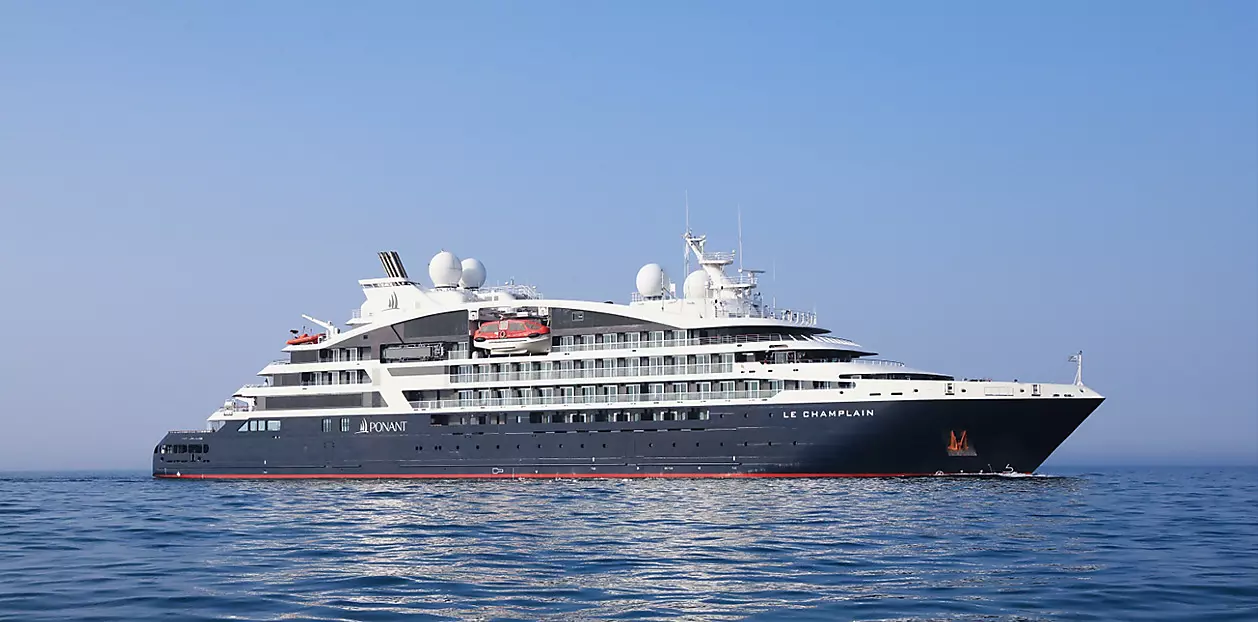
Ponant operates thirteen ships across five classes. Le Commandant Charcot (200 to 245 guests, PC2 icebreaker, LNG-electric hybrid) is the undisputed flagship — the only luxury ship to reach the Geographic North Pole and the first to visit the North Pole of Inaccessibility in September 2024. Six Explorer-class ships (184 guests each, Ice Class 1C) feature the Blue Eye underwater lounge and Zodiac fleets launched from retractable marina platforms. Four Boreal-class ships (264 guests each, Ice Class 1C ice-strengthened) are proven expedition workhorses. Le Ponant (32 guests, three-masted sailing yacht) offers ultra-intimate Mediterranean sailing. Paul Gauguin (332 guests) operates year-round in French Polynesia. Recent additions include the Paspaley Pearl superyacht (30 guests, Kimberley and Raja Ampat) and the Ponant Yachting catamaran brand. This fleet generates over three hundred departures per year, deploying simultaneously across the Mediterranean, Kimberley, French Polynesia, Antarctica, the Arctic, subantarctic islands, Papua New Guinea, Japan, and beyond.
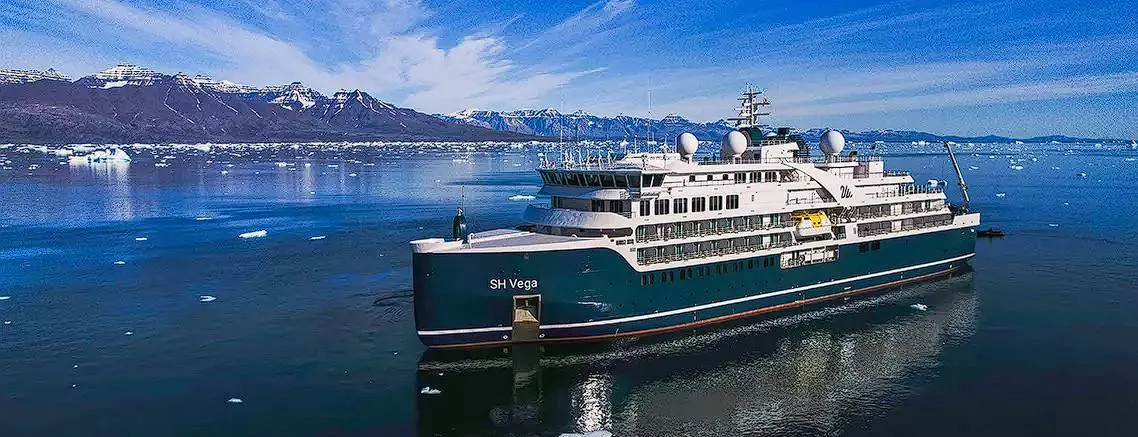
Swan Hellenic operates three purpose-built expedition ships. SH Minerva (2021) and SH Vega (2022) are sister ships — 113.5 metres, 10,617 gross tonnes, PC5 ice class, 76 staterooms, 152 guests maximum. SH Diana (2023) is the slightly larger flagship — 124.9 metres, 12,255 gross tonnes, PC6 ice class, 96 staterooms, 192 guests maximum. All three were built at Helsinki Shipyard — a yard that specialises in icebreakers and ice-class vessels — and feature diesel-electric hybrid propulsion with dynamic positioning systems that allow them to hold station without dropping anchor. Each carries a full Zodiac fleet (10 MK5 plus 2 MK6 on the sister ships, 14 MK5 on Diana), with SH Diana additionally carrying two 48-seat enclosed tender boats. The crew-to-guest ratio of roughly 1:1.25 on the sister ships is among the highest in the industry. Approximately 80 departures per year cover Antarctica, the Arctic, the Mediterranean, Asia-Pacific, West Africa, South America, and the British Isles.
The ice class comparison deserves specific attention. Swan Hellenic’s SH Minerva and SH Vega at PC5 — rated for year-round operation in medium first-year ice including old ice inclusions — actually exceed the ice rating of Ponant’s six Explorer-class and four Boreal-class ships at Ice Class 1C. This means Swan Hellenic’s smaller sister ships can technically handle heavier ice conditions than the majority of Ponant’s fleet. SH Diana at PC6 is the standard for modern expedition cruise ships. Only Le Commandant Charcot at PC2 — in a class of its own — surpasses Swan Hellenic’s capability. For Antarctic Peninsula expeditions, all ships from both lines are more than capable. For deep polar penetration into the Weddell Sea, to emperor penguin colonies, to Peter I Island, and to the Geographic North Pole, only Charcot qualifies.
Passenger capacity and IAATO implications: All three Swan Hellenic ships carry fewer than 200 passengers, placing them in IAATO Category C1 — every guest goes ashore simultaneously, with no group rotation required. Ponant’s Explorer-class ships at 184 passengers also sit within Category C1. Le Commandant Charcot reduces to 200 passengers for Antarctic sailings to remain within this threshold. However, Ponant’s four Boreal-class ships at 264 passengers fall into Category C2, requiring more complex landing rotations. On standard Antarctic operations, both lines deliver efficient landing logistics on their primary expedition vessels.
The Blue Eye underwater lounge is Ponant’s unique feature — present on all six Explorer-class ships, designed by French architect Jacques Rougerie, located 2.5 metres below the waterline, with two whale-eye-shaped glass portholes, hydrophones capturing marine sounds across a three-mile radius, and Body Listening Sofas that vibrate with underwater acoustics. It seats 40 guests and serves champagne. No competitor offers anything remotely comparable. Swan Hellenic counters with the Swan’s Nest — a circular glass-enclosed observation platform at the very front of the bow, placing guests directly over the water for wildlife spotting and ice navigation viewing. Both are genuinely memorable spaces; neither has an equivalent on the other line.
Le Commandant Charcot’s unique expedition hardware goes beyond standard Zodiac operations. The ship carries a helicopter (used for expedition team operations and science, not passenger excursions), a Sherp all-terrain vehicle for snow and ice operations, a hovercraft for excursions over ice and open water, a tethered hot-air balloon for aerial polar views, snowmobiles for ice shelf transport, and kayaks. Two purpose-built laboratories support up to 20 visiting scientists per voyage. These assets create experiences available on no other expedition ship — and none of them exist on any Swan Hellenic vessel.
Landing experience and shore programme
Both lines deliver the core expedition promise — daily landings with expert guides in some of the most remote landscapes on Earth. The differences lie in ship size, rotation logistics, and the time you actually spend with your boots on the ground.
Landings per day: Both lines typically conduct one to two landings or Zodiac excursions per day on expedition itineraries, weather and ice permitting, plus additional Zodiac cruises along coastlines and ice formations. The expedition leader adjusts plans in real time based on conditions, wildlife sightings, and weather windows. Neither line guarantees a fixed schedule — flexibility is the nature of expedition travel.
Time ashore — Swan Hellenic’s structural advantage: With all passengers landing simultaneously on every Swan Hellenic ship (all three carry fewer than 200 guests under IAATO Category C1), each landing typically delivers two to three hours ashore. Ponant’s Explorer-class ships at 184 passengers achieve similar efficiency within Category C1. On Ponant’s Boreal-class ships at 264 passengers, however, the IAATO 100-ashore-at-any-time rule requires more complex rotations, meaning each group gets a shorter window before cycling back via Zodiac. Over a 12-day Antarctic voyage, the cumulative time-ashore difference between a sub-200-passenger ship and a 264-passenger ship becomes substantial.
Included expedition activities — Ponant: Standard programme includes Zodiac landings and cruises, hiking and walking ashore, wildlife observation, polar plunge, and expert-led lectures. Sea kayaking and snowshoeing are available on select itineraries, some at extra cost. Le Commandant Charcot adds tethered hot-air balloon rides, hovercraft excursions on pack ice, snowmobile rides on ice shelves, polar diving (PADI certified), and participation in scientific research on ice floes. A polar parka is provided and kept; expedition boots are loaned.
Included expedition activities — Swan Hellenic: All expedition landings and Zodiac cruises, guided hikes, snowshoeing on polar itineraries, snorkelling on tropical itineraries, one escorted shore excursion per port of call, and the full lecture programme are included. Kayaking is an optional paid add-on that must be pre-booked — eight kayaks are carried per ship. A branded expedition parka (kept), rubber boots (loaned), a waterproof backpack, and a refillable water bottle are provided.
The activity comparison: Ponant’s Le Commandant Charcot offers expedition activities available on no other luxury vessel — the hovercraft on pack ice, the hot-air balloon over Antarctic landscapes, the snowmobile on an ice shelf. These are extraordinary, one-of-a-kind moments. On the Explorer-class ships, however, Ponant’s activity programme is comparable to Swan Hellenic’s standard offering. Neither line offers camping on ice or passenger helicopter flights — for those, look to Quark Expeditions. The practical advantage Swan Hellenic holds is the included shore excursion per port on non-polar itineraries — a meaningful inclusion for Mediterranean, Asia-Pacific, and repositioning voyages where cultural visits ashore are a central part of the experience.
What is actually included
Both lines market all-inclusive fares, but the specifics differ meaningfully — and the differences matter when calculating total cost, particularly for Australian travellers budgeting in AUD.
Ponant’s inclusion model covers all dining across two to three restaurants, an open bar available at all hours (beer, wine, spirits, Henri Abelé Brut Champagne, cocktails, coffee, and soft drinks), a daily-restocked minibar in every stateroom, unlimited Wi-Fi (Starlink-enhanced on Charcot), and 24-hour room service. On expedition sailings — the Kimberley, Antarctica, French Polynesia — one guided excursion per port per day is included, covering Zodiac outings, shore landings, and expert-led activities. A branded polar parka is provided to keep; expedition boots are loaned. On most Antarctic Peninsula sailings, an overnight hotel stay in Buenos Aires and a charter flight to Ushuaia are included — a significant logistical and financial inclusion.
What Ponant does not include: gratuities are described as optional but an anonymous envelope is provided, with the suggested guideline of approximately EUR 10 to 12 per person per day. Shore excursions on non-expedition itineraries are extra. Spa treatments, premium wines and spirits beyond the standard open bar, and international flights are excluded unless booked as part of a Fly, Stay and Cruise package. The Ponant Bonus programme offers up to thirty per cent off the reference fare for early bookings — a substantial saving for planners willing to commit early.
Swan Hellenic’s inclusion model is broader and deliberately simple. The fare covers all meals including 24-hour room service, an open bar with house wines, beer, and selected spirits, a minibar, basic Wi-Fi (Silver Connect — messaging apps only at up to 1 Mbps), all onboard gratuities, all shore excursions and expedition activities (Zodiac landings, guided walks, cultural visits), the full onboard lecture programme, a one-night pre-cruise hotel stay with breakfast, and airport-to-ship transfers. On Cruise Plus packaged sailings — including the 2026 Asia-Pacific season — charter flights, additional hotel nights, and ground transfers are bundled into the advertised fare. A branded parka, rubber boots, waterproof backpack, and refillable water bottle are provided. Complimentary self-service laundry is available 24 hours — a practical inclusion on longer voyages.
What Swan Hellenic does not include: premium Wi-Fi upgrades (Gold Connect at USD 25 per day for browsing, Platinum Connect at USD 37 per day for streaming), kayaking as a paid add-on, spa and beauty treatments, premium spirits and wines from the Aficionado Menu, and international flights to gateway cities.
The champagne distinction: Ponant includes Henri Abelé Brut champagne as part of the standard open bar — available at any time, in any lounge, without surcharge. This is a genuine Maison de Champagne dating to 1757. Swan Hellenic’s bar programme covers house wines, beer, and selected spirits — comprehensive and available throughout the day, but without a named champagne as standard. For the passenger who considers champagne a non-negotiable part of the expedition experience, Ponant delivers it as standard.
The net effect for Australian travellers is significant. Swan Hellenic’s fare means almost nothing goes on the onboard account — drinks from morning to night, every excursion, every Zodiac landing, every lecture, and gratuities are covered. The pre-cruise hotel and transfer inclusions add genuine value, particularly for travellers arriving from long-haul Australian flights who need a night to recover before boarding. Ponant’s open bar with Henri Abelé champagne is more generous at the premium beverage level, and the Starlink Wi-Fi across the fleet is meaningfully better than Swan Hellenic’s messaging-only base tier. But Ponant’s voluntary gratuities (approximately AUD 25 to 30 per person per day at current exchange rates) and the Wi-Fi advantage Swan Hellenic negates with paid upgrades create a more complex value calculation.
On a twelve-night Antarctic expedition, the practical cost difference is substantial. Swan Hellenic’s fare covers everything from the hotel night before boarding through every Zodiac landing and every evening drink. Ponant’s equivalent requires adding gratuities, and potentially pre-voyage hotel and transfer costs beyond what is included — roughly AUD 800 to 1,200 per couple in extras beyond the headline fare.
Destination coverage and itinerary depth
The fleet comparison — thirteen ships against three — creates the most dramatic difference in geographic reach and scheduling flexibility between any two lines in this segment.
Ponant’s destination range is the broadest of any luxury expedition line. Antarctica: Peninsula voyages from Ushuaia on Explorer and Boreal class ships, deep Antarctic from Charcot (Weddell Sea emperor penguins, Peter I Island, East Antarctica, Ross Sea, the full 62-day circumnavigation departing January 2028), South Georgia, and the Falklands. Arctic: North Pole from Longyearbyen (five departures in 2026), Svalbard, Greenland, Northwest Passage transit, and Iceland. Kimberley: 16 departures between Broome and Darwin with two ships and the Paspaley Pearl superyacht — one of the most comprehensive Kimberley programmes of any cruise line. French Polynesia: Le Jacques-Cartier positioned September to March, with Paul Gauguin (sister brand) year-round from Papeete across six archipelagos including the Gambier, Austral, and Pitcairn Islands. Additional regions include Papua New Guinea, the Mediterranean, Northern Europe, Caribbean, Alaska, Japan, Central America, and the Great Lakes. This fleet generates more than 300 departures per year. If a specific departure date or region matters, Ponant’s breadth provides options that a three-ship line simply cannot.
Swan Hellenic’s destination coverage is more selective but reaches destinations no other expedition line visits. The Antarctic programme runs approximately 12 expeditions across the season, covering the Peninsula, Weddell Sea, South Georgia, and the Falklands — with 18 to 19-night “In Shackleton’s Footsteps” voyages combining all three regions. Arctic: Svalbard circumnavigation, Iceland, East and West Greenland, Norwegian coast and Lofoten (including maiden calls to remote islands like Vaeroy), and select Northwest Passage departures. Mediterranean cultural expeditions are Swan Hellenic’s heritage heartland — Sicily, Montenegro, Croatia, Spain, Greece, and the Turkish coast, with SH Diana small enough to dock directly in Venice city centre. West Africa itineraries include maiden calls to Hermanus in South Africa, Loango National Park in Gabon, and ports in Ghana and Angola. South America routes include Amazon River exploration. And the most significant new development: the 2026 Asia-Pacific debut, with SH Minerva sailing seven itineraries through Papua New Guinea, Indonesia, the Philippines, and Japan. Across the 2025-2026 programme, Swan Hellenic has scheduled 34 maiden call destinations — places no other cruise line visits.
Where Ponant has no competition in this pairing: The Kimberley (Swan Hellenic does not operate there), French Polynesia (Swan Hellenic has no Pacific presence), and the Geographic North Pole and deep Antarctic via Le Commandant Charcot. These are destinations where Ponant competes only with itself and a handful of other expedition operators.
Where Swan Hellenic competes directly: Antarctica, the Arctic, the Mediterranean, and now Asia-Pacific. In each of these regions, the value proposition — smaller ships, no landing rotation, PC5 ice capability, included shore excursions, and a materially lower price point — is difficult for Ponant to match on a like-for-like basis.
For Australian travellers, Ponant’s fleet offers dramatically more departure dates and destination options at any given time of year. Swan Hellenic counters with the concentration of a boutique fleet — every ship is purpose-built, every voyage is carefully curated, and the limited departures create a sense of occasion that a three-hundred-departure programme inherently dilutes.
Cabins and accommodation
Both lines offer well-appointed expedition accommodation, but the cabin sizes, amenities, and standard inclusions differ notably — and the entry-level comparison is particularly revealing.
Ponant’s Explorer-class staterooms are deliberately compact — expedition philosophy prioritises time on deck and ashore over cabin space. The entry-level Prestige Stateroom offers approximately 200 square feet of interior space plus a 43-square-foot balcony. Deluxe Suites step up to approximately 290 square feet. The Owner’s Suite tops out at approximately 580 square feet plus an 85-square-foot balcony. Every cabin on every Ponant ship has a private balcony — no inside cabins exist in the fleet. Interiors by Jean-Philippe Nuel and Jean-Michel Wilmotte use polar-inspired whites and blues in public areas with warmer tones in staterooms. Butler service is available in Privilege Suite and above. The aesthetic is distinctly French — understated, refined, and materially rich.
On Le Commandant Charcot, accommodation is substantially more generous. Prestige Staterooms start at 215 square feet plus a 53-square-foot balcony. The Duplex Suite is a two-level apartment at 1,010 square feet with a private terrace Jacuzzi and a dining room seating six. The Owner’s Suite spans 1,240 square feet of interior with a 2,000-square-foot private terrace, personal telescope, and separate dining room — genuinely the most extravagant accommodation in expedition cruising. Standard amenities include a daily-restocked minibar, room service, and quality linens.
Swan Hellenic’s three ships offer a well-defined cabin hierarchy with notably larger entry-level accommodation than Ponant’s Explorer-class. On SH Diana, Oceanview staterooms measure 215 square feet — comparable to Ponant’s Charcot entry level, though without a private balcony (large fixed windows instead). Balcony staterooms step up to 300 square feet of interior plus a 65-square-foot private terrace — significantly more than Ponant’s Explorer-class entry cabin in total space. Junior Suites on SH Diana offer 376 square feet with a 75-square-foot balcony. Premium Suites top out at approximately 505 square feet with a 130-square-foot wraparound veranda, separate living room, and butler service. On SH Minerva and SH Vega, Oceanview cabins measure 205 square feet and Balcony cabins 300 square feet with a 65-square-foot terrace. Eighty per cent of cabins across the fleet feature private balconies.
The cabin amenity standard on Swan Hellenic deserves specific mention. Every cabin — regardless of category — features an Illy espresso machine, a faux holographic electric fireplace, premium toiletries, a pillow menu, individual climate control, a flatscreen TV with media library, a safe, and a well-stocked minibar. On polar voyages, select categories include Nikon binoculars for wildlife observation. These are not suite-tier perks — the entry-level Oceanview cabin gets the Illy espresso machine and the fireplace just as the Premium Suite does. Ponant’s Explorer-class cabins include a daily-restocked minibar, quality linens, and room service, but do not match the branded amenity level at the entry tier.
The space comparison at entry level is revealing. For a couple booking the most affordable cabin on each line for an Antarctic expedition, Swan Hellenic’s Oceanview cabin offers 205 to 215 square feet versus Ponant’s Prestige Stateroom at approximately 200 square feet — roughly comparable in floor space. But Swan Hellenic’s Balcony cabin at 300 square feet plus a 65-square-foot terrace versus Ponant’s Prestige Stateroom at 200 square feet plus a 43-square-foot balcony is a meaningful difference — fifty per cent more interior space plus a substantially larger terrace. Ponant’s Charcot reverses the equation entirely, with Prestige Staterooms at 215 square feet that match Swan Hellenic — but Charcot commands a significant price premium and sails a limited number of voyages per year.
Solo travellers: Neither line offers dedicated solo cabins. Ponant has waived the single supplement on more than 160 voyages across its fleet — a remarkable policy that positions Ponant as arguably the best luxury expedition line for solo travellers. Swan Hellenic’s solo supplement ranges from 0 to 75 per cent depending on the sailing, with frequent no-supplement promotions on selected departures. For solo travellers, Ponant’s broader and more consistent supplement waiver gives it the edge.
Pricing and value
This is where the comparison becomes most consequential for Australian travellers — and where the different business models produce starkly different total costs.
Swan Hellenic’s pricing represents strong value in expedition cruising at entry level. A nine-night Antarctic Peninsula voyage starts from approximately USD 11,000 per person in an Oceanview cabin — translating to roughly AUD 17,000 to 18,000 at current exchange rates. Longer itineraries including South Georgia and the Falklands (18 to 19 nights) range from approximately USD 22,000 to 25,000. The fare is genuinely all-inclusive: open bar, all excursions, gratuities, pre-cruise hotel, and transfers. Promotional discounts of 20 to 30 per cent off brochure rates appear frequently. The 2026 Asia-Pacific Cruise Plus packages from Brisbane include charter flights, hotel accommodation, and transfers — bundling what would otherwise be thousands of dollars in separate bookings.
Ponant’s pricing sits at a comparable headline level for the Explorer-class but with a different inclusion structure. An Antarctic Peninsula expedition of 10 to 11 nights starts from approximately AUD 11,000 to 13,000 per person for a Prestige Stateroom with balcony. This includes the open bar with champagne, daily-restocked minibar, unlimited Wi-Fi, parka, boots, and — on most sailings — a Buenos Aires hotel night and charter flight to Ushuaia. Le Commandant Charcot commands a significant premium: Emperor Penguins of the Weddell Sea starts from approximately AUD 18,000 to 22,000 per person, and the 2028 Antarctic Circumnavigation starts from USD 147,360 per person for 62 days. The Ponant Bonus early-booking discount of up to thirty per cent off the reference fare substantially improves value for planners.
The total cost comparison for Antarctica in AUD terms: Ponant’s Explorer-class entry point of AUD 11,000 to 13,000 for a 10 to 11-night voyage appears lower than Swan Hellenic’s AUD 17,000 to 18,000 for 9 nights. But the per-night calculation narrows the gap, and Swan Hellenic’s included gratuities, shore excursions, and pre-cruise hotel reduce the additional costs that Ponant’s fare leaves to the passenger. On a per-diem basis, Ponant’s Explorer-class delivers approximately AUD 1,000 to 1,300 per day; Swan Hellenic delivers approximately AUD 1,800 to 2,000 per day. The gap reflects Swan Hellenic’s smaller ship, stronger ice class, no landing rotation, and more comprehensive inclusions — but it remains a meaningful price difference.
Where price comparisons do not apply: The Kimberley, French Polynesia, and deep polar via Le Commandant Charcot are destinations where Ponant competes only with other operators, not with Swan Hellenic. In these regions, Ponant’s pricing stands on its own. The 2026 Kimberley Fly, Stay and Cruise package from AUD 13,670 per person with bundled flights from Australian cities represents genuinely strong value.
Booking timing and promotions: Both lines reward advance booking — 12 to 18 months ahead for peak Antarctic departures in December and January. Swan Hellenic runs promotional campaigns of 20 to 30 per cent off plus onboard credits. Ponant’s early-bird savings reach up to 30 per cent. Shoulder season voyages in November and March offer lower pricing on both lines, with trade-offs in daylight hours and wildlife patterns. Wave season (December to March) is when the deepest promotional discounts from both operators appear.
Onboard enrichment and science
Both lines invest substantially in enrichment, but their programmes reflect genuinely different intellectual philosophies — and this may be the single most important difference for the traveller who values what happens between landings.
Ponant’s enrichment programme draws on three major institutional partnerships. National Geographic Expeditions (since 2018) places National Geographic experts and photographers onboard select sailings, adding a visual storytelling dimension that few expedition lines can match. Smithsonian Journeys collaborations (30 itineraries in 2025, expanding to 35 ocean cruise departures in 2027) bring two Smithsonian experts per voyage — museum curators, geologists, and archaeologists on Mediterranean, Great Lakes, and family-oriented itineraries. The Explorers Club partnership (expanded in late 2025, with 15-plus Ponant voyages scheduled for 2026-2027) brings scientists, filmmakers, and explorers including mountaineer Peter Hillary and marine scientist Diego Cardenosa. On Le Commandant Charcot, dedicated wet and dry laboratories support up to 20 visiting scientists per voyage, with the Ponant Science Expedition Grants programme providing research berths in collaboration with the Explorers Club. The Blue Eye underwater multi-sensory lounge on Explorer-class ships is a genuinely singular enrichment experience — hydrophones capturing marine sounds across a three-mile radius, Body Listening Sofas vibrating with underwater acoustics, and two whale-eye-shaped glass portholes below the waterline. Evening programming is intimate: a musical duo, cocktails in the lounge, and the signature Soirée Blanche (White Party) on warm-climate sailings.
Swan Hellenic’s enrichment programme is the heart of the product — not a supplement to the expedition but the reason many guests choose the line. The guest lecturer programme, inherited directly from the 1950s when Swan’s Tours placed scholars alongside guests visiting ancient Greek sites, brings Oxford professors, published authors, historians, archaeologists, and specialist academics on every voyage. Lectures connect directly to upcoming destinations, giving passengers intellectual context before stepping ashore. The SETI Institute partnership is the standout investment: on nine designated “Explore Space at Sea” voyages in the 2025-2026 programme, SETI scientists deliver lectures on astronomy, astrophysics, astrobiology, and the search for extraterrestrial life. An advanced telescope on the Stargazing Deck enables guided stargazing sessions, and guests participate in active citizen science projects. The programme bridges expedition exploration on Earth with exploration of the cosmos — visiting Antarctic glaciers and remote islands by day, contemplating the conditions for extraterrestrial life by night. No other expedition cruise line offers anything comparable. Swan Hellenic also partners with JRE-Jeunes Restaurateurs for the Maris culinary discovery programme — on designated voyages, a JRE chef sails onboard, creating a nightly signature dish, hosting cooking demonstrations, and leading gastronomic excursions ashore. This elevates dining from sustenance to enrichment. Evening programming is quiet by design: conversation over drinks in the Observation Lounge with panoramic views, a pianist playing on the white baby grand, quiz nights, movie screenings, and stargazing from the open deck.
The distinction is worth stating clearly. Ponant’s partnerships are prestigious and event-driven — a specific sailing with a National Geographic photographer or an Explorers Club speaker creates a marquee voyage. Swan Hellenic’s enrichment is structural and universal — every sailing carries 12 to 15 specialists, every voyage includes a full lecture programme, and the intellectual dimension is woven into the daily experience rather than reserved for select departures. For travellers who want to book a specific marquee voyage with a world-class explorer, Ponant. For travellers who want guaranteed intellectual depth on every sailing regardless of date, Swan Hellenic.
Dining on expedition
Both lines can credibly claim culinary excellence — and both have invested in genuine chef partnerships rather than generic cruise catering. The approaches, however, reflect their fundamentally different identities, and on an expedition vessel the food needs to fuel adventure, accommodate diverse diets, and provide the comfort of a good meal after a day in freezing conditions.
Ponant’s culinary programme is a core differentiator and arguably the finest in expedition cruising. On Le Commandant Charcot, the NUNA restaurant is the only Alain Ducasse restaurant at sea — menus personally curated by the Ducasse Conseil team, included in the fare at no extra charge. Ashore, a Ducasse dinner commands several hundred dollars per person; at sea, it is part of your evening. Charcot’s three dining venues (NUNA for fine dining with Bernardaud porcelain and Ligne Roset furniture, Sila for buffet and themed dinners, and Inneq for casual poolside grill) are complemented by 24-hour room service. On Explorer-class ships, Le Nautilus serves French and European cuisine with open seating, while Le Nemo offers poolside casual dining. The culinary DNA across the fleet is genuinely French — French chefs, classic French technique, a cheese course at dinner as standard, boulangerie-quality bread and pastries every morning, Pierre Hermé macarons, Kaviari caviar, and a curated French wine list. The wine programme features Henri Abelé Brut champagne as the house pour.
That said, Ponant’s culinary reviews are more variable than the marketing suggests. Guests on French-majority sailings frequently report exceptional dining. Guests on more internationally mixed sailings sometimes describe the experience as inconsistent, with the quality appearing to track with the mix of French versus international passengers onboard. On Explorer and Boreal class ships — which do not carry the named Ducasse affiliation — the cuisine is French-prepared and well above expedition norms, but not at Charcot’s level.
Swan Hellenic’s Maris culinary programme takes a different approach. JRE-Jeunes Restaurateurs provides the culinary framework, with chefs Andrea Ribaldone (Italian) and Sang Keun Oh (Korean) developing the permanent menu programme. On designated Maris culinary voyages, rotating JRE guest chefs come aboard to curate menus, host themed dinners, and lead gastronomic excursions ashore — building toward a climactic Gala Dinner. The Swan Restaurant serves sit-down dinners with white tablecloths and open seating, offering international and regional cuisine adapted to each itinerary. The Club Lounge transforms throughout the day — early riser service, afternoon tea, Piemonte-style pizza, and casual evening dining with family-style plates. A private Chef’s Table experience pairs a bespoke menu with wines selected by the sommelier. The Pool Grill and Bar serves al fresco classics.
Swan Hellenic’s Cruise Critic rating of 4.7 out of 5 makes it the highest-rated expedition line on the platform — and the dining consistently appears as a highlight in guest reviews. Multiple reviewers describe the food as “the best on any cruise line.” The advantage of an English-speaking kitchen serving an English-speaking passenger base is subtle but real: menus are conceived and communicated without a translation layer.
The honest comparison: Ponant’s Charcot dining — Ducasse-curated, included, with a dedicated cheese course and French wine list — is world-class fine dining at sea. Swan Hellenic delivers consistently excellent international cuisine with JRE-calibre creativity and higher average guest satisfaction scores. For Francophiles who value focused French culinary excellence, Ponant. For travellers who want reliably outstanding food in an English-speaking environment, Swan Hellenic.
Standout itineraries for Australian travellers
Ponant
Le Jacques-Cartier: Kimberley (10 nights, May to September 2026, Broome to Darwin or reverse) — Sixteen sailings with Fly, Stay and Cruise packages from approximately AUD 13,670 per person. Return flights from five Australian capitals, hotel, and all-inclusive expedition cruise. One guided excursion per port per day included. King George Falls, Montgomery Reef, and Indigenous cultural encounters. Blue Eye underwater lounge on Explorer-class sailings. No Swan Hellenic equivalent exists.
Explorer-class: Antarctic Peninsula (10 to 11 nights, Ushuaia round trip, November to March) — The classic Antarctic introduction with French luxury. All-inclusive with champagne bar, 184 passengers, Blue Eye lounge, Buenos Aires hotel and charter flight to Ushuaia included on most sailings. From approximately AUD 11,000 per person. Fly Sydney or Melbourne to Buenos Aires (approximately 14 to 16 hours).
Le Jacques-Cartier: French Polynesia (7 to 14 nights, roundtrip Papeete, September 2026 to March 2027) — Society Islands, Tuamotu, Marquesas, Cook Islands, Fiji, and Tonga. Air Tahiti Nui flies direct Sydney to Papeete (approximately eight hours). Blue Eye underwater lounge and Zodiac excursions included. No Swan Hellenic equivalent in the Pacific.
Le Commandant Charcot: Antarctica Circumnavigation (62 nights, departing Ushuaia 11 January 2028) — The first-ever full circumnavigation of Antarctica. From USD 147,360 per person. PC2 ice class, LNG-electric hybrid, NUNA restaurant. For the most ambitious Australian polar traveller, this is the defining voyage of the decade.
Le Soléal: West Coast Odyssey (10 nights, Broome to Fremantle, July to August 2026) — A brand-new itinerary exploring Shark Bay (UNESCO), Abrolhos Islands, Montebello Islands, and Murujuga National Park. Domestic flights only from Perth or connecting from eastern capitals.
Swan Hellenic
SH Minerva: Wild Eden of Papua New Guinea (13 nights, Honiara to Jayapura, April 2026) — Swan Hellenic’s inaugural Asia-Pacific sailing. Cruise Plus package includes charter flight from Brisbane to Honiara, Brisbane hotel night, and all transfers. Explore WWII history in the Solomon Islands, volcanic landscapes of Rabaul, coral gardens of Kimbe Bay, and Sepik River cultural communities. Twelve to fifteen expedition specialists onboard.
SH Minerva: Raja Ampat and the Spice Islands (from the 2026 Asia-Pacific programme) — Among the most biodiverse marine environments on the planet, reached by Zodiac from a ship carrying just 152 guests. The Cruise Plus package from Brisbane simplifies access to a destination that would otherwise require complex independent logistics.
SH Minerva: Philippines to Japan Cultural Discovery (11 nights, Manila to Hiroshima, May 2026) — From the Hundred Islands National Park through the windswept Batanes Islands to the Kerama Archipelago and Kagoshima. Easter school holiday dates make this accessible for Australian families.
SH Minerva: 55-Day Asia-Pacific Grand Voyage (Honiara to Otaru, April to May 2026) — All five Asia-Pacific itineraries linked into a single grand voyage. Solomon Islands, Papua New Guinea, Raja Ampat, the Philippines, and the length of Japan from south to north. No port visited twice.
SH Vega or SH Diana: Antarctica (9 to 19 nights, roundtrip Ushuaia, November to March) — Entry-level Antarctic fares from approximately USD 11,000 per person all-inclusive. The 18 to 19-night “In Shackleton’s Footsteps” expedition combines Antarctica, South Georgia, and the Falkland Islands. Academic lecturers contextualise polar exploration history alongside wildlife encounters. Fly from Sydney or Melbourne to Buenos Aires via Santiago or Auckland, then onward to Ushuaia.
For Australian travellers specifically
Both lines maintain Australian offices and actively court the Australian market, but the nature of their presence and the ease of booking from Australia differ.
Ponant’s Australian operation is the more established and larger-scale. The North Sydney office (1300 737 178) was built under Sarina Bratton AM — described as “Australia’s First Lady of Cruising” — who grew the APAC operation from less than one per cent of global revenue to twenty per cent over nearly a decade. Current CEO Asia Pacific Deb Corbett serves on the CLIA Australasia Executive Committee, and the office is complemented by Chief Commercial Officer APAC Maxime Farrenq. The Kimberley is Ponant’s second most popular cruise region for Australian guests. Fly, Stay and Cruise packages from five Australian capitals (Sydney, Melbourne, Brisbane, Adelaide, Perth) simplify Kimberley bookings with bundled flights, hotels, and transfers. Ponant runs Discovery Sessions in five Australian cities with exclusive cruise offers and flight credits. The 2026 West Coast Odyssey (Broome to Fremantle) is a uniquely Australian product. Le Commandant Charcot made its Australian debut in Hobart on 14 February 2026, establishing the Tasmanian capital as a gateway to East Antarctica. Ponant regularly offers AUD pricing through Australian trade partners. For Australians, Ponant feels like a line that understands the Australian market — because it has invested heavily in it for over a decade.
Swan Hellenic’s Australian operation is newer but purpose-built for the 2026 push. The Sydney office (Suite 14b, Level 1, 123 Clarence Street, Sydney NSW 2000) manages the Australian and New Zealand markets. CEO Andrea Zito — who received the Seatrade Cruise Personality of the Year award at Seatrade Europe 2025 — has spoken at CLIA Australasia events and publicly stated that Australia is a key growth priority. The inaugural 2026 Asia-Pacific season is the strongest evidence of commitment: Cruise Plus packages with charter flights from Brisbane to Honiara; Easter school holiday dates for family sailings; and itineraries covering destinations within Australia’s natural travel radius — Papua New Guinea, the Solomon Islands, Raja Ampat, Indonesia, the Philippines, Japan, and Korea. Swan Hellenic has described Australia as one of its fastest-growing markets. The line is sold through Australian specialist agents including Cruise Traveller, Expedition Cruise Specialists, and Antarctica Travel Centre, and Qantas Tours has offered Swan Hellenic Antarctic packages.
Flight routing matters for both lines. For Ponant’s Kimberley, flights to Broome or Darwin from eastern capitals run approximately two to four hours direct — entirely domestic. For Ponant’s French Polynesia, Air Tahiti Nui operates direct Sydney to Papeete flights (approximately eight hours). For Ponant’s and Swan Hellenic’s Antarctic sailings, flights route from Sydney or Melbourne to Buenos Aires via Santiago or Auckland (approximately 14 to 16 hours), with both lines including charter flights from Buenos Aires to Ushuaia and a pre-cruise hotel night. For Swan Hellenic’s Asia-Pacific season, the Brisbane charter flights to Honiara eliminate the logistical complexity of reaching the Solomon Islands independently. For Arctic voyages with either line, routing goes through European hubs to Longyearbyen or Reykjavik — 22 to 24 hours from Australia. Universal advice: arrive a day early. A missed expedition ship is unrecoverable.
Travel insurance: Standard travel insurance policies often exclude Antarctic and expedition cruise activities. Specialist expedition insurance with minimum AUD 500,000 medical coverage and AUD 250,000 evacuation coverage is strongly recommended for voyages with either line. Both require mandatory travel insurance. Adequate medical facilities can be 72-plus hours away from any polar position — the insurance must cover helicopter evacuation from remote regions.
The loyalty pathway differs substantially. Ponant’s Yacht Club is a lifetime-status programme with four tiers (Major, Admiral, Grand Admiral, Commodore) offering 5 to 12.5 per cent cruise fare discounts, onboard credits, and complimentary cabin upgrades. The December 2025 cross-brand matching extends status across Ponant Explorations, Paul Gauguin Cruises, and Aqua Expeditions — a genuine advantage for travellers who plan to sail across multiple expedition brands. Swan Hellenic does not currently operate a formal tiered loyalty programme — a notable omission given that competitors across the expedition space offer structured repeat-guest benefits. Repeat guests may receive preferential offers and early access informally. For Australians who sail frequently and value loyalty structures, Ponant has the clear edge. For those booking one or two expedition voyages and choosing on value and experience, Swan Hellenic’s lower fares likely outweigh any loyalty benefit.
The onboard atmosphere
The cultural feel of these two lines is the single most important non-technical difference — and it matters profoundly for Australian travellers making a choice between them.
Ponant’s atmosphere is distinctly French. The passenger mix is approximately fifty per cent French, with significant Australian, European, and smaller North American contingents. French officers command the bridge. French chefs command the kitchen. Announcements are delivered in French first, then English — and this is the point of feedback that English-speaking travellers raise most consistently. Multiple guests report that the French version of announcements and briefings is longer, more detailed, and delivered with more warmth and humour than the English translation. Some English-speaking guests describe feeling like secondary participants. On Zodiac excursions, English speakers are sometimes placed in separate groups — not a negative in itself, but a reminder that the ship’s primary cultural orientation is French. The Soirée Blanche (White Party) in warm climates is a signature event — all-white dress, music, dancing on the outer decks — that captures Ponant’s convivial French spirit at its best. The dress code is “Casual Chic” most evenings with one or two gala evenings per sailing where a dark suit or cocktail dress is recommended. The average passenger age is early sixties.
For Australians who love French culture and language, this atmosphere is a genuine attraction — dining with French guests, hearing French conversation, and experiencing a distinctly European approach to expedition cruising. For Australians who want to fully understand every announcement, feel equally prioritised in briefings, and relax into an English-speaking environment, the language dynamic can detract from the experience. The French orientation is not a flaw — it is the product. But it is important to understand before booking.
Swan Hellenic’s atmosphere is cosmopolitan, intellectual, and English-speaking throughout. With never more than 192 guests — and typically 100 to 150 — the intimacy is profound. The captain is visible daily; expedition leaders dine with guests; the historian who lectured on Melanesian navigation that morning is sitting across from you at dinner. The Observation Lounge is the intellectual and social hub — lectures by day, cocktails and live piano on the white baby grand by evening. Conversations naturally gravitate toward the day’s discoveries, the afternoon lecture, and tomorrow’s landing plans. The passenger mix is international — British, European, Australian, and North American — united by intellectual curiosity rather than nationality. The average age is predominantly 55 and above, though the Asia-Pacific Easter school holiday sailings are expected to attract a broader range. The dress code is casual throughout — expedition gear during the day, smart casual in the evening. No formal nights, no enforced glamour. There is no casino, no theatre, no poolside games. The pace is contemplative, the ship is quiet, and the focus is decidedly intellectual. The Cruise Critic rating of 4.7 out of 5 reflects a guest base that overwhelmingly finds what it came for.
For English-speaking Australians, Swan Hellenic presents no language barrier at any point — the onboard language is English throughout, with an internationally diverse crew that also speaks Spanish, Portuguese, German, Italian, and French as needed. The cultural dynamic is defined by shared curiosity rather than national identity. Passengers frequently describe the atmosphere as “refreshingly adult” — more “floating university” than floating hotel.
The bottom line
Ponant and Swan Hellenic are among the closest direct competitors in expedition cruising — both are genuine expedition lines with Zodiac capability, polar operations, ice-class ratings, and enrichment teams. The choice comes down to fleet scale, language, pricing, enrichment philosophy, and what kind of expedition experience resonates with you.
Choose Ponant for the most extensive expedition fleet in the luxury segment — thirteen ships reaching the Geographic North Pole, French Polynesia year-round, and the Kimberley across sixteen annual sailings. Choose it for Ducasse-trained French cuisine on Charcot, an included open bar with Henri Abelé champagne across every ship, the Blue Eye underwater lounge on six Explorer-class vessels, and partnerships with National Geographic, Smithsonian, and the Explorers Club that create marquee voyages with world-class speakers and photographers. Choose it for more than three hundred departures per year that make finding your ideal date and destination far more achievable. Choose it for the Ponant Bonus early-booking discount of up to thirty per cent and the Yacht Club loyalty programme that rewards repeat sailing. Accept the French language dynamic that doubles briefing times, the Explorer and Boreal class ice ratings at 1C that fall below Swan Hellenic’s PC5, the voluntary gratuities that add to the headline fare, and the reality that the French cultural orientation — charming for many — can feel excluding for some English-speaking passengers.
Choose Swan Hellenic for a more comprehensively all-inclusive fare covering open bar, all excursions, gratuities, a pre-cruise hotel night, and transfers — delivered on three purpose-built ice-class ships (two of which exceed Ponant’s Explorer-class ice rating at PC5). Choose it for an English-only onboard language with no bilingual complexity, an intellectual enrichment programme featuring 12 to 15 specialists per voyage and the SETI Institute partnership bringing NASA-affiliated scientists to sea, and the JRE Maris culinary programme with rotating European chefs. Choose it for larger cabins at entry level, Illy espresso and electric fireplace in every stateroom, and the inaugural 2026 Asia-Pacific season from Brisbane with charter flights and Cruise Plus packages designed specifically for Australian travellers. Accept the three-ship fleet that limits departure dates and destination options, the absence from the Kimberley and French Polynesia, the per-diem premium over Ponant’s Explorer-class for Antarctic sailings, and the reality that a brand with operational history dating to 2021 — however storied its seven-decade heritage — carries less scheduling certainty than an established thirteen-ship fleet.
For Australian travellers drawn to both, the combination is compelling. A Ponant Kimberley for the French culinary intimacy, the Blue Eye underwater lounge, and access to Australia’s most spectacular coastline — followed by a Swan Hellenic Asia-Pacific for the intellectual enrichment, the all-inclusive ease, and destinations like Papua New Guinea and Raja Ampat at remarkable value. The lines complement each other beautifully, and together they represent two of the most thoughtful expedition propositions available to Australian travellers in 2026.