Ponant and SeaDream Yacht Club both operate small ships with open bars and included dining, but the similarities end there — one is a thirteen-ship French expedition fleet with an icebreaker, the other a twin-yacht operation carrying just 112 guests with water sports off the stern. Jake Hower compares their inclusions, dining, fleet, and value for Australians.
| Ponant | SeaDream Yacht Club | |
|---|---|---|
| Category | Luxury / Expedition | Yacht-Style / Ultra-Luxury |
| Rating | ★★★★★ | ★★★★☆ |
| Fleet size | 13 ships | 2 ships |
| Ship size | Small (under 500) | Yacht (under 120) |
| Destinations | Antarctica, Mediterranean, Arctic, South Pacific | Caribbean, Mediterranean, Northern Europe |
| Dress code | Smart casual | Casual elegance |
| Best for | French-inspired luxury expedition travellers | Ultra-intimate yacht lifestyle travellers |
Ponant is the choice for expedition-driven travellers who want Zodiac landings, polar capability, and access to the Kimberley, Antarctica, French Polynesia, and the Geographic North Pole aboard intimate French ships with Ducasse-trained cuisine and an open bar. SeaDream is the choice for yacht-style travellers who want the most intimate all-inclusive experience afloat — 112 guests, a near-perfect crew ratio, complimentary water sports from the marina platform, and access to small harbours no expedition ship visits. For Australians wanting expedition access with a local office and Kimberley departures, choose Ponant. For Australians seeking ultra-intimate Caribbean, Mediterranean, or Norwegian fjord yachting with every drink included, choose SeaDream.
The core difference
Ponant and SeaDream Yacht Club are two of the most distinctive small-ship operators in luxury cruising — and their differences are as fundamental as their similarities are superficial. Both carry fewer than 300 guests per ship. Both include open bars. Both serve outstanding cuisine. And both reject the mega-ship model with genuine conviction. But the moment you step aboard, any resemblance dissolves entirely.
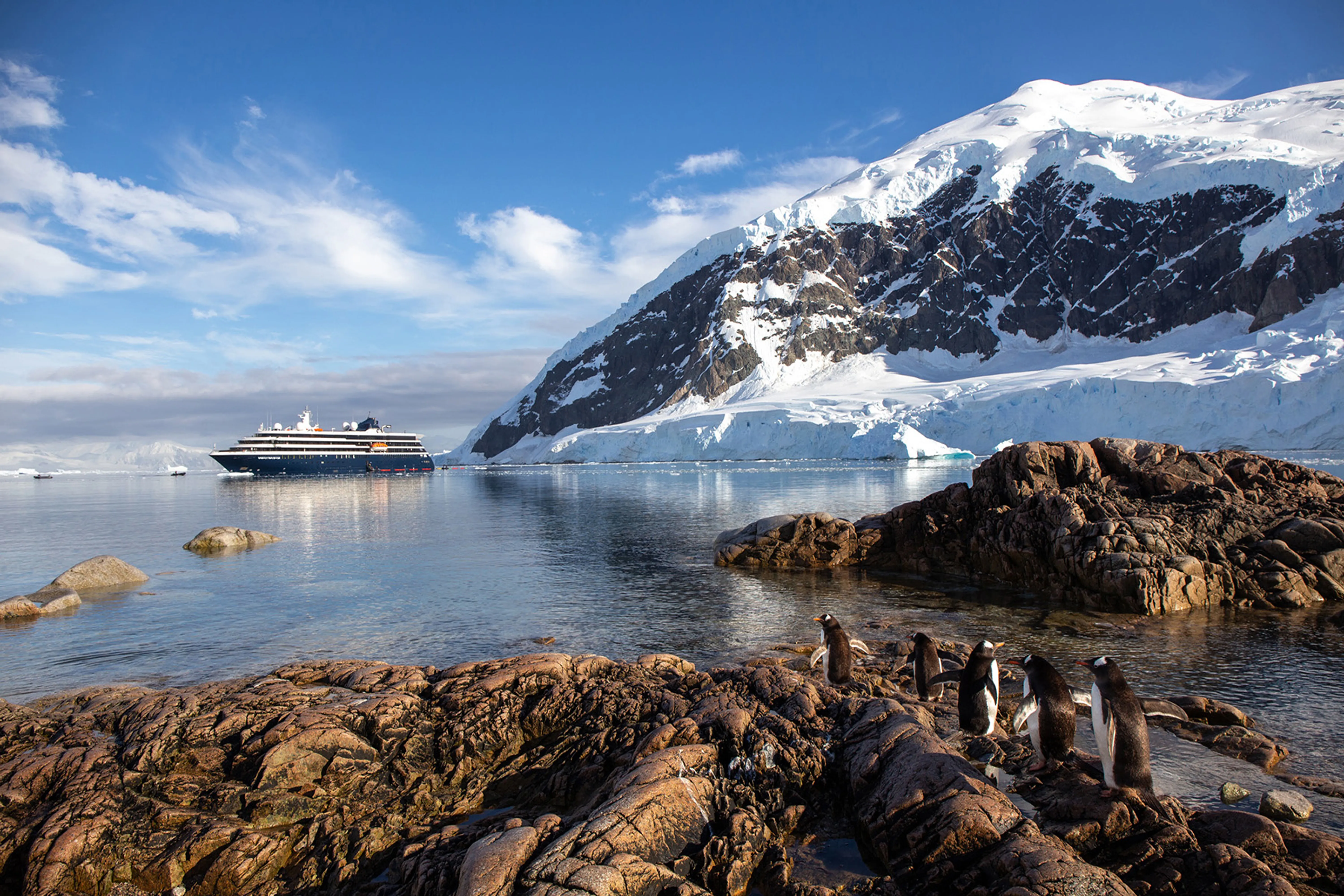
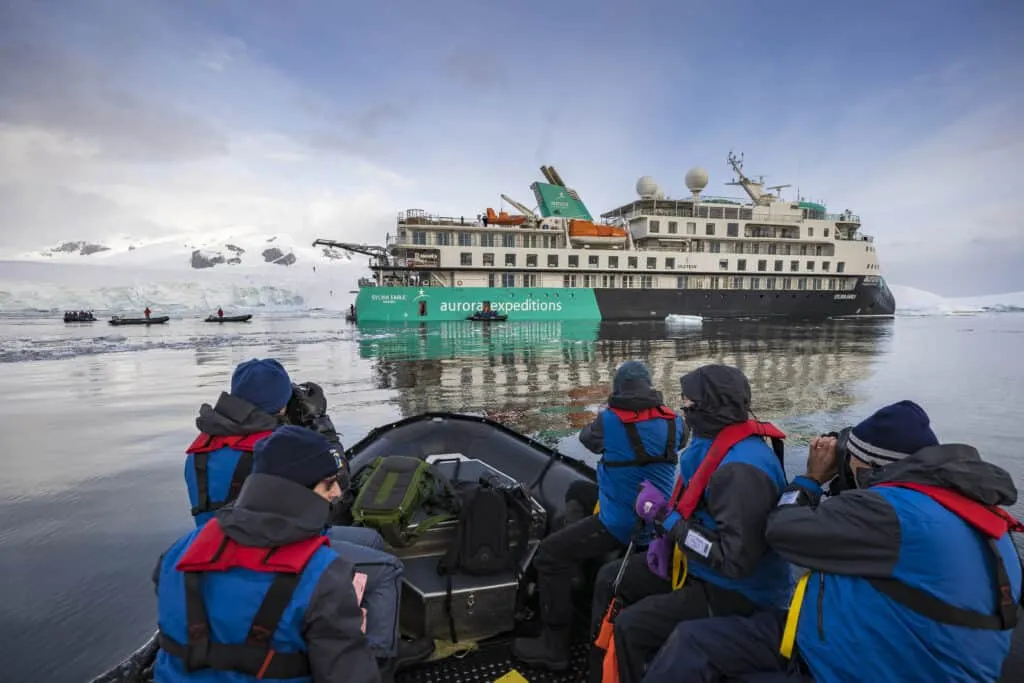
Ponant’s identity is expedition. Rebranded as Ponant Explorations Group in March 2025, the French line operates thirteen ships spanning an extraordinary range — from the 32-guest sailing yacht Le Ponant to the 245-guest Le Commandant Charcot, the only luxury icebreaker afloat with PC2 ice class capable of reaching the Geographic North Pole. Six Explorer-class ships carry Zodiac fleets and the signature Blue Eye underwater multi-sensory lounge. The Ducasse Conseil culinary partnership since 2016 brings Michelin-heritage French cuisine to two restaurants per ship, complemented by Henri Abelé Brut champagne flowing freely at all hours. The fleet reaches the Kimberley, Antarctica, the Arctic, French Polynesia year-round, Papua New Guinea, Japan, and the Great Lakes. Owned by Groupe Artémis — the Pinault family investment holding that also controls Kering, Christie’s, and Château Latour — Ponant is unambiguously French in language, culinary philosophy, and passenger mix. Approximately fifty per cent of guests on any given voyage are French nationals, with announcements delivered in French first and English second.
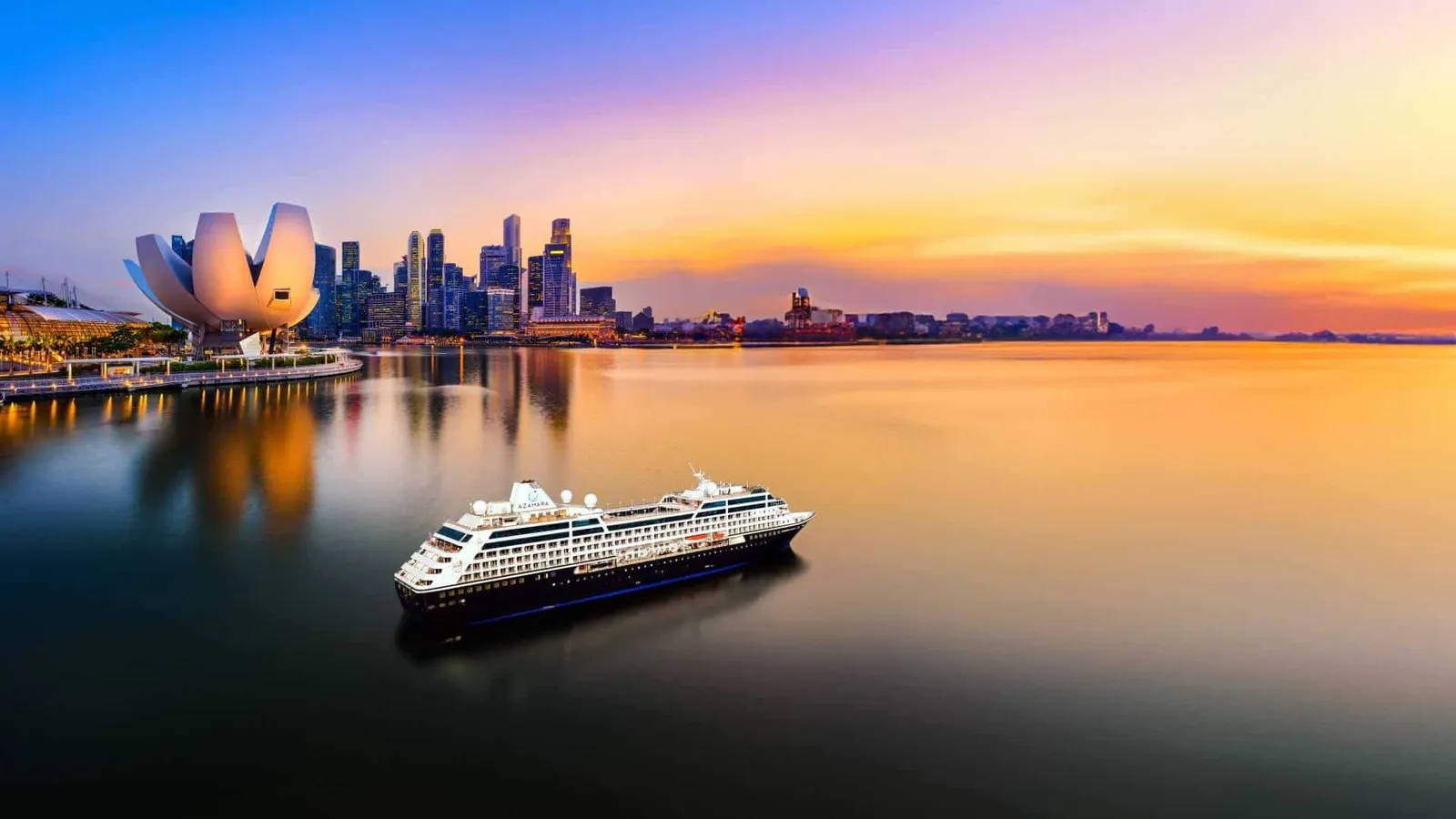
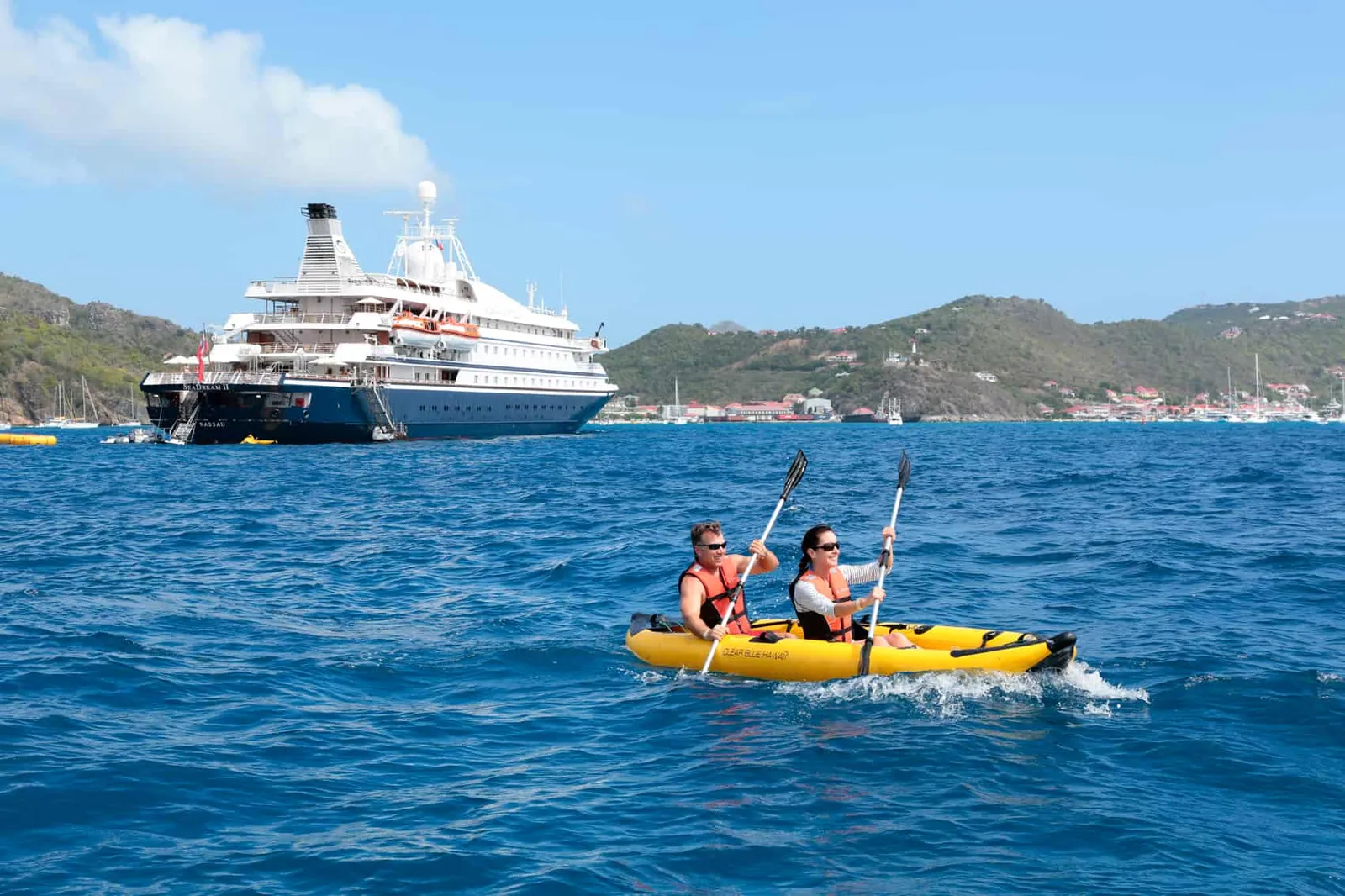
SeaDream’s identity is yachting. The line’s founding principle — “It’s yachting, not cruising” — is an operational reality borne out daily aboard two twin mega-yachts carrying just 112 guests each. SeaDream I and SeaDream II were launched in 1984 and 1985 as Sea Goddess I and Sea Goddess II, purchased and reimagined by Atle Brynestad — the Norwegian entrepreneur who also founded Seabourn — in 2001. With 95 crew serving 112 guests, the near-perfect 1:1 ratio delivers first-name service from the first morning. The marina platform drops down at anchor for complimentary kayaking, paddleboarding, jet skiing, and the signature Champagne and Caviar Splash. Balinese Dream Beds on the top deck invite guests to sleep under the stars as the yacht sails through the night. There are no Zodiacs, no expedition landings, no naturalists, and no ice-class ratings. SeaDream sails the Caribbean, Mediterranean, and Norwegian fjords — coastal waters where the yacht format thrives and the marina platform gets maximum use.
For Australian travellers, the practical question is this: if you are drawn to remote, expedition-grade destinations — the Kimberley coastline, Antarctic ice, the Geographic North Pole, the Marquesas — Ponant is the only choice from this pairing, and it operates from Australian soil. If you want the most intimate luxury yacht experience afloat — 112 guests, an all-inclusive open bar, water sports off the stern, and harbours that no expedition ship visits — SeaDream delivers something no other line replicates, though you will fly internationally to reach every departure port.
These lines do not compete. They serve fundamentally different travel motivations. Understanding which motivation is yours is the entire decision.
What is actually included
Both lines market genuine inclusivity, and both deliver it — but the specifics differ in ways that matter when calculating total cost and choosing between them.
Ponant’s inclusion model covers all dining aboard, an open bar available at all hours (beer, wine, spirits, Henri Abelé Brut Champagne, coffee, and soft drinks), a daily-restocked minibar, unlimited Wi-Fi (though quality varies by region and ship), and 24-hour room service. On expedition sailings — which includes the Kimberley, Antarctica, French Polynesia, and subantarctic islands — one guided excursion per port per day is included, covering Zodiac outings, shore landings, and expert-led naturalist activities. On expedition voyages, a complimentary expedition parka is provided. What Ponant does not include: gratuities are voluntary but suggested at approximately EUR 10 to 12 per person per day, shore excursions on non-expedition Mediterranean and Asian itineraries are additional, spa treatments carry surcharges, and flights are separate unless booked as part of a Fly, Stay & Cruise package.
SeaDream’s all-inclusive model covers an open bar at all hours — premium wines, champagne, spirits, cocktails, beer, and soft drinks served anywhere on the yacht, from the Top of the Yacht Bar’s 360-degree panorama to your sun lounger by the pool. All dining is included without restriction. Crew gratuities are fully covered — tipping is neither required nor expected. The marina platform’s full complement of water sports equipment — jet skis, kayaks, paddleboards, wakeboards, Hobie Cat catamarans, snorkelling gear, a waterslide, and the floating trampoline — is entirely complimentary. What SeaDream does not include: Wi-Fi is charged separately, shore excursions (Yachting Land Adventures) are priced individually, spa treatments carry additional costs, and flights are separate.
The net effect for Australian travellers: SeaDream’s inclusion of gratuities and water sports creates a marginally more comprehensive base fare — you genuinely do not reach for your wallet aboard. Ponant’s inclusion of Wi-Fi and expedition excursions (on relevant sailings) adds significant value that SeaDream does not match. The open bars are comparable in quality and availability, though SeaDream’s is frequently cited as slightly more premium in wine selection. The real differentiator is not what each fare covers but what each experience offers: Ponant’s included daily Zodiac excursions on expedition voyages represent activities worth hundreds of dollars per day that have no equivalent on SeaDream. SeaDream’s included marina platform with jet skis and kayaks represents a water sports programme that has no equivalent on Ponant.
For drinks-inclusive peace of mind with zero tipping, SeaDream wins by a narrow margin. For expedition value where excursions, gear, and naturalist expertise are bundled into the fare, Ponant wins decisively. Both are genuinely all-inclusive in spirit — neither will surprise you with a bill that undermines the luxury you paid for.
Dining and culinary experience
Both lines can credibly claim to serve some of the finest food at sea — and both have the credentials to back it. The culinary experiences, however, are as different as a Parisian brasserie and a Scandinavian yacht club.
Ponant is a French kitchen. The Ducasse Conseil partnership since 2016 focuses depth over breadth. On Explorer-class ships, Le Nautilus serves à la carte four-course dinners with amuse-bouche and regional French wines. Le Grill offers poolside casual dining for up to seventy guests. The bread and pastries are consistently described as boulangerie-quality — not a casual compliment when your passenger base is fifty per cent French and deeply opinionated about bread. Pierre Hermé macarons appear at afternoon tea. Kaviari caviar accompanies special evenings. On Le Commandant Charcot, the flagship Nuna restaurant — named from the Inuit word for “Earth” — is widely cited as one of the finest restaurants at sea, with Bernardaud porcelain, Ligne Roset furniture, and menus featuring soft-boiled eggs with caviar, saffron fettuccine with seafood, and a French cheese course rivalling any Lyon brasserie. The wine list is curated with obvious French bias, though international selections appear. Reviews are passionate but occasionally polarised — the majority describe it as exceptional, while a vocal minority finds the cooking inconsistent on certain ships. My observation after advising clients across multiple Ponant sailings: the culinary standard on Charcot and the newer Explorer-class vessels is genuinely outstanding, while older Sistership sailings can be less consistent.
SeaDream is a private kitchen cooking for 112. The line’s “Cuisine à la Minute” philosophy means everything is made to order — no pre-preparation, no batch cooking, no heat lamps. The Dining Salon (Deck 2, seating 110) serves multi-course dinners with amuse-bouche, while the Topside Restaurant offers al fresco dining where all 112 guests can eat outdoors simultaneously — a claim no other ship can make. SeaDream holds Forbes Travel Guide Recommended status for 2025, one of only fourteen cruise ships worldwide to receive the distinction. Zagat rates the cuisine 4.5 to 4.7. The signature Le Menu de Dégustation presents a multi-course tasting menu with wine pairings, climaxing in the celebrated 24-carat gold-leaf-topped Fondant au Chocolat with vanilla ice cream. SeaDream also offers the largest plant-based menu at sea — entirely prepared with raw, organic ingredients — alongside comprehensive vegetarian, vegan, gluten-free, pescatarian, and keto-friendly options. Dietary flexibility is a genuine strength. The wine pairings at dinner are included in the fare, drawn from a thoughtfully curated list. An exclusive twelve-tea selection prepared by a master blender in Kent complements the beverage programme. The sixty per cent repeat guest rate is driven substantially by the food and service — guests return because they cannot find this standard of made-to-order cooking at this scale anywhere else afloat.
The verdict is clear by purpose. Ponant delivers the most authentically French culinary experience at sea — the bread, the cheese, the macarons, the wine integration, and the Ducasse heritage create something that resonates with Francophile travellers and genuine food lovers. SeaDream delivers the most intimate culinary experience afloat — a single kitchen cooking everything to order for 112 guests, with dietary flexibility, included wine pairings, and the intimacy of a private dinner party. For French culinary purists, Ponant. For made-to-order precision and the pleasure of dining as one of 112 rather than one of 264, SeaDream.
Suites and accommodation
The accommodation comparison between these lines reveals two fundamentally different philosophies — and neither is wrong for its purpose.
Ponant’s staterooms are designed for expedition. On Explorer-class ships (184 guests), the standard Deluxe Balcony stateroom offers 161 square feet of interior space plus a 43-square-foot private balcony — compact by any measure, but sufficient when your days are spent on Zodiacs, at shore landings, and in the Blue Eye lounge rather than in your cabin. Prestige Suites step up to 291 square feet. The Owner’s Suite on Explorer-class ships provides 485 square feet of interior plus a spectacular 323-square-foot private terrace with outdoor Jacuzzi. On Le Commandant Charcot (245 guests), accommodation is markedly more generous: Prestige Staterooms start at 300 square feet plus a 55-square-foot balcony, and the Owner’s Suite spans an astonishing 1,240 square feet of interior plus a 2,000-square-foot private terrace — genuinely one of the most spectacular suites at sea, with views over polar ice from your own outdoor space. Duplex Suites on Charcot are two-level apartments with private dining rooms seating six. Across the fleet, Ponant offers what SeaDream cannot: private balconies on virtually every stateroom category.
SeaDream’s accommodation reflects the yacht’s origins and its complete reimagining. Both yachts received a comprehensive USD 10-million-plus refurbishment between 2022 and 2024, stripping staterooms back to bare steel and rebuilding from scratch. Yacht Club Staterooms average 195 square feet across Decks 2, 3, and 4 — larger in interior space than Ponant’s entry-level Explorer-class cabins, but with no private balconies. Deck 3 and 4 staterooms have picture windows; Deck 2 staterooms have portholes. The 2022 renovation installed new 55-inch flat-screen televisions, USB charging throughout, Nespresso machines in suites, marble-lined bathrooms with multi-jet showers, Elm Organics bath products, and luxury robes and slippers. The Commodore Suite combines two Yacht Club Staterooms into approximately 390 square feet with two full bathrooms — a practical upgrade for couples wanting space. The Admiral’s Suite (375 square feet, Deck 4) features three picture windows, a separate living area, and a soaking tub. The Owner’s Suite (447 square feet, mid-ship Deck 3) includes a separate master bedroom, a soaking tub with ocean views, and a dining area for entertaining.
The tradeoff is architectural and philosophical. Ponant offers private balconies — in the tropics, in the Kimberley, in the Mediterranean, watching Antarctic ice calve from your own outdoor space. That balcony is a genuine advantage for travellers who value private outdoor access. SeaDream offers slightly more interior space at entry level but no balconies at all — compensating instead with expansive shared outdoor decks, the Balinese Dream Beds, the marina platform, and a yacht philosophy that life happens in communal spaces, not behind closed doors. The absence of balconies on SeaDream is the most discussed limitation in guest reviews, and it is also the clearest signal that this is a yacht, not a ship.
For travellers who consider a private balcony essential — particularly for expedition destinations where wildlife viewing from your stateroom is part of the experience — Ponant is the clear choice. For travellers who prefer more interior cabin space and are comfortable with the yacht’s communal outdoor philosophy, SeaDream’s recently refurbished staterooms are attractive and modern.
Pricing and value
The pricing comparison between Ponant and SeaDream is not straightforward — because the lines rarely compete on the same itineraries, and the value proposition of each is tied to experiences the other does not offer.
Ponant’s per-diem varies enormously by ship and destination. Explorer-class Mediterranean sailings run approximately USD 600 to 1,000 per person per night. A ten-night Kimberley Fly, Stay & Cruise package starts from approximately AUD 13,670 per person including return flights from Australian capitals, a hotel stay, all meals, open bar, and daily guided excursions — a package that bundles significant value. Le Commandant Charcot polar voyages command a substantial premium: Antarctic sailings aboard L’Austral start from approximately USD 11,092 per person for shorter itineraries, while the Charcot North Pole expedition runs from USD 38,440 per person for seventeen days. The 2028 circumnavigation of Antarctica starts from USD 147,360 per person for sixty-two days. Paul Gauguin French Polynesia sailings range from approximately USD 4,000 to 8,000 per person for seven to fourteen nights. The range reflects the fleet’s extraordinary breadth — from Mediterranean coastal cruising to the Geographic North Pole.
SeaDream’s per-diem is more contained. Caribbean seven-night voyages start from approximately USD 2,500 to 3,500 per person — roughly USD 360 to 500 per night, making SeaDream one of the most accessible entry points into genuine luxury yachting. Mediterranean sailings vary but typically fall in a similar range. Norwegian fjord voyages, which sell out years in advance, may command a premium. For the 2026 season, SeaDream has introduced its first-ever fourteen-night Grand Mediterranean itinerary and doubled Norwegian fjord capacity — both signals of confidence in strong demand. All SeaDream fares include the open bar, all dining, gratuities, and water sports — so the headline price is genuinely close to the total cost (excluding Wi-Fi, shore excursions, spa, and flights).
For a direct Mediterranean comparison — the one region where both lines operate simultaneously — a seven-night Ponant Explorer-class sailing costs roughly USD 4,200 to 7,000 per person. A comparable seven-night SeaDream voyage costs roughly USD 2,500 to 3,500 per person. SeaDream’s lower base fare plus included gratuities creates a per-night advantage of approximately USD 200 to 400. Ponant counters with included Wi-Fi, private balconies on every stateroom, 184 guests (versus 112, offering slightly more social breadth), and the Blue Eye underwater lounge. The remaining premium buys a different kind of luxury — French culinary heritage versus yacht intimacy.
For Australian travellers, flight costs are a critical variable. Ponant’s Kimberley departures from Broome involve domestic flights only — typically AUD 400 to 800 per person from eastern capitals. SeaDream’s embarkation ports (Barcelona, Athens, San Juan, Barbados, Oslo) require international flights costing AUD 2,000 to 4,000 per person return. When total holiday cost including flights is calculated, Ponant’s Kimberley offering can be comparable to or cheaper than a SeaDream Caribbean or Mediterranean voyage for Australian travellers — despite Ponant’s higher per-night rate — because the airfare differential is substantial.
Neither line is a budget option. But SeaDream offers arguably the most accessible per-night entry into genuine luxury yachting, while Ponant’s expedition sailings deliver value that is impossible to replicate on any yacht.
Spa and wellness
Both lines offer spa and wellness programmes, but at scales and with philosophies that reflect their fundamentally different characters.
Ponant’s spa offering varies significantly by ship class. On Explorer-class vessels, compact spas operated by Sothys or Clarins offer massage cabins, a hammam (Turkish bath), and a fitness centre. The standout feature is not the spa itself but the Blue Eye underwater multi-sensory lounge — two whale-eye-shaped glass portholes below the waterline, hydrophones capturing live ocean acoustics, and Body Listening Sofas that vibrate with underwater sounds. It is not a traditional spa experience but an immersive wellness encounter unique in cruising. On Le Commandant Charcot, the Nuan Wellness Lounge elevates the programme dramatically: Biologique Recherche treatments across three spa cabins, the Ikuma sauna with panoramic polar views, the Siku snow room for contrast therapy, and — most spectacularly — the Blue Lagoon heated outdoor pool maintained at 27 to 37 degrees Celsius where guests swim surrounded by Antarctic or Arctic ice. An indoor saltwater pool with counter-current swimming and floor-to-ceiling windows completes a wellness facility that has no peer on any expedition vessel.
SeaDream’s Asian Spa and Wellness Centre is the only Thai-certified spa service at sea — a distinction reflecting commitment to authentic technique over branded product lines. Highly trained Thai-certified therapists offer Traditional Thai Massage, Sisley Paris facial treatments (a luxury French skincare brand that sits comfortably alongside the yacht’s premium positioning), detoxifying body wraps, and aroma massages for individuals and couples. The spa houses two treatment rooms, three steam showers, a sauna, and a private open-air massage area on deck where treatments are delivered with ocean breezes and the sound of waves — weather permitting, this is one of the most memorable spa settings afloat. The Fitness Centre on Deck 4 carries treadmills, elliptical and recumbent bikes, and free weights with ocean views. Complimentary sunrise yoga and tai chi sessions are offered daily on the open deck. Sixteen laps around Deck 6 equals one mile for walking or running. The therapist-to-guest ratio is remarkable at this scale — with just 112 guests aboard, there is no waiting, no rush, and genuine personal attention.
The difference mirrors the broader comparison. Ponant’s wellness experience is experiential and destination-driven — swimming in a heated pool while icebergs drift past, listening to whale song through the hull via the Blue Eye lounge, contrast therapy in a snow room at the edge of the polar ice cap. These are not spa treatments; they are once-in-a-lifetime wellness encounters tied to extraordinary destinations. SeaDream’s wellness experience is intimate and personal — a Thai-certified massage on the open deck of a yacht carrying 112 guests, sunrise yoga with a handful of fellow travellers, Sisley Paris facials in an unhurried setting. For spa-motivated travellers who want experiential wellness tied to expedition, Ponant — particularly on Charcot. For those who want personal, authentic spa treatments in an intimate yacht setting, SeaDream.
Entertainment and enrichment
Neither Ponant nor SeaDream produces Broadway shows, stages cabaret revues, or programmes packed entertainment schedules — and both attract travellers who consider this a virtue. The enrichment philosophies, however, diverge meaningfully.
Ponant’s enrichment programme is expedition-driven. Onboard naturalists, ornithologists, marine biologists, historians, and geologists deliver daily briefings and lectures before each landing. The quality of these experts is consistently cited as one of Ponant’s greatest strengths — these are working scientists and expedition leaders, not retired academics filling time. National Geographic Expeditions partnerships (since 2018) place National Geographic experts and photographers onboard select sailings. Smithsonian Journeys collaborations add two Smithsonian experts per voyage on family-oriented Mediterranean and Great Lakes itineraries. The Explorers Club partnership (expanded November 2025) brings speakers including mountaineer Peter Hillary and marine scientist Diego Cardenosa. The Blue Eye underwater lounge offers a unique passive enrichment experience — watching marine life through two enormous portholes while hydrophones transmit live ocean acoustics through the hull. Evenings feature a musical duo or small performance in the lounge, cocktails with fellow travellers, and the signature Soirée Blanche (White Party) on warm-climate sailings — an all-white dress event with music and dancing on the outer decks that has become a Ponant tradition. The dress code is “Casual Chic” most evenings with one or two gala evenings per sailing where cocktail dress or dark suit is recommended.
SeaDream’s evening atmosphere is deliberately unstructured. Entertainment is intentionally minimal: a pianist in the Piano Bar, occasional guitarists and singers at the Top of the Yacht Bar, and late-night DJ sets that add energy on warmer evenings. Trivia games and a modest casino with a blackjack table appear in the daily programme. But the signature SeaDream evening is not programmed — it is organic. Champagne at the Top of the Yacht Bar’s 360-degree observation point as the sun sets. Dinner al fresco under the stars at the Topside Restaurant. A nightcap with fellow guests who were strangers forty-eight hours ago but now feel like friends. For the adventurous, a Balinese Dream Bed on the top deck — with custom-embroidered pyjamas and linens — where you fall asleep under the stars as the yacht sails to her next port. There are no naturalist lectures, no expedition briefings, no National Geographic experts. The enrichment is the setting, the company, and the experience of being one of 112 people on a yacht that feels like it belongs to you. The dress code is resort casual throughout — even more relaxed than Ponant’s standard — with no formal nights and no jacket expectations.
The distinction is philosophical. Ponant makes the destination the curriculum — the enrichment programme exists to deepen your understanding of the places you are visiting, whether that is the geology of Antarctica, the Indigenous culture of the Kimberley, or the marine biology of French Polynesia. SeaDream makes the yacht the experience — the enrichment is social, sensory, and entirely self-directed. If structured expert-led programmes and expedition briefings enhance your travel experience, Ponant delivers genuine intellectual enrichment. If your ideal evening is an open bar, an open deck, and the freedom to do precisely nothing, SeaDream provides the setting without the structure.
Fleet and destination coverage
The fleet comparison reveals the most fundamental difference between these lines — and it is not simply about ship count. It is about strategic ambition and the breadth of experiences each line can offer.
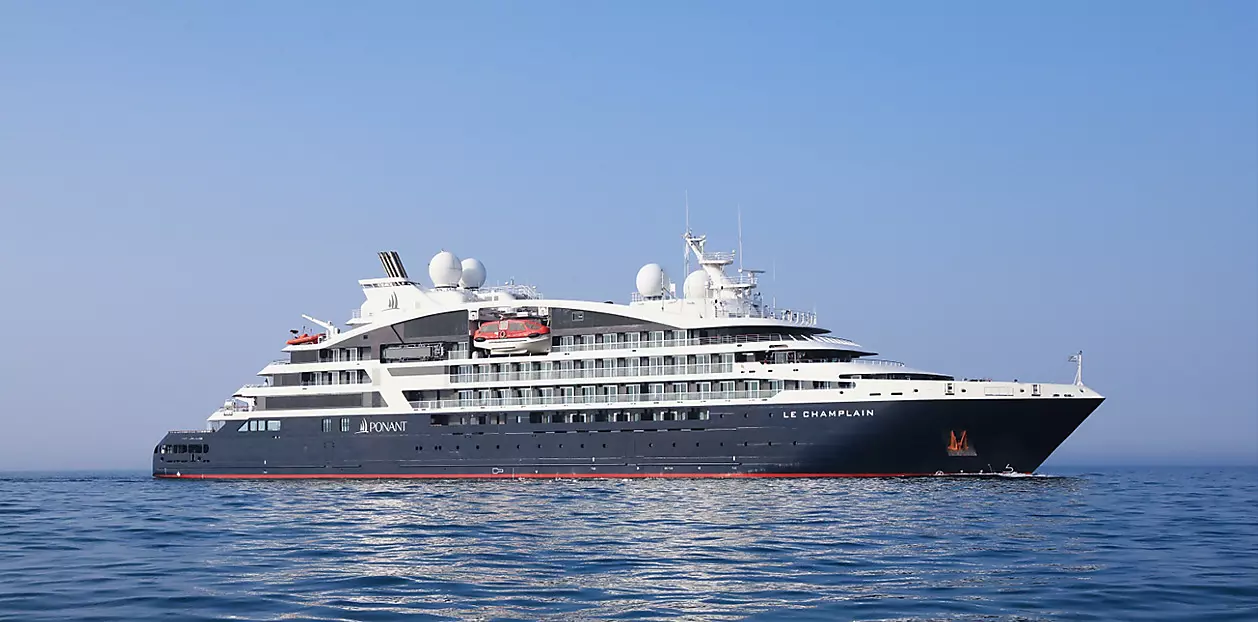
Ponant operates thirteen ships across five distinct classes. Le Ponant (32 guests) is a three-masted sailing yacht offering an entirely unique experience. Four Sisterships — Le Boréal, L’Austral, Le Soléal, and Le Lyrial — each carry 264 guests with ice-strengthened hulls and proven expedition capability. Six Explorer-class ships — Le Champlain, Le Lapérouse, Le Bougainville, Le Dumont-d’Urville, Le Jacques Cartier, and Le Bellot — carry 184 guests each with Zodiac fleets, the Blue Eye underwater lounge, and stabilisation technology for open-ocean comfort. Le Commandant Charcot carries 245 guests as the world’s only luxury icebreaker with PC2 ice class and LNG-electric hybrid propulsion. Paul Gauguin (332 guests) operates year-round in French Polynesia with Tahitian cultural hosts. And the recent majority acquisition of Aqua Expeditions adds five river and ocean vessels in the Amazon, Mekong, Galápagos, and Indonesia. This fleet breadth means Ponant deploys simultaneously across the Mediterranean, Kimberley (sixteen sailings), French Polynesia (year-round), Antarctica, the Arctic, the Geographic North Pole, subantarctic islands, Papua New Guinea, Japan, and the Great Lakes. No other luxury expedition line covers this geographic range.
SeaDream operates two ships — and only two. SeaDream I (launched 1984) and SeaDream II (launched 1985) are identical twins: 4,253 gross tonnes, 355 feet long, 56 suites each, 112 guests maximum, 95 crew. Both received comprehensive USD 10-million-plus refurbishments between 2022 and 2024. No new ships are planned — the Innovation newbuild was cancelled in December 2019, and founder Atle Brynestad has committed to the twin-yacht model. For 2026, the deployment covers the Caribbean (33 itineraries spanning 39 destinations), the Mediterranean (27 voyages visiting 82 ports across 14 countries), and Norwegian fjords (doubled capacity after previous seasons sold out years in advance). SeaDream’s 2026 programme also introduces the line’s first-ever fourteen-night Grand Mediterranean itinerary — a signal of growing appetite for extended yachting. At 4,253 gross tonnes, the yachts access harbours that are physically impossible for any Ponant ship: downtown Venice, Capri overnight, the Corinth Canal, St Barts’ Gustavia harbour, and the intimate coves of the Grenadines.
The destination overlap between these lines is narrow — both operate in the Mediterranean, but with different port profiles. Ponant’s Explorer-class ships (approximately 10,000 gross tonnes) can access smaller ports but not the truly intimate harbours that SeaDream’s 4,253-tonne yachts reach. And Ponant sails to dozens of expedition destinations — the Kimberley, both polar regions, French Polynesia, Papua New Guinea — that SeaDream’s yachts are not designed to visit. The fleets are complementary rather than competitive.
For Australian travellers, Ponant’s fleet offers vastly more itinerary flexibility — thirteen ships across a dozen regions simultaneously, including Kimberley departures from Australian soil. SeaDream’s twin-yacht model means fewer sailings, higher demand, earlier booking requirements, and the need to fly internationally for every voyage. But two ships can deliver what thirteen cannot: the feeling that you have boarded a private yacht, not a passenger vessel — because at 112 guests and 4,253 gross tonnes, you genuinely have.
Where each line excels
Ponant excels in:
- Expedition access. Thirteen ships reaching the Kimberley, Antarctica, the Arctic, the Geographic North Pole, subantarctic islands, Papua New Guinea, French Polynesia, Japan, and the Great Lakes. No SeaDream yacht can visit any of these destinations — nor is it designed to.
- The Kimberley. Sixteen sailings for the 2026 season with a new West Coast Odyssey from Broome to Fremantle. Fly, Stay & Cruise packages from five Australian capitals from approximately AUD 13,670 per person. One of the most comprehensive Kimberley programmes of any cruise line, with daily included Zodiac excursions.
- Polar capability. Le Commandant Charcot is the only luxury ship to have reached the Geographic North Pole and the first to visit the northern pole of inaccessibility. The 2028 circumnavigation of Antarctica will be a world first.
- French Polynesia year-round. Paul Gauguin has operated from Papeete since 1998, with Le Jacques Cartier joining from the 2026–2027 season. Direct Air Tahiti Nui flights from Sydney (eight hours) make this one of the most accessible exotic deployments for Australians.
- The Blue Eye lounge. The underwater multi-sensory lounge on Explorer-class ships — two whale-eye-shaped portholes below the waterline with hydrophones and Body Listening Sofas — is unique in cruising and has no equivalent on any SeaDream yacht.
- Private balconies. Virtually every stateroom category across the Ponant fleet offers a private balcony — essential for wildlife viewing on expedition and a genuine advantage over SeaDream’s balcony-free yachts.
SeaDream excels in:
- Intimacy and service ratio. Ninety-five crew for 112 guests creates a near-perfect 1:1 ratio that no Ponant ship matches. Crew learn your name on the first day, remember your drink preference by the second, and greet you as family by the third. The seventy to eighty per cent repeat guest rate is a loyalty metric unmatched in the industry.
- All-inclusive beverages with included gratuities. The open bar is genuinely premium and genuinely all-hours. Gratuities are fully included — no voluntary contributions, no suggested amounts, no awkward end-of-voyage envelopes. The fare covers everything social.
- Water sports and the marina platform. Jet skis, kayaks, paddleboards, wakeboards, Hobie Cat catamarans, snorkelling gear, a waterslide, and a floating trampoline deployed from the stern marina — all complimentary. No Ponant ship carries comparable water sports equipment; Ponant’s marine activities are expedition-focused (Zodiacs, shore landings) rather than recreational.
- Small-harbour access. At 4,253 gross tonnes and 355 feet, SeaDream’s yachts access harbours that are physically impossible for even Ponant’s smallest Explorer-class ships: downtown Venice, Capri overnight, the Corinth Canal, Gustavia in St Barts, and the intimate anchorages of the Grenadines and British Virgin Islands.
- Balinese Dream Beds. Sleeping under the stars on the top deck — with custom-embroidered pyjamas and linens — is unique in cruising. No other line offers this experience.
- The Champagne and Caviar Splash. A signature beach event where crew set up champagne service and caviar on a secluded beach, with guests arriving from the yacht by tender. It is theatrical, celebratory, and distinctly SeaDream.
- Dietary flexibility. The largest plant-based menu at sea, plus comprehensive vegetarian, vegan, gluten-free, pescatarian, and keto-friendly options, all prepared to order. Ponant’s Ducasse-trained kitchen is outstanding but less explicitly flexible.
Standout itineraries for Australian travellers
Ponant
Le Jacques Cartier: Kimberley (10 nights, May–September 2026, Broome to Darwin) — Sixteen sailings with Fly, Stay & Cruise packages from approximately AUD 13,670 per person including return flights from five Australian capitals, hotel, and all-inclusive expedition cruise. One guided Zodiac excursion per port per day included. King George Falls, Montgomery Reef, Indigenous cultural encounters, and the remote Kimberley coastline accessible only by small ship. No international flights required. This is the most practical luxury expedition for Australian travellers — and it departs from home soil.
Le Soleal: West Coast Odyssey (10 nights, Broome to Fremantle, July–August 2026) — A brand-new itinerary exploring Shark Bay (UNESCO World Heritage), Jurien Bay, the Abrolhos Islands, Montebello Islands, and Murujuga National Park. Domestic flights only. A uniquely Australian product with no international equivalent and no SeaDream alternative.
Le Jacques Cartier: French Polynesia (7–14 nights, roundtrip Papeete, September 2026–March 2027) — Sixty-six departures across the Society Islands, Tuamotu, Marquesas, Cook Islands, Fiji, and Tonga. Air Tahiti Nui operates direct Sydney–Papeete flights in approximately eight hours. Blue Eye underwater lounge and Zodiac excursions included. For Australians wanting accessible South Pacific expedition luxury, this is the shortest flight path to an extraordinary experience.
Le Commandant Charcot: Antarctica (various durations, departing Ushuaia) — Antarctic sailings aboard the world’s only luxury icebreaker, from approximately USD 11,092 per person for shorter itineraries. The 2028 circumnavigation of Antarctica (sixty-two nights, from USD 147,360 per person) will be a world first. For the most ambitious Australian polar traveller, Charcot is the defining vessel of this era.
Le Commandant Charcot: Geographic North Pole (17 days, from USD 38,440 per person) — The only luxury vessel reaching 90 degrees North. For Australian travellers who have done Antarctica and want the ultimate polar complement, this is literally the only option at this level.
SeaDream
SeaDream I or II: Grand Mediterranean (14 nights, 2026) — SeaDream’s first-ever two-week Mediterranean itinerary, calling at St Tropez, Corsica, Taormina, Valletta, Dubrovnik, with overnights possible in Capri and direct access to downtown Venice. The extended format is new and represents the most immersive SeaDream Mediterranean experience to date. Fly to Barcelona or Athens from Australian gateways via Singapore Airlines, Emirates, or Qatar Airways — one-stop connections from Sydney, Melbourne, Brisbane, and Perth.
SeaDream II: Best of the Secluded Caribbean (7–10 nights, November–April 2026) — The quintessential SeaDream experience through the islands these yachts were designed for. Thirty-three itineraries spanning 39 destinations including the US and British Virgin Islands, Anguilla, St Barts with an overnight in Gustavia, St Kitts and Nevis, and the Grenadines. Marina platform water sports at virtually every stop. The Champagne and Caviar Splash on a beach in the Grenadines is the signature experience the line is built around. Fly to San Juan or Barbados via Dallas, Los Angeles, or Miami from Australian east coast cities. Starting from approximately USD 2,500 per person for seven nights — the most accessible per-night entry into genuine luxury yachting.
SeaDream II: Norwegian Fjords (7 nights, July–August 2026) — The programme that sells out years in advance, with doubled capacity for 2026 after overwhelming demand. Oslo, Bergen, Ålesund, and the secluded fjord villages of Måløy, Kalvåg, and Olden. Kayaking through Ulvesundet, RIB adventures in the Sognefjord, and fjord fishing. At 112 guests and 4,253 gross tonnes, the yacht penetrates deep into fjords where Ponant’s 10,000-tonne Explorer-class ships simply cannot follow. Fly to Oslo via a single connection through London, Dubai, or Doha from Australian capitals.
Ship-by-ship recommendations
Ponant
Le Jacques Cartier (184 guests, 2020) — The most versatile ship for Australian travellers. Deployed to both the Kimberley (May–September) and French Polynesia (September–March), Le Jacques Cartier covers the two most accessible Ponant deployments from Australia. Explorer-class with Blue Eye underwater lounge, Zodiac fleet, and Ducasse-trained cuisine. Start here for your first Ponant experience.
Le Commandant Charcot (245 guests, 2021) — For serious polar expedition only. PC2 ice class, LNG-electric hybrid propulsion, and the Nuna restaurant. Commands a significant premium but delivers experiences available on no other passenger ship — the Geographic North Pole, deep Antarctic ice, and the 2028 circumnavigation. Not a beginner’s first cruise; rather, the culmination of an expedition career.
Le Soléal or Le Lyrial (264 guests, 2013/2015) — Sistership-class vessels that are the Kimberley and coastal expedition workhorses. Slightly larger and older than Explorer-class but proven performers with ice-strengthened hulls. The new West Coast Odyssey from Broome to Fremantle aboard Le Soléal is an excellent Australian-waters itinerary.
Paul Gauguin (332 guests, 1998) — A separate experience entirely, operating year-round in French Polynesia with Tahitian cultural hosts, Les Gauguines and Les Gauguins. Not an expedition ship but purpose-built for the region with a retractable marina platform. Choose for the most immersive Pacific cruise available with the shortest flight from Australia.
SeaDream
SeaDream I or SeaDream II (112 guests each, 1984/1985, refurbished 2022–2024) — The twin yachts deliver an identical experience. Both carry the same 56 suites, the same crew-to-guest ratio, the same marina platform, the same Dining Salon and Topside Restaurant. Choose by itinerary rather than ship: typically one yacht covers the Caribbean while the other covers the Mediterranean, with both offering Norwegian fjord deployments in summer. For a first SeaDream experience, the Caribbean is the ideal testing ground — calmer seas suit the yacht’s smaller displacement, the marina platform gets maximum use in warm waters, and the Champagne and Caviar Splash on a Caribbean beach is the signature experience the line was built around.
For travellers considering upgrades, the Owner’s Suite (447 square feet, mid-ship Deck 3) and Admiral’s Suite (375 square feet, near the Library) are the only accommodations with soaking tubs and substantially more living space. The Commodore Suite option — combining two Yacht Club Staterooms into approximately 390 square feet with two full bathrooms — is a practical choice for couples wanting additional space without the premium of the named suites. Note that SeaDream is celebrating its twenty-fifth anniversary in 2026, and anniversary sailings may offer special programming or commemorative touches worth timing your first voyage around.
For Australian travellers specifically
Both lines are accessible from Australia, but the depth of local presence, the ease of booking, and the practical logistics differ meaningfully — and for a market that can sit fifteen to twenty-four hours of flying from most embarkation ports, these details are decisive.
Ponant’s Australian operation is the more established by a significant margin. The North Sydney office (1300 737 178) was built under the leadership of Sarina Bratton AM — described as “Australia’s First Lady of Cruising” — who grew the APAC operation from less than one per cent of global revenue to twenty per cent over nearly a decade. Current CEO Asia Pacific Deb Corbett serves on the CLIA Australasia Executive Committee, giving Ponant a voice in Australian cruise industry governance. The Kimberley is Ponant’s second most popular cruise region for Australian guests. Fly, Stay & Cruise packages from five Australian capitals — Sydney, Melbourne, Brisbane, Adelaide, and Perth — simplify the booking process by bundling flights, hotel, transfers, and the cruise into a single package. Ponant runs Discovery Sessions in Australian cities with exclusive cruise offers and flight credits for Australian and New Zealand travellers. The West Coast Odyssey from Broome to Fremantle is a uniquely Australian product developed specifically for the domestic market. For Australians wanting expedition luxury without leaving the country, Ponant is the only choice from this pairing — and indeed one of the very few luxury expedition operators with a substantive Australian ground presence.
SeaDream’s Australian presence is smaller but growing. The line offers a freephone number for Australia (+61 1800 290 785) and has appointed Jarrod Zurvas as APAC Director of Sales, signalling intent to grow a market that currently represents approximately one per cent of global business with ambitions to reach five per cent or more. SeaDream does not sail in Australian waters — every voyage requires international flights. Caribbean embarkation from San Juan, Barbados, or Palm Beach means connecting through the United States, typically via Dallas, Los Angeles, or Miami, adding approximately twenty to twenty-four hours of travel each way. Mediterranean embarkation from Barcelona, Athens, Dubrovnik, or the French Riviera connects through the Middle East or London. Norwegian fjord voyages embark from Oslo or Bergen. Australian specialist cruise advisors — including Pan Australian Travel — are the recommended booking channel, offering expertise in itinerary selection, flight routing, pre- and post-cruise hotel arrangements, and travel insurance that the line’s US-based headquarters may not provide with the same Australian-specific knowledge.
Flights from Australia are a practical consideration that decisively favours Ponant. The Kimberley programme departs from Broome — a domestic flight of three to four hours from Perth, or five to six hours with a connection from eastern capitals. No international flights, no visa requirements, no jet lag. French Polynesia departs from Papeete — an eight-hour direct flight from Sydney on Air Tahiti Nui, one of the shortest long-haul connections from Australia. Even Ponant’s Mediterranean and polar deployments depart from European and South American ports that are well-served by one-stop connections from Australian gateways. SeaDream’s Caribbean programme, by contrast, requires the most complex routing for Australians — typically Sydney to Los Angeles or Dallas, then onward to San Juan or Barbados, with total travel times of twenty to twenty-six hours each way. The journey is not trivial, and the cost of flights (AUD 2,000 to 4,000 per person return to the Caribbean, AUD 2,000 to 3,500 to Europe) adds meaningfully to SeaDream’s total holiday cost.
The loyalty pathway diverges clearly. Ponant’s Yacht Club programme is standalone but offers lifetime status with no requalification requirement, and the December 2025 cross-brand status match extends recognition across Ponant Explorations, Paul Gauguin Cruises, and Aqua Expeditions — an increasingly broad portfolio for expedition-oriented travellers. SeaDream’s Club is a flat membership structure with automatic enrolment after your first voyage, offering USD 500 savings on select sailings, ten to fifteen per cent onboard booking discounts, and early access to new itineraries. The most telling loyalty metric is not the programme structure but the behaviour: seventy to eighty per cent of guests on any SeaDream voyage are repeat travellers. That statistic represents the strongest organic loyalty in the cruise industry.
The onboard atmosphere
These two lines feel utterly different aboard — and the atmosphere may ultimately matter more than any comparison of inclusions, pricing, or destinations.
Ponant’s atmosphere is the French yacht. With never more than 264 guests on the main fleet (184 on Explorer-class), the intimacy is genuine — the Captain and expedition leader are visible daily, often dining with guests and leading shore excursions personally. The passenger mix is approximately fifty per cent French, followed by Australians, Europeans, and a smaller North American contingent. Announcements and briefings are delivered in French first, then English — and this is the single most discussed aspect of the Ponant experience among English-speaking travellers. Some find it charming and authentically French. Others report that the French version is longer, more detailed, and that the English translation can feel abbreviated. The truth lies somewhere in between, and individual tolerance for language dynamics varies enormously. The dress code is “Casual Chic” most evenings with one or two gala evenings per sailing where cocktail dress or dark suit is recommended. The Soirée Blanche (White Party) in warm climates is a signature event that guests either love or dread — I recommend embracing it. Evenings are intimate rather than programmed: conversation over champagne in the lounge, stargazing from the observation deck, a musical duo providing background rather than spectacle. On expedition sailings, the daily briefings and landings create a shared sense of purpose and camaraderie among guests — the experience of watching humpback whales breach together from a Zodiac builds bonds that no cocktail party can replicate.
SeaDream’s atmosphere is the private house party. With a maximum of 112 guests, the intimacy is immediate and inescapable — in the best possible way. The Captain dines with guests, walks with them ashore, and is a genuinely visible daily presence. Crew call you by name from the first morning. The passenger mix is well-travelled and international — predominantly American and European, with a notable Scandinavian contingent reflecting founder Atle Brynestad’s Norwegian heritage — and trends slightly younger than most luxury lines, with a core demographic of couples aged 40 to 60 alongside older repeat travellers. English is the working language throughout, with no secondary language dynamic. The dress code is resort casual — even more relaxed than Ponant’s standard — with no formal evenings, no jacket expectations, and no dress codes beyond common courtesy at dinner. The evening rhythm is organic and unforced: champagne at the Top of the Yacht Bar as the sun sets over whichever coastline the yacht is tracing, dinner al fresco under the stars, a nightcap with fellow guests who were strangers two days ago but feel like old friends, and — for the adventurous — a Balinese Dream Bed on the top deck for the night. The atmosphere is frequently described as a house party on a yacht owned by a very generous friend. The easy camaraderie is the primary reason SeaDream commands such extraordinary repeat rates. People naturally congregate on the open decks, where space is plentiful, the bar is always open, and the sense of shared experience is genuine.
For Australians specifically, the language factor is a practical differentiator. SeaDream operates entirely in English with no language barriers whatsoever. Ponant’s French-first announcements are not a barrier to safety or service, but they are a recurring point of feedback from Australian clients. If being in a predominantly French-speaking environment appeals — and for Francophile travellers, it genuinely does — Ponant’s atmosphere is authentically Continental. If English-only communication is important to your comfort aboard, SeaDream removes that variable entirely.
The bottom line
Ponant and SeaDream occupy different segments, serve different motivations, and rarely compete for the same booking — but for Australian travellers weighing one against the other, the choice resolves around two questions: where do you want to go, and how do you want to feel when you get there?
Choose Ponant for genuine expedition access — the Kimberley from Broome with daily included Zodiac excursions, Antarctica from Ushuaia aboard the world’s only luxury icebreaker, the Geographic North Pole from Longyearbyen, and French Polynesia year-round from Papeete. Choose it for authentic French culinary heritage under the Ducasse Conseil partnership, an open bar with Henri Abelé champagne, private balconies on virtually every stateroom, and the Blue Eye underwater lounge. Choose it for thirteen ships reaching destinations that no yacht can approach, and for an established Australian office with Kimberley Fly, Stay & Cruise packages from five capitals. Accept that the passenger mix is predominantly French, that announcements are delivered in French first, that gratuities are suggested rather than included, and that per-night rates run higher than SeaDream’s comparable Mediterranean sailings.
Choose SeaDream for the most intimate luxury experience afloat. Choose it for 112 guests maximum, a near-perfect 1:1 crew ratio, an open bar from morning to midnight with gratuities fully included, and the kind of first-name recognition that only a yacht can deliver. Choose it for the marina platform with complimentary jet skis, kayaks, and paddleboards, the Champagne and Caviar Splash on a Caribbean beach, the Balinese Dream Beds under a canopy of stars, and the small harbours — downtown Venice, Capri overnight, the Corinth Canal, the Norwegian fjords — that no expedition ship can reach. Choose it for Forbes Travel Guide Recommended dining, made-to-order cuisine for 112 guests, and a repeat guest rate of seventy to eighty per cent that speaks louder than any marketing claim. Accept that staterooms are compact with no balconies, that Wi-Fi costs extra, that you must fly internationally from Australia to reach every embarkation port, and that with only two ships and programmes selling out years in advance, availability rewards the decisive.
For many Australian travellers, these lines do not compete — they complement. A Ponant Kimberley aboard Le Jacques Cartier followed by a SeaDream Caribbean on SeaDream I is not an unusual combination for our clients at Pan Australian Travel. It is, in fact, the journey from discovering that luxury cruising can take you to the most remote coastlines on Earth — to discovering that the most luxurious thing of all is being one of 112 guests on a yacht where the crew know your name, the bar never closes, and the stars above your Dream Bed stretch from horizon to horizon.