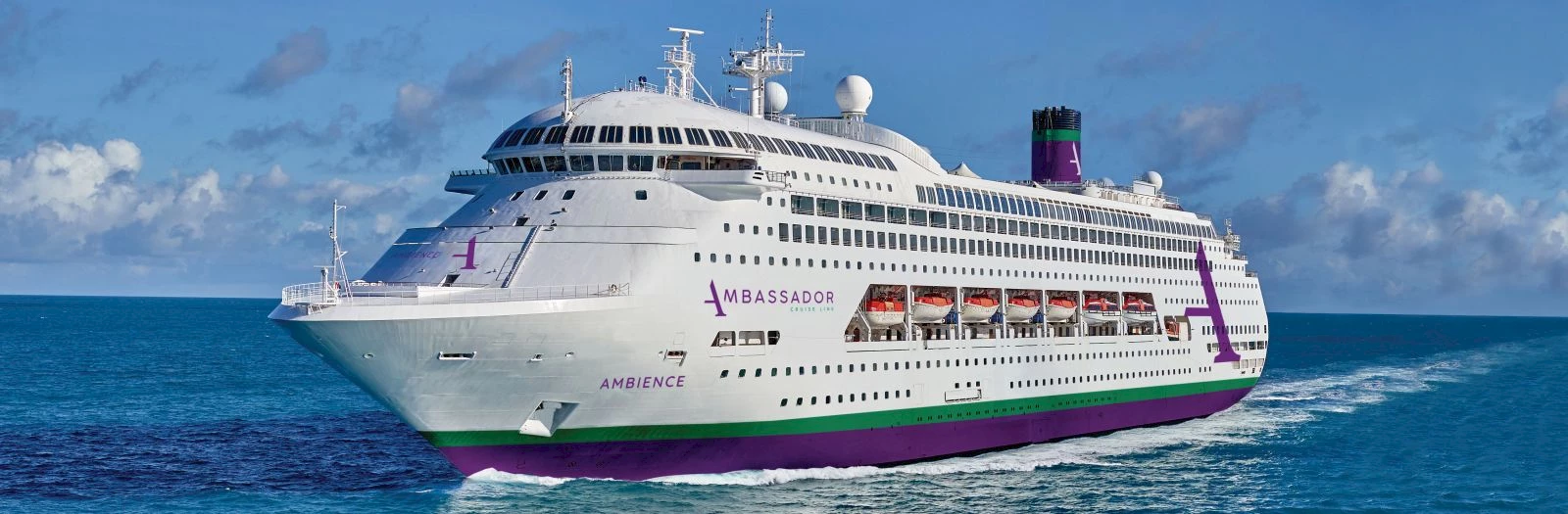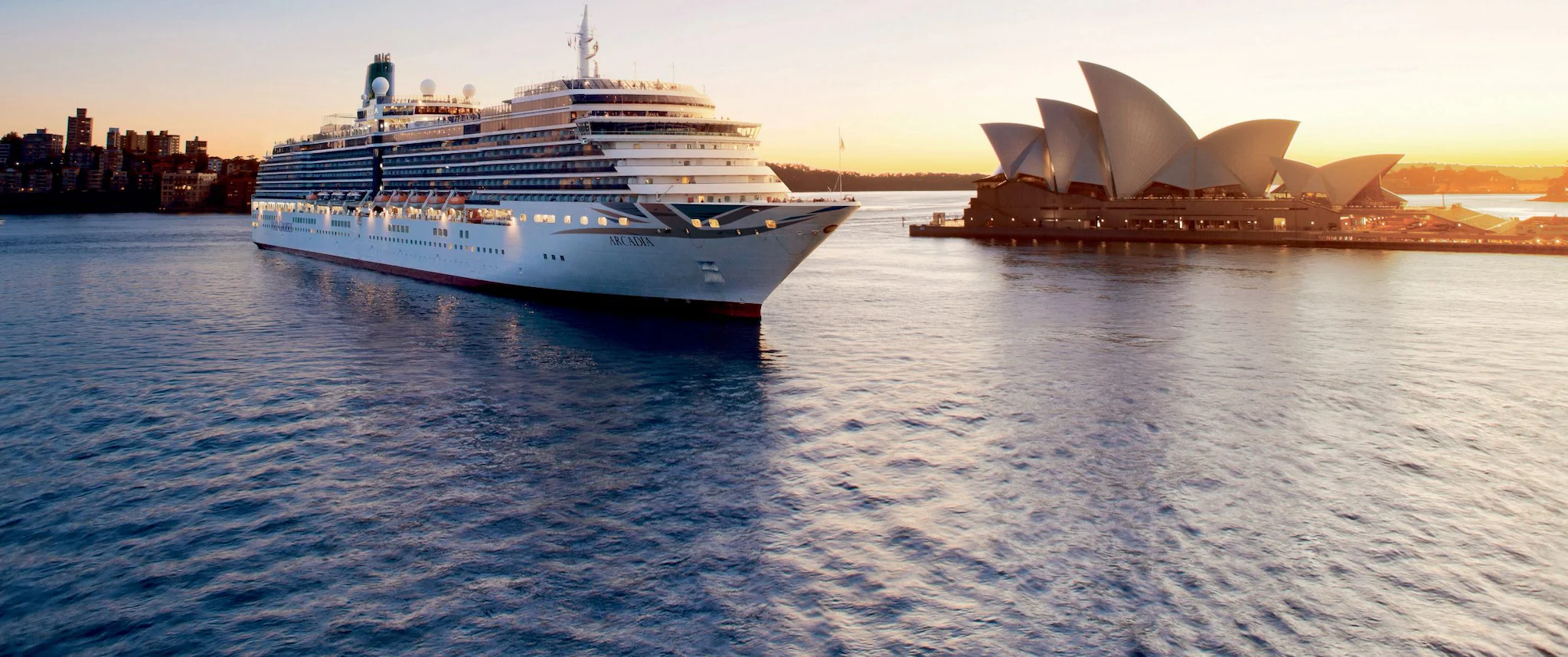
P&O Cruises and Viking Ocean Cruises are two of the most recognisable names in cruising, yet they occupy completely different segments of the market — mainstream British holiday cruising versus Scandinavian upper-premium exploration. Jake Hower untangles the inclusions, dining, atmosphere, and value proposition for Australian travellers considering either line.
| P&O Cruises | Viking Ocean Cruises | |
|---|---|---|
| Category | Premium | Premium |
| Rating | ★★★★☆ | ★★★★★ |
| Fleet size | 7 ships | 12 ships |
| Ship size | Large (2,500-4,000) | Small (under 1,000) |
| Destinations | Caribbean, Mediterranean, Norwegian Fjords, Canary Islands | Mediterranean, Scandinavia, Asia, Caribbean |
| Dress code | Smart casual | Smart casual |
| Best for | British holiday-makers and families | Destination-focused culturally curious adults |
P&O Cruises and Viking Ocean Cruises are not competitors in any meaningful sense — they serve fundamentally different markets at fundamentally different price points. Viking is the right choice for Australian travellers who want a culturally immersive, adults-only voyage on a smaller ship where excursions, speciality dining, Wi-Fi, and thermal spa access are all included. Viking deploys annually from Sydney, prices in AUD, and offers Companion Fly Free from Australian gateways. P&O Cruises UK is the right choice for Australians planning a UK or European holiday who want to add an accessible, entertainment-forward cruise from Southampton — particularly families or those who enjoy celebrity chef dining, West End-style shows, and a lively British social atmosphere. For Australians specifically, Viking is vastly more accessible and relevant. P&O UK has no Australian deployment, no AUD pricing, and requires flying to Southampton. The two lines are best understood not as alternatives to each other but as entirely different holiday propositions.
The core difference
P&O Cruises and Viking Ocean Cruises both carry enormous brand recognition, but they are about as different as two cruise lines can be. Comparing them is less like weighing two similar products and more like comparing a British holiday resort with a Scandinavian boutique hotel — both excellent at what they do, both serving entirely different audiences.
P&O Cruises is the oldest cruise brand in the world, tracing its passenger heritage to 1837. Headquartered at Carnival House in Southampton and owned by Carnival Corporation, it commands approximately 26 per cent of the UK cruise market and positions itself as accessible, mainstream British holiday cruising. The fleet of seven ships — ranging from the 1,874-guest Aurora to the 5,200-guest Excel-class mega-ships Iona and Arvia — sails almost exclusively from Southampton. The onboard experience is unabashedly British: afternoon tea is a ritual, celebrity chefs design the menus, the SkyDome on Iona and Arvia hosts West End-style acrobatics under a retractable glass roof, the casino runs nightly, and children’s clubs welcome families during school holidays. The atmosphere is a floating British high street — cheerful, familiar, and broadly appealing.
Viking Ocean Cruises, founded by Norwegian entrepreneur Torstein Hagen in 1997, operates from the opposite end of the spectrum. With 12 ocean ships at 47,800 to 54,300 gross tonnes — each carrying 930 to 998 guests — Viking builds virtually identical vessels designed as comfortable base camps for destination exploration, not floating theme parks. There is no casino, no children’s programme, no water slides, and no formal nights. The entertainment is the destination itself, supported by a Resident Historian programme, TED Talks screenings, Metropolitan Opera performances, and destination speakers who are genuine experts in the regions being sailed. The Scandinavian design — blonde wood, muted tones, clean lines — creates a calm environment that feels more library than lobby. The base fare includes a shore excursion in every port, all speciality dining, Wi-Fi, beer and wine at lunch and dinner, and complimentary access to the LivNordic Spa thermal suite.
A critical clarification for Australian readers: P&O Cruises Australia — the brand many Australians sailed with from Sydney, sailing ships like Pacific Explorer, Pacific Adventure, and Pacific Encounter — ceased operations in March 2025. Those ships were absorbed into Carnival Cruise Line or sold. P&O Cruises Australia was always a separate entity from P&O Cruises UK, despite sharing the name under the Carnival Corporation umbrella. The P&O discussed in this comparison is the UK-based brand that sails from Southampton. It is a fundamentally different product with different ships, different pricing, different itineraries, and no Australian deployment.
What is actually included
The inclusions gap between these two lines is one of the largest in the cruise industry, and it fundamentally shapes the value equation.
Viking includes in every fare: a private veranda (every cabin has one — no inside staterooms exist); all dining venues including Manfredi’s Italian, The Chef’s Table five-course tasting menu, Mamsen’s Norwegian deli, and the World Cafe; beer, wine, and soft drinks at lunch and dinner; speciality coffees, teas, and filtered water around the clock; one shore excursion per port; basic Wi-Fi on multiple devices; access to the LivNordic Spa thermal suite (sauna, steam room, snow grotto, hydrotherapy pool, cold plunge, and heated tile loungers); a heated main pool with retractable roof; self-service laundry with complimentary detergent; 24-hour room service; and enrichment lectures including the Resident Historian programme.
Viking does not include: gratuities (approximately US$17 per person per day, charged to the onboard account); cocktails and premium spirits (US$8–$15 per drink, or the Silver Spirits Beverage Package at US$27 per person per night); The Kitchen Table cooking experience (US$180–$260 per person); spa treatments; and flights or transfers (though Viking offers Companion Fly Free promotions for Australian bookings).
P&O includes in the base fare: accommodation; full-board dining in the main restaurants and buffet; afternoon tea; basic room service (continental breakfast); entertainment including theatre shows and live music; children’s clubs on family ships; self-service laundry; and — notably — gratuities, which are included in the ticket price. This last point is a genuine advantage, as many premium lines charge US$15–$20 per person per day on top.
P&O does not include: alcoholic and soft drinks (beer from approximately GBP 5.65, cocktails from approximately GBP 8–9); speciality dining (surcharges of GBP 15–35 per person); Wi-Fi (paid packages required); spa thermal suite access (GBP 39 per day or GBP 129 per week); The Retreat outdoor wellness area (GBP 40 per day); shore excursions; and premium room service items.
P&O did launch its first-ever all-inclusive packages in December 2025, available from March 2026 onwards. The Classic Package at GBP 49 per person per day bundles a drinks selection, basic Wi-Fi, and a GBP 55 speciality dining credit. The Deluxe Package at GBP 59 per person per day upgrades to premium drinks, streaming-capable Wi-Fi, and a GBP 80 dining credit. These are welcome additions that narrow the inclusions gap, but they remain opt-in extras on top of the base fare — not part of the standard product.
The practical difference is significant. On Viking, you know the total cost before you board. On P&O, the base fare is lower but the extras accumulate — a week of drinks, a couple of speciality dinners, Wi-Fi, and a few excursions can add several hundred pounds per person to the holiday cost. For travellers who like to control spending and keep things simple, Viking’s upfront approach has clear appeal. For travellers who do not drink, prefer to explore ports independently, and are happy with the included dining, P&O’s lower base fare delivers genuine value.
Dining and culinary experience
Both lines take food seriously, but the approach could hardly be more different — celebrity chef branding versus destination-driven all-inclusive dining.
P&O’s dining identity revolves around its “Food Heroes” programme. Marco Pierre White has a 20-plus-year partnership with the line, designing menus for the main dining rooms fleet-wide and creating dedicated restaurants including the Ocean Grill on Arcadia. Atul Kochhar, the Michelin-starred chef, created Sindhu restaurants across the fleet — Indian-British fusion that is widely praised — as well as the pan-Asian East restaurant on Iona and Arvia. Olly Smith, the wine expert, curates The Glass House wine bars. Jose Pizarro and Kjartan Skjelde make guest appearances on select sailings. The line runs “Food Hero” sailings with live chef appearances, Cookery Club masterclasses, book signings, and curated wine pairings.
On P&O’s newest ships, Iona and Arvia, the dining variety is impressive. The main dining rooms, The Quays Food Hall (street-food counters serving fish and chips, Asian fusion, and roast dinners), the Market Cafe buffet, and casual venues like The Beach House are all included in the fare. The speciality restaurants carry surcharges: Epicurean fine dining at GBP 29–35 per person, Sindhu at GBP 20–25, East at approximately GBP 20, The Keel and Cow steakhouse at GBP 25–30, and The Olive Grove Mediterranean at GBP 15–20. The Glass House offers wine by the glass and small plates a la carte. A couple dining at two speciality restaurants during a 7-night cruise will add approximately GBP 80–120 before drinks.
Viking’s dining is included and consistent. The Restaurant is the main dining room with open seating, a daily-changing menu reflecting the itinerary’s regions, and always-available classics including Norwegian salmon and the Viking steak. Manfredi’s — named after Silversea founder Manfredi Lefebvre, a friend of Viking founder Torstein Hagen — serves authentic Italian with housemade pasta, osso buco, and regional wines in an intimate open-kitchen setting. It is included without surcharges and is frequently cited as one of the best Italian restaurants at sea. The Chef’s Table offers a five-course tasting menu with wine pairing that rotates every three days through Asian, French bistro, Norwegian, and thematic menus — also included. Mamsen’s, named after Hagen’s mother, serves Norwegian waffles, open-faced sandwiches, and Scandinavian pastries throughout the day and has developed a devoted following. The World Cafe is an elevated market-style buffet with made-to-order stations, a sushi bar, and themed dinner nights. Wintergarden hosts a traditional afternoon tea with three-tiered stands, finger sandwiches, and live music. The only surcharge venue is The Kitchen Table — a two-part experience where you shop for ingredients at a local market with Viking chefs in the morning and cook a multi-course meal together in the evening (US$180–$260, limited to 12 guests).
The fundamental difference is economic. P&O offers more sheer variety on its mega-ships — 20-plus bars and restaurants on Iona and Arvia — but the premium venues add up. Viking offers fewer venues but includes everything. For food-motivated travellers who want to try every restaurant without ever signing a bill, Viking. For travellers who enjoy celebrity chef branding and British food culture and are comfortable paying supplements for the standout venues, P&O.
Suites and accommodation
The accommodation philosophies reflect the broader market positioning — P&O offers a wide range from budget to premium on large ships, while Viking provides a single quality tier on smaller ones.
P&O’s stateroom range spans seven ships and multiple generations of shipbuilding. Inside cabins start from 101 square feet on some ships, with sea view cabins from 210 square feet and balcony cabins from 142 square feet. On the newer Excel-class ships Iona and Arvia, balcony cabins are on the smaller side — a common complaint from guests — though the Conservatory Mini Suites with their bi-folding doors that fully open to the balcony are an innovative touch. Standard Suites run 382 to 698 square feet including balcony, while the Penthouse Suites on Aurora, Azura, and Ventura reach up to 937 square feet. All P&O suites include butler service (unpacking, packing, booking spa and dining), priority embarkation, complimentary room service from the main dining room menu, champagne and fresh fruit on arrival, and access to Epicurean Restaurant breakfast. Family Sea View Suites on Iona and Arvia sleep up to four guests — something Viking simply cannot offer.
Viking’s cabin categories are simpler and remarkably consistent. Every cabin on every ship has a private veranda — no inside staterooms exist. The Veranda Stateroom at 270 square feet including veranda is the entry level. The Deluxe Veranda — identical in size and layout, with a better location and the addition of a minibar — is the most popular category at 272 cabins per ship. Penthouse Veranda (338 square feet) adds an upgraded minibar with alcoholic beverages, welcome champagne, an espresso machine, and priority dining reservations. Penthouse Junior Suite (405 square feet) adds a separate living area, complimentary laundry and dry cleaning, and early stateroom access. Explorer Suite (757 square feet) is the only category with a bathtub. The Owner’s Suite — one per ship at 1,319 square feet — features a personal sauna, wet bar, and kitchenette.
A key distinction: Viking does not offer butler service in any cabin category. The highest suites receive concierge service and enhanced amenities, but there is no dedicated personal butler. P&O provides butler service for all suite guests. For travellers who value that personal touch — unpacking upon arrival, in-suite dining coordination, reservations management — P&O’s suite product delivers something Viking does not.
The other critical difference is variety and entry point. P&O’s inside cabins provide a genuinely lower starting price for travellers comfortable without a balcony. Viking’s approach is that every guest deserves a veranda — there is no economy tier, and the uniformity ensures consistency across the ship. Because every Viking ship is virtually identical, guests booking a Deluxe Veranda on Viking Star know they will get the same cabin on Viking Vela or Viking Saturn. P&O’s cabin experience varies significantly by ship — the newest Excel-class vessels feel different from 25-year-old Aurora.
Pricing and value
The headline price difference between P&O and Viking is substantial, but the comparison requires context. These are fundamentally different products targeting different markets.
P&O’s directional pricing for a 7-night Norwegian Fjords cruise (ex-Southampton, Britannia, 2026): inside cabin from approximately GBP 752 per person (GBP 107 per night); balcony cabin from approximately GBP 915 per person (GBP 131 per night). These are Early Saver fares before any all-inclusive add-on. A 14-night Spain, Portugal, and Canary Islands cruise on Ventura starts from approximately GBP 1,099 per person (GBP 79 per night) for an inside cabin. Adding the Classic all-inclusive package adds GBP 49 per person per day; the Deluxe package adds GBP 59. P&O’s entry-level pricing is genuinely accessible — and the convenience of no-fly cruising from Southampton is a genuine saving for UK-based travellers.
Viking’s directional pricing for a comparable Mediterranean itinerary: a 7-night sailing in a Veranda Stateroom runs approximately US$350–$450 per night in shoulder season and US$450–$600-plus in peak summer. A 14-night Mediterranean averages approximately US$300–$550 per night depending on timing. These fares include the veranda cabin, all dining, beer and wine at meals, Wi-Fi, one shore excursion per port, thermal spa access, and self-service laundry.
The like-for-like comparison reveals the real gap — and also its limits. A P&O balcony cabin at GBP 131 per night plus the Deluxe all-inclusive package at GBP 59, plus shore excursions at roughly GBP 40–60 per port, reaches approximately GBP 230–250 per night per person — still significantly below Viking’s GBP 280–480 range (converted at current rates). The gap is real and meaningful, typically running at 40 to 100 per cent depending on the specific sailing and season.
But the products being compared are not equivalent. You are comparing a balcony cabin on a 5,200-guest mega-ship against a veranda stateroom on a 930-guest boutique vessel. The crew-to-guest ratio on Viking (1:2) is substantially better than P&O’s (approximately 1:2.5 to 1:3). Viking’s ships carry five to six times fewer passengers. The thermal suite is included on Viking and costs GBP 39 per day on P&O. The enrichment programming — Resident Historians, destination speakers, cultural performances — has no P&O equivalent. These are different experiences at different price points, and the higher cost on Viking reflects a genuinely different product rather than simple brand premium.
For Australian travellers specifically, there is an additional consideration. Viking prices in AUD, has a dedicated Australian website, and offers the Companion Fly Free programme from Australian gateways — economy flights worth up to AU$2,500 per person on international sailings. P&O UK prices in GBP and requires Australians to arrange their own flights to Southampton. Viking’s Australian infrastructure makes it the far more accessible booking experience.
Spa and wellness
The spa comparison illustrates the broader philosophical divide between these two lines — one charges for premium wellness access, the other includes it.
P&O’s Oasis Spa operates across the fleet, with the largest facilities on Iona and Arvia. The Thermal Suite includes heated loungers, a sauna, a sensory steam room with salt brine solution, experiential showers, and a hydrotherapy pool with massaging jets and air recliners. It is a quality facility — but it requires a day pass at GBP 39 or a weekly pass at GBP 129. The Retreat, an adult-only outdoor wellness area on Iona and Arvia’s top deck, features two infinity whirlpools with sea views, private cabanas, day beds, hammocks, and complimentary smoothies — at GBP 40 per day or GBP 145 for a 7-night pass. The gym is complimentary with floor-to-ceiling ocean windows. Free fitness classes include meditation, HIIT, and functional training. Paid classes — yoga at GBP 14, Pilates at GBP 14, spin at GBP 15 — are available for those who want structured instruction. Spa treatments run from GBP 89 for a basic Swedish massage to GBP 199 for a Thai Herbal Poultice.
Viking’s LivNordic Spa is rooted in Scandinavian wellness tradition and was designed by Stockholm-based consultancy Raison d’Etre. The headline differentiator is that the thermal suite is complimentary for every guest — not reserved for suite passengers, not sold as a day pass, but included in the fare for all 930 guests aboard. The facilities include a hydrotherapy pool with underwater benches, a Finnish sauna, a eucalyptus-scented steam room, heated tile loungers, a cold plunge pool, a relaxation room with ocean views, and Viking’s signature snow grotto — a sub-zero room with gently falling snowflakes that delivers the cold phase of the Nordic bathing cycle. Viking was the first cruise line to feature a snow grotto at sea when it debuted on Viking Star in 2015. The fitness centre, outdoor gym, and most group classes are also complimentary. Spa treatments are at additional cost, with a 50-minute Swedish massage running approximately US$139–$209 depending on variation.
The distinction is clear. Viking gives every guest daily access to a quality thermal suite at no additional cost. P&O reserves its thermal facilities behind a paywall. For travellers who enjoy starting their morning with a sauna and hydrotherapy pool — and I find most guests over 50 do — Viking’s complimentary access represents genuine daily value. Over a 7-night cruise, a P&O thermal suite pass costs GBP 129 per person (GBP 258 per couple). On Viking, it costs nothing.
Entertainment and enrichment
This is where the two lines diverge most dramatically, and where personal preference matters more than any objective quality comparison.
P&O delivers entertainment in the traditional cruise mould — and does it well. The SkyDome on Iona and Arvia is a genuine innovation — a retractable glass-roofed entertainment space that functions as an open-air cinema (SeaScreen) by evening and hosts acrobatic shows, aerial acts, physical theatre, and late-night DJ sets. There is no equivalent on any Viking ship, or indeed on most other lines. The Headliners Theatre on all P&O ships presents West End-style production shows — Arvia features “Greatest Days,” the official Take That musical. The 710 Club on the Excel-class ships is an adults-only late-night venue with live music and vintage ambience. Every ship has a full casino. Children’s clubs — The Reef for ages 2 to 12 and Scene for ages 13 to 17 — are included in the fare. There are pub quizzes, bingo, ballroom dancing, escape rooms, mini golf, sports courts, and a gin distillery on Iona. The Cookery Club on Britannia is a fully equipped teaching kitchen where guests can take classes led by celebrity chefs including Marco Pierre White. P&O’s entertainment is broad, social, and familiar — a British holiday atmosphere at sea.
Viking delivers enrichment. The Resident Historian programme is unique in the cruise industry — a university-style curriculum of lectures, roundtable discussions, and daily office hours for one-on-one conversations, all tailored to the specific itinerary being sailed. Destination speakers include archaeologists, authors, former diplomats, and cultural experts. Destination Performances bring local musicians and performers aboard — flamenco in Spain, opera in Italy, folk music in Scandinavia. The Metropolitan Opera “Live in HD” screenings with backstage interviews and TED Talks programmes provide intellectual stimulation that no other premium line matches. Viking Orion and Viking Jupiter feature onboard planetariums. The Explorers’ Lounge — a two-level space with floor-to-ceiling glass at the bow — is a signature gathering space with a library and live music. Torshavn is the late-night venue, though “late night” on Viking tends to wind down earlier than on most other lines. There are no production shows in the P&O sense, no casino, no casino noise, no children’s activities, and no themed parties.
The dress code reflects the broader philosophy. P&O maintains traditional British Celebration Nights (formerly formal or gala nights) — black tie, dinner jackets, and evening gowns are expected, with one per 7-night cruise and two to four on longer sailings. These are a genuine highlight for guests who enjoy dressing up. Viking has no formal nights — the dress code is elegant casual every evening, every sailing. Trousers, a collared shirt, and an optional jacket for men; a dress, skirt, or slacks with a blouse for women. No tuxedos, no ball gowns, no packing stress.
The divide is genuine. If you want West End shows, a casino, and a SkyDome acrobatics performance after dinner, P&O delivers in a way Viking deliberately does not. If you want a lecture on Mediterranean civilisations followed by a quiet cocktail while watching the sunset from the Explorers’ Lounge, Viking delivers in a way P&O cannot match. Neither approach is wrong — they serve different appetites.
Fleet and destination coverage
The fleet comparison reveals fundamentally different strategies in shipbuilding, deployment, and scale.
P&O operates seven ships built across 22 years. The two newest — Iona (2020) and Arvia (2022) — are Excel-class vessels at 184,700 gross tonnes carrying up to 5,200 guests, powered by liquefied natural gas. These are among the largest cruise ships in the British market. Britannia (2015) carries 3,647 guests at 143,000 gross tonnes. Ventura (2008) and Azura (2010) carry approximately 3,100 guests each. Arcadia (2005) and Aurora (2000) are the smaller, traditionally adults-only ships at 2,094 and 1,874 guests respectively. The fleet experience varies meaningfully by ship — Iona and Arvia feel contemporary and bustling, while Aurora, at 25 years old, feels more intimate and traditional despite refurbishment. All seven ships sail from Southampton for the vast majority of their programme, with fly-cruise options from Mediterranean ports and Caribbean deployments from Barbados during winter.
Viking operates 12 ocean ships (growing to 16 by end of 2028) built on a philosophy of deliberate consistency. Ten Star-class ships (2015–2023) at 47,800 gross tonnes each carry 930 guests. Two Vela-class ships (Viking Vela, December 2024; Viking Vesta, July 2025) at approximately 54,300 gross tonnes carry 998 guests, with four more Vela-class vessels on order. Every ship has the same deck layout, same restaurant names, same cabin categories, and same public spaces. A guest who sails Viking Star knows Viking Saturn. This consistency simplifies repeat bookings and eliminates the ship-lottery anxiety that can arise with fleets spanning multiple generations. Viking also operates two polar-class expedition ships and approximately 80 river vessels, though these are separate product lines.
The scale difference is enormous. P&O’s Iona carries more than five times the passengers of a single Viking ship. P&O’s total fleet capacity approaches 24,300 guests at maximum occupancy. Viking’s 12 ships carry approximately 11,200 guests combined. These are mega-ships versus small ships — completely different cruising experiences with completely different atmosphere, crowd levels, and port access.
Destination coverage: P&O’s deployment centres on Southampton, radiating outward to Norwegian Fjords (the most popular programme), the Mediterranean, Canary Islands and Iberia, the Caribbean from Barbados, British Isles, and annual world cruises. Viking deploys globally — Scandinavia and Northern Europe (the line’s spiritual home), Mediterranean, British Isles, Australia and New Zealand, Asia, Caribbean, Alaska, and annual world cruises of 125 to 170 days. Viking’s smaller ships access ports that P&O’s larger vessels cannot reach, and Viking’s global deployment pattern means it covers substantially more of the world’s waterways. P&O’s strength is depth in its core markets — Norwegian Fjords and the Mediterranean from Southampton — rather than global breadth.
Where each line excels
P&O excels in:
- Accessibility and entry-level pricing. Inside cabins from approximately GBP 79 per night on longer European sailings provide a genuinely affordable starting point for budget-conscious travellers. The no-fly convenience of Southampton departure eliminates airfare costs for UK-based guests.
- Entertainment and social atmosphere. The SkyDome, West End-style shows, a full casino, late-night DJ sets, escape rooms, pub quizzes, and children’s clubs create a lively holiday atmosphere with broad appeal. P&O is never quiet.
- Celebrity chef dining. Marco Pierre White, Atul Kochhar, and Olly Smith have shaped P&O’s food identity over decades. The Food Hero sailings with live chef appearances are a unique draw.
- Family cruising. Five of seven ships welcome children, with dedicated clubs and family suites. For multi-generational travel, P&O offers infrastructure Viking simply does not have.
- British cultural identity. Afternoon tea, fish and chips, Sunday roasts, pub quizzes, Celebration Nights, and a predominantly British passenger base create an atmosphere that resonates with those who want a familiar holiday with British comforts.
- Gratuities included. P&O includes service charges in the ticket price — a genuine saving that simplifies budgeting.
Viking excels in:
- Cultural enrichment. The Resident Historian programme, TED Talks, Metropolitan Opera screenings, destination speakers, and destination performances create an intellectually stimulating environment unmatched in the premium segment.
- All-inclusive value. Speciality dining, shore excursions, Wi-Fi, thermal spa access, and wine at meals are all included in the fare — eliminating the mental arithmetic of add-on costs.
- Smaller ship intimacy. At 930 guests versus P&O’s 3,100 to 5,200, Viking ships feel markedly calmer, with less crowding, shorter queues, and a more personal relationship with crew. The 1:2 crew-to-guest ratio is significantly better than P&O’s 1:2.5 to 1:3.
- Consistent fleet product. Know one Viking ship, know them all. This consistency is genuinely one of Viking’s greatest strengths and eliminates the need to research individual ships before booking.
- Adults-only atmosphere. The strict 18-plus policy, no casino, and no themed parties create a serene environment that couples specifically seek. Unlike P&O’s adults-only ships, which are gradually opening to families, Viking’s policy is absolute and unwavering.
- Complimentary spa thermal suite. Daily access to a quality wellness facility — including the signature snow grotto — without booking or payment. Over a 14-night cruise, a couple saves hundreds compared to P&O’s day-pass model.
Standout itineraries for Australian travellers
Viking
Grand Australia Circumnavigation (32 days, roundtrip Sydney, Viking Orion). A full loop of the Australian coast with multiple ports — a unique offering in the premium segment at this ship size. Viking’s included excursion at every stop provides guided experiences without additional cost. This is the most relevant Viking itinerary for Australians who want to explore their own coastline from the water.
Australia and New Zealand (15 days, Sydney to Auckland or reverse, Viking Orion). The core Australian season itinerary covering both countries with ports including Geelong (Melbourne), Hobart, and New Zealand highlights. The smaller 930-guest ship size suits New Zealand’s more intimate harbours better than any P&O vessel would.
Viking Homelands (15 days, Stockholm to Bergen). Viking’s signature itinerary through the Baltic capitals — eight countries, multiple overnights, and the cruise that best showcases the Resident Historian programme and Nordic cultural authenticity. Accessible from Australia via Companion Fly Free through European gateways.
Into the Midnight Sun (15 days, London to Bergen). Above the Arctic Circle in summer with Norwegian fjords, Lofoten Islands, Tromso, and the North Cape. Twenty-four-hour daylight and spectacular scenery in Viking’s spiritual home waters.
Viking World Voyage III (170 days, Fort Lauderdale to Stockholm, departing 22 December 2026 on Viking Sky). Six continents, 41 countries, 82 guided tours, 18 overnight cities. World cruise offers include complimentary business-class airfare and credits worth over US$60,000 per couple.
P&O
Arcadia 100-Night World Cruise — “Epic World Explorer” (Southampton to Southampton, January to April). An adults-only circumnavigation touching 28 ports across six continents, including an overnight call in Sydney. This is the primary point of Australian relevance for P&O UK — Australians can book segments joining or leaving in Sydney. From approximately GBP 10,780 per person for an inside cabin.
Iona 7-Night Norwegian Fjords (ex-Southampton, summer 2026). The quintessential P&O experience — the largest UK cruise ship through the fjords with the SkyDome under the midnight sun, Geirangerfjord, Olden, Bergen, and Stavanger. From approximately GBP 849 per person. Ideal for Australians visiting the UK who want to add a short cruise to their holiday.
Arvia 14-Night Caribbean Fly-Cruise (ex-Barbados, winter 2026–27). St Lucia, Grenada, Martinique, St Kitts, St Maarten, and Tortola. Air-inclusive packages from the UK via Virgin Atlantic and TUI Airways. For Australians willing to connect through London, this is P&O’s tropical flagship deployment.
Britannia 14-Night Canary Islands and Iberia (ex-Southampton, autumn 2026). Madeira, Tenerife, Gran Canaria, Lanzarote, and Lisbon. The Cookery Club experience with Marco Pierre White menus aboard P&O’s most recently refreshed mid-fleet ship. A British autumn-escape staple that pairs well with a London holiday.
Aurora 75-Night Grand Voyage (January departure). The fleet’s most classic-feeling vessel on an intimate world cruise. Adults-only, smaller ship, and traditional P&O cruising at its most refined. Grand voyage segments through Australian waters are bookable.
Ship-by-ship recommendations
Viking
Viking Orion — The ship for Australian travellers. Deploys annually to Sydney and Auckland from December to March, and features one of only two onboard planetariums in the Viking fleet. If you want to sail Viking from Australia without flying internationally, Orion is your ship.
Viking Vela or Viking Vesta — The newest ships (2024–2025) and the first of the Vela class. Slightly larger than Star-class siblings with hybrid engines and solar panels, but the same deck layout and amenities. Book these for the newest hardware on Mediterranean or Northern European itineraries.
Viking Jupiter — The other ship with a planetarium. Primarily deployed to Northern Europe and the Mediterranean. A strong choice for those itineraries if the planetarium is a draw.
Any Star-class ship — Because Viking deliberately builds identical ships, the experience on Viking Star (2015) is functionally the same as Viking Saturn (2023). You can book based on itinerary and dates without worrying about ship quality. This consistent fleet product is genuinely one of Viking’s greatest strengths.
P&O
Iona or Arvia — The flagship Excel-class ships and the best introduction to P&O. The SkyDome, the broadest dining variety, LNG power, and the most contemporary design in the fleet. Iona was refurbished in October 2025; Arvia delivered in 2022. These ships represent P&O at its most ambitious. Iona is ideal for Norwegian Fjords; Arvia for the Caribbean.
Britannia — A multi-million-pound refit in 2024 for its tenth anniversary brought the design in line with Iona and Arvia’s lighter, airier aesthetic. The Cookery Club teaching kitchen is exclusive to Britannia. A strong mid-fleet option that avoids the 5,200-guest crowding concerns of the Excel-class ships.
Arcadia — The adults-only ship at 2,094 guests that carries the world cruise programme. If you are an Australian looking to book a world cruise segment through Sydney, Arcadia is likely your ship. Ocean Grill by Marco Pierre White is one of the fleet’s standout dining venues.
Aurora — The fleet’s most traditional ship at 1,874 guests. Currently adults-only, though select family sailings begin from December 2026. For travellers who want a smaller, more intimate P&O experience, Aurora offers a quieter alternative to the mega-ships — but at 25 years old, it shows its age despite refurbishment.
Ventura and Azura — Mid-fleet workhorses. Azura was refreshed in March 2025 with updated restaurants, bars, and cabin decor. These ships deliver a solid P&O experience at mid-range pricing but lack the innovations of the Excel-class ships and the intimacy of the smaller vessels. Best considered for specific itineraries rather than as a ship destination in themselves.
For Australian travellers specifically
The Australian relevance of these two lines could hardly be more different, and this is perhaps the most important section in this comparison.
Viking has a substantial and growing Australian presence. Viking Orion deploys annually to Sydney and Auckland from December to March, with itineraries ranging from 15-day Australia and New Zealand voyages to the 32-day Grand Australia Circumnavigation. Sixty-seven sailings are available between February 2026 and March 2028, with 17 touching Australian or New Zealand waters per season. The dedicated Australian website (vikingcruises.com.au) prices in AUD. The Companion Fly Free programme from Australian gateways — including Adelaide, Brisbane, Cairns, Canberra, Darwin, Gold Coast, Hobart, Launceston, Melbourne, Perth, and Sydney — provides economy flights worth up to AU$2,500 per person when booked through Viking Air. This is a significant benefit with no P&O UK equivalent. Viking also runs Australian Explorer Society events in Sydney and Melbourne. Brand awareness is strong in Australia, driven partly by television advertising and partly by the established reputation of Viking river cruises — many Australian ocean cruise guests come to Viking via prior river experiences.
P&O Cruises UK has minimal Australian presence. The fleet sails almost exclusively from Southampton, with no ships deployed to Australian waters on a regular basis. The only Australian touchpoints are world cruise or grand voyage calls — Arcadia’s annual 100-night world cruise may include an overnight in Sydney, and Aurora’s grand voyages occasionally call at Australian ports. Newcastle, Australia, is confirmed as a port for Arcadia’s 2027 world cruise. These are once-a-year, ultra-long-haul voyages — not seasonal deployments. P&O UK fares are in GBP. There is no Australian sales office, no dedicated AU booking infrastructure, and no fly-free programme. Australian travel agencies such as Cruise Guru and Clean Cruising do sell P&O UK sailings, with Clean Cruising listing fares from approximately USD 97 per day for Australian bookers — but the booking experience is not tailored to the Australian market.
For Australians, P&O UK is primarily relevant in two scenarios. First, if you are visiting England and want to add a cruise to your UK holiday — a 7-night Norwegian Fjords or Mediterranean sailing from Southampton is accessible and affordable. Second, if you are a former P&O Australia guest curious about the UK parent brand — though you should know the experience is quite different. P&O UK is more formal, more British, uses larger ships, and has completely different itineraries. The nostalgia factor may draw some former P&O Australia loyalists, but the product they will find is a British cruise line serving the British market, not a continuation of the Australian brand they remember.
The bottom line for Australian travellers: if you are choosing between these two lines, Viking is the practical choice in almost every scenario. It sails from your home ports, prices in your currency, includes more in the fare, and offers meaningful fly-free promotions. P&O UK is a fine line for what it does, but what it does is serve British holidaymakers from Southampton — and that is a long way from Australia.
The onboard atmosphere
The atmospheric difference between these two lines is perhaps the widest gap of any comparison on this site, and it is the factor that determines whether a guest rebooks.
P&O’s atmosphere is a British holiday resort at sea. The SkyDome buzzes with poolside energy by day and hosts acrobatic spectacles by night. The casino floor hums after dinner. The pub quiz packs a loyal crowd. Celebration Nights bring out the sequins, the dinner jackets, and the champagne. The children’s pool areas ring with laughter during school holidays. The Headliners Theatre fills for West End musicals. The Glass House draws wine enthusiasts to Olly Smith tastings. The 710 Club offers a late-night bolt-hole with cocktails and live music. The passenger base is overwhelmingly British — 95 per cent or more — creating a culturally specific atmosphere that is cheerful, social, and familiar. It is afternoon tea with scones and clotted cream. It is fish and chips on deck. It is cricket commentary in the sports bar. For British travellers — and Australians who appreciate that energy — it feels like home. For those who find it too busy, too noisy, or too themed, it may feel overwhelming, particularly on the 5,200-guest Excel-class ships.
Viking’s atmosphere is a Scandinavian boutique hotel at sea. The Explorers’ Lounge at the bow, with its two storeys of panoramic glass, a library, and a telescope, sets the cultural tone from the moment you board. The Living Room at the ship’s centre offers puzzles, board games, and reading nooks. Conversations at dinner tend to focus on the day’s port, tomorrow’s itinerary, or the morning’s Resident Historian lecture. The passenger base is international — approximately 60 to 65 per cent American, 15 to 20 per cent British, and 5 to 8 per cent Australian — and skews older, predominantly couples in their 60s to 80s. The absence of casino noise, children’s activities, production show announcements, and poolside DJs creates a quietude that some find deeply restorative and others find too still. Evenings wind down earlier than on P&O. The ship rewards readers, thinkers, and travellers who are genuinely interested in where they are going. Staff are consistently described as “incredibly kind, helpful, and attentive.” The Scandinavian design — blonde wood, neutral tones, clean lines, muted lighting — creates a space that feels residential rather than resort.
The atmosphere distinction is the single most important factor in this comparison. These are not two versions of the same product pitched at different price points — they are fundamentally different ways of spending time at sea. P&O is for travellers who want their cruise to feel like a holiday. Viking is for travellers who want their cruise to feel like an exploration. Both deliver exactly what they promise. The question is which promise matches how you want to feel when you step aboard.
The bottom line
P&O Cruises and Viking Ocean Cruises are not competitors. They share the word “cruise” in their description and that is roughly where the overlap ends. Choosing between them is less about comparing features and more about understanding what kind of holiday you want.
Choose Viking if you want a culturally rich, adults-only experience on a smaller ship where the destination is the main event. Choose it for the all-inclusive model — shore excursions, speciality dining, Wi-Fi, and thermal spa access included in every fare. Choose it for 930 guests instead of 5,200. Choose it for the Resident Historian programme, no formal nights, and a consistent fleet where every ship delivers the same product. Choose it if you are sailing from Australia, where Viking deploys annually from Sydney with Companion Fly Free from Australian gateways. Accept that entertainment options are limited, that there is no casino, that the passenger demographic skews older, and that the identical-ship philosophy means less variety across the fleet.
Choose P&O if you want an accessible, entertainment-forward British holiday at sea. Choose it for the SkyDome innovation, the celebrity chef dining programme, the West End-style shows, and the full casino. Choose it for family travel — five of seven ships welcome children with dedicated clubs. Choose it for the lower entry-level pricing and the convenience of Southampton departure. Choose it if you are visiting the UK and want to add a cruise to your holiday, or if you are drawn to the world cruise segments that occasionally touch Australian waters. Accept that the best dining venues carry surcharges, that Wi-Fi and spa access cost extra, that the largest ships can feel crowded, and that P&O UK has no Australian deployment.
For most Australian travellers considering these two lines, the answer is straightforward. Viking is the accessible, relevant, well-supported choice with ships in your home waters, pricing in your currency, and a product that includes what matters most. P&O UK is a perfectly good line that happens to operate on the other side of the world. If a P&O UK cruise fits into a broader UK holiday plan, it is worth considering. But if you are simply looking for the better cruise from this pairing for an Australian traveller, Viking is the clear recommendation.