Marella Cruises and MSC Cruises both sit in the mainstream category but serve fundamentally different markets — one is a British all-inclusive brand flying guests from UK regional airports, the other a European mega-ship operator with Mediterranean roots and a 23-ship global fleet. Jake Hower compares their inclusions, dining, fleet, and relevance for Australian travellers.
| Marella Cruises | MSC Cruises | |
|---|---|---|
| Category | Mainstream | Mainstream |
| Rating | ★★★★☆ | ★★★★☆ |
| Fleet size | 5 ships | 23 ships |
| Ship size | Mid to Large (1,800–2,200) | Mega (4,000+) |
| Destinations | Mediterranean, Caribbean, Canary Islands | Mediterranean, Caribbean, Northern Europe, Middle East |
| Dress code | Smart casual | Smart casual |
| Best for | All-inclusive British holiday cruisers | European-style family cruisers |
Marella is purpose-built for British holidaymakers who want flights, drinks, meals, and tips wrapped into a single TUI-protected package — genuinely all-inclusive at a competitive price, with the adults-only Explorer 2 as a standout for couples. MSC is a far larger, more internationally diverse operation with mega-ships carrying up to 7,000 guests, the outstanding Yacht Club ship-within-a-ship concept, and a global itinerary network that includes Australian waters. For Australians, MSC is the clear choice — it sails globally, prices in multiple currencies, and offers the Yacht Club luxury tier that Marella cannot match. Marella is best approached as a UK holiday option for Australians visiting Britain who want an affordable add-on cruise from a regional UK airport.
The core difference
Marella Cruises and MSC Cruises occupy the same mainstream category on paper, but the reality of these two operations could scarcely be more different. One is a niche British all-inclusive brand operating five refurbished mid-size ships from UK airports. The other is the world’s largest privately-owned cruise company with 23 ships, Mediterranean DNA, and a fleet that includes some of the biggest passenger vessels ever built. Comparing them is less about which is better and more about understanding two entirely different approaches to mainstream cruising.
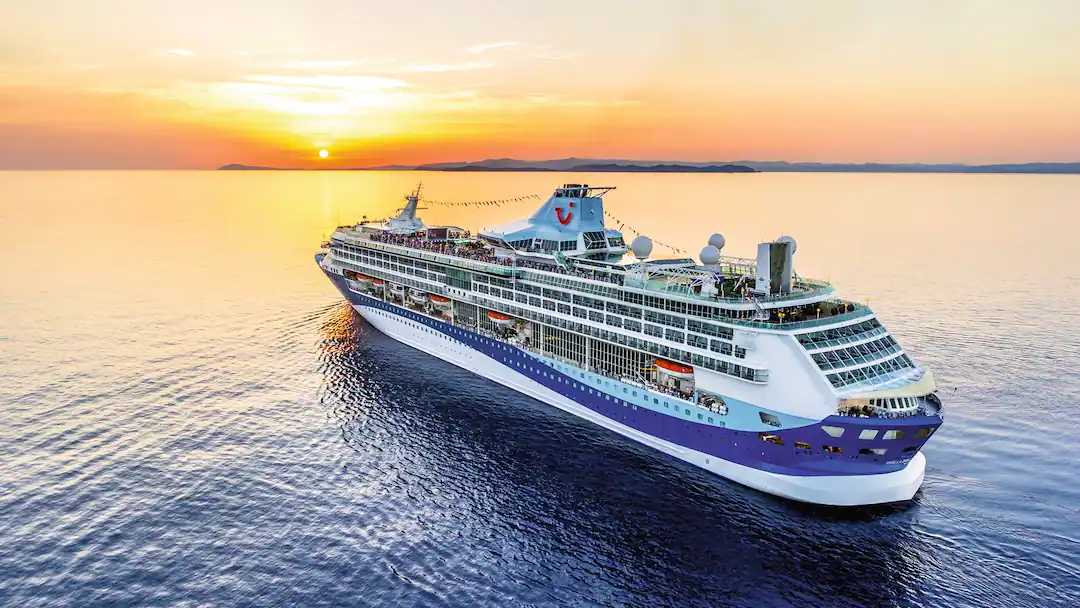
Marella is a TUI holiday product. Formerly Thomson Cruises, rebranded in 2017, Marella is the third-largest cruise line in the UK and exists within the TUI ecosystem. The defining proposition is total inclusion — the fare covers flights from 22 regional UK airports, all meals, selected drinks, entertainment, and gratuities. There is no bill at the end of the voyage. The fleet of five ships (Discovery, Discovery 2, Explorer, Explorer 2, and Voyager) are all older vessels acquired and refurbished rather than purpose-built, which keeps costs down and allows competitive pricing. The standout is Explorer 2, an adults-only vessel with a more refined onboard atmosphere. Destinations centre on the Mediterranean, Canary Islands, Caribbean, and North Africa, with itineraries typically running 7 to 14 nights. The onboard culture is unmistakably British — quiz nights, afternoon tea, West End-style shows, and a sociable, relaxed atmosphere.
MSC is a Mediterranean shipping dynasty turned global cruise powerhouse. Founded in Naples in 1987 and still privately held by the Aponte family, MSC has grown from a modest Italian operation into a 23-ship fleet with some of the largest vessels afloat. The World Class ships — MSC World Europa and MSC World America — exceed 200,000 gross tonnes and carry nearly 7,000 passengers across 22 decks divided into themed districts. The onboard atmosphere is distinctly European and cosmopolitan, with announcements in multiple languages and a guest mix drawn heavily from Italy, France, Germany, Spain, and the UK, alongside a growing American contingent. MSC’s secret weapon is the Yacht Club — a private ship-within-a-ship available on 15 vessels, offering suites, butler service, a dedicated restaurant, and an exclusive pool deck that delivers genuine luxury inside a mainstream hull.
For Australian travellers, this comparison is asymmetric. MSC sails globally and is accessible from Australian gateways. Marella is a UK domestic product that requires being in Britain to board. The comparison is most useful for Australians considering a cruise while visiting the UK, or for understanding where these brands sit in the broader market.
What is actually included
The inclusion models are fundamentally different, and this is where Marella’s proposition is genuinely distinctive — even if its relevance to Australians is limited.
Marella’s all-inclusive package is comprehensive for the price point. The fare covers return flights from 22 regional UK airports, full-board dining across all complimentary restaurants, selected alcoholic and non-alcoholic drinks throughout the day and evening, entertainment, kids’ clubs on family ships, and gratuities. There is no onboard account to settle at disembarkation. Upgrades to premium drinks packages are available for those wanting top-shelf spirits and premium wines. Shore excursions, spa treatments, and speciality dining at The Dining Club carry surcharges. The simplicity is the selling point — the total holiday cost is known at the point of booking, which is particularly attractive for budget-conscious British families.
MSC’s base fare covers accommodation and main dining room meals. Everything else is additional: drinks packages (the all-inclusive Easy package starts from approximately EUR 50 per person per day), Wi-Fi, speciality restaurants (Butcher’s Cut steakhouse, Kaito Teppanyaki and Sushi Bar, Hola Tacos and Cantina, and others at approximately EUR 30-50 per cover), and gratuities (approximately EUR 14 per person per day in the Mediterranean). MSC runs frequent promotional bundles — “Drinks + Wi-Fi” and “All Inclusive” packages appear regularly — but the base product is a la carte. The Yacht Club is the exception: fares include a premium drinks package, 24/7 butler service, a private restaurant with open-seating dining, an exclusive pool and sun deck, priority embarkation, and concierge services. Yacht Club delivers genuinely all-inclusive luxury at a premium above mainstream fares.
The net effect is clear. Marella wins on inclusion simplicity — everything bundled, nothing to add, no surprises. MSC wins on flexibility and scale — choose what you want to pay for, with the option to upgrade to Yacht Club for a transformative experience. For pure like-for-like value on a seven-night Mediterranean cruise, Marella’s all-inclusive fare from a UK airport often undercuts the total cost of an MSC booking with drinks package, gratuities, and flights purchased separately. But MSC’s range of price points — from budget interior cabins to Yacht Club suites — spans a far wider spectrum than Marella can offer.
Dining and culinary experience
The dining gap between these lines reflects both their scale and their target markets.
Marella’s dining is solid and unpretentious. The main dining rooms serve British-friendly menus — think prawn cocktail, roast dinners, and sticky toffee pudding alongside Mediterranean-influenced dishes. The 2025 launch of Piccadilly’s is the most significant recent addition — a complimentary 250-seat gastropub restaurant rolled out across the entire fleet, serving traditional British comfort food from early morning through evening. The Dining Club is a premium surcharge restaurant available on select ships offering a more refined multi-course experience. Buffet dining, poolside grills, and 24-hour room service round out the options. Everything in the main dining programme is included. The food is honest, well-prepared, and designed for British palates — it does not pretend to be haute cuisine, and it does not need to.
MSC’s dining reflects its Mediterranean heritage and mega-ship scale. Main dining rooms serve Italian-influenced cuisine — fresh pasta, risotto, and Mediterranean flavours are the strong suit. The buffet restaurants are vast, spanning multiple stations with global cuisine. Speciality dining is where MSC steps up: Butcher’s Cut steakhouse, Kaito for teppanyaki and sushi, Hola Tacos and Cantina for Mexican, and the Chef’s Garden Table for multi-course tasting menus. On World Class ships, the dining districts create themed precincts with their own restaurant clusters. The Yacht Club’s dedicated restaurant is the standout — open-seating fine dining with an Italian accent, served by dedicated staff in a private setting that rivals premium cruise lines. MSC’s dining programme has improved markedly in recent years, though the quality varies more across the fleet than Marella’s more consistent output.
For sheer variety, MSC wins decisively — 15 to 20 dining options on the newest ships versus Marella’s four to six. For included simplicity and straightforward British comfort food, Marella delivers what its market expects. The Yacht Club restaurant elevates MSC into territory Marella simply cannot reach.
Suites and accommodation
The accommodation comparison highlights the scale difference between a five-ship refurbished fleet and a 23-ship operation building some of the largest passenger vessels in history.
Marella’s staterooms reflect the fleet’s second-hand origins. Cabins are functional and well-maintained — TUI invests in regular refurbishment — but they are not spacious by modern standards. Inside cabins, ocean-view rooms, balcony staterooms, and suites are available across the fleet. The newest addition, Marella Voyager (formerly Mein Schiff Herz), offers the most contemporary accommodation in the fleet. Explorer 2’s adults-only environment means a quieter cabin experience without families in adjacent staterooms. Suites are available but modest compared to purpose-built ships — Marella’s top suites are functional rather than aspirational.
MSC’s accommodation spans the full spectrum. Interior cabins on older Lirica-class ships can feel compact, but the newest World Class vessels offer modern, well-designed staterooms with balconies and panoramic ocean views. The real differentiator is the Yacht Club suite tier — spacious suites with premium furnishings, marble bathrooms, walk-in wardrobes, and private balconies, all serviced by dedicated butlers. The Royal Suite on MSC World Europa features a private whirlpool, separate living and dining areas, and panoramic floor-to-ceiling windows. MSC also offers family-focused cabins with interconnecting rooms, which Marella provides on its family ships but at a smaller scale. The breadth of cabin categories — from budget interiors to Yacht Club Royal Suites — gives MSC a range that Marella’s five-ship fleet cannot match.
Pricing and value
Pricing comparisons between Marella and MSC require acknowledging that these products serve different markets and are booked through different channels.
Marella’s pricing is transparent and inclusive. A seven-night Mediterranean cruise including flights from a UK regional airport, all meals, selected drinks, and gratuities starts from approximately GBP 800 to 1,200 per person — roughly AUD 1,600 to 2,400. The all-inclusive model means the advertised price is close to the final cost. For budget-conscious British travellers, this represents outstanding value. The catch for Australians is that you must first get to the UK, adding AUD 2,000 to 4,000 in international flights before the cruise fare begins.
MSC’s pricing is competitive at the base level but expands with add-ons. A seven-night Mediterranean cruise in an interior cabin starts from approximately EUR 500 to 800 per person — roughly AUD 850 to 1,350 — before flights, drinks, excursions, and gratuities. Adding a drinks package, Wi-Fi, and gratuities pushes the total to approximately AUD 1,400 to 2,200 per person. MSC’s Yacht Club fares run approximately AUD 3,000 to 6,000 per person for a seven-night Mediterranean sailing — materially higher, but the inclusion of butler service, private dining, premium drinks, and exclusive facilities delivers a fundamentally different product. MSC frequently runs aggressive promotional pricing, particularly for Mediterranean sailings from Barcelona, Genoa, and Marseille.
For Australians, MSC offers better practical value because the line sails from ports accessible via standard international flights from Australian gateways. Marella’s value proposition is compelling only if you are already in the UK.
Spa and wellness
Marella’s spa facilities are modest but adequate for the fleet’s size and price point. Each ship offers a spa with treatment rooms, sauna, and fitness centre. The adults-only Explorer 2 provides a more tranquil spa environment without the competing energy of family areas. Treatments include standard massage, facial, and beauty services. The fitness centres carry cardio equipment and free weights — functional rather than aspirational spaces. The spa is not a headline attraction — it is a competent addition to a budget-friendly all-inclusive product.
MSC’s spa offering scales with its ships. The Aurea Spa on newer vessels features thermal suites with steam rooms, saunas, and thalassotherapy pools. On World Class ships, the spa complexes are genuinely impressive — multi-level facilities rivalling dedicated wellness resorts. MSC Aurea Experience passengers receive spa access, priority dining, and a premium cabin location as part of a mid-tier upgrade. The Yacht Club provides a more exclusive wellness environment with dedicated facilities. Beyond the spa, MSC’s newest ships offer extensive pool complexes — multiple pools across different deck areas, dedicated children’s aqua zones, and adults-preferred sun decks. For travellers who value spa and wellness as a core part of the cruise experience, MSC’s newest ships deliver at a level Marella’s fleet cannot approach.
The practical distinction for Australian travellers is straightforward. If spa and wellness facilities are a priority, MSC’s Meraviglia and World Class ships offer genuine resort-quality spaces. If the spa is a nice-to-have rather than a deciding factor, Marella’s modest facilities will suffice for an occasional treatment without adding to the overall cost.
Entertainment and enrichment
Marella’s entertainment is tailored for British audiences. West End-style theatre shows, live bands, comedians, quiz nights, and tribute acts fill the evening programme. The atmosphere is sociable and informal — more holiday camp than cultural enrichment, and that is precisely what the audience wants. Explorer 2’s adults-only environment allows for more sophisticated evening programming without competing with family entertainment schedules — cocktail-making classes, comedy nights, and acoustic sessions replace the family-friendly shows on Discovery ships. The Piccadilly’s gastropub addition gives the fleet a casual social venue that doubles as dining and entertainment space throughout the day and evening.
MSC’s entertainment is big-ship spectacular. Cirque du Soleil at Sea performs exclusively on MSC Meraviglia and Bellissima — a genuine headline act unavailable on any other cruise line. Broadway-style shows, LED dance floors, aquaparks with elaborate water slides, Formula 1 simulators, bowling alleys, and full casinos fill the programming. On World Class ships, the entertainment districts create distinct zones — family-focused areas, adult nightlife, and quiet lounges coexist on the same vessel. The Galleria promenade on Meraviglia-class ships, with its LED sky ceiling displaying changing imagery throughout the day, is an entertainment experience in itself. MSC’s European entertainment aesthetic is different from American lines — more Mediterranean flair, less scripted enthusiasm — which appeals to some travellers and puzzles others expecting US-style cruise direction.
The entertainment gap is significant. MSC’s newest ships offer a breadth and scale of onboard activity that Marella’s mid-size fleet cannot approach. But for travellers who find mega-ship entertainment overwhelming and prefer a low-key British social atmosphere, Marella’s more modest programme is a deliberate choice rather than a limitation.
Fleet and destination coverage
The fleet comparison reveals the starkest difference in this pairing.
Marella operates five ships ranging from 1,800 to 2,200 guests. All are refurbished older vessels — none are purpose-built for the brand. The fleet covers the Mediterranean, Canary Islands, Caribbean, and North Africa, departing exclusively from UK airports. Marella Voyager (joined 2023) is the newest addition, formerly Mein Schiff Herz from TUI’s German cruise brand. The fleet is adequate for its market but limited in ambition — these ships will not win design awards, and destinations are restricted to routes accessible from UK departure points.
MSC operates 23 ships across five generations of ship classes, with the newest World Class vessels among the largest passenger ships ever constructed. The fleet sails the Mediterranean, Caribbean, Northern Europe, Middle East, South America, Asia, and beyond. MSC’s Mediterranean home-turf advantage means excellent port knowledge and convenient embarkation from Barcelona, Genoa, and Marseille. The line is building aggressively — multiple new ships are on order, and MSC is expanding its American presence with World America based in Miami. For destination variety and fleet modernity, MSC operates in a different league entirely.
Where each line excels
Marella excels in:
- All-inclusive simplicity. Flights from 22 UK airports, meals, selected drinks, entertainment, and gratuities bundled into a single transparent price with no onboard account to settle. The advertised fare is the holiday cost.
- Adults-only cruising. Explorer 2 is a genuinely adults-only ship — no children aboard — with The Dining Club, cocktail bars, and a refined atmosphere. This is a rare proposition in budget mainstream cruising.
- Piccadilly’s gastropub. The 2025 fleet-wide launch of a 250-seat British gastropub adds a distinctive dining and social venue to every ship.
- TUI financial protection. The TUI booking ecosystem provides ATOL protection, single-package convenience, and the ability to bundle flights, transfers, and pre-cruise hotels.
MSC excels in:
- Scale and fleet modernity. Twenty-three ships sailing globally, with World Class vessels among the largest and most technically advanced passenger ships ever built. Multiple new ships on order ensure continued fleet renewal.
- The Yacht Club. A ship-within-a-ship luxury enclave on 15 vessels — butler service, private restaurant, exclusive pool deck, and concierge — at a fraction of ultra-luxury line pricing. Marella has no equivalent tier.
- Family facilities. Dedicated kids’ zones, aquaparks, teen spaces, and interconnecting family cabins make MSC one of the strongest mainstream family cruise lines in Europe.
- Mediterranean expertise. The Aponte family’s Neapolitan roots and MSC’s home-turf advantage deliver excellent Mediterranean port knowledge and convenient embarkation from Barcelona, Genoa, and Marseille.
Standout itineraries for Australian travellers
Marella
Marella Explorer 2: Western Mediterranean (7 nights, adults-only, from UK airport). The strongest Marella recommendation for Australian couples visiting Britain. All-inclusive from a regional British airport — flights, meals, drinks, and gratuities included. The adults-only atmosphere, The Dining Club, and cocktail bars create a refined experience in a manageable ship size. Ports typically include Palma, Barcelona, Marseille, and Italian coastal towns.
Marella Explorer 2: Canary Islands (7 nights, adults-only, from UK airport). A warm-weather winter option departing UK airports for Tenerife, Lanzarote, Gran Canaria, and Fuerteventura. The year-round sunshine and shorter flight times from the UK make this programme particularly popular with British guests. For Australians visiting the UK during the European winter months, the Canary Islands programme avoids the cold weather of Northern European itineraries.
MSC
MSC Meraviglia or Grandiosa: Western Mediterranean (7 nights, from Barcelona or Genoa). Accessible from Australian gateways via one-stop connections through Singapore, Dubai, or Doha. The Meraviglia-class ships deliver the best balance of modern MSC design and manageable scale. The Yacht Club on these ships is particularly well-executed — an intimate private enclave within a 5,700-guest vessel.
MSC World Europa: Dubai and Arabian Gulf (7 nights, from Dubai). MSC’s flagship World Class vessel sailing the Gulf — accessible from Australian east coast cities via direct flights to Dubai on Emirates or Qantas. The proximity of Dubai to Australian gateways makes this one of the most accessible MSC itineraries. The ship’s district-based design, 22 decks, and themed neighbourhoods are best experienced on a short sailing that maximises onboard time.
MSC Yacht Club: Eastern Mediterranean (7 nights, from Piraeus or Genoa). The Yacht Club in the Greek islands delivers a luxury experience — butler service, private restaurant, exclusive pool deck — at a fraction of the cost of a dedicated luxury line sailing the same waters. Fly to Athens from Australian gateways via Singapore or the Middle East.
Ship-by-ship recommendations
Marella Explorer 2 is the standout recommendation — the adults-only ship with The Dining Club, cocktail bars, and a more refined atmosphere. For couples considering Marella, this is the only ship worth prioritising. Marella Voyager is the newest hull in the fleet and offers the most contemporary public spaces. Avoid the Discovery ships if you are accustomed to modern cruise hardware — they are the oldest in the fleet and show their age despite refurbishment.
For MSC, the Meraviglia-class ships (Meraviglia, Bellissima, Grandiosa, Virtuosa) offer the best balance of modern design and manageable scale at approximately 5,700 guests. MSC World Europa and MSC World America are the flagships — 22-deck, district-based mega-ships for travellers who want the biggest possible experience. The Yacht Club on any vessel with the concept is the insider recommendation — particularly on Meraviglia-class ships where the private enclave feels most intimate relative to the ship’s overall size. Avoid the older Lirica-class vessels for a first MSC experience — they are significantly smaller and dated.
For Australian travellers specifically
This is where the comparison becomes straightforward. Marella has essentially no Australian relevance as a primary cruise product. The line flies guests from UK airports, books through TUI UK, and does not price in AUD. There is no Australian sales representation, no local website, and no ships deployed outside European and Caribbean waters accessible from Britain. There is no loyalty programme that crosses into other brands. The only scenario where Marella makes sense for Australians is as an add-on cruise during a UK visit — book a week on Explorer 2 from a regional airport, enjoy the all-inclusive value, and treat it as part of a broader British holiday. For that specific use case, the value is genuinely strong.
MSC is globally accessible and increasingly relevant to Australian travellers. The line sails from Mediterranean ports reachable via one-stop connections from Sydney, Melbourne, and Brisbane. Caribbean sailings connect through the US. The Dubai and Arabian Gulf programme is particularly accessible from Australia via direct Emirates or Qantas flights to Dubai. MSC’s pricing is competitive, and the Yacht Club provides a luxury upgrade path unavailable on Marella — butler service, private dining, and an exclusive pool deck at a fraction of dedicated luxury line pricing. The European guest mix and Mediterranean cultural atmosphere appeal to Australian travellers who enjoy a Continental flavour rather than an American one. MSC’s Voyagers Club loyalty programme offers benefits from Classic through Diamond tier, with escalating discounts and onboard credits for repeat guests. The continued fleet expansion and destination growth make MSC a line worth watching for Australians planning future cruises.
The onboard atmosphere
Marella’s atmosphere is British holiday at sea. The guest mix is overwhelmingly from the United Kingdom. Entertainment, dining, and social culture are tailored to British tastes — quiz nights, roast dinners, tribute bands, and a relaxed, sociable energy. Explorer 2’s adults-only policy creates a noticeably more refined atmosphere, while the Discovery ships carry a lively family holiday vibe. The dress code is smart casual throughout, with no formal nights. The atmosphere is warm, unpretentious, and familiar for British guests — and potentially alienating for international travellers who do not share the cultural reference points.
MSC’s atmosphere is European and cosmopolitan. Announcements in multiple languages, a guest mix spanning Italy, France, Germany, Spain, the UK, and increasingly the Americas, and a Mediterranean design aesthetic with Swarovski crystal staircases and marble lobbies. The service style is European rather than American — more relaxed, less scripted, with Italian warmth rather than choreographed enthusiasm. The Yacht Club creates a private, refined bubble within the broader mega-ship energy. For Australian travellers accustomed to the informality of P&O or Royal Caribbean, MSC’s European flavour offers a refreshing change of pace.
The bottom line
Marella and MSC serve different markets with different products at different scales. Marella is the best-value all-inclusive cruise in Britain — flights, drinks, meals, and tips baked in, with the adults-only Explorer 2 as a genuine highlight for couples. MSC is a global mega-ship operator with Mediterranean soul, aggressive fleet expansion, and the Yacht Club luxury tier as its standout proposition.
For Australian travellers, MSC is the practical choice. It sails globally, offers accessible embarkation ports from Australian gateways, and provides a range of products from budget interiors to butler-serviced Yacht Club suites. The Yacht Club in particular deserves attention — it delivers a luxury experience that rivals dedicated luxury lines at a meaningful saving, and it is available across 15 ships sailing every major region.
Marella is worth considering only as an add-on to a UK holiday — a week on Explorer 2 from a regional British airport is a genuinely affordable and enjoyable way to cruise the Mediterranean or Canary Islands while visiting Britain. But as a primary cruise holiday booked from Australia, Marella’s UK-centric model makes it impractical compared to the global reach of MSC or any other mainstream line sailing from internationally accessible ports.