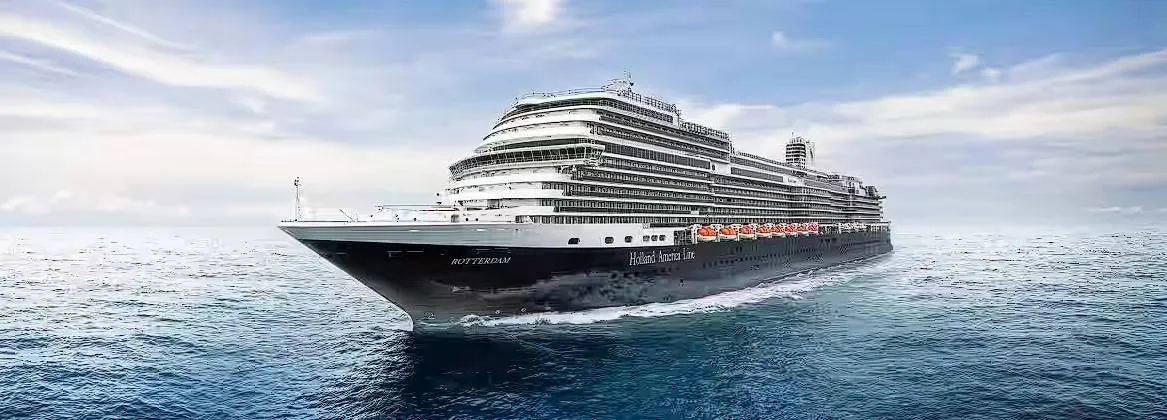
Holland America Line and Saga Ocean Cruises both attract mature, refined travellers who value enrichment over entertainment and conversation over casinos — but they operate in fundamentally different markets with different geographic reach, different inclusion models, and different demographics. Jake Hower compares these two lines for Australian travellers weighing quality cruise options.
| Holland America Line | Saga Ocean Cruises | |
|---|---|---|
| Category | Premium | Premium |
| Rating | ★★★★☆ | ★★★★☆ |
| Fleet size | 11 ships | 2 ships |
| Ship size | Mid-size (1,000-2,500) | Small (under 1,000) |
| Destinations | Caribbean, Alaska, Northern Europe, Mediterranean | Mediterranean, Norwegian Fjords, Caribbean, Canary Islands |
| Dress code | Smart casual | Smart casual |
| Best for | Classic cruise enthusiasts and mature travellers | Over-50s British cruise travellers |
Holland America Line is the stronger recommendation for Australian travellers. It deploys globally with 11 ships, has a genuine presence in the Australian booking ecosystem, sails Alaska and world cruises that Australian agencies sell actively, and offers one of the best live music programmes at sea. Saga Ocean Cruises is a superb niche product for British travellers aged 50 and over — the all-inclusive package from 2026 with chauffeur service, included excursions, drinks, and dining is genuinely hard to beat in the premium segment. But Saga sails exclusively from UK ports, restricts bookings to the over-50s, and has no Australian deployment. For Australians already planning a UK trip who meet the age requirement, Saga is worth serious consideration. For everyone else, Holland America offers more itinerary choice, stronger Australian relevance, and a similar demographic in a globally accessible package.
The core difference
Holland America Line and Saga Ocean Cruises share more DNA than most lines in this comparison series. Both attract mature, culturally curious travellers. Both favour enrichment over spectacle. Both maintain a smart casual atmosphere without the forced fun of mainstream lines. Both appeal to couples and solo travellers who value conversation, destination immersion, and a civilised pace. If you drew a Venn diagram of their ideal passengers, the overlap would be substantial.
Yet the two lines operate in fundamentally different markets. Holland America is a global premium line within the Carnival Corporation portfolio, operating 11 ships from 61,849 to 99,500 gross tonnes, carrying 1,432 to 2,668 guests across every major ocean. The fleet includes the Pinnacle-class Rotterdam (2021) and Nieuw Statendam (2018) as flagships, the mid-size R-class ships for longer itineraries, and specialist deployments including extensive Alaska and world cruise programmes. Holland America traces its heritage to 1873, originally as a transatlantic passenger and cargo service between the Netherlands and North America. The Music Walk — featuring BB King’s Blues Club, Billboard Onboard, Lincoln Center Stage, and Rolling Stone Rock Room — is the most comprehensive live music programme at sea. The EXC (Explorations Central) enrichment programme provides destination lectures, BBC Earth programming, and cooking demonstrations. The passenger base is predominantly American, with a strong contingent of international travellers including Australians.
Saga Ocean Cruises is a British boutique line operating two purpose-built ships — Spirit of Discovery (2019) and Spirit of Adventure (2021) — exclusively for travellers aged 50 and over. At 58,250 gross tonnes carrying approximately 1,000 guests each, these ships are intimate and modern. Every cabin has a private balcony. Roughly 20 per cent of cabins are dedicated to solo travellers with no single supplement. Saga sails from UK ports to the Mediterranean, Norwegian Fjords, Canary Islands, and the Caribbean. The all-inclusive package from 2026 covers all dining, house drinks, Wi-Fi, gratuities, shore excursions at every port, and chauffeur service from your front door to the ship.
The distinction is not quality — both deliver excellent products for their audiences. It is geographic reach, fleet scale, and market definition. Holland America serves the world. Saga serves British over-50s from UK ports. For Australian travellers, this accessibility gap is the defining factor.
What is actually included
The inclusions comparison is where Saga’s proposition becomes genuinely compelling — and where the gulf between these two lines’ value models is most visible.
Saga includes in every fare from 2026: all dining venues without surcharges; house wines, beers, and spirits; 24-hour room service; Wi-Fi; gratuities; a shore excursion at every port; and chauffeur service from home to the ship and back. This is one of the most comprehensive all-inclusive packages in the premium segment.
Saga does not include: premium wines and champagnes beyond the house selection; spa treatments; premium excursion upgrades; and flights for non-UK-based travellers.
Holland America’s standard fare includes: main dining room meals, Lido Market buffet, room service, basic entertainment, pool and fitness centre access, and some enrichment programming.
Holland America’s Have It All fare adds: a beverage package (shore excursion credit, speciality dining credit, and Wi-Fi) at a bundled premium over the base fare. This is a meaningful step toward all-inclusive, but it still requires careful arithmetic. Gratuities of approximately US$16.50 per person per day are charged separately. Shore excursions beyond the credit amount require additional payment. Speciality dining credits cover one or two visits but not unlimited access.
Holland America does not include in any standard fare: alcoholic drinks (without the Have It All upgrade); speciality dining at venues such as Pinnacle Grill, Tamarind, Nami Sushi, and Rudi’s Sel de Mer; Wi-Fi; most shore excursions; spa access; and gratuities.
The practical difference is substantial. A couple sailing Saga receives everything in the headline fare. A couple sailing Holland America on the standard fare will accumulate a meaningful onboard bill across drinks, speciality dining, Wi-Fi, and excursions. The Have It All package narrows the gap but does not close it — Saga’s inclusion of unlimited drinks, unlimited dining, and a shore excursion at every port goes further than Holland America’s credit-based bundling.
Dining and culinary experience
Both lines serve quality cuisine aimed at a mature palate, but the scope and pricing model differ.
Saga’s dining is entirely included. Spirit of Adventure features Khukuri House — the world’s first Nepalese restaurant at sea — alongside Amalfi Italian fine dining and the Supper Club live entertainment dining venue. Spirit of Discovery offers La Vie en Rose at The Club with Phil Vickery menus, East to West fusion, and Coast to Coast seafood. Both ships have a main dining room with open seating, buffet venue, 24-hour room service, and afternoon tea. Every restaurant, every evening, is included without surcharges. The cuisine is well-prepared, ingredient-focused British and international cooking that punches above its weight for a two-ship fleet.
Holland America’s dining programme is anchored by the Pinnacle Grill and the Music Walk venues. The main dining room offers a five-course dinner nightly with open seating available on most ships. The Lido Market buffet is included. Beyond these, speciality venues carry surcharges: Pinnacle Grill steakhouse (approximately US$39); Tamarind Southeast Asian (approximately US$29); Nami Sushi (approximately US$29); Rudi’s Sel de Mer French brasserie (approximately US$49); and Canaletto Italian (approximately US$15). The Culinary Arts Centre on select ships hosts live cooking demonstrations and cooking classes. Club Orange — a premium mid-ship cabin category — includes priority main dining room seating with an expanded breakfast menu and a dedicated restaurant on Pinnacle-class ships.
Holland America offers more dining variety across a larger fleet with more venues per ship. Saga offers fewer venues but includes everything. A couple on a 7-night Holland America cruise who dines at Pinnacle Grill and Tamarind will add approximately US$140-$170 before gratuities. On Saga, every restaurant is included every night. For travellers who want the certainty of no onboard dining charges, Saga. For travellers who enjoy a broader range of cuisines and do not mind selective surcharges, Holland America.
Suites and accommodation
The accommodation comparison reflects the broader difference between a global fleet with varied cabin categories and a boutique line with a single quality tier.
Holland America’s cabin range spans 11 ships. Inside cabins start from approximately 150-185 square feet. Oceanview cabins offer similar dimensions with a window. Verandah cabins run approximately 197-260 square feet including balcony — the line’s most popular category. Signature Suites (400-500 square feet) and Penthouse Suites (500-700 square feet) add separate living areas and enhanced amenities. Neptune Suites — the top category at approximately 500-1,000 square feet — include concierge-level service, the exclusive Neptune Lounge, priority embarkation, and complimentary laundry. The newest Pinnacle-class ships offer the most modern cabin design, while older R-class ships show their age despite refurbishment.
Saga’s cabin range is narrower but every cabin has a private balcony. Standard balcony cabins start at approximately 215 square feet plus balcony. Superior and deluxe categories offer progressively larger spaces. Suites provide separate living areas and premium finishes. The critical differentiator is Saga’s solo cabin inventory: over 100 dedicated sole-occupancy rooms per ship — roughly 20 per cent of capacity — available with no single supplement. Holland America offers a limited number of single-occupancy cabins on Nieuw Statendam and Rotterdam, but the inventory is a fraction of Saga’s.
Holland America provides wider cabin variety from budget interiors to premium Neptune Suites. Saga provides consistency — every guest gets a balcony and the full all-inclusive package regardless of cabin choice. For solo travellers, Saga’s purpose-built single cabins at no supplement represent the industry’s strongest proposition.
Pricing and value
The pricing comparison requires context about what each fare includes and the total holiday cost for Australian travellers.
Saga’s directional pricing for a 7-night Mediterranean cruise (standard balcony, per person): approximately GBP 200-$350 per night depending on season. This includes the balcony cabin, all dining, house drinks, Wi-Fi, gratuities, a shore excursion at every port, and chauffeur transfers from home.
Holland America’s directional pricing for a 7-night Mediterranean cruise (verandah cabin, per person): approximately US$180-$350 per night for the base fare. Add the Have It All package at approximately US$75-$100 per day. Add gratuities at US$16.50 per day. The total for a verandah cabin with bundled extras runs approximately US$275-$475 per night — though this still includes fewer items than Saga’s fare.
When genuinely like-for-like inclusions are compared, Saga often represents stronger value per pound. However, Holland America’s flexibility — the ability to book a budget interior cabin and skip the extras — provides an entry point that Saga cannot match. And for Australian travellers, the equation shifts dramatically. Holland America’s global deployment means no flights to the UK are required for many itineraries. Saga requires AU$2,000-$4,000 per person in airfares to reach Southampton or Dover before the cruise begins.
Holland America also offers periodic promotional pricing that can substantially improve value — early booking bonuses, onboard credit promotions, and have-it-all upgrade deals are common. Saga’s pricing is more stable but less prone to deep discounting.
Spa and wellness
Both lines offer spa facilities proportionate to their ship sizes, though neither makes wellness a headline feature.
Holland America’s Greenhouse Spa & Salon operates across the fleet with treatment rooms, a thermal suite, and a fitness centre. The thermal suite — featuring a hydrotherapy pool, heated ceramic loungers, and a steam room — requires a day pass or multi-day package. Treatments include massage, facial, and body therapies. The fitness centre and most group exercise classes are complimentary.
Saga’s spa is intimate and well-maintained, with treatment rooms, salon, fitness centre, and thermal facilities aboard both ships. Fitness classes are complimentary. The smaller ship size means spa facilities are proportionally more accessible — waiting lists are rare, and the atmosphere is calmer.
Neither line positions wellness as a core differentiator in the way Viking or Celebrity does. Both offer competent, pleasant spa experiences without the elaborate thermal suites or snow grottos found on other premium lines. For dedicated spa travellers, neither line is the primary recommendation. For travellers who simply want a massage on a sea day and access to a sauna, both deliver adequately.
Entertainment and enrichment
This is where the two lines diverge most visibly, and where Holland America holds a genuinely distinctive advantage.
Holland America’s Music Walk is the standout. BB King’s Blues Club features a live eight-piece band playing Memphis blues, soul, and R&B — it is consistently rated as one of the finest live music venues at sea. Billboard Onboard brings chart-topping hits performed by a live band and duelling pianists. Lincoln Center Stage presents classical music performances in partnership with New York’s Lincoln Center. Rolling Stone Rock Room, the newest addition, delivers rock and roll with a live band. These are not background musicians — they are dedicated performance venues with purpose-built spaces, quality sound systems, and genuine musical talent. The EXC enrichment programme adds destination lectures, BBC Earth documentaries, and Culinary Arts demonstrations. The Mainstage theatre presents production shows. And Holland America operates a casino on every ship.
Saga’s entertainment is intimate and culturally focused. The main theatre hosts cabaret, musical performances, comedy, and guest speakers. Enrichment lectures cover history, wildlife, culture, and destination-specific topics. Over 1,000 pieces of original artwork per ship — almost all by British artists — create a gallery-like quality, with art tours led by an onboard curator. The Supper Club on Spirit of Adventure combines dining with live entertainment. There is no casino, no dedicated music venues on the scale of Music Walk, and no production show programme comparable to Holland America’s Mainstage.
For music lovers — and I find many mature travellers are precisely that — Holland America’s Music Walk is a genuine deciding factor. Nothing in Saga’s programme matches the quality and variety of BB King’s, Billboard, Lincoln Center Stage, and Rolling Stone. For travellers who value quiet conversation, cultural lectures, and an intimate social atmosphere over live performances, Saga’s programme is well suited. The entertainment choice is perhaps the clearest differentiator between these two lines for their shared demographic.
Fleet and destination coverage
The fleet comparison reveals different strategies in scale and deployment.
Holland America operates 11 ships across three primary classes. The two Pinnacle-class flagships — Rotterdam (2021) and Nieuw Statendam (2018) — are the newest at 99,500 gross tonnes carrying 2,668 guests. The Vista-class ships offer mid-fleet quality. The smaller R-class ships — including Volendam and Zaandam — carry approximately 1,432 guests and are specialist vessels for longer itineraries and world cruises. Holland America sails globally: the Mediterranean, Northern Europe, Alaska (the line’s strongest seasonal programme), Caribbean, Asia, Australia/New Zealand (on world cruise sectors), South America, Hawaii, and Transatlantic. The line operates annual grand world voyages of 100-plus days.
Saga operates two ships from UK ports — primarily Southampton, Dover, and Portsmouth — to the Mediterranean, Norwegian Fjords, Canary Islands, Caribbean, British Isles, and Iceland. Both ships are modern purpose-built vessels (2019 and 2021) but the fleet provides limited itinerary diversity compared to Holland America’s 11-ship global deployment.
For Australian travellers, Holland America’s Alaska programme is particularly relevant — it is widely sold through Australian travel agencies and pairs well with a North American holiday. World cruise sectors that transit through Australian or New Zealand waters provide another touchpoint. Saga has no programmatic Australian relevance beyond the possibility of a future world cruise port call.
Where each line excels
Holland America excels in:
- Live music programme. The Music Walk — BB King’s, Billboard, Lincoln Center Stage, Rolling Stone — is the finest live music offering at sea. No other line matches this breadth and quality of live musical performance.
- Alaska specialism. Holland America has sailed Alaska since 1947 and operates the most comprehensive Alaska programme in the premium segment, with shore excursions developed over decades.
- Global deployment and itinerary depth. Eleven ships sailing every major ocean provide itinerary choice that Saga’s two UK-based ships cannot approach.
- World cruises. Annual grand voyages of 100-plus days, many transiting through Australian waters, offer sector booking opportunities for Australian travellers.
- Cabin variety and entry pricing. Interior cabins provide a genuinely lower entry point for budget-conscious travellers. Neptune Suites offer a premium tier with lounge access and enhanced service.
- Casino access. A full casino on every ship for travellers who enjoy gaming.
Saga excels in:
- All-inclusive comprehensiveness. From 2026, every fare includes all dining, house drinks, Wi-Fi, gratuities, shore excursions, and chauffeur transfers. No other premium line matches this scope.
- Solo traveller infrastructure. Over 100 dedicated sole-occupancy cabins per ship at no single supplement — the strongest solo proposition in the cruise industry.
- Demographic consistency. The 50-plus-only policy guarantees a mature, like-minded passenger base. Holland America attracts a similar demographic on average, but without a formal age restriction.
- Chauffeur service. Door-to-door transfers from anywhere in mainland Britain eliminate logistics for UK-based travellers.
- Intimate ship size. At approximately 1,000 guests versus Holland America’s 1,432-2,668, Saga’s ships are notably quieter and more personal.
- Modern purpose-built ships. Both Saga ships were launched in 2019 and 2021. Some Holland America ships date to the late 1990s and early 2000s.
Standout itineraries for Australian travellers
Holland America
7-Night Alaska Inside Passage (multiple departures, roundtrip Seattle or Vancouver). Holland America’s flagship seasonal programme — Glacier Bay, Juneau, Ketchikan, and Skagway with decades of developed shore excursion partnerships. The line’s Alaska heritage dates to 1947. Widely sold by Australian travel agencies and pairs well with a Pacific Northwest holiday.
Grand World Voyage (approximately 120 days, annual departure, typically on Volendam or Zaandam). A full circumnavigation touching six continents with sector booking available. Australian travellers can join or depart at Australian ports when the ship transits through Oceania.
14-Night Mediterranean (roundtrip from Barcelona, Rome, or Venice). Classical Mediterranean itineraries with the EXC enrichment programme providing cultural depth at every port. The Music Walk venues provide evening entertainment that rivals any shoreside jazz club.
Northern Europe and Baltic (10-14 nights, roundtrip Amsterdam or Copenhagen). Viking heritage ports, Baltic capitals, and Norwegian Fjords with Holland America’s enrichment programme adding context to each destination.
Saga
14-Night Mediterranean Treasures (Spirit of Discovery, ex-Southampton). All dining, drinks, excursions, and chauffeur service included. For Australian travellers in the UK, this is outstanding all-inclusive value.
7-Night Norwegian Fjords (Spirit of Adventure, ex-Dover or Southampton). An intimate 1,000-guest ship through spectacular scenery with included excursions at every port. A straightforward, fully packaged experience.
Extended Caribbean Voyage (Spirit of Discovery, winter departures, 28-35 nights). A no-fly sailing from the UK to the Caribbean and back with the full all-inclusive package. Remarkable value for the duration.
Ship-by-ship recommendations
Holland America
Rotterdam — The flagship and newest ship (2021). The most modern public spaces, the best Music Walk integration, and the Pinnacle-class design at its most refined. If comparing Holland America to Saga, sail Rotterdam for a fair representation of the line’s current product.
Nieuw Statendam — Sister ship to Rotterdam with virtually identical facilities and cabin layouts. Choose between the two based on itinerary and timing rather than ship preference.
Volendam or Zaandam — The R-class ships used for longer itineraries and world cruises. Smaller at approximately 1,432 guests, they offer a more intimate experience closer to Saga’s ship size, though the hardware is older. Best for world cruise sectors that transit through Australian waters.
Saga
Spirit of Adventure — The newer ship (2021) with Khukuri House Nepalese restaurant and the Supper Club dining-entertainment venue. Slightly more adventurous dining programme than Spirit of Discovery.
Spirit of Discovery — The original (2019) with La Vie en Rose featuring Phil Vickery menus. Tends to operate the more popular Mediterranean and Norwegian Fjords routes. Choose based on itinerary rather than ship.
For Australian travellers specifically
The Australian relevance of these two lines differs significantly, with Holland America holding the clear advantage in accessibility.
Holland America has a meaningful, if indirect, Australian presence. The line does not homeport ships in Australia on a seasonal basis, but world cruise sectors transit through Australian and New Zealand waters annually. Holland America cruises are widely sold through Australian travel agencies and are listed on major Australian booking platforms. The Alaska programme is one of the most popular cruise products sold to Australian consumers, and Holland America’s heritage and expertise in that region are well recognised. Pricing is typically in USD, requiring currency conversion, but the booking infrastructure is well-established. Holland America’s demographic — predominantly 55-plus, travel-experienced, culturally curious — aligns closely with the Australian premium cruise market.
Saga has no Australian presence. There is no Australian deployment, no Australian website, no AUD pricing, and no promotional programme targeting Australian travellers. All sailings depart from UK ports. Australian travellers must fly to the United Kingdom and must be aged 50 or over. The chauffeur service — Saga’s signature inclusion — will collect you from a UK address but offers no equivalent for international arrivals beyond London hotels.
For Australian travellers considering these two lines, the practical choice is clear. Holland America is globally accessible with itineraries available from multiple continents. Saga requires a specific set of circumstances — being over 50, planning a UK trip, and wanting to add a cruise from a UK port. If those circumstances align, Saga’s all-inclusive package is genuinely excellent value. If they do not, Holland America is the more practical and flexible option.
The onboard atmosphere
The atmospheric similarities between these two lines are greater than with most comparisons on this site — both attract mature, refined passengers who value conversation and culture. But meaningful differences remain.
Holland America’s atmosphere is understated, musical, and cosmopolitan. The ships feel more classic ocean liner than floating resort — dark wood, art deco flourishes, and a traditional sense of occasion. The Music Walk creates genuine energy in the evenings — BB King’s Blues Club fills with passengers dancing, Billboard draws sing-along crowds, and Lincoln Center Stage offers quiet classical performances. The casino adds late-night activity. The passenger base is international, predominantly American, with a well-travelled character. The Crow’s Nest observation lounge is a favourite gathering spot. The pace is unhurried without being sleepy. Holland America occupies a distinctive middle ground — more refined than mainstream lines, more lively than ultra-premium ones.
Saga’s atmosphere is warm, communal, and distinctly British. The 50-plus-only policy and UK departure ports create a homogeneous passenger base that shares cultural references, humour, and social expectations. People talk to each other at dinner. Solo travellers are genuinely welcomed into the social fabric. Over 1,000 pieces of original artwork per ship create a cultural environment. The crew know guests by name. The atmosphere is more country house than cruise ship. There is no casino noise, no children’s activities, and the evening entertainment winds down earlier than on Holland America. Saga reportedly holds the highest repeat passenger rate in the cruise industry — and the community feel is a significant reason.
For Australian travellers, the cultural difference is worth noting. Holland America’s international passenger base means Australians will feel at home alongside Americans, Canadians, and Europeans. Saga’s almost exclusively British passenger base creates a specifically British social dynamic that some Australians find charming and others find culturally intense. Neither is objectively better — it depends on whether you want a cosmopolitan crowd or a homogeneous community.
The bottom line
Holland America Line and Saga Ocean Cruises attract similar travellers with similar values but serve them through fundamentally different models. Holland America offers global reach, live music excellence, itinerary depth, and flexible pricing across 11 ships. Saga offers comprehensive all-inclusive value, intimate ships, dedicated solo cabins, and a curated community atmosphere on two purpose-built vessels.
Choose Holland America if you want a globally deployed premium line with the finest live music programme at sea. Choose it for Alaska, world cruise sectors, and Mediterranean itineraries accessible from multiple continents. Choose it for the flexibility of interior cabins to Neptune Suites, for the casino, and for an international passenger base. Accept that drinks, speciality dining, and excursions cost extra on the standard fare, that some ships in the fleet are ageing, and that the line has no formal age restriction guaranteeing a mature demographic.
Choose Saga if you are a traveller aged 50 or over who values the most comprehensive all-inclusive package in the premium segment. Choose it for over 100 dedicated solo cabins at no supplement, for chauffeur service from your front door, for included excursions at every port, and for an intimate British community aboard modern boutique ships. Accept that you must be over 50 to sail, that all departures are from UK ports, that entertainment and dining variety are limited compared to Holland America’s fleet, and that there is no Australian deployment.
For most Australian travellers, Holland America is the more accessible and practical choice — available through established Australian booking channels with itineraries reachable from Australian gateways. Saga is a discovery for the Australian traveller who already knows they will be in the United Kingdom, who meets the age requirement, and who wants a cruise experience where everything is genuinely included. Both lines serve the mature, culturally curious traveller well. The question is geography and access as much as product preference.