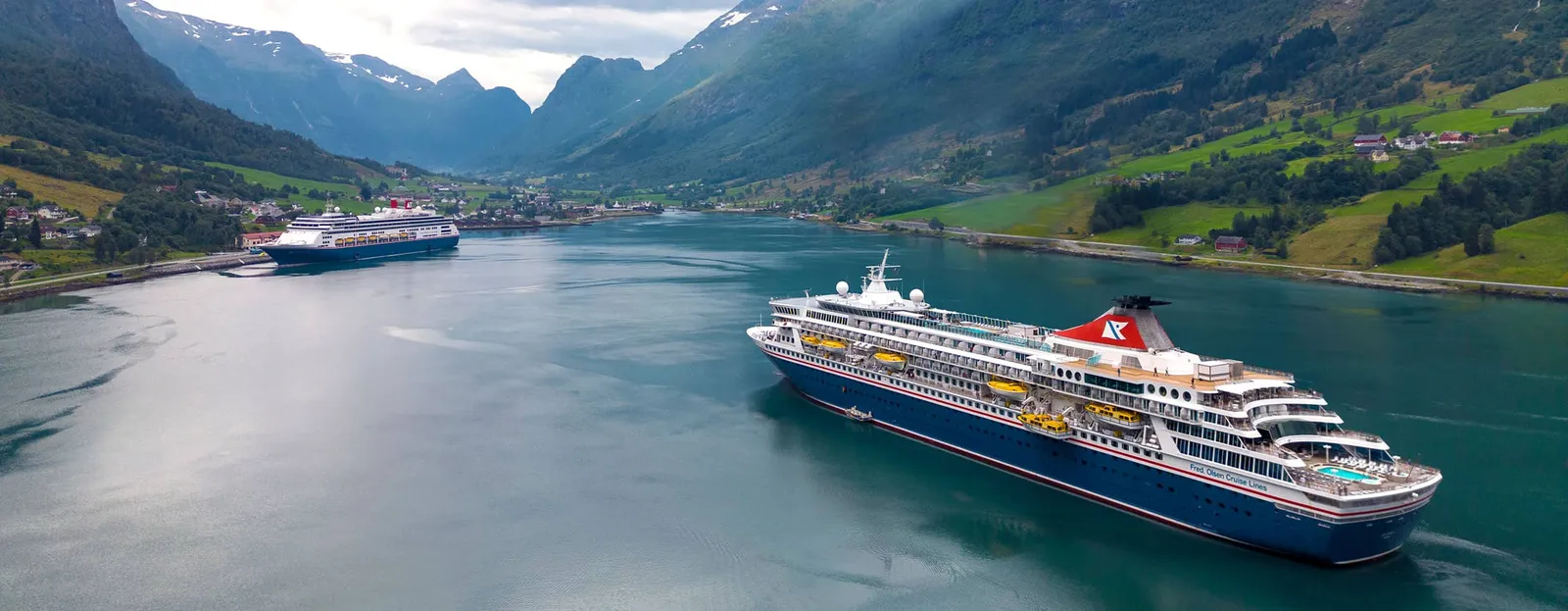
Fred. Olsen and Norwegian Cruise Line both trace their origins to Norway, but the similarity ends there — one is a traditional British three-ship operation sailing from UK ports, the other is a 21-ship American Freestyle cruising giant. Jake Hower compares two very different visions of mainstream cruising and explains what each means for Australian travellers.
| Fred. Olsen Cruise Lines | Norwegian Cruise Line | |
|---|---|---|
| Category | Mainstream | Mainstream |
| Rating | ★★★★☆ | ★★★★☆ |
| Fleet size | 3 ships | 20 ships |
| Ship size | Mid-size (1,000-2,500) | Large (2,500-4,000) |
| Destinations | Northern Europe, Norwegian Fjords, Mediterranean, Canary Islands | Caribbean, Mediterranean, Alaska, Northern Europe |
| Dress code | Smart casual | Resort casual |
| Best for | British travellers seeking scenic itineraries | Freestyle dining and entertainment seekers |
These lines represent opposite philosophies within mainstream cruising. Fred. Olsen is for mature British travellers who value traditional service, scenic itineraries, and sailing from home without flying — it has genuine strengths in solo travel, adults-only cruising, and Norwegian Fjords. Norwegian Cruise Line is for independent-minded travellers of all ages who want flexible dining, high-energy entertainment, and global destination coverage. For Australians, NCL is the clear primary recommendation — it sails globally, offers The Haven as a luxury alternative, and delivers the breadth of choice that justifies international flights. Fred. Olsen is a specialist add-on for Australians already visiting the UK.
The core difference
Fred. Olsen Cruise Lines and Norwegian Cruise Line share Norwegian founding heritage — and almost nothing else. This is a comparison between a small, traditional, UK-focused cruise line and one of the largest, most innovative mainstream operators in the world. The ships, the audiences, the philosophies, and the onboard experiences are so different that the comparison serves primarily to illustrate the extraordinary range of what mainstream cruising encompasses.
Fred. Olsen operates three ships — Bolette, Borealis, and Balmoral — each carrying no more than 1,300 guests. The line was founded in Norway in 1848 and is still Norwegian-owned, but it operates as a thoroughly British cruise company sailing from UK ports with an almost entirely British passenger base. The atmosphere is country-house traditional: wraparound promenade decks, two-sitting dinners, enrichment lectures, and a pace that rewards patience. Borealis is adults-only. Over 50 dedicated solo cabins serve a loyal solo traveller community. The ships are older, classic vessels with character rather than cutting-edge hardware.
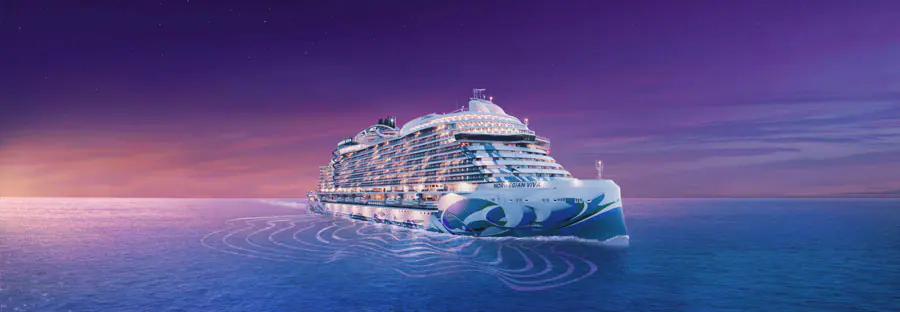
Norwegian Cruise Line was also founded in Norway, in 1966, but is now headquartered in Miami and operates as the fourth-largest cruise line in the world with 21 ships. NCL fundamentally changed the industry with Freestyle Cruising — no fixed dinner times, no assigned seating, no formal dress codes. The newest ships, led by Norwegian Aqua (launched April 2025), feature waterslide-rollercoaster hybrids, go-kart tracks, LED sports courts, and Broadway shows. The fleet offers typically 15 to 20 restaurants per vessel. The Haven by Norwegian provides a private luxury enclave with butler service, its own pool, and dedicated restaurant.
For Australian travellers, the practical difference is decisive. NCL is a globally deployed line with strong coverage across the Caribbean, Mediterranean, Alaska, and Northern Europe, and occasional Australian-waters deployments. Fred. Olsen sails exclusively from UK ports. NCL is accessible from Australian gateways with a single flight to a European or American hub. Fred. Olsen requires specifically travelling to Britain.
What is actually included
The inclusion models reflect fundamentally different approaches to pricing and guest choice.
Fred. Olsen’s fare covers the cabin, all meals in the main dining rooms, and from 2026, drinks at mealtimes. Bar drinks outside meals, gratuities, shore excursions, and specialty dining are additional. Bar prices are notably competitive. The ex-UK sailing model eliminates flight costs for British travellers, representing significant hidden value for the domestic market.
NCL’s base fare covers the cabin, meals in the main dining room and buffet, basic entertainment, and pool access. The Free at Sea programme allows guests to add bundled packages — typically including premium beverage, specialty dining, Wi-Fi, and shore excursion credits — for a daily rate that varies by sailing and cabin category but runs roughly USD $50 to $100 per person per day. The Haven fare is more inclusive, covering a dedicated restaurant, premium beverages in the Haven lounge, butler service, and priority access to entertainment and dining.
For Australian travellers, NCL’s total cost depends heavily on the Free at Sea package and cabin choice. A seven-night Mediterranean cruise in a balcony cabin with Free at Sea runs approximately AUD 250 to 450 per person per night all in — competitive for the scale of entertainment and dining on offer. Fred. Olsen’s seven-night ex-UK sailings cost roughly AUD 2,000 to 3,600 per person before adding flights from Australia. The Haven commands a premium — roughly AUD 500 to 900 per person per night — but delivers a luxury-adjacent experience that Fred. Olsen’s smaller ships approach through intimacy rather than exclusivity.
Dining and culinary experience
The dining comparison reveals different philosophies about choice, flexibility, and tradition.
Fred. Olsen serves meals in traditional dining rooms with two sittings — a structured, sociable approach where you have an assigned table and your waiter learns your preferences over the voyage. Menus blend British comfort food with destination-inspired regional dishes. The quality is honest and well-prepared. From 2026, drinks at mealtimes are included. The dining experience is traditional cruise ship elegance — white tablecloths, multi-course dinners, and a pace that encourages conversation.
NCL’s Freestyle Dining philosophy is the polar opposite. Guests eat when they want, where they want, with whoever they want. A typical NCL ship offers 15 to 20 restaurants, from the complimentary main dining room and buffet to specialty venues including Cagney’s Steakhouse, La Cucina Italian, Teppanyaki, Food Republic, Le Bistro French, and Onda by Scarpetta. Specialty restaurants charge supplements of roughly USD $30 to $60 per person. The Free at Sea specialty dining package covers several meals at these venues. The Haven has its own dedicated restaurant for suite guests.
The dining comparison is not about quality — both deliver competently at their respective scales. It is about structure versus flexibility. Fred. Olsen’s two-sitting dinner creates a social rhythm where you dine with the same companions, know your waiter’s name, and build relationships over shared meals. NCL’s Freestyle approach means you can eat steak tonight, Italian tomorrow, and sushi the next day, alone or with new acquaintances, at 6pm or 9pm. For travellers who value variety and independence, NCL wins decisively. For those who value tradition and the social structure of shared dining, Fred. Olsen delivers.
Suites and accommodation
The accommodation comparison spans decades of cruise ship design philosophy and wildly different scales.
Fred. Olsen’s fleet offers cabins from inside singles to suites, with the former Holland America vessels Borealis and Bolette providing the best space-per-guest ratios. Borealis achieves 45.5 — genuinely spacious for a mid-market line. The fleet’s 50-plus dedicated single cabins are purpose-built for solo travellers. Suite options exist but are modest compared to premium lines or NCL’s Haven.
NCL’s accommodation ranges from compact inside cabins to the extraordinary Haven suites. The Haven occupies the top decks of each ship and is accessed by private keycard, with its own pool, sun deck, restaurant, bar, concierge, and 24-hour butler service. The three-bedroom Garden Villa — a sprawling suite with private terrace on select ships — has won multiple awards for best cruise ship suite. Norwegian Aqua’s Haven includes the Haven Sundeck, the Haven Restaurant, and Haven Suites spanning up to 1,000 square feet. Below the Haven, standard balcony cabins are functional but compact by Fred. Olsen standards, with the ship’s passenger density meaning corridors and public areas are busier.
The accommodation choice crystallises the core difference. Fred. Olsen offers consistent cabin quality across a smaller, less crowded ship where every guest enjoys the same level of personal service. NCL offers a deliberately tiered experience — from budget-friendly inside cabins to genuine luxury in The Haven — on ships where the experience varies enormously depending on what you have paid. For Australian travellers wanting a luxury feel, The Haven delivers at a price point below dedicated luxury lines, while Fred. Olsen delivers through small-ship intimacy.
Pricing and value
The pricing comparison must account for what each line includes and what each charges extra for.
Fred. Olsen’s seven-night ex-UK sailings start from roughly GBP 1,000 to 1,800 per person — approximately AUD 2,000 to 3,600. Longer voyages, including the 108-night world cruise, command significantly more. The no-fly model saves British travellers several hundred pounds in airfare. With mealtime drinks now included, the onboard spend beyond the fare is modest.
NCL’s seven-night Mediterranean or Caribbean cruises start from approximately USD $800 to $1,500 per person in a balcony cabin — roughly AUD 1,200 to 2,300. The Free at Sea package adds approximately USD $350 to $700 per person for a week, covering drinks, specialty dining, Wi-Fi, and excursion credits. Haven suites start from approximately USD $3,000 to $6,000 per person for seven nights — roughly AUD 4,500 to 9,000. NCL’s aggressive promotional pricing means deals frequently appear, particularly for shoulder-season sailings.
For Australian travellers, the total cost calculation is instructive. A week on NCL in the Mediterranean with Free at Sea and flights from Australia runs approximately AUD 4,000 to 6,500 per person — delivering 15 to 20 restaurants, Broadway shows, waterslides, and go-kart tracks. A week on Fred. Olsen with flights to London and a train to Southampton runs approximately AUD 4,500 to 7,000 per person — delivering enrichment lectures, traditional dining, and a quiet ship carrying a quarter of NCL’s guests. The price points overlap, but the products could not be more different.
Spa and wellness
The spa and wellness comparison reflects the scale difference between the lines.
Fred. Olsen offers traditional spa facilities on all three ships — treatment rooms, saunas, and fitness centres. Treatments are straightforward, the spa is never crowded, and the smaller ship size means booking is easy. The fitness centre provides basic equipment with ocean views.
NCL operates the Mandara Spa brand across its fleet, with elaborate facilities on newer ships. Norwegian Aqua features the Mandara Spa with thermal suites, salt rooms, snow rooms, and hydrotherapy pools. Fitness centres are large and well-equipped with ocean views and a full class schedule including yoga, spinning, and HIIT sessions. The spa complex on newer NCL ships is a destination in itself — larger than Fred. Olsen’s entire spa offering across three ships.
NCL wins on spa facilities and variety. Fred. Olsen wins on accessibility and the absence of crowds. Australian travellers who prioritise wellness will find NCL’s newer ships significantly more compelling, with world-class thermal suite facilities and comprehensive treatment menus.
Entertainment and enrichment
The entertainment comparison is where the philosophical divide between these lines is most visible.
Fred. Olsen prioritises enrichment over spectacle. Guest speakers deliver lectures on history, nature, and destinations being visited. Scenic cruising is treated as an event with expert commentary. Evening entertainment includes production shows (enhanced by the RWS Global partnership), live music, quiz nights, and convivial bar evenings. The pace is gentle. There are no waterslides, no go-karts, no Broadway shows. The entertainment is the destination, the enrichment, and the company of fellow travellers.
NCL has invested more heavily in entertainment than almost any other mainstream line. Full Broadway productions — including Tony Award-winning shows like Six — perform in purpose-built theatres. Norwegian Aqua features the Aqua Slidecoaster (a hybrid waterslide and rollercoaster), The Drop free-fall dry slide, the Glow Court LED sports floor, and the first-ever official Prince tribute show at sea. Go-kart tracks, ropes courses, laser tag, and virtual reality experiences fill the days. Multiple bars and lounges offer live music, DJs, and themed party nights. The Haven provides a quiet retreat, but the broader ship pulses with energy from morning to late at night.
For Australian travellers, this is the decisive question. If you cruise to be stimulated, entertained, and perpetually offered something new, NCL delivers at a level Fred. Olsen cannot approach. If you cruise to slow down, learn something, watch the scenery, and enjoy genuine conversation with fellow passengers, Fred. Olsen delivers what NCL’s scale makes difficult. Neither approach is wrong — they serve fundamentally different desires.
Fleet and destination coverage
The fleet comparison is decisive in scale, though Fred. Olsen’s niche has its own advantages.
Fred. Olsen operates three ships — Bolette (1,360 guests), Borealis (1,360 guests, adults-only), and Balmoral (1,325 guests) — from UK ports covering Norwegian Fjords, Canary Islands, British Isles, Iceland, Mediterranean, and longer expedition-style voyages. The mid-size ships access ports that NCL’s large vessels cannot reach. Voyages range from 1-night tasters to 108-night world cruises.
NCL operates 21 ships ranging from mid-size vessels like Norwegian Jewel to the newest Prima Plus Class, with over 500 itineraries globally. Coverage spans Caribbean, Mediterranean, Alaska, Northern Europe, South Pacific, and beyond. NCL’s private island destinations — Great Stirrup Cay in the Bahamas and Harvest Caye in Belize — add exclusive beach-day stops. Four more Prima Plus ships and an entirely new class of 5,000-passenger vessels are on order through 2030.
For Australian travellers, NCL’s global deployment and fleet size mean far greater choice and accessibility. Caribbean sailings from Miami, Mediterranean from multiple European ports, Alaska from Seattle, and occasional South Pacific deployments mean NCL can be reached from Australian gateways with a single connection. Fred. Olsen offers one destination — UK-departure cruises — and requires specifically travelling to Britain. NCL wins overwhelmingly on breadth and accessibility.
Where each line excels
Fred. Olsen excels in:
Traditional British cruising with genuine personal service on smaller ships where crew know your name. The adults-only Borealis is ideal for couples and solo travellers seeking a quieter atmosphere. Over 50 dedicated single cabins and a daily solo social programme make this among the best lines for solo cruisers. The Norwegian Fjords itineraries from UK ports carry authentic Norwegian heritage. Enrichment programming — guest lecturers, scenic commentary, cultural talks — rewards intellectually curious travellers. And the no-fly ex-UK model is unbeatable for British travellers.
NCL excels in:
Freestyle flexibility — dining, scheduling, and dress code all on the guest’s terms. Entertainment at a level that rivals shore-based attractions, from Broadway shows to waterslide-rollercoasters. The Haven ship-within-a-ship concept delivers genuine luxury inside a mainstream vessel. The global fleet of 21 ships offers unmatched choice across every major cruise region. Family facilities are extensive and purpose-built. And the competitive pricing, particularly during promotional periods, makes NCL accessible to a broad range of budgets.
Standout itineraries for Australian travellers
Fred. Olsen
Borealis: Norwegian Fjords from Southampton (7-14 nights, multiple departures) — The signature Fred. Olsen itinerary and the most compelling option for Australians visiting the UK. Adults-only Borealis sails from Southampton into fjords that the line’s Norwegian heritage lends authentic context to. The mid-size ships navigate narrow channels that NCL’s larger vessels cannot enter. Fly to London from Australian gateways, train to Southampton.
Balmoral: Canary Islands and Madeira (14 nights, ex-Southampton, winter departures) — A warm-weather escape on a traditional ship. Two weeks of Atlantic island cruising with scenic sea days and extended port time. Suits Australians visiting the UK in winter who want a cruise without an additional flight.
NCL
Norwegian Aqua: Western Mediterranean (7-10 nights, roundtrip Barcelona, 2025-2026) — NCL’s newest and most innovative ship on the line’s strongest Mediterranean itineraries. The Aqua Slidecoaster, Broadway shows, and 15-plus restaurants deliver relentless entertainment, while The Haven offers a luxury retreat. Fly to Barcelona from Australian gateways via Singapore Airlines, Emirates, or Qatar Airways.
Norwegian Prima: Alaska (7 nights, Seattle to Alaska, May-September) — The Prima Class ships bring Freestyle cruising to Alaska’s Inside Passage. Glacier Bay, Juneau, and Ketchikan with go-kart tracks, waterslides, and specialty dining aplenty. Fly to Seattle from Sydney via United, Qantas, or Air New Zealand.
Norwegian Spirit or Jewel: South Pacific (seasonal deployments) — NCL occasionally positions ships in the Australian and South Pacific market. When available, these sailings offer the Freestyle experience from Australian or New Zealand ports, eliminating the long-haul flight entirely. Check current season availability with your agent.
Ship-by-ship recommendations
Fred. Olsen
Borealis (1,360 guests, adults-only) — The flagship choice. Adults-only status means a quieter atmosphere. Excellent space-per-guest ratio. Choose for Norwegian Fjords and scenic itineraries.
Bolette (1,360 guests) — Same hardware as Borealis, open to all ages. Choose for family-inclusive itineraries.
Balmoral (1,325 guests) — The older ship with a loyal following. Choose when the itinerary is the priority.
NCL
Norwegian Aqua (3,571 guests, April 2025) — The newest and most innovative ship in the fleet. Aqua Slidecoaster, Glow Court, Prince tribute show, and the most modern Haven. Choose for the cutting-edge NCL experience.
Norwegian Prima or Viva (3,215 guests) — The Prima Class delivers a more refined NCL experience with lower guest counts and the Ocean Boulevard wraparound outdoor deck. Choose for a slightly more upmarket mainstream experience.
Norwegian Jewel or Spirit (2,376-2,394 guests) — The mid-size ships in the fleet, occasionally deployed to the South Pacific and Asia. Choose for Australian-accessible itineraries when available, or for a less overwhelming NCL experience.
For Australian travellers specifically
The Australian perspective on this comparison is straightforward: NCL is the accessible, practical choice; Fred. Olsen is the niche add-on for UK visitors.
NCL’s global deployment means Australians can fly to Barcelona, Miami, Seattle, or Athens and board a ship offering Freestyle dining, Broadway entertainment, and The Haven luxury. The line’s promotional pricing means deals are frequent, and the Free at Sea package bundles the major extras into a predictable cost. Occasional South Pacific deployments bring NCL within reach without international flights.
Fred. Olsen requires flying to the UK, travelling to a port city, and boarding a ship designed for British tastes. There is no Australian sales representation, no AUD pricing, and no Australian-relevant departure points. The line makes sense for Australians only when a UK visit is already planned and a cruise is a welcome addition — particularly to the Norwegian Fjords, where Fred. Olsen’s heritage and mid-size ships create an experience NCL’s larger vessels cannot replicate.
Neither line has meaningful loyalty programme partnerships with Australian travel brands. NCL’s Latitudes Rewards programme is a tiered system offering benefits from priority boarding to free internet and cabin upgrades at higher tiers. Fred. Olsen’s Oceans programme rewards repeat bookings with onboard credit and priority access. Both function independently.
For Australian travellers choosing between these lines, the real question is what kind of cruise experience you want. NCL delivers choice, entertainment, and flexibility on a global scale. Fred. Olsen delivers tradition, enrichment, and personal service on a British scale. For most Australians, NCL is the answer. For the specific traveller visiting Britain who wants to cruise from UK ports on a quieter, more traditional ship, Fred. Olsen fills a niche no other line does.
The onboard atmosphere
The atmospheric contrast between these lines is among the most dramatic in any mainstream comparison.
Fred. Olsen’s atmosphere is genteel, traditional, and unhurried. The average guest is retired or semi-retired, British, and values conversation over stimulation. Evenings centre around the bar, enrichment lectures, and modest entertainment. The dress code is smart casual, interpreted conservatively. The pace is deliberately slow — sea days are embraced rather than endured, and the promenade deck is for walking, not rushing. With a maximum of 1,360 guests, the social dynamic is village-like. You will know fellow passengers by name within days.
NCL’s atmosphere is energetic, diverse, and relentlessly offering options. The guest mix is international — American, Australian, British, European — and spans all ages from families with toddlers to retired couples in The Haven. Freestyle philosophy means no fixed schedule, no dress code pressure, and no expectation of formality. The daytime offers waterslides, go-karts, pool activities, and fitness classes. Evenings offer Broadway shows, live music across multiple venues, casino gaming, and late-night parties. With 3,000 to 5,000 guests depending on the ship, the atmosphere is resort-like — exciting, occasionally crowded, and never dull.
Australian travellers will find NCL more familiar in its energy and diversity — closer to the atmosphere of P&O Australia, Royal Caribbean, or Princess. Fred. Olsen will feel like stepping into a quieter, more British world where the ship moves at the pace of its guests rather than the other way around.
The bottom line
Fred. Olsen and Norwegian Cruise Line share Norwegian origins and almost nothing else. One is a three-ship traditional British cruise line. The other is a 21-ship global mainstream giant. Comparing them illuminates not which is better, but which is right — and for most Australian travellers, that question has a clear answer.
Choose Fred. Olsen for traditional British cruising on smaller ships with personal service, enrichment over entertainment, and the best solo traveller provisions in mainstream cruising. Choose it for the adults-only Borealis, for Norwegian Fjords with genuine heritage, and for the unique experience of sailing from UK ports without flying. Accept that ships are older, entertainment is modest, and the line is practical for Australians only when visiting Britain.
Choose NCL for Freestyle flexibility, world-class entertainment, global destination coverage, and The Haven’s luxury-within-mainstream proposition. Choose it for Broadway shows at sea, for the newest ships in any mainstream fleet, for family holidays with endless activities, and for a line that is accessible from Australian gateways across multiple regions. Accept that ships carry thousands of guests, that the Freestyle environment is casual to the point of informality, and that the experience outside The Haven is mainstream in every sense.
For the Australian traveller who wants one European cruise, NCL delivers more entertainment, more dining variety, and more destination choice at a comparable total cost. For the Australian traveller visiting the UK who wants a cruise as part of a broader trip, Fred. Olsen delivers a quietly excellent traditional experience that NCL’s energy and scale cannot replicate. Both are good at what they do — they simply do very different things.