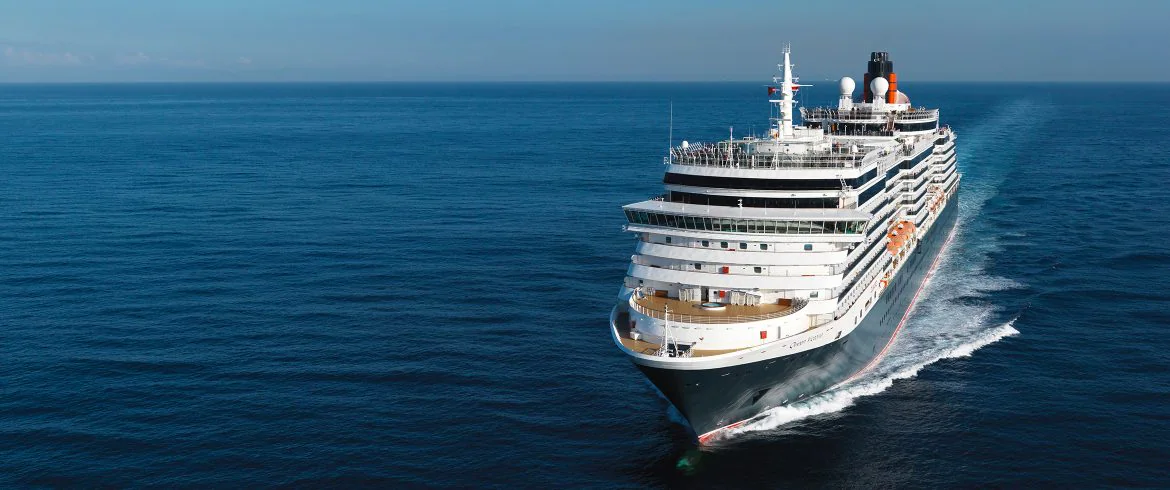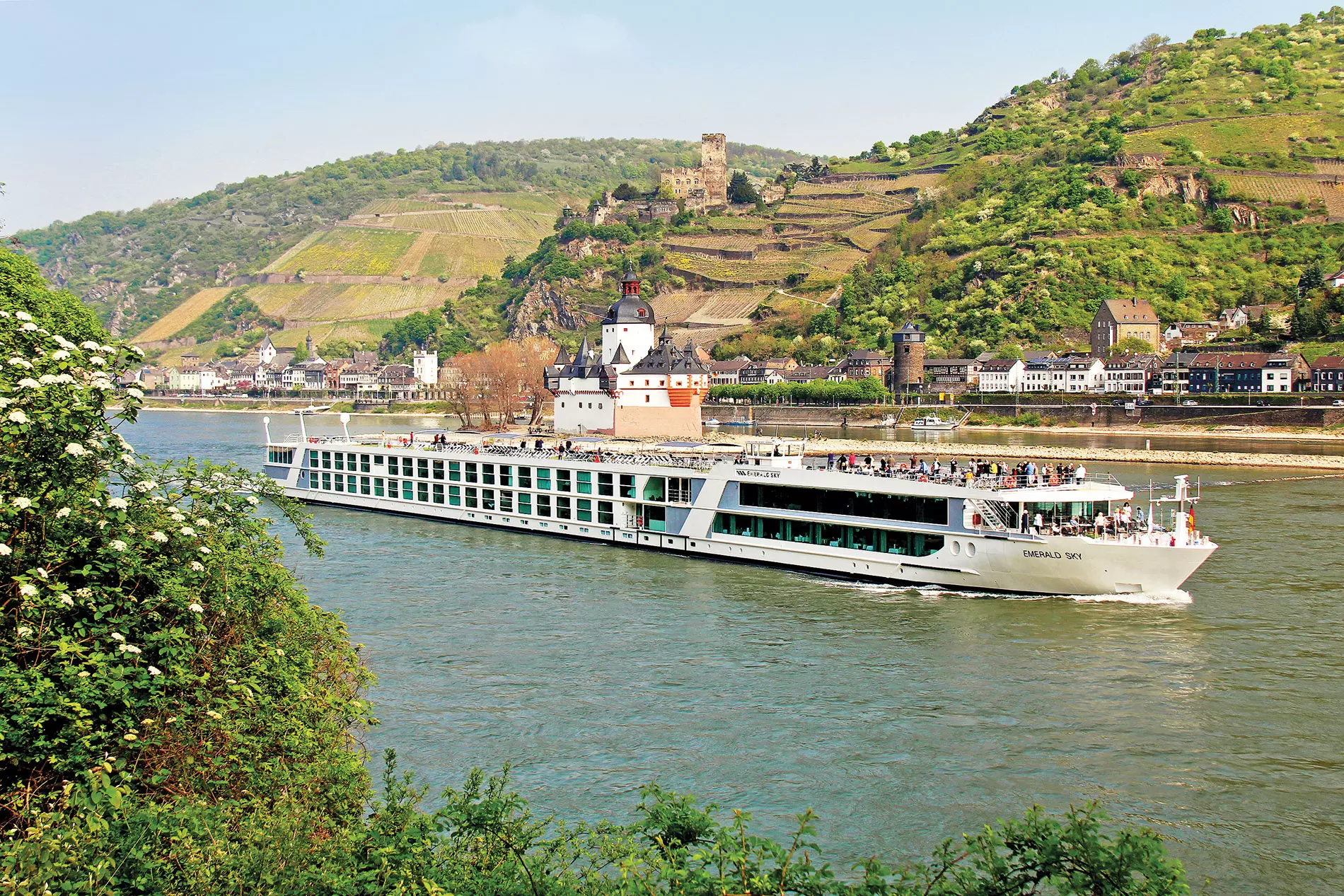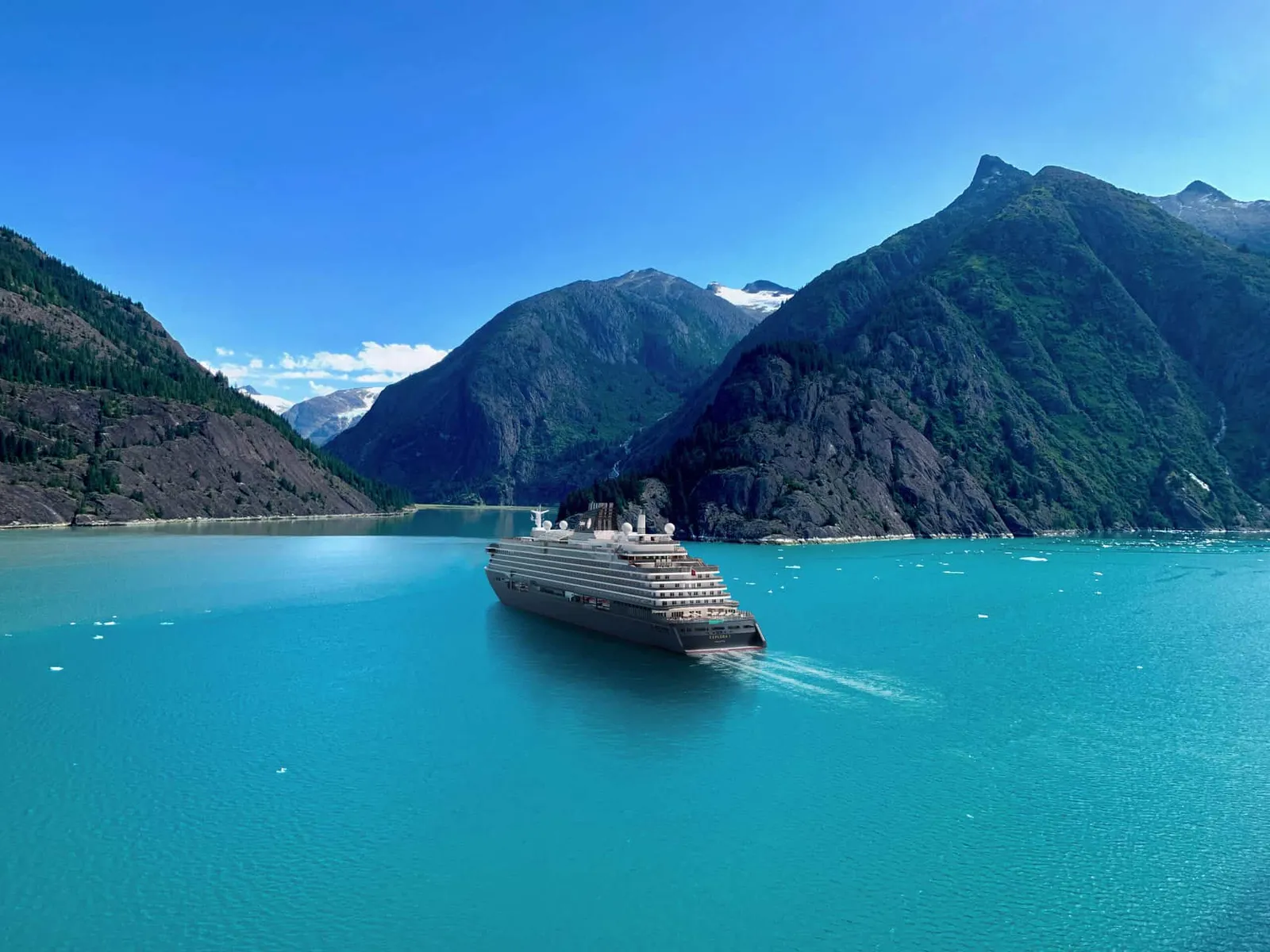
| Explora Journeys | Hapag-Lloyd Cruises | |
|---|---|---|
| Category | Luxury | Expedition / Ultra-Luxury |
| Rating | ★★★★★ | ★★★★★ |
| Fleet size | 2 ships | 5 ships |
| Ship size | Small (under 1,000) | Small (under 1,000) |
| Destinations | Mediterranean, Caribbean, Northern Europe, Asia | Worldwide, Arctic, Antarctica, Mediterranean |
| Dress code | Casual elegance | Casual elegance |
| Best for | Contemporary ultra-luxury ocean travellers | German-heritage luxury and expedition travellers |
This is the ultra-luxury segment's most fascinating culture clash — a brand-new Italian-backed disruptor against a 130-year-old German institution. Explora delivers the most contemporary hardware afloat: all-terrace suites from 377 square feet, complimentary thermal spa, unlimited premium drinks and high-speed Wi-Fi, and an atmosphere that feels like a Mediterranean resort. Hapag-Lloyd delivers something no competitor can match: a luxury ocean fleet and a world-class expedition fleet under one brand, with three-Michelin-star dining on EUROPA, 890 original artworks on EUROPA 2, and HANSEATIC expedition ships carrying PC6 ice class into Antarctica and the Kimberley. For Australians, Hapag-Lloyd arrives first — EUROPA 2 visits Australian waters in 2027 and HANSEATIC spirit debuts in the Kimberley in 2028. Explora does not reach Australia until its 2029 World Cruise. Choose Explora if you want the most modern all-inclusive ocean experience afloat. Choose Hapag-Lloyd if you value expedition access, European cultural depth, and a genuinely different onboard atmosphere.
The core difference
Explora Journeys and Hapag-Lloyd Cruises represent two entirely different philosophies of ultra-luxury cruising — and the contrast could not be starker.
Explora is the new world. Launched in 2023 by the MSC Group with a reported EUR 3.5 billion investment across six ships, it was conceived as a ground-up luxury brand that deliberately avoids the word “cruise” in its name. The ships are brand-new, the suites are among the largest at entry level in the industry, the design is contemporary European with Molteni&C furnishings and Calacatta marble, and there are no formal nights. Crew members are called “hosts” and trained in partnership with the Ecole Hoteliere de Lausanne. The target guest is someone who stays at Four Seasons and Aman but has never considered a cruise holiday.
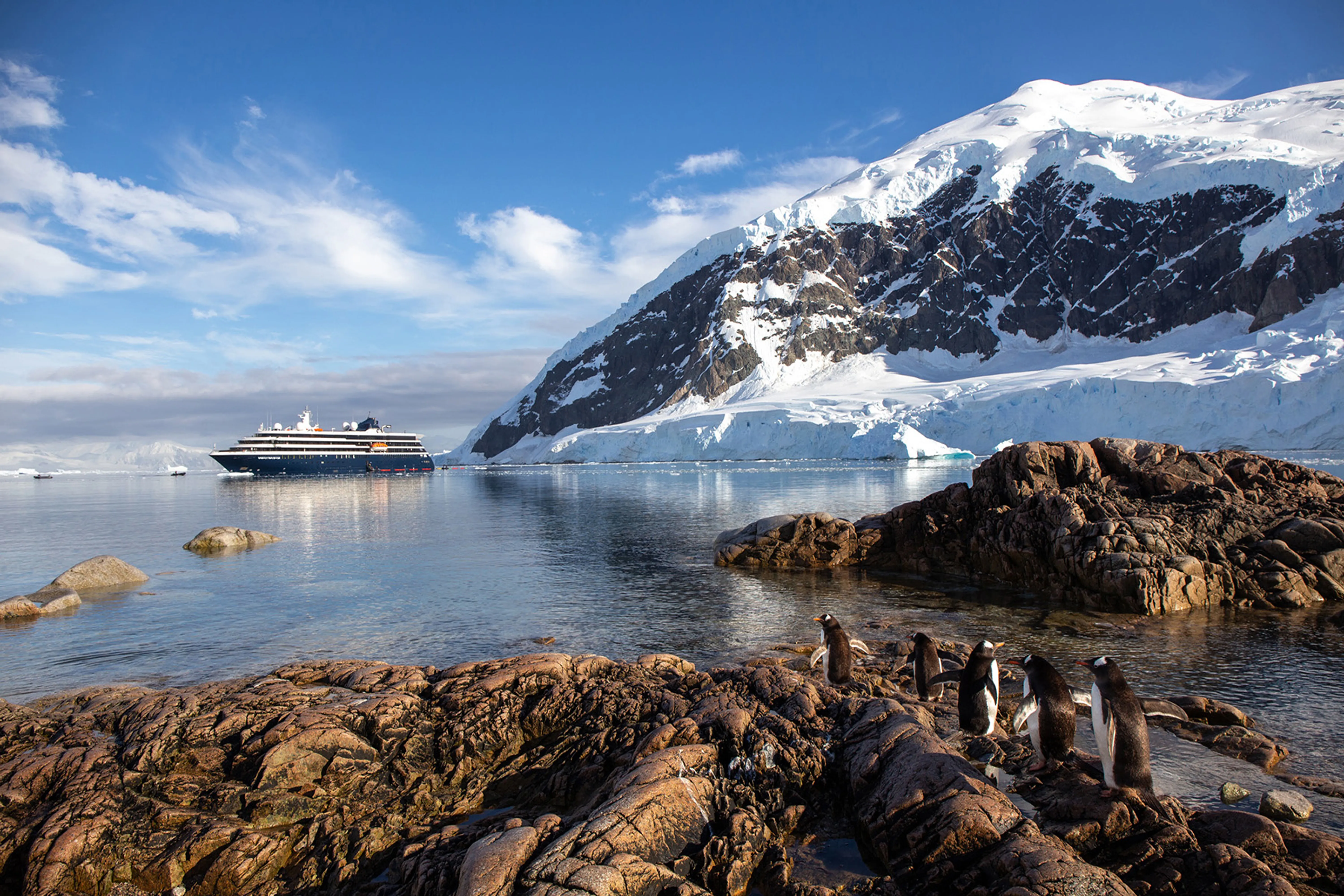
Hapag-Lloyd is the old world — and proudly so. The company traces its lineage to 1847 and claims to have operated the first pleasure cruise in 1891 aboard the Augusta Victoria. Under TUI Group ownership (a 50/50 joint venture with Royal Caribbean), it operates two luxury ocean ships — EUROPA and EUROPA 2 — alongside three purpose-built expedition vessels. EUROPA 2 carries 890 original artworks including pieces by Gerhard Richter and Damien Hirst. EUROPA features The Globe, the only three-Michelin-star chef’s restaurant at sea. The expedition ships hold PC6 ice class and carry guests into Antarctica, the Arctic, and from 2028, the Kimberley coast of Western Australia.
For Australian travellers, this comparison is not just about two cruise lines. It is about choosing between the most modern all-inclusive ocean product afloat and a European cultural institution with world-class expedition credentials.
What is actually included
This is where Explora has a meaningful structural advantage — and where Hapag-Lloyd’s headline fares can be misleading.
Explora includes: all dining at eight of nine restaurants (Anthology carries a EUR 165 surcharge; Chef’s Kitchen is also extra), unlimited premium spirits, wines, cocktails, and speciality coffees, complimentary high-speed Starlink Wi-Fi delivering 60–70 Mbps, all gratuities, a daily-replenished minibar, 24-hour in-suite dining, complimentary thermal spa access (hydrotherapy pool, salt cave, Finnish sauna, steam room, heated marble loungers), and port-to-city-centre shuttle services. Butler service is reserved for Residence suites and above.
Hapag-Lloyd includes: all dining at every restaurant on every ship with no surcharges whatsoever, champagne on arrival, a daily-replenished minibar (non-alcoholic beverages and beer; spirits in higher categories), 24-hour room service, and gratuities. From January 2026, complimentary soft drinks are included throughout the day. Wi-Fi is limited to 60 free minutes per day via Starlink, with additional packages from EUR 19 (1 GB) to EUR 225 (25 GB). Unlimited Wi-Fi is complimentary only for Grand Penthouse and Owner Suite guests. On the expedition ships, Zodiac excursions and polar gear are included.
What Hapag-Lloyd does not include — and Explora does: alcoholic beverages at bars and restaurants (a beverage package is available for approximately EUR 200 per person per cruise, but this is modest by ultra-luxury standards), premium Wi-Fi beyond 60 minutes, and thermal spa access at the level Explora provides.
The practical impact is significant. A couple on EUROPA 2 who enjoys wine with dinner and cocktails before and after could easily spend EUR 500–1,000+ per week on beverages. Add EUR 119–225 each for adequate internet packages, and the effective cost of a Hapag-Lloyd voyage climbs well above the headline fare. On Explora, every drink, every Wi-Fi session, and every thermal spa visit is already covered.
However, Hapag-Lloyd’s dining is genuinely surcharge-free at every venue on every ship — including Kevin Fehling’s three-Michelin-star Globe on EUROPA. Explora charges EUR 165 for its signature Anthology restaurant, which makes Hapag-Lloyd’s all-inclusive dining the more complete offering.
Dining and culinary experience
Both lines deliver exceptional food, but the culinary identities are distinctly different.
Hapag-Lloyd’s EUROPA features five restaurants, headlined by The Globe by Kevin Fehling — Germany’s most celebrated chef, holder of three Michelin stars, who personally joins eight selected cruises per year to cook for 408 guests. The rebuilt Pearls restaurant offers 15 innovative vegetarian caviar compositions using spherification alongside traditional caviar, with three seven-course menus and vegan options. Venezia delivers Italian classics. The Europa Restaurant serves international gourmet cuisine with daily-changing menus. All dining is included.
EUROPA 2 offers seven restaurants plus a late-night lounge. Weltmeere (“World Oceans”) is the main restaurant with nearly half its tables set for two — a thoughtful touch. Tarragon is a French brasserie with tableside preparations. Elements serves Asian-fusion. Serenissima delivers Italian regional specialties. Sakura offers high-grade sushi. The Yacht Club is a casual grill and buffet. Again, every venue is included with no reservation restrictions or surcharges.
Explora offers nine culinary venues across EXPLORA I and II. Anthology is the signature — a degustation restaurant with rotating three-Michelin-star guest chefs, inaugurated by Mauro Uliassi (one of his own chefs works permanently in the galley). Fil Rouge delivers French-inspired international cuisine. Sakura offers pan-Asian dining. Marble & Co. Grill is a European steakhouse. Med Yacht Club channels Riviera coastal dining. Notably, Explora has dispensed entirely with the traditional buffet and main dining room — the Emporium Marketplace is a global food hall concept, and all dining is open-seating across multiple venues.
Explora won Cruise Critic’s 2025 Best Dining award. Hapag-Lloyd’s five ships all received five-star ratings from the Insight Guides — the only fleet worldwide to achieve this. The quality gap between these two lines is negligible; the difference is in style. Hapag-Lloyd’s cuisine is more classically European — refined, precise, and rooted in continental traditions. Explora’s is more contemporary and globally diverse — lighter, more Mediterranean, with stronger Asian and fusion influences.
Suites and accommodation
Explora wins this comparison decisively on space. Hapag-Lloyd wins on intimacy and design character.
Explora’s entry-level Ocean Terrace Suite is 377 square feet with a private terrace, floor-to-ceiling windows, walk-in wardrobe, marble bathroom with separate rain shower, espresso machine, and daily-replenished minibar. Every one of Explora’s 461 suites has a private outdoor terrace. The Owner’s Residence spans 3,015 square feet with a private hot tub, full dining room for eight, and a dedicated Residence Manager. Ocean Residences (from 754 square feet) include butler service and private plunge pools.
EUROPA 2’s entry-level Veranda Suite is 301 square feet with a 75-square-foot step-out veranda — comfortable but 25 per cent smaller than Explora’s entry level. All 251 suites have step-out verandas. Bathrooms feature separate tubs and showers — a thoughtful European touch. The Owner’s Suite at 1,066 square feet plus 161-square-foot veranda is well-appointed but roughly a third the size of Explora’s equivalent. Sixteen Spa Suites feature in-room whirlpool tubs and direct spa access. Grand Penthouse and Owner Suite guests receive butler service.
The space ratio tells a broader story. EUROPA 2’s gross tonnage per guest is 83 — among the highest in the industry. Despite Explora’s larger suites, EUROPA 2 achieves an exceptional sense of spaciousness in public areas because of its lower passenger count (516 versus Explora’s 922). The ship feels less crowded even though individual suites are smaller.
Design philosophy differs markedly. Explora’s interiors channel a Mediterranean boutique hotel — contemporary warm minimalism with superyacht references, Molteni&C furnishings, and Italian craftsmanship. EUROPA 2 feels like a European design museum — classical elegance with 890 original artworks by Gerhard Richter, Damien Hirst, and Olafur Eliasson lining the corridors. Both are beautiful; the question is whether you prefer contemporary or classical.
Pricing and value
Both lines sit in the upper range of the ultra-luxury segment, but comparing them requires adjusting for what is and is not included.
Explora’s per-diem for entry-level Mediterranean sailings runs approximately USD $457–$714 per person per night during shoulder season, rising to USD $714–$1,071 during peak summer. A 14-night Mediterranean sailing in an Ocean Terrace Suite averages roughly USD $586–$964 per night.
Hapag-Lloyd’s per-diem on EUROPA 2 runs approximately EUR 500–800 per person per night (roughly USD $550–$880) depending on itinerary and season. A 13-day Hamburg to Malaga voyage starts from approximately EUR 599 per night. The Singapore-to-Perth Australian sailing runs approximately EUR 791 per night.
The hidden cost gap: Hapag-Lloyd’s headline fares look competitive, but once you add alcoholic beverages (EUR 500–1,000+ per couple per week), Wi-Fi packages (EUR 119–225 per person per voyage), and any spa treatments, the effective per-diem climbs significantly. On Explora, premium drinks, unlimited Wi-Fi, and thermal spa access are already in the fare.
For an Australian couple on a 14-night Mediterranean voyage including flights:
Explora (Ocean Terrace Suite): approximately AUD $35,000–$65,000 per couple. Includes cruise fare with unlimited drinks, Wi-Fi, and thermal spa. Flights and shore excursions are extra.
Hapag-Lloyd EUROPA 2 (Veranda Suite): approximately AUD $35,000–$70,000 per couple when you add beverages, Wi-Fi, and other extras to the headline fare. Flights and shore excursions are also extra.
At comparable total cost, Explora delivers a larger suite, unlimited drinks, unlimited fast Wi-Fi, and complimentary thermal spa access. EUROPA 2 delivers surcharge-free dining at all venues, a more intimate 516-guest ship with an exceptional space ratio, and a European cultural atmosphere unlike anything else at sea.
Spa and wellness
Explora has a decisive advantage in both scale and what is complimentary.
Explora’s Ocean Wellness Spa spans over 7,500 square feet with 11 treatment rooms, a hydrotherapy pool, salt cave, Finnish sauna, steam room, experience showers, ice fountain, and heated marble loungers. The entire thermal suite is complimentary for all guests — no booking required, no time limit. Spa partners include Dr Levy Switzerland (cosmeceutical facials) and Aromatherapy Associates. The ship features four swimming pools (including one adults-only and one with a retractable glass roof) and 64 private cabanas. Explora’s spa won the World Spa Awards 2024 for World’s Best Cruise Spa.
EUROPA 2’s Ocean Spa covers 1,000 square metres with eight treatment rooms, four complimentary sauna and steam rooms, a relaxation area with sea views, and a beauty salon. Sixteen Spa Suites offer in-room whirlpool tubs and direct spa access. The heated pool has a retractable roof, and there are three outdoor whirlpools. The spa is well-appointed and includes complimentary sauna access, but it lacks Explora’s hydrotherapy pool, salt cave, and the sheer number of outdoor pools and cabanas.
On the expedition ships, the HANSEATIC fleet offers a 235-square-metre Ocean Spa with treatment rooms featuring sea views, a Finnish sauna with floor-to-ceiling windows and outdoor area, steam sauna, and a 100-square-metre fitness area with glass front opening to the outdoors. The expedition spa is surprisingly well-equipped given the ships’ expedition focus.
Treatment pricing is comparable on both lines — signature treatments run USD $200–$400. The meaningful difference is Explora’s complimentary thermal suite and four-pool deck versus EUROPA 2’s more conventional (though high-quality) spa offering.
Entertainment and enrichment
Neither line delivers Broadway-scale entertainment — and neither is trying to. The difference is in what they offer instead.
Hapag-Lloyd’s enrichment programme is rooted in European high culture. EUROPA 2 carries a permanent collection of 890 original artworks, with dedicated ART2SEA voyages featuring rotating exhibitions, gallery partnerships, and curator-led tours. Guest lecturers include experts from politics, economics, art, architecture, and cultural history. The IN2BALANCE programme offers wellness-focused sailings. EUROPA features Kevin Fehling’s personal appearances on selected cruises. The evening atmosphere on EUROPA 2 includes live music in the Piano Bar and Jazz Club, ’50s and ’60s hits, and late-night entertainment in the Sansibar lounge. There are no production shows — the emphasis is on sophisticated conversation, exceptional art, and cultural depth.
Explora’s entertainment is more contemporary. The Journeys Lounge hosts nightly performances including the Explora Music Series — a 14-night rotation of live shows with six resident vocalists, guest West End performers, and themed programmes like “Voices of Vegas” and “Motor City” (Motown revue). The Sky Bar on Deck 14 features DJ and saxophone sets under the stars — an energy Hapag-Lloyd does not attempt. The Luminaries enrichment programme brings destination experts and creative arts workshops aboard. Chef’s Kitchen offers intimate cooking experiences for 12 guests.
The expedition ships offer a completely different enrichment model. Each HANSEATIC voyage carries a 16-person expedition team of biologists, glaciologists, historians, and ornithologists. The Ocean Academy is an onboard science centre with microscopes and specimens. Daily lectures in the HanseAtrium cover the science and history of destinations visited. This is enrichment through direct experience — Zodiac landings, snowshoe hikes, kayaking — rather than the lecture-and-lounge format of ocean ships.
Dress codes: Neither line has formal nights. Explora’s guidance is “elegant resort wear” — Monaco or Amalfi Coast evening style. EUROPA 2’s passengers are typically smartly attired in expensive European labels — upscale resort casual by day, designer slacks and sports jackets by evening. No tuxedos or gowns on either line.
Fleet and destination coverage
The fleet comparison is unusual because Hapag-Lloyd operates two distinct types of ships — and this is its greatest strategic advantage.
Hapag-Lloyd operates five ships in two categories. The luxury ocean fleet comprises MS EUROPA (1999, 408 guests, 28,890 GT) and MS EUROPA 2 (2013, 516 guests, 42,830 GT). The expedition fleet comprises HANSEATIC nature (2019), HANSEATIC inspiration (2019), and HANSEATIC spirit (2021) — three sister ships carrying 230 guests each with PC6 ice class and full Zodiac complements. No new builds are on order.
Explora operates two ships — EXPLORA I (2023) and EXPLORA II (2024), both 922 guests and 63,900 GT — with EXPLORA III arriving July 2026 (72,810 GT, LNG-powered), EXPLORA IV in early 2027, and two further ships through 2028. By the end of 2028, Explora expects to operate five or six ships — a pace of fleet expansion unprecedented in the ultra-luxury segment.
Destination coverage diverges significantly. Hapag-Lloyd’s ocean ships cover the Mediterranean, Northern Europe, Africa (including a full circumnavigation), Asia (Japan cherry blossom season), French Polynesia, the Great Lakes, and Australasia from 2027. The expedition ships reach Antarctica (including the rarely visited Weddell Sea), the Arctic, the Northwest Passage, the Kimberley, and remote Pacific islands. Explora covers the Mediterranean, Caribbean, Northern Europe, Iceland and Greenland, the Red Sea and Arabian Peninsula, and Alaska (from 2027). The inaugural World Cruise departs January 2029.
Hapag-Lloyd’s advantage is depth and breadth — the expedition fleet provides access to destinations Explora simply cannot reach. Explora’s advantage is fleet growth and modernity — by 2028, it will offer substantially more ocean sailing choice than Hapag-Lloyd’s two-ship luxury fleet.
Where each line excels
Explora excels in:
- Physical product. Brand-new ships with industry-leading suite sizes, four pools, 64 private cabanas, and over 27,000 square feet of outdoor space. The hardware advantage over EUROPA 2 (a 2013 ship) and EUROPA (a 1999 ship) is substantial.
- Inclusiveness. Unlimited premium drinks, unlimited high-speed Wi-Fi, complimentary thermal spa — the most generous all-inclusive package among the newer ultra-luxury entrants.
- Contemporary atmosphere. No formal nights, no assigned dining, DJ sets at the Sky Bar, an international guest mix. The atmosphere of a Mediterranean resort, not a traditional cruise ship.
- Fleet growth trajectory. Five or six ships by 2028, backed by the MSC Group’s financial muscle. More itinerary choice every year.
- Awards momentum. Cruise Critic’s Best Luxury Cruise Line in 2024 and 2025, Best Dining, Best Cabins — remarkable for a brand in only its second year.
Hapag-Lloyd excels in:
- Expedition capability. Three purpose-built PC6 ice-class expedition ships with Zodiac fleets and 16-person expert teams. Antarctica, the Arctic, the Northwest Passage, and the Kimberley — destinations no ocean-only line can reach.
- Culinary pedigree. Kevin Fehling’s three-Michelin-star Globe on EUROPA. The innovative vegetarian caviar programme at Pearls. All dining surcharge-free across the entire fleet.
- Cultural depth. EUROPA 2’s 890-work permanent art collection. ART2SEA dedicated art voyages. Guest lecturers from European politics, culture, and the arts. The Ocean Academy science centre on expedition ships.
- Intimacy. EUROPA 2 carries 516 guests with an 83 GT-per-guest space ratio — among the highest in the industry. EUROPA carries just 408. The HANSEATIC ships carry 230. Every Hapag-Lloyd ship is smaller and more intimate than any Explora vessel.
- Australian presence. EUROPA 2 visits Australian waters in 2027. HANSEATIC spirit debuts in the Kimberley in 2028. Hapag-Lloyd joined CLIA Australasia in 2025 and has established Australian trade partnerships.
Standout itineraries for Australian travellers
Explora
Red Sea and Arabian Peninsula (December 2026–March 2027 on EXPLORA II) — Jeddah, Salalah, Khasab, Dubai. An emerging luxury cruise region. Fly direct from east coast Australia to Dubai (approximately 14 hours on Emirates or Qantas) — one of the shortest flight connections from Australia to any Explora embarkation port.
EXPLORA III inaugural season: Iceland and Greenland (August–September 2026) — The maiden voyages of the newest ship, departing Southampton for Norway, Iceland, and Greenland. Off-the-beaten-path ports on a brand-new LNG-powered vessel. Fly Sydney to London (approximately 22–24 hours).
Mediterranean summer (May–October 2026 on EXPLORA I or II) — Extensive programmes from Barcelona and Rome. The no-formal-dress-code and flexible dining format make these ideal for Australian couples trying ultra-luxury cruising for the first time.
2029 World Cruise (128 days, Dubai to Barcelona on EXPLORA I) — Explora’s first visit to Australian waters. The itinerary includes Cairns, Sydney, Melbourne, Tasmania, and New Zealand. A bookable Sydney-to-Auckland segment runs approximately 14 nights.
Hapag-Lloyd
Singapore to Perth (17 days, January 2027 on EUROPA 2) — Via Indonesia, Broome, Exmouth, Geraldton, and Fremantle. From EUR 13,440 per person. Fly Sydney to Singapore (7.5 hours) and cruise to Western Australia. One of the most exotic approaches to the Australian coastline.
Perth to Auckland (19 days, February 2027 on EUROPA 2) — Busselton, Albany, Kangaroo Island, Adelaide, Melbourne, Sydney, and across the Tasman. Embark in Perth (domestic flight for Australians) and cruise home to the east coast or onward to New Zealand.
Kimberley expedition (18 days, February 2028 on HANSEATIC spirit) — Hapag-Lloyd’s maiden Kimberley voyage. King George River, Montgomery Reef, Houtman Abrolhos Islands — explored by Zodiac with a 16-person expert expedition team. The adults-only HANSEATIC spirit brings PC6 ice-class expedition credentials to one of Australia’s most spectacular wilderness coastlines.
Antarctica from Ushuaia (14–22 days on HANSEATIC nature/inspiration/spirit) — Multiple annual departures. The 22-day Weddell Sea expedition is a standout — one of the most ambitious Antarctic voyages available. Fly Sydney to Buenos Aires (approximately 17–19 hours via Auckland or Santiago), connect to Ushuaia.
Ship-by-ship recommendations
Explora
EXPLORA I or EXPLORA II (both 922 guests, 63,900 GT, 2023–2024) — Functionally identical sister ships. Either delivers the full Explora experience: 461 all-terrace suites, four pools, Ocean Wellness Spa, nine dining venues. Choose based on itinerary rather than ship preference.
EXPLORA III (arriving July 2026, 72,810 GT) — The first LNG-powered ship in the fleet, 19 metres longer than EXPLORA I/II with expanded public spaces, a 48-foot glass-enclosed pool, 60 private cabanas, and new dining venues including Shore Club and Chef’s Table. Inaugural season covers Northern Europe, Iceland, Greenland, and New England.
EXPLORA IV through VI (arriving 2027–2028) — Unless you specifically want cutting-edge environmental credentials (hydrogen fuel cell technology), there is no need to wait. EXPLORA I and II deliver the full experience now.
Hapag-Lloyd
MS EUROPA 2 (516 guests, 42,830 GT, 2013) — The ship for English-speaking travellers. Bilingual from inception, with an exceptional 83 GT-per-guest space ratio, seven surcharge-free restaurants, and 890 original artworks. The most refined luxury ocean ship in the fleet and the one deployed to Australia in 2027. If you are an Australian considering Hapag-Lloyd for the first time, start here.
MS EUROPA (408 guests, 28,890 GT, 1999, refurbished 2024) — The German-language flagship. Smaller, more traditional, and home to Kevin Fehling’s three-Michelin-star Globe restaurant. From 2026 it operates bilingually, but German remains the dominant social language. Choose if you speak German or specifically want the Fehling dining experience. Avoid if linguistic immersion is a concern.
HANSEATIC spirit (230 guests, 16,100 GT, 2021) — The adults-only expedition ship, and the vessel deploying to the Kimberley in 2028. PC6 ice class, Zodiac fleet, 16-person expedition team. Choose for Antarctica, the Arctic, or the Kimberley. The most intimate and sophisticated of the three expedition sisters.
HANSEATIC inspiration (230 guests, 16,100 GT, 2019) — The family-friendly expedition option with a Young Explorers Program for ages 10–17. Features the Nikkei restaurant (Japanese-Peruvian fusion). Bilingual German-English. Choose for expedition voyages with children.
HANSEATIC nature (230 guests, 16,100 GT, 2019) — Features The Hamptons restaurant (East Coast USA cuisine). Now bilingual from 2026. Choose based on itinerary.
For Australian travellers specifically
This comparison has a clear timing dimension for Australians: Hapag-Lloyd arrives in Australian waters first, and its expedition fleet offers something Explora cannot match.
Hapag-Lloyd’s Australian proposition is emerging and compelling. The line joined CLIA Australasia in April 2025, signalling a deliberate push into the Australian market. EUROPA 2 sails from Singapore to Perth (January 2027) and Perth to Auckland (February 2027), calling at Broome, Exmouth, Adelaide, Melbourne, and Sydney. HANSEATIC spirit debuts in the Kimberley in February 2028 — an 18-day expedition that brings world-class expedition credentials to one of Australia’s most spectacular coastlines. The shift to fully bilingual operations from January 2026 removes the language barrier that previously limited Hapag-Lloyd’s appeal. Booking is available through Australian travel advisors with established Hapag-Lloyd trade partnerships.
Explora’s Australian proposition is currently limited but growing. The brand has an Australian-based team and an Australian website with AUD pricing, but no ships visit Australian waters until the 2029 World Cruise. For 2026–2027, the most accessible Explora embarkation for Australians is Dubai (14 hours direct from east coast capitals), followed by Singapore for the forthcoming Asia deployments. The Sky & Sea Fare programme (launched August 2025) offers integrated fly-cruise packages from Australian airports, handling flight logistics for Mediterranean and other international sailings.
The language and cultural consideration is uniquely important in this comparison. On Explora, an Australian couple will feel linguistically and culturally at home within an intentionally international guest mix. On EUROPA 2, they will be well-served in English but socially surrounded by German-speaking passengers — international guests historically comprise just seven per cent of the passenger base. This can be either genuinely appealing (a different cultural experience, European social dynamics, the art collection) or potentially isolating (difficulty finding dinner companions who share your language). On the expedition ships, the shared experience of Zodiac landings and wildlife encounters tends to transcend language barriers.
Loyalty pathways: Explora Club offers free membership and status matching from 11 cruise lines including Hapag-Lloyd. Hapag-Lloyd Cruises Club charges a membership fee (EUR 170 initial, EUR 70 annually) with bonus miles redeemable for onboard credits. Neither line has a direct Qantas Frequent Flyer partnership.
The onboard atmosphere
The atmospheres are different enough that this may be the deciding factor.
Explora feels like a contemporary Mediterranean resort at sea. The guest mix is intentionally international — European, British, American, and Australian. The demographic skews 40–60, with many first-time cruisers who are more accustomed to luxury resort holidays. There are no formal nights. DJ sets and saxophone performances play at the Sky Bar on Deck 14 under the stars. Families with children are welcome. The Emporium Marketplace replaces the traditional buffet with a global food hall concept. The design references superyachts rather than ocean liners. The energy is polished, relaxed, and contemporary.
EUROPA 2 feels like a European design hotel crossed with an art gallery. The guest mix is overwhelmingly German-speaking — affluent, well-travelled, quietly sophisticated. The evening atmosphere centres on the Piano Bar, Jazz Club, and the late-night Sansibar lounge. Guests are smartly attired in expensive European labels — Bogner and Escada by day, designer slacks and sports jackets by evening. There are no formal nights, but the atmosphere is more subdued and culturally specific than Explora’s cosmopolitan energy. Art tours, gallery exhibitions, and cultural lectures replace the DJ sets and resort programming.
The expedition ships create a third atmosphere entirely — the camaraderie of shared adventure. Zodiac landings in Antarctica, wildlife encounters in the Kimberley, and daily lectures from expert scientists create bonds between guests regardless of language. This is the most egalitarian and least formal environment in the Hapag-Lloyd fleet.
The bottom line
Explora Journeys and Hapag-Lloyd Cruises are both excellent, but they are excellent at fundamentally different things — and the right choice reveals what you value most in a luxury travel experience.
Choose Explora if you want the most modern all-inclusive ocean product available — brand-new ships with the largest entry-level suites in ultra-luxury, unlimited premium drinks and high-speed Wi-Fi, a complimentary thermal spa, contemporary design, and an international atmosphere that feels like a Mediterranean resort. Accept that the line is young (launched 2023), the crew culture is still developing, and Australian waters are not on the horizon until 2029.
Choose Hapag-Lloyd if you want something genuinely different from every other ultra-luxury line — a European cultural institution with a permanent art collection rivalling many galleries, three-Michelin-star dining at sea, and a world-class expedition fleet that reaches Antarctica, the Arctic, and the Kimberley. Accept that alcoholic beverages and premium Wi-Fi cost extra, that the guest base is predominantly German-speaking, and that the ships are older and smaller than Explora’s fleet.
For Australians specifically, the choice has a practical dimension. Hapag-Lloyd brings ships to Australian waters in 2027 and the Kimberley in 2028 — tangible, bookable itineraries that do not require long-haul flights to embark. Explora offers the more generous all-inclusive package and the more linguistically comfortable atmosphere, but requires Australians to fly internationally until 2029. If expedition cruising appeals — and Australia’s Kimberley coast is on your list — Hapag-Lloyd offers something no other ultra-luxury line can match.