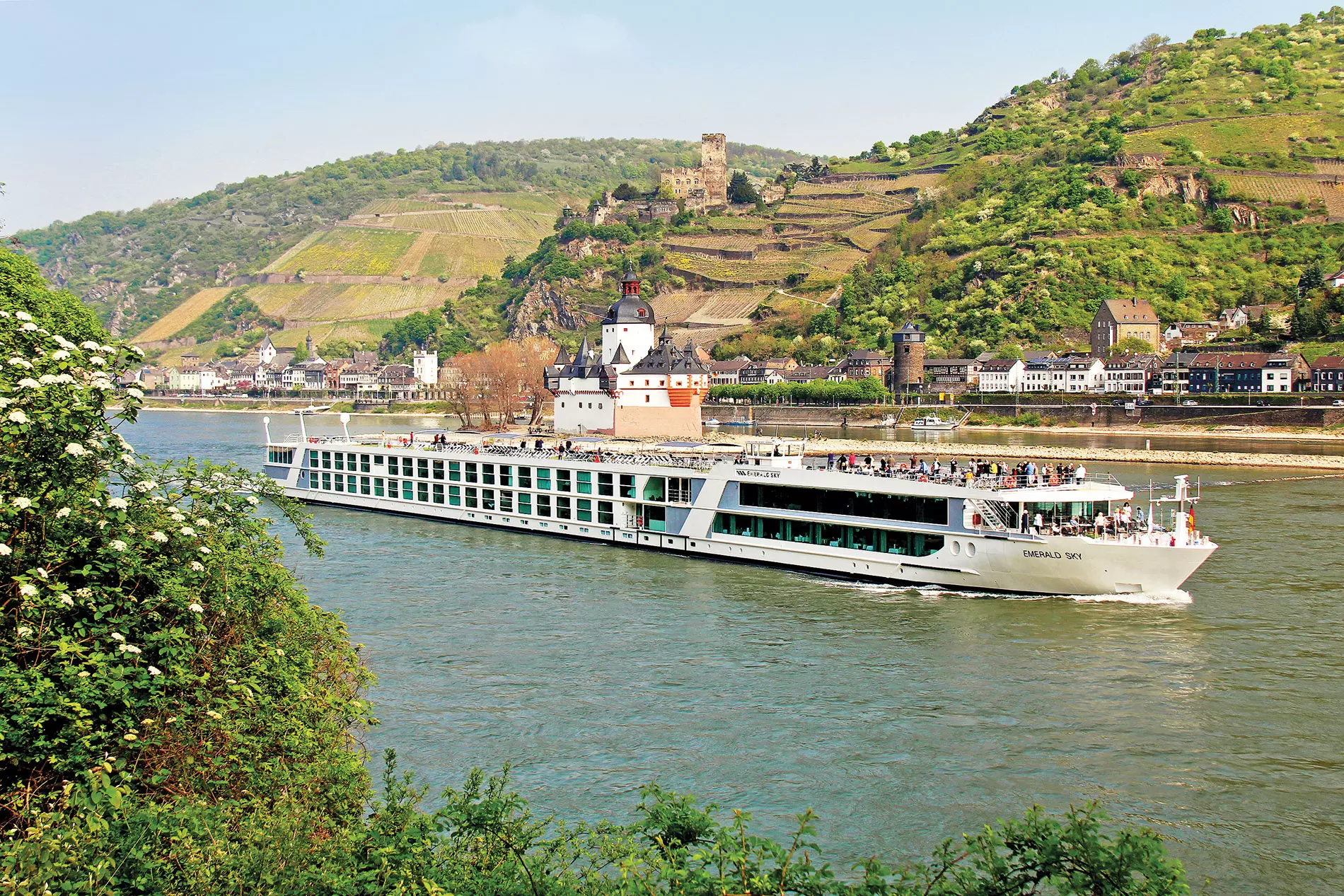
Emerald Cruises and The Ritz-Carlton Yacht Collection both deliver intimate superyacht experiences with fewer than 230 guests, marina platforms, and all-suite accommodation — but one is Australian-owned with a growing fleet at a premium price point, the other a Marriott-backed ultra-luxury brand with Michelin-level dining and the highest space-per-guest ratio at sea. Jake Hower compares their inclusions, dining, fleet, and value for Australian travellers.
| Emerald Cruises | The Ritz-Carlton Yacht Collection | |
|---|---|---|
| Category | River / Yacht-Style / Luxury | Yacht-Style / Ultra-Luxury |
| Rating | ★★★★☆ | ★★★★★ |
| Fleet size | 11 ships | 3 ships |
| Ship size | River (under 200) | Yacht (under 300) |
| Destinations | European rivers, Mekong, Mediterranean, Adriatic | Mediterranean, Caribbean, Northern Europe, Central America |
| Dress code | Smart casual | Casual elegance |
| Best for | Premium-value river and yacht cruisers | Ultra-luxury yacht lifestyle travellers |
Emerald Azzurra and her expanding sister ships offer Australian travellers a superyacht experience with genuine local backing through Scenic Group, generous inclusions, and a price point that undercuts the Ritz-Carlton Yacht Collection by a meaningful margin. Ritz-Carlton counters with the highest space-per-guest ratio afloat, three-Michelin-star culinary pedigree through S.E.A., and the seamless integration of Marriott Bonvoy loyalty benefits. For Australians who want a polished superyacht experience at a competitive price from an Australian-owned operator with local support, choose Emerald. For those who demand the very highest tier of ultra-luxury afloat, Michelin-level dining, and the cachet of the Ritz-Carlton name, the Yacht Collection is without peer.
The core difference
Emerald Cruises and The Ritz-Carlton Yacht Collection both operate in the superyacht space, but they approach it from fundamentally different starting points — and the distinction matters for Australian travellers weighing price, pedigree, and practical support. Emerald is the yacht division of Scenic Group, an Australian-owned travel company headquartered in Newcastle, New South Wales, with more than thirty-five years of operation. The Ritz-Carlton Yacht Collection is the maritime extension of one of the world’s most recognised ultra-luxury hotel brands, backed by Marriott International’s global infrastructure. Both promise intimate, all-suite vessels with marina platforms and destination-focused itineraries. The experience aboard, however, is calibrated for different expectations and different budgets.
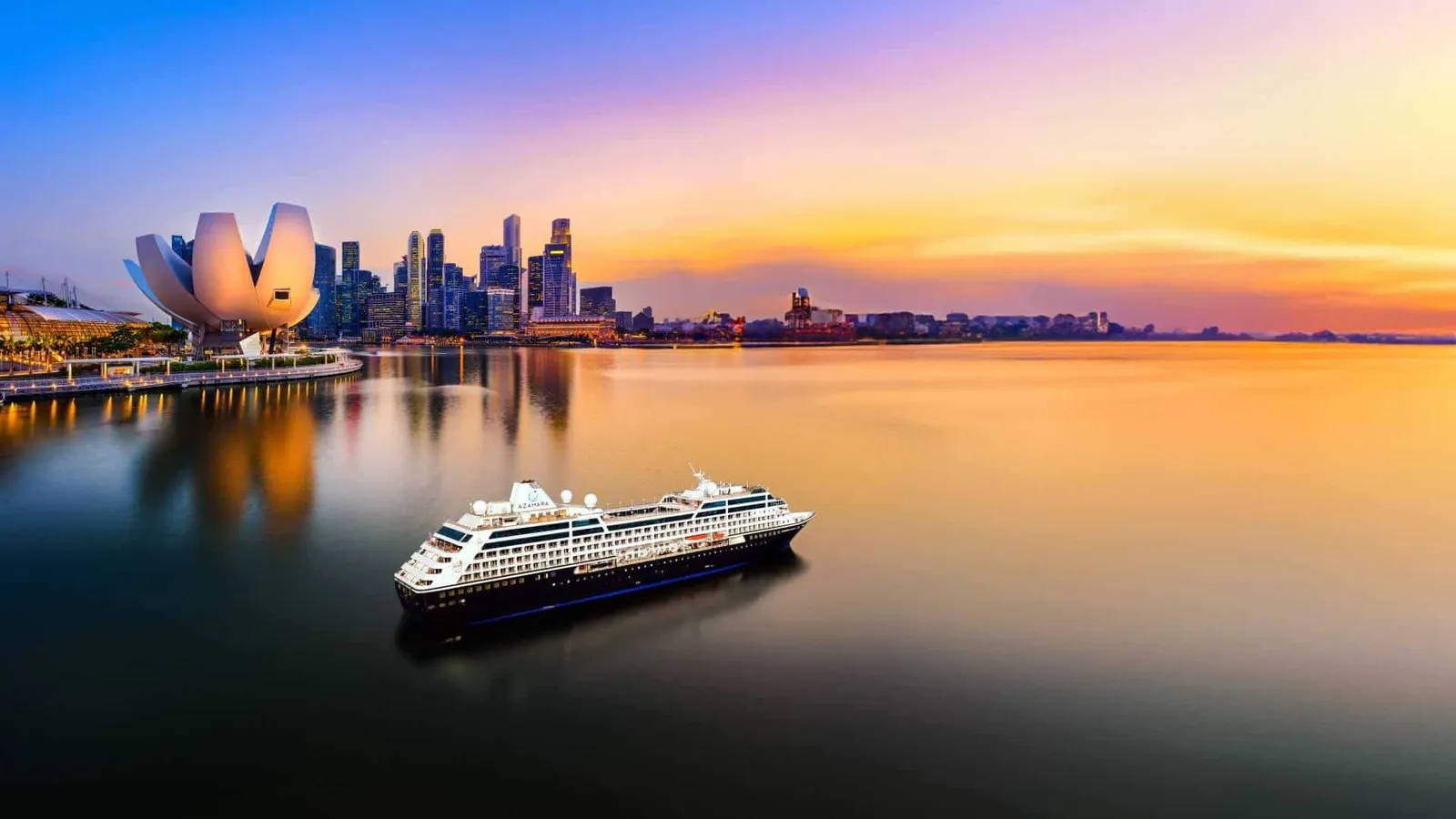
Emerald Azzurra, the line’s inaugural superyacht launched in 2022, carries just 100 guests across 50 suites, with 88 per cent featuring step-out balconies. An infinity pool, a water-sports marina deployed from the stern, and regionally sourced dining create a boutique atmosphere that punches above its price point. The fleet is expanding aggressively — Emerald Kaia, Raiya, and Xara will enter service between 2026 and 2027, bringing the yacht fleet to four vessels. The parent company’s river cruise heritage informs a focus on included excursions, intuitive service, and a design-conscious aesthetic that appeals to travellers in their forties to sixties who want luxury without excessive formality.
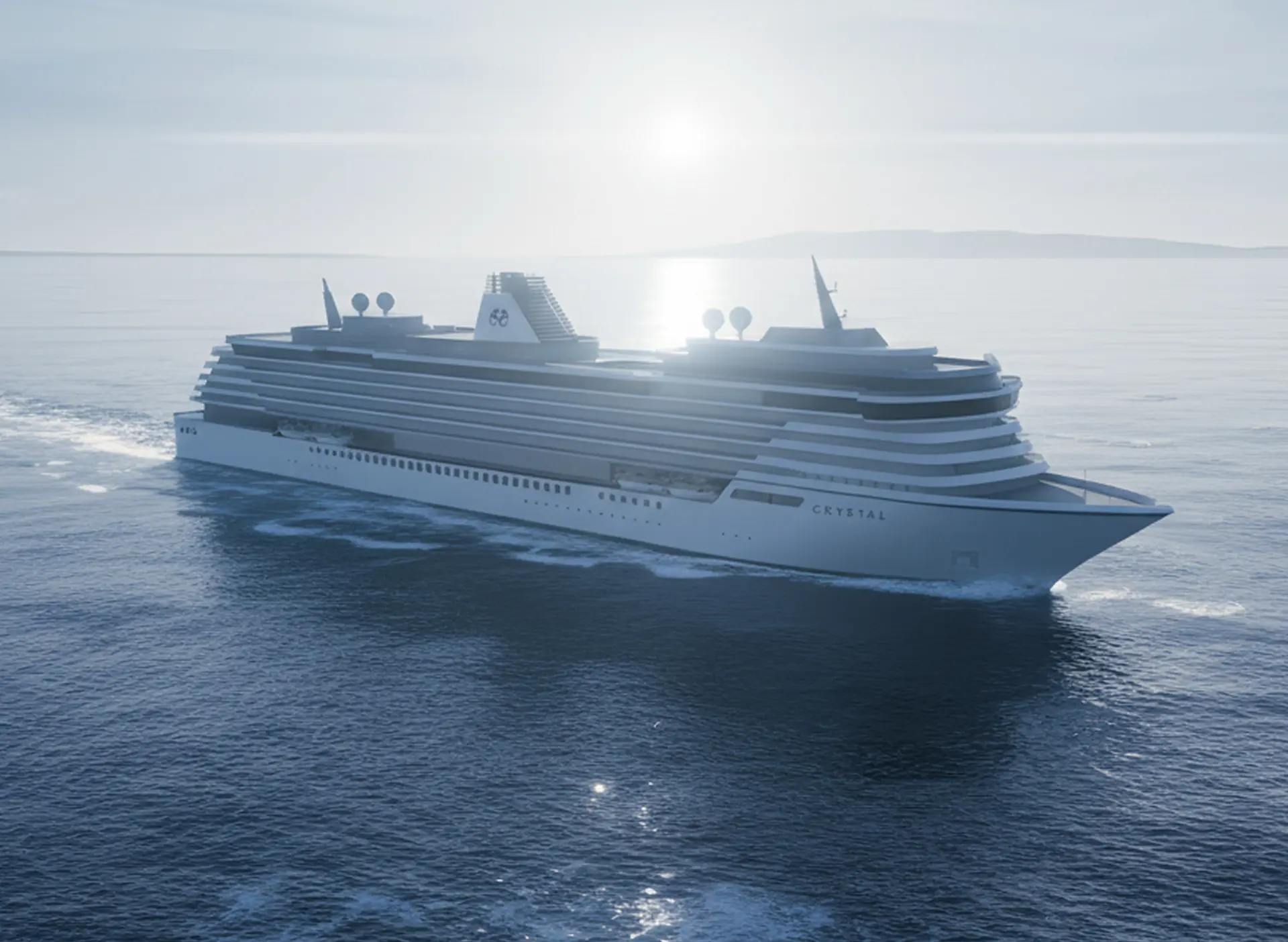
The Ritz-Carlton Yacht Collection launched Evrima in 2022 with 149 suites, followed by Ilma in 2024 with 224 suites, and Luminara entering service in 2025 with 226 suites. These are purpose-built superyachts designed to feel like floating Ritz-Carlton properties — no buffet, no public-address system, no cruise director, no casino. The near one-to-one crew-to-guest ratio, five restaurants including the Michelin-pedigreed S.E.A., and the highest space-per-guest ratio at sea (Ilma exceeds 104 cubic feet per passenger) position this collection at the very top of the ultra-luxury market. Roughly half of guests have never cruised before, drawn instead by the Ritz-Carlton hotel experience translated to the water.
For Australian travellers, the choice often comes down to a practical question: do you want a superyacht experience from an Australian-owned operator at a competitive price, or do you want the absolute pinnacle of ultra-luxury afloat with Michelin-level dining and Marriott Bonvoy integration? Both are excellent. They serve different travellers.
What is actually included
The inclusion models differ meaningfully, and understanding the detail prevents surprise at either the booking stage or the end of the voyage.
Ritz-Carlton’s fare is the more comprehensive all-inclusive package. Every suite fare covers all dining across five onboard restaurants without surcharges, premium beverages including fine wines, champagne, spirits, and cocktails, unlimited Wi-Fi, crew gratuities, and full access to the marina watersports platform. Shore excursions are priced separately, and spa treatments carry individual charges. The philosophy is simple: once aboard, virtually nothing costs extra beyond excursions and spa. For travellers who dislike calculating add-ons, this transparency is a genuine benefit.
Emerald’s yacht fare includes all onboard dining, selected beverages with meals (house wine, beer, soft drinks), a programme of included shore excursions at most ports, and access to the marina platform with kayaks, paddleboards, and snorkelling equipment. Premium beverages — fine wines, top-shelf spirits, cocktails beyond the included range — carry a surcharge. Wi-Fi is available but may carry charges depending on the package. Gratuities are included in the fare. The inclusion of shore excursions is a meaningful differentiator — Ritz-Carlton charges for these separately, and a week of guided tours can easily add AUD $500 to $1,000 per person.
The net calculation is nuanced. Ritz-Carlton’s all-inclusive drinks programme is more generous at the base fare, covering premium beverages that Emerald charges for. But Emerald’s inclusion of shore excursions partially offsets this advantage. For moderate drinkers who plan to take excursions at most ports, the total cost gap between the two lines narrows. For enthusiastic wine and cocktail drinkers who prefer independent exploration ashore, Ritz-Carlton’s inclusion model delivers clearer value. Australian travellers should factor in Emerald’s AUD pricing and local support infrastructure, which simplifies the booking process and avoids currency conversion uncertainty.
Dining and culinary experience
Dining is where the gap between these two lines is most pronounced, and it reflects the difference between a very good yacht kitchen and a world-class restaurant programme.
Ritz-Carlton’s culinary offering is anchored by S.E.A., the signature restaurant serving seven-course tasting menus conceived by Chef Sven Elverfeld of the three-Michelin-star Aqua at The Ritz-Carlton Wolfsburg. This is not a branded partnership in name only — the menus are developed in Wolfsburg, the techniques are Michelin-calibre, and the presentation is among the finest at sea. Five onboard restaurants provide variety without surcharges: S.E.A. for fine dining, the Pool House for casual fare, Mistral for Mediterranean cuisine, Talaat Nam for Asian flavours, and the Living Room for all-day grazing. All dining is included, and the quality across every venue reflects the Ritz-Carlton brand’s commitment to culinary excellence. The absence of a buffet — replaced by plated service everywhere — reinforces the feeling that this is a restaurant collection rather than a ship’s galley.
Emerald’s dining is regionally sourced and well-executed, with menus designed to reflect each port of call. The intimate guest count — 100 on Azzurra — means the kitchen serves a small number and can adjust to dietary needs and preferences with agility. The quality is strong for the price bracket, with fresh ingredients, competent preparation, and attractive presentation. However, Emerald does not carry Michelin-star pedigree or a signature chef partnership of the calibre that Ritz-Carlton commands. Dining is a pleasure aboard Emerald rather than a destination in itself.
For food-driven Australian travellers — the kind who plan holidays around restaurant reservations — Ritz-Carlton’s S.E.A. alone justifies consideration. For travellers who want good food as part of a broader yacht experience without paying ultra-luxury premiums, Emerald delivers consistently and without pretension.
Suites and accommodation
Both lines are all-suite, but the suites themselves reflect different design philosophies, budgets, and space allocations.
Ritz-Carlton’s suites are designed to replicate the brand’s hotel experience at sea. Ilma’s Terrace Suites start at approximately 300 square feet with floor-to-ceiling windows and a private terrace — though these entry-level accommodations are more studio than traditional suite, and upgrading at least one category is advisable for travellers accustomed to genuine separation between living and sleeping areas. The Grand Suites, Signature Suites, and Owner’s Suites progressively expand to well over 1,000 square feet with separate living rooms, dining areas, and wraparound terraces. Ilma’s space-per-guest ratio — the highest at sea — means corridors are wide, public areas feel uncrowded even at capacity, and the overall sense of space is extraordinary. Custom furnishings, Frette linens, and Asprey bath products reinforce the five-star hotel standard.
Emerald Azzurra’s suites range from Stateroom categories at approximately 210 square feet to the Owner’s Suite at roughly 515 square feet. Eighty-eight per cent feature step-out balconies — a strong ratio for a yacht of this size. The design is contemporary and well-finished, with clean lines, quality textiles, and functional layouts that maximise the available space. The suites are comfortable and attractive, though they do not match the sheer square footage or material luxury of Ritz-Carlton’s mid-range and upper categories. For travellers stepping up from premium cruise lines or river cruising, Emerald’s suites will feel like a significant upgrade. For those accustomed to ultra-luxury hotel suites, Ritz-Carlton’s accommodation is more natural territory.
The practical difference for Australian travellers is that Emerald’s entry-level suites deliver a genuine superyacht experience at a price that competes with premium lines, while Ritz-Carlton’s entry-level suites demand ultra-luxury pricing but deliver space and finish that justify the premium. Both lines offer meaningful upgrades for those willing to invest — but the floor is different.
Pricing and value
The pricing gap between these lines is substantial, and it reflects genuinely different market positions rather than simply different marketing.
Emerald’s yacht per-diem runs approximately AUD $500 to $800 per person per night for standard suite categories on Mediterranean and Adriatic itineraries, with the Owner’s Suite commanding premiums above that range. Seven-night voyages typically start from approximately AUD $4,000 to $6,000 per person including meals, selected beverages, excursions, and gratuities. The value proposition is compelling: a 100-guest superyacht with a marina platform, included excursions, and balcony suites at prices that undercut established ultra-luxury lines by 30 to 50 per cent. Scenic Group’s Australian presence means AUD pricing without currency conversion risk, local phone support, and familiarity with Australian travel agent commission structures.
Ritz-Carlton’s per-diem runs approximately AUD $1,200 to $2,000 per person per night for Terrace and Panoramic Suites, with Signature and Owner’s Suites commanding significantly more. Seven-night Mediterranean voyages typically start from approximately AUD $9,000 to $14,000 per person with all dining, premium drinks, Wi-Fi, and gratuities included. Shore excursions add to the total. The pricing places Ritz-Carlton alongside Regent Seven Seas and Silversea at the top of the ultra-luxury market — a tier where the competition is not Emerald but rather the most expensive cruise products afloat.
For Australian travellers, the value equation depends on priorities. Emerald delivers perhaps 80 per cent of the superyacht experience at 50 per cent of the price, with the bonus of Australian ownership and included excursions. Ritz-Carlton delivers a level of space, dining, and service refinement that Emerald does not attempt to match, at a price that reflects that ambition. Neither is poor value for what it offers. The question is whether the premium for Ritz-Carlton’s top-tier positioning is justified by your personal expectations — and for many Australian travellers stepping into the superyacht category for the first time, Emerald provides an excellent and less daunting entry point.
Spa and wellness
Both lines offer spa and wellness facilities scaled to their yacht environments, though neither positions spa as a primary selling point in the way that some larger luxury ships do.
Ritz-Carlton provides a full-service spa aboard each vessel, with treatment rooms, a salon, and a fitness centre designed with the brand’s hotel-standard aesthetics. Treatments include massages, facials, body wraps, and beauty services. The fitness facilities are modern and well-equipped. The marina platform provides an active wellness dimension — kayaking, paddleboarding, and swimming directly from the yacht. The overall wellness experience is polished and consistent with the brand’s five-star hotel standard, though it is not positioned as a destination spa in the way that some purpose-built wellness ships are.
Emerald Azzurra offers a spa and wellness area with treatment rooms, a beauty salon, and a fitness centre. The infinity pool on the upper deck adds a visual centrepiece that doubles as a relaxation space. The marina platform provides kayaks, paddleboards, and snorkelling gear for active water-based wellness. The spa offering is competent and appropriate for a 100-guest yacht, though the scale is necessarily more intimate than Ritz-Carlton’s larger vessels.
Both lines deliver the most compelling wellness experience through their marina platforms rather than their spa facilities. The ability to swim, kayak, and paddleboard directly from the stern of a superyacht in Mediterranean or Caribbean waters is a form of active wellness that no land-based spa can replicate — and both lines execute this exceptionally well.
Entertainment and enrichment
Neither line operates like a traditional cruise ship when it comes to evening entertainment — and both attract travellers who consider that a virtue rather than a limitation.
Ritz-Carlton deliberately avoids the conventional cruise entertainment model. There is no cruise director, no casino, no production shows, and no public-address announcements. Evening entertainment consists of live music in the lounges, curated cultural performances, and the social atmosphere of the bars and public spaces. The philosophy mirrors the brand’s hotel approach — create beautiful spaces, provide excellent food and drink, and let guests determine their own evening rhythm. Enrichment is destination-focused, with guest speakers and cultural programming that varies by itinerary.
Emerald offers a similarly relaxed evening atmosphere with live music, cultural entertainment reflecting the destinations visited, and social gatherings in the yacht’s public spaces. The EmeraldACTIVE programme provides guided excursions ashore that double as enrichment — walking tours, cycling, and cultural visits are included in the fare. The smaller guest count on Azzurra — just 100 — creates a naturally convivial atmosphere where conversation and shared experience replace structured programming.
Both lines serve travellers who would rather have a conversation over a fine glass of wine than watch a production show. The entertainment gap between them is negligible. The difference is in the setting: Ritz-Carlton’s larger, more lavishly appointed public spaces create a resort-like atmosphere, while Emerald’s more compact yacht creates a house-party intimacy.
Fleet and destination coverage
The fleet comparison reveals different growth strategies and different scales of ambition.
Emerald’s yacht fleet currently centres on the Azzurra, with three sister ships — Kaia, Raiya, and Xara — entering service between 2026 and 2027. All four yachts carry approximately 100 guests and share the same design DNA: step-out balconies, infinity pool, marina platform, and regionally sourced dining. Deployment covers the Mediterranean, Adriatic, Red Sea, and select seasonal rotations. The rapid expansion from one yacht to four in two years signals serious commitment to the ocean segment, though destination coverage remains concentrated in the eastern Mediterranean and surrounding waters. The broader Emerald Cruises fleet includes river vessels on the Danube, Rhine, Rhone, Main, Moselle, Douro, and Mekong — giving the brand unusual breadth across river and ocean products.
Ritz-Carlton’s fleet comprises three purpose-built superyachts: Evrima (149 suites, 298 guests), Ilma (224 suites, 448 guests), and Luminara (226 suites, 452 guests). The fleet deploys across the Mediterranean, Caribbean, Northern Europe, Central America, and — with Luminara’s inaugural Alaska season in 2026 — expanding into new waters. The three-ship fleet covers more geographic territory than Emerald’s single current yacht, and the larger vessel sizes allow for longer itineraries and more diverse deployment patterns.
For Australian travellers, neither line offers domestic departures, and both require international flights. Emerald’s Mediterranean and Adriatic focus aligns well with Australian travellers connecting through Middle Eastern hubs, while Ritz-Carlton’s Caribbean and Northern European programmes require routing through the United States or United Kingdom. Emerald’s Australian ownership provides local booking infrastructure that Ritz-Carlton lacks.
Where each line excels
Emerald Cruises excels in:
- Value for money. A 100-guest superyacht with balcony suites, included excursions, a marina platform, and regionally sourced dining at roughly half the per-night cost of Ritz-Carlton. The gap between the experience and the price is the narrowest in the yacht category.
- Australian ownership and support. Scenic Group’s Australian headquarters means AUD pricing, local phone support, Australian-timed service, and a company that understands Australian travel patterns. No other superyacht operator offers this level of local infrastructure.
- Included excursions. Shore excursions bundled into the fare represent genuine savings — AUD $500 to $1,000 per person over a week — and remove the need to research and book independently at each port.
- Fleet growth. Four yachts by 2027 provides increasing choice of itineraries and departure dates, with consistent quality across sister ships.
The Ritz-Carlton Yacht Collection excels in:
- Ultra-luxury positioning. The highest space-per-guest ratio at sea, a near one-to-one crew ratio, no buffet, no announcements, and an atmosphere that replicates the hushed, anticipatory service of a world-class hotel. This is the top tier of the market.
- Culinary excellence. S.E.A.’s seven-course tasting menus from a three-Michelin-star chef, five restaurants without surcharges, and a dining programme that rivals the best restaurants on land. No other yacht line matches this pedigree.
- All-inclusive beverages. Premium wines, champagne, spirits, and cocktails included in the base fare — a genuine all-inclusive model that Emerald does not match at the beverage level.
- Marriott Bonvoy integration. Earning and redeeming points, elite recognition, and suite upgrade opportunities through the world’s largest hotel loyalty programme. For travellers already invested in Marriott, this is a compelling pathway to yacht cruising.
Standout itineraries for Australian travellers
Emerald Cruises
Emerald Azzurra: Adriatic and Dalmatian Coast (7-10 nights, seasonal) — The quintessential Emerald yacht voyage, threading through Croatia’s islands and Montenegro’s Bay of Kotor with included walking tours and cultural excursions at each port. At 100 guests, the yacht accesses harbours that larger vessels bypass. Fly to Venice or Dubrovnik from Australian gateways via Singapore, Dubai, or Doha with connections through major Middle Eastern hubs — a straightforward routing for Australian travellers.
Emerald Azzurra: Greek Islands and Turkish Coast (7-10 nights, seasonal) — Island-hopping through the Cyclades and Dodecanese with calls at Santorini, Mykonos, Bodrum, and Rhodes. The marina platform deploys in the Aegean’s crystal-clear waters, and included excursions cover archaeological sites and local villages. Embark from Athens — accessible via a single connection from Australian east coast cities through Singapore or the Middle East.
The Ritz-Carlton Yacht Collection
Ilma: Western Mediterranean (7-10 nights, seasonal) — The flagship yacht’s Mediterranean programme covers the French and Italian Rivieras, Corsica, Sardinia, and the Balearic Islands with the quiet anchorages and hidden coves that define the Ritz-Carlton itinerary philosophy. S.E.A.’s tasting menu paired with Provencal or Ligurian coastline is the culinary highlight. Ilma’s extraordinary space-per-guest ratio means the ship never feels crowded, even in the most popular Mediterranean ports.
Luminara: Alaska (2026 inaugural season) — The collection’s first Alaska deployment signals expansion into expedition-adjacent territory with the same ultra-luxury service standard. For Australian travellers who want Alaska without the large-ship experience, Luminara offers an intimate alternative. Connect via Los Angeles, San Francisco, or Vancouver from Australian gateways.
Ship-by-ship recommendations
Emerald Cruises
Emerald Azzurra (100 guests, launched 2022) — The proven original, with a full season of Mediterranean and Adriatic itineraries behind her. Choose for the most established Emerald yacht experience, with well-refined service patterns and a crew that has settled into the vessel. The 50-suite configuration, infinity pool, and marina platform deliver a complete superyacht experience at a price that remains the brand’s strongest selling point.
Emerald Kaia, Raiya, Xara (approximately 100 guests each, 2026-2027) — Sister ships sharing Azzurra’s design DNA with refinements informed by operational experience. For Australian travellers planning ahead, these new-builds offer the opportunity to experience a fresh vessel with the latest amenities while benefiting from Emerald’s proven yacht service model. Book early for inaugural season departures — first sailings attract strong demand from repeat Scenic Group guests.
The Ritz-Carlton Yacht Collection
Evrima (298 guests, 149 suites) — The original Ritz-Carlton yacht and the smallest in the fleet. Choose for the most intimate Ritz-Carlton experience, with 149 suites creating a guest count that delivers genuine yacht-scale intimacy. The five-restaurant dining programme, marina platform, and all-inclusive model are consistent across the fleet.
Ilma (448 guests, 224 suites) — Cruise Critic’s Luxury Ship of the Year 2024 and the highest space-per-guest ratio at sea. Despite the larger guest count, Ilma feels serenely uncrowded thanks to extraordinary public-area design. Choose for the best suites in the fleet, the most refined S.E.A. dining experience, and the feeling of a floating five-star resort. Upgrade beyond the entry-level Terrace Suites for the full impact.
Luminara (452 guests, 226 suites, 2025) — The newest vessel, bringing the fleet to three and opening new itineraries including Alaska. Choose for the latest design evolution, inaugural-season excitement, and access to destinations the earlier ships have not yet visited.
For Australian travellers specifically
The Australian-specific considerations in this comparison are unusually significant, because one of these lines is Australian-owned and the other is not.
Emerald’s Australian advantage is tangible and practical. Scenic Group’s headquarters in Newcastle, New South Wales, means brochures are priced in Australian dollars, phone support operates in Australian business hours, and the sales and marketing teams understand the nuances of Australian travel — school holiday timing, preferred gateway cities (Sydney, Melbourne, Brisbane, Perth), frequent flyer programme routing through Middle Eastern and Asian hubs, and the expectation of value-for-money even in the luxury segment. Australian travel agents receive competitive commission structures and local training support. For Australian travellers who value dealing with a company that speaks their language — literally and culturally — Emerald’s local presence is a genuine differentiator that no amount of Ritz-Carlton brand prestige can replicate.
Ritz-Carlton’s Australian presence is more limited. Booking is typically through the global Ritz-Carlton Yacht Collection sales team or through Australian travel agents who access the product through international wholesale channels. There is no dedicated Australian office, no AUD brochure pricing, and no local marketing team. The Marriott Bonvoy programme is widely held in Australia, and elite members will receive recognition aboard — but the booking and pre-cruise experience lacks the Australian-specific infrastructure that Scenic Group provides. For well-travelled Australians comfortable booking internationally and managing USD transactions, this is a minor inconvenience. For those who prefer Australian-dollar certainty and local support, it matters.
The flight factor is comparable for both lines. Neither operates in Australian waters, so international flights are required regardless. Mediterranean embarkation ports — Athens, Venice, Barcelona, Rome — are accessible from Australian east coast cities via a single connection through Singapore, Dubai, Doha, or Hong Kong. Ritz-Carlton’s Caribbean programme requires US-routed connections from Australia, which adds complexity and transit time compared to eastbound Mediterranean flights.
The onboard atmosphere
The atmosphere aboard these two lines reflects their different origins — one born from an Australian travel company’s expansion into ocean cruising, the other from a global luxury hotel brand’s translation of its identity to the water.
Emerald’s atmosphere is contemporary, relaxed, and sociable. The 100-guest capacity creates a house-party dynamic where guests recognise each other by the second day and crew know names and preferences quickly. The passenger demographic trends younger than many luxury lines — typically couples in their forties to sixties, active, well-travelled, and often stepping up from premium cruise lines or river cruising. The dress code is smart casual throughout, with no formal nights. The Australian and British contingent is typically well-represented, alongside European and North American travellers. The vibe is unpretentious — guests who choose Emerald tend to value experience over ostentation, and the yacht’s design reflects this with clean, contemporary interiors rather than gilded opulence.
Ritz-Carlton’s atmosphere is hushed, polished, and resort-like. The deliberate absence of a cruise director, public-address system, and casino creates an environment that feels more like a floating boutique hotel than a ship. Service is anticipatory — staff appear before you realise you need them, with the quiet efficiency that defines the Ritz-Carlton hotel experience. The passenger profile is distinctive: roughly half have never cruised before, drawn by the hotel brand rather than a cruise affinity. Around 40 per cent are existing Ritz-Carlton loyalists. The demographic skews younger than most ultra-luxury lines, with many couples in their thirties and forties. The dress code is “casual elegance” — refined but not stuffy, with no formal nights.
The social dynamic differs meaningfully. On Emerald’s 100-guest yacht, intimacy is unavoidable and generally welcome — you will know most fellow travellers by mid-voyage. On Ritz-Carlton’s larger vessels, particularly Ilma and Luminara with over 400 guests, the generous space-per-guest ratio allows for both social engagement and graceful anonymity. Choose Emerald for the warmth of a small group. Choose Ritz-Carlton for the polish of a five-star resort with the option to be sociable or private as the mood takes you.
The bottom line
Emerald Cruises and The Ritz-Carlton Yacht Collection occupy different tiers of the superyacht market, and the choice between them is ultimately a question of budget, brand affinity, and what matters most to you in a luxury cruise experience.
Choose Emerald for the most accessible entry into superyacht cruising from an Australian-owned operator. Choose it for 100 guests, included excursions, AUD pricing, local support, and a price point that delivers a genuine superyacht experience at roughly half the cost of ultra-luxury competitors. Choose it for Scenic Group’s Australian heritage, for the expanding fleet that will offer four yachts by 2027, and for the comfort of dealing with a company that understands Australian travellers. Accept that the dining, while good, does not carry Michelin-star pedigree, that premium beverages are not fully included, and that the suites, while well-designed, do not match the sheer space and material luxury of Ritz-Carlton’s larger vessels.
Choose The Ritz-Carlton Yacht Collection for the absolute pinnacle of superyacht luxury. Choose it for the highest space-per-guest ratio at sea, for S.E.A.’s three-Michelin-star tasting menus, for five restaurants without surcharges, for premium beverages included in the fare, and for the unmistakable Ritz-Carlton service standard translated to the water. Choose it for Marriott Bonvoy integration, for the feeling of a floating five-star hotel, and for a product that has very few peers afloat. Accept the significantly higher price, the lack of included excursions, the absence of Australian-based support infrastructure, and the US-dollar pricing that adds currency conversion complexity for Australian travellers.
For many Australian travellers, Emerald represents the smarter first step into superyacht cruising — a chance to experience the category at a manageable price with local support, before deciding whether to invest in the ultra-luxury tier. For those who already know they want the very best and have the budget to match, Ritz-Carlton delivers an experience that justifies every dollar of its premium.