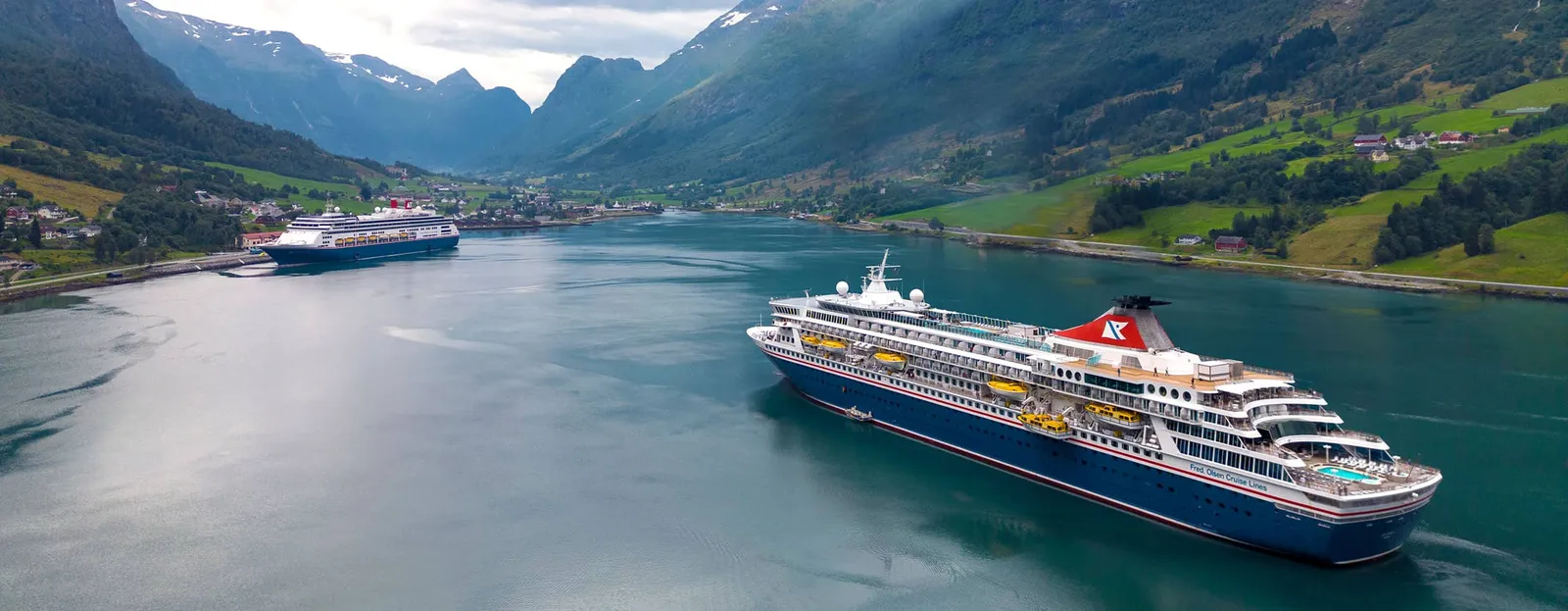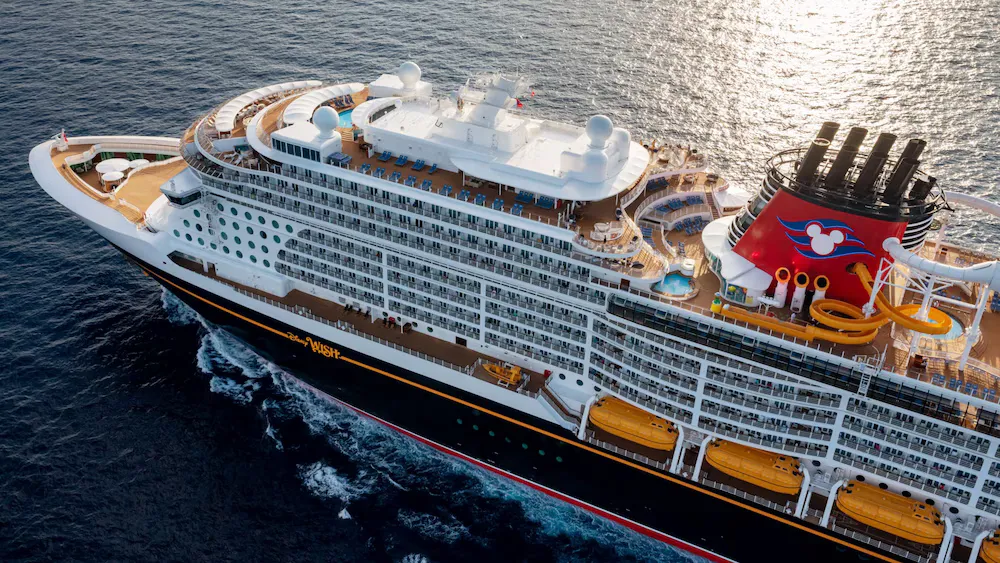
Disney Cruise Line and Nicko Cruises could hardly be more different — one is a premium ocean cruise line built on family magic and global entertainment, the other a German river cruise operator with thirty years on Europe's waterways. Jake Hower explains why comparing them reveals more about the breadth of cruising than about any genuine competition between the two.
| Disney Cruise Line | Nicko Cruises | |
|---|---|---|
| Category | Mainstream | Mainstream / River |
| Rating | ★★★★☆ | ★★★★☆ |
| Fleet size | 7 ships | 20 ships |
| Ship size | Large (2,000–4,000) | River (under 200) |
| Destinations | Caribbean, Alaska, Mediterranean, Northern Europe | European rivers — Danube, Rhine, Elbe, Moselle |
| Dress code | Cruise casual | Smart casual |
| Best for | Families seeking Disney magic at sea | Value European river cruise enthusiasts |
These lines serve entirely different purposes and should never be weighed against each other as alternatives. Disney is the gold standard for family ocean cruising — immersive character experiences, Broadway-calibre shows, waterparks, and kids' clubs that set the industry benchmark. Nicko is a solid, value-oriented German river cruise operator offering scenic European river voyages on intimate ships carrying under 220 guests. Australian families wanting a cruise holiday should choose Disney. Australians wanting a European river cruise at a reasonable price should consider Nicko alongside Viking, AmaWaterways, and other river specialists. The two products have nothing in common beyond the word cruise.
The core difference
Disney Cruise Line is a premium ocean cruise line owned by The Walt Disney Company, operating seven large ships (eight from March 2026) that carry between 2,500 and 6,000 guests each. The experience revolves around Disney’s unmatched entertainment intellectual property — rotational dining with themed restaurants, Broadway-calibre stage productions, character meet-and-greets, world-class kids’ clubs, waterparks, and private island destinations in the Bahamas. Disney sails the Caribbean, Mediterranean, Alaska, Northern Europe, and Southeast Asia from Singapore. The fleet is modern, purpose-built for family entertainment, and commands the highest fares in the mainstream cruise segment.
Nicko Cruises is a German river cruise operator that has been sailing Europe’s waterways since 1994. With approximately 20 river ships plus the ocean-going Vasco da Gama, the company offers an extensive programme covering the Danube, Rhine, Main, Moselle, Elbe, Douro, Rhone, and several more far-flung rivers. Ships carry under 220 passengers in a comfortable four-star hotel-style setting. The philosophy is “time to discover” — a slow-cruising approach prioritising extended port stays, town-centre docking, and independent exploration of riverside villages and cities. The pricing undercuts premium river lines like Viking and AmaWaterways significantly.
The gap between these two lines is not one of quality ranking but of category. Comparing Disney to Nicko is like comparing a theme park resort to a walking holiday in the Austrian countryside — both are valid ways to spend a holiday, but the motivations, expectations, and experiences have virtually nothing in common. This comparison exists to help Australian travellers who are exploring the full spectrum of cruise options understand where each line sits and which one matches their needs.
What is actually included
Disney Cruise Line includes all standard dining across three rotational restaurants and the buffet, room service, character experiences, kids’ club programming from six months through seventeen, Broadway-calibre stage shows, water attractions, and themed deck parties. Gratuities are added at approximately USD $14.50 per person per day. Speciality restaurants, alcoholic beverages, Wi-Fi, and spa treatments are extra. No casino.
Nicko Cruises includes all meals in the main restaurant (breakfast, lunch, and dinner with regional cuisine reflecting the river being sailed), port-side docking in town centres wherever possible, and onboard enrichment. Drinks packages are available at additional cost. Gratuities are not included — Nicko suggests EUR 10 to 13 per person per night. Shore excursions, premium drinks, and Wi-Fi carry additional charges. The base fare covers a comfortable but straightforward river cruise experience.
The inclusion models reflect completely different product categories. Disney’s inclusions centre on entertainment — character experiences, Broadway shows, waterparks, and kids’ clubs represent thousands of dollars in value for families. Nicko’s inclusions centre on the cruise itself — meals, docking in historic town centres, and scenic sailing through river valleys represent the core river cruise proposition. Comparing the two is like comparing what a resort includes versus what a bed-and-breakfast includes — both deliver their promise, but the promises are unrelated.
Dining and culinary experience
Disney’s rotational dining moves families through three uniquely themed restaurants per ship with dedicated waitstaff who follow you throughout the voyage. On the Wish-class ships, Arendelle (Frozen-themed), Worlds of Marvel (interactive Avengers experience), and 1923 (elegant Disney heritage) deliver immersive theming alongside consistently above-average mainstream cruise cuisine. Palo Steakhouse and Enchante offer adults-only premium dining. Children’s menus are thoughtful and varied. Dining is designed as entertainment — an integral part of the Disney experience.
Nicko’s dining is a single-restaurant experience on each river ship, serving regional cuisine that reflects the waterway being sailed — Austrian specialities on the Danube, Alsatian dishes on the Rhine, Portuguese fare on the Douro. The food is comfortable four-star hotel standard, well-prepared without being gastronomically ambitious. Menus typically feature a multi-course dinner with wine available for purchase. The dining atmosphere is social and unhurried, with open seating and the expectation that guests will share tables and conversation. There are no speciality restaurants, no themed dining experiences, and no children’s menus.
The dining comparison illuminates the fundamental difference between ocean and river cruising. Disney treats dining as a theatrical experience with production values, theming, and character interaction. Nicko treats dining as a social ritual connected to the destinations being visited — the food tells the story of the river rather than the story of a Disney film. Both approaches deliver satisfying meals, but the intent and experience are entirely distinct.
Suites and accommodation
Disney Cruise Line offers cabins from Inside Staterooms (approximately 169 to 184 square feet) to the Tower Suite on Wish-class ships (over 1,900 square feet). Family features include split bathrooms, pull-down bunks, and cabins sleeping four or five. The Concierge tier provides a dedicated lounge and priority services. All cabins are on modern, purpose-built ocean ships with contemporary amenities.
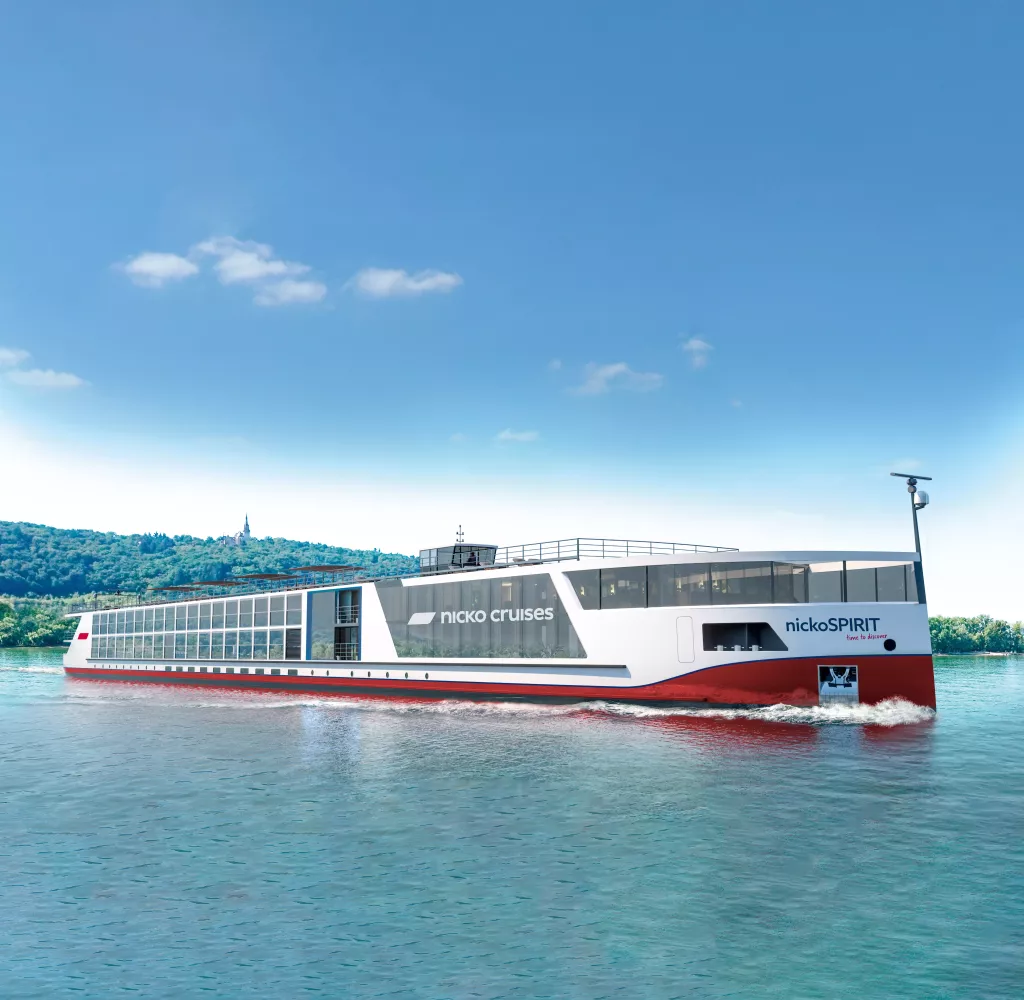
Nicko Cruises offers cabins across approximately 20 river ships, with all cabins being outside-facing with windows or French balconies. The flagship NickoVision carries up to 220 passengers with a split-level layout and extensive glass. Cabin sizes on river ships are compact by necessity — European river lock dimensions constrain ship beam, which limits cabin width. Typical cabins range from approximately 140 to 200 square feet. Suites are available on select ships. The standard is four-star hotel comfort.
The accommodation comparison is shaped by the physical constraints of each environment. Ocean ships can be any width; river ships are limited by lock dimensions to approximately 11.4 metres. Disney’s broadest ships span over 37 metres. The result is that even Disney’s smallest Inside Stateroom offers more space than many river cruise cabins, and the range of cabin categories on a Disney ship dwarfs anything a river vessel can offer. This is not a quality failing on Nicko’s part — it is an engineering reality of river cruising that applies equally to Viking, AmaWaterways, and every other river line.
Pricing and value
Disney Cruise Line commands the highest per-night fares in the mainstream ocean cruise segment. A seven-night Caribbean sailing in a Verandah Stateroom starts from approximately AUD $3,500 to $5,000 per person before flights from Australia. The pricing reflects the entertainment, dining, and kids’ programming quality.
Nicko Cruises is one of the most affordable river cruise lines in Europe. A seven-night Danube cruise starts from approximately EUR 800 to 1,500 per person (roughly AUD $1,300 to $2,500), with pricing that noticeably undercuts Viking, Uniworld, and AmaWaterways. The value proposition is strong for travellers who want a solid European river cruise experience without the premium pricing of the market leaders.
The pricing gap is significant in absolute terms but irrelevant as a comparison metric because the products are not substitutes. A family of four considering a Disney cruise is not also considering a Nicko river cruise — the audiences, expectations, and holiday purposes are entirely different. Nicko’s competitive pricing is relevant only when compared against other river cruise operators (Viking, AmaWaterways, Scenic, Uniworld), not against ocean lines of any type.
Spa and wellness
Disney Cruise Line operates the Senses Spa and Salon — an adults-only retreat with the Rainforest Room featuring heated stone loungers, steam rooms, and aromatic showers. Treatments include massage, facials, and body wraps. The fitness centre is well-equipped. The spa is a valued parental escape from the family programme.
Nicko Cruises offers limited spa facilities on select river ships — typically a small fitness area and sauna. Some ships offer massage treatments. The wellness experience on a river cruise is primarily the cruise itself — watching vineyard-covered hillsides slide past from the sundeck, walking through medieval towns at a gentle pace, and the calming rhythm of river travel. Dedicated spa facilities are modest across the river cruise industry, and Nicko is no exception.
The spa comparison reflects the broader product distinction. Ocean cruise ships have the physical space for dedicated spa complexes. River cruise ships do not — the vessels are simply too small. Travellers who prioritise spa and wellness facilities should look to ocean lines (Disney or otherwise). Travellers who find wellness in gentle physical activity, scenic surroundings, and a slow travel pace will find river cruising inherently restorative, even without dedicated facilities.
Entertainment and enrichment
Disney’s entertainment is world-class. Broadway-calibre original productions — Frozen, Tangled, Hercules — feature professional casts with production values rivalling major theatre districts. Pirate Night with fireworks, character meet-and-greets, first-run films, and themed deck parties create a family entertainment programme that no competitor replicates. The entertainment is the product — it is what families are paying for.
Nicko’s enrichment is destination-focused and low-key. Guest speakers, scenic cruising commentary, cultural demonstrations, and occasional local musicians provide context for the destinations being visited. Evening entertainment is typically limited to music in the lounge or a themed dinner evening. The enrichment is not the product — the destinations are. Nicko’s ships dock in town centres wherever possible, and the expectation is that guests spend their evenings exploring ashore or socialising in the lounge rather than watching shows.
The entertainment gap is absolute and irrelevant. These lines do not compete on entertainment because they do not serve the same purpose. Disney delivers theatrical spectacle. Nicko delivers cultural immersion. Asking which has better entertainment is like asking whether a concert hall or a museum offers better exhibits — the question misunderstands both institutions.
Fleet and destination coverage
Disney Cruise Line operates seven ocean ships (eight from March 2026) sailing the Caribbean and Bahamas, Alaska, the Mediterranean, Northern Europe, and Southeast Asia from Singapore. Two private island destinations in the Bahamas are exclusive to Disney. Ships carry 2,500 to 6,000 guests. The fleet does not sail in Australian waters, but Disney Adventure from Singapore brings the brand within eight hours of Australian east coast cities.
Nicko Cruises operates approximately 20 river ships across the Danube, Rhine, Main, Moselle, Elbe, Douro, Rhone, and other European waterways. The Vasco da Gama operates as an ocean-going vessel on selected itineraries. Ships carry 150 to 220 guests. The fleet has no presence outside Europe and no relevance to the Australian or Asia-Pacific market.
The fleets operate in entirely different bodies of water. Disney sails oceans. Nicko sails rivers. There is no destination overlap whatsoever — even in the Mediterranean, where Disney calls at coastal cities and Nicko does not operate (Nicko’s closest Mediterranean-adjacent offering is the Rhone in southern France). For Australian travellers, Disney is accessible from Singapore. Nicko is accessible only by flying to a European embarkation port on the Danube, Rhine, or another covered waterway.
Where each line excels
Disney Cruise Line excels in:
Family entertainment. No ocean cruise line matches Disney’s character experiences, Broadway shows, waterparks, and themed dining. For families with children under twelve who love Disney, the experience is genuinely magical and impossible to replicate elsewhere.
Kids’ programming. The Oceaneer Club is the industry benchmark. Immersive, character-driven, exceptionally staffed, and covering ages six months through seventeen. No river cruise line offers anything comparable.
Modern fleet design. Purpose-built ships with innovative water attractions, family-friendly cabin layouts, and entertainment facilities that rival shoreside theme parks. The Wish-class ships represent the current peak of mainstream family cruise design.
Nicko Cruises excels in:
Value European river cruising. Nicko undercuts the premium river cruise brands significantly while delivering a solid four-star experience. For budget-conscious travellers wanting a Danube, Rhine, or Moselle river cruise, Nicko offers genuine value.
Town-centre docking. River ships dock right in the heart of historic towns — guests walk off the gangway directly into medieval old towns, riverside markets, and vineyard villages. This proximity to destinations is physically impossible for ocean ships.
Unhurried pace and extended port stays. Nicko’s “time to discover” philosophy prioritises independent exploration and generous port time over back-to-back excursions. The slow-travel approach suits travellers who want cultural immersion rather than entertainment.
Standout itineraries for Australian travellers
Disney Adventure from Singapore (3 and 4 nights, from March 2026) is the headline recommendation for Australian families. An eight-hour flight, a purpose-built ship, and short itineraries that suit families with young children. This is the most accessible Disney option from Australia.
Disney Wish or Disney Treasure: Eastern Caribbean (7 nights, from Port Canaveral) delivers the full Disney experience — Castaway Cay, character dining, Broadway shows. The long flight from Australia requires planning. Allow a pre-cruise night in Orlando.
Nicko NickoVision: Classic Danube (7 to 10 nights, Passau to Budapest or Vienna to Budapest) is Nicko’s flagship itinerary. The largest ship in the fleet (220 guests) sails the Danube through Austria, Slovakia, and Hungary, docking in the heart of Vienna, Bratislava, and Budapest. For Australians planning a European holiday, this river cruise makes an excellent supplement to a land-based itinerary. Fly to Munich or Vienna and connect to Passau by rail.
Nicko: Rhine and Moselle (7 nights, Amsterdam to Basel or similar) sails through the Netherlands, Germany, and Switzerland past castles, vineyards, and the dramatic Rhine Gorge. The NickoSPIRIT (170 guests) offers a more intimate experience. Combine with a land stay in Amsterdam, the Swiss Alps, or the Black Forest.
Ship-by-ship recommendations
Disney Wish, Disney Treasure, and Disney Destiny (approximately 4,000 guests each) are Disney’s newest ocean ships and the recommended choice for a first Disney cruise. The AquaMouse, three immersive rotational restaurants, expanded kids’ club facilities, and Broadway-calibre shows represent the current peak of the Disney product.
Disney Adventure (approximately 6,000 guests, from Singapore, March 2026) is the practical choice for Australian families — the shortest flight and the newest ship in the fleet.
NickoVision (up to 220 guests) is Nicko’s flagship river ship, sailing the Danube with a split-level design, extensive glass, and the most spacious public areas in the fleet. The recommended choice for a first Nicko experience.
NickoSPIRIT (170 guests) offers a more intimate river cruise experience on the Rhine and Moselle. The smaller guest count creates a boutique atmosphere closer to a floating hotel than a cruise ship.
Vasco da Gama (approximately 1,000 guests) is Nicko’s ocean-going vessel — a mid-size ship offering a very different experience from the river fleet. Occasionally deployed on European coastal itineraries. Relevant only for travellers seeking Nicko’s style in an ocean-going format.
For Australian travellers specifically
The practical relevance of these two lines for Australian travellers could not be more different — Disney is a genuine option from Australia, while Nicko requires specific European travel planning.
Disney Cruise Line is accessible to Australians primarily through Singapore (from March 2026, eight-hour flight), with Caribbean and European sailings requiring longer international flights. Singapore is the clear recommendation for Australian families. Bookings through Australian travel agents are supported, and specialist cruise agents provide expertise in the complex logistics of Disney fly-cruise itineraries from Australia.
Nicko Cruises is accessible to Australians only through European embarkation ports — typically Passau (for Danube sailings), Amsterdam or Basel (for Rhine sailings), or other river-specific ports. There is no Australian booking channel, no AUD pricing, and no local sales presence. English-language Nicko sailings are booked through UK specialist agents such as Light Blue Travel. The appeal for Australians is niche: those planning an extended European holiday who want to incorporate a value-oriented river cruise as part of the itinerary.
The decision framework is simple. Australian families wanting a cruise holiday should look at Disney (from Singapore), Royal Caribbean (from Sydney), Norwegian, or MSC. Australians wanting a European river cruise should compare Nicko against Viking, AmaWaterways, Scenic, and Uniworld. These are separate decisions that happen to share the word “cruise” and rarely intersect.
The onboard atmosphere
Disney Cruise Line is joyful, immersive, and family-oriented. Characters roam the ship, children wear costumes, and the energy is celebratory from dawn to the fireworks. The passenger mix is families, multigenerational groups, and Disney enthusiasts from around the world. The atmosphere is magical, meticulously curated, and designed to make every guest — regardless of age — feel the Disney wonder.
Nicko Cruises is quiet, scenic, and culturally oriented. The atmosphere aboard a Nicko river ship is akin to a small European hotel floating through the landscape. Guests read on the sundeck as vineyards pass, gather in the lounge for a lecture on the history of the region, and walk off the ship directly into the town square of a medieval village. The passenger mix is predominantly German (with growing English-language sailings), mature, and culturally curious. The pace is gentle, the expectations are modest, and the emphasis is on the world outside the windows rather than the experience inside the ship.
The atmospheric contrast is total. Disney is spectacle. Nicko is serenity. A child who has sailed Disney would find a Nicko river cruise unbearably quiet. An older traveller who treasures Nicko’s gentle pace would find Disney overwhelmingly loud. Both atmospheres are exactly right for their intended guests — and completely wrong for the other’s.
The bottom line
Disney Cruise Line and Nicko Cruises are not competitors, alternatives, or even inhabitants of the same market segment. They share only the word “cruise” — and even that word means something fundamentally different on an ocean liner carrying 4,000 families through the Caribbean and a river ship carrying 170 guests down the Danube.
Choose Disney for the finest family ocean cruise experience available. Choose it for character magic, rotational dining, Broadway shows, waterparks, and the best kids’ clubs at sea. Choose Disney Adventure from Singapore for the most accessible Disney option from Australia. Accept the premium pricing and the need for international flights.
Choose Nicko for an affordable, unhurried European river cruise that docks in the heart of historic towns. Choose it for the Danube, Rhine, Moselle, or Elbe — for vineyard hills, medieval villages, and the gentle rhythm of river travel. Choose it as part of a broader European holiday, booked through specialist agents, for travellers who value cultural immersion and scenic tranquillity over entertainment and activity. Accept the modest facilities, the limited English-language options, and the need to fly to Europe.
For Australian families, Disney is the relevant option. For Australian travellers planning a European cultural holiday with a river cruise component, Nicko offers genuine value against the premium river brands. These are separate decisions for separate travellers — and understanding that distinction is the most useful outcome of this comparison.