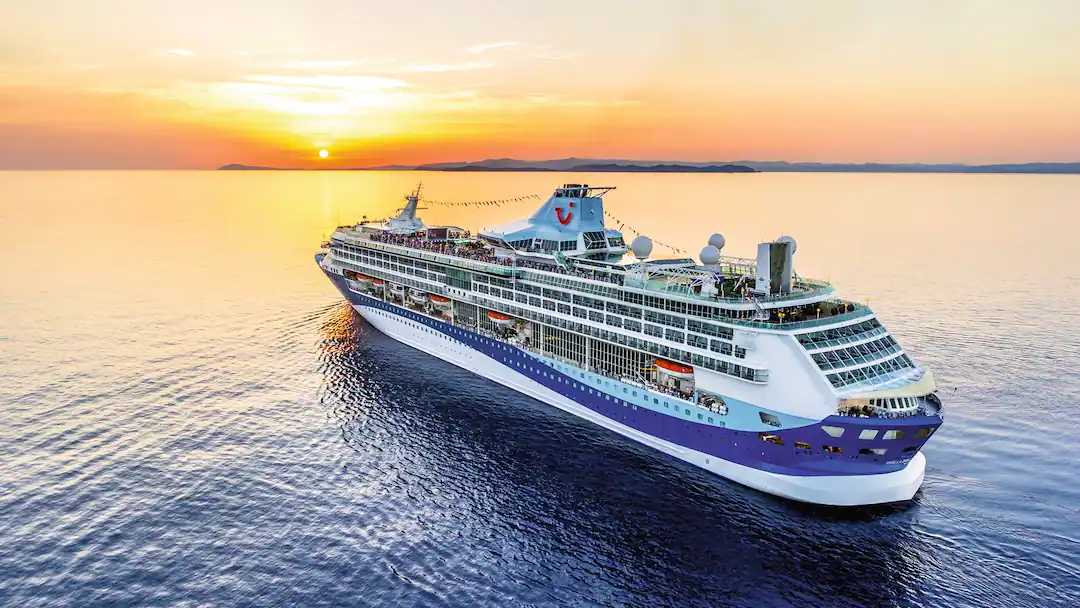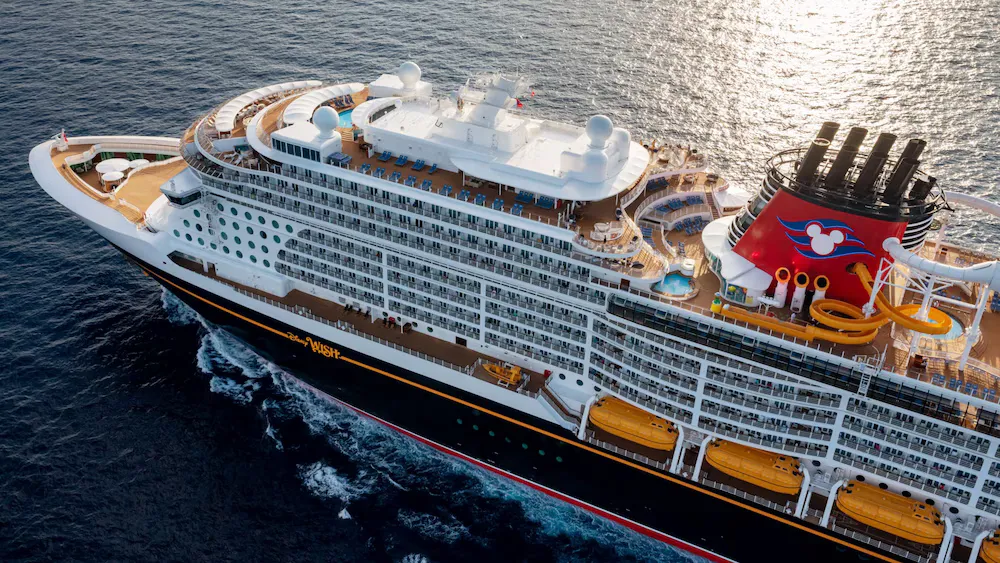
Disney Cruise Line and Fred. Olsen Cruise Lines are not natural competitors — one is a premium American family brand built on storytelling and character magic, the other a traditional British cruise line sailing smaller ships from UK homeports. But Australian travellers researching broadly may encounter both. Jake Hower explains what each line does best and who they genuinely serve.
| Disney Cruise Line | Fred. Olsen Cruise Lines | |
|---|---|---|
| Category | Mainstream | Mainstream |
| Rating | ★★★★☆ | ★★★★☆ |
| Fleet size | 7 ships | 3 ships |
| Ship size | Large (2,000–4,000) | Mid-size (1,000-2,500) |
| Destinations | Caribbean, Alaska, Mediterranean, Northern Europe | Northern Europe, Norwegian Fjords, Mediterranean, Canary Islands |
| Dress code | Cruise casual | Smart casual |
| Best for | Families seeking Disney magic at sea | British travellers seeking scenic itineraries |
These lines serve entirely different markets. Disney is the gold standard for family cruising — immersive character experiences, Broadway-calibre shows, and the best kids' clubs at sea, delivered on modern ships at premium pricing. Fred. Olsen is a traditional British cruise line for mature travellers who value scenic itineraries, personal service, and ex-UK departures on smaller, classic ships. Australian families should choose Disney for a once-in-a-lifetime family celebration, particularly via Disney Adventure from Singapore. Australians drawn to traditional British cruising, Norwegian Fjords, and unhurried scenic voyages should consider Fred. Olsen — but be aware it is a UK-focused product with no Australian presence.
The core difference
Disney Cruise Line is a premium family entertainment brand at sea. Seven ships (eight from March 2026) deliver an experience built entirely around Disney’s unmatched intellectual property — character meet-and-greets, rotational dining with dedicated waitstaff, Broadway-calibre original productions, and themed environments where every detail supports the story. The fleet carries approximately 2,500 to 6,000 guests per ship on modern vessels sailing the Caribbean, Mediterranean, Alaska, Northern Europe, and Southeast Asia from Singapore. The passenger mix is overwhelmingly families with children, supplemented by Disney-fan couples and multigenerational groups. Premium pricing reflects a curated, high-quality product.
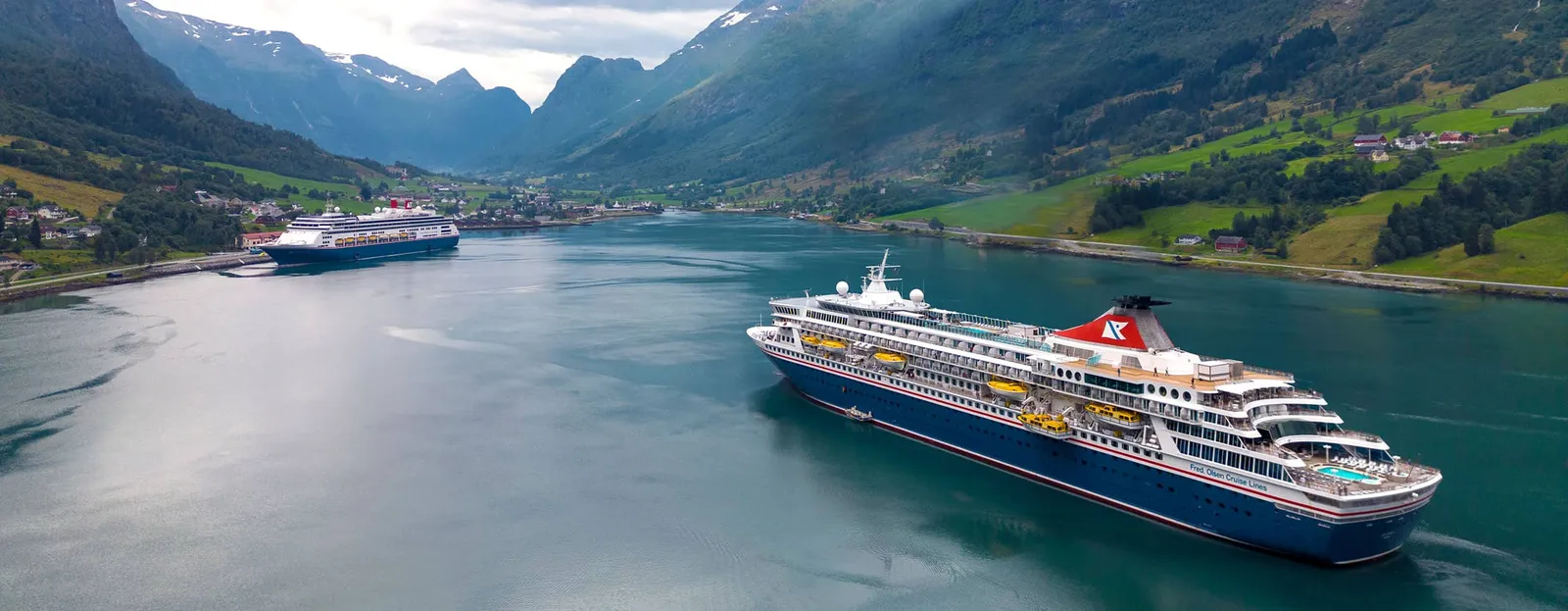
Fred. Olsen Cruise Lines is a traditional British cruise line with Norwegian ownership heritage, founded in 1848 and now operating three ships — Bolette, Borealis, and Balmoral — carrying no more than 1,300 guests each. The ships sail almost exclusively from UK homeports, serving an overwhelmingly British passenger base of mature travellers who value scenic itineraries, personal service, and the classic cruise ship experience. Wraparound promenade decks, two-sitting dinners, enrichment lectures, and a warm country-house atmosphere define the brand. Borealis is designated adults-only. The pricing is modest, the ships are older but well-maintained, and the experience is deliberately unhurried.
These two lines have almost nothing in common. They serve different demographics, operate in different regions, price at different levels, and deliver fundamentally different onboard experiences. The comparison exists because both fall within the mainstream cruise category, but the reality is that a family choosing between Disney and Fred. Olsen would be choosing between two entirely separate holiday concepts. Understanding both lines helps Australian travellers narrow their search rather than weigh a genuine either-or decision.
What is actually included
Disney Cruise Line includes all standard dining across three rotational restaurants plus the buffet, room service, character experiences and meet-and-greets, kids’ club programming from six months through seventeen, Broadway-calibre stage shows, water attractions, and themed deck parties. Gratuities are added at approximately USD $14.50 per person per day. Speciality restaurants, alcoholic beverages, Wi-Fi, and spa treatments are extra. No casino.
Fred. Olsen Cruise Lines includes all main dining room meals and buffet options, room service, enrichment lectures and guest speakers, scenic cruising commentary, entertainment shows, and — from 2026 — drinks at mealtimes included in the fare. Bar prices outside mealtimes remain notably lower than competitors. Gratuities are not included but are discretionary. Wi-Fi, shore excursions, spa treatments, and premium drinks are extra.
The inclusion models reflect different value propositions. Disney includes a comprehensive family entertainment programme that would cost thousands if priced separately — kids’ clubs, character experiences, and Broadway shows represent genuine included value for families. Fred. Olsen’s new drinks-at-mealtimes inclusion is a meaningful addition for its target market, and the low onboard prices generally keep the total spend modest. Neither line operates an all-inclusive model, but the spending patterns aboard are very different — Disney families spend on character dining upgrades, photo packages, and speciality restaurants, while Fred. Olsen guests spend modestly on drinks, shore excursions, and spa treatments.
Dining and culinary experience
Disney’s rotational dining is the line’s signature innovation. Three themed restaurants per ship, with your dedicated waitstaff following you through each one — by the second evening, your servers know your family’s preferences intimately. On the Wish-class ships, Arendelle (Frozen-themed), Worlds of Marvel (Avengers interactive experience), and 1923 (elegant Disney heritage) deliver immersive theming alongside food that is consistently above mainstream cruise standards. Palo Steakhouse and Enchante offer premium adults-only dining at additional cost. Children’s menus are thoughtful and varied.
Fred. Olsen’s dining is traditional British cruise cuisine — two-sitting dinners in the main restaurant with menus that blend British favourites (roast beef and Yorkshire pudding, fish and chips, sticky toffee pudding) with dishes inspired by the destinations being visited. The food is reliable, well-prepared comfort dining rather than gastronomically ambitious. The atmosphere in the dining room is classic — white tablecloths, attentive service, and a convivial warmth that reflects the line’s country-house ethos. There are no speciality restaurant surcharges on most Fred. Olsen ships, and the inclusive approach means dining choices are straightforward.
The comparison here is not about quality so much as intent. Disney designs dining as entertainment — the themed restaurants, the interactive elements, and the continuity of dedicated waitstaff transform dinner into an experience. Fred. Olsen designs dining as a social ritual — the two-sitting format encourages table friendships, the menu is familiar and comforting, and the evening meal is a centrepiece of the day’s programme. For families with children, Disney’s approach is infinitely more engaging. For mature couples seeking convivial dinner conversation and traditional cruise dining, Fred. Olsen delivers exactly what its guests want.
Suites and accommodation
Disney Cruise Line offers cabins from Inside Staterooms (approximately 169 to 184 square feet) to the Tower Suite on Wish-class ships (over 1,900 square feet). Family-oriented design features include split bathrooms, pull-down bunk beds, and staterooms that sleep four or five. The Concierge tier provides a dedicated lounge and priority services. The cabin product is modern, well-maintained, and designed for families.
Fred. Olsen Cruise Lines offers cabins ranging from Inside Single Cabins to suites on Bolette, Borealis, and Balmoral. The standout feature is the fleet’s exceptional provision for solo travellers — over 50 dedicated single cabins across the three ships, a number that few cruise lines match. Suites are traditional in design, with sitting areas and picture windows or balconies. Borealis and Bolette, former Holland America vessels, offer generous space-per-guest ratios (Borealis at 45.5, among the highest in the mainstream sector). The accommodation is comfortable four-star standard rather than contemporary luxury.
The accommodation comparison reflects the age and purpose of the respective fleets. Disney’s ships are modern and purpose-built for family cruising. Fred. Olsen’s ships are classic vessels with higher-than-average space ratios and a traditional aesthetic. For families, Disney’s cabin design is clearly superior. For solo travellers, Fred. Olsen’s dedicated single cabins are among the best in the industry — a niche that Disney does not address at all.
Pricing and value
Disney Cruise Line is the most expensive mainstream cruise line. Seven-night Caribbean sailings in a Verandah Stateroom start from approximately AUD $3,500 to $5,000 per person before flights from Australia. Wish-class ships command a premium. Disney rarely discounts aggressively.
Fred. Olsen Cruise Lines is one of the most affordable cruise lines in the UK market. A seven-night sailing from a UK homeport starts from approximately GBP 700 to 1,200 per person (roughly AUD $1,400 to $2,400), with no flights required for UK-based passengers. Longer voyages of 14 to 28 nights offer strong per-night value. For Australian travellers, the cost of return flights to the UK (AUD $2,000 to $4,000 per person) must be added.
The pricing comparison is misleading in isolation because the products are so fundamentally different. Paying less for Fred. Olsen does not mean getting a budget version of Disney — it means getting an entirely different holiday. The relevant comparison for Australian families is Disney versus other family-focused mainstream lines. The relevant comparison for Australians interested in Fred. Olsen is against other traditional British lines like P&O Cruises, Saga, or Cunard.
Spa and wellness
Disney Cruise Line operates the Senses Spa and Salon — an adults-only retreat with the Rainforest Room featuring heated stone loungers, steam rooms, and aromatic showers. Treatments include massage, facials, and body wraps. The fitness centre is compact but well-equipped. The spa primarily serves as a parental escape from the family programme.
Fred. Olsen Cruise Lines offers spa facilities across the fleet with treatment rooms, sauna, and fitness equipment. The spas are modest in scale, reflecting the ships’ size and the guest demographic. Treatments are competitively priced compared to larger cruise lines. The open deck space — including wraparound promenade decks designed for walking and scenic viewing — serves as a different kind of wellness, suited to the line’s emphasis on fresh air, scenic cruising, and gentle physical activity.
Neither line is a spa destination. Disney’s Rainforest Room is the more polished facility. Fred. Olsen’s open decks and promenade walks offer a different form of relaxation that suits its older, scenery-focused passenger base. Travellers for whom spa and wellness are a primary motivation would be better served by premium or luxury lines with dedicated wellness programmes.
Entertainment and enrichment
Disney’s entertainment is world-class and purpose-built. Broadway-calibre original productions — Frozen, Tangled, Hercules — feature professional casts and production values comparable to major theatre districts. Pirate Night with fireworks at sea, character meet-and-greets throughout the day, first-run films in the onboard cinema, and themed deck parties create a programme that is immersive, energetic, and uniquely Disney. The entertainment alone justifies the fare premium for families with young children.
Fred. Olsen’s entertainment reflects a traditional British cruise philosophy. Enrichment lectures from guest speakers — historians, naturalists, former diplomats — are a highlight for the intellectually curious passenger base. Scenic cruising commentary as the ship navigates fjords and archipelagos is a form of entertainment unique to destination-focused itineraries. Evening entertainment includes shows from the resident entertainment team, guest performers, and themed evenings, but the scale and production quality are modest compared to any large-ship line. The real evening entertainment on Fred. Olsen is conversation in the bar, quizzes, and the social programme for solo travellers.
The entertainment gap between these two lines is the widest of any section in this comparison. Disney operates at a level that competes with West End theatre. Fred. Olsen operates at a level that competes with a good hotel’s evening programme. Neither is failing to deliver for its target audience — Disney guests expect spectacle, and they receive it; Fred. Olsen guests expect enrichment and companionship, and they receive those. But a family expecting Disney-level entertainment on Fred. Olsen would be profoundly disappointed, and a mature couple expecting Fred. Olsen’s quiet enrichment on Disney would feel overwhelmed.
Fleet and destination coverage
Disney Cruise Line operates seven ships (eight from March 2026) sailing the Caribbean and Bahamas, Alaska, the Mediterranean, Northern Europe, and Southeast Asia from Singapore. Two private island destinations in the Bahamas are exclusive to Disney. The fleet does not sail in Australian waters, but Disney Adventure from Singapore brings the brand within eight hours of Australian east coast cities.
Fred. Olsen Cruise Lines operates three ships sailing from UK homeports to the Norwegian Fjords, Canary Islands, British Isles, Iceland, the Mediterranean, and on extended voyages to the Caribbean, Scandinavia, and circumnavigations. The ships’ modest size (under 1,300 guests) allows access to smaller ports and scenic waterways that larger vessels cannot navigate. The ex-UK sailing programme means no flights for UK-based passengers. Fred. Olsen does not sail in Australian waters and has no presence in the Pacific or Asian markets.
For Australian travellers, both lines require international flights — Disney to North America, Europe, or Singapore; Fred. Olsen to the United Kingdom. Disney’s Singapore option is the more accessible from Australia. Fred. Olsen’s appeal for Australians lies specifically in the UK departure experience — board in Southampton, cruise to the Norwegian Fjords or Canary Islands, and return to the UK without a flight — which is compelling for Australians who are already visiting the UK or who hold dual UK-Australian citizenship.
Where each line excels
Disney Cruise Line excels in:
Family entertainment and immersion. No cruise line can replicate Disney’s intellectual property. Character experiences, rotational dining, Broadway-calibre shows, and private island destinations create a family cruise experience that exists nowhere else. For children under twelve who love Disney, this is the definitive cruise choice.
Kids’ club programming. The Oceaneer Club is the industry benchmark — immersive, character-driven, and exceptionally well-staffed. Programming from six months through seventeen means every child is catered for.
Modern fleet and design. Disney’s ships are modern, purpose-built, and meticulously maintained. The Wish-class ships represent the current peak of mainstream family cruise design, with innovative water attractions, themed dining, and family-friendly cabin layouts.
Fred. Olsen excels in:
Solo traveller provision. Over 50 dedicated single cabins across three ships, plus a daily programme of social events for solo guests, make Fred. Olsen one of the best cruise lines in the world for people travelling alone. Disney does not cater specifically to solo travellers.
Scenic itineraries from UK homeports. The Norwegian Fjords, British Isles, Canary Islands, and Iceland programmes — all sailing from UK ports without flights — are Fred. Olsen’s sweet spot. The smaller ships access fjord villages and island harbours that larger vessels cannot reach.
Traditional cruise atmosphere. For travellers who miss the classic cruise experience — wraparound promenade decks, two-sitting dinners, enrichment lectures, and a warm social atmosphere — Fred. Olsen preserves a way of cruising that modern ships have largely abandoned.
Standout itineraries for Australian travellers
Disney Adventure from Singapore (3 and 4 nights, from March 2026) is the standout Disney option for Australians. An eight-hour flight from Sydney or Melbourne brings families to the most accessible Disney cruise embarkation port. The short itinerary length suits families with young children or limited leave. Disney Adventure will be the largest ship in the fleet with unique regional attractions.
Disney Wish or Disney Treasure: Eastern Caribbean (7 nights, from Port Canaveral) delivers the full Disney experience — Castaway Cay, Caribbean ports, Broadway shows, and the complete rotational dining programme. The long flight from Australia is the cost of entry. Allow a pre-cruise night in Orlando.
Fred. Olsen Borealis: Norwegian Fjords (7 to 14 nights, from Southampton or Edinburgh) is the definitive Fred. Olsen experience for Australians already planning a UK visit. The adults-only ship navigates deep into Norwegian fjords, visiting villages and harbours that mega-ships cannot access. Combine with a UK land holiday before or after the cruise. Fly to London and train to Southampton, or fly to Edinburgh for northern departures.
Fred. Olsen Bolette: Canary Islands (14 nights, from Southampton) offers warm-weather cruising from a UK homeport — a popular autumn and winter option. The two-week format and relaxed pace suit Australian retirees spending an extended period in the UK who want a cruise without additional flights.
Ship-by-ship recommendations
Disney Wish, Disney Treasure, and Disney Destiny (approximately 4,000 guests each) are Disney’s newest ships and the recommended choice for a first Disney cruise. The AquaMouse, three immersive rotational restaurants, and expanded kids’ club facilities represent the current peak of the Disney product.
Disney Adventure (approximately 6,000 guests, from Singapore, March 2026) is the practical choice for Australian families — the shortest flight and the newest ship. Purpose-built for the regional market with unique dining and entertainment.
Borealis (approximately 1,360 guests, adults-only) is the recommended Fred. Olsen ship for Australian travellers without children. The highest space-per-guest ratio in the fleet (45.5), adults-only designation, and scenic itineraries from UK ports make it the best expression of the Fred. Olsen experience.
Bolette (approximately 1,360 guests, families welcome) is the alternative for multigenerational groups or families who want the Fred. Olsen experience. Similar space ratios to Borealis but without the adults-only restriction.
Balmoral (approximately 1,325 guests) is the oldest ship in the fleet with a slightly lower space ratio (32.9) but carrying a loyal following. The longer itineraries — including extended Caribbean voyages and circumnavigations — are Balmoral’s strength.
For Australian travellers specifically
The practical considerations for Australian travellers considering either line are shaped by geography and access more than by onboard product.
Disney Cruise Line is accessible to Australians primarily through three pathways: Singapore (from March 2026, eight-hour flight), North American ports (20-plus hour journeys to Port Canaveral, Miami, or Vancouver), and European ports (20-plus hours to Barcelona, Rome, or Copenhagen). Singapore is the clear recommendation for most Australian families. The line does not have a dedicated Australian sales office, but bookings through Australian travel agents are supported and recommended for handling the complex logistics of fly-cruise itineraries from Australia.
Fred. Olsen Cruise Lines is accessible to Australians only by flying to the United Kingdom — specifically to London (for Southampton departures) or regional UK airports (for Liverpool, Dover, or Edinburgh departures). The line has no Australian presence, no Australian website, and no regional sales support. Australian travellers typically book through UK agents or specialist cruise agents with UK knowledge. The appeal is niche but genuine: Australians with British heritage, dual citizenship, or planned UK holidays who want to add a cruise without additional flights within Europe.
The loyalty programmes are both modest. Disney’s Castaway Club escalates with number of sailings — Silver, Gold, Platinum — offering priority booking and onboard gifts. Fred. Olsen’s Oceans programme rewards repeat guests with onboard credit, cabin upgrades, and exclusive events. For Australians who are unlikely to cruise either line frequently due to geographic distance, the loyalty programmes are pleasant bonuses rather than decision drivers.
The onboard atmosphere
Disney Cruise Line is joyful, immersive, and family-oriented. Characters roam the ship, children wear costumes to dinner, and the horn plays “When You Wish Upon a Star” at every departure. The energy is celebratory, the design is meticulous, and the atmosphere makes adults feel like children again — which is precisely the point. The passenger mix is families and Disney enthusiasts from around the world. There is no casino, and the overall tone is wholesome without being cloying.
Fred. Olsen Cruise Lines is warm, traditional, and British. The atmosphere aboard Borealis, Bolette, and Balmoral evokes a country house at sea — convivial dinners with newfound friends, enrichment lectures in the morning, scenic cruising with commentary in the afternoon, and quiet evenings in the bar with a nightcap. The passenger mix is overwhelmingly British, predominantly retired or semi-retired, and repeat guests are common. Solo travellers are a visible and welcomed presence. The pace is unhurried, the expectations are modest, and the emphasis is on companionship and destination rather than spectacle.
These atmospheres have virtually nothing in common, which is the clearest indicator that these two lines serve different markets. An Australian family with young children would find Fred. Olsen bewilderingly quiet. An Australian retiree seeking traditional British cruising would find Disney overwhelmingly loud. The onboard atmosphere alone should guide the choice — and for most travellers, the right line will be immediately obvious.
The bottom line
Disney Cruise Line and Fred. Olsen Cruise Lines are not meaningfully comparable products. Placing them side by side reveals more about the breadth of the cruise industry than about any genuine competition between the two brands.
Choose Disney for the finest family cruise experience available at sea. Choose it for rotational dining, Broadway-calibre shows, character experiences, and kids’ clubs that set the industry standard. Choose it for Disney Adventure from Singapore — finally, a Disney cruise within easy reach of Australian families. Accept the premium pricing, the family-centric atmosphere, and the logistics of fly-cruise travel from Australia.
Choose Fred. Olsen for traditional British cruising on smaller, friendlier ships with scenic itineraries from UK homeports. Choose it if you are an Australian planning a UK visit and want to add a Norwegian Fjords or Canary Islands cruise without additional flights within Europe. Choose it for the exceptional solo traveller provision — over 50 dedicated single cabins and a genuine social programme. Choose it for the unhurried pace, the enrichment lectures, and the country-house warmth that modern cruise ships have largely abandoned. Accept the dated ship interiors, the limited entertainment programme, and the exclusively UK-focused embarkation.
For Australian families, this is not a genuine choice — Disney is the family cruise line, and Fred. Olsen is a niche British product with limited relevance to the Australian market. For Australian solo travellers or retirees with British connections, Fred. Olsen offers something that Disney does not attempt. The two lines exist in different worlds, and understanding that distinction is more valuable than any head-to-head ranking.