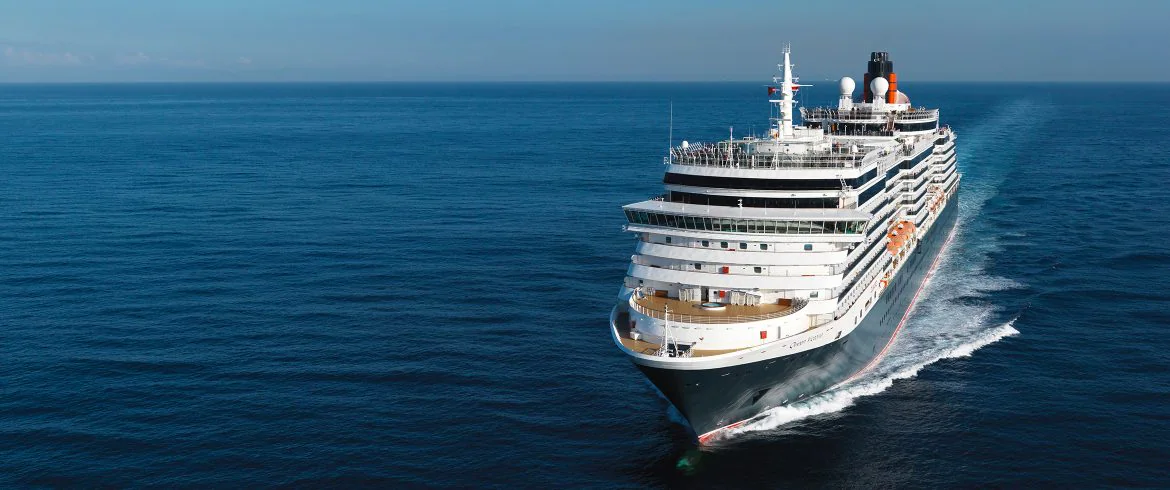
Cunard Line and Oceania Cruises both attract mature, cultured travellers who value substance over spectacle — but one fills evenings with gala balls and ballroom dancing while the other fills them with Jacques Pepin's French bistro and hands-on cooking classes. Jake Hower compares heritage formality with culinary immersion for Australian travellers weighing these two refined lines.
| Cunard Line | Oceania Cruises | |
|---|---|---|
| Category | Luxury | Luxury |
| Rating | ★★★★★ | ★★★★☆ |
| Fleet size | 4 ships | 8 ships |
| Ship size | Mid to Large | Mid-size (1,000-2,500) |
| Destinations | Global | Mediterranean, Asia, South Pacific, Caribbean |
| Dress code | Formal evenings | Country club casual |
| Best for | Tradition lovers | Food-focused culturally curious cruisers |
Oceania is the stronger choice for food-motivated Australian travellers who want included speciality dining across up to ten restaurants, a professional cooking school, country club casual dress code, and mid-size ships without formal evenings. Cunard is the right choice for travellers drawn to British maritime heritage, gala evenings, ballroom dancing, the irreplaceable QM2 Transatlantic Crossing, and the Grills butler service experience. Oceania's recent Australian debut with Riviera sailing from Sydney makes it increasingly accessible for domestic travellers. Cunard's withdrawal from Australian homeporting means fly-cruise from international ports for most itineraries. Both lines attract cultured, well-travelled couples — the deciding factor is whether your ideal evening involves a ballroom or a bistro.
The core difference
Cunard Line and Oceania Cruises both target well-travelled couples over 55 who value quality, enrichment, and civilised onboard atmospheres. Both excel in the Mediterranean. Both attract passengers who have outgrown mainstream cruising. The overlap in passenger profile is genuine — and yet the onboard experience feels fundamentally different, because these lines have made opposite bets on what sophisticated travellers value most.
Cunard has bet on occasion. Founded in 1840, the line carries 185 years of British maritime heritage into four ships — Queen Mary 2, Queen Victoria, Queen Elizabeth, and Queen Anne — sailing 2,061 to 2,996 guests each. The brand identity is formal British tradition: Gala Evenings with dinner jackets and evening gowns, ballroom dancing with a live orchestra, white-gloved afternoon tea, and a class-separated dining hierarchy. The voyage itself is the destination. The ritual of dressing for dinner, descending the grand staircase, and dancing in the Queens Room is not incidental to the Cunard experience — it IS the Cunard experience.
Oceania has bet on cuisine. The line’s trademarked claim to “The Finest Cuisine at Sea” is backed by Jacques Pepin — former personal chef to three French heads of state, author of thirty cookbooks, and Oceania’s Executive Culinary Director since 2003. Eight ships carry 684 to 1,250 guests. Up to ten dining venues are included without surcharges. The onboard Culinary Center offers hands-on cooking classes at professional workstations. Culinary Discovery Tours take guests to local markets with the ship’s chef before cooking regional dishes. The dress code is Country Club Casual. The port is the destination. The food is the event.
For Australian travellers, the practical question has become clearer. Oceania’s Riviera now sails from Sydney. Cunard has withdrawn from Australian homeporting. The accessibility gap, combined with the food-versus-formality decision, frames this comparison clearly.
What is actually included
The inclusion models differ significantly, and the gap favours Oceania at the entry level.
Oceania’s “Your World Included” programme covers all speciality dining without surcharges across up to ten restaurants, shipboard gratuities, unlimited Wi-Fi, speciality coffees, laundry services, and in-stateroom dining. From September 2025 bookings, guests choose between complimentary wine and beer at meals or a shore excursion credit. La Reserve by Wine Spectator and Privee Dom Perignon carry surcharges.
Cunard’s Britannia fare covers accommodation, main restaurant dining, buffet meals, afternoon tea, basic beverages, entertainment, and gym access. Alcoholic drinks, speciality dining surcharges, Wi-Fi, shore excursions, spa access, and gratuities are extra. Grills suites add dedicated restaurants, lounges, concierge, and butler service — but Wi-Fi and excursions remain additional.
The practical difference for a 7-night Mediterranean voyage is substantial. An Oceania guest accesses ten restaurants, included gratuities, Wi-Fi, and laundry services without additional charge. A Cunard Britannia guest must pay for speciality dining, drinks, Wi-Fi, and gratuities — extras that can add hundreds per person per week.
Dining and culinary experience
This is the comparison point that matters most — because dining is Oceania’s identity and the area where the gap is widest.
Oceania is a restaurant ship. On O-class vessels, guests choose nightly from Jacques (French bistro), Polo Grill (premium steakhouse), Red Ginger (pan-Asian), Toscana (Italian), Aquamar Kitchen (wellness), The Grand Dining Room, Terrace Cafe, and Waves Grill — up to ten venues, all included. The Culinary Center offers hands-on cooking classes at professional workstations. Culinary Discovery Tours visit local markets. Every restaurant is open to every guest regardless of stateroom category. No surcharges, no class separation, no restrictions. Jacques Pepin’s namesake bistro — modelled on a Parisian restaurant with antiques from his personal collection — is genuinely outstanding.
Cunard’s dining is hierarchical and class-separated. Your cabin determines your restaurant. Britannia guests eat in the Britannia Restaurant at assigned tables. Grills guests eat in their exclusive venues. Guests cannot cross tiers. Speciality restaurants carry surcharges of approximately USD $18.50 to $65 per person. The afternoon tea is the finest at sea. The Queens Grill bespoke menu service is exceptional.
The verdict is clear for most travellers: Oceania delivers the wider, more accessible, and more comprehensively included dining programme. The only Cunard dining experiences that surpass Oceania are the Queens Grill bespoke menus and the afternoon tea — and the Queens Grill requires paying for the highest stateroom tier. For food-motivated travellers, Oceania is the definitive choice.
Suites and accommodation
Both lines offer quality accommodation with different philosophies.
Oceania’s O-class Veranda staterooms start from 282 to 291 square feet including a private veranda — generous for the segment. Penthouse Suites reach 440 square feet. Owner’s Suites span approximately 2,000 square feet. Butler service is available from Penthouse level. R-class staterooms are tighter at 165 to 216 square feet. All suites feature Prestige Tranquility Beds and Bulgari amenities.
Cunard’s range spans Britannia Inside at approximately 152 square feet through to Queens Grill Grand Duplexes at 2,249 square feet on QM2. The hierarchy is explicit — higher tiers receive larger rooms, better locations, exclusive dining, and butler service. Queen Anne expanded the Britannia Club category significantly.
Oceania’s entry-level cabin is larger and always includes a balcony. Cunard’s range extends lower (cheaper inside cabins) and higher (palatial Grills suites with butler service). For most travellers comparing equivalent categories, Oceania provides more space per dollar at the standard and mid-tier levels.
Pricing and value
The pricing comparison requires factoring in Oceania’s substantially broader inclusions.
Cunard’s per-diem for a 7-night Mediterranean Britannia Balcony starts from approximately USD $196 per night. Grills suites command a significant premium.
Oceania’s per-diem for a comparable Mediterranean O-class Veranda stateroom runs approximately AUD $600 to $800 per person per night, including all speciality dining, gratuities, Wi-Fi, and laundry.
When Cunard’s extras are added — drinks, speciality dining, Wi-Fi, gratuities — the total per-diem for a comparable Britannia Balcony experience approaches Oceania’s headline rate. Oceania’s included dining across ten restaurants without surcharges represents genuine embedded value. For food-motivated travellers who would naturally visit multiple speciality restaurants, Oceania’s total cost is often lower than Cunard’s on a like-for-like basis.
Spa and wellness
Both lines offer quality spa facilities with different scopes.
Cunard’s Mareel Wellness and Beauty spa features treatment rooms, thermal suites, saunas, and hydrotherapy pools. Queen Anne has cryo-therapy and micro-needling. Thermal suite access is charged at approximately USD $49 to $59 per session.
Oceania’s Canyon Ranch SpaClub operates in partnership with the renowned Tucson-based wellness brand. O-class spas span approximately 5,000 square feet with a thalassotherapy pool, steam room, Finnish sauna, and relaxation lounge. The Aquamar Kitchen restaurant extends the wellness philosophy into dining — spa-inspired cuisine available to all guests. Health consultations and nutrition counselling are available.
Both offer competent spa facilities. Oceania’s Canyon Ranch partnership and the integration of wellness into the dining programme give it a slight edge for health-conscious travellers.
Entertainment and enrichment
Both lines are enrichment-focused and prioritise substance over spectacle, but the formats differ.
Cunard’s programme is broader in scale. Over 430 speakers delivered more than 2,000 talks in 2024. The RADA partnership brings theatrical performances. The Queens Room ballroom hosts nightly dancing. West End-style shows play in the Royal Court Theatre. QM2 has the only planetarium at sea. A casino operates on every ship.
Oceania’s programme centres on culinary education. The Culinary Center’s hands-on cooking classes are unique in the luxury segment. Guest lecturers cover history, science, and culture. Culinary Discovery Tours extend learning ashore. The evening atmosphere is quiet and conversational — a jazz trio, a cocktail, a lingering dinner.
Cunard’s enrichment is wider and more varied. Oceania’s is more focused and culinary-forward. Cunard fills sea days brilliantly with speakers and performances. Oceania fills them with cooking classes and restaurant variety. The choice depends on whether you want a broad lecture programme or a deep culinary immersion.
Fleet and destination coverage
The fleets serve the same markets but at different scales.
Cunard operates four ships — QM2, Queen Victoria, Queen Elizabeth, and Queen Anne — sailing globally. QM2 at 149,215 gross tonnes is the largest. The Transatlantic Crossing and world voyages are unique Cunard propositions.
Oceania operates eight ships — four O-class (1,250 guests) and four R-class (684 guests). The fleet covers the Mediterranean extensively (over 230 sailings per season), plus Asia, Caribbean, Alaska, South Pacific, and world voyages. Oceania’s mid-size ships access more ports than Cunard’s larger vessels, particularly in the Mediterranean where draft and beam restrictions matter.
Both lines sail the Mediterranean, Northern Europe, and world voyages. Cunard adds the unique Transatlantic Crossing. Oceania adds deeper Mediterranean coverage and smaller-port access.
Where each line excels
Cunard excels in:
- The Transatlantic Crossing. QM2 Southampton to New York — irreplaceable.
- Formal heritage. Gala evenings, ballroom dancing, afternoon tea, and 185 years of tradition.
- The Grills ship-within-a-ship. Butler service and bespoke dining at the highest level.
- Enrichment breadth. RADA partnership, planetarium, and over 2,000 talks per year.
Oceania excels in:
- Culinary programme. Ten included restaurants, Jacques Pepin’s French bistro, professional cooking classes, and culinary shore excursions.
- Country Club Casual atmosphere. No formal nights, no dress code pressure, no class-separated dining.
- Mediterranean depth. Over 230 sailings per season with port-intensive itineraries.
- Included value. All speciality dining, gratuities, Wi-Fi, and laundry in the fare.
Standout itineraries for Australian travellers
Cunard
QM2 Transatlantic Crossing (7 nights, Southampton to New York). The quintessential Cunard voyage — a bucket-list experience.
Queen Anne Mediterranean (7-14 nights, various European ports). The newest Cunard ship with 15 dining venues exploring the Mediterranean with gala evenings.
QM2 World Voyage segments through Sydney. Join in Sydney for legs connecting Australia to Asia, Africa, and Europe.
Oceania
Riviera: Sydney departures (14 nights, Sydney to Bali or New Zealand). Oceania’s Australian debut — no international flights needed. Ten dining venues, Country Club Casual, and the Jacques Pepin culinary programme.
Riviera: Mediterranean Grand Voyage (28-42 nights, combinable segments). The best Oceania experience for food-motivated Australians. Sea days between Mediterranean ports allow full exploration of all ten restaurants.
Regatta: Polynesian Dreams (15 nights, Honolulu to Papeete). The intimate R-class format suits French Polynesia’s smaller harbours.
Ship-by-ship recommendations
Cunard
Queen Mary 2 — For the Transatlantic Crossing and world voyages through Sydney. The only purpose-built ocean liner still in service.
Queen Anne — The newest Cunard ship with the broadest dining programme. Best for Mediterranean and Northern Europe.
Oceania
Riviera — The flagship for Australian travellers, deployed to Sydney for the 2025-2026 season. All ten dining venues and the Culinary Center. Start here.
Vista or Allura — The newest O-class ships with updated design and the largest cooking school at sea. Worth booking for the newest hardware.
Regatta — The most intimate Oceania ship at 684 guests. Fewer dining venues but devoted following. Best for smaller-port itineraries.
For Australian travellers specifically
The accessibility comparison has shifted decisively toward Oceania.
Oceania’s Riviera now sails from Sydney during the Australian summer season, with itineraries to New Zealand, Bali, and the South Pacific. This gives Australian travellers direct access to Oceania’s full culinary programme without international flights. The NCLH Sydney office provides local booking support. Oceania’s loyalty programme integrates with Norwegian and Regent — creating a clear progression pathway for Australian travellers building toward ultra-luxury.
Cunard ended Australian homeporting in 2025. Queen Elizabeth’s final Australian season concluded in February 2025. Future access is limited to world voyage segments through Sydney. Most Cunard voyages now require Australians to fly internationally — adding cost and complexity.
For Australians specifically choosing between these two lines, Oceania’s Sydney homeporting is a decisive practical advantage.
The onboard atmosphere
The atmospheres serve the same demographic — cultured, well-travelled couples over 55 — but deliver entirely different evenings.
Cunard’s atmosphere is grand and ceremonial. Gala evenings, ballroom dancing, the grand staircase descent, champagne in the Queens Room. The passenger demographic is predominantly British and Commonwealth, averaging 60 to 65. The formality is the point — the evening transformation creates an occasion.
Oceania’s atmosphere is the Country Club. Smart trousers, a collared shirt, a wandering dinner across three restaurants. The passenger base is predominantly American and Canadian with growing Australian representation. The evening is social, unhurried, and food-centred. The dress code is permanently casual. There is a casino — unusual for a luxury line.
The divide is clear: Cunard elevates the evening into an event. Oceania keeps it relaxed and lets the food do the talking.
The bottom line
Cunard and Oceania serve similar travellers but through fundamentally different philosophies — one elevates tradition, the other elevates cuisine. The choice is personal and decisive.
Choose Cunard for the romance of British maritime heritage, gala evenings, ballroom dancing, the QM2 Transatlantic Crossing, and the Grills butler service. Accept that Australian homeporting has ended, formal wear is required, and extras beyond the base fare add significantly to the total cost.
Choose Oceania for the finest culinary programme at sea, ten included restaurants, a professional cooking school, and a Country Club Casual atmosphere where food is the centrepiece. Choose it for Sydney homeporting, growing Australian accessibility, and a loyalty pathway to Regent Seven Seas. Accept that evenings are quieter, there are no formal occasions, and the atmosphere is refined rather than grand.
For most Australian food-loving couples, Oceania delivers the stronger proposition — better accessibility, broader inclusions, and the most comprehensive dining programme at sea. For Anglophiles, ballroom dancers, and those who find that dressing for dinner is the point, Cunard remains irreplaceable.