Carnival and MSC are the two largest cruise companies in the world — one American, the other European — both operating mega-ships with family-friendly programming, competitive pricing, and expanding global footprints. The personality gap between these lines is wider than the price gap. Jake Hower compares both for Australian travellers considering their first mainstream cruise.
| Carnival Cruise Line | MSC Cruises | |
|---|---|---|
| Category | Mainstream | Mainstream |
| Rating | ★★★★☆ | ★★★★☆ |
| Fleet size | 29 ships | 23 ships |
| Ship size | Large (2,500-4,000) | Mega (4,000+) |
| Destinations | Caribbean, Mexico, Alaska, Mediterranean | Mediterranean, Caribbean, Northern Europe, Middle East |
| Dress code | Resort casual | Smart casual |
| Best for | Budget-friendly fun-seeking families | European-style family cruisers |
Carnival delivers the quintessential American cruise experience with unbeatable casual dining, the Punchliner Comedy Club, and a festive poolside atmosphere at the lowest per-night rates in mainstream cruising, plus seasonal Australian departures from Brisbane and Melbourne. MSC counters with European design sensibility, the MSC Yacht Club ship-within-a-ship offering genuine luxury at mainstream prices, younger and more stylish ships, and the strongest Mediterranean programme of any cruise line. For Australian families wanting maximum fun per dollar with domestic departure options, choose Carnival. For travellers drawn to European style, Mediterranean cruising expertise, and a luxury enclave within a family ship, choose MSC.
The core difference
Carnival Cruise Line and MSC Cruises are the two largest cruise operators on the planet by total passenger capacity, and together they carry more people per year than most countries’ domestic airline networks. Both operate fleets of mega-ships. Both target families. Both compete on price. And yet the experience aboard is so different that a guest who loves one may struggle to enjoy the other — not because either is inferior, but because they reflect fundamentally different cultural DNA.
Carnival is American fun. The brand was built in Miami, and its identity — the Fun Ship concept — is as American as the Fourth of July. The atmosphere is casual, loud, participatory, and structured around entertainment that brings strangers together: comedy clubs, game shows, poolside DJs, the BOLT roller coaster, and celebrity-branded dining from Guy Fieri and Shaq. The dress code is board shorts and singlets at the pool, jeans and a clean shirt at dinner. The 29-ship fleet sails primarily from US homeports across the Caribbean, with seasonal Mediterranean, Alaska, and Australian deployments. Carnival carries more children per year than any other cruise line and makes no apology for the noise level.
MSC is European sophistication. Founded in Naples in 1987 and still privately owned by the Aponte family through the Mediterranean Shipping Company empire, MSC’s DNA is Italian and cosmopolitan. The ships feature Swarovski crystal staircases, marble lobbies, Italian-designed interiors, and a Mediterranean-influenced dining programme. The guest mix is genuinely international — Italian, French, German, Spanish, and British passengers alongside a growing American contingent. Announcements come in multiple languages. The atmosphere is stylish without being formal, social without being boisterous. The 23-ship fleet is one of the youngest in the industry, with the newest World Class ships exceeding 200,000 gross tonnes. And the MSC Yacht Club — a private luxury enclave available on 15 ships — delivers a premium experience that Carnival has no direct equivalent for.
For Australian travellers, Carnival offers seasonal domestic departures from Brisbane and Melbourne. MSC does not currently sail from Australian waters. That practical distinction shapes the comparison for anyone who prefers to board close to home.
What is actually included
Both lines operate on the mainstream model where the base fare covers the cabin and basic dining, with beverages, premium dining, Wi-Fi, and other extras charged separately. The fare structure philosophies differ.
Carnival’s base fare is straightforward: the main dining room, Lido Marketplace buffet, all complimentary casual venues (Guy’s Burgers, BlueIguana Cantina, Shaq’s Big Chicken on Excel-class ships, the pizzeria, the deli), basic room service, pool and waterpark access, stage shows, the comedy club, and the fitness centre. Add-on packages include the Cheers! beverage package (approximately USD $60 to $70 per person per day), Wi-Fi (from USD $13 per day), and specialty dining (USD $25 to $45 per venue). Gratuities are USD $16 per person per day.
MSC’s fare structure is tiered across four levels — Bella, Fantastica, Aurea, and Yacht Club — each bundling progressively more inclusions. Bella is the entry fare covering the cabin and basic dining. Fantastica adds cabin location choice and a more flexible cancellation policy. Aurea bundles premium drinks, Wi-Fi, and spa thermal area access. Yacht Club is the all-inclusive premium tier with butler service, a dedicated restaurant, private pool, and premium beverages. This tiered approach means MSC’s advertised entry prices can be very low — sometimes appearing cheaper than Carnival — but the Bella fare excludes more than Carnival’s equivalent single-tier pricing. For a true apples-to-apples comparison, MSC’s Aurea fare aligns most closely with Carnival’s base fare plus Cheers! beverage package.
The implication for Australian travellers is that Carnival’s pricing is more transparent — one fare level, clear add-on packages, predictable total cost. MSC’s pricing rewards those who understand the tiers — Aurea and Yacht Club can deliver excellent value, but Bella fare buyers may find the onboard experience more restricted than expected.
Dining and culinary experience
The dining comparison reveals the cultural gulf between these lines — and both approaches have genuine strengths.
Carnival’s dining programme emphasises celebrity-branded casual excellence at no extra charge. Guy’s Burgers (fleet-wide, complimentary) is routinely rated the best free burger at sea. BlueIguana Cantina does fresh burritos and tacos. Shaq’s Big Chicken delivers fried chicken sandwiches on Excel-class ships. Emeril Lagasse’s bistro and Chibang! add variety on newer vessels. The main dining room is solid American-international fare — the warm chocolate melting cake is a fleet-wide institution. Specialty restaurants (Fahrenheit 555 steakhouse, Bonsai Sushi, Ji Ji Asian Kitchen) are good without being remarkable.
MSC’s dining leans Mediterranean. The main dining rooms feature Italian-influenced menus with pasta courses, regional specialities, and a broader wine selection reflecting European preferences. The buffet stations include dedicated pizza counters, charcuterie, and European bread selections. On newer ships, specialty dining includes Butcher’s Cut steakhouse, Hola! Tacos and Cantina, the Asian-fusion Kaito Sushi Bar, and the Ocean Cay seafood restaurant. The World Class ships (MSC World Europa, MSC World America) carry the most diverse dining programmes, with distinct food districts offering quick-service and sit-down options. MSC’s food quality is more variable across the fleet than Carnival’s — the newest ships deliver significantly better dining than the older Lirica and Musica-class vessels.
For Australian palates, MSC’s Mediterranean-influenced dining may feel more aligned with Australian food culture — the emphasis on fresh pasta, olive oil, charcuterie, and European-style breads resonates with an audience raised on Mediterranean cuisine. Carnival’s complimentary casual options deliver more free variety, which matters for families managing onboard budgets. Neither line produces coffee that will satisfy an Australian flat white standard, though MSC’s Italian heritage means the espresso is marginally better.
Suites and accommodation
Both lines offer the full range from inside cabins to premium suites, but MSC’s Yacht Club creates a category of mainstream-priced luxury that Carnival does not yet match.
Carnival’s accommodation spans inside cabins (approximately 185 square feet), ocean-view, balcony (approximately 185 square feet plus 35-square-foot balcony), and suites. The Excel-class Loft 19 suite sundeck provides a dedicated adult retreat for suite guests with private cabanas and a dedicated bar. Suite categories top out at the Excel Presidential Suite at roughly 1,120 square feet. The accommodation is functional and well-maintained on newer ships, though older vessels in the fleet show their age in cabin hardware.
MSC’s accommodation benefits from a younger average fleet age, with modern cabins across the newer Meraviglia, Seaside, and World Class ships. Standard balcony cabins on newer ships run approximately 180 to 200 square feet plus balcony. The differentiation is the MSC Yacht Club, available on 15 ships — a completely self-contained luxury enclave occupying the forward and upper decks. Yacht Club suites start at approximately 250 square feet and extend to the Royal Suite at over 600 square feet. All Yacht Club guests receive a dedicated concierge, 24-hour butler service, a private pool and sun deck, a dedicated restaurant and lounge, premium beverages, and priority embarkation and disembarkation. The experience is a genuine luxury cruise product embedded within a mainstream mega-ship — and at per-night rates roughly 40 to 60 per cent below comparable dedicated luxury lines.
For Australian travellers considering a premium mainstream experience, MSC Yacht Club is the standout proposition in this comparison. The ability to enjoy MSC’s waterparks, entertainment, and family-friendly activities during the day while retreating to a private pool, butler service, and a dedicated restaurant in the evening is a value proposition that Carnival’s Loft 19 does not yet replicate in terms of comprehensiveness. Yacht Club suites on Mediterranean sailings start from approximately AUD $400 to $700 per person per night — a significant premium over standard cabins but a fraction of what Silversea or Regent charge for comparable service.
Pricing and value
Both lines compete at the value end of the mainstream market, but pricing structures and geographic strengths create different value propositions depending on where you are sailing.
Carnival is typically cheaper for Caribbean sailings. Seven-night Eastern Caribbean cruises start from approximately AUD $1,000 to $1,400 per person in a balcony cabin. Three- and four-night getaways can drop below AUD $500 total. The Australian deployment from Brisbane and Melbourne starts from roughly AUD $800 to $1,200 per person for shorter sailings. Carnival’s pricing transparency — one fare level plus clearly priced add-ons — makes budget planning straightforward.
MSC is often cheaper for Mediterranean sailings. Seven-night Western Mediterranean cruises on MSC start from as low as AUD $800 to $1,200 per person at the Bella fare level, which can undercut Carnival’s Mediterranean pricing. MSC’s home-turf advantage in Europe translates to competitive embarkation logistics from Barcelona, Genoa, and Marseille — all accessible from Australian gateways via one-stop Middle Eastern or Asian connections. The Yacht Club tier represents exceptional luxury value at AUD $2,500 to $5,000 per person for a seven-night Mediterranean sailing with butler service, dedicated dining, and premium drinks included.
For Australian travellers, the total-cost comparison depends on destination. For South Pacific cruises from home ports, Carnival wins by default — MSC does not offer Australian departures. For Mediterranean holidays, MSC may deliver better value when the lower fare and superior European embarkation logistics are factored in. For Caribbean fly-cruise holidays, both lines are competitive, with Carnival slightly cheaper per night but MSC occasionally offering aggressive promotional pricing on newer ships.
Spa and wellness
Both lines operate spa and fitness programmes across their fleets, with expanding facilities on newer ships.
Carnival’s Cloud 9 Spa offers thermal suites, thalassotherapy pools, saunas, steam rooms, and standard treatment menus. Cloud 9 Spa staterooms include unlimited thermal suite access. The Serenity Adult-Only Retreat — complimentary for all adult guests — provides a quiet pool and sundeck away from the family zones. On Excel-class ships, Serenity is notably larger and more developed.
MSC’s Aurea Spa operates across the fleet with thermal areas, treatment rooms, and fitness centres. On newer ships, the MSC Aurea Spa features Balinese massage rooms, snow rooms, salt walls, and thalassotherapy pools. The spa thermal area is included for Aurea fare guests and Yacht Club guests — a meaningful perk at the higher fare tiers. The Yacht Club’s private sun deck includes dedicated spa amenities and a quieter atmosphere than the main pool areas.
The key difference is access. Carnival includes Serenity for everyone — a quiet retreat at no charge. MSC includes the spa thermal area only for Aurea and Yacht Club fare guests — Bella and Fantastica guests must pay a daily fee for thermal area access. For Australian adults seeking a quiet onboard retreat, Carnival delivers it free. MSC charges for it unless you have booked the higher fare tiers.
Entertainment and enrichment
Both lines invest heavily in onboard entertainment, but the cultural flavour differs significantly.
Carnival’s entertainment is American and participatory. The Punchliner Comedy Club, game shows (Family Feud Live, Deal or No Deal), deck parties, poolside DJs, BOLT roller coaster on Excel-class ships, waterparks, and karaoke nights create an atmosphere where the entertainment is something you do, not just something you watch. The stage shows (Playlist Productions) are competent but not spectacular. The social energy peaks at the pool deck and the comedy club.
MSC’s entertainment reflects its European heritage. Cirque du Soleil at Sea performs on MSC Bellissima and MSC Grandiosa — dedicated purpose-built venues with original productions that are genuinely impressive. Stage shows across the fleet feature acrobatic and dance-driven performances with a European production sensibility. The kids’ programmes — including a LEGO partnership on select ships and a Chicco Baby Club for under-threes — are comprehensive. Aquaparks, bumper cars, and robotic rides on newer ships provide family-oriented thrills. The atmosphere is more international in feel — entertainment is presented in multiple languages, and the cultural programming reflects a global rather than solely American audience.
For Australian families, MSC’s Cirque du Soleil at Sea is a unique offering that no other cruise line provides — a genuine competitive advantage for guests sailing on ships that carry the dedicated venue. Carnival’s comedy programming is the strongest in the mainstream segment and appeals to the Australian sense of humour. Neither line offers enrichment lectures, destination-focused programming, or cultural activities beyond the entertainment schedule.
Fleet and destination coverage
The fleet comparison reveals two global operators with different geographic strengths and deployment strategies.
Carnival’s 29 ships are heavily weighted toward Caribbean and US homeport deployment, sailing from more American ports than any competitor. The fleet spans from older Fantasy-class vessels to the newest Excel-class ships — a wide quality range. Mediterranean, Alaska, and seasonal Australian deployments round out the programme. Private destinations include Celebration Key, Half Moon Cay, and Isla Tropicale.
MSC’s 23 ships include some of the youngest and largest vessels afloat. The World Class ships (MSC World Europa, MSC World America) exceed 200,000 gross tonnes. MSC’s geographic strength is the Mediterranean, where the company’s Italian heritage translates to the deepest port knowledge, the most convenient embarkation options, and year-round deployment. The Caribbean programme is growing aggressively, with MSC Ocean Cay Marine Reserve (the company’s private Bahamian island) and MSC World America based in Miami. Northern European, Middle Eastern, and South American deployments expand the global coverage. MSC does not currently sail in Australian waters.
For Australian travellers, Carnival provides domestic departure access that MSC cannot match. MSC provides superior Mediterranean deployment — more ships, more embarkation ports, more regional expertise. For fly-cruise holidays to Europe, MSC’s Mediterranean programme is the stronger choice. For cruising from home, Carnival is the only option in this pairing.
Where each line excels
Carnival excels in:
- Per-night value. The cheapest mainstream cruise line, with complimentary casual dining that reduces onboard spending further. Three-night getaways under AUD $500 total.
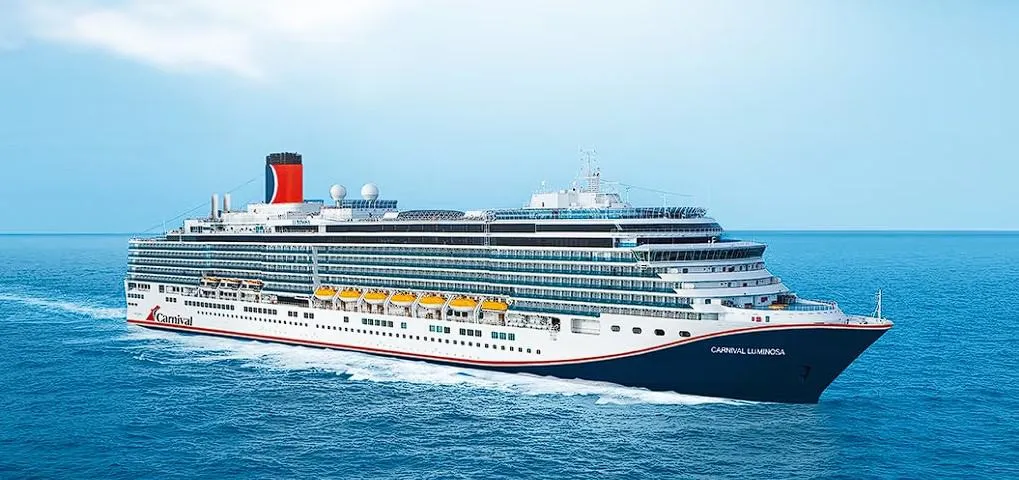
- Australian departures. Carnival Luminosa from Brisbane and Melbourne provides domestic-departure cruising — an option MSC does not offer.
- Complimentary casual dining. Guy’s Burgers, Shaq’s Big Chicken, BlueIguana Cantina — more free food variety than MSC’s equivalent programme.
- Comedy programming. The Punchliner Comedy Club is the best dedicated comedy venue at sea.
- Pricing transparency. One fare level with clear add-on packages. No complex tier structure to navigate.
MSC excels in:
- Mediterranean expertise. Born in Naples, homeporting across southern Europe, and sailing the Mediterranean year-round with more ships and more embarkation options than Carnival.
- MSC Yacht Club. A genuine luxury ship-within-a-ship with butler service, dedicated restaurant, private pool, and premium beverages — available on 15 ships at mainstream-adjacent pricing.
- Fleet modernity. Younger average fleet age with the World Class ships exceeding 200,000 gross tonnes. MSC’s newest ships are among the most modern afloat.
- Cirque du Soleil at Sea. Purpose-built venues with original Cirque productions on select ships — a unique entertainment offering no other line provides.
- European design and atmosphere. Swarovski crystal staircases, marble lobbies, Italian-designed interiors, and a cosmopolitan guest mix that feels distinctly different from American cruise culture.
Standout itineraries for Australian travellers
Carnival Luminosa: South Pacific from Brisbane or Melbourne (7 to 10 nights, seasonal) — The most practical option for Australian travellers in this comparison. No flights, no visa complications, no jet lag. South Pacific and New Zealand itineraries from approximately AUD $800 per person. The only domestic-departure choice between these two lines.
Carnival Jubilee: Western Caribbean from Galveston (7 nights, year-round) — The Excel-class experience with BOLT roller coaster, themed zones, and full celebrity dining. Texas is accessible from Australia via Dallas, and a pre-cruise stay in Houston or San Antonio adds destination value. Fares from approximately AUD $1,200 per person.
MSC World Europa: Western Mediterranean (7 nights, seasonal from Barcelona or Genoa) — MSC’s World Class flagship with 22 decks, themed districts, the Luna Park interactive kids’ area, and the broadest dining programme in the fleet. Barcelona is the most convenient European embarkation for Australians — accessible via Singapore Airlines, Emirates, or Qatar Airways with a single connection. Fares from approximately AUD $1,000 per person at Fantastica level.
MSC Yacht Club on any Mediterranean ship (7 nights, various embarkation ports) — The premium proposition. Book the Yacht Club tier on any MSC Mediterranean sailing for butler service, a private pool, a dedicated restaurant, and premium drinks — all within a mega-ship carrying 4,000-plus guests. The Yacht Club experience on MSC Seaside-class or World Class ships is particularly impressive. Fares from approximately AUD $2,800 per person for seven nights including the full luxury package.
Ship-by-ship recommendations
Carnival
Carnival Celebration or Carnival Jubilee (Excel class, 180,000 GT, approximately 5,200 guests) — The flagships with BOLT roller coaster, themed zones, Loft 19, and the full celebrity dining lineup. Choose these ships for the best Carnival has to offer.
Carnival Luminosa (92,000 GT, approximately 2,260 guests) — The Australian deployment ship. Mid-size, fewer features than the Excel class, but well-suited to South Pacific sailings from Brisbane and Melbourne at excellent value.
MSC
MSC World America (approximately 210,000 GT, nearly 7,000 guests, Miami, 2025) — MSC’s newest and most ambitious ship, purpose-designed for the American market with themed districts, an expanded dining programme, and the Yacht Club. Choose for Caribbean fly-cruise from Miami.
MSC World Europa (approximately 205,000 GT, nearly 7,000 guests) — The original World Class ship sailing Mediterranean itineraries. Twenty-two decks, themed districts, and the full range of MSC entertainment. Choose for Mediterranean fly-cruise from Barcelona or Genoa.
MSC Seaside or MSC Seaview (Seaside class, approximately 160,000 GT, 5,000 guests) — Purpose-designed for warm-weather cruising with an innovative outdoor promenade, waterfront boardwalk, and panoramic glass-floor bridges. Available in both Caribbean and Mediterranean deployments. The Yacht Club on Seaside-class ships is particularly well-designed, with forward-facing suites offering dramatic ocean views.
For Australian travellers specifically
The geographic accessibility gap between these lines for Australian travellers is significant, but the expanding global presence of both brands creates opportunities depending on your travel plans.
Carnival’s domestic programme is the practical Australian choice. Carnival Luminosa from Brisbane and Melbourne offers South Pacific and New Zealand cruising without international flights. The P&O Cruises Australia legacy — absorbed into Carnival — means local brand awareness, Australian pricing, and an established travel agent network. For families wanting a mainstream cruise without the complexity of fly-cruise logistics, Carnival’s domestic deployment is unmatched in this comparison.
MSC’s strongest play for Australians is Mediterranean. For travellers already planning a European holiday, embedding an MSC cruise into the trip makes excellent logistical sense. Barcelona, Genoa, and Marseille are all accessible from Australian gateways via single-connection flights through Singapore, Dubai, or Doha. MSC’s Mediterranean expertise, competitive pricing, and the Yacht Club option deliver a cruise experience that is genuinely difficult to find at comparable value on other lines. An Australian couple booking a seven-night MSC Yacht Club Mediterranean cruise at AUD $2,800 per person receives butler service, a private pool, a dedicated restaurant, and premium beverages — a luxury-line experience at mainstream pricing.
MSC’s Caribbean programme from Miami is growing rapidly, with MSC World America based there from 2025. Australians planning US-based fly-cruise holidays can now consider MSC alongside Carnival and Royal Caribbean as a Caribbean option — with the Yacht Club providing a luxury tier that neither Carnival nor Royal Caribbean matches in comprehensiveness at the same price point.
Neither line’s loyalty programme crosses to the other. Carnival’s VIFP Club and MSC’s Voyagers Club are entirely separate. MSC Voyagers Club offers tier-based benefits including onboard credits, cabin upgrades, and priority boarding at higher levels. Both programmes reward repeat cruisers but do not extend to partner brands.
The onboard atmosphere
The atmosphere gap between Carnival and MSC is one of the widest in mainstream cruising — and it reflects the cultural origins of each line.
Carnival’s atmosphere is unmistakably American. The pool deck is the social hub. The music is loud. The drinks are large. The comedy club fills every evening. Game shows create collective moments of laughter and participation. The dress code is relaxed to the point of indifference — board shorts, singlets, and baseball caps are standard daytime attire. The demographic is primarily American families and groups, with a festive, unpretentious energy that values fun over elegance.
MSC’s atmosphere is cosmopolitan European. The lobby features Swarovski crystal and marble. Announcements are delivered in Italian, English, French, German, and Spanish — sometimes more. The guest mix is genuinely international: Italian families, French couples, German retirees, British groups, and an increasing American contingent. The dress code is smart casual — not formal, but a distinct step above Carnival’s resort casual. The evening atmosphere in the main bar areas feels more like a European hotel lobby than an American pool party. The overall energy is social but more composed — conversation-driven rather than entertainment-driven.
For Australians, MSC’s European atmosphere may feel slightly more aligned with Australian cultural expectations — particularly for travellers who prefer conversation over karaoke and smart casual over singlets. Carnival’s atmosphere translates well for Australians who enjoy the irreverence and directness of American social culture. The choice is largely one of cultural comfort rather than quality.
The bottom line
Carnival and MSC represent two philosophies of mainstream cruising — American fun and European style — at price points that make both accessible to Australian families and couples planning fly-cruise holidays. Neither is objectively better; both are genuinely good at what they promise.
Choose Carnival for the lowest per-night fares in mainstream cruising, complimentary casual dining that keeps the budget honest, the best comedy programming at sea, and a festive atmosphere where participation is the entertainment. Choose it for Carnival Luminosa from Brisbane and Melbourne — the ability to cruise from Australia without international flights. Choose it if value-for-money is the primary decision factor and you enjoy an unpretentious, high-energy holiday. Accept that the older ships show their age and that the atmosphere is louder than some travellers prefer.
Choose MSC for European design sensibility, Mediterranean cruising expertise, and the Yacht Club — a luxury ship-within-a-ship that delivers butler service, a private pool, and a dedicated restaurant at mainstream-adjacent pricing. Choose it for Mediterranean fly-cruise holidays where MSC’s home-turf advantage in embarkation logistics and port knowledge is decisive. Choose it for a cosmopolitan guest mix and an atmosphere that feels distinctly different from American cruise culture. Accept that MSC does not sail from Australian waters, that the tiered pricing can be confusing, and that the service style is European rather than American — more relaxed, less scripted, and occasionally less attentive to English-speaking guests on predominantly European sailings.
For Australian travellers, the two lines serve different purposes rather than competing directly. Carnival is the domestic option — board in Brisbane, cruise the South Pacific, return home without a passport stamp. MSC is the European option — fly to Barcelona, cruise the Mediterranean with butler service in the Yacht Club, and experience mainstream cruising through a distinctly Continental lens. Both are worth doing, and both deliver remarkable value for the price.