Atlas Ocean Voyages and Azamara Cruises both operate small ships, but they solve completely different travel problems. Atlas sends 196 guests on polar-class expedition voyages with Zodiacs and included flights. Azamara sends 700 guests on destination-immersion cruises with overnight port stays and included drinks. Jake Hower explains which philosophy suits Australian travellers.
| Atlas Ocean Voyages | Azamara Cruises | |
|---|---|---|
| Category | Expedition / Luxury | Luxury |
| Rating | ★★★★☆ | ★★★★☆ |
| Fleet size | 3 ships | 4 ships |
| Ship size | Small (under 500) | Small (under 1,000) |
| Destinations | Antarctica, Arctic, Mediterranean, Caribbean | Mediterranean, Asia, Northern Europe, South America |
| Dress code | Resort casual | Smart casual |
| Best for | All-inclusive luxury expedition travellers | Destination-immersive port-intensive travellers |
These lines occupy different corners of the small-ship world. Atlas is the choice for travellers who want genuine expedition — Zodiac landings in Antarctica, kayaking in the Arctic, wildlife encounters in places with no pier and no town. The included roundtrip flights from North American gateways, premium drinks, and butler service in suites make it a strong all-inclusive proposition, though Australians face additional positioning flights. Azamara is the choice for destination-immersed ocean cruising — late-night port stays, overnight calls, AzAmazing Evening cultural events, and a growing number of Australian departures. For most Australians, Azamara offers the more practical and accessible experience. For those drawn to genuine adventure, Atlas delivers something Azamara simply cannot.
The core difference
Atlas Ocean Voyages and Azamara Cruises share a small-ship philosophy but apply it to fundamentally different purposes. Understanding this distinction is the essential first step — these lines are not competing for the same passenger.
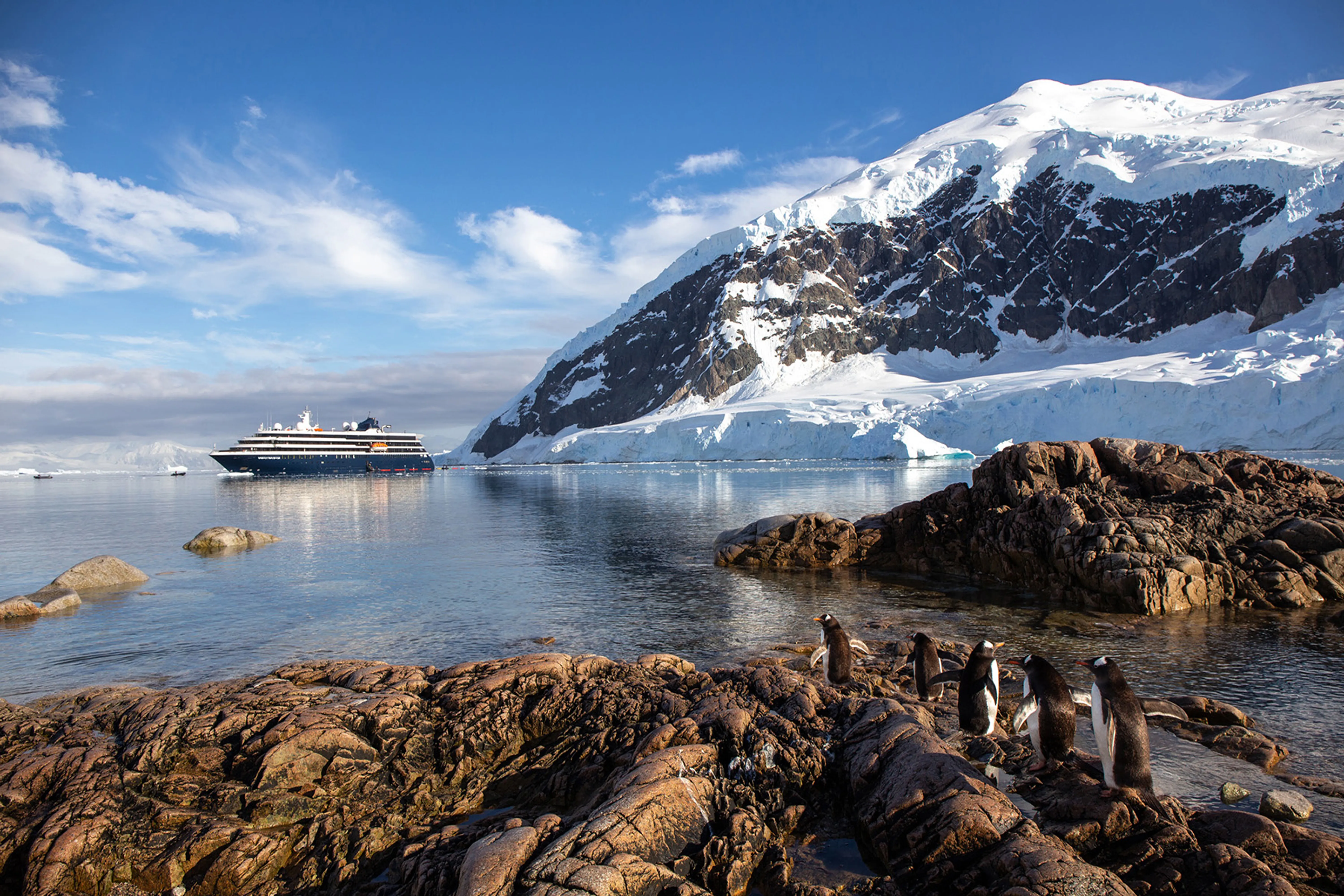
Atlas Ocean Voyages is a luxury expedition line operating three Portuguese-flagged vessels — World Navigator, World Traveller, and World Voyager — each carrying approximately 196 guests. The ships are polar-class, equipped with Zodiac fleets for shore landings on beaches with no infrastructure, and the itineraries reach Antarctica, the Arctic, the Mediterranean, the Caribbean, and Central America. Atlas is a subsidiary of Mystic Invest, and the brand positions itself as all-inclusive expedition: roundtrip flights from North American gateways, premium drinks, Wi-Fi, gratuities, L’Occitane bath amenities, and butler service in all suites are bundled into the fare. A luxury sailing yacht, Atlas Adventurer, accommodating 200 guests, is expected in 2028. The dress code is resort casual throughout, and the atmosphere is that of a private yacht exploring remote coastlines.
Azamara Cruises operates four virtually identical R-class ships, each carrying approximately 700 guests. Owned by Sycamore Partners since 2021, Azamara’s identity is “Destination Immersion” — more than fifty per cent of port calls involve late-night or overnight stays, and AzAmazing Evenings deliver complimentary cultural events ashore in extraordinary venues. The fare includes select drinks, gratuities, and shuttle buses. The ships are traditional ocean cruise vessels designed for port-intensive itineraries across six continents and 300-plus ports. The dress code is resort casual with no formal nights.
For Australian travellers, the practical question is clear: if you want Zodiac landings, polar wildlife, and genuine expedition adventure, Atlas is the only choice. If you want late-night port exploration, cultural immersion, and the option to board close to home, Azamara delivers that with growing Australian departures.
What is actually included
The inclusion models reflect two different philosophies of what “all-inclusive” means.
Atlas Ocean Voyages includes roundtrip flights from select North American gateway cities, premium alcoholic and non-alcoholic beverages, Wi-Fi, gratuities, L’Occitane amenities in all staterooms, butler service in suites, Zodiac excursions as part of the expedition programme, and all dining across six onboard venues. The flights inclusion is distinctive in the expedition segment — most competitors charge flights separately. However, the gateway cities are North American, which means Australian travellers receive partial value from this inclusion unless connecting via the United States.
Azamara includes select standard spirits, international beers, and wines by the glass; gratuities; one AzAmazing Evening cultural excursion per qualifying voyage; shuttle buses in port; self-service laundry; and dining at four of six restaurants. Two speciality restaurants — Prime C and Aqualina — carry surcharges of approximately US$50 per person. Wi-Fi is included only for Club Veranda Plus and suite categories. Premium spirits and wines beyond the standard selection are additional.
The net effect: Atlas delivers a more comprehensive all-inclusive package at the point of boarding, particularly with flights and premium drinks bundled. Azamara’s inclusion model is thinner but paired with a lower entry fare and the practical advantage of Australian departures that eliminate the flight question entirely.
Dining and culinary experience
Both lines offer quality dining at a scale appropriate to their ship sizes, but the approaches differ.
Atlas provides six dining venues across its intimate 196-guest ships. The main restaurant offers regionally inspired menus reflecting the expedition destinations — expect Portuguese-influenced cuisine alongside international fare. The atmosphere is resort casual throughout, with no formal nights and no dress code requirements beyond smart casual. All dining is included in the fare with no surcharges. The intimacy of 196 guests means the kitchen can offer personalised attention that larger ships struggle to replicate.
Azamara offers six dining venues scaled for 700 guests. Discoveries Restaurant is the main dining room with open seating and Mediterranean-influenced menus. Windows Cafe provides buffet options. The Patio transforms from casual poolside grill to elegant al fresco evening dining. Mosaic Cafe serves coffees and pastries. Two speciality restaurants — Prime C (steakhouse) and Aqualina (Italian-Mediterranean) — carry surcharges but are complimentary for suite guests. Azamara emphasises regionally inspired menus with over 150 locally sourced dishes and destination beers reflecting the ports visited.
Atlas wins on inclusivity — every venue, every drink, no surcharges. Azamara wins on variety and destination-driven culinary programming, with menus designed around the itinerary.
Suites and accommodation
The accommodation reflects the different ship purposes — Atlas is built for expedition with smaller but well-appointed cabins, while Azamara offers a range from interior to suite categories.
Atlas staterooms range from entry-level cabins to suites with butler service. The ships are modern (launched from 2021) with contemporary design, L’Occitane amenities in every cabin, and balconies in most categories. Suite guests receive dedicated butler service as part of the fare. The newest hardware in the small-ship expedition segment gives Atlas a design advantage over older competitors.
Azamara cabins range from Club Interior (approximately 158 square feet) through Club Veranda (175 square feet plus 40-square-foot balcony) to the Club World Owner’s Suite (approximately 836 square feet total). The ships are older — built between 1999 and 2001 — though the fleet-wide Azamara Forward refurbishment programme (US$80 million investment) is modernising all four vessels through 2029. Suite guests receive butler service, complimentary speciality dining, and enhanced inclusions.
Atlas offers newer hardware in a more intimate setting. Azamara offers a wider range of cabin categories at various price points, with refurbishment bringing the product up to contemporary standards.
Pricing and value
The pricing comparison requires context — these lines serve different markets at different price points.
Atlas per-diems position in the luxury expedition segment, typically ranging from approximately AUD $800 to $1,500 per person per night depending on itinerary and cabin category. Antarctic and Arctic voyages command the highest premiums. The included flights from North American gateways represent genuine value — expedition flights alone can cost US$1,000 to $3,000 per person — though Australian travellers must add their own flights to gateway cities.
Azamara per-diems run approximately AUD $300 to $600 per person per night for entry-level balcony staterooms on standard itineraries. A 14-night Mediterranean voyage costs roughly AUD $6,000 to $10,000 per person including drinks, gratuities, and the AzAmazing Evening excursion. Azamara positions as an upper-premium line rather than luxury, and the value proposition is competitive for what is included.
These lines do not compete on price. Atlas is a luxury expedition product at expedition pricing. Azamara is an upper-premium destination-immersion product at a substantially lower per-diem. The choice is determined by what kind of experience you want, not by which offers better value in the same category.
Spa and wellness
Both lines offer spa facilities scaled to their ship sizes, though the approaches reflect their different philosophies.
Atlas ships feature compact but well-appointed spas with L’Occitane products — the French luxury skincare brand provides both in-cabin amenities and spa treatments. The intimate ship size means the spa never feels crowded, and treatments can be booked with relative ease throughout the voyage. Fitness facilities are available but compact, reflecting the expedition philosophy that guests spend their active time ashore rather than in a gym.
Azamara’s Sanctum Spa is operated by Steiner with Elemis products and includes massage cabins, facial treatments, and a relaxation lounge. The standout feature is the Sanctum Spa Terrace — an exclusive outdoor deck with loungers, daybeds, and a Thalassotherapy pool with massaging salt-water jets. Suite guests receive complimentary access; others pay approximately US$24 per day. The fitness centre offers ocean views, free weights, and complimentary group classes including yoga and Pilates.
Azamara offers the more comprehensive traditional spa experience with the Thalassotherapy pool as a genuine differentiator. Atlas offers intimate spa facilities that complement an expedition programme where the real wellness experience is kayaking past glaciers or hiking volcanic coastlines.
Entertainment and enrichment
The entertainment philosophies could not be more different — one centres on expedition, the other on destination.
Atlas focuses on expedition enrichment. Onboard naturalists, expedition leaders, and wildlife photographers deliver daily briefings before Zodiac excursions and shore landings. The programme is destination-driven — expect lectures on polar wildlife, glaciology, marine biology, or the cultural history of the regions visited. Evenings are intimate and social, with no production shows. The 196-guest capacity creates a convivial atmosphere where conversations with fellow travellers and expedition staff define the experience.
Azamara focuses on destination immersion. The AzAmazing Evenings programme delivers complimentary cultural events ashore in remarkable settings — private performances in ancient theatres, concerts in historic churches, cultural celebrations in extraordinary venues. Over 250 Destination Speakers (natives of the regions visited) sail fleet-wide, and “Stories Under the Stars” poolside evenings feature regional folklore and storytelling. The Cabaret Lounge hosts professional musical revues and live bands in an intimate nightclub atmosphere.
Atlas makes the expedition the entertainment. Azamara makes the destination the show. Neither line produces Broadway-style production shows, and both are designed for travellers who prefer authentic experiences over scripted spectacle.
Fleet and destination coverage
The fleet comparison reveals dramatically different scales and strategies.
Atlas operates three ships — World Navigator, World Traveller, and World Voyager — each carrying approximately 196 guests with polar-class capability. The fleet is young (launched from 2021) and purpose-built for expedition. Destinations span Antarctica, the Arctic, the Mediterranean, the Caribbean, and Central America. The Atlas Adventurer luxury sailing yacht (200 guests) is expected in 2028. The fleet is compact and focused — three ships deployed to expedition itineraries that leverage their polar-class ratings and Zodiac fleets.
Azamara operates four R-class ships — Journey, Quest, Pursuit, and Onward — each carrying approximately 700 guests. The fleet visits over 300 ports across 92 countries on six continents, with late-night and overnight stays at more than half of all port calls. The ships are older (built 1999–2001) but undergoing comprehensive refurbishment. Azamara is returning to Alaska for 2026 and expanding its Australian deployment with 25 sailings from local ports between 2026 and 2028.
Atlas covers destinations Azamara cannot reach — polar regions, remote expedition coastlines, and beaches without piers. Azamara covers destinations Atlas does not serve — Asia, the Pacific, Alaska, and Australia — with a port-intensive approach that prioritises time ashore over expedition landings.
Where each line excels
Atlas Ocean Voyages excels in:
- Genuine expedition. Polar-class ships with Zodiac fleets reach Antarctica, the Arctic, and remote coastlines that no Azamara ship can visit. If you want to step onto a beach with no pier, Atlas delivers.
- All-inclusive value. Roundtrip flights, premium drinks, Wi-Fi, gratuities, and butler in suites — the most comprehensive inclusion model in this comparison.
- Ultra-intimacy. At 196 guests, the social dynamic is fundamentally different from 700-guest ships. The expedition team knows every passenger by name.
- Modern hardware. Ships launched from 2021 with contemporary design and L’Occitane amenities throughout.
Azamara excels in:
- Destination immersion. Late-night and overnight port stays give genuine time to explore cities after day-trippers leave. The AzAmazing Evenings programme has no Atlas equivalent.
- Australian accessibility. Twenty-five cruises departing Australian ports between 2026 and 2028 mean you can board in Sydney without international flights.
- Global itinerary range. Over 300 ports across 92 countries on six continents, including Asia, the Pacific, Alaska, and Australia.
- Value positioning. Substantially lower per-diems than Atlas, with included drinks and gratuities keeping total costs predictable.
Standout itineraries for Australian travellers
Atlas Ocean Voyages
Antarctica Expedition (10–14 nights from Ushuaia) — The signature Atlas experience. Zodiac landings on the Antarctic Peninsula, kayaking among icebergs, wildlife photography with expert guides. Flights from Miami or New York included in the fare. Australian travellers connect via Santiago or Buenos Aires.
Arctic and Norway (10–14 nights, summer departures) — Expedition cruising through Norwegian fjords, Svalbard, and Arctic waters. Zodiac excursions, polar bear sightings, and glacier approaches. A genuine counterpoint to southern hemisphere expedition.
Mediterranean Expedition (7–12 nights) — Atlas applies its intimate expedition philosophy to the Med, visiting smaller harbours and coastal destinations that larger ships bypass. The most accessible Atlas itinerary for Australians seeking a shorter voyage.
Azamara
Australia and New Zealand Intensive (15–22 nights from Sydney) — Azamara’s core ANZ product with late-night and overnight port stays along both coastlines. No international flight required. The destination-immersion philosophy applied to home waters.
Japan Cherry Blossom (various, spring departures) — Small-ship access to Japanese ports during peak cherry blossom season, with Destination Speakers and cultural programming. Accessible via direct flights from Australian east coast cities.
Mediterranean with AzAmazing Evenings (10–14 nights) — The quintessential Azamara experience combining late-night port stays with a complimentary cultural event ashore. The mid-size format accesses harbours larger ships cannot reach.
Ship-by-ship recommendations
Atlas Ocean Voyages
World Navigator (196 guests, 2021) — The inaugural Atlas ship and the most proven vessel in the fleet. Polar-class with Zodiac fleet. A solid choice for any Atlas itinerary, particularly Antarctic and Arctic expeditions.
World Traveller and World Voyager (196 guests each) — Sister ships to World Navigator with identical specifications. Choose based on itinerary and dates rather than ship — the consistency across the fleet is a strength.
Azamara
Azamara Onward — The primary ship for ANZ season deployment and the vessel sailing the 2026 World Voyage. Features the Atlas Bar exclusive to this ship. The best choice for Australians wanting local departures.
Azamara Pursuit — Also deployed for ANZ seasons and handling expanded Alaska programmes in 2026. The Japan Cherry Blossom itineraries sail on Pursuit.
Azamara Quest — First ship to undergo the Azamara Forward refurbishment in late 2026. Post-refit, Quest will offer the newest hardware in the fleet including Penthouse Suite Deck and Chef’s Table restaurant.
For Australian travellers specifically
The accessibility gap between these lines is the single most important factor for Australian travellers deciding between them.
Azamara is expanding in Australia. Twenty-five cruises depart Australian ports between 2026 and 2028, with Sydney as the primary embarkation port. Australians represent a significant and growing proportion of Azamara’s passenger base on ANZ season sailings. You can board in your home city, cruise your own coastline or New Zealand, and step off without international flights or jet lag.
Atlas has no Australian presence. No Australian departures, no local office, and no ships deployed to the southern hemisphere outside Antarctic expeditions departing from South America. Australian travellers choosing Atlas must fly to North American or European embarkation points. The included flights from North American gateways partially offset this — but you still need to get to the gateway city.
For practical purposes, Azamara is the accessible small-ship option for most Australian travellers. Atlas is the aspirational expedition choice for Australians willing to travel internationally to board — and the experience justifies the journey for those drawn to polar and expedition cruising.
The onboard atmosphere
The atmospheric difference between these lines is as pronounced as the itinerary difference.
Atlas feels like a private expedition yacht. With 196 guests, the ship develops a tight-knit social dynamic within the first day. The expedition team — naturalists, photographers, Zodiac drivers — become part of your daily routine. Evenings are conversational and intimate, centred around shared expedition experiences. The dress code is resort casual throughout with no formal requirements. The Portuguese-flagged ships carry a European sensibility without the formality. Expect fellow passengers who are well-travelled, curious, and comfortable in expedition settings.
Azamara feels like a floating country club. With 700 guests, the ship is large enough for variety but small enough for the crew to learn your name by the second day. The atmosphere is social, relaxed, and destination-focused — conversations tend to centre on where you explored that day and what you discovered ashore. The White Night deck party is the signature social event. No formal nights, no dress code anxiety. The passenger mix on ANZ sailings includes a strong Australian contingent alongside Americans, British, and Europeans.
Both lines attract experienced travellers who prefer authentic experiences over production shows. The difference is one of intensity — Atlas passengers are there for the expedition; Azamara passengers are there for the destinations.
The bottom line
Atlas Ocean Voyages and Azamara Cruises represent two distinct philosophies of what small-ship cruising should deliver. They rarely compete head-to-head, and the choice between them typically comes down to a single question: are you seeking expedition adventure or destination immersion?
Choose Atlas for genuine expedition cruising — Zodiac landings in Antarctica, kayaking in Arctic waters, wildlife encounters on remote coastlines that no conventional cruise ship can reach. Choose it for the comprehensive all-inclusive package that bundles flights, premium drinks, and butler service. Accept that Australian travellers face additional positioning flights, that the fleet is small with limited itinerary dates, and that the expedition focus means fewer ports and more nature.
Choose Azamara for destination-immersed ocean cruising — late-night port stays that let you experience cities after dark, overnight calls in harbours that reward lingering, and AzAmazing Evenings that take you to private cultural events ashore. Choose it for the growing Australian deployment that lets you board in Sydney without international flights. Choose it for the accessible pricing and the practical convenience of a well-established four-ship fleet covering six continents. Accept that there is no expedition capability, that two speciality restaurants carry surcharges, and that the ships are older despite ongoing refurbishment.
For most Australian travellers, Azamara is the more practical choice. For those with expedition ambitions and the willingness to travel internationally to board, Atlas delivers experiences that Azamara simply cannot replicate.