American Cruise Lines
River Cruising
If your clients want to explore the United States by water, American Cruise Lines is the only game in town at this scale. They run 21 ships on domestic rivers and coastlines — Mississippi, Columbia, Alaska, the Eastern Seaboard — and every vessel is American-built and American-crewed. The newer Modern Riverboat class ships are genuinely impressive, but I'd steer clients away from some of the older fleet. The all-inclusive pricing now covers tips, port charges, and drinks, which simplifies things enormously.
American Cruise Lines is the largest river and coastal cruise line in the United States, and it occupies a position in the market that no other operator can replicate. Family-owned since its founding in 1972 by Charles A. Robertson in Haddam, Connecticut, the line sails exclusively on domestic U.S. waterways with a fleet of 21 small ships — every one of them American-built at the family's own Chesapeake Shipbuilding yard in Maryland, American-flagged, and staffed entirely by American crew. That vertical integration, owning the shipyard that constructs every vessel in the fleet, is unique in the cruise industry and has enabled an aggressive expansion pace of two to three new ships per year.
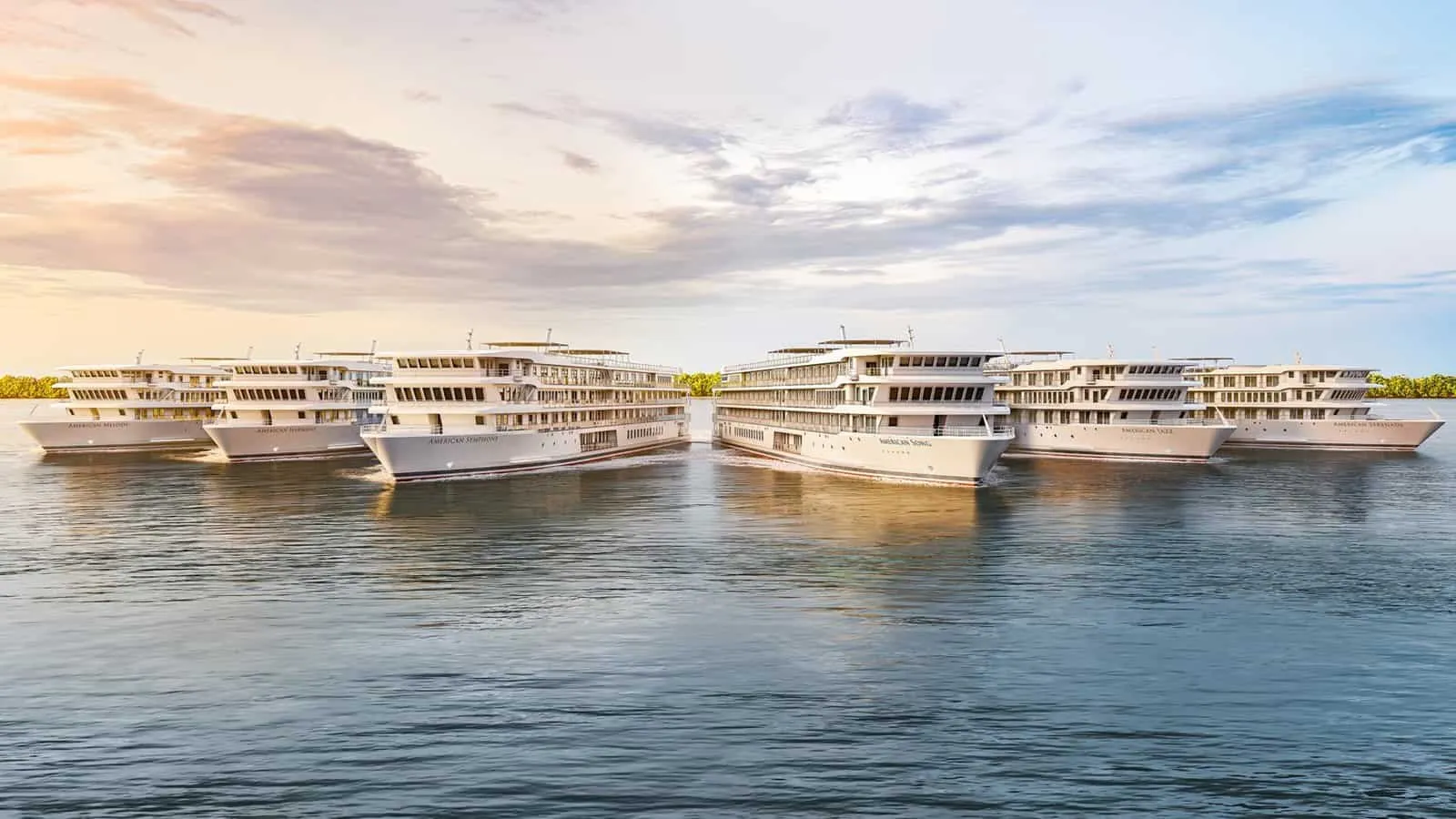
The fleet spans several generations of design, and the quality gap between the newest and oldest vessels is something I discuss frankly with clients. The six Modern Riverboats — American Song through American Serenade — are genuinely impressive ships: four-deck, 190-passenger vessels with contemporary open-plan lounges, floor-to-ceiling glass, and 100% private balcony staterooms averaging 300 square feet. The Patriot-class coastal ships, launched from 2023, bring the same all-balcony standard to coastal and island itineraries with 125 passengers and full stabilisation on the newer hulls. The classic paddlewheelers, while nostalgic, show their age and attract notably less positive reviews. The advice is straightforward: book a Modern Riverboat or Patriot-class ship if at all possible.
What sets this line apart is access. Their shallow-draft vessels dock in town centres that ocean ships and larger river vessels cannot reach, and their Jones Act compliance as U.S.-flagged ships means they can operate between domestic ports without foreign port calls — a legal advantage no European-built competitor can match. From the nine-day Lower Mississippi between New Orleans and Memphis to the 52-day Great United States voyage spanning 18 states coast to coast, the breadth of domestic itineraries is simply unmatched.
American Cruise Lines operates one of the more comprehensive all-inclusive models in river cruising. The fare covers all meals across the main restaurant and the casual Back Porch Cafe, beer and wine with lunch and dinner, a daily evening cocktail hour featuring a full complimentary bar with mixed drinks and canapes, non-alcoholic beverages and snacks throughout the day, Starlink Wi-Fi, all gratuities, port charges, and at least one Featured shore excursion at every port of call. The company reports over 600 excursions available across its system.
What is not included: Premium excursions at US$10-99 per person, Signature small-group VIP experiences at higher price points, spa treatments on select ships, laundry, travel insurance, and domestic airfare (though some extended cruises include complimentary flights on select dates). The evening cocktail hour includes a full bar, though the spirits selection is mid-tier rather than premium. There is no drinks package to purchase — the inclusion is genuine and uncomplicated.
Compared to the only other major Mississippi operator, Viking, American Cruise Lines includes a more generous beverage programme (the cocktail hour with full bar versus beer and wine only at meals on Viking) and wraps gratuities and port charges into the fare. The all-inclusive scope genuinely does remove the bill-signing from the experience.
Every ship operates a single main restaurant with open seating — no assigned tables, no set dining times. Breakfast offers eggs any style, omelettes, daily specials, and a continental spread. Lunch follows a flexible mix-and-match format where guests can order half portions across multiple dishes. Dinner is a multi-course plated affair with two to three main course choices.
The most distinctive culinary feature is the region-specific menu programme. A team of chefs creates menus inspired by the specific waterway being sailed, with ingredients sourced locally at ports of call. On the Lower Mississippi, expect Memphis barbecue, gumbo, creole entrees, and Abita beer. On the Columbia and Snake Rivers, fresh-caught Pacific Northwest salmon and wines from the Columbia River Valley. In New England, lobster prepared multiple ways alongside clam chowder. In Alaska, wild-caught halibut and salmon. The food genuinely changes with the region, and fresh provisions come aboard daily from local farms and purveyors.
I want to be honest about the standard: this is well-executed American comfort food, not fine dining or experimental gastronomy. Travellers who appreciate honest regional cooking done with care and fresh ingredients are typically very pleased. Travellers who expect the elevated culinary artistry found on Uniworld, Scenic, or ocean lines like Oceania should set expectations accordingly. There are no specialty restaurants with surcharges on any ship — all dining is included. Wine is regionally selected and mid-tier rather than premium. Dietary requirements including vegetarian, vegan, and gluten-free are accommodated with advance notice, and the smaller kitchen and passenger count means chefs can respond to individual requests more flexibly than on large ships.
The typical American Cruise Lines passenger is 65 to 80 years old, with a median age around 70. The passenger base is almost entirely American — estimated at 95% or higher — which creates a distinctly U.S.-centric social environment. On ships carrying 90 to 190 passengers, everyone gets to know each other. Open seating at meals, the daily cocktail hour, and enrichment lectures in the lounge create natural opportunities for conversation. Many passengers are Eagle Society repeat customers who return for the social atmosphere as much as the destinations.
Enrichment is the line's entertainment philosophy. Each sailing carries onboard historians, naturalists, or cultural interpreters who lead informal, conversational sessions rather than formal lectures. Local musicians board at various ports — jazz and blues on the Mississippi, folk music and sea shanties in New England, bluegrass in the Southeast, Native cultural presentations in Alaska. There are no production shows, no casino, no nightclub, and no late-night entertainment. The ship is quiet by 10pm, and that is by design. The dress code is Country Club Casual throughout — no formal nights, no black tie, no suits. Pack light and pack comfortably.
This is emphatically not a line for families with children, travellers under 50 seeking an energetic social scene, or anyone expecting large-ship amenities like pools, gyms, or Broadway-style shows. It is purpose-built for retired travellers who want to learn something, see something new, and do it in comfort without pretension.
American Cruise Lines operates exclusively within the United States — there is no Australian office, no AUD pricing, no local trade programme, and no deployments to the Asia-Pacific. All fares are quoted in U.S. dollars, and bookings are made through the company's U.S. reservation system or through an Australian travel agent like ourselves.
That said, if you are already planning a trip to the States, this line offers an experience you simply cannot get anywhere else. The Mississippi River, the Columbia River Gorge, Alaska's Inside Passage from a small ship, the New England coast in autumn — these are uniquely American waterways that reward slow, immersive travel. For Australians who have done the big cities and want to see small-town America from the water, this is a compelling way to do it.
Getting there involves a connection through Los Angeles, San Francisco, Dallas, or Seattle depending on your embarkation port. Qantas operates a direct Sydney-to-Seattle service that makes Pacific Northwest and Alaska itineraries particularly convenient. My recommendation for Australian clients making the long journey is to combine the cruise with pre- or post-cruise land time: a few nights in New Orleans before a Mississippi sailing, or time in Portland's food scene before the Columbia River. The extended multi-ship voyages of 22 to 55 days suit Australian retirees who have the time to make the most of the trip. You will need a valid ESTA (US$21, apply online at least 72 hours before departure) and a passport valid for at least six months beyond your travel dates.
American Cruise Lines sits at the premium end of the U.S. domestic river cruise market, and the pricing reflects that positioning. Entry-level standard balcony cabins start at approximately US$575-750 per person per night, which translates to roughly A$910-1,190 at current exchange rates. Suites range from A$1,430 to A$2,380 per person per night. A standard eight-night Lower Mississippi cruise starts from approximately US$4,775 per person in a double cabin; the Columbia/Snake Rivers from around US$4,500; and Alaska from US$6,200.
Is it worth the money? The value equation depends on your priorities. The all-inclusive scope, small-ship intimacy, exclusive access to waterways no competitor serves, dedicated solo cabins without supplements, and the U.S.-only proposition with an all-American crew are genuine differentiators that justify the premium for the right traveller. The no-supplement solo cabins alone are a standout — at 250 square feet with a private balcony, they are among the best solo offerings in the river cruise industry.
Where the value argument is less convincing: if you compare purely on cabin hardware and food quality against European ultra-luxury river lines like Uniworld or Scenic at similar per-diem rates, those lines deliver more refined product. Viking's Mississippi offering starts at a lower base price with a newer, larger ship. The honest assessment is that you are paying a premium for the domestic U.S. experience, the small-ship scale, the Jones Act advantage, and the all-inclusive simplicity — and for the right traveller, that premium is well justified. The deposit is US$500 per person for cruises of nine nights or less, with final payment due 90 days before sailing. The cancellation policy is strict — no refund within 45 days of departure — so travel insurance is strongly recommended.
Share your dates and preferences and we will come back with American Cruise Lines cabin options, pricing, and insider tips.