Star Clippers
Yacht-Style Cruising
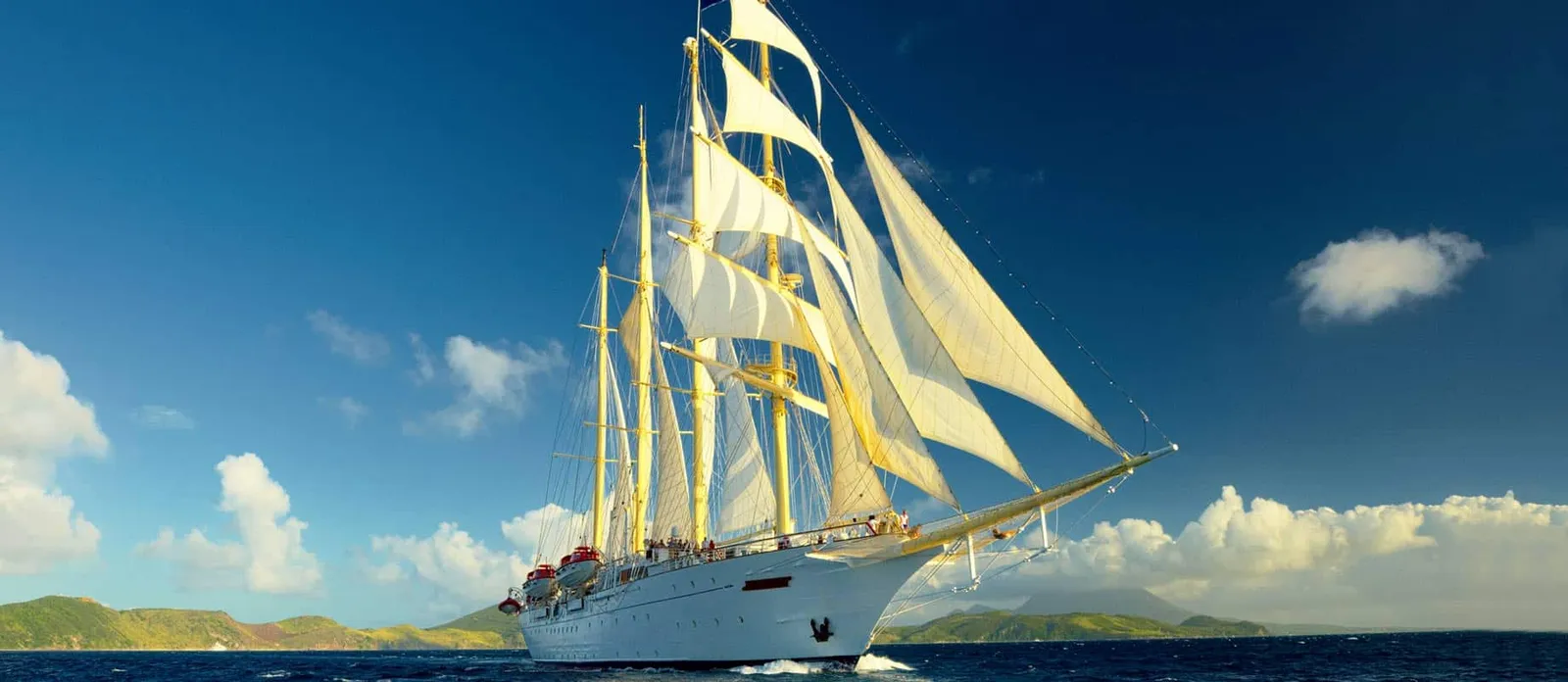
Star Clippers is the real deal for sailing purists — these are working tall ships, not cruise ships with decorative sails. If your clients own a sailboat or fantasise about the age of sail, they'll be in heaven climbing masts and lying in the bowsprit net. Just set expectations on cabin size and the fact there are no elevators or stabilisers.
Star Clippers exists because of one man's obsession with the golden age of sail. Mikael Krafft, a Swedish maritime lawyer and lifelong sailing enthusiast, conceived the line in 1987 while cruising the Caribbean aboard his own yacht. He wanted to build clipper ships — not replica museum pieces, but working tall ships that would carry paying passengers across open ocean under thousands of square feet of canvas. The first vessel launched from a Belgian shipyard in 1991, her sister followed in 1992, and in 2000 the five-masted Royal Clipper entered service as the largest full-rigged sailing ship in the world, a distinction recognised by the Guinness Book of Records. Three decades on, the fleet of three tall ships remains the only cruise line offering authentic square-rigger sailing as a commercial product.
What sets Star Clippers apart is not simply that the ships have sails — Windstar has sails too — but that sailing is operationally central to every voyage. The crew are trained square-rigger sailors who raise and trim canvas by hand, and passengers are genuinely invited to participate. These ships heel under wind, the rigging creaks, and when the engines shut down on a good trade-wind passage the only sounds are water, wind, and canvas. The company remains privately held by the Krafft family, with four family members heading the business from Monaco. That independence means decisions are made by sailors for sailors, without the quarterly earnings pressures that shape larger cruise corporations.
This is the anti-mega-ship experience, and it is important to understand what that means in practice. The ships carry between 170 and 227 guests. There are no casinos, no theatres, no production shows, and no cruise directors in the conventional sense. The entertainment is the sailing itself — watching 42 sails unfurl on Royal Clipper, lying in the bowsprit net at the prow as dolphins race the hull below, or hauling on a line alongside the crew as sails are trimmed for a new tack. Guests can climb rope ladders to the crow's nest on Royal Clipper, learn celestial navigation from the third officer during evening star-gazing sessions, and visit an open bridge where the captain is happy to explain weather routing and sail management.
The small size of these ships opens up itineraries that larger vessels simply cannot reach. In the Caribbean, that means the Tobago Cays, the tiny Grenadine islands, and quiet anchorages in Dominica and the Iles des Saintes. In the Mediterranean, the ships thread into harbours on Hydra, Korcula, and Corsican fishing villages. In Southeast Asia, they anchor among the karst formations of Phang Nga Bay and slip into remote Thai and Indonesian islands. At anchor, the stern opens into a water sports platform offering complimentary kayaking, snorkelling, windsurfing, sailing dinghies, and water skiing — all supervised by a dedicated sports team. The ships also carry scuba equipment for optional diving at select sites.
The honest caveat is that the ships can heel under sail, there are no stabilisers, and on breezy days you will feel the sea. The companionways between decks are steep, there are ropes to sidestep on deck, and the ambient soundtrack at night is the creak of timber and rigging. For some passengers this is the entire appeal. For others, it is genuinely unsettling. Knowing yourself matters when choosing this product.
Star Clippers fares cover all meals — breakfast, lunch, afternoon tea, and a multi-course dinner — plus tea, coffee, water, and juices throughout the day. The full water sports programme from the stern platform is complimentary, as are all onboard enrichment activities including sail-handling sessions, cooking demonstrations, and navigation classes. Port taxes are typically included in the advertised fare.
What is not included: alcoholic beverages and soft drinks, shore excursions, Wi-Fi, spa treatments, gratuities, laundry, and scuba diving. The important context here is that drink prices are notably reasonable by cruise standards — wine from around five euros a glass, beer from four, cocktails from seven to ten. There is no drinks package. Recommended gratuities sit at eight euros per person per day, which is modest compared to the industry norm. The line does not pretend to be all-inclusive, and the trade-off is a lower upfront fare that makes genuine tall-ship sailing accessible to a broader audience than the all-inclusive competitors.
Each ship has a single dining room, and all meals are open seating — no assigned tables, no fixed times, no formality. You sit where you wish, with whom you wish. Breakfast and lunch are available both in the dining room and as a buffet on deck, and in fair weather the alfresco option on a teak deck under billowing sails is one of the quiet pleasures of the voyage. Dinner is a plated, multi-course affair with a rotating menu that draws on European culinary traditions, particularly French and Italian, with regional influences from whatever waters the ship happens to be sailing.
Reviews on the food are genuinely split. Many guests describe it as superb and one of the standout elements of the trip, praising generous portions, fresh seafood, and inventive menus. Others find it solid but unexceptional, with plating that lacks artistry and vegetarian options that lean on staples. The honest assessment is that Star Clippers' food is good for a mid-priced sailing cruise — generous, fresh, and enjoyable in the relaxed communal dining atmosphere. It is not the James Beard Foundation-partnered programme at Windstar or the French fine dining on Ponant, and guests who rank cuisine as their top priority should calibrate expectations accordingly. The wine list is functional and European, predominantly French, Italian, and Spanish, with house wines from around three and a half euros a glass. No sommelier service, but perfectly drinkable bottles in the mid-twenties range.
The passenger mix is one of the most cosmopolitan in cruising. Europeans make up the majority — Germans, French, British, Scandinavians, Dutch — with North Americans and a growing number of Australians rounding out the manifest. The core demographic is 45 to 65, though what unites them is a sense of adventure rather than age. A significant proportion are sailors themselves, and more than half return within a year — an exceptional repeat rate for a line with a minimal loyalty programme. Announcements and menus are typically in English and German, with other languages depending on the sailing.
The atmosphere is adventurous, social, and profoundly informal. Bare feet on deck are entirely normal. There are no formal nights, no dress codes beyond basic evening smart-casual, and no PA announcements interrupting the afternoon. Information is shared through printed daily programmes and in-person briefings. By the second day, you know most of your fellow passengers by name. Evenings are quiet — acoustic music, drinks under the stars, conversation on deck, the sound of wind in the rigging. There is no nightclub, no casino, and no organised entertainment in the conventional sense. The sail illumination show on selected evenings is a standout moment, and crew talent nights are a beloved tradition, but anyone expecting a busy social calendar will find the evenings empty. For the right traveller, that emptiness is the whole point.
This product is genuinely not for everyone. Guests who want spacious cabins, modern amenities, organised entertainment, or wheelchair accessibility should look elsewhere. Cabins are compact and nautically themed — most outside staterooms are around 118 square feet, there are no private balconies on the standard categories, and storage is limited. But for travellers who measure a voyage by the sound of wind in canvas, the feeling of a ship heeling under sail, and the company of like-minded adventurers, there is simply nothing else like it afloat.
Star Clippers does not deploy to Australian waters, so this is always a fly-cruise proposition. The most accessible itineraries for Australian travellers are the Southeast Asian sailings from Phuket, Singapore, and Bali — Phuket is roughly ten to fourteen hours from the east coast, and Singapore is an easy eight-hour direct flight. These itineraries thread through Thai islands, Malaysian anchorages, and the Indonesian archipelago, and they align naturally with Australian winter holiday patterns. Mediterranean sailings from Rome, Athens, or Venice require a 20 to 24-hour journey via Singapore, Dubai, or Doha, but align well with the Australian winter escape to a European summer. Caribbean homeports like Barbados and Antigua involve the longest travel at 24 to 30 hours via Los Angeles or London.
Since January 2026, the Entire Travel Group has served as Star Clippers' exclusive general sales agent for Australia and New Zealand, replacing Adventure World. Entire Travel plans to create combined holiday packages pairing Star Clippers sailings with European land experiences — a welcome development for Australian travellers who typically want to extend their trip on either side of the cruise. Fares are published in US dollars and euros, so expect your travel agent to quote in Australian dollars at prevailing exchange rates. There is no dedicated AUD website. For Australians with a sailing background — and this country has a strong one — the tall-ship experience resonates deeply, and the value positioning makes it an accessible entry point into the small-ship sailing world.
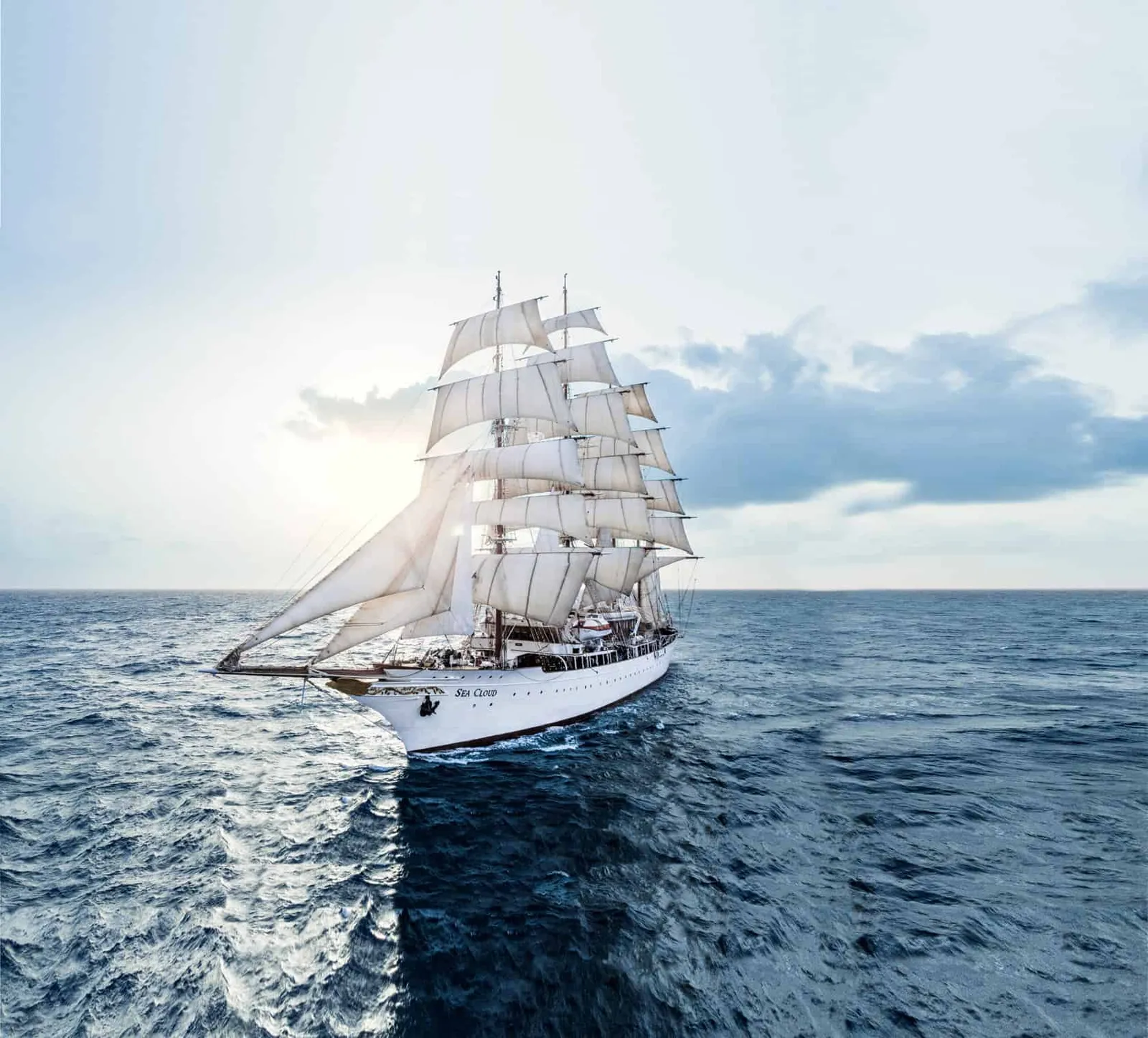
Star Clippers is the most affordable tall-ship sailing cruise on the market, and it is not close. A seven-night Caribbean voyage starts from roughly USD 1,500 to 2,200 per person in an outside cabin, with Mediterranean sailings from around USD 1,800 to 2,500. By comparison, Windstar's sailing yachts typically start from USD 3,500 to 7,000 for a similar Mediterranean week, and Sea Cloud Cruises — the ultra-premium tall-ship option — ranges from USD 5,000 to well over 12,000. The per-night rate on Star Clippers sits broadly between USD 215 and 570 depending on itinerary, season, and cabin category, with transatlantic crossings and repositioning sailings offering the lowest per-diems.
The caveat is that this is not an all-inclusive fare, so your total spend will be higher than the headline price once you factor in drinks, excursions, Wi-Fi, and gratuities. For moderate drinkers who explore ports independently, the total cost remains very competitive. Solo travellers should note that single supplements typically range from 50 to 100 per cent of the double-occupancy fare, though Royal Clipper does offer dedicated solo cabins — a rarity in the small-ship market. Deposits run from USD 400 to 800 per person depending on cabin category, with final payment due 90 days before sailing. Early-booking discounts of up to 20 per cent appear when new seasons open for sale, and returning TopGallant Club members receive a standing 10 per cent discount on future voyages. The Caribbean programme periodically includes two complimentary pre- or post-cruise hotel nights — a genuinely useful inclusion that reduces the overall cost of the trip.
Share your dates and preferences and we will come back with Star Clippers cabin options, pricing, and insider tips.