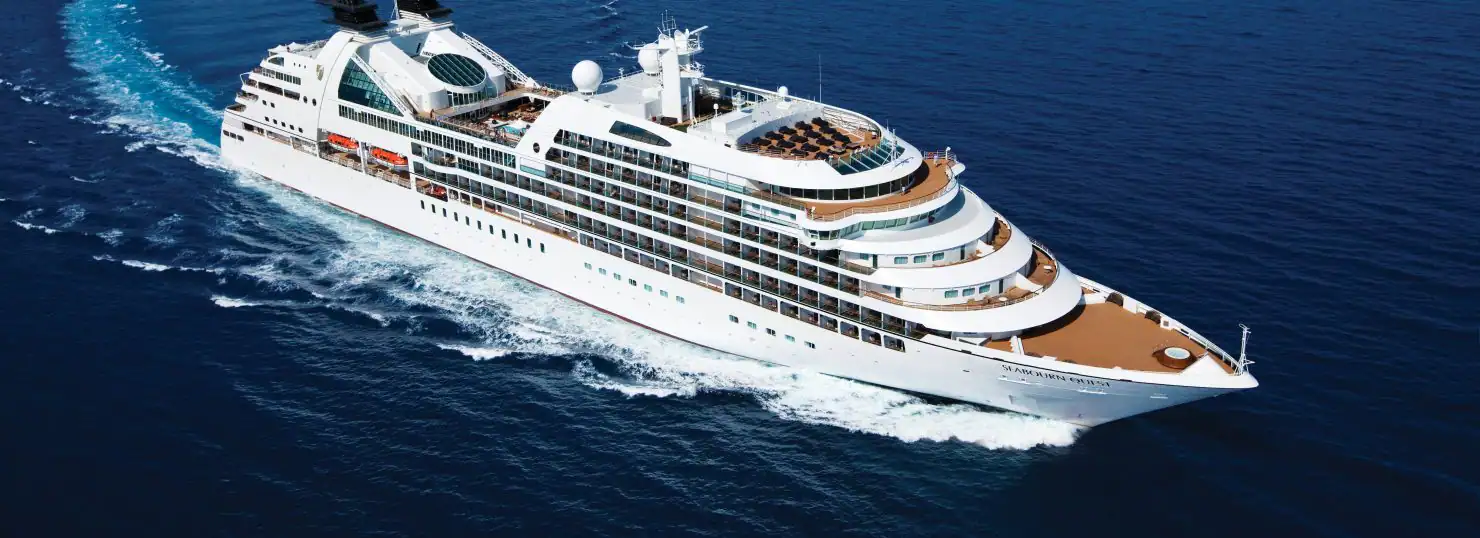
Seabourn
Expedition Cruising
Seabourn occupies a unique position — they do both traditional ultra-luxury ocean cruising and genuine expedition voyaging at the same level of refinement. The Venture and Pursuit expedition ships carry submarines and kayaks but still deliver Seabourn's signature caviar-on-the-beach experience and one-to-one crew ratios. For clients who want Zodiac landings in Antarctica followed by champagne in a beautifully designed lounge, there is simply no better option.
Seabourn Cruise Line was born in 1986 when Norwegian industrialist Atle Brynestad set out to create an intimate, yacht-like alternative to the larger luxury ships of the era, and for nearly four decades the brand has defined what ultra-luxury means at sea. The first vessel, Seabourn Pride, entered service in 1988 carrying fewer than 200 guests in all-suite accommodation — a template that still governs the fleet today. Since 1992, Seabourn has operated as a subsidiary of Carnival Corporation, the world's largest cruise group, sitting as the smallest brand by revenue but the highest by prestige positioning within a portfolio of nine lines.
That Carnival ownership is worth understanding. It provides financial backing and scale, but it also means Seabourn's investment competes with brands like Carnival Cruise Line and Princess that generate far greater returns. In recent years, the ocean fleet has contracted — Seabourn Odyssey and Sojourn have been sold — while the two expedition ships launched in 2022 and 2023 represent the brand's most significant forward bet. Whether Seabourn's long-term future lies primarily in expedition or retains a meaningful ocean programme is an open question, and one that industry watchers follow closely. For the moment, the fleet comprises Seabourn Ovation and Encore on the ocean side, and the purpose-built expedition vessels Venture and Pursuit — all delivering the intimate service, all-suite accommodation, and culinary seriousness that Seabourn has always stood for.
Seabourn Venture and Pursuit are purpose-built expedition ships carrying 264 guests in 132 all-veranda suites with PC6 ice-class certification for polar waters. They are not retrofitted ocean liners — they were designed from the hull up for expedition, with strengthened bows, Azipod propulsion for manoeuvrability in ice, and a fleet of 24 Zodiacs capable of carrying all passengers simultaneously. A 23-person expedition team of naturalists, marine biologists, historians, and guides sails on every voyage, delivering a guide-to-guest ratio of approximately one to eleven. That is respectable, though not the tightest in the market — Aurora Expeditions achieves closer to one to eight.
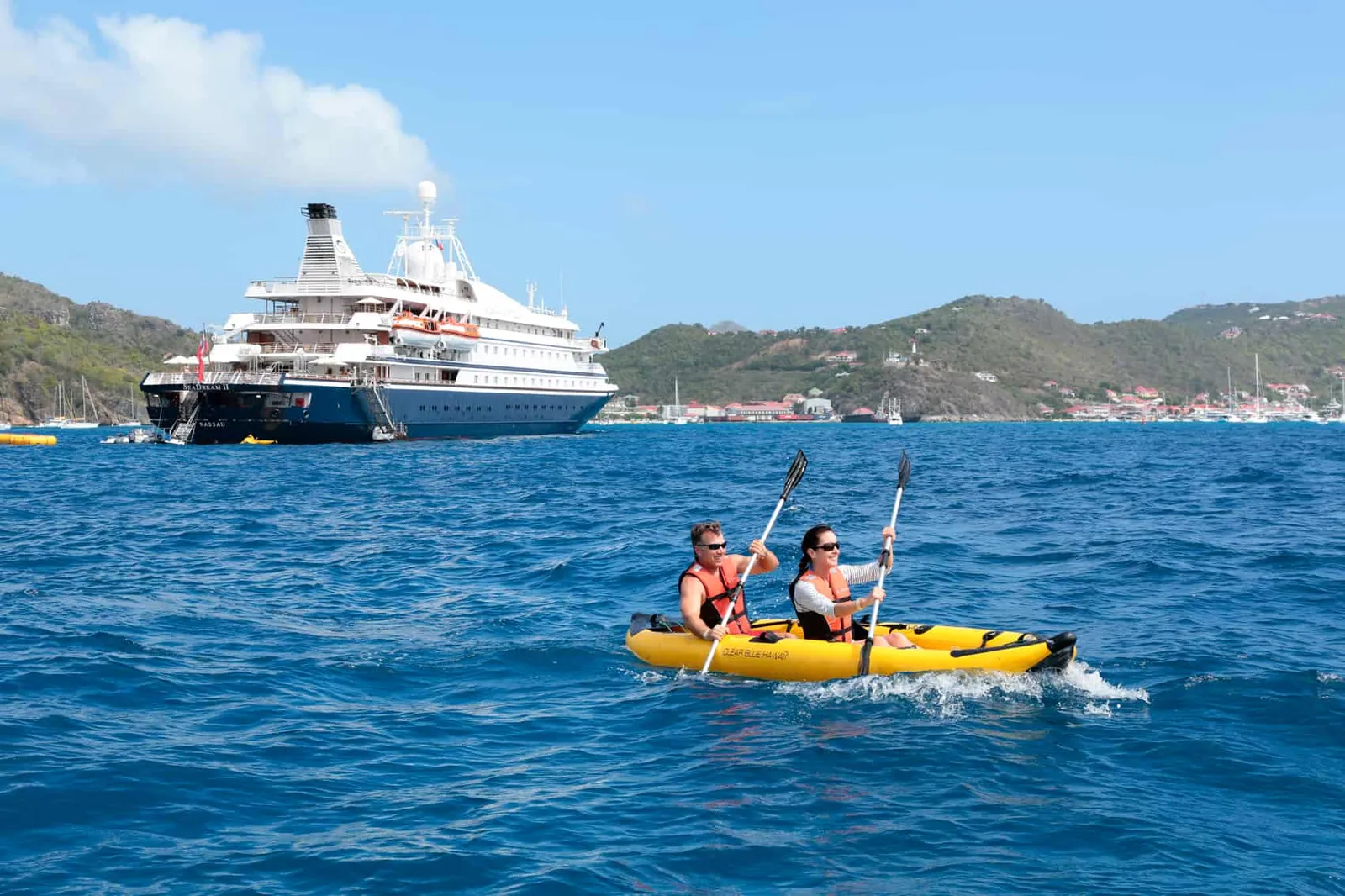
Zodiac landings and cruises are the core of the expedition experience and are fully included in the fare, as are nature walks, snorkelling, expedition lectures, and the polar plunge in Antarctica. Kayaking, however, is an optional extra at roughly two hundred to two hundred and fifty US dollars per session — a frequent criticism given the fare level, and a point where competitors like Hurtigruten and Lindblad include it as standard. The submarine programme, which was a headline feature at launch, was discontinued in early 2026 due to low uptake, operational complexity, and regulatory constraints. Its removal narrows the gap between Seabourn's expedition offering and the rest of the luxury expedition field.
In practice, these ships sit at the far luxury end of the expedition spectrum. The Adam Tihany-designed interiors feel more like a refined lodge than a research vessel, with faux fireplaces, fur cushions, and a Constellation Lounge offering 270-degree views. Guests choosing Seabourn expedition are choosing luxury first and adventure second. If you want the most rugged, science-driven expedition experience, an operator like Quark or Lindblad will deliver that more directly. But if you want to watch humpback whales from a Zodiac in the morning and settle into a marble-lined bathroom with heated floors that evening, Seabourn does that as well as anyone.
Seabourn's all-inclusive fare is generous by any standard. All dining venues are covered without surcharges, and premium wines and spirits are available at every bar throughout the day and evening — there is no separate beverage package. Gratuities are included and tipping is neither required nor expected (the only exception is an automatic eighteen percent on spa treatments). Starlink Wi-Fi is complimentary with unlimited minutes across the fleet, a meaningful improvement over the satellite systems of a few years ago and particularly valuable in polar regions where connectivity was previously dire.
On expedition voyages, the inclusions extend further. All Zodiac excursions and landings, nature walks, snorkelling, and expedition team lectures are covered. Guests receive a gifted Helly Hansen PolarShield parka, waterproof backpack, and water bottle to keep, plus loaned Swarovski binoculars and insulated boots for the duration of the voyage. Antarctic sailings add a pre-cruise hotel night in Buenos Aires and charter flights to Ushuaia — a meaningful inclusion that some competitors charge separately for. Seabourn's signature Caviar in the Surf beach event and its polar adaptation, Caviar on Ice, are complimentary.
What is not included: kayaking sessions, helicopter flights (such as Mitchell Falls in the Kimberley), spa treatments beyond the complimentary wellness classes, the Image Masters photography masterclass, and optional Ventures by Seabourn shore excursions on non-expedition port calls. On the ocean ships, marina watersports from the fold-out platform are included where available. Laundry is complimentary for Seabourn Club Gold members and above but charged at lower tiers.
Dining has always been central to the Seabourn proposition, and the expedition ships carry that forward with multiple venues, all included. The Restaurant serves as the main dining room with open seating and no reservations required — the design, inspired by snowflake geometry, is striking, and the menu rotates daily with dishes that would hold their own in a good restaurant ashore. The Colonnade operates as a casual space for breakfast and lunch before converting to Earth and Ocean for dinner, a waiter-served bistro with rotating themed nights spanning Singaporean, Indian, French, and American cuisines. The Club serves sushi and cocktails, Seabourn Square provides specialty coffees and pastries through the day, and the Bow Lounge offers grab-and-go options between excursions.
It is worth noting that the eight-year partnership with chef Thomas Keller ended in 2024. The Grill by Thomas Keller has been replaced by Solis on the ocean fleet, but the expedition ships were never part of the Keller programme — they launched with their own culinary concept under Chef Anton Egger and Senior Corporate Chef Franck Salein. Complimentary caviar remains available throughout every voyage, fine wines are poured at lunch and dinner, and the in-suite bar is stocked to each guest's stated preferences. Dietary requirements including vegetarian, vegan, gluten-free, and kosher are accommodated with advance notice. The Dr. Andrew Weil Spa and Wellness programme contributes wellness-inspired menu options and complimentary mindful living workshops across the fleet.
Seabourn attracts a specific type of traveller, and it is worth being direct about that. The core demographic is affluent, well-travelled couples in their sixties and beyond — many are loyal repeat guests who have sailed Seabourn for years and value quiet sophistication, destination immersion, and genuinely personalised service over entertainment or spectacle. The expedition ships draw a slightly broader and sometimes younger audience, but the overall feel is closer to a private members' club than a resort. Evening entertainment consists of fireside chats with the expedition team, live music in The Club, stargazing from deck, and conversation over cocktails. If you want Broadway-calibre shows, casinos, or a party atmosphere, Seabourn is not the line for you — and that is by design, not an oversight.
The dress code has relaxed considerably. Formal nights have been eliminated entirely on expedition ships, and the standard after six o'clock is elegant casual — slacks with a collared shirt or sweater for men, a jacket optional. Elegant jeans are now welcome in all dining venues. The nationality mix skews North American, British, and Australian, and the social atmosphere is warm but unforced. Staff learn guests' names within the first day or two, and the service ratio — approximately one hundred and forty-three crew and expedition staff to 264 guests — delivers a standard of attention that is difficult to replicate on larger vessels.
The Seabourn Club was overhauled in late 2025 and now operates across six tiers: Member, Silver, Gold, Platinum, Diamond, and Diamond Elite. Points accrue at one per day sailed, with additional points for premium suite categories and eligible onboard spending. Status and points never expire provided you sail within a three-year window — a more forgiving policy than many competitors.
Benefits escalate meaningfully through the tiers. Silver brings a choice-based benefits menu including a streaming Wi-Fi upgrade and ten percent off shore excursions. Gold adds complimentary laundry service. Platinum delivers a dedicated Seabourn Club concierge for pre-voyage planning. Diamond moves all benefits to automatic rather than choice-based and adds spa credits and priority embarkation. Diamond Elite, at 500 points, unlocks complimentary transfers — a valuable perk given the remote embarkation points for expedition voyages. Award cruises become available at 350 Club Days for a seven-day voyage and 460 for fourteen days, and these can be redeemed on expedition sailings subject to availability.
Seabourn operates locally through Carnival Australia in North Sydney, with a dedicated reservations team, AUD pricing through local travel agents, and a Director of Sales based in the Australian market. This means Australian guests deal with a local team during the booking process rather than navigating US-based call centres, which matters when coordinating complex expedition itineraries.
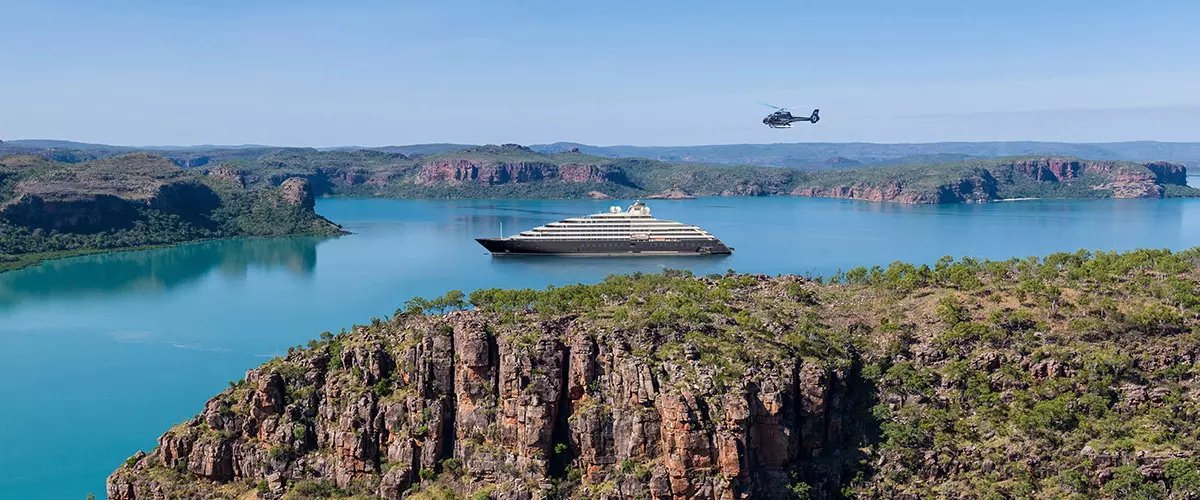
The standout Australian product is the Kimberley. Seabourn Pursuit sails ten-day voyages between Broome and Darwin during the dry season from May to September, with an expanded eight-departure season in 2026 and four confirmed for 2027. Both embarkation ports are served by direct domestic flights from Perth, Sydney, Melbourne, and Brisbane — making this by far the most accessible expedition in the Seabourn fleet. The Kimberley programme includes a cultural partnership with the Wunambal Gaambera people, the traditional landowners who served as godparents of Seabourn Pursuit, and their involvement adds a dimension that distinguishes these voyages from other Kimberley operators.
For Antarctic voyages, Australian travellers fly to Buenos Aires — typically via Santiago or Auckland — with charter flights onward to Ushuaia included in the fare. Arctic and Svalbard sailings require longer routing through Singapore, Dubai, or London. The South Pacific itineraries, sailing from ports like Papeete, are reachable with one connection from Australia's east coast.
Seabourn sits at the upper end of the expedition market on a per-diem basis, typically running between seventeen hundred and two thousand Australian dollars per person per day for entry-level Veranda Suites. That places it above most expedition-focused operators — Aurora, Quark, Ponant, and Hurtigruten all come in lower — but below Silversea's expedition pricing and comparable to Scenic Eclipse when the full inclusions are factored in. Against Regent Seven Seas, the comparison is less direct since Regent does not operate expedition ships, but Seabourn's ocean fleet pricing is broadly competitive with Regent and Silversea once the different inclusion structures are accounted for.
Solo travellers should budget carefully. The standard single supplement is two hundred percent of the double occupancy fare — effectively paying the full suite price for one person. Reduced solo rates of one hundred and twenty-five percent appear periodically on select sailings, but they are not guaranteed and tend to sell quickly. Deposits run at twenty-five percent of the total fare, due within three days of booking, with the balance payable ninety to one hundred and twenty days before departure depending on voyage length. The cancellation schedule is strict: no refund within thirty days for standard voyages. At this price level, comprehensive travel insurance with medical evacuation and supplier insolvency cover is not optional — it is essential.
The honest assessment: Seabourn delivers a premium product, but the value conversation has become more nuanced in recent years. The submarine programme is gone, the Thomas Keller partnership has ended, and kayaking remains an extra charge on a voyage that already commands a significant fare. What you are paying for is the combination of genuine expedition capability with ultra-luxury onboard standards — marble bathrooms, heated floors, in-suite clothes dryers, complimentary champagne, and service that treats every guest as an individual. For the right traveller, that combination justifies the premium. For those who prioritise expedition intensity over onboard polish, there are strong options at a lower price point.
Share your dates and preferences and we will come back with Seabourn cabin options, pricing, and insider tips.