Oceanwide Expeditions
Expedition Cruising
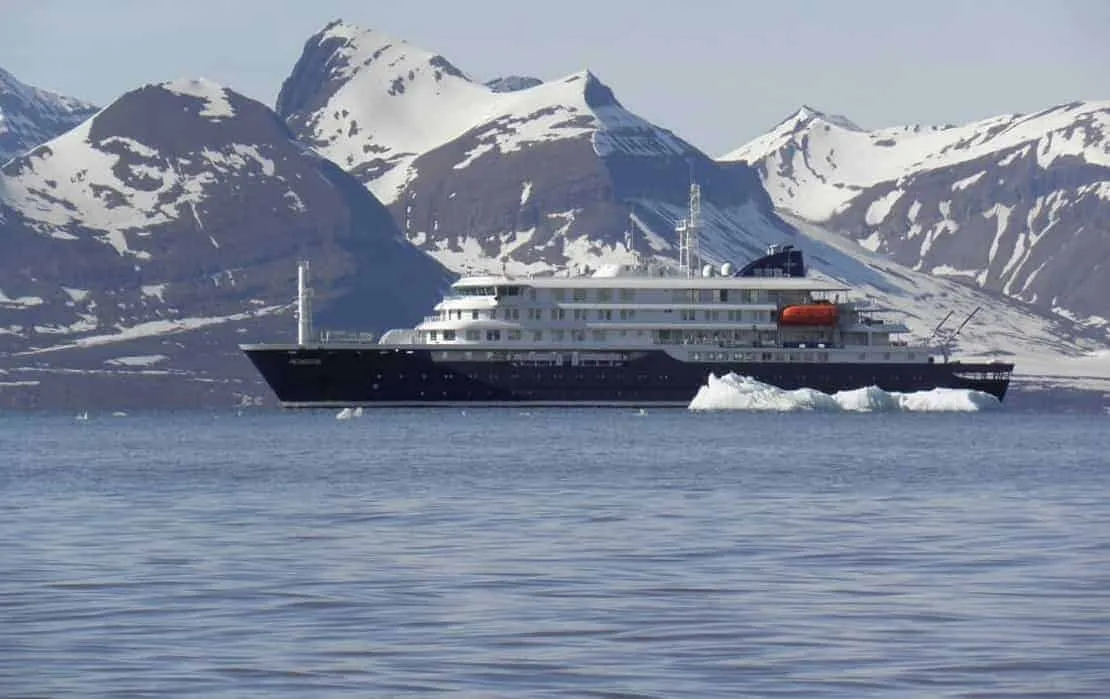
Oceanwide is the polar expedition line I recommend when clients want a serious, no-frills wildlife experience without the luxury price tag. Their ships are proper ice-strengthened workhorses — Hondius is the world's first Polar Class 6 vessel — and the expedition staff are genuine polar scientists, not entertainers in fleece jackets. You'll share the ship with birders, photographers, and repeat polar travellers, not first-time cruisers looking for a spa.
Oceanwide Expeditions grew out of a university research programme in the northern Netherlands, where a group of academics at the University of Groningen established the Plancius Foundation in 1983 to combine funded scientific research in Svalbard with commercial expedition voyages. Father and son Wijnand and Michel van Gessel formalised the operation as Oceanwide Expeditions in 1993, and over three decades the company has become one of the most respected names in polar travel. The headquarters remain in the Dutch port city of Vlissingen, the fleet has grown to four vessels, and the company is a founding member of IAATO, the International Association of Antarctica Tour Operators.
What distinguishes Oceanwide from the growing crowd of expedition operators is an uncompromising focus on the destination rather than the ship. Cabins are functional rather than lavish, dining is honest rather than theatrical, and the daily programme revolves around maximising time on the ice and in Zodiacs rather than onboard cocktail hours. The expedition teams include marine biologists, ornithologists, and glaciologists who lead landings with genuine expertise. This is Dutch pragmatism applied to polar travel: get the important things right, do not charge for things that do not matter, and keep the focus squarely on the wildlife and the landscape.
The company also retains its scientific roots through active citizen science programmes, including partnerships with Wageningen University on Arctic plastics monitoring, ARGO oceanographic float deployment, and sponsorship of BirdLife International conservation initiatives. Multiple consecutive wins at the Expedition Cruise Network Awards — including Favourite Polar Expedition Operator and Favourite for Sustainability — confirm that the industry recognises what regular Oceanwide passengers already know: this is a serious expedition company with genuine academic credibility.
Oceanwide maintains multi-disciplinary expedition teams on every voyage, with a guide-to-guest ratio of approximately one to thirteen across the fleet. Each team is assembled to cover a range of specialities — biology, geology, glaciology, ornithology, photography, and polar history — and many guides hold advanced academic credentials. The company runs its own training programme from Vlissingen and annually in Wales, covering Zodiac piloting, firearms, navigation, and kayak rescue. Full-time guide contracts, introduced in 2023, have improved staff retention and consistency.
The activity programme is broader than most value-oriented expedition lines. Standard voyages offer sea kayaking, overnight camping, snowshoeing, mountaineering, and polar diving as paid add-ons. However, on designated Basecamp departures — offered on the smaller ships — all of these activities are included at no extra charge, making them some of the best-value adventure voyages in Antarctic cruising. Basecamp voyages anchor at select locations for two to three days, with the ship serving as a comfortable base for extended time on shore and on the water. The polar diving programme deserves particular mention: Oceanwide runs arguably the most established polar scuba operation in the industry, with one to two dives daily for qualified divers in both the Arctic and Antarctic.
A moderate to high level of physical fitness is expected. Passengers must board and disembark Zodiacs independently — stepping down into a moving inflatable boat from a platform — and walk on uneven, rocky, and sometimes icy terrain at landing sites. Snowshoeing and mountaineering activities require greater fitness again. There are no lifts on any vessel in the fleet, which limits accessibility for travellers with significant mobility issues. A medical form is mandatory, and certain conditions require a physician's clearance before embarkation.
Oceanwide's inclusions model is deliberately stripped back, and the lower base fare reflects that choice. The fare covers all meals — buffet breakfast and lunch, three-course plated dinner — along with hot drinks available around the clock, shore landings, Zodiac excursions, expert-led lectures and presentations, rubber boots on loan for the duration of the voyage, and open-bridge access. On Basecamp voyages, all adventure activities are included in the fare.
What is not included is notable. There is no complimentary expedition parka — a genuine surprise for travellers coming from competitors like Quark, Aurora, Ponant, or Silversea, all of which provide one. Parkas are available for rental through Oceanwide's gear partner and delivered to your cabin before departure. Alcoholic drinks are charged per drink at the bar and with meals. Wi-Fi is available for purchase but is not included. Gratuities are not covered, with a recommended amount of eight to ten US dollars per person per day collected at the end of the voyage. International flights, travel insurance, and pre- or post-voyage accommodation are also the traveller's responsibility.
The honest assessment is that when you add parka rental, drinks, Wi-Fi, and gratuities to the base fare, the all-in cost narrows the gap with operators that include those items upfront. The Basecamp concept, however, is a genuine offsetting advantage — comparable operators charge substantial surcharges for kayaking, camping, and mountaineering activities that Oceanwide bundles into the fare on those designated voyages.
Oceanwide attracts a particular kind of traveller, and the atmosphere on board reflects that self-selection. The typical passenger is between forty-five and seventy, with a pronounced skew toward the fifties and sixties on standard voyages. Basecamp departures tend to attract a younger, more active cohort in their thirties and forties. The nationality mix leans heavily European — Dutch, German, British, and Scandinavian passengers dominate, reflecting the company's Dutch heritage and euro-denominated pricing. North Americans form a meaningful secondary segment, while Australians and New Zealanders are a smaller but growing presence, typically booking through specialist agents.
The dress code is entirely casual. Fleece, hiking trousers, and expedition layers are the uniform at dinner, and there are no formal nights. Evenings revolve around the bar, the daily recap presentation from the expedition team, and early nights before the next morning's landings. The communal atmosphere is convivial and low-key — you will swap stories over a drink with fellow travellers who are genuinely passionate about wildlife and polar landscapes, not looking for entertainment programming or nightlife.
Oceanwide is emphatically not the right choice for every traveller. If you expect luxury amenities — butler service, multiple dining venues, spa facilities, or a complimentary open bar — look elsewhere. If you value included Wi-Fi for staying connected, this is not your line. And if you or your travel companion have significant mobility limitations, the absence of lifts and the physical demands of Zodiac boarding and wet landings make Oceanwide a poor fit. This is expedition cruising in its most authentic form, designed for people who want to spend their time on ice and in Zodiacs rather than admiring a well-appointed suite.
Oceanwide has no Australian office and no ships deployed to Australian waters. The company operates from Vlissingen in the Netherlands with a secondary office in Houston. Australian travellers typically book through specialist expedition agents such as Antarctica Travel Centre, Expedition Cruise Specialists, or Chimu Adventures, all of whom can assist with flights and pre- or post-voyage arrangements.
For Antarctic voyages departing from Ushuaia, the most common routing from Australia is Sydney or Melbourne to Santiago on LATAM or Qantas, roughly thirteen to fourteen hours, followed by a domestic connection to Ushuaia via Buenos Aires at around three and a half hours. Total transit is twenty to twenty-four hours each way with connections. We always recommend building in at least one buffer night in Buenos Aires or Santiago before your embarkation date — missing the ship because of a delayed connection is the kind of risk that is not worth taking. For Arctic voyages departing from Longyearbyen or Reykjavik, the routing involves a long-haul flight to a European hub such as London, Copenhagen, or Oslo, then a connecting flight onward.
All Oceanwide pricing is denominated in euros, which introduces exchange-rate risk for Australian travellers. The AUD-EUR rate can meaningfully affect the final cost, and there are no Australia-specific promotions or AUD pricing options. There are also no Qantas or Velocity frequent flyer partnerships. None of this is a dealbreaker, but it does mean Australian travellers should factor currency fluctuations and flight costs into their overall budget when comparing Oceanwide against Australian-owned operators like Aurora Expeditions, which prices in Australian dollars and departs from local gateways.
Oceanwide is consistently positioned as one of the most affordable established polar expedition operators, and for budget-conscious travellers this is a genuine advantage. Entry-level fares for an eleven-day Antarctic Peninsula voyage start from shared quad cabins on the older vessels, with per-diem rates sitting at the lower end of the expedition spectrum. This positions Oceanwide below Aurora Expeditions and Quark Expeditions on a per-night basis, though the comparison is not straightforward: Aurora and Quark both include items — parka, and in Quark's case drinks and Wi-Fi — that Oceanwide charges as extras.
The Basecamp voyages represent the sharpest value proposition in Oceanwide's programme. Because all adventure activities are included in the fare on these departures, the effective cost per activity hour is significantly lower than on standard voyages or with competitors who charge separately for kayaking, camping, and mountaineering. For active travellers whose primary interest is doing things rather than watching from the deck, Basecamp voyages are the standout product. The company also prices in euros, which at times works in favour of Australian travellers when the AUD is strong, but cuts the other way when the dollar weakens.
Deposits sit at twenty per cent of the total fare, due on booking, with the balance payable sixty days before departure. The cancellation policy is firm: forfeit the deposit beyond ninety days, fifty per cent between sixty and eighty-nine days, and one hundred per cent inside fifty-nine days. Comprehensive travel insurance with cancellation cover is strongly recommended, and medical, accident, and repatriation insurance is mandatory. Solo travellers benefit from the cabin-share programme, which eliminates single supplement risk entirely, or can opt for single occupancy at a seventy per cent premium. For travellers who prioritise time on the ice over thread count in the cabin, Oceanwide delivers more polar expedition per dollar than almost anyone else in the market.
Share your dates and preferences and we will come back with Oceanwide Expeditions cabin options, pricing, and insider tips.