Hurtigruten Coastal Express
Premium Cruising
This is not a cruise in the traditional sense — it is a working coastal route that happens to carry tourists alongside locals and cargo. That is exactly what makes it special. The northbound leg gives you daylight views of the big-ticket scenery; the southbound reveals everything you missed at night. Do the full 12-day round trip if you possibly can.
The Hurtigruten Coastal Express is not a cruise line in any conventional sense. It is a working Norwegian coastal route — a mail, cargo, and passenger service that has connected the remote communities of Norway's western and northern coastline continuously since 1893, when Captain Richard With commanded the inaugural Bergen to Hammerfest voyage. The full round trip covers 2,500 nautical miles over 12 days, calling at 34 ports between Bergen in the south and Kirkenes near the Russian border. Ships carry cargo, pick up local passengers for short hops between villages, and maintain a working-vessel character that is fundamental to the experience. That dual identity — scheduled transport service and scenic voyage — is what makes Hurtigruten unlike anything else at sea.
It is important to understand that Hurtigruten Coastal Express and HX (formerly Hurtigruten Expeditions) are now legally separate companies under different ownership, following a formal split completed in February 2025. Hurtigruten operates the Norwegian coastal route with a fleet of nine ships. HX operates global expedition cruises to Antarctica, the Arctic, and other remote destinations on entirely different vessels. The two share a loyalty programme but nothing else — different ships, different management, different booking systems. When you see the Hurtigruten name, make sure you know which company you are looking at.
The fleet is divided into two tiers. The Original Coastal Express runs on six heritage ships built in the 1990s, all recently refurbished with hybrid-electric propulsion and modernised interiors. These are comfortable, practical vessels — not floating hotels — with panoramic lounges, a main restaurant, a bar, and cabins ranging from compact inside rooms to suites with private balconies. The Signature fleet, currently led by MS Trollfjord and MS Finnmarken, offers a premium all-inclusive experience with enhanced dining, drinks, longer port stays, and a doubled expedition team. A third Signature ship, MS Midnatsol, joins from mid-2026. The route's appeal, though, lies entirely in what unfolds outside the windows: fjords, the Arctic Circle, the Lofoten Islands, the North Cape, and 130 years of Norwegian coastal life.
This is the area that generates the most confusion, and understandably so. Hurtigruten operates a tiered fare system on the Original Coastal Express, and what you receive changes materially depending on which tier you book. The entry-level Basic fare covers your cabin (assigned at check-in with no choice of location), breakfast, lunch, and a three-course dinner in the main restaurant, plus the daily lecture programme from the onboard expedition team. Wi-Fi and tea or coffee require registering for the free 1893 Ambassador loyalty programme. All excursions, alcoholic beverages, soft drinks, and specialty coffees are at additional cost. The fine dining restaurant is not available to Basic passengers.
The Select fare, which is the most popular tier, adds the ability to choose your specific cabin, preferred dining times, complimentary Wi-Fi, and tea and coffee throughout the voyage. Platinum takes a significant step up: a full drinks package covering wines, beers, spirits, and soft drinks at meals; all dinners at the Kysten fine dining restaurant; two included shore excursions of your choice; a set of seasonal outdoor clothing; bridge visits; and private airport transfers at selected ports. The Suite fare adds priority check-in, a premium cocktail package, and daily minibar refills. For travellers who want simplicity, the Signature Voyages on the premium fleet ships bundle everything into a single all-inclusive fare — meals across multiple restaurants, premium beverages, enhanced guiding, and exclusive excursions. What is never included across any product is travel insurance, flights, luggage handling at ports, spa treatments, and the parka or outdoor gear you will need for deck time.
Port-to-port passengers, those travelling short segments between individual towns without booking a full voyage cabin, do not receive meals. Food must be purchased separately from the cafe or added as a meal package. This catches some travellers off guard, so it is worth confirming your booking type before you board.
The dining programme, branded Norway's Coastal Kitchen, is one of the genuine surprises of the Coastal Express and arguably Hurtigruten's strongest differentiator. The concept is straightforward but executed with real commitment: ingredients are sourced from over 70 local suppliers along the coast the ship is sailing past. Fresh fish loaded at one port becomes that evening's dinner course. Reindeer from Finnmark, king crab from Honningsvag, cloudberries from the Arctic tundra, lamb from coastal farms, and cod from the Lofoten fisheries all appear on menus timed to the region the ship is passing through. The programme won Gold at Travel Weekly's 2024 Magellan Awards for Best Overall Cruise Cuisine, which is a notable achievement for a working coastal route competing against purpose-built cruise ships with far larger culinary budgets.
The main restaurant, Torget, serves all passengers across all fare tiers. Breakfast and lunch are buffet-style with hot dishes alongside fresh bread, smoked salmon, cheeses, fruit, and Norwegian staples. Dinner is a three-course set menu with choices, changing daily throughout the voyage. Regional specialities rotate as the ship moves along the coast — expect Lofoten cod, Arctic char, reindeer, and local seafood to feature prominently. Kysten, the fine dining restaurant available to Platinum, Suite, and Signature passengers, offers an a la carte Norwegian experience that elevates the same local sourcing philosophy into a more refined setting. The cafe, Multe, sells Norwegian baked goods, ice cream, and light snacks on a pay-as-you-go basis. The 1893 Bar doubles as the social hub.
Vegetarian and plant-based options are available at every meal, and allergies and gluten-free requirements can be communicated in advance. The honest caveat is that hot vegetarian options at the lunch buffet receive mixed feedback, and on the full 12-day round voyage the breakfast and lunch spread can feel repetitive by the second week. Dinner, with its daily-changing regional menu, holds up far better over the longer sailing.
The atmosphere on a Hurtigruten Coastal Express ship is unlike anything you will find on a conventional cruise. The passenger mix is a blend of international tourists — predominantly German, British, and Scandinavian, with growing numbers of Australians and Americans — alongside local Norwegians who board for short hops between coastal towns. You will share deck space with someone travelling from Tromsoe to Hammerfest for a business meeting while you photograph the Arctic coastline. That mix of working transport and scenic voyage creates a democratic, unhurried energy that is deeply Norwegian in character. The dress code is effectively nonexistent: hiking boots and fleece to dinner are entirely normal, and there are no formal nights. The typical passenger is aged 55 to 75, travelling as a couple, with a meaningful proportion of solo travellers drawn by the waived single supplements and the easy social atmosphere.
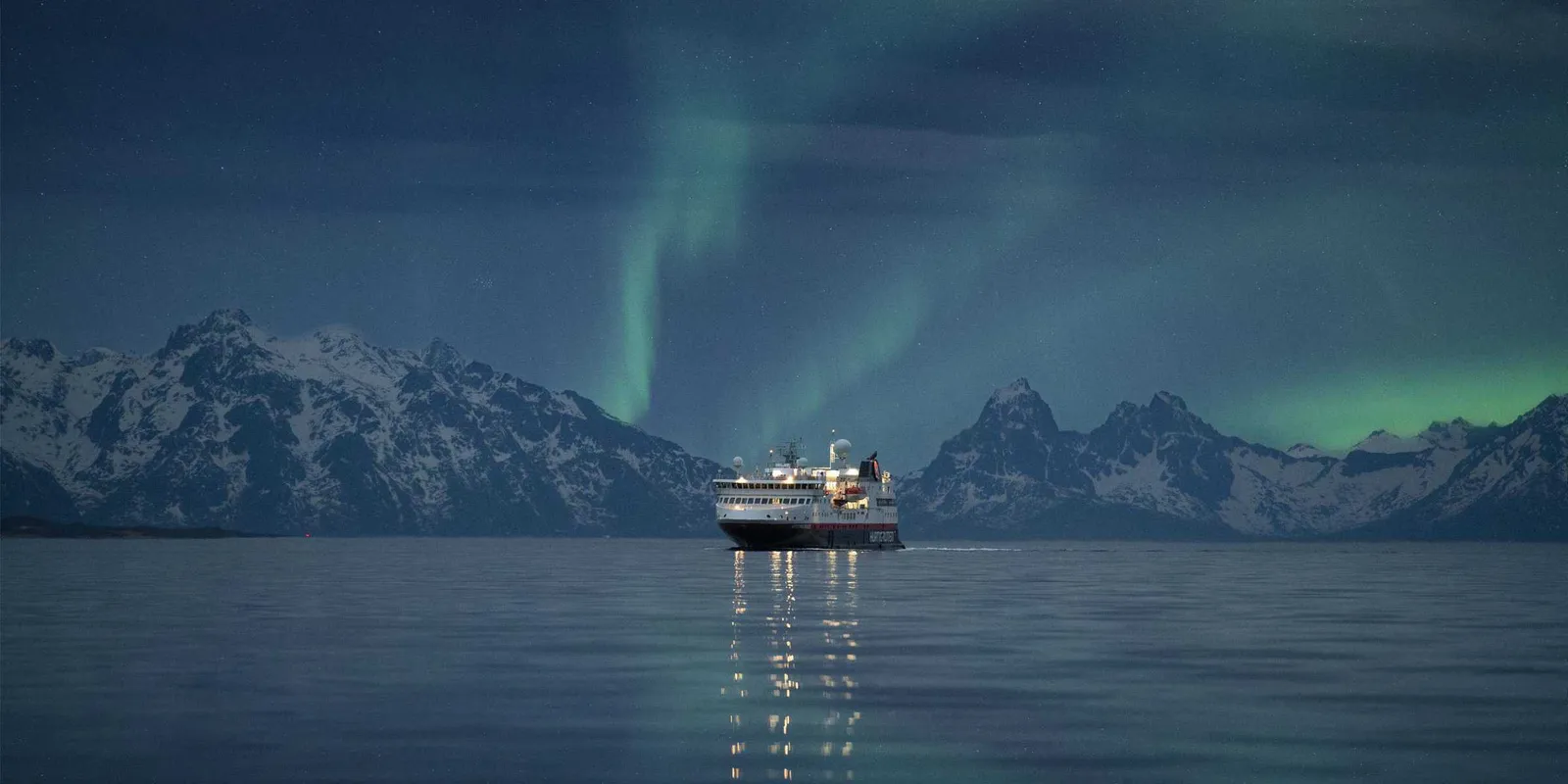
The ships are quiet after dark. There are no production shows, no casino, no nightclub, and no organised games. The expedition team delivers lectures on northern lights, Arctic ecology, Norwegian history, and coastal culture, and the 1893 Bar serves as the gathering point for drinks and conversation. In winter, passengers huddle on deck watching for aurora; in summer, the midnight sun keeps the lounges active later. By about 10 PM, most people have retired to their cabins. Many passengers describe this as meditative and restorative. Some describe it as dull. Whether the quiet appeals depends entirely on what you want from a voyage.
This is a product for travellers who are more interested in the destination than the ship, who find a working port call more engaging than a pool deck, and who do not need entertainment infrastructure to enjoy themselves. It is not for anyone expecting luxury cruise amenities, large cabins, reliable high-speed internet, or structured evening programming. The standard cabins are notably compact — 5 to 13 square metres for most categories, significantly smaller than typical cruise ship accommodation — and this is the single most common source of disappointment among passengers who did not research the product thoroughly before booking.
Norway is not a quick trip from Australia, and it is worth planning the logistics carefully. Bergen, the primary embarkation port, has no direct flights from Australian cities. The most practical routings involve flying to a Middle Eastern or Asian hub — Doha on Qatar Airways, Singapore on Singapore Airlines, Dubai on Emirates, or Helsinki on Finnair — then connecting via Oslo or Copenhagen to Bergen. Expect two connections and roughly 24 to 30 hours of total travel time. For Signature Voyages departing Hamburg, routing is simpler with multiple one-stop options available. Qatar and Finnair connections earn Qantas Frequent Flyer points through the oneworld alliance, which is worth noting for points-conscious travellers.
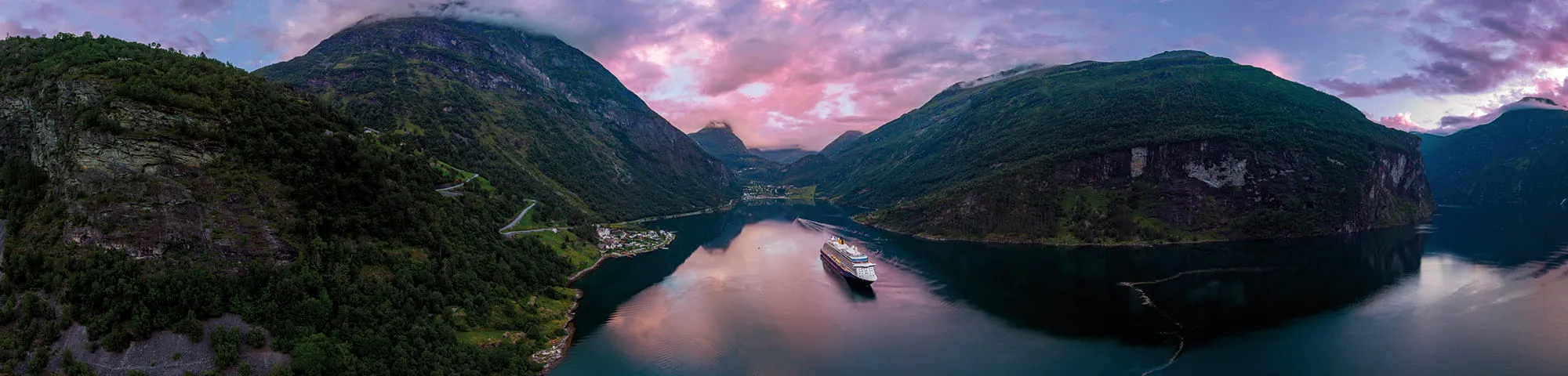
Seasonality aligns conveniently for Australians. Australian winter (June to August) coincides with Norwegian summer — the Midnight Sun season, when continuous daylight above the Arctic Circle delivers the route's most dramatic scenery and access to the stunning Geirangerfjord. Australian summer (December to February) aligns with Norwegian winter, meaning Northern Lights season, snow-covered Arctic landscapes, and significantly lower prices. Christmas and New Year sailings are popular with Australians seeking a white Christmas experience that feels genuinely remote rather than manufactured. The shoulder months of April, May, and September offer the best value with fewer crowds and either the last of the winter aurora or the first extended daylight of spring.
Hurtigruten maintains a dedicated Australian website with AUD pricing, which is a meaningful advantage over competitors like Havila Voyages that do not natively offer Australian dollar bookings. The company also has a Melbourne-based office handling enquiries and an agent portal supporting Australian travel advisors. For a destination that requires this much travel to reach, having local-currency pricing and Australian-timezone support removes a layer of friction from the booking process.
The Coastal Express positions as a premium product rather than a budget one, though entry-level pricing is more accessible than many Australian travellers expect. A 12-day round voyage on the Basic fare in a Polar Inside cabin starts from the low-to-mid two thousands per person in winter, rising considerably in summer peak season. Select fare in a Polar Outside cabin — the most popular combination — runs noticeably higher, and suites command a significant premium. Signature Voyages, with their all-inclusive model, sit at a substantially higher price point reflecting the enhanced dining, drinks, and guiding. The per-diem cost across most cabin categories and fare tiers positions Hurtigruten in the premium bracket — above mainstream cruise lines, below ultra-luxury, and roughly comparable to the upper end of expedition cruising when you factor in the included meals.
The full 12-day round voyage delivers the best value per day and the most complete experience of the route. The 7-day northbound and 6-day southbound segments work well for travellers with limited time, but you inevitably miss scenery that was passed in darkness. Port-to-port segments of two to five days are the most affordable way to sample the route, though meals are excluded and must be purchased separately. Solo travellers benefit from Hurtigruten's regular waiver of the single supplement on selected departures — when available, you pay the per-person double-occupancy rate and get a full cabin to yourself.
Deposits are 25 per cent of the total fare, due within seven days of booking and generally non-refundable. The balance is due 90 days before departure, with full payment required for bookings made within that window. Cancellation penalties increase as the departure approaches and can reach 100 per cent for late cancellations. Travel insurance is strongly recommended and never included in the fare. Wave-season promotions from January to March typically offer meaningful savings, and winter sailings consistently represent the best value on the route.
Share your dates and preferences and we will come back with Hurtigruten Coastal Express cabin options, pricing, and insider tips.