Hebridean Island Cruises
Luxury Cruising
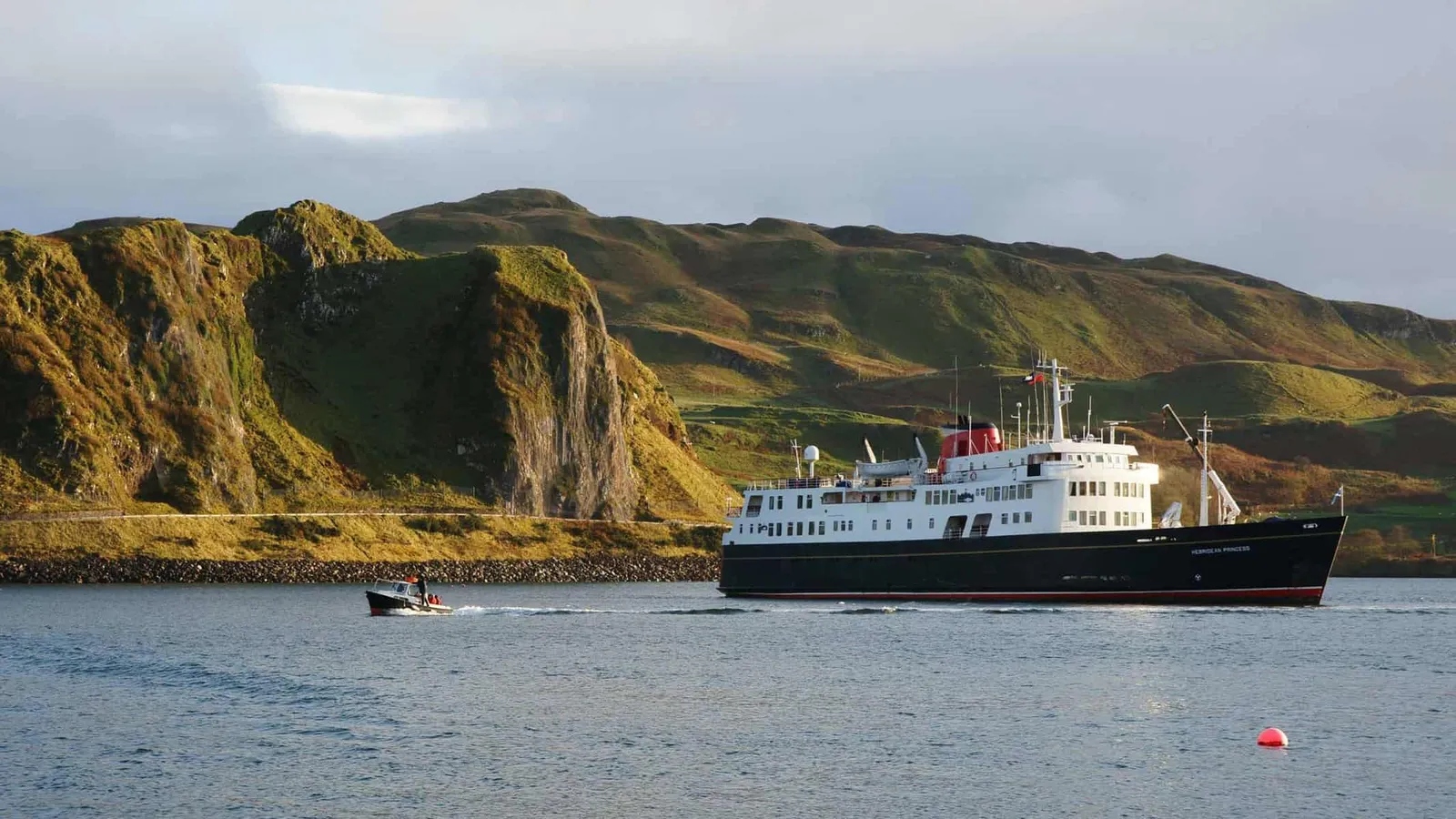
Hebridean Princess is the most exclusive small-ship experience in British waters — just 50 guests, everything included, and the crew know your name by lunchtime on day one. Queen Elizabeth chartered her twice for family holidays, which tells you everything about the standard. It is not cheap, but there is genuinely nothing else like it around the Scottish islands.
Hebridean Island Cruises occupies a niche so specific that comparisons with other cruise lines are almost meaningless. Founded in 1988 by a Yorkshire family who purchased a retired CalMac car ferry and converted her into a luxury vessel carrying just forty-eight guests, the company has spent more than three decades doing one thing extraordinarily well: exploring Scotland's islands and coastline with the intimacy and personal service of a private yacht charter. The flagship, Hebridean Princess, can slip into tiny harbours, sheltered sea lochs, and remote island anchorages that no larger vessel could reach — places like St Kilda, the Summer Isles, and the most far-flung corners of Orkney and Shetland.
The brand's credibility was cemented when Queen Elizabeth II chartered the ship twice for private family holidays, in 2006 and 2010, subsequently granting a Royal Warrant. That endorsement speaks to a standard of service and discretion that the line has maintained through multiple ownership changes and the inevitable disruptions of the past few years. The fleet also includes Lord of the Highlands, a thirty-eight-guest vessel navigating the Caledonian Canal and Highland lochs, though it is Hebridean Princess that defines the brand entirely.
What makes this line genuinely unique is its refusal to grow, modernise, or dilute. There is no casino, no swimming pool, no theatre, no buffet, no PA announcements. The experience is deliberately modelled on a floating Scottish country house, and every decision — from the tartan-upholstered cabins named after islands rather than numbered, to the inglenook fireplace in the Tiree Lounge — reflects that singular vision. For the right traveller, there is nothing else like it anywhere in the world.
Hebridean operates one of the most genuinely comprehensive all-inclusive models in the cruise industry. The fare covers all meals, all beverages including champagne and an extensive selection of single malt whiskies, every shore excursion with entrance fees to castles, gardens, and historic sites, guest speakers on selected departures, coach transfers from Glasgow or Inverness airport, gratuities, Wi-Fi, use of the ship's bicycles, fishing tackle, and port taxes. There is no bill to settle at the end of the voyage.
The practical effect of this model is significant. Onboard, guests simply do not think about money. There is no signing for drinks, no budgeting for excursions, no awkward end-of-cruise envelope for tips. It creates a genuinely relaxed atmosphere where the focus is entirely on the experience, the landscape, and the company of fellow guests. The only extras are flights to Scotland, the supplementary connoisseur wine list, gift shop purchases, and personal laundry — which is to say, almost nothing.
For travellers accustomed to lines that advertise “all-inclusive” while quietly loading on supplements, Hebridean's approach is refreshingly straightforward. When they say everything is included, they mean it.
All meals are served in the Columba Restaurant, a single-sitting dining room with plaid-framed floor-to-ceiling windows overlooking the passing scenery. Seating is assigned for the duration of the cruise, and the chef tailors menus around Scottish produce sourced from local suppliers along the route. Breakfast offers a full Scottish with black pudding, kippers, and smoked salmon alongside continental options. Lunch runs to three courses. Dinner is a three-to-four-course affair with two or three options per course, built around ingredients like Loch Fyne oysters, Highland venison, Oban langoustines, and seasonal game.
The advantage of cooking for fewer than fifty guests is that the galley can operate with a precision and responsiveness that larger ships simply cannot match. Dietary requirements are accommodated with advance notice, and the quality is consistently praised — multiple reviewers describe the food aboard Hebridean Princess as among the best they have encountered at sea. The intimate scale allows genuinely bespoke cooking, and the provenance of ingredients is a point of pride.
Whisky deserves particular mention. A complimentary decanter of single malt is placed in every cabin, the bar stocks an extensive selection of Scotch whiskies included in the fare, and themed whisky cruises feature distillery visits and expert-led tastings. For anyone with even a passing interest in Scotch, the programme is quietly outstanding.
The atmosphere aboard Hebridean Princess is that of a private country house weekend, transposed to sea. The Tiree Lounge, with its brick inglenook fireplace — possibly the only working fireplace on any cruise ship — serves as the social heart of the ship. Pre-dinner drinks beside the fire are the highlight of the daily routine, and the small passenger count means everyone knows everyone within twenty-four hours of sailing. Conversation is the primary entertainment, and the atmosphere is warm, convivial, and traditional without being stuffy.
The passenger profile is predominantly British, affluent, and retired, with an average age north of seventy and a repeat-guest rate above sixty per cent. Many guests have sailed ten, twenty, or more times. International travellers are welcome and increasingly common, but the cultural tone is unapologetically British — from the social rituals of afternoon tea and pre-dinner cocktails to the enforced dress code of jacket and tie on most evenings. Gala nights, typically one or two per cruise, call for dinner jackets or kilts. This is one of the last cruise experiences where dressing for dinner is a genuine expectation rather than a polite suggestion.
This ship is emphatically not for everyone. If you want onboard entertainment, nightlife, a pool, a spa, or a busy social programme, Hebridean will disappoint. If you want structured children's activities, modern design, or international diversity, look elsewhere. But if you value intimacy, authenticity, extraordinary destinations, and the kind of personal service that comes from a near one-to-one crew-to-guest ratio, there is no comparable experience afloat.
Most Hebridean Princess itineraries depart from Oban on Scotland's west coast, with complimentary coach transfers included from Glasgow or Inverness. The most practical routing from Australia is to fly into London Heathrow or Glasgow — via Middle Eastern or Asian hubs — then take an internal flight or train to Glasgow or Inverness. I would strongly recommend allowing at least one overnight in Glasgow, Edinburgh, or Inverness before embarkation to recover from the journey and enjoy some pre-cruise exploration.
The cruising season runs from March through November, with peak months from May through September offering the longest daylight hours, mildest weather, and the best wildlife sightings. June and July are particularly rewarding for birdlife, including puffin colonies. Shoulder months bring dramatic light and fewer midges, but cooler temperatures. Scottish weather is genuinely unpredictable regardless of when you visit, and itinerary flexibility is built into the experience.
All fares are quoted in pounds sterling, so Australian travellers should factor in the exchange rate when budgeting. Hebridean is a niche proposition from this market, but it appeals strongly to Anglophiles with a love of Scotland, ultra-experienced cruisers seeking something genuinely different, solo travellers drawn by the ten no-supplement single cabins, and Australians with Scottish ancestry looking to visit ancestral islands in uncommon comfort.
Hebridean Princess sits at the upper end of the luxury cruise market on a per-night basis, with per-diem rates comparable to or exceeding Silversea, Seabourn, and Regent Seven Seas. However, the genuinely all-inclusive nature of the fare — covering excursions, drinks, transfers, and gratuities that would add hundreds per day on other lines — means the effective value is considerably stronger than the headline figure suggests. When you factor in what is actually included, the comparison with other luxury lines becomes much more favourable.
Voyages range from four to ten nights, with four and five-night sailings offering a more accessible entry point. Early booking savings of up to fifteen per cent are available on selected departures, and a multi-cruise discount rewards guests booking two or more sailings in the same season. The ten purpose-built single cabins carry no supplement whatsoever, which represents exceptional value for solo travellers in a market segment where single supplements of fifty to one hundred per cent are standard.
Deposits and cancellation terms follow a structured schedule that tightens as the departure date approaches, so early commitment is rewarded and late changes carry increasing penalties. Given the small capacity and high repeat-guest rate, the practical reality is that desirable cabins on popular departures sell out well in advance. This is not a cruise you book on impulse — it rewards planning and early decision-making.
Share your dates and preferences and we will come back with Hebridean Island Cruises cabin options, pricing, and insider tips.