Havila Voyages
Expedition Cruising
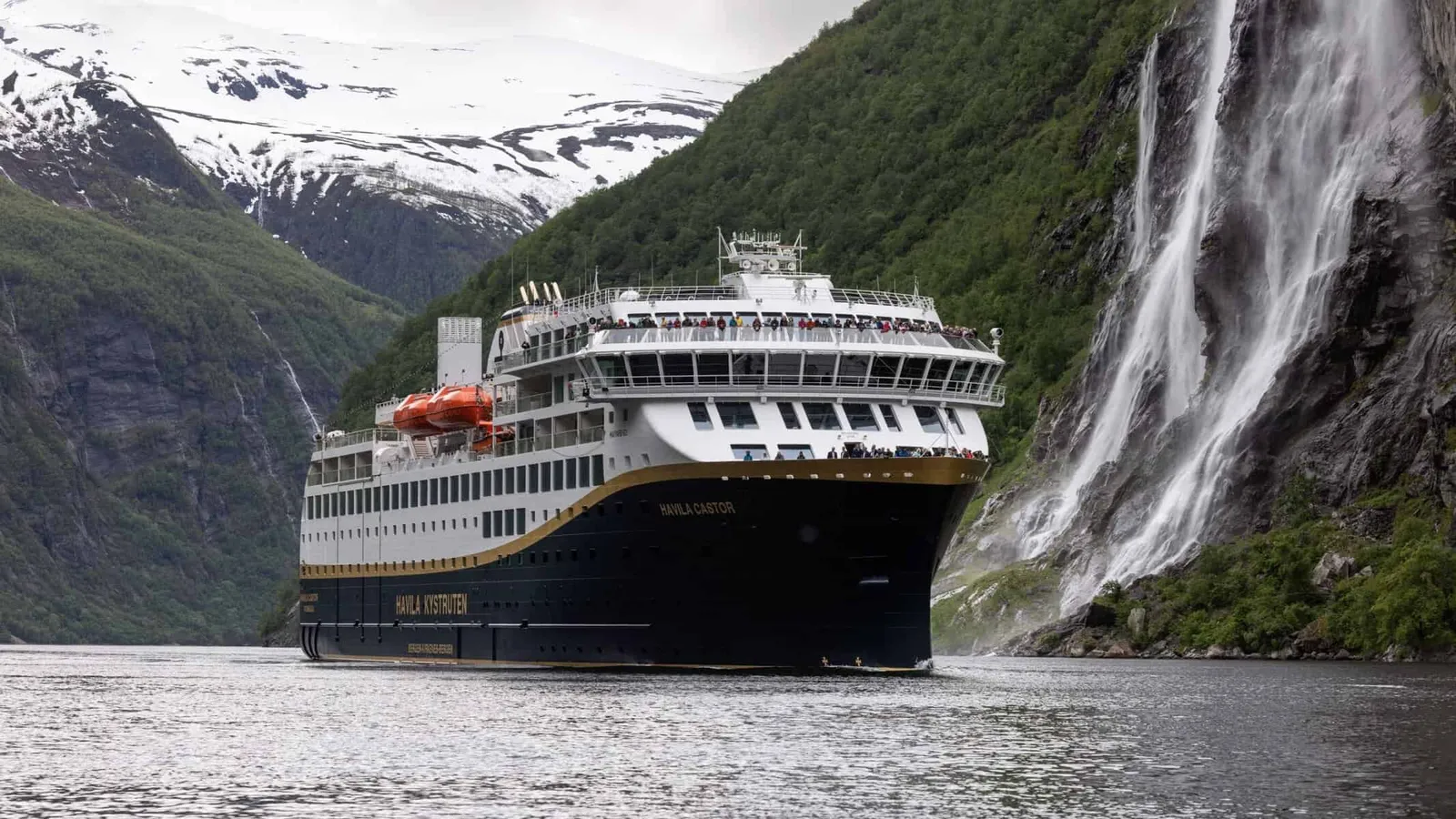
Havila is the fresh alternative to Hurtigruten on the Bergen-Kirkenes route, and their ships are genuinely stunning — modern Scandinavian design with the largest battery packs ever fitted to a passenger vessel. If sailing silently through a UNESCO fjord on zero emissions matters to you, this is the only real choice.
Havila Voyages is the newer of the two companies operating Norway's legendary Bergen to Kirkenes coastal route — a 2,500-nautical-mile voyage along what many consider the most spectacular coastline on earth. The company launched in 2021 after winning a government concession to operate four of the eleven daily departures on the route, breaking Hurtigruten's monopoly on a service that has run continuously since 1893. Behind Havila sits the Saevik family's Havila Group, a Norwegian maritime dynasty whose roots trace back to 1957, when founder Per Saevik bought his first fishing boat at sixteen. This is not a venture capital start-up playing at shipping — it is a family with deep maritime credentials building something ambitious.
What makes Havila genuinely distinctive is the engineering. All four ships are identical sister vessels, purpose-built from the keel up with sustainability as the design priority rather than an afterthought. Each carries a 6.1 megawatt-hour battery pack — the largest ever fitted to a passenger vessel at the time of delivery — enabling up to four hours of silent, zero-emission sailing. When those batteries engage in a UNESCO-listed fjord and the engines fall completely silent, the effect is remarkable. The ships run on liquefied natural gas rather than marine diesel, cutting CO2 emissions by roughly 35 per cent and eliminating virtually all sulphur and nitrogen oxide pollution. In late 2025, Havila Polaris completed a full 12-day round voyage on liquefied biogas, reducing greenhouse gas emissions by over 90 per cent. The company's stated target is to replace fossil LNG with biogas across the entire fleet by 2028. These are not greenwashing claims — they are measurable engineering achievements that no other coastal operator can match.
The early years were not without turbulence. Shipyard difficulties, the 2022 Russian sanctions crisis that temporarily docked one vessel, and significant refinancing challenges tested the company's resilience. A comprehensive debt restructure completed in November 2025 has stabilised the financial picture considerably, and with all four ships now in reliable year-round service, the operational teething problems of the launch period have largely been resolved. The trajectory is clearly upward, though Havila remains a young company still refining its product.
Havila's inclusion model sits somewhere between a full-service cruise and a Scandinavian transport service. For cabin passengers booking a full voyage — northbound, southbound, or the 12-day round trip — breakfast, lunch, and dinner in the main Havrand restaurant are included, as are water, tea, standard coffee, and juices at breakfast. Wi-Fi is included at a basic speed suitable for browsing and email. Access to the gym, sauna, jacuzzis, and self-service laundry rounds out the standard inclusions. Onboard lectures and enrichment activities from the expedition team are also part of the fare.
What is not included tells you something about the Scandinavian approach to value. Alcoholic beverages are pay-as-you-go, and there is no drinks package available — a point that catches some travellers off guard. Soft drinks and specialty coffees outside breakfast carry a charge. All excursions at the 34 port calls are optional and at additional cost. The Hildring fine dining restaurant carries a surcharge, as does the casual Havly Cafe. Gratuities are not formally expected in the Scandinavian tradition, though a tipping jar is available. Havila does not provide parkas, boots, or outdoor gear — you bring your own warm layers.
Havila offers three fare flexibility tiers — Saver, Flex, and Super Flex — which share the same onboard inclusions but differ in cancellation and change terms. The Havila Gold upgrade package adds fine dining evenings at Hildring, an expanded menu across all meals, a non-alcoholic beverage allowance, Havly Cafe access, exclusive lounge access, and priority check-in. Gold is automatically included for suite guests, making the suites genuinely better value than the headline price suggests. Port-to-port passengers travelling without a cabin receive none of the meal inclusions and must purchase food separately.
Havila's food programme is built around a concept called Havila Food Stories — menus that change as the ship moves along the coast, drawing on regional Norwegian ingredients sourced from the areas you are sailing past. Between Bodo and Honningsvag, expect Lofoten cod, dried fish, and cloudberries. In the Arctic north, crab, reindeer, Arctic char, and seaweed appear on the menu. It is a thoughtful approach that connects the dining experience directly to the landscape outside the window, and when it works well, it is one of the most rewarding aspects of the voyage.
All meals in the main Havrand restaurant are served a la carte rather than buffet-style — a deliberate choice that has reduced food waste to a remarkable 70 grams per passenger, a fraction of the industry average. The format means you choose from a set menu of smaller dishes, which allows variety but has drawn legitimate criticism. Portions are tapas-sized, and some passengers find them insufficient. An additional charge applies if you order more than three courses at dinner, which is a genuine point of friction in reviews. The company clearly prioritises sustainability metrics here, and not every guest appreciates that trade-off. The Hildring fine dining restaurant, available as a surcharge or included with Havila Gold and suites, offers a five-course signature menu that represents the best of the culinary programme. The casual Havly Cafe serves waffles, shrimp sandwiches, wraps, and baked goods throughout the day for those who want something between meals.
Vegetarian options are available at every meal, and dietary requirements including allergies can be communicated in advance. Detailed information on vegan, gluten-free, halal, or kosher provisions is limited in public materials, so passengers with strict requirements should confirm directly with Havila before booking. The beverage programme is straightforward — water, tea, and coffee are included around the clock, with everything else at additional cost. There is no all-inclusive drinks package, which is worth factoring into your budget if you enjoy wine with dinner.
The atmosphere on a Havila ship is unlike anything you will find on a conventional cruise line, and understanding that distinction is important before you book. This is a working coastal vessel. Alongside the 468 cabin passengers, the ship carries up to 172 day travellers hopping between ports, plus cargo, pallets, and occasionally cars in the vehicle garage below. At some of the 34 port calls, the stop lasts just fifteen minutes — long enough to load freight and exchange local passengers before moving on. At others, you have several hours to explore a town or join an excursion. The rhythm is dictated by the coastal schedule, not by a cruise director's programme.
The design aesthetic is modern Scandinavian — clean lines, natural materials, floor-to-ceiling glass, and a restrained colour palette that lets the coastline do the visual heavy lifting. The observation lounge on Deck 9 features a glass roof purpose-built for northern lights viewing, and the Havly bar with its panoramic windows is consistently praised as one of the finest public spaces on any ship of this size. The crew is predominantly Norwegian, and the service style reflects Scandinavian culture: competent, friendly, and direct rather than effusive. Announcements are made in Norwegian, English, and German. There is no casino, no production shows, no formal nights, and no structured evening entertainment beyond the bar, occasional lectures, and the ever-changing view. Evenings are quiet.
This is a voyage for travellers who are drawn to the destination rather than the ship, who find silence through a fjord more thrilling than a deck party, and who are comfortable with a laid-back pace and their own company. It is not the right choice for anyone expecting a traditional cruise atmosphere, extensive nightlife, or constant activity programming. Compared to Hurtigruten's coastal ships, Havila feels more contemporary and more design-conscious, but also slightly less characterful — the heritage and working-vessel charm that Hurtigruten's older ships carry is not something a new build can replicate. Families with older children who appreciate nature may enjoy it; families with young children will find no kids' club, no children's programme, and very little to keep small ones occupied.
Norway is not a quick trip from Australia, and the logistics of reaching Bergen deserve honest attention. There are no direct flights. The most practical routing involves two connections — typically Australia to a Middle Eastern hub such as Doha, Dubai, or Singapore, then onward to Oslo or Copenhagen, and finally a domestic flight to Bergen. Total travel time runs 24 to 30 hours depending on connections. Qatar Airways via Doha is a strong option for Australians because the Oneworld connection earns Qantas Frequent Flyer points. Singapore Airlines via Singapore, Emirates via Dubai, and Finnair via Helsinki are also well-established routings. If you are booking a one-way voyage ending in Kirkenes, factor in an additional domestic Norwegian flight back to Oslo — Kirkenes is served only by domestic connections.
Havila does not have an Australian office, and the website does not offer Australian dollar pricing natively. Bookings can be made directly through havilavoyages.com in euros, pounds, or US dollars, or through Australian travel agents and Scandinavian specialist operators who quote in AUD. We can handle the full booking and coordinate flights, transfers, and any pre or post-voyage accommodation in Bergen or Oslo to simplify the logistics considerably.
Seasonality works in interesting ways for Australians. Our winter — June through August — aligns with Norway's summer, delivering midnight sun, the warmest weather, and the summer-only Geirangerfjord detour. Our summer — December through February — aligns with Norwegian winter, offering northern lights, dramatic Arctic darkness, and substantially lower fares. Christmas and New Year sailings attract Australians seeking a white Christmas experience. The shoulder seasons of April to May and September offer fewer crowds and excellent value. If the northern lights are your primary motivation, the strongest viewing months are October, February, and March — and Havila's Northern Lights Promise guarantee on 12-day round voyages provides genuine insurance against bad luck.
Havila is generally priced at or slightly below Hurtigruten for equivalent cabin categories on the same route, which makes it solid value given the ships are newer and the cabins are typically larger. The included meals, Wi-Fi, and gym and sauna access provide a reasonable baseline without reaching true all-inclusive territory. Where Havila loses ground on value is in the extras — excursions are priced at a premium and promoted assertively, drinks are entirely pay-as-you-go with no package option, and the fine dining restaurant and casual cafe both carry surcharges unless you hold the Havila Gold upgrade. Budgeting for these additions is important if you want to enjoy the full breadth of the onboard experience.
Solo travellers benefit from a 40 per cent discount on selected Interior and Seaview cabins, and Havila frequently removes the solo supplement entirely on non-peak sailings approximately 90 days before departure. That makes it one of the more accessible Norwegian coastal options for single travellers willing to be flexible on timing. Winter voyages represent the best value across the board — fares drop significantly compared to the peak summer season, and the northern lights and snow-covered landscapes arguably deliver a more dramatic voyage than the midnight sun months.
Havila offers three fare tiers — Saver, Flex, and Super Flex — that share identical onboard inclusions but differ in cancellation and change flexibility. Super Flex carries the most generous terms for a higher upfront price. Early-bird promotions typically launch annually for the following year, and last-minute deals appear occasionally in shoulder seasons. The deposit and cancellation structure follows standard escalating penalties as the departure date approaches, with specific terms published in Havila's booking conditions. If flexibility matters to you — and it should for a trip that involves long-haul flights to Norway — the Flex or Super Flex tiers are worth the premium over Saver.
Share your dates and preferences and we will come back with Havila Voyages cabin options, pricing, and insider tips.