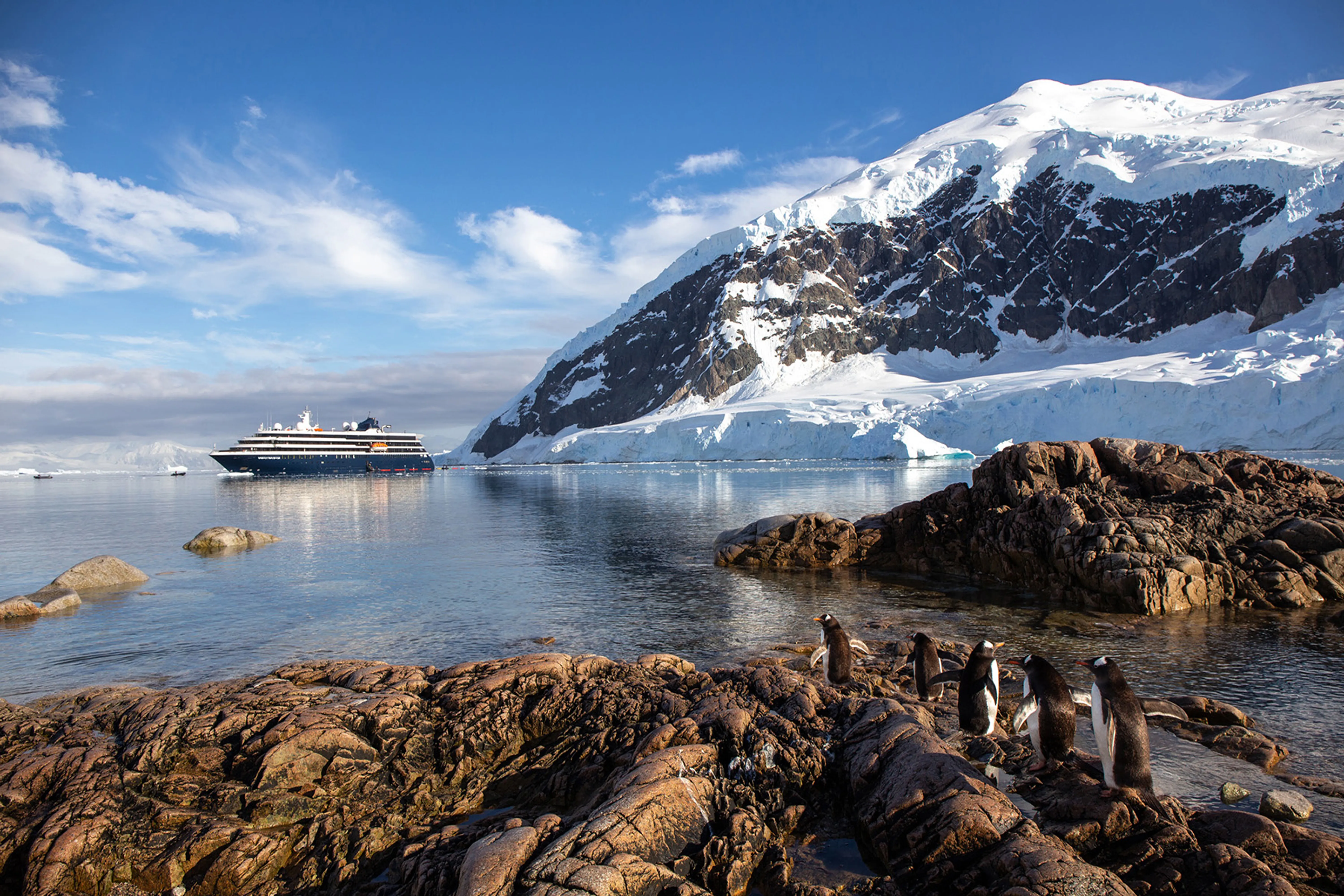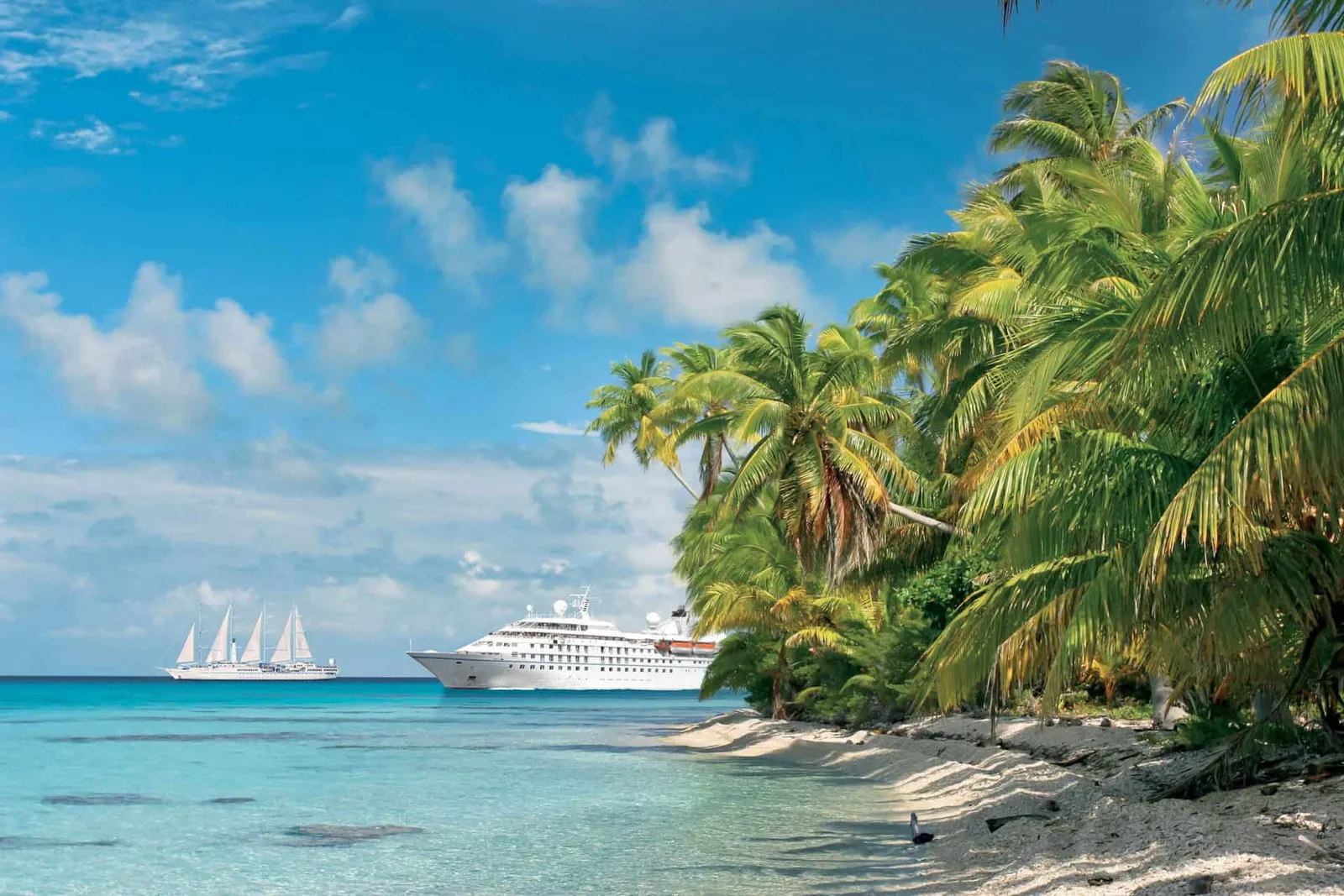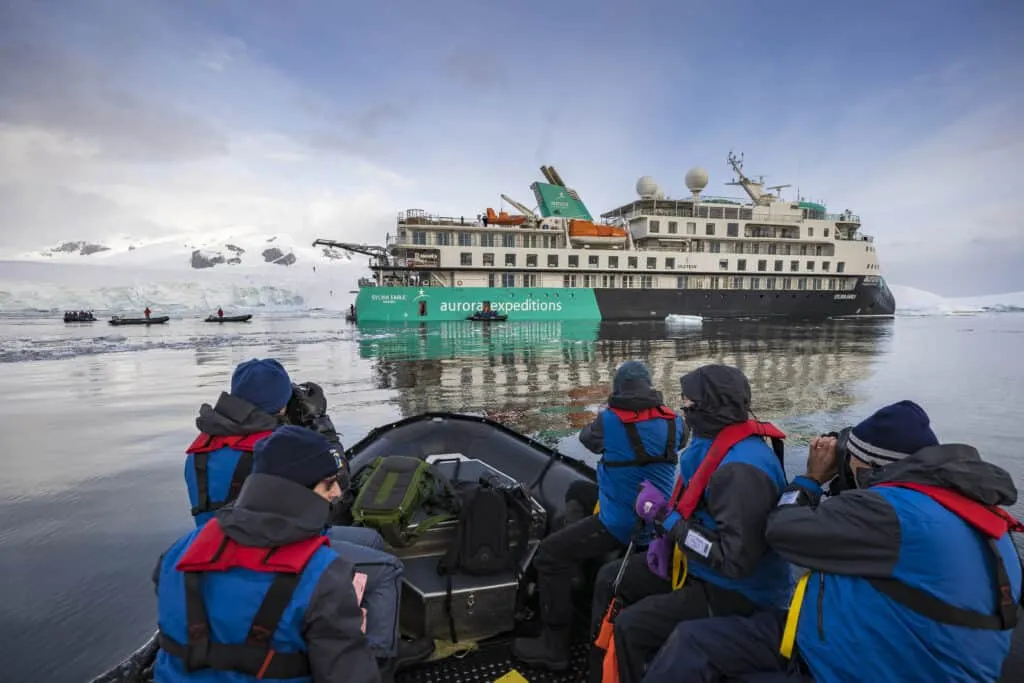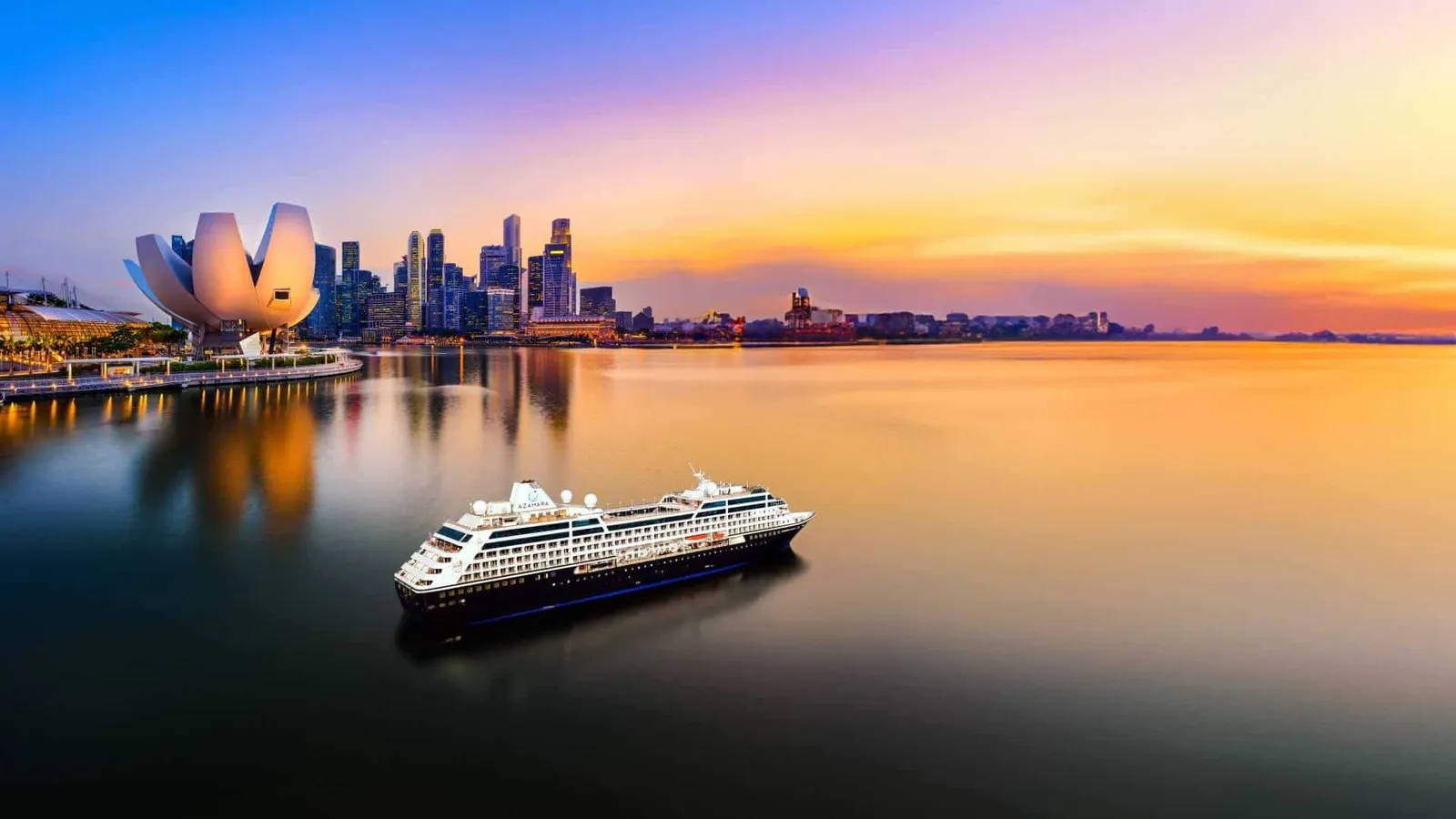
Swan Hellenic and Windstar Cruises both carry fewer than 350 guests and reject the conventions of mainstream cruising — but they solve entirely different problems. One is a cultural expedition specialist with ice-class ships and Zodiac landings, the other a barefoot sailing line whose computer-controlled sails define the romance of small-ship cruising. Jake Hower compares their inclusions, dining, fleet, and value for Australians.
| Swan Hellenic | Windstar Cruises | |
|---|---|---|
| Category | Expedition | Yacht-Style / Luxury |
| Rating | ★★★★☆ | ★★★★☆ |
| Fleet size | 3 ships | 7 ships |
| Ship size | Small (under 200) | Yacht (under 300) |
| Destinations | Polar, Mediterranean, South America, Asia | Mediterranean, Caribbean, Alaska, French Polynesia |
| Dress code | Relaxed | Resort casual |
| Best for | Cultural expedition and enrichment travellers | Romantic small-ship and sailing enthusiasts |
Swan Hellenic is the choice for intellectually curious Australians who want genuine expedition access — ice-class ships reaching Antarctica, the Arctic, Papua New Guinea, and the Solomon Islands, a fully all-inclusive fare covering open bar, excursions, gratuities, and Wi-Fi, and an onboard enrichment programme featuring historians, naturalists, and SETI Institute scientists. Windstar counters with sailing heritage no other line can match — computer-controlled sails on three masted yachts, the James Beard Foundation culinary partnership, year-round Tahiti departures, and a watersport marina platform that turns the ocean into your private playground. For Australians drawn to remote destinations and cultural discovery, choose Swan Hellenic. For Australians seeking barefoot romance, intimate ports, and the magic of cruising under sail, choose Windstar.
The core difference
Swan Hellenic and Windstar Cruises both belong to the small-ship end of the luxury cruise spectrum — neither carries more than 342 guests, both reject formal nights, and both attract travellers who have deliberately chosen not to sail on anything larger. But the similarities end there. These two lines represent fundamentally different answers to the question of what a cruise should be, and understanding the distinction before booking will determine whether your voyage delivers revelation or disappointment.
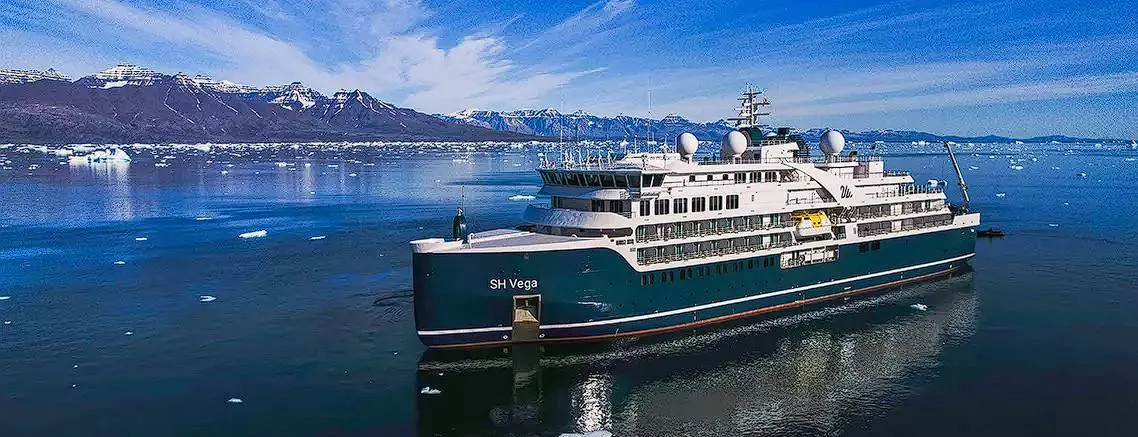
Swan Hellenic’s identity is cultural expedition. The brand traces its origins to the 1950s, when Swan’s Tours began carrying British guests to historic Mediterranean sites — pioneering the concept of intellectually enriched cruising long before the term “expedition” entered the luxury lexicon. After multiple ownership changes and a period of dormancy, the brand was relaunched in 2021 under CEO Andrea Zito with three purpose-built ice-class expedition ships: SH Minerva (2021, 152 guests, PC6 ice class), SH Vega (2022, 152 guests, PC5 ice class), and SH Diana (2023, 192 guests, PC5 ice class). All three were built at Helsinki Shipyard — specialists in icebreakers and polar vessels — and carry full Zodiac fleets, onboard science laboratories, and expedition teams of twelve to fifteen specialists including historians, naturalists, ornithologists, marine biologists, and cultural experts. The SETI Institute partnership places NASA-affiliated scientists aboard select sailings. The tagline — “Pioneering Cultural Discovery Since 1954” — captures the distinction from pure adventure expedition lines: Swan Hellenic’s expeditions are as much about understanding civilisations as they are about reaching remote coastlines.
Windstar’s identity is sailing romance. Founded in 1984, Windstar operates three motorised sailing yachts — Wind Surf (342 guests, five masts), Wind Star (148 guests, four masts), and Wind Spirit (148 guests, four masts) — whose computer-controlled sails define the line’s identity. The sails unfurl during every departure in a signature ceremony that no other cruise line can replicate, and they deploy whenever wind conditions are favourable, capable of generating speeds up to twelve knots without engine power. The tagline “180 degrees from ordinary” captures a philosophy of barefoot elegance, watersport marina platforms that lower directly into the ocean, and access to harbours that larger ships cannot enter. The Star Plus class motor yachts (Star Breeze, Star Legend, Star Pride, each carrying 312 guests after the USD $250 million Star Plus Initiative renovation) and the new-build Star Seeker (224 guests, December 2025, ice-strengthened hull) round out a fleet of seven growing to eight. Owned by Xanterra Parks and Resorts (a subsidiary of The Anschutz Corporation), Windstar is the antithesis of the mega-ship — intimate, casual, and defined by the romance of wind-assisted cruising.
For Australian travellers, the practical question often clarifies around a single word: purpose. If you want to board a Zodiac, land on beaches with no pier, explore Antarctica or Papua New Guinea, and attend daily lectures from historians and marine biologists, Swan Hellenic is the choice. If you want to feel the sails catch the wind, swim from the back of the ship, dine under the stars in Tahiti, and dock in ports where even most small ships cannot fit, Windstar delivers an experience that no other line can replicate.
What is actually included
Both lines market inclusivity, but the specifics differ substantially — and the gap matters when calculating true cost from an Australian wallet.
Swan Hellenic’s inclusion model is broad and deliberately simple. The base fare covers all meals including 24-hour room service, an open bar with selected wines, spirits, beer, coffee, and soft drinks, a well-stocked minibar replenished daily, unlimited Wi-Fi, gratuities, shore excursions and expedition activities (Zodiac landings, guided walks, cultural visits), the full onboard lecture programme, and — uniquely — a one-night pre-cruise hotel stay with breakfast, plus airport-to-ship transfers. On Cruise Plus packaged sailings, charter flights from Australian gateways and additional hotel nights are included in the advertised fare. On polar voyages, an expedition parka is provided. What Swan Hellenic does not include: spa treatments, premium wines or spirits beyond the standard open bar selection, and optional specialist activities such as scuba diving or polar kayaking on select itineraries.
Windstar’s base fare covers all dining across every restaurant without surcharges, 24-hour room service, non-alcoholic beverages including speciality coffees, complimentary watersport marina access (kayaks, paddleboards, snorkelling gear, water skiing), group fitness classes, and onboard enrichment events. What Windstar does not include in the base fare: alcoholic beverages, Wi-Fi, crew gratuities (USD $16 per person per day), and laundry. The All-In package bundles unlimited beer, wine, cocktails, and spirits, unlimited Wi-Fi for two devices, and prepaid gratuities for USD $99 per person per day when purchased before sailing (USD $109 if added onboard). An 18 per cent beverage service charge applies to individual drink purchases outside the package.
The net effect for Australian travellers is significant. Swan Hellenic’s fare means almost nothing goes on the onboard account — drinks from morning to night, every excursion, every Zodiac landing, every lecture, and the pre-cruise hotel are covered. On a fourteen-night expedition sailing for a couple, the additional spend can genuinely be close to zero beyond spa treatments. Windstar’s base fare excludes three major categories — alcohol, Wi-Fi, and gratuities — that add roughly AUD $3,200 per couple on a ten-night cruise through the All-In package. For Australian travellers accustomed to calculating the true cost of a cruise beyond the headline fare, Swan Hellenic’s model is markedly simpler and, for most guests, more genuinely all-inclusive.
Dining and culinary experience
Both lines boast genuine culinary partnerships — and both can point to credentialed chefs backing their programmes. The dining experience, however, differs in scale, philosophy, and setting.
Swan Hellenic is a focused, chef-driven kitchen. The Maris culinary programme, developed in partnership with JRE-Jeunes Restaurateurs — a prestigious European association of rising culinary talent — brings rotating guest chefs aboard select sailings to curate menus, host themed dinners, and lead gastronomic excursions ashore. The permanent culinary programme was created by Michelin-starred Italian chef Andrea Ribaldone and Korean chef Sang Keun Oh. The Swan Restaurant serves as the primary venue for sit-down dinners with white tablecloths and linen napkins, offering international and regional cuisine adapted to each itinerary — a voyage through Papua New Guinea might feature local produce and Pacific Rim influences, while an Antarctic sailing brings hearty European and South American dishes. The Club Lounge transforms throughout the day from early riser service through afternoon tea to casual evening dining with Piemonte-style pizza and family-style plates. The Pool Bar & Grill serves al fresco classics on expedition-free days. On Maris culinary voyages, the guest chef builds to a climactic Gala Dinner showcasing their creativity, and leads cooking demonstrations aboard. A private Chef’s Table experience is available in the main restaurant, where the executive chef and sommelier curate a bespoke menu with wine pairings. Three dining venues serve 152 to 192 guests — an intimate ratio that allows the kitchen to maintain exacting standards.
Windstar is a chef’s table with sails overhead. The James Beard Foundation partnership, now spanning over a decade with more than forty-five award-recognised chefs having participated, places James Beard Award-recognised guest chefs aboard select sailings for cooking demonstrations, hosted dinners with wine pairings, and local market tours. On every Windstar sailing — not just culinary-themed departures — the dinner menu at Amphora (the main restaurant) features a rotating “Signature Recipe” from the cruise’s resident James Beard Foundation-affiliated chef, built around local market ingredients wherever possible. The standout venue is Candles, the signature open-air restaurant on the Star Deck where guests dine on steak and seafood under the stars — widely cited as one of the most romantic dining experiences at sea and an experience Swan Hellenic’s enclosed dining rooms cannot replicate. On Star Plus class ships, Cuadro 44 by Michelin-recognised chef Anthony Sasso served Spanish-influenced cuisine, now transitioning to Basil + Bamboo offering Asian and Mediterranean fare on Star Seeker and during upcoming fleet refurbishments. Stella Bistro and the Veranda round out the options. Star Seeker introduces five dining venues in total, all included. Windstar offers three to five dining venues depending on the vessel — more variety than Swan Hellenic’s three, though fewer than the largest luxury lines.
The verdict depends on what you value most. Swan Hellenic delivers intimate, itinerary-integrated dining where menus respond to the cultural context of each destination, wines and spirits are included, and the JRE chef collaboration brings rotating European culinary talent aboard. Windstar delivers a broader restaurant count with the unforgettable Candles experience — dining under open skies with sails silhouetted above is a sensory memory that lingers long after the voyage. For destination-integrated culinary intimacy with drinks included, Swan Hellenic. For the most romantic dining setting at sea and the depth of a decade-long James Beard Foundation partnership, Windstar.
Suites and accommodation
The accommodation comparison reflects the fundamental difference in ship philosophy — Swan Hellenic’s purpose-built expedition vessels against Windstar’s sailing yachts, renovated motor yachts, and a purpose-built new ship.
Swan Hellenic’s three ships offer a well-defined cabin hierarchy across eight categories. On SH Diana, Oceanview staterooms measure 215 square feet — compact but thoughtfully designed as calming retreats between expeditions. Balcony staterooms step up to 300 square feet of interior plus a 65-square-foot private terrace. Junior Suites on SH Diana offer 375 square feet with a super king bed, separate living area, flame-effect fireplace, and private kitchenette. Balcony Suites reach 470 square feet with a 129-square-foot terrace, and Premium Suites top out at 505 square feet with a 130-square-foot wraparound veranda, separate living room, bathtub, walk-in wardrobe, and butler service. On SH Minerva and SH Vega, Oceanview cabins measure 205 square feet, Balcony cabins 300 square feet, and Premium Suites 525 square feet. Every cabin — regardless of category — features Scandi-inspired design with softwood fittings, an Illy espresso machine, a flame-effect electric fireplace, a smart HDTV, a well-stocked minibar, Lajatica toiletries, bathrobes and slippers, a personal safe, and a pair of Nikon Prostaff 3S 10x42 binoculars for wildlife observation.
Windstar’s sailing yachts are more compact. Wind Star and Wind Spirit carry staterooms with portholes rather than windows or balconies, measuring approximately 188 square feet — smaller than Swan Hellenic’s entry-level Oceanview category. Wind Surf offers deluxe ocean-view suites at 376 square feet with two bathrooms — comfortable for a sailing vessel and comparable to Swan Hellenic’s Junior Suite category. These are well-appointed but genuinely intimate spaces, reflecting the sailing heritage where guests spend their days on deck, on excursions, or in the water rather than in their cabins.
Windstar’s Star Plus class ships (Star Breeze, Star Legend, Star Pride) are all-suite vessels with entry-level suites starting at 277 square feet — larger than Swan Hellenic’s Oceanview category and comparable to Balcony staterooms. Classic Suites offer 400 square feet with separate bedroom and living areas. The mid-ship Owner’s Suites span 820 square feet — considerably larger than Swan Hellenic’s Premium Suites. All suites were completely refurbished during the USD $250 million Star Plus Initiative with new Egyptian cotton bedding, remodelled bathrooms, and designer furnishings.
Star Seeker (arriving December 2025) introduces twelve suite categories, from Oceanview Suites to the Horizon Owner’s Suites at 796 square feet with wrap-around verandas and separate living and dining areas. Deluxe Suites measure 380 square feet plus a 110-square-foot balcony. Most suites feature private verandas or floor-to-ceiling infinity windows, walk-in mosaic glass showers, and fully stocked minibars. The four highest categories add Illy espresso machines, canape service, and fresh flowers.
The tradeoff is intentional on both sides. Swan Hellenic’s cabins are designed as calming retreats between expeditions — guests spend their days on Zodiacs, at shore landings, and attending lectures in the Observation Lounge. The standard inclusions in every cabin — binoculars, espresso machine, fireplace — are deliberately expedition-oriented. Windstar’s sailing yacht cabins reflect a philosophy that the deck, the sails, the watersport marina, and the ports themselves are the living space. The Star Plus class and Star Seeker narrow the gap considerably, offering accommodation that exceeds Swan Hellenic’s entry and mid-tier categories.
Pricing and value
The pricing comparison between these lines requires careful analysis — they are fundamentally different products serving different purposes, and headline fares tell only part of the story.
Swan Hellenic’s pricing reflects its all-inclusive expedition model. Antarctic voyages start from approximately AUD $11,880 per person for a ten-day itinerary in an entry-level Oceanview cabin, rising to approximately AUD $25,180 per person for eighteen-day expeditions combining Antarctica, South Georgia, and the Falkland Islands. That fare includes the open bar, all excursions and Zodiac landings, gratuities, Wi-Fi, a pre-cruise hotel night, and airport transfers. On Asia-Pacific Cruise Plus sailings from Brisbane, charter flights, hotel accommodation, and transfers are included — pricing that would cost thousands extra if booked separately. Mediterranean and cultural expedition sailings typically start from approximately USD $5,000 to $10,000 per person for ten to fourteen nights in Oceanview cabins. Promotional fares through “Elevated Expeditions” sales have brought some longer voyages below USD $420 per person per night — remarkable value for all-inclusive expedition cruising on ships carrying fewer than 200 guests.
Windstar’s pricing varies substantially by ship class and destination. Entry-level pricing on the sailing yachts starts from approximately USD $250 to $400 per person per night for seven-night Mediterranean or Caribbean itineraries — among the most competitive in the small-ship segment. A seven-night Tahiti cruise on Wind Spirit from Papeete starts from approximately USD $2,050 per person. Star Plus class ships command a slight premium. Star Seeker pricing reflects its new-build status. Adding the All-In package (USD $99 per person per day) for drinks, Wi-Fi, and gratuities adds roughly AUD $1,600 per person for a ten-night cruise. The total per-diem with All-In typically falls in the AUD $500 to $750 range for standard itineraries.
The comparison is nuanced because the products are so different. Swan Hellenic’s higher headline fares include substantially more — the open bar alone represents AUD $1,500 to $3,000 in value per couple on a two-week sailing, and the included excursions on expedition itineraries would cost thousands if purchased separately. Windstar’s lower base fares are genuinely attractive but require the All-In add-on to approach comparable inclusivity, and shore excursions remain an additional cost. For a ten-night Mediterranean sailing, the true cost gap between the two lines narrows considerably once add-ons are factored in — Swan Hellenic’s all-inclusive Oceanview fare versus Windstar’s Star Plus suite with All-In may differ by only a few hundred dollars per person.
For expedition itineraries — Antarctica, the Arctic, Papua New Guinea — no Windstar comparison exists. For year-round Tahiti under sail — no Swan Hellenic equivalent exists. The lines compete directly only in the Mediterranean, and even there, they serve fundamentally different motivations.
Spa and wellness
Both lines offer spa and wellness facilities at scales reflecting their different ship sizes, but each incorporates a distinctive element that the other cannot match.
Swan Hellenic’s wellness offering is boutique and expedition-oriented. Each ship features a Balinese-inspired spa with treatments including hot stone massages, bamboo massages, and pampering body care, plus a hairdressing salon and barber. A panoramic sauna on Deck 8 offers views while guests relax after expeditions — particularly dramatic in polar regions where you can gaze at icebergs through the sauna glass. The heated infinity pool and open-deck jacuzzi are complimentary, as is the sauna. The state-of-the-art gym includes cardio machines, stretch bands, and free weights, with instructor-led classes in yoga, Pilates, meditation, and resistance training available at no extra charge. Personal trainers are on hand for individual sessions. The scale is intimate rather than expansive — four treatment areas rather than a dedicated spa floor — but the wellness experience integrates naturally with the expedition rhythm: a massage after a morning of Zodiac landings in Antarctica, yoga on deck before a cultural walk in Papua New Guinea, the sauna after a bracing shore excursion in Iceland.
Windstar’s spa offering varies across the fleet but centres on active, ocean-based wellness. On Star Plus class ships, the World Spa features treatment rooms, a sauna, a steam room, a therapy shower, heated loungers, and male and female changing rooms. On the sailing yachts, spas are more compact — treatment rooms, a sauna, and basic fitness equipment. Star Seeker elevates the experience with a full-service spa and modern fitness facility. Services across the fleet include massages, facials, body treatments, Chinese medicine, teeth whitening, and hair styling.
Where Windstar distinguishes itself decisively is the watersport marina platform — a retractable stern platform that lowers directly into the ocean, creating a private water sports centre. Complimentary kayaks, paddleboards, snorkelling gear, sailboats, windsurfers, water trampolines, and even water skiing are available. PADI-certified diving is offered in the Caribbean, Central America, and French Polynesia. The marina operates on all anchored days, weather permitting, and is consistently cited as an unexpected highlight by guests who had not anticipated swimming directly from their cruise ship. No Swan Hellenic ship offers anything comparable — the Zodiac fleet serves expedition purposes rather than recreation.
The difference is philosophical. Swan Hellenic offers expedition wellness — recovery and rejuvenation woven into the rhythm of active exploration, with the sauna and spa serving as counterpoints to the physical demands of Zodiac landings and shore excursions. Windstar offers active ocean wellness — the sea itself as the spa, with direct water access from the marina platform. Neither is superior; they serve different definitions of what it means to feel well on a cruise.
Entertainment and enrichment
Neither line is a floating theatre, but they approach enrichment and evening programming from diametrically different starting points — and understanding this distinction matters more than almost any other factor in choosing between them.
Swan Hellenic’s enrichment programme is the heart of the product. Twelve to fifteen carefully selected expedition guides and guest lecturers sail on every voyage, drawn from fields including history, archaeology, ecology, marine biology, ornithology, and natural sciences. Lectures connect directly to upcoming destinations, giving passengers context before stepping ashore — a morning briefing on Sepik River cultures before arriving at a traditional village in Papua New Guinea, or a lecture on glaciology before navigating the Lemaire Channel in Antarctica. The SETI Institute “Explore Space at Sea” partnership places NASA-affiliated scientists on ten voyages in 2026, offering insights into astronomy, astrophysics, and astrobiology during sailings to Chile, Peru, Iceland, Greenland, and Canada. Expedition guides dine with guests, join them for morning coffee, and are available throughout the day for informal conversation — the boundary between guest and expert is deliberately porous. Entertainment beyond enrichment is low-key: sing-alongs, movie nights, quizzes, and quiet evenings in the Observation Lounge with panoramic views and cocktails. The dress code is casual throughout — expedition gear during the day, casually elegant in the evening. No formal nights, no forced programming.
Windstar’s enrichment programme is destination-focused and experiential. The James Beard Foundation culinary-themed sailings bring guest chefs aboard for cooking demonstrations, local market tours, and exclusive hosted dinners with paired wines — but these occur on select departures, not every sailing. On every voyage, the daily “Signature Recipe” from a James Beard-affiliated chef adds culinary storytelling to dinner. Entertainment is deliberately low-key: local musicians perform in ports, acoustic artists and cultural dancers bring regional flavour aboard, and resident musicians fill the lounges in the evening. The signature sail-away ceremony — watching the computer-controlled sails unfurl as the ship departs port — is a moment of genuine theatre that occurs at every departure and never diminishes. The deck barbecue on warm-weather itineraries adds casual social energy. There are no production shows, no casino, no formal nights. The dress code is “Yacht Casual” — sundresses, collared shirts, relaxed elegance.
The distinction is clear. Swan Hellenic makes the destination the curriculum — enrichment is not a supplement to the cruise but the reason for it. Windstar makes the ocean and the sails the spectacle — the romance of departure under sail, the splash of entering the water from the marina platform, and the glow of Candles dining under the stars provide the evening texture. Neither produces Broadway-calibre shows. If intellectual enrichment and expert access matter, Swan Hellenic delivers a programme that is central to the experience. If romantic atmosphere and the unique spectacle of sailing define your ideal evening, Windstar has no peer.
Fleet and destination coverage
The fleet comparison reveals two fundamentally different strategies — Swan Hellenic’s focused, purpose-built expedition armada versus Windstar’s diverse collection of sailing yachts, motor yachts, and new-build vessels.
Swan Hellenic operates three purpose-built expedition ships. SH Minerva (2021) and SH Vega (2022) are sister ships — 115 metres, 10,500 gross tonnes, 76 staterooms, 152 guests maximum. SH Diana (2023) is the slightly larger flagship — 125 metres, 12,100 gross tonnes, 96 staterooms, 192 guests maximum. All three were built at Helsinki Shipyard, which specialises in icebreakers and ice-class vessels, and feature diesel-electric hybrid propulsion for reduced emissions. SH Minerva holds a PC6 ice class rating; SH Vega and SH Diana hold PC5 — both ratings permit operation in medium first-year ice with inclusions, sufficient for Antarctic Peninsula, Arctic, and subarctic operations. Each ship carries a full Zodiac fleet for expedition landings, dedicated tender boats on SH Diana, an onboard science laboratory, a library curated for each itinerary, and the Basecamp expedition hub. The crew-to-passenger ratio of approximately 0.8 is among the highest in the cruise industry.
Windstar operates seven ships across three distinct classes (growing to eight with Star Explorer in December 2026). The Wind Class sailing yachts — Wind Surf (342 guests, 1990), Wind Star (148 guests, 1986), and Wind Spirit (148 guests, 1988) — define the brand with their masted silhouettes and computer-controlled sails. The Star Plus class motor yachts — Star Breeze, Star Legend, and Star Pride (312 guests each, originally built for Seabourn, completely rebuilt 2020–2021) — deliver all-suite modern yacht cruising. Star Seeker (224 guests, December 2025) is the first purpose-built Windstar vessel with an ice-strengthened hull, Rolls-Royce diesel-electric hybrid propulsion, and twelve suite categories. Star Explorer (224 guests, December 2026) will be based year-round in Europe. The fleet deploys across the Mediterranean, Caribbean, Tahiti and French Polynesia, Alaska, Japan, Southeast Asia, Costa Rica and the Panama Canal, Canada and New England, and seasonally to Australia and New Zealand — visiting over 330 ports worldwide.
Swan Hellenic’s fleet deploys simultaneously across Antarctica, the Arctic, the Mediterranean, Asia-Pacific, West Africa, South America, and the British Isles. The 2026 Asia-Pacific season brings SH Minerva to the Solomon Islands, Papua New Guinea, Indonesia, the Philippines, and Japan with seven voyages from April to September and charter flights from Brisbane. West Africa grand voyages span thirty-five to fifty-one nights.
For Australian travellers, the coverage distinction is stark. Swan Hellenic accesses destinations that Windstar cannot reach — Antarctica, the Arctic, Papua New Guinea’s Sepik River, the Solomon Islands. Windstar accesses destinations where Swan Hellenic does not operate — Tahiti year-round, the Caribbean, Alaska under sail, and over 330 ports across established cruise regions. The Mediterranean is the only shared region, and even there the itineraries differ: Swan Hellenic’s Mediterranean sailings emphasise archaeological sites and cultural expeditions, while Windstar’s Mediterranean sailings emphasise intimate harbours and sailing romance.
Where each line excels
Swan Hellenic excels in:
- Cultural expedition access. Three ice-class ships reaching Antarctica, the Arctic, Papua New Guinea, Raja Ampat, the Solomon Islands, West Africa, and the British Isles. No Windstar ship can visit any polar destination or operate Zodiac landings at expedition sites.
- Intellectual enrichment. Twelve to fifteen expedition specialists per voyage, SETI Institute scientists on ten 2026 sailings, and a lecture programme directly integrated with each itinerary. The enrichment is not supplementary — it is the product.
- All-inclusive simplicity. One fare covers everything: open bar, all excursions, Zodiac landings, gratuities, Wi-Fi, pre-cruise hotel, and transfers. Almost nothing goes on the onboard account.
- Asia-Pacific debut from Australia. The 2026 season brings SH Minerva to Papua New Guinea, Indonesia, the Philippines, and Japan — with charter flights from Brisbane and Cruise Plus packages designed specifically for Australian travellers.
- Purpose-built modernity. All three ships were built between 2021 and 2023 — the youngest fleet in the expedition segment. No legacy vessels, no retrofits, no compromise.
Windstar excels in:
- Sailing heritage. The only cruise line operating motorised sailing yachts with computer-controlled sails. The sail-away ceremony, the sound of canvas catching wind, and the sight of masted sails against open ocean create an emotional connection that no motor-driven vessel can replicate.
- Tahiti and French Polynesia. Wind Spirit operates year-round from Papeete — one of a handful of ships permanently deployed in the region. Windstar’s shallow-water access and intimate 148-guest size suit French Polynesia perfectly.
- Watersport marina. The retractable platform offering complimentary kayaking, paddleboarding, snorkelling, sailing, water skiing, and PADI-certified diving is a genuine differentiator. No Swan Hellenic ship offers recreational direct ocean access.
- Fleet diversity and scale. Seven ships (growing to eight) across three classes covering over 330 ports worldwide. The range from 148-guest sailing yachts to 312-guest all-suite motor yachts to a purpose-built 224-guest new vessel offers variety that Swan Hellenic’s three-ship fleet cannot match.
- Culinary partnership depth. The James Beard Foundation relationship, now spanning over a decade with more than forty-five award-recognised chefs having participated, brings a different culinary personality to each sailing. Candles under-the-stars dining is the most romantic restaurant setting at sea.
Standout itineraries for Australian travellers
Swan Hellenic
SH Minerva: Wild Eden of Papua New Guinea (13 nights, Honiara to Jayapura, April 2026) — Swan Hellenic’s inaugural Asia-Pacific sailing. Charter flight from Brisbane to Honiara included in the Cruise Plus package, along with a Brisbane hotel night and all transfers. Explore the Second World War history of the Solomon Islands, volcanic landscapes of Rabaul, coral gardens of Kimbe Bay, and Sepik River cultural communities. Twelve expedition specialists onboard. This is the most accessible Swan Hellenic experience for Australians — domestic flight to Brisbane, charter flight included.
SH Minerva: 55-Day Asia-Pacific Grand Voyage (Honiara to Otaru, April–May 2026) — All five Asia-Pacific itineraries linked seamlessly into a single grand voyage. No port visited twice. Solomon Islands, Papua New Guinea, Raja Ampat, the Philippines, and the length of Japan from south to north. For the most ambitious Australian cultural expedition traveller, this is the defining voyage of the 2026 season.
SH Vega or SH Diana: Antarctica (10–18 nights, roundtrip Ushuaia, from AUD $11,880 pp) — From the ten-day Antarctic Peninsula sailing to the eighteen-day “In Shackleton’s Footsteps” expedition combining Antarctica, South Georgia, and the Falkland Islands. Expert-led Zodiac landings, wildlife viewing, citizen science, and polar kayaking on select departures. An expedition parka is included. Fly from Sydney or Melbourne to Buenos Aires, then onward to Ushuaia.
SH Minerva: Philippines to Japan Cultural Discovery (11 nights, Manila to Hiroshima, May 2026) — From the Hundred Islands National Park and historic Vigan through the windswept Batanes Islands to the Kerama Archipelago, Amami Oshima, and Kagoshima. Offered as Cruise Only with easy connections via scheduled flights from Australian capitals.
Windstar
Wind Spirit: Tahiti and French Polynesia (7 nights, year-round, roundtrip Papeete) — The signature Windstar experience. The 148-guest sailing yacht explores Moorea, Raiatea, Taha’a, Bora Bora, and Huahine under sail. The watersport marina deploys in crystal-clear lagoons for kayaking, paddleboarding, and snorkelling. Candles under-the-stars dining with Polynesian skies overhead. Air Tahiti Nui operates direct Sydney to Papeete flights in approximately eight hours. For Australians wanting French Polynesia without complex long-haul logistics, this is arguably the most accessible luxury South Pacific sailing available.
Star Seeker: Alaska (7–12 nights, May–August 2026, Vancouver to Juneau or Seward) — Windstar’s new-build 224-guest vessel brings an ice-strengthened hull and expedition-style leaders to Alaska. Signature Expeditions include hiking, kayaking, and skiff outings in small groups. The intimate ship size accesses ports that larger vessels cannot enter. Australians connect via Air Canada, United, or Qantas to Vancouver.
Star Seeker: Grand Japan (10 nights, September–November 2026, Tokyo to Osaka or reverse) — Windstar’s popular Japan itinerary on the newest ship in the fleet. The 224-guest format suits Japan’s smaller ports and intimate harbours. Following the Alaska season, Star Seeker repositions across the Pacific for an extended Japan deployment — combining two destinations in a single season for Australians planning a longer trip.
Wind Surf: Mediterranean (7 nights, multiple departures, roundtrip Rome or Athens) — The flagship sailing yacht exploring the Italian and French Rivieras, Greek islands, and Dalmatian coast under sail. Seven-night voyages from approximately USD $4,450 per person suit Australians wanting a shorter European sailing experience with the romance of masted sails.
Ship-by-ship recommendations
Swan Hellenic
SH Minerva (152 guests, 2021, PC6 ice class) — The ship most relevant to Australian travellers in 2026, launching the inaugural Asia-Pacific season from the Solomon Islands in April with Brisbane charter flight connections. Zodiac fleet, science laboratory, and the full Maris culinary programme. After a three-year absence due to a leasing complication resolved in mid-2025, SH Minerva was fully refurbished and returned to service for the 2025–2026 Antarctic season before pivoting to Asia-Pacific.
SH Diana (192 guests, 2023, PC5 ice class) — The newest and largest of the three ships, with forty additional guests over the sister ships, dedicated tender boats alongside the Zodiac fleet, a slightly larger spa, and Junior Suites not available on Minerva or Vega. Deployed primarily to Antarctica and the Mediterranean. The best choice for travellers who want Swan Hellenic’s expedition product with a touch more space and ship facilities.
SH Vega (152 guests, 2022, PC5 ice class) — Sister ship to Minerva with identical specifications and cabin layout. Deployed across Antarctica, the Arctic, and South America. The ship for SETI Institute “Explore Space at Sea” voyages in 2026, with NASA-affiliated scientists onboard for sailings to Chile, Peru, Iceland, and Greenland. Choose for the most intellectually ambitious enrichment programme in the fleet.
Windstar
Wind Spirit (148 guests, 1988, refurbished 2020) — The year-round Tahiti yacht. Four masts of computer-controlled sails, 101 crew for 148 guests, and the watersport marina in lagoon waters. This is the purest Windstar experience — genuinely intimate, genuinely under sail, in one of the world’s most beautiful cruise regions. Choose for French Polynesia.
Wind Surf (342 guests, 1990) — The flagship sailing yacht and the world’s largest motor-sailing vessel. Five masts, seven sails reaching 221 feet high, and a passenger space ratio of 47.5 — nearly double many large cruise ships. The Candles restaurant, expanded deck space, and deluxe ocean-view suites at 376 square feet make Wind Surf the most spacious sailing yacht option. Choose for Mediterranean and Caribbean.
Star Breeze, Star Legend, or Star Pride (312 guests each) — The all-suite motor yachts, completely rebuilt during the Star Plus Initiative. Entry-level suites from 277 square feet, mid-ship Owner’s Suites at 820 square feet. No sails, but the most spacious accommodation in the current fleet. Star Breeze has been deployed for Australian and New Zealand itineraries — choose for the closest-to-home Windstar experience.
Star Seeker (224 guests, December 2025) — The first purpose-built Windstar vessel with an ice-strengthened hull, twelve suite categories, five dining venues, and the reimagined watersport marina platform. Debuts in the Caribbean before Alaska and Japan in 2026. For Australians planning ahead, the Japan deployment represents the most compelling way to experience the newest ship in the fleet.
For Australian travellers specifically
Both lines court the Australian market, but with different levels of local presence, accessibility, and relevance to Australian travel patterns.
Swan Hellenic’s Australian operation is based at Suite 14b, Level 1, 123 Clarence Street, Sydney NSW 2000. CEO Andrea Zito — who received the Seatrade Cruise Personality of the Year award at Seatrade Europe 2025 — has publicly stated that the Australian market is a key growth priority. The inaugural 2026 Asia-Pacific season is designed with Australian travellers in mind: Cruise Plus packages depart from Brisbane with charter flights to Honiara and post-cruise connections to Bali; Easter school holiday dates are offered for family sailings; and the seven itineraries cover destinations within the Australian time zone and travel radius — Papua New Guinea, the Solomon Islands, Raja Ampat, Indonesia, the Philippines, Japan, and Korea. Swan Hellenic has described Australia as one of its fastest-growing markets, with Australians appreciating the relaxed onboard environment and international mix of guests. The five per cent repeat guest discount, while not a formal tiered programme, can be combined with promotional fares.
Windstar’s Australian representation is handled through Travel the World Group, the line’s General Sales Agent in Australia for more than thirty-eight years — one of the longest-running cruise agency partnerships in the Australian market. Windstar operates an Australian website (windstar.com.au) with AUD pricing and locally relevant promotions. Star Breeze has been deployed for Australia and New Zealand seasons with itineraries departing from Sydney, Melbourne, and Cairns. The Yacht Club loyalty programme operates across four tiers, offering a five per cent fare discount at entry level escalating to complimentary Wi-Fi, laundry, and USD $100 onboard credit per sailing at the top Four Star tier. For Australians building repeat Windstar loyalty, the cumulative savings are meaningful.
The flight factor matters differently for each line. Swan Hellenic’s 2026 Asia-Pacific season eliminates much of the long-haul complexity for Australians — a domestic flight to Brisbane followed by an included charter flight to the Solomon Islands or a scheduled flight to Manila is substantially less demanding than positioning to Ushuaia for Antarctica (though Swan Hellenic offers that too). For Antarctic sailings, both lines require similar positioning — Sydney or Melbourne to Buenos Aires to Ushuaia, approximately twenty-four hours. Windstar’s strongest accessibility advantage for Australians is Tahiti — direct Air Tahiti Nui flights from Sydney to Papeete in approximately eight hours, with year-round Wind Spirit departures. No Swan Hellenic equivalent exists in French Polynesia.
A note on fleet maturity. Windstar’s sailing yachts date from 1986 to 1990 — three to four decades old, though regularly refurbished. Swan Hellenic’s entire fleet was built between 2021 and 2023. The Star Plus class motor yachts were originally built for Seabourn in the early 1990s but were completely rebuilt during the USD $250 million Star Plus Initiative. Star Seeker, arriving December 2025, is Windstar’s first purpose-built vessel. For Australian travellers who value new-build quality and modern expedition technology, Swan Hellenic has the clear advantage. For those who value sailing heritage and the character of a vessel that has crossed oceans for decades, Windstar’s wind-class yachts carry a patina that purpose-built ships cannot replicate.
The onboard atmosphere
These two lines feel as different as their itineraries suggest — and choosing correctly on atmosphere matters as much as choosing correctly on destination.
Swan Hellenic’s atmosphere is the Expedition Club. With never more than 192 guests — and typically 152 — the intimacy is profound. The captain is visible daily; expedition leaders dine with guests; the naturalist who briefed on whale migration that morning is sitting across from you at dinner that evening. The passenger mix is international — British, European, Australian, and North American — united by a shared characteristic of intellectual curiosity. Guests choose Swan Hellenic because they want to learn, not just to travel. The average age is sixty and above, though the Asia-Pacific sailings with Easter school holiday dates are expected to attract a broader range. The dress code is casual throughout — expedition gear during the day, casually elegant in the evening. No formal nights, no enforced glamour. The pace is contemplative, the ship is quiet, and the focus is decidedly intellectual. Evenings feature conversation over drinks in the Observation Lounge, a quiz or movie night, or stargazing from the open deck in polar latitudes. For English-speaking Australians, there is no language barrier — unlike some European expedition competitors, the onboard language is English throughout, with an internationally diverse crew.
Windstar’s atmosphere is the private yacht. With never more than 342 guests — and often just 148 on the sailing ships — the intimacy is pronounced, though the mood is romantic rather than academic. Staff know your name by the second day, your wine preference by the third. The captain is visible daily, often dining with guests. The passenger mix skews slightly younger than Swan Hellenic — couples in their late forties to early sixties — with a more international blend of North American, British, European, and Australian guests. Honeymooners are attracted to the sailing yachts in particular. The dress code is “Yacht Casual” — sundresses, collared shirts, sandals. No formal nights, no jackets, no pretension. Evenings are intimate rather than programmed: a cocktail on the open deck watching the sails catch the last light, dinner at Candles under the stars, acoustic music in the lounge. There is no casino. The cultural vibe is barefoot, adventurous, and quietly romantic.
The atmospheres serve different emotional registers. Swan Hellenic satisfies intellectual curiosity — you return home knowing more about the world. Windstar satisfies romantic wanderlust — you return home feeling more connected to the person beside you and to the ocean itself. Both are quiet, both are intimate, both reject the performative energy of larger ships. But one sends you to bed thinking about Polynesian navigation techniques or penguin colony dynamics, while the other sends you to bed with the memory of sails against a sunset and the sound of waves from an open deck. Know which you seek before booking.
The bottom line
Swan Hellenic and Windstar occupy adjacent but non-overlapping spaces in the small-ship cruise world. Both reject the conventions of mainstream cruising. Both attract travellers who have actively chosen intimacy over scale. Both deliver experiences that larger ships cannot replicate. But the nature of those experiences could hardly be more different — and choosing the wrong one will leave you disappointed regardless of the objective quality.
Choose Swan Hellenic for genuine cultural expedition access — Antarctica from Ushuaia, Papua New Guinea from Brisbane, the Arctic from northern Europe, and the Solomon Islands with charter flights from Australian capitals. Choose it for intimate ships carrying 152 to 192 guests, a fully all-inclusive fare that covers the open bar, all excursions, gratuities, and a pre-cruise hotel, and an intellectual enrichment programme featuring historians, naturalists, SETI scientists, and cultural experts. Choose it for the youngest fleet in the expedition segment — three purpose-built ice-class ships delivered between 2021 and 2023. Choose it for the heritage of a brand that pioneered expedition cruising in the 1950s, now reborn with modern technology and a growing commitment to the Australian market. Accept that the fleet is small, that evening programming is quiet by design, that the dining venue count is three rather than five, and that the experience demands active intellectual engagement.
Choose Windstar for the romance of sailing — computer-controlled sails unfurling at every departure, the sound of canvas catching wind, and the sight of masted yachts silhouetted against open ocean. Choose it for year-round Tahiti departures with a direct eight-hour flight from Sydney, the James Beard Foundation culinary partnership now in its second decade, Candles under-the-stars dining, and the watersport marina platform that turns the ocean into your swimming pool. Choose it for a fleet of seven ships (growing to eight) covering over 330 ports worldwide, with the new Star Seeker bringing modern suite accommodation and an ice-strengthened hull to Alaska and Japan. Choose it for the Yacht Club loyalty programme that rewards repeat sailings. Accept that the sailing yachts are three to four decades old, that alcoholic drinks, Wi-Fi, and gratuities cost extra without the All-In package, that staterooms on the wind-class ships are compact, and that the enrichment programme, while enjoyable, is not the core product.
For most Australian travellers, these lines do not compete — they serve different chapters of a well-travelled life. A Swan Hellenic Papua New Guinea expedition to satisfy the mind, followed by a Windstar Tahiti sailing to satisfy the soul, is not an unusual combination. One feeds intellectual curiosity. The other feeds romantic escapism. Together, they represent two of the most distinctive propositions available to Australian travellers who have decided that small-ship cruising is the only way to see the world properly.