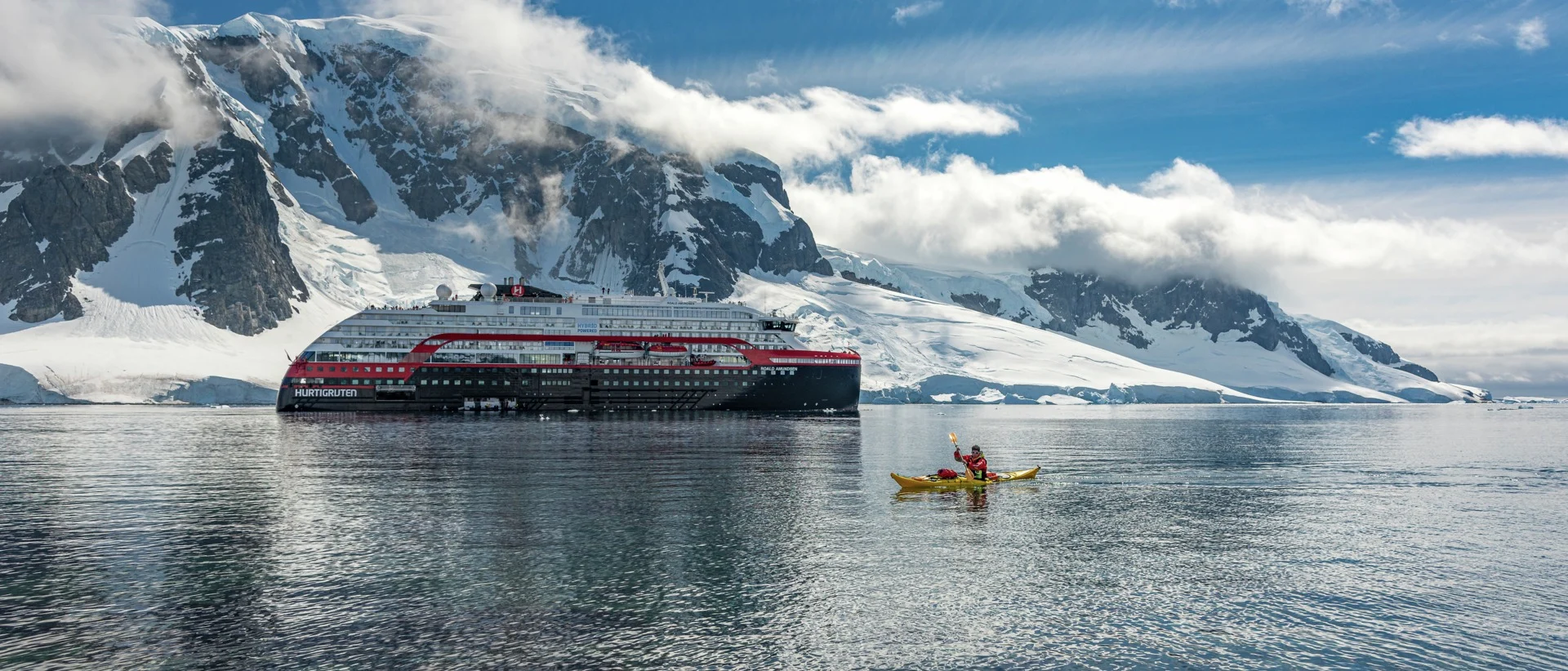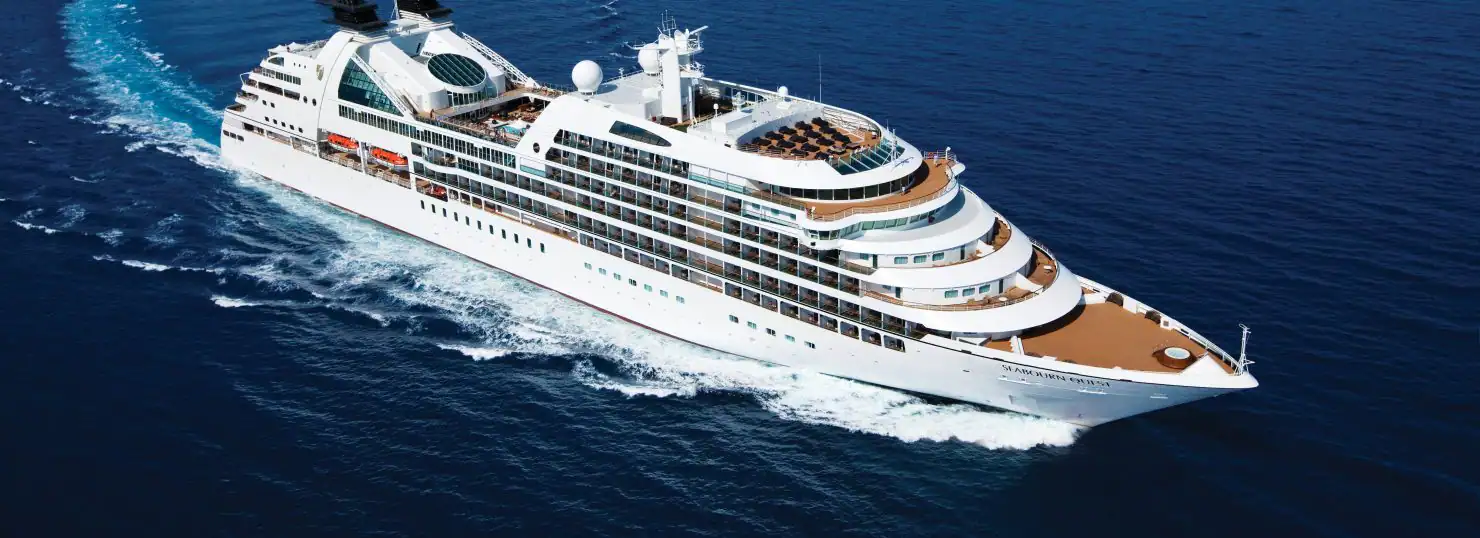
Seabourn and Swan Hellenic both operate purpose-built expedition ships in polar and remote waters, but they represent fundamentally different philosophies of what expedition cruising should be. Jake Hower compares their ships, ice class, landing programmes, inclusions, culinary partnerships, and value for Australian travellers choosing between American ultra-luxury and British cultural expedition heritage.
| Seabourn | Swan Hellenic | |
|---|---|---|
| Category | Expedition / Ultra-Luxury | Expedition |
| Rating | ★★★★★ | ★★★★☆ |
| Fleet size | 5 ships | 3 ships |
| Ship size | Small (under 1,000) | Small (under 200) |
| Destinations | Mediterranean, Caribbean, Antarctica, Northern Europe | Polar, Mediterranean, South America, Asia |
| Dress code | Casual elegance | Relaxed |
| Best for | Ultra-luxury intimate ship enthusiasts | Cultural expedition and enrichment travellers |
Seabourn is the ultra-luxury choice — Adam Tihany interiors, Swarovski binoculars, Helly Hansen parkas, premium spirits poured freely, and the service standards of a brand that has defined luxury cruising since 1986. Swan Hellenic is the cultural-intellectual choice — SETI Institute partnership, JRE Maris culinary programme, PC5 ice class on two of three ships, IAATO C1 landing advantage, Cruise Critic 4.7/5 ratings, and significantly lower pricing. Choose Seabourn when luxury is the priority and expedition is the setting. Choose Swan Hellenic when intellectual depth, landing access, ice capability, and value matter more than marble bathrooms. Both serve the Australian market — Seabourn through the Kimberley, Swan Hellenic through a Sydney office and its 2026 Asia-Pacific debut.
The core difference
Seabourn and Swan Hellenic both build purpose-built expedition ships and deploy them to Antarctica, the Arctic, and remote waters worldwide. Both carry expert expedition teams. Both offer all-inclusive pricing that covers meals, drinks, and Zodiac excursions. Both have Australian offices and serve the Australian market. On paper, they are competitors. In practice, they are building fundamentally different products for fundamentally different travellers.
Seabourn is American ultra-luxury. Founded in 1986 by Norwegian industrialist Atle Brynestad, now a wholly owned subsidiary of Carnival Corporation, Seabourn has defined the ultra-luxury tier of ocean cruising for nearly four decades. The two expedition ships — Seabourn Venture (2022) and Seabourn Pursuit (2023) — are the most luxurious expedition vessels afloat. Adam Tihany designed the interiors. Swarovski provides the binoculars. Helly Hansen provides the parkas. Every one of the 132 suites has a private veranda, a marble-lined bathroom, heated floors, and a separate bathtub. Premium spirits and fine wines flow at all bars. Gratuities are covered. The crew-to-guest ratio is approximately 1:1.8 — not “nearly 1:1” as sometimes marketed, but still excellent. At 264 passengers and 23,615 gross tonnes, these are substantial ships designed for guests who want genuine expedition capability wrapped in five-star service. Luxury first, expedition second.
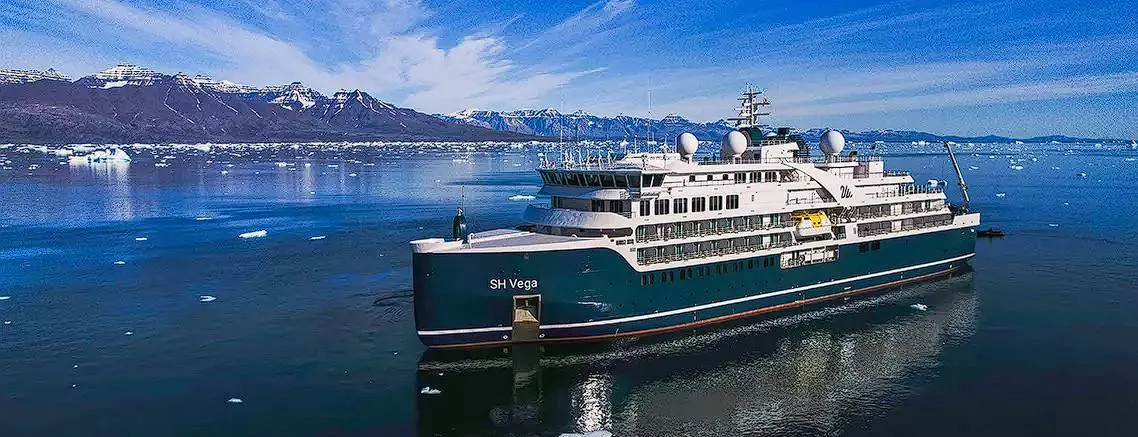
Swan Hellenic is British cultural expedition. The brand traces to 1954, when W.F. Swan organised a cruise for members of the Hellenic Society to explore ancient Greek sites of the Aegean, with distinguished academics as guest lecturers. That founding model — combining culturally significant destinations with expert-led intellectual enrichment — remains the brand’s DNA seven decades later. After periods under Carnival Corporation (ironically, Seabourn’s current parent), bankruptcy, and dormancy, Italian-British CEO Andrea Zito revived the brand in 2020 with three purpose-built ships from Helsinki Shipyard: SH Minerva (2021), SH Vega (2022), and SH Diana (2023). At 152 to 192 passengers, these are meaningfully smaller than Seabourn’s vessels, with PC5 ice class on two of three ships, the SETI Institute as a science partner, and a culinary programme developed with JRE-Jeunes Restaurateurs. Enrichment first, luxury as supporting infrastructure.
The choice between these two lines is not about which is better. It is about what you value. If you want the finest accommodation, the most generous bar, and the highest service standards in expedition cruising — with expert guides and genuine polar capability — Seabourn delivers that. If you want deeper intellectual engagement, stronger ice capability, better landing access, and substantially lower pricing — with comfortable but not opulent ships — Swan Hellenic delivers that. They occupy different positions on the expedition spectrum, and neither is trying to be the other.
Expedition team and guides
Both lines deploy credentialled expedition teams, but the composition and emphasis differ in ways that reflect each brand’s identity.
Seabourn’s expedition team numbers 23 specialists per ship — ornithologists, marine biologists, historians, oceanographers, geologists, photographers, and kayak guides. This produces a guide-to-guest ratio of approximately 1:11 with 264 passengers aboard. Notable expedition leaders for the 2025-2026 Antarctic season include Luciano Bernacchi (15-plus years of polar experience), Chris Clarke (16 years in expedition cruising), and Brent Houston (30-plus years of wildlife research and over 400 expeditions). The team delivers Zodiac landings, nature walks, lectures, and fireside chats. Seabourn’s guides are naturalists and adventurers — their expertise is in the wildlife and landscapes you encounter.
Swan Hellenic’s expedition team numbers 12 to 15 specialists per ship, producing a ratio of approximately 1:10 to 1:12 with typical sailing numbers of 120 to 150 guests. Where Swan Hellenic differs is in the breadth of disciplines: alongside marine biologists and ornithologists, the team includes historians, archaeologists, anthropologists, and regional cultural experts — particularly on Mediterranean and Asia-Pacific itineraries. On designated SETI voyages, a scientist from the SETI Institute joins the team, delivering lectures on astronomy, astrophysics, and the search for extraterrestrial life. Guest lecturers from Oxford and other leading universities are curated for each specific itinerary. The team’s orientation is not just “what are we seeing” but “why does it matter” — the intellectual framework is the product.
The practical difference is this: on a Seabourn landing in Antarctica, the guide will identify penguin species, explain breeding behaviour, and ensure you get outstanding photographs. On a Swan Hellenic landing, the guide will do the same, but the onboard programme will also have contextualised the visit within the history of Antarctic exploration, the science of Southern Ocean ecosystems, and potentially the astrophysics of the aurora australis. If naturalist interpretation is sufficient, both teams deliver well. If you want academic depth and interdisciplinary context, Swan Hellenic’s team goes further.
Ships and expedition hardware
This comparison reveals one of the most consequential differences between the two lines — differences in ice class, passenger capacity, and IAATO landing category that directly shape the expedition experience.
Passenger capacity and IAATO category: Seabourn Venture and Pursuit each carry 264 passengers in 132 suites — placing them in IAATO Category C2 (201 to 500 passengers). This means they must comply with the 100-passenger shore limit by rotating groups: while one group is on land, others do Zodiac cruising, then swap. All Swan Hellenic ships carry fewer than 200 passengers (152 on Minerva and Vega, 192 on Diana), placing them in IAATO Category C1 — all guests go ashore simultaneously with no rotation required. This is not a minor technical distinction. It means Swan Hellenic passengers spend more cumulative time on land per expedition day and never wait for their turn. It is the single most important structural advantage Swan Hellenic holds.
Ice class: SH Minerva and SH Vega carry PC5 ice class — rated for year-round operation in medium first-year ice that may include old ice inclusions. This is materially stronger than PC6 and among the highest ratings in the expedition cruise market. SH Diana and both Seabourn ships carry PC6, the industry standard. PC5 allows deeper penetration into ice-choked waters and provides a greater safety margin. In practical terms, Swan Hellenic’s smaller ships can go where Seabourn’s cannot when conditions are marginal.
Ship design and comfort: Seabourn’s ships are larger, more spacious, and more luxuriously appointed. At 23,615 gross tonnes versus 10,617 (Minerva/Vega) or 12,255 (Diana), Seabourn offers meaningfully more public space, more dining venues, a higher space-to-guest ratio, and more substantial stabilisation. The Adam Tihany-designed interiors feature lodge-style aesthetics with faux fireplaces, fur pillows, and green velveteen. Swan Hellenic’s Tillberg Design interiors are Scandinavian-inspired — clean, modern, and comfortable without approaching Seabourn’s decorative ambition. Swan Hellenic’s ships are expedition platforms that happen to be attractive. Seabourn’s ships are luxury hotels that happen to carry Zodiacs.
Zodiac fleet: Seabourn carries 24 Zodiacs per ship, stowed on the top deck — a deployment position that slows launch and recovery compared to water-level storage. Swan Hellenic carries 12 Zodiacs on Minerva and Vega (10 MK5 plus 2 MK6) and 14 on Diana, plus two dedicated 48-seat tender boats for port transfers. Seabourn’s larger Zodiac fleet reflects the need to move 264 passengers; Swan Hellenic’s smaller fleet is proportionate to 152 to 192 passengers. Neither line carries helicopters or submarines — Seabourn’s submarine programme ended in March 2026.
Observation spaces: Swan Hellenic’s signature feature is the Swan’s Nest — a circular glass-enclosed observation platform at the very bow, allowing guests to stand directly over the water. It is an outstanding wildlife-spotting and ice-navigation viewing position. Seabourn counters with the Bow Lounge, virtual bridge screens, and a Cineflex bow camera live-streamed to suites. Both offer open bridge access.
Landing experience and shore programme
Both lines deliver the core expedition promise — Zodiac landings on remote shores with expert guides — but the capacity difference shapes the daily experience.
Landings per day: Both aim for two landings or Zodiac excursions per day when conditions permit. The key difference is time ashore per landing. Swan Hellenic’s smaller passenger counts mean everyone goes ashore simultaneously — no rotation, no waiting, no Zodiac queue. Seabourn’s 264 passengers must split into groups, with landing starts as early as 7:00 AM to allow all guests adequate time. In practice, Seabourn passengers spend somewhat less cumulative time on land per day than Swan Hellenic passengers — a structural consequence of the IAATO C2 versus C1 distinction.
Activity options on Seabourn: Zodiac cruises and landings (included), nature walks and hikes (included), snorkelling (included in appropriate destinations), polar plunge (included), and cultural experiences such as the Wunambal Gaambera encounter in the Kimberley (included). Kayaking is available at extra charge — approximately US$199 to US$250 per session with 8 double kayaks per ship — a surcharge that draws consistent criticism on a product at this price level. The Image Masters photography programme is US$1,500 to US$1,850 for a four-day masterclass limited to 10 participants. There is no complimentary photography programme for remaining guests.
Activity options on Swan Hellenic: Zodiac cruises and landings (included), guided hikes (included), snowshoeing on polar itineraries (included), snorkelling on warm-water itineraries (included), and one escorted shore excursion per port (included — a meaningful inclusion that Seabourn does not match). Kayaking is available at extra charge and must be pre-booked. Select voyages include onboard photographers and workshops as part of the fare. Neither line offers camping, helicopters, diving, or climbing — for those activities, look to Aurora Expeditions or Quark.
The shore excursion inclusion: Swan Hellenic includes one escorted shore excursion per port of call in the fare. On Seabourn expedition voyages, Zodiac-based expedition activities are included, but optional Ventures by Seabourn shore excursions at non-expedition ports are extra. On a culturally diverse itinerary — Mediterranean, Asia-Pacific, or an Atlantic repositioning — Swan Hellenic’s included excursion per port adds substantial value.
What is actually included
Both lines position themselves as all-inclusive, but the scope of inclusions differs in ways that compound across a voyage.
Seabourn includes: All dining at every restaurant with no surcharges, premium spirits and fine wines at all bars throughout the day, welcome champagne, complimentary caviar, all gratuities, Starlink Wi-Fi (unlimited), Zodiac excursions and landings, expedition team lectures, a Helly Hansen PolarShield parka and waterproof backpack (gifted — yours to keep), boot loans, Swarovski Optik binoculars (loaned, one per cabin), pre-cruise hotel (Buenos Aires for Antarctic voyages), charter flights (Buenos Aires to Ushuaia for Antarctic voyages), open bridge access, Dr. Andrew Weil wellness classes, and live entertainment.
Swan Hellenic includes: All meals at all restaurants including 24-hour room service, complimentary beverages (house wines, beer, selected spirits, coffee, tea, and soft drinks) throughout the day, all gratuities, port taxes, one escorted shore excursion per port, all Zodiac cruises and landings, the lecture programme, basic Wi-Fi (Silver Connect — messaging apps), a branded expedition parka (polar voyages — yours to keep), waterproof backpack and water bottle (gifted), boot loans, self-service laundry (24/7), gym, sauna, pool, and jacuzzi access. On Cruise Plus voyages, a pre-cruise hotel night and charter flights are included.
The meaningful differences: Seabourn’s bar programme is broader — premium spirits and fine wines versus Swan Hellenic’s house selection. Seabourn provides Swarovski binoculars on loan; Swan Hellenic provides binoculars in select cabin categories only. Swan Hellenic includes one shore excursion per port; Seabourn does not. Swan Hellenic includes self-service laundry; Seabourn charges for laundry unless you hold Gold-tier Seabourn Club status. Swan Hellenic’s Wi-Fi inclusion is limited to messaging apps; upgrading to browsing costs US$25 per day, streaming US$37 per day. Seabourn includes unlimited Starlink Wi-Fi.
What is not included on either line: Kayaking (extra on both), spa treatments (extra on both), premium Wi-Fi tiers on Swan Hellenic, international flights to gateway cities, and travel insurance.
Destination coverage and itinerary depth
Both lines operate in Antarctica, the Arctic, and beyond, but their geographic ambitions differ markedly.
Seabourn’s destination coverage centres on two expedition ships deployed in complementary patterns. Both ships serve Antarctica from November to March (16-plus departures in 2025-2026, 19 planned for 2026-2027), with itineraries ranging from 10-day Peninsula voyages to 22-day South Georgia and Falklands combinations. Seabourn Venture serves the Arctic from May to September — Svalbard, Iceland, Greenland, British Isles, and the Northwest Passage (two 24-day crossings in 2026). Seabourn Pursuit sails the Kimberley from May to September (8 departures in 2026, expanded third season) and the South Pacific in shoulder months. An 82-day “Across Three Continents” combining Oceania to Antarctica departs Broome in September 2026. Amazon itineraries featured in the 2025 season.
Swan Hellenic’s destination coverage deploys three ships across a broader cultural and geographic range. All three ships serve Antarctica from November to March (12 expeditions in 2025-2026, ranging from 9 to 20 nights). SH Vega covers the Arctic in summer — Svalbard, Iceland, Greenland, the Norwegian coast, and the Northwest Passage. SH Diana handles Mediterranean cultural expeditions (the brand’s heritage heartland — Sicily, Croatia, Montenegro, Greek islands) and African repositioning voyages (Ghana, Gabon, Angola, South Africa — including maiden calls to Hermanus, a port no other cruise line visits). The headline development for Australian travellers is the 2026 Asia-Pacific debut: SH Minerva sails five sequential cruises from April — Solomon Islands and Papua New Guinea, Indonesia and Philippines, then Japan — combinable into a 55-day grand voyage with no port repeated. Two additional Japan sailings follow in September 2026.
The diversity comparison: Swan Hellenic covers more destinations, more cultures, and more ocean basins — a reflection of the cultural expedition positioning that extends beyond polar waters. Seabourn’s expedition coverage is more concentrated on polar and tropical wilderness. For the Australian traveller who wants one expedition cruise as a gateway to future voyages, Swan Hellenic’s 2026 Asia-Pacific programme from the Solomon Islands to Japan is closer to home than any Seabourn expedition departure. Seabourn’s Kimberley remains the most accessible expedition product of all — domestic flights to Broome or Darwin, no passport required.
Cabins and accommodation
This is where Seabourn’s luxury credentials are most visible. The accommodation gap between these two lines is substantial.
Seabourn’s suites are the finest in expedition cruising. All 132 suites feature a private veranda, marble-lined bathroom with heated floors, a separate bathtub (welcome after cold polar landings), an in-suite clothes dryer (exceptionally practical on expedition), a walk-in closet, and an in-suite bar stocked to guest preferences. Categories range from the Veranda Suite at 33 square metres to the two-storey Grand Wintergarden Suite at 130 square metres — the latter featuring a glass-enclosed solarium, a whirlpool spa tub, a Swarovski spotting scope, and Shackleton Blended Malt Scotch in the wet bar. Butler service applies from Penthouse and above. Bang and Olufsen sound systems in premium categories. The entry-level Veranda Suite at 33 square metres is larger than Swan Hellenic’s entry-level Balcony cabin at 28 square metres — and comes with a bathtub and heated marble floors.
Swan Hellenic’s cabins are comfortable, modern, and well-designed for expedition — but they are cabins, not suites. On Minerva and Vega, categories range from the Oceanview at 19 square metres (no balcony, large window) to the Premium Suite at 49 square metres with a separate living area. On Diana, a Junior Suite category is added at 35 square metres. Eighty per cent of cabins across the fleet feature private balconies. Every cabin includes an espresso machine (Illy), a faux holographic fireplace feature, a pillow menu, and premium toiletries. Select categories include Nikon binoculars. The fireplace — a thoughtful touch — creates warmth and atmosphere in a compact space. Storage is praised by reviewers as generous.
The gap in detail: Seabourn offers heated marble bathroom floors, separate bathtubs, in-suite clothes dryers, walk-in closets, and an in-suite bar stocked to preferences in every cabin. Swan Hellenic offers an espresso machine and a fireplace in every cabin. Both are pleasant; one is materially more luxurious. Whether the difference justifies the price premium depends on how much the cabin matters to your expedition experience. Some guests spend most of their waking hours on deck, in the lounge, or ashore — for them, the cabin is where they sleep and dry their gear. Others consider the in-suite experience central to the voyage. Seabourn serves the latter category without compromise.
Pricing and value
The pricing gap between these two lines is substantial, and it compounds across the voyage.
Swan Hellenic directional pricing: An entry-level 9-night Antarctic Peninsula voyage starts from approximately A$17,000 to A$18,000 per person in an Oceanview cabin. Longer itineraries including South Georgia and the Falklands range from approximately A$22,000 to A$25,000-plus per person for 18 to 19 nights. Mediterranean cultural expeditions start from approximately USD 5,000 to USD 7,000 per person for a 10-night voyage. Promotional discounts of 20 to 30 per cent are frequently available through Australian agents, plus onboard credit offers.
Seabourn directional pricing: An entry-level 12-day Antarctic Peninsula voyage starts from approximately A$21,500 per person in a Veranda Suite (charter flights and Buenos Aires hotel included). A 14-day Antarctica Exploration starts from approximately A$24,100. Extended voyages including South Georgia and the Falklands range from A$48,000 to A$50,000-plus. The Kimberley starts from A$17,799 per person for a 10-day voyage.
The value equation: Swan Hellenic is significantly cheaper at entry level — often A$3,000 to A$5,000 per person less for a comparable Antarctic Peninsula voyage. When Swan Hellenic’s frequent promotional discounts are applied, the gap widens further. Seabourn counters with a broader all-inclusive drinks programme (premium spirits versus house selection), Swarovski binoculars, the Helly Hansen gear package, superior accommodation, and service standards that justify a premium for travellers who prioritise luxury. Swan Hellenic’s Cruise Critic rating of 4.7 out of 5 — including Best Value for Money recognition — suggests passengers perceive genuine value at the lower price point.
Solo supplements: Swan Hellenic’s solo supplement ranges from 0 to 75 per cent and is frequently waived entirely on promotional sailings. Seabourn’s standard solo supplement is 200 per cent of the double-occupancy fare — the full cabin price — with a reduced 125 per cent on select voyages. For solo Australian travellers, this is a significant cost difference. Neither line offers dedicated solo cabins.
The Kimberley exception: Seabourn’s Kimberley from A$17,799 per person is the most price-competitive product either line offers to the Australian market, with the advantage of requiring only domestic flights. Swan Hellenic does not sail Australian waters.
Onboard enrichment and science
The enrichment gap between these two lines is among the largest of any comparison in this series.
Swan Hellenic’s enrichment programme is the brand’s defining product. Guest lecturers are curated for each itinerary from Oxford and other leading universities — professors, published authors, archaeologists, and regional cultural experts who deliver substantive academic programmes, not general-interest talks. The SETI Institute partnership (“Explore Space at Sea”) places institute scientists aboard nine designated voyages per year, delivering approximately five lectures per sailing on astronomy, astrophysics, astrobiology, and the search for extraterrestrial life. An advanced telescope installed on deck supports guided stargazing sessions. Guests participate in citizen science projects — genuine research contributions, not token activities. No other expedition cruise line has anything comparable to this space science programme. The lecture programme is the core of the daily schedule, held in the Observation Lounge — not optional background entertainment but the reason many guests booked.
Seabourn’s enrichment programme centres on the 23-person expedition team delivering naturalist lectures, fireside chats, and daily expedition briefings — competent and engaging, but supplementary to the luxury experience rather than central to it. Seabourn does not operate a structured citizen science programme — a notable absence compared to competitors. The Image Masters photography programme is excellent but costs US$1,500 to US$1,850 and is limited to 10 participants per sailing. Guests not enrolled receive no structured photography instruction. Seabourn Conversations brings guest speakers aboard, but the programme is not as academically rigorous or itinerary-specific as Swan Hellenic’s curated lecture series.
The comparison distilled: Swan Hellenic is a floating university that happens to visit extraordinary places. Seabourn is a floating private club that happens to employ excellent naturalists. If the enrichment programme is a primary reason for booking — if you want to understand the astrophysics of the southern sky, the archaeology of Mediterranean civilisations, or the cultural history of the places you visit — Swan Hellenic is in a different category. If enrichment is pleasant context for a luxury holiday, Seabourn delivers adequately.
Dining on expedition
Both lines take dining seriously, but with different approaches and different levels of ambition.
Seabourn’s dining programme on the expedition ships offers four to five venues: The Restaurant (main dining, Adam Tihany-designed, open seating), The Colonnade (buffet by day, converting to Earth and Ocean for waiter-served themed dinner nights — Singaporean, Indian, French, American), The Club (sushi bar and cocktails), Seabourn Square (specialty coffees, pastries, artisan gelato), and the Bow Lounge (grab-and-go between activities). In-suite dining is available 24 hours with a full menu during restaurant hours. All dining is complimentary with no surcharges. Complimentary fine wines are poured at lunch and dinner. Complimentary caviar is available throughout the voyage. The Thomas Keller partnership ended in Spring 2024 — but the expedition ships never had a Keller restaurant. Current culinary leadership includes Chef Anton Egger and Chef Franck Salein. The signature event is Caviar on Ice — a deck transformation with an ice bar, champagne, and rare caviars.
Swan Hellenic’s dining programme operates three venues: the Swan Dining Room (main restaurant, 152 seats on Minerva/Vega, open seating at breakfast and lunch, seated dinner service with white tablecloths), the Club Lounge (all-day social space with a fireplace, early-riser breakfasts, light lunches, Piemonte-style pizza, afternoon tea, and family-style evening dining), and the Pool Grill (al fresco, weather-dependent). Menus are created by Chef Andrea Ribaldone (Italian) and Chef Sang Keun Oh (Korean). The standout programme is Maris — developed with JRE-Jeunes Restaurateurs, placing a different JRE chef aboard designated voyages to create a nightly signature dish, host cooking demonstrations, and lead gastronomic excursions ashore, culminating in a gala dinner. Room service is included 24 hours.
The dining comparison: Seabourn offers more venues, more variety, and a more generous beverage programme — premium spirits and fine wines poured freely versus Swan Hellenic’s house selection. The dining experience is refined and luxurious, consistent with the brand’s ultra-luxury positioning. Swan Hellenic offers fewer venues but a more distinctive culinary identity through the Maris programme — on designated voyages, the JRE chef collaboration is a genuinely creative culinary event that Seabourn has no equivalent for since the Thomas Keller departure. Cruise Critic reviewers describe Swan Hellenic’s food as “the best on any cruise line” — high praise for a line positioned below ultra-luxury. Seabourn’s food is consistently rated highly but has drawn some complaints about declining standards in recent reviews.
Standout itineraries for Australian travellers
Seabourn
Kimberley Coast: Broome to Darwin (10 days, Seabourn Pursuit, May to September) — The most accessible expedition product for any Australian traveller. Domestic flights only. King George Falls, Montgomery Reef, Horizontal Falls, Ashmore Reef, cultural experiences with the Wunambal Gaambera people (traditional landowners and godparents of the ship). From A$17,799 per person. Eight departures in 2026. No international flights, no jet lag, no charter connections. This is expedition cruising on your doorstep.
The Great White Continent (12 days, Seabourn Venture, November to March) — The standard Antarctic Peninsula introduction with Seabourn’s ultra-luxury treatment. Charter flights and Buenos Aires hotel included. From approximately A$21,500 per person. Fly Sydney or Melbourne to Buenos Aires via Santiago (approximately 14 to 16 hours), then included charter to Ushuaia.
Antarctica, South Georgia and Falklands (22 days, Seabourn Venture) — The comprehensive polar voyage: the Antarctic Peninsula, the cathedral king penguin colonies of South Georgia, and the British character of Stanley. From approximately A$48,000 per person. For travellers with the time and budget for the definitive Southern Ocean expedition at five-star comfort.
Across Three Continents (82 days, Seabourn Pursuit, departing Broome September 2026) — An epic voyage combining the South Pacific, Oceania, and Antarctica in a single sailing. For committed expedition travellers with extraordinary time and budget. This is Seabourn’s most ambitious deployment.
Swan Hellenic
Antarctic Peninsula (9 nights, all three ships, November to March) — Swan Hellenic’s entry-level Antarctic voyage. PC5 ice class on Minerva and Vega. IAATO C1 landing advantage — everyone lands at once. Charter flight and pre-cruise hotel included. From approximately A$17,000 to A$18,000 per person. Promotional discounts frequently available.
In Shackleton’s Footsteps (18 to 19 nights, SH Diana or SH Vega) — The extended Antarctic voyage including the Falkland Islands, South Georgia, and the Antarctic Peninsula. Historical context is Swan Hellenic’s strength — Shackleton’s story brought to life by onboard historians. From approximately A$22,000 per person on Diana.
Solomon Islands and Papua New Guinea (13 nights, SH Minerva, April 2026) — Swan Hellenic’s Asia-Pacific debut and the itinerary closest to Australian shores. Cultural expedition cruising through Melanesia with the enrichment programme tailored to the region. Cruise Plus package includes charter flights and hotel. The first of five combinable Asia-Pacific voyages.
Japan: Hiroshima to Otaru (10 nights, SH Minerva, May 2026) — Cultural expedition cruising in the brand’s natural element. Japan’s northern coast, Hokkaido, and the cultural depth of a programme designed for intellectually curious travellers. Cruise-only from Hiroshima — accessible from Australia via direct or one-stop flights.
For Australian travellers specifically
Getting to the ships: For Seabourn’s Kimberley, the routing is domestic — flights from any major Australian capital to Broome or Darwin. This is the simplest embarkation in expedition cruising. For Seabourn’s Antarctica, fly to Buenos Aires via Santiago or Auckland (approximately 14 to 16 hours from Sydney or Melbourne); the charter flight to Ushuaia and pre-cruise hotel are included. For Swan Hellenic’s Antarctica, the routing is identical — Buenos Aires, then included charter to Ushuaia. For Swan Hellenic’s 2026 Asia-Pacific programme, the first three cruises depart from remote ports (Honiara, Jayapura) with charter flights included in the Cruise Plus package; Manila and Hiroshima departures are accessible on regular scheduled flights. For Arctic voyages with either line, routing goes through European hubs — 22-plus hours from Australia.
Australian offices: Seabourn operates through Carnival Australia in North Sydney with a dedicated team, the phone number 13 24 02, and Director of Sales Tony Archbold. Hours are Monday to Friday 8:30 AM to 7:00 PM AEST, Saturday 9:00 AM to 5:00 PM. Swan Hellenic’s Australia and New Zealand office is at 123 Clarence Street, Sydney. Both lines sell through Australian travel agents and specialist expedition advisors including Expedition Cruise Specialists, Antarctica Travel Centre, and Cruise Traveller. Both price in AUD through local agents. Seabourn’s Carnival Australia infrastructure is more established; Swan Hellenic’s Australian presence is newer but growing rapidly.
The accessibility question: Seabourn wins on accessibility for Australian travellers, decisively. The Kimberley programme — domestic flights, no passport, no jet lag, no charter connections — is expedition cruising without the logistical complexity that defines most expedition departures. Swan Hellenic has no Australian departures, but the 2026 Asia-Pacific programme through the Solomon Islands, Papua New Guinea, Indonesia, the Philippines, and Japan brings the fleet into the region for the first time. If Swan Hellenic expands its Asia-Pacific presence (the Sydney office and growing Australian trade relationships suggest strategic intent), the accessibility gap will narrow.
Travel insurance: Both lines operate in remote regions where adequate medical evacuation can be 72-plus hours away. Specialist expedition insurance with minimum A$500,000 medical coverage and A$250,000 evacuation coverage is strongly recommended. Standard travel insurance policies often exclude Antarctic and expedition activities. Both lines require mandatory travel insurance.
Loyalty programmes: Seabourn operates the six-tier Seabourn Club (Member, Silver, Gold, Platinum, Diamond, Diamond Elite) — points earned per day sailed, benefits including streaming Wi-Fi upgrades, complimentary laundry, spa credits, and award cruises redeemable on expedition sailings. Points and levels never expire within a three-year sailing window. Swan Hellenic does not operate a formal loyalty programme as of February 2026 — a notable gap for repeat guests. Booking through a Virtuoso advisor unlocks up to US$150 onboard credit per person on Swan Hellenic.
The onboard atmosphere
These two lines create distinctly different evening atmospheres, and the difference matters as much as any technical specification.
Seabourn’s atmosphere is private members’ club at sea. The Adam Tihany interiors create a lodge-style warmth — faux fireplaces, fur pillows, green velveteen banquettes. The Constellation Lounge offers 270-degree views. The Club serves sushi and cocktails with live music into the evening. Staff learn guest names within 48 hours. The dress code after 6:00 PM is “elegant casual” — slacks with a collared shirt or sweater, jacket optional, elegant jeans welcome. No formal nights on expedition ships since January 2023. The demographic skews older affluent — experienced luxury cruisers, many repeat Seabourn guests, predominantly North American, British, and Australian. The evening rhythm is drinks, enrichment lectures, dinner, and quiet conversation. No casino, no Broadway production, no organised nightlife. The entertainment is refined, subdued, and entirely appropriate for guests who want Antarctica, not a show.
Swan Hellenic’s atmosphere is floating university. The Observation Lounge — half of Deck 7, panoramic views, a white baby grand piano — is the intellectual and social hub. Lectures by day, cocktails and piano by evening. The Club Lounge on Deck 6, with its feature fireplace, is the informal social space. Conversations gravitate naturally toward the day’s discoveries, tomorrow’s landing sites, and the questions raised by the lecture programme. The demographic is predominantly 55-plus, well-educated, intellectually curious — “readers, museum-goers” rather than luxury consumers. The dress code is relaxed — no formal requirements at any time. The ship quiets early because guests rise for morning landings. Solo travellers report finding it easy to connect because shared intellectual curiosity creates natural bonds.
The difference in feel: Seabourn passengers have chosen luxury and received expedition. Swan Hellenic passengers have chosen expedition and received culture. The Seabourn guest at the bar is likely discussing their suite, the quality of the caviar, and the service. The Swan Hellenic guest at the bar is likely discussing the lecture, the next port of call, and a book recommendation. Both are enjoying themselves. Both are on expedition ships in extraordinary places. The atmosphere each line cultivates reflects the core product promise — and both deliver it authentically.
The bottom line
Seabourn and Swan Hellenic represent two coherent but fundamentally different answers to the question of what expedition cruising should be.
Choose Seabourn when luxury is the priority. When you want marble bathrooms with heated floors, Swarovski binoculars on your veranda, premium spirits poured at all hours, Adam Tihany interiors, a Helly Hansen parka gifted on arrival, and service that knows your name within a day. When 264 passengers feels intimate enough. When the Kimberley from Broome — no international flights, no charter connections — is the ideal expedition for an Australian traveller who wants wilderness access without logistical complexity. When you accept the IAATO C2 landing rotation as the trade-off for the finest accommodation in expedition cruising. Seabourn delivers the most luxurious expedition experience afloat, and for the guest whose first criterion is comfort, nothing in expedition cruising matches it.
Choose Swan Hellenic when intellectual depth, landing access, and value matter more than luxury polish. When PC5 ice class on two of three ships, IAATO C1 simultaneous landing for all guests, and the SETI Institute partnership represent the expedition priorities you care about. When a Cruise Critic 4.7 out of 5 rating and a price point A$3,000 to A$5,000 below Seabourn at entry level make the value case clear. When the JRE Maris culinary programme, guest lecturers from Oxford, and a 70-year heritage of cultural cruising matter more than a butler or a bathtub. When the 2026 Asia-Pacific debut through Papua New Guinea, Indonesia, the Philippines, and Japan brings expedition cruising closer to Australian waters. Swan Hellenic delivers the deepest enrichment programme in expedition cruising and an ice-class advantage that is not just marketing but physics.
For the Australian traveller who cannot choose between them, the answer may be both — a Seabourn Kimberley for the domestic accessibility, ultra-luxury service, and Wunambal Gaambera cultural experience, followed by a Swan Hellenic Antarctic voyage for the PC5 ice capability, C1 landing advantage, SETI lectures, and the intellectual camaraderie of 150 passengers united by curiosity rather than cabin category. Together, these two lines represent the breadth of modern expedition cruising — from the most luxurious ship afloat to the most intellectually ambitious. The question is not which is better. The question is which version of expedition travel speaks to you.