| Seabourn | SeaDream Yacht Club | |
|---|---|---|
| Category | Expedition / Ultra-Luxury | Yacht-Style / Ultra-Luxury |
| Rating | ★★★★★ | ★★★★☆ |
| Fleet size | 5 ships | 2 ships |
| Ship size | Small (under 1,000) | Yacht (under 120) |
| Destinations | Mediterranean, Caribbean, Antarctica, Northern Europe | Caribbean, Mediterranean, Northern Europe |
| Dress code | Casual elegance | Casual elegance |
| Best for | Ultra-luxury intimate ship enthusiasts | Ultra-intimate yacht lifestyle travellers |
This is the most personal comparison in ultra-luxury cruising — both brands trace their DNA to one man. Atle Brynestad founded Seabourn in 1986, sold it, then purchased the former Sea Goddess twins in 2001 and created SeaDream Yacht Club. The brands diverged dramatically: Seabourn grew into a five-ship fleet with Thomas Keller dining, Dr. Andrew Weil spa programmes, and purpose-built expedition ships carrying submarines to Antarctica. SeaDream stayed intimate — two 112-guest yachts with a near 1:1 crew ratio, Balinese Dream Beds, the Champagne and Caviar Splash, and a retractable marina with jet skis. Seabourn sold to Carnival Corporation; SeaDream remains independent. For Australians, Seabourn has the decisive advantage — annual Kimberley expeditions from Darwin, Antarctic voyages, and broader destination coverage. SeaDream has no Australian presence. Choose Seabourn for expedition capability, culinary prestige, and Australian accessibility. Choose SeaDream for the most intimate luxury experience afloat and the unmatched feeling of boarding a private mega-yacht.
The core difference
This comparison carries more personal history than any other in ultra-luxury cruising. Atle Brynestad — the Norwegian shipping and real estate entrepreneur — founded Seabourn in 1986 and built it into the gold standard of luxury at sea during the 1990s. He sold Seabourn to Carnival Corporation. Then, in 2001, he purchased the former Sea Goddess I and Sea Goddess II — twin yachts originally built in 1984 for Sea Goddess Cruises, later operated by Cunard, and then by Seabourn itself under Carnival ownership — and relaunched them as SeaDream Yacht Club. The founding philosophy of both lines came from the same mind. The divergence since then tells us everything about what ultra-luxury cruising became and what it could have remained.
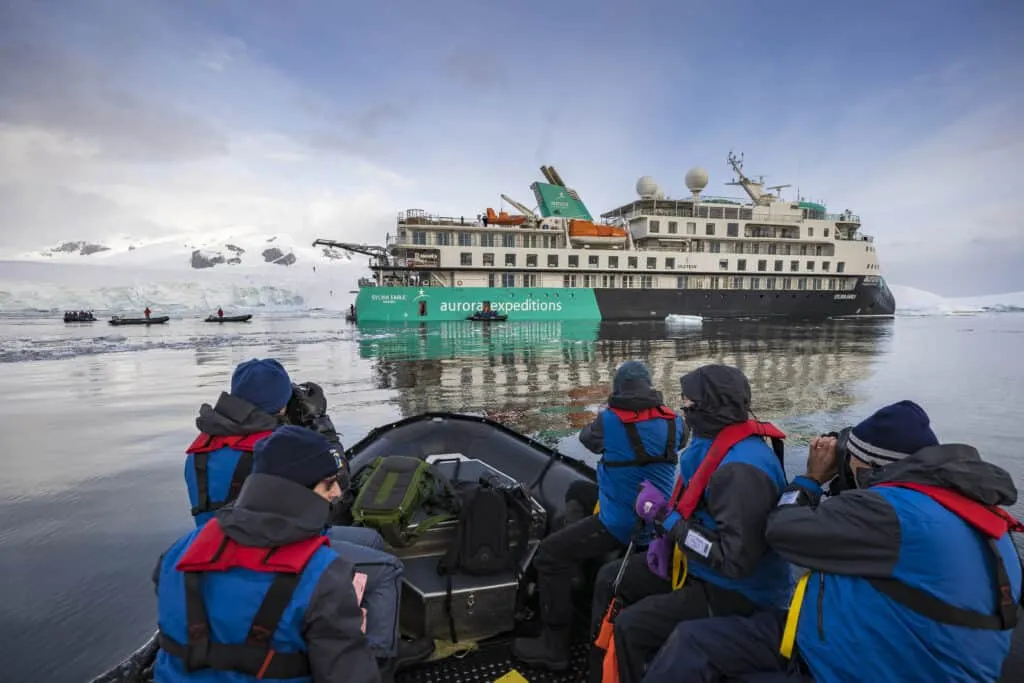
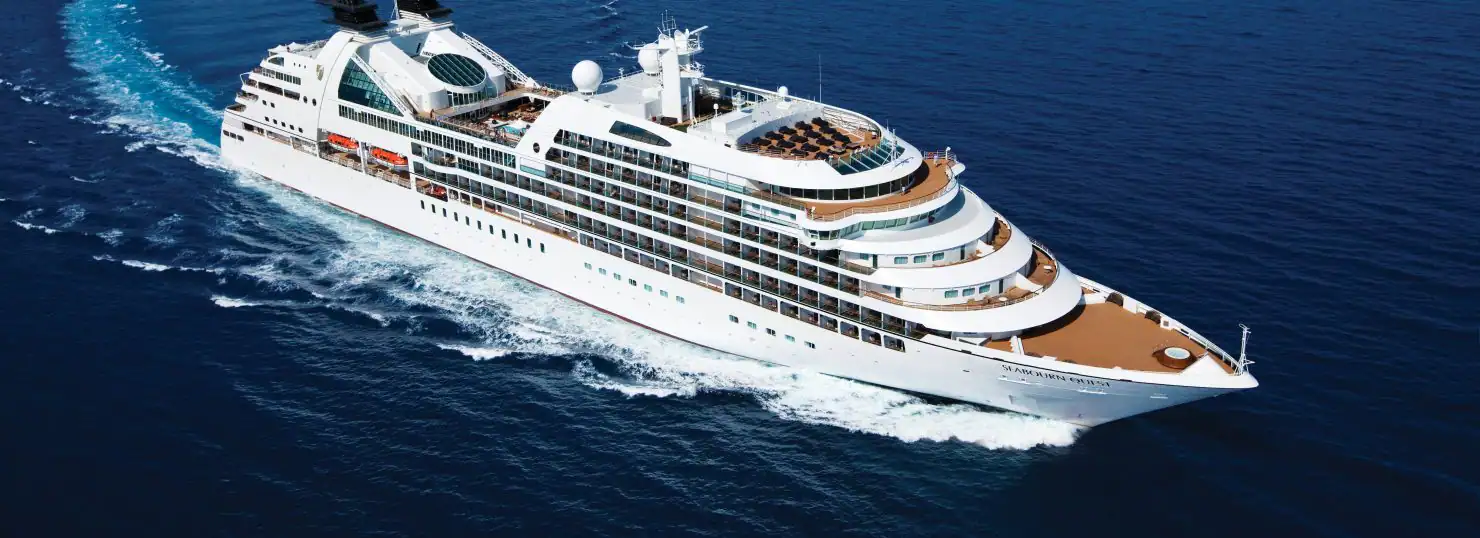
Seabourn grew. Under Carnival Corporation ownership, the line expanded to five ships — three ocean vessels (Seabourn Ovation, Encore, and Sojourn, carrying 450–600 guests each) and two purpose-built expedition ships (Seabourn Venture and Pursuit, 264 guests each with PC6 ice-strengthened hulls, custom submarines, and 24 Zodiacs). Thomas Keller — the only American chef to hold three Michelin stars simultaneously at two restaurants — brought The Grill by Thomas Keller to every ship. Dr. Andrew Weil’s integrative wellness programme anchors the spa. The expedition ships reach Antarctica, the Arctic, the Kimberley, the Amazon, and the South Pacific. Seabourn today is a comprehensive ultra-luxury fleet with global reach, structured programming, and the backing of the world’s largest cruise corporation.
SeaDream stayed. Under Brynestad’s continued ownership, the line kept its two 112-guest yachts and resisted every temptation to scale. No new ships were ordered. No expedition vessels were added. No corporate parent was invited. Instead, Brynestad invested in what the yachts already did best — intimacy, service, and the feeling of boarding a private vessel rather than a passenger ship. The twin yachts were comprehensively refurbished in 2022 at USD 10 million each. The near 1:1 crew-to-guest ratio remained. The open bar, the Balinese Dream Beds, the Champagne and Caviar Splash, and the retractable marina with jet skis remained. SeaDream in 2026 is essentially what Brynestad wished Seabourn could have been if he had never sold it — two small yachts doing one thing perfectly.
For Australian travellers, the practical implications are significant. Seabourn operates Kimberley expeditions from Darwin and Broome, reaches Antarctica, and deploys to Australian waters. SeaDream has no Australian presence — every voyage requires international flights. The philosophical choice between these former sister brands is whether you want the comprehensive ultra-luxury fleet that Brynestad’s creation became, or the intimate mega-yacht experience he built after letting it go.
What is actually included
Both lines offer comprehensive all-inclusive models that reflect their ultra-luxury positioning, but the details reveal different priorities.
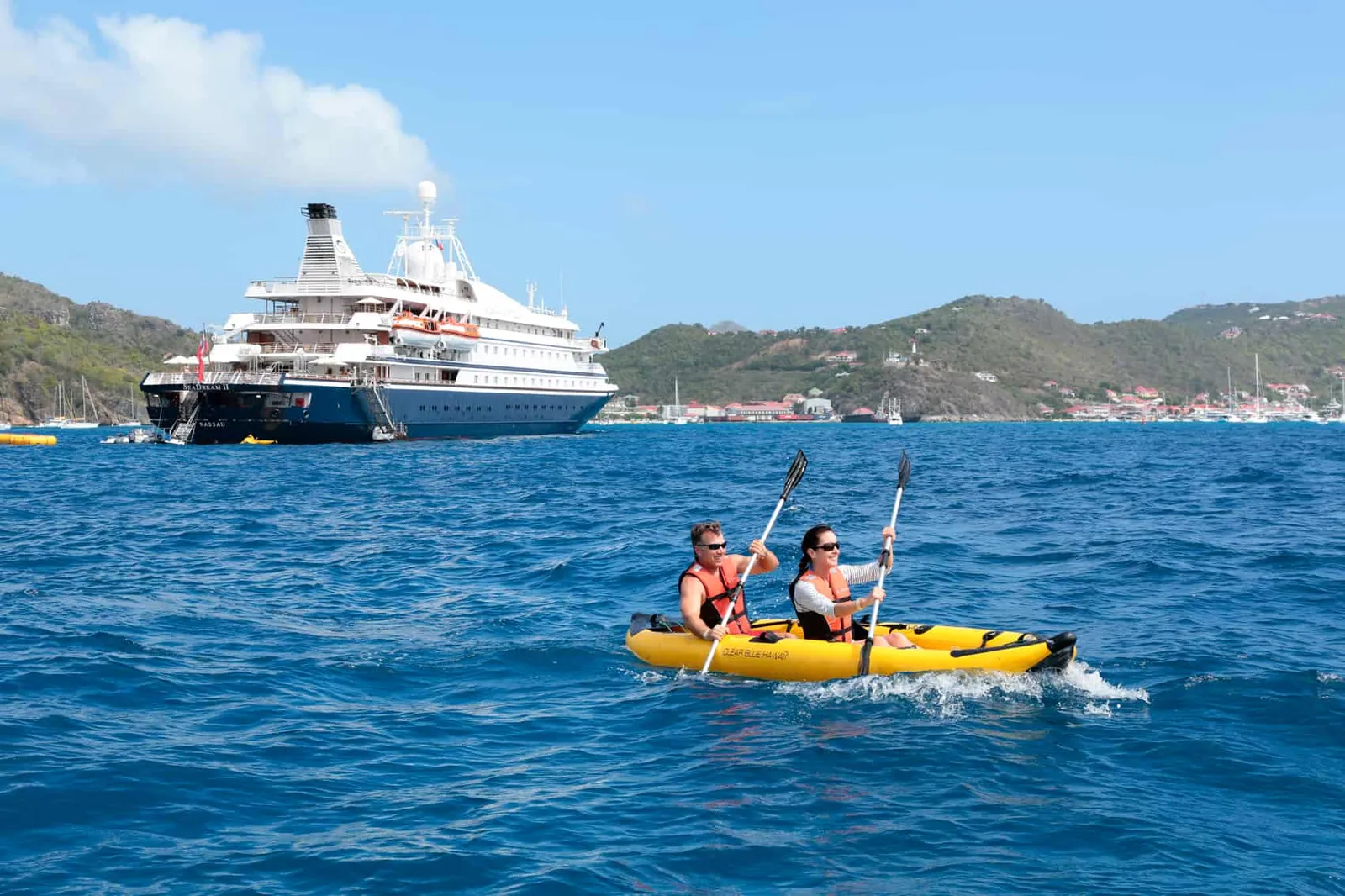
SeaDream includes: an open bar with premium wines, champagne, spirits, and cocktails available at all hours — from the Top of the Yacht Bar to the pool deck to your stateroom. All dining in both the Dining Salon and Topside Restaurant without restriction or surcharge of any kind. Crew gratuities are fully covered. The retractable marina platform’s entire equipment complement — jet skis, kayaks, paddleboards, wakeboards, Hobie Cat catamarans, snorkelling gear, a water slide, and floating trampoline — is complimentary. What SeaDream does not include: Wi-Fi (USD 35 per day or USD 99 per week), shore excursions, spa treatments, and flights.
Seabourn includes: open bars throughout the ship with premium spirits, wines, and champagne; fine dining across multiple venues; all gratuities; complimentary Wi-Fi; 24-hour in-suite dining; and in-suite bar stocked with your preferences. On expedition ships, the inclusion model expands significantly to cover all Zodiac excursions, expert-guided landings, expedition lectures, polar gear (parka and boots), and kayaking. The Grill by Thomas Keller carries a reservation-based access model; availability varies by voyage length. What Seabourn does not include: shore excursions on ocean voyages, spa treatments, laundry (included for Penthouse and premium suite categories), submarine dives on expedition ships (priced separately), and flights.
The meaningful differences: SeaDream’s open bar is all-inclusive without any qualification — premium everything, all hours, no package required. Seabourn’s open bar is equally comprehensive. The key distinction is Wi-Fi: Seabourn includes it; SeaDream charges USD 35 per day. Dining surcharges are negligible on both lines — SeaDream has none whatsoever, while Seabourn limits access to The Grill by Thomas Keller through reservations rather than surcharges. On expedition voyages, Seabourn’s inclusion of all Zodiac excursions, landings, and polar gear represents enormous value — potentially thousands of dollars in activities that would be separately priced on any non-expedition line.
Dining and culinary experience
Both lines have earned genuine culinary reputations, but through different models — the private kitchen against the celebrity chef programme.
SeaDream’s culinary team prepares everything a la minute for a maximum of 112 guests from a single galley — made to order, fresh, with no pre-preparation or batch cooking. The Dining Salon on Deck 2 serves multi-course dinners, and the Topside Restaurant offers al fresco dining where all 112 guests can eat simultaneously outdoors. The line earned the Forbes Travel Guide four-star dining rating and the “Highest Rated Restaurant at Sea” distinction from Conde Nast Johansens. The signature Le Menu de Degustation features wine-paired courses including the celebrated 24-carat gold-leaf-topped fondant au chocolat. Wine pairings at dinner are included. A raw food menu — entirely plant-based, nothing heated above 48 degrees — is unique at sea. All dining is included without surcharge.
Seabourn’s headline restaurant is The Grill by Thomas Keller — the only Thomas Keller restaurant at sea, serving American steakhouse classics reimagined with the precision of the chef behind The French Laundry and Per Se. Lobster thermidor, Dover sole, a 32-ounce tomahawk steak, and Caesar salad prepared tableside are among the signatures. Beyond The Grill, Seabourn’s main dining room (The Restaurant) offers open-seating multi-course dinners, the Colonnade provides casual indoor-outdoor dining, and Sushi serves Japanese specialities. Earth & Ocean on the expedition ships features menus inspired by voyage destinations. Each ship carries multiple venue options that SeaDream’s two-venue model cannot match.
The comparison: Seabourn wins on variety (four-plus venues versus two), the prestige of Thomas Keller, and the breadth of the menu programme. SeaDream wins on the intimacy and precision of a single kitchen cooking everything to order for 112 guests — a claim no ship carrying 450–600 guests can make. Both include wine with dinner. Both serve exceptional food. The experience is categorically different: dining on SeaDream feels like a private dinner party; dining on Seabourn feels like a collection of excellent restaurants.
Suites and accommodation
The accommodation gap reflects the 15-year span between SeaDream’s heritage yachts and Seabourn’s modern fleet — and the fundamentally different scale of each line.
SeaDream’s Yacht Club Staterooms average 195 square feet with ocean views through picture windows or portholes — no private balconies in any category. The 2022 refurbishment rebuilt every stateroom with 55-inch televisions, USB charging, marble-lined bathrooms, and Elm Organics products. Commodore Suites combine two staterooms into approximately 390 square feet with two bathrooms. The Admiral’s Suite (375 square feet) has a soaking tub and separate living area. The Owner’s Suite (447 square feet) features a separate master bedroom and ocean-view soaking tub. The total suite inventory is 56 per yacht.
Seabourn’s ocean ships are all-suite with private verandas in most categories. On Ovation and Encore (the newest ocean ships), Veranda Suites start at approximately 300 square feet plus a 65-square-foot veranda. Penthouse Suites reach 436 square feet plus veranda. The Wintergarden Suite spans 1,097 square feet with two bedrooms, a living room, a private garden, and an outdoor whirlpool. On the expedition ships (Venture and Pursuit), Veranda Suites are approximately 355 square feet plus an 88-square-foot veranda — among the most spacious in the expedition segment. The Wintergarden Suite on expedition ships reaches 1,399 square feet.
The comparison is decisive in Seabourn’s favour on size and features. Seabourn’s entry-level suite is larger than SeaDream’s standard stateroom and includes a private veranda. Seabourn’s top suite is nearly three times SeaDream’s largest. But SeaDream’s philosophy holds: with only 112 guests, the communal spaces — pool, Dream Beds, Top of the Yacht Bar, marina platform — are the primary living environment. The stateroom is for sleeping. Seabourn’s suites are for living in. Both approaches are valid — but if private outdoor space matters, Seabourn is the clear choice.
Pricing and value
SeaDream and Seabourn occupy overlapping price bands on ocean voyages, but the total cost equation for Australians favours Seabourn when expedition and domestic departures are factored in.
SeaDream’s per-diem runs approximately USD 650–950 per person per night for Yacht Club Staterooms. Seven-night Caribbean voyages start from roughly USD 4,500–7,000 per person. Mediterranean sailings from approximately USD 5,500. Norwegian fjord voyages command a 15–25 per cent premium. All fares include the open bar, all dining, gratuities, and watersports.
Seabourn’s per-diem on ocean ships runs approximately USD 600–1,000 per person per night for Veranda Suites. Mediterranean voyages of seven to fourteen nights cost roughly USD 5,000–12,000 per person. Expedition per-diems are higher — Kimberley voyages from approximately AUD 900–1,500 per night, Antarctic voyages from approximately USD 12,000 per person for 10–12 days. Expedition fares include all Zodiac excursions and landings.
Total cost for an Australian couple:
SeaDream, seven-night Mediterranean (Yacht Club Stateroom): approximately AUD 13,000–18,000 for the cruise fare. Add business-class flights from Sydney to Europe (AUD 10,000–18,000), Wi-Fi (AUD 700), and shore excursions (AUD 1,000–2,500). Total: approximately AUD 25,000–39,000.
Seabourn, ten-day Kimberley expedition (Veranda Suite): approximately AUD 18,000–30,000 for the cruise fare (all landings, Zodiacs, and expert guides included). Add domestic flights to Darwin (AUD 600–1,200). Total: approximately AUD 19,000–31,000.
The Kimberley comparison illustrates Seabourn’s Australian advantage powerfully. A Seabourn Kimberley expedition costs less total than a SeaDream Mediterranean voyage for an Australian couple — because domestic flights to Darwin cost a fraction of business-class flights to Barcelona. For ocean voyages in Europe, pricing is broadly comparable, but SeaDream’s slightly lower per-diem is offset by Seabourn’s included Wi-Fi and larger suites.
Spa and wellness
Both lines invest in spa and wellness, but at scales and with philosophies that reflect their broader identities.
SeaDream’s Asian Spa and Wellness Centre is the only Thai-certified spa service at sea. Trained Thai-certified therapists offer Traditional Thai Massage, Sisley Paris facial treatments, and body wraps. Two treatment rooms, steam showers, a sauna, and an open-air deck massage area. Complimentary sunrise yoga and tai chi on deck with six participants. The therapist-to-guest ratio on a 112-passenger yacht means personalisation is exceptional and availability is rarely an issue.
Seabourn’s spa programme is headlined by the Dr. Andrew Weil Spa — the only integrative wellness programme at sea, blending Western medicine with holistic practices. Mindful Living workshops, guided meditation, and wellness seminars are complimentary. The spa on Ovation and Encore features multiple treatment rooms, a thermal suite with heated stone loungers, and a hydrotherapy pool. Products are by Molton Brown and Dr. Andrew Weil’s own range. On expedition ships, the spa is proportionally smaller but functional, and the expedition experience itself — Zodiac landings, kayaking, hiking — serves as active wellness.
Seabourn has the clear edge in spa scale, product range, and the unique Dr. Andrew Weil wellness programming. SeaDream compensates with Thai-certified authenticity and the intimacy that only 112 guests can create. Both lines charge for hands-on treatments at similar prices.
Entertainment and enrichment
Neither line delivers traditional cruise entertainment — both attract guests who consider that absence a feature. The difference is one of structured programming.
SeaDream’s approach is deliberately minimal. A pianist in the Piano Bar, occasional guitarists at the Top of the Yacht Bar, DJ sets on warm evenings, and a blackjack table. The signature evening is unstructured — champagne at sunset, al fresco dinner, a nightcap, and the possibility of a Dream Bed under the stars. The Champagne and Caviar Splash — Dom Perignon and caviar on a secluded beach — is the closest to a programmed event. There are no enrichment lectures, no production shows, and no daily schedule demanding attendance.
Seabourn’s approach is more structured but never forced. Guest lecturers include historians, naturalists, and destination specialists. Evening entertainment features musicians, vocal artists, and themed events in the Grand Salon. The conversation programme brings aboard notable speakers. The Grill by Thomas Keller provides a culinary experience that doubles as evening entertainment. On expedition ships, the enrichment programme is the voyage itself — daily Zodiac excursions, wildlife encounters, expert-led briefings, submarine dives, and kayaking. The expedition team of 26 includes marine biologists, ornithologists, historians, and geologists.
The enrichment gap is significant, particularly on expedition voyages. Seabourn’s expedition programme — submarines, Zodiacs, expert naturalists — provides structured immersion in the destination that SeaDream’s unstructured yacht philosophy cannot replicate. On ocean voyages, the difference is more subtle: Seabourn programmes more; SeaDream programmes less. Both attract guests who prefer the destination and the company to the entertainment.
Fleet and destination coverage
The fleet comparison exposes the fundamental divergence between these former sister brands.
Seabourn operates five ships across two product lines. The ocean fleet — Seabourn Ovation (2018, 600 guests), Encore (2016, 600 guests), and Sojourn (2010, 450 guests) — covers the Mediterranean, Caribbean, Northern Europe, Alaska, and Asia. The expedition fleet — Seabourn Venture (2022, 264 guests) and Pursuit (2023, 264 guests) — reaches Antarctica, the Arctic, the Kimberley, the Amazon, South Pacific islands, and British Isles. PC6 ice-strengthened hulls enable deep polar penetration. Two custom-built submarines on each expedition ship offer underwater excursions. In any given week, Seabourn has ships across multiple continents simultaneously.
SeaDream operates two identical yachts. SeaDream I (1984) and SeaDream II (1985), each 4,253 gross tonnes, 112 guests, 95 crew. Caribbean from November to April, Mediterranean from May to September, Norwegian fjords in summer. Transatlantic repositioning voyages connect the seasons. No Pacific, no Alaska, no Asia, no expedition capability, no Australian waters.
The coverage gap is enormous. Seabourn offers five times the fleet, expedition capability, polar access, submarine excursions, and Australian deployments. SeaDream offers two regions with seasonal rotation — and the smallest, most intimate vessels in ultra-luxury cruising. For Australians, the gap is decisive: Seabourn’s Kimberley expeditions depart from Darwin, requiring only a domestic flight. SeaDream requires international flights to every embarkation port without exception.
Where each line excels
Seabourn excels in:
- Expedition capability. Two PC6 ice-strengthened expedition ships with custom submarines, 24 Zodiacs, and 26-person expedition teams. Antarctica, the Arctic, the Kimberley, and the Amazon. SeaDream has no expedition capability whatsoever.
- Australian accessibility. Kimberley expedition seasons from Darwin and Broome. Ocean ship deployments to Australian and New Zealand waters. SeaDream has no Australian presence.
- Thomas Keller dining. The only Thomas Keller restaurant at sea — a genuine culinary landmark in ultra-luxury cruising.
- Dr. Andrew Weil spa programme. The only integrative wellness programme at sea, blending Western medicine with holistic practices.
- Fleet breadth. Five ships across ocean and expedition lines covering a dozen regions simultaneously. More options, more dates, more flexibility.
SeaDream excels in:
- Intimacy. Ninety-five crew for 112 guests — a near 1:1 ratio that Seabourn, at 450–600 guests on ocean ships, cannot approach. Crew know every guest by name from the first day.
- Independence. Still privately owned by Brynestad, still operating as the founder intended. No corporate parent, no fleet expansion pressure, no compromise.
- Harbour access. At 4,253 gross tonnes, SeaDream’s yachts access downtown Venice, overnight in Capri, the Corinth Canal, and Norwegian fjord villages that Seabourn’s 32,000–41,000-tonne ships cannot physically enter.
- Balinese Dream Beds. Sleeping under the stars on the top deck as the yacht sails through the night. No other line — including Seabourn — offers this.
- All-inclusive simplicity. No dining surcharges whatsoever. Premium open bar included at the base fare. Jet skis and all watersports included. The most straightforward inclusive model in ultra-luxury.
Standout itineraries for Australian travellers
Seabourn
Seabourn Venture or Pursuit: Kimberley expedition (10–12 days, May–September, Darwin to Broome or reverse) — The premier Australian ultra-luxury expedition. Zodiac landings at King George Falls, Montgomery Reef, and Horizontal Waterfalls. Submarine dives beneath the Kimberley coastline. A 26-person expedition team including marine biologists and Indigenous cultural interpreters. From Darwin — a domestic flight from any Australian capital. This is the strongest Australian itinerary from either line.
Seabourn Venture: Antarctica (10–20 days, November–March, from Ushuaia) — PC6 ice class, submarines beneath Antarctic waters, 264 guests with a 1:1 crew ratio. Zodiac landings at penguin colonies, whale encounters, and glacier approaches. Fly to Buenos Aires from Sydney via Santiago (approximately 18 hours on LATAM or Qantas).
Seabourn Encore: Mediterranean (7–14 nights, summer 2026) — The 600-guest ocean flagship through the Greek Islands, Adriatic, and Western Mediterranean. The Grill by Thomas Keller, the Dr. Andrew Weil Spa, and structured enrichment with guest lecturers. Fly to Rome, Barcelona, or Athens from Australian gateways.
SeaDream
SeaDream: Norwegian Fjords (7 nights, July–August 2026) — The programme that sells out years in advance. Oslo, Bergen, and secluded fjord villages. Kayaking through narrow channels where Seabourn cannot follow. The most intimate fjord experience available. Fly to Oslo from Australian capitals.
SeaDream: Caribbean (7–10 nights, November–April) — The quintessential SeaDream experience. The Champagne and Caviar Splash in the Grenadines. The marina platform deployed at every anchorage. Dream Beds under Caribbean skies. Fly to San Juan or Barbados.
SeaDream: Mediterranean (7–14 nights, May–September 2026) — The expanded Mediterranean programme visiting ports Seabourn’s larger ships bypass — downtown Venice, Capri overnight, the Corinth Canal. Fly to Barcelona, Athens, or Dubrovnik.
Ship-by-ship recommendations
Seabourn
Seabourn Venture (264 guests, 2022, PC6 ice class) — The expedition flagship. Custom submarines, 24 Zodiacs, state-of-the-art expedition equipment. Choose for Antarctica, Arctic, and Kimberley voyages. The recommended first Seabourn experience for Australians — the Kimberley expedition from Darwin is accessible, transformative, and unlike anything SeaDream offers.
Seabourn Pursuit (264 guests, 2023, PC6 ice class) — Near-identical to Venture. Choose by itinerary. Deployed to the Amazon, South Pacific, and polar regions.
Seabourn Ovation (600 guests, 2018) — The newest ocean ship with the most refined design. The Grill by Thomas Keller, the Dr. Andrew Weil Spa, and Penthouse Suites with panoramic views. Choose for Mediterranean and Northern Europe — the closest Seabourn ocean experience to competing with SeaDream’s intimacy, though at five times the guest count.
Seabourn Encore (600 guests, 2016) — Near-identical to Ovation. Choose by itinerary and date.
Seabourn Sojourn (450 guests, 2010) — The smallest and oldest ocean ship. Fewer guests than Ovation and Encore create a slightly more intimate atmosphere. Choose for world cruise segments or destinations where a smaller ship matters.
SeaDream
SeaDream I or SeaDream II (112 guests each, 1984/1985, refurbished 2022) — The identical twins deliver the same experience. Choose by itinerary: typically one yacht covers the Caribbean while the other covers the Mediterranean, with both offering Norwegian fjord deployments. For a first SeaDream experience, the Caribbean maximises marina use and delivers the Champagne and Caviar Splash. Book early — with 56 suites per yacht and a 70–80 per cent repeat guest rate, top categories sell rapidly.
For Australian travellers specifically
The Australian accessibility gap between these former sister brands is the widest of any dimension in this comparison.
Seabourn’s Australian proposition is strong. The expedition ships operate dedicated Kimberley seasons from Darwin and Broome every year between May and September — 10 to 12-day voyages featuring Zodiac landings, submarine dives, and encounters with the Kimberley’s spectacular wilderness coastline. Darwin is a domestic flight from every Australian capital. Seabourn’s ocean ships have also deployed to Australian and New Zealand waters for seasonal voyages. The line maintains trade relationships with major Australian travel agencies and offers Australian Dollar pricing on select itineraries.
SeaDream’s Australian proposition is nascent. The line offers an Australian freephone number (+61 1800 290 785) and has appointed APAC sales leadership, but does not sail in Australian waters. Every SeaDream embarkation port — Barcelona, Athens, Dubrovnik, San Juan, Barbados, Oslo — requires international flights of 20 to 30 hours from Australian gateways. Caribbean departures route through the United States. Mediterranean departures connect through the Middle East, Singapore, or London. Australian specialist cruise agents are the recommended booking channel for flight routing and pre/post-cruise logistics.
The loyalty factor: Seabourn’s loyalty programme (Seabourn Club) is a standalone tiered programme earning points per cruise day with benefits escalating at each tier. SeaDream’s Club offers USD 500 savings on select sailings and 10–15 per cent onboard booking discounts. Neither programme connects to any Australian airline loyalty scheme or hotel programme. Seabourn’s position within Carnival Corporation does not create cross-brand loyalty with Holland America, Princess, or Cunard for Australian travellers.
For most Australians, the decision is practical before it is philosophical. Can you board from Australia? Seabourn yes; SeaDream no. Do you want expedition capability? Seabourn yes; SeaDream no. Do you want the Kimberley? Seabourn has it; SeaDream does not. The only scenario where SeaDream wins on accessibility is when the destination is the Caribbean or Mediterranean — and even then, both lines require equivalent international flights from Australia.
The onboard atmosphere
These former sister brands feel different in ways that trace directly back to their shared origin and subsequent divergence.
SeaDream’s atmosphere is the private mega-yacht. With 112 guests maximum, the intimacy is immediate and absolute. The Captain dines with guests and walks with them ashore. Crew call you by name from the first morning and remember your drink by the second. Seventy to eighty per cent of guests are repeat travellers — creating a community that feels like a reunion of well-travelled friends. The passenger mix is international — predominantly American and European with a Scandinavian contingent reflecting Brynestad’s Norwegian heritage — and skews towards couples aged 45 to 65. The dress code is resort casual — no jacket expectations, no formal evenings, no pretension beyond common courtesy. The signature evening is organic and unplanned: champagne at the Top of the Yacht Bar with 360-degree views, dinner al fresco, and a Dream Bed under the stars. With only 112 guests, anonymity is impossible. Connection is inevitable. The atmosphere is frequently described as a house party aboard a yacht owned by a generous friend.
Seabourn’s atmosphere is refined casual elegance. The 450–600 guests on ocean ships create a social environment that is intimate by cruise standards but not yacht-intimate. Staff learn your name and anticipate preferences with training that reflects Brynestad’s original service philosophy — the DNA is still visible three decades later. The passenger base is international and well-travelled, predominantly American and European with Australian representation on southern hemisphere sailings. The dress code is “Casual Elegance” — sportcoats suggested but not required on most evenings, no formal nights. The evening rhythm is more structured than SeaDream’s: cocktails in the Observation Bar, dinner at The Grill or The Restaurant, live music in the Grand Salon. On expedition ships, the atmosphere shifts to adventure-focused: fellow guests bond over shared Zodiac excursions, submarine dives, and wildlife encounters. The 264-guest expedition ships create a social dynamic closer to SeaDream’s intimacy than the larger ocean vessels.
The atmosphere distinction follows from the guest count. On SeaDream, you will know every guest by the third evening. On Seabourn’s expedition ships, you will know most by mid-voyage. On Seabourn’s ocean ships, you will recognise many faces but retain the option of privacy. Brynestad built both cultures — but the one he kept for himself remained the more intimate.
The bottom line
Seabourn and SeaDream are both exceptional — and the fact that they share a founder makes choosing between them more personal than most comparisons in this series.
Choose Seabourn for the comprehensive ultra-luxury fleet that does everything. Choose it for expedition ships with submarines reaching Antarctica and the Kimberley. Choose it for Thomas Keller dining and the Dr. Andrew Weil spa programme. Choose it for Australian accessibility — Kimberley expeditions from Darwin, no international flight required. Choose it if you want a luxury cruise with structured enrichment, guest lecturers, and a broader social environment. Accept that the ocean ships carry 450–600 guests — intimate by cruise standards, but not intimate by yacht standards — and that the corporate ownership by Carnival means the founding culture has been preserved but not frozen.
Choose SeaDream for the most intimate luxury experience afloat — 112 guests, a near 1:1 crew ratio, and the feeling of boarding a private yacht rather than a cruise ship. Choose it for the open bar without qualification, all dining without surcharge, Balinese Dream Beds under the stars, and harbours that no Seabourn ship can enter. Choose it for the independence of a line still run by the man who created it — and the heritage of yachts that have carried guests under three different names across four decades. Accept that staterooms are compact with no balconies, that Wi-Fi costs extra, that every embarkation port requires international flights from Australia, and that two ships means limited availability and no expedition capability.
For Australian travellers, the practical recommendation is clear. Start with Seabourn’s Kimberley expedition from Darwin — it is the most accessible ultra-luxury expedition available from Australia, and the submarine experience is unique in the industry. Then, when the appetite for ultimate intimacy takes hold, fly to the Caribbean or Mediterranean for SeaDream — the yacht Brynestad kept for himself. Both brands carry the DNA of one remarkable founder. Experiencing both is the best way to understand what ultra-luxury cruising can be.