Sea Cloud Cruises and SeaDream Yacht Club both deliver ultra-intimate voyages for fewer than 140 guests — but one does it under 29 hand-set sails aboard a 1931 tall ship, the other aboard twin motor mega-yachts with a near 1:1 crew ratio and an all-inclusive open bar. Jake Hower compares two of cruising's most distinctive small-ship experiences for Australian travellers.
| Sea Cloud Cruises | SeaDream Yacht Club | |
|---|---|---|
| Category | Yacht-Style | Yacht-Style / Ultra-Luxury |
| Rating | ★★★★☆ | ★★★★☆ |
| Fleet size | 3 ships | 2 ships |
| Ship size | Yacht (under 140) | Yacht (under 120) |
| Destinations | Mediterranean, Caribbean, Northern Europe | Caribbean, Mediterranean, Northern Europe |
| Dress code | Elegantly casual | Casual elegance |
| Best for | Tall-ship sailing romantics | Ultra-intimate yacht lifestyle travellers |
Sea Cloud is for the traveller who wants sailing heritage that cannot be replicated — a 1931 tall ship with hand-set sails, original mahogany cabins, and the rhythm of the wind dictating the voyage. SeaDream is for the traveller who wants the most personalised motor-yacht experience afloat — 112 guests, an all-inclusive open bar, Balinese Dream Beds, and a crew that knows your name before lunch on day one. For Australians drawn to maritime history, authentic sailing under canvas, and the romance of a vessel with genuine provenance, choose Sea Cloud. For Australians who prioritise comprehensive inclusions, a watersport marina with jet skis, and the intimacy of a mega-yacht where every detail is anticipated, choose SeaDream.
The core difference
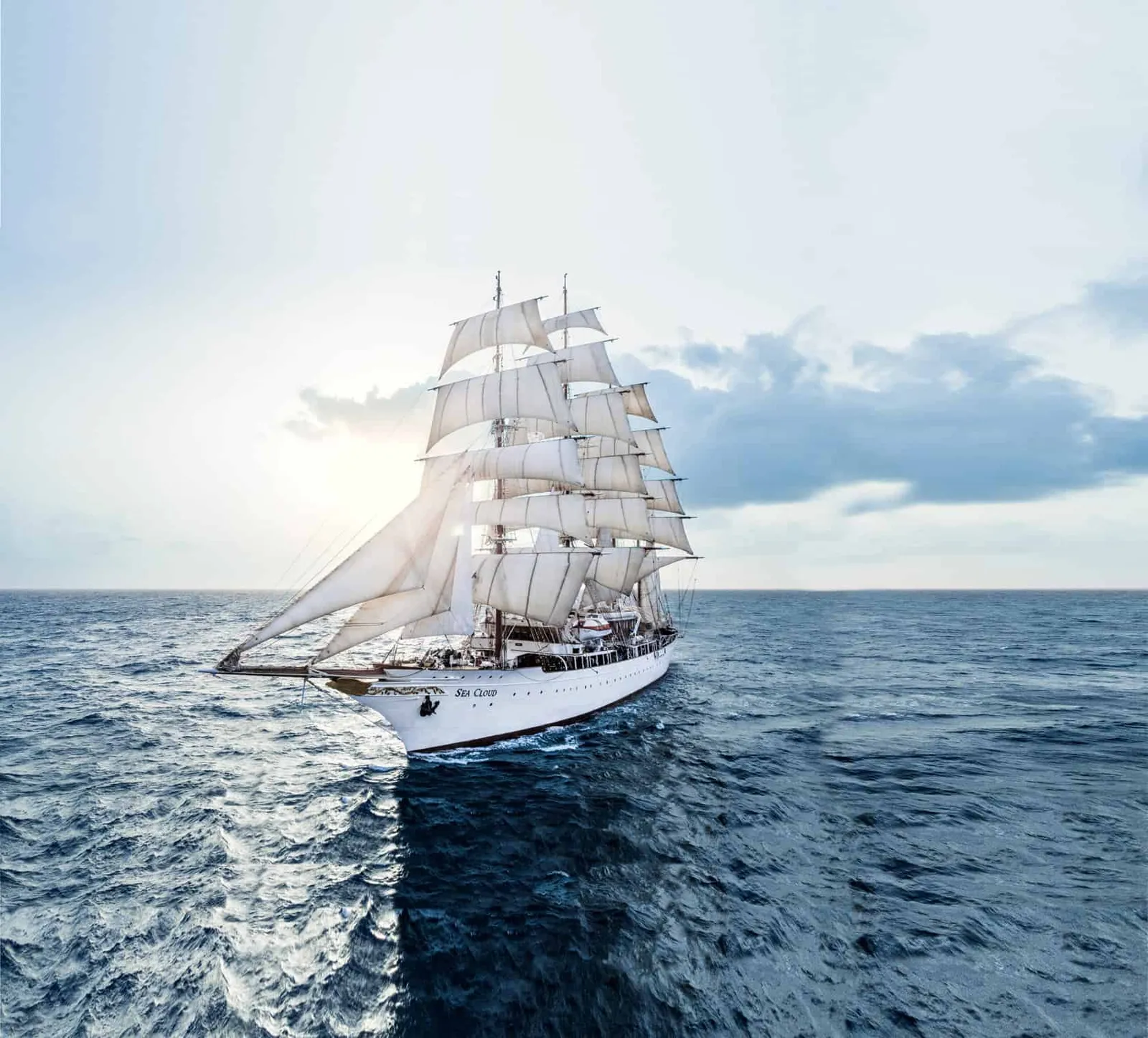
Sea Cloud Cruises offers something that exists nowhere else in the cruise industry — and arguably nowhere else in travel. The original Sea Cloud, built in 1931 for cereal heiress Marjorie Merriweather Post, is a genuine maritime treasure: a three-masted barque carrying just 64 guests in cabins that retain their original mahogany panelling, marble fireplaces, and gold-plated bathroom fixtures. When the crew hand-sets 29 sails across 3,000 square metres of canvas, it is not a performance — it is the ship’s actual propulsion system, operated by sailors trained in square-rigger seamanship that dates back centuries. Sea Cloud II (2001, 94 guests) and Sea Cloud Spirit (2021, 136 guests) expanded the fleet while preserving the windjammer sailing philosophy. There is no casino, no swimming pool on the older vessels, no production show. The rhythm of the voyage is set by the wind.
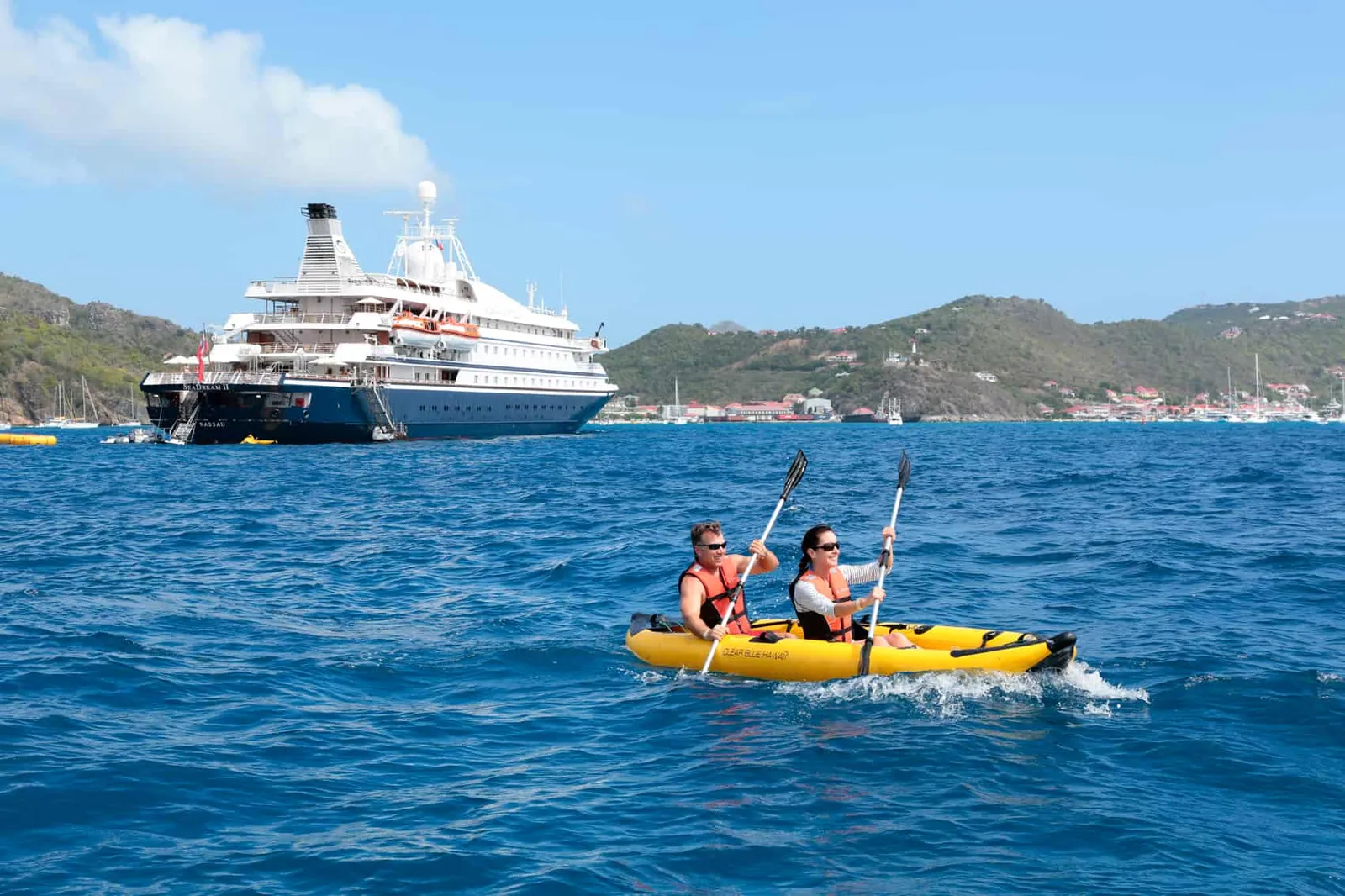
SeaDream Yacht Club offers the opposite pathway to intimacy — not through heritage sailing but through the most refined motor-yacht experience afloat. Founded in 2001 by Norwegian entrepreneur Atle Brynestad (who also created Seabourn), SeaDream operates twin mega-yachts carrying just 112 guests served by 95 crew. The near 1:1 crew-to-guest ratio drives a level of personalisation that no sailing vessel can match: pre-trip questionnaires capture your drink preferences, dietary requirements, and pillow choices before you board. The open bar runs from dawn to the small hours with premium wines, champagne, and spirits. Balinese Dream Beds on the top deck invite you to sleep under the stars. The retractable marina platform deploys jet skis, kayaks, paddleboards, and Hobie Cat catamarans. The philosophy — “It’s yachting, not cruising” — is an operational reality, not marketing.
For Australian travellers, this comparison comes down to what you want to feel. Sea Cloud delivers awe — the sensation of standing on a deck built ninety-five years ago as hand-set sails billow overhead and the hull cuts through Mediterranean waters under wind power alone. SeaDream delivers personalisation — the comfort of a mega-yacht where the bartender prepares your cocktail before you reach the bar and the chef adjusts tonight’s menu because you mentioned a preference at breakfast. Both are extraordinary. Neither can replicate what the other does.
What is actually included
The inclusion models reflect fundamentally different philosophies — one rooted in European hotel tradition, the other in all-inclusive yacht culture.
SeaDream’s all-inclusive model is the more comprehensive at the base fare. The fare covers an open bar available at all hours — premium wines, champagne, spirits, cocktails, and soft drinks served anywhere aboard. All dining is included without restriction. Crew gratuities are fully covered. The marina platform’s full complement of watersports equipment — jet skis, kayaks, paddleboards, wakeboards, Hobie Cat catamarans, and snorkelling gear — is complimentary. Wi-Fi is charged separately at USD $35 per day or USD $99 per week. Shore excursions and spa treatments are additional.
Sea Cloud’s inclusion model follows the European tradition of elegant simplicity. The fare covers all dining — breakfast, lunch, afternoon tea, and multi-course dinners with complimentary table wines at dinner. A daily cocktail hour with open bar is included, and soft drinks are available throughout the day. Sea Cloud Spirit adds a swimming platform and spa, though spa treatments carry a surcharge. Gratuities are not included and are at guests’ discretion. Premium wines and spirits outside the cocktail hour are charged. Shore excursions are priced separately.
For Australian travellers calculating total cost, SeaDream’s inclusion of round-the-clock premium beverages and gratuities represents meaningful value — a couple drinking freely across a seven-night voyage could consume AUD $1,500 to $2,500 in beverages that SeaDream includes at the base fare. Sea Cloud’s beverage programme is more restrained but perfectly adequate for moderate drinkers, and the lower base fare on certain sailings partially offsets what is excluded. Neither line includes flights, and both require international travel from Australian gateways.
Dining and culinary experience
Both lines deliver exceptional cuisine at an intimate scale — but the dining culture aboard each reflects their broader identities.
SeaDream’s culinary programme has earned recognition as the highest-rated restaurant at sea from Conde Nast Johansens and a four-star rating from Forbes Travel Guide. The single kitchen prepares everything a la minute for just 112 guests — no batch cooking, no pre-preparation. The Dining Salon seats the full complement for multi-course dinners, while the Topside Restaurant offers al fresco dining where all 112 guests can eat outdoors simultaneously. The signature Le Menu de Degustation presents a multi-course tasting menu with wine pairings, culminating in the celebrated 24-carat gold-leaf chocolate fondant. A raw food menu — entirely plant-based, nothing heated above 48 degrees Celsius — is unique in the industry. Dietary accommodations span vegetarian, vegan, gluten-free, and keto-friendly menus.
Sea Cloud’s dining follows the European tradition of a single open-seating restaurant serving regionally inspired cuisine with complimentary wines at dinner. The galley prepares fresh, seasonal menus drawing on Mediterranean and European culinary traditions, with ingredients sourced at ports of call wherever possible. On the original Sea Cloud, dining for 64 guests feels like a private dinner party in a room adorned with original 1930s fixtures. Sea Cloud Spirit’s larger restaurant accommodates 136 guests with modern presentation while maintaining the fleet’s culinary standards. The atmosphere at dinner is convivial and unhurried — multi-course meals with good wines, conversation flowing easily among a small group of fellow travellers.
SeaDream wins on culinary ambition, precision, and the sheer scale of its all-inclusive beverage programme. Sea Cloud wins on atmosphere and the romance of dining aboard a vessel with nearly a century of history. Both deliver food that would be noteworthy ashore — but SeaDream’s made-to-order philosophy for 112 guests with a 1:1 crew ratio achieves a level of kitchen precision that a sailing vessel’s galley, however excellent, approaches differently.
Suites and accommodation
The accommodation comparison reveals starkly different design philosophies — one shaped by 1930s yacht heritage, the other by 1980s mega-yacht engineering refined through modern renovation.
Sea Cloud’s cabins are the fleet’s most distinctive feature. On the original 1931 vessel, the Owner’s Cabins (Categories 1 and 2) retain their original appointments — mahogany panelling, marble fireplaces, gold-plated fixtures, and antique furnishings that belonged to Marjorie Merriweather Post. These are museum-quality interiors you sleep in. Standard cabins on Sea Cloud are compact and nautically themed, with portholes rather than windows. Sea Cloud II offers more contemporary accommodation with larger cabins and improved bathrooms across 47 cabins for 94 guests. Sea Cloud Spirit, launched in 2021, represents a generational leap — balcony cabins, a wellness area, a swimming platform, and modern suite accommodation with ocean-view fitness facilities across 69 cabins for 136 guests.
SeaDream’s accommodation reflects the twin yachts’ 1984 and 1985 origins, comprehensively refurbished in 2022 at USD $10 million per yacht. Yacht Club Staterooms average 195 square feet with picture windows (Decks 3 and 4) or portholes (Deck 2) — no balconies in any category. The 2022 renovation rebuilt everything from bare steel: 55-inch televisions, USB charging, marble-lined bathrooms, Elm Organics bath products. The Owner’s Suite (447 square feet) includes a separate bedroom, soaking tub with ocean views, and a dining area. The Admiral’s Suite (375 square feet) features three picture windows and a soaking tub. Commodore Suites combine two staterooms into approximately 390 square feet with two bathrooms.
The tradeoff is clear. Sea Cloud’s original vessel offers cabins with irreplaceable historical character — you cannot buy a 1931 mahogany-panelled owner’s cabin with original fixtures anywhere else. Sea Cloud Spirit offers the only balcony cabins in this entire comparison. SeaDream’s refurbished staterooms are uniformly modern, well-appointed, and consistent across both yachts, with none of the variability that comes from a fleet spanning ninety years of maritime history.
Pricing and value
Both lines occupy the upper reaches of the small-ship market, but the pricing structures and what they include differ meaningfully.
SeaDream’s per-diem runs approximately AUD $900 to $1,200 per person per night for Yacht Club Staterooms, with seven-night Caribbean voyages from roughly USD $4,500 to $7,000 per person and Mediterranean sailings from approximately USD $5,500 per person. These fares include the open bar, all dining, gratuities, and watersports — a comprehensive package where the main add-ons are Wi-Fi, shore excursions, and spa treatments.
Sea Cloud’s pricing varies significantly by vessel and cabin category. The original Sea Cloud commands premium pricing — owner’s cabins with original 1930s appointments can reach AUD $1,500 or more per person per night, while standard cabins are more accessible. Sea Cloud II and Sea Cloud Spirit offer a broader price range, with entry-level cabins starting from approximately AUD $600 to $900 per person per night depending on itinerary and season. These fares include dining with table wines at dinner and the cocktail hour, but premium beverages, gratuities, and excursions are additional.
For Australian travellers, the total cost calculation must include international flights — typically AUD $2,000 to $4,000 per person return to the Mediterranean or Caribbean. Neither line sails in Australian waters. SeaDream’s all-inclusive fare makes budgeting simpler — the price you see is close to the price you pay, with only Wi-Fi and excursions adding meaningfully. Sea Cloud’s fare requires adding beverages, gratuities, and excursions to reach the true cost, but the entry point for standard cabins can be lower than SeaDream’s floor. The original Sea Cloud’s owner’s cabins represent a once-in-a-lifetime splurge that has no SeaDream equivalent in terms of historical significance.
Spa and wellness
Both lines offer wellness programmes proportionate to their intimate scale, though one has expanded significantly with its newest vessel.
SeaDream’s Asian Spa and Wellness Centre is the only Thai-certified spa service at sea. Highly trained Thai-certified therapists offer Traditional Thai Massage, Sisley Paris facial treatments, and couples treatments. The spa features two treatment rooms, steam showers, a sauna, and an open-air massage area on deck. Complimentary sunrise yoga and tai chi sessions are offered daily. The marina platform — deploying jet skis, kayaks, paddleboards, and Hobie Cat catamarans — represents active wellness that no spa treatment can replicate. Sixteen laps around Deck 6 equals one mile for walking or running.
Sea Cloud’s wellness offering has evolved across its fleet. The original Sea Cloud and Sea Cloud II have limited spa facilities, reflecting their heritage as sailing vessels where the deck and the sea are the wellness programme. Sea Cloud Spirit changed the equation significantly — launching in 2021 with a dedicated wellness and spa area, a swimming platform for direct ocean access, and an ocean-view fitness centre. Across all three ships, the most compelling wellness experience is the sailing itself: standing on deck as sails are hand-set overhead, feeling the ship respond to the wind, and the meditative rhythm of a vessel powered by canvas rather than engines.
The distinction is philosophical. SeaDream delivers structured wellness — a certified spa, organised fitness, and an equipment-rich marina for active water engagement. Sea Cloud delivers organic wellness — the physical and mental restoration that comes from disconnecting aboard a sailing vessel where the wind sets the pace and the rhythms of the sea replace the rhythms of daily life.
Entertainment and enrichment
Neither line carries a theatre troupe or a production show — and both attract travellers who consider that a feature. But the enrichment philosophies diverge meaningfully.
SeaDream’s evening atmosphere is deliberately unstructured. A pianist performs in the Piano Bar, occasional guitarists appear at the Top of the Yacht Bar, and late-night DJ sets add energy on warmer evenings. The Casino offers blackjack. But the signature SeaDream evening is organic — champagne at the Top of the Yacht Bar with its 360-degree views, dinner al fresco at Topside, and a Balinese Dream Bed under the stars. The Champagne and Caviar Splash — crew serving champagne and caviar on a secluded beach — is universally cited as a highlight. No lectures, no formal programming.
Sea Cloud’s enrichment programme is destination-focused and culturally rich. Guest lecturers aboard cover maritime history, regional culture, and the history of the ships themselves — the original Sea Cloud’s story alone, from Marjorie Merriweather Post to its service in World War II, provides material for several evenings. Classical music performances complement the ship’s heritage atmosphere. The daily spectacle of watching the crew hand-set 29 sails is entertainment in itself — many guests describe it as the single most memorable moment of any cruise they have taken. Evening gatherings in the ship’s elegant public rooms have the feel of a country house party.
The difference reflects the lines’ souls. SeaDream makes the yacht and the open bar the evening’s centrepiece — unstructured conviviality among 112 guests who feel like co-conspirators. Sea Cloud makes history and sailing the story — structured enrichment that gives context to the extraordinary vessel beneath your feet.
Fleet and destination coverage
The fleet comparison reveals two very different approaches to scale — one deliberately tiny, the other modestly growing.
Sea Cloud operates three ships. Sea Cloud (1931, 64 guests) is the legendary original — 3,000 square metres of sail, 29 sails, crew hand-setting canvas as they have since the vessel’s maiden voyage. Sea Cloud II (2001, 94 guests) is a purpose-built three-masted barque blending square-rigger tradition with modern comforts. Sea Cloud Spirit (2021, 136 guests) added balcony cabins, a spa, and a swimming platform while maintaining authentic windjammer sailing. All three deploy seasonally: Caribbean in winter, Mediterranean, Canary Islands, and Northern Europe in summer. Itineraries range from four to nineteen nights. The ships’ shallow draft accesses small harbours and anchorages unreachable by larger vessels.
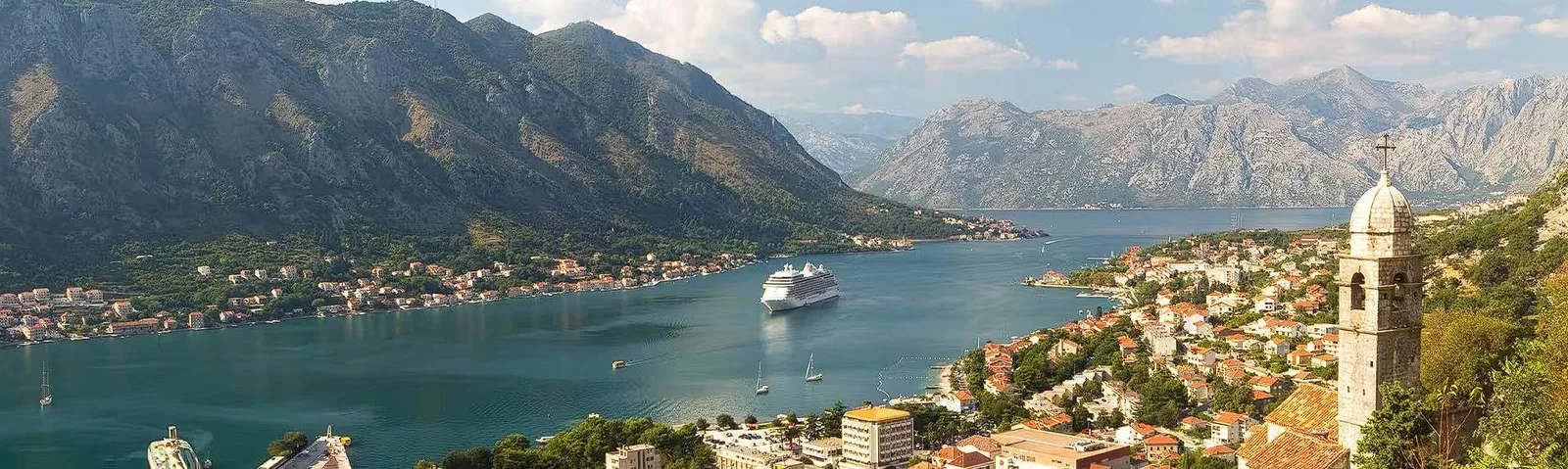
SeaDream operates two identical ships. SeaDream I (1984, refurbished 2022) and SeaDream II (1985, refurbished 2022) are twins — 112 guests, 95 crew, 4,253 gross tonnes each. The yachts deploy seasonally between the Caribbean (November to April) and Mediterranean (May to September), with Norwegian fjord voyages in summer and transatlantic repositioning voyages bridging the seasons. SeaDream’s compact 355-foot length accesses harbours that even Sea Cloud’s sailing vessels may not enter — downtown Venice, overnight in Capri, the Corinth Canal.
For Australian travellers, destination coverage is similar — both lines operate in the Caribbean and Mediterranean with neither sailing in Australian or Pacific waters. Sea Cloud adds Northern European and Canary Islands itineraries. SeaDream adds the Norwegian fjords. The critical difference is fleet variety: Sea Cloud offers three genuinely distinct vessels spanning ninety years of maritime design, while SeaDream offers two identical twins where the choice is driven entirely by itinerary rather than ship preference.
Where each line excels
Sea Cloud excels in:
- Maritime heritage. The original 1931 vessel is irreplaceable — a floating museum with original mahogany panelling, marble fireplaces, and gold-plated fixtures that you actually sleep in. No other cruise line offers anything comparable.
- Authentic sailing. Twenty-nine sails hand-set by trained square-rigger sailors across 3,000 square metres of canvas. This is real sailing, not decorative — the ship moves under wind power whenever conditions allow.
- Ultra-small capacity. Sixty-four guests on the original Sea Cloud is the smallest capacity in this comparison and among the smallest in the entire cruise industry. The intimacy at this scale is profound.
- Fleet variety. Three ships spanning ninety years offer genuinely different experiences — from the 1931 original to the modern Sea Cloud Spirit with balcony cabins and a spa.
- Cultural enrichment. Guest lecturers, maritime history, classical music, and the living spectacle of hand-set sails provide intellectual engagement that complements the physical beauty.
SeaDream excels in:
- All-inclusive value. The open bar with premium wines, champagne, spirits, and cocktails from dawn to the small hours — included in the base fare with no add-ons or packages — is the most comprehensive beverage programme in small-ship cruising.
- Crew-to-guest ratio. Ninety-five crew for 112 guests creates a near 1:1 ratio. Crew learn your name on the first morning and your preferences by the second.
- Watersports marina. Jet skis, kayaks, paddleboards, wakeboards, Hobie Cat catamarans, snorkelling gear, and a floating trampoline — the most equipment-rich marina platform in small-ship cruising.
- Modern consistency. Both yachts received comprehensive USD $10-million refurbishments in 2022, delivering uniform modern comfort across every stateroom.
- Balinese Dream Beds. Sleeping under the stars on the top deck as the yacht sails through the night is unique in cruising — no other line, including Sea Cloud, offers this experience.
Standout itineraries for Australian travellers
Sea Cloud
Sea Cloud: Classic Caribbean under Sail (7-10 nights, winter season) — The original 1931 vessel under full sail through the Windward and Leeward Islands, calling at small anchorages and harbours that showcase the ship’s shallow draft. With just 64 fellow guests, the experience is closer to a private yacht charter than any cruise. Fly to the Caribbean from Australian east coast cities via the United States, connecting through Dallas, Los Angeles, or Miami.
Sea Cloud Spirit: Mediterranean Discovery (7-14 nights, summer season) — The newest vessel brings balcony cabins, a spa, and a swimming platform to Mediterranean itineraries visiting the Italian and French Rivieras, Greek Islands, and Dalmatian coast. At 136 guests, Sea Cloud Spirit offers the most accessible entry point to the fleet. Fly to Mediterranean embarkation ports from Australian gateways via Singapore Airlines, Emirates, or Qatar Airways.
SeaDream
SeaDream I or II: Grand Mediterranean and Adriatic Explorer (14 nights, 2026) — SeaDream’s first two-week Mediterranean itineraries visiting St Tropez, Corsica, Taormina, Valletta, Dubrovnik, overnight in Capri, and downtown Venice. The extended format maximises the marina platform’s deployment in warm waters. Fly to Barcelona or Athens from Australian gateways via the Middle East or Singapore.
SeaDream II: Best of the Secluded Caribbean (10 nights, San Juan to Barbados) — The quintessential SeaDream voyage through the Virgin Islands, St Barts with an overnight in Gustavia, St Kitts, and the Grenadines. The Champagne and Caviar Splash on a secluded beach is the signature moment. Fly to San Juan via the United States from Australian east coast cities.
SeaDream II: Yachting the Norwegian Fjords (7 nights, July-August 2026) — The programme that sells out years in advance. Oslo, Bergen, Alesund, and secluded fjord villages. At 112 guests, the yacht penetrates deep fjord channels inaccessible to larger vessels. Fly to Oslo via one connection from Australian capitals.
Ship-by-ship recommendations
Sea Cloud
Sea Cloud (64 guests, 1931) — The irreplaceable original. Book this ship for the Owner’s Cabins with their 1930s appointments and the intimacy of just 64 guests under hand-set sails. This is a bucket-list voyage for maritime history enthusiasts and sailing romantics. The experience cannot be replicated on any other vessel afloat.
Sea Cloud II (94 guests, 2001) — The purpose-built barque that expanded the fleet. More contemporary accommodation than the original, with the same authentic sailing experience. A strong middle ground between the heritage intensity of Sea Cloud and the modern comforts of Sea Cloud Spirit.
Sea Cloud Spirit (136 guests, 2021) — The modern flagship. Balcony cabins, a wellness and spa area, a swimming platform, and ocean-view fitness centre make this the most comfortable vessel in the fleet. For first-time Sea Cloud guests or those who want sailing heritage with contemporary amenities, Spirit is the ideal entry point.
SeaDream
SeaDream I or SeaDream II (112 guests each, 1984/1985, refurbished 2022) — Identical twins delivering an identical experience. Choose by itinerary rather than ship. For a first SeaDream experience, the Caribbean is ideal — calmer seas, maximum marina use, and the Champagne and Caviar Splash on a secluded beach. The Owner’s Suite (447 square feet) and Admiral’s Suite (375 square feet) offer soaking tubs and substantially more space. Book early — with a 60 to 70 per cent repeat guest rate, top categories sell out rapidly.
For Australian travellers specifically
Both lines require international flights from Australia — neither operates in Australian or Pacific waters, and every embarkation port demands a minimum 20-hour journey from Australian gateways.
Sea Cloud’s Australian presence is niche. The Hamburg-based company draws its clientele predominantly from German-speaking Europe and the United Kingdom. Australian representation is limited, and booking typically occurs through specialist cruise agents — including Pan Australian Travel — who can navigate the European booking systems and provide itinerary advice tailored to Australian flight routing. The European passenger base means the onboard atmosphere and enrichment programming carry a Continental sensibility that Australian travellers who enjoy European travel culture will appreciate.
SeaDream’s Australian presence is growing. The line offers a freephone number for Australia and has appointed dedicated APAC sales leadership. However, like Sea Cloud, every voyage requires international flights. Caribbean embarkation from San Juan or Barbados connects through the United States. Mediterranean embarkation from Barcelona, Athens, or Dubrovnik connects through the Middle East, London, or Singapore. Australian specialist cruise agents are the recommended booking channel for both lines.
The flight factor is a wash in this comparison — both lines require comparable international travel from Australia. The deciding factor is not accessibility but preference: maritime heritage under canvas, or motor-yacht luxury with a 1:1 crew ratio. For Australians who have the time and budget to fly internationally for a cruise, both lines deliver experiences that justify the journey.
The onboard atmosphere
These two lines create profoundly different emotional experiences — both intimate, both elegant, but rooted in entirely different traditions.
Sea Cloud’s atmosphere is that of a private yacht from another era. The original 1931 vessel carries an atmosphere of reverence — guests are conscious of walking decks that Marjorie Merriweather Post walked, dining in rooms where history was made. The passenger base is predominantly European, well-travelled, and drawn to maritime culture. Conversation revolves around the ship’s history, the sailing, the ports. The dress code is elegantly casual — no formal nights, but a level of European sophistication that reflects the Hamburg-based company’s heritage. When the crew hand-sets the sails, guests gather on deck in what feels like a communal meditation — the spectacle unites everyone aboard in shared wonder.
SeaDream’s atmosphere is the contemporary private yacht. With 112 guests and a near 1:1 crew ratio, the social dynamic is immediate — you know every guest by the third evening. The Captain dines with guests and walks with them ashore. The dress code is resort casual — even more relaxed than most expect from luxury. The evening rhythm is organic: champagne at the Top of the Yacht Bar, dinner al fresco, a nightcap with new friends. The atmosphere is often described as a house party on a yacht owned by a very generous friend. The open bar creates a convivial social lubricant that Sea Cloud’s more measured beverage service does not replicate.
The critical distinction is tone. Sea Cloud whispers; SeaDream laughs. Sea Cloud invites contemplation of the sea and the ship’s history; SeaDream invites celebration with champagne in hand. Both are wonderful — but they attract different temperaments.
The bottom line
Sea Cloud Cruises and SeaDream Yacht Club represent two of the most distinctive experiences in all of cruising — and the gap between them is not one of quality but of philosophy. Both are intimate. Both are elegant. Both deliver experiences that mass-market cruising cannot approach. But the soul of each is entirely different.
Choose Sea Cloud for irreplaceable maritime heritage — a 1931 tall ship with hand-set sails, original owner’s cabins with mahogany panelling and marble fireplaces, and the profound experience of sailing under canvas as it was done a century ago. Choose it for the spectacle of 29 sails being raised by hand, for 64 guests on the original vessel, and for the European cultural enrichment that gives context to every port. Choose it for Sea Cloud Spirit’s balcony cabins and modern spa if you want the sailing heritage with contemporary comfort. Accept that the beverage programme is less inclusive than SeaDream’s, that cabins on the older vessels are compact and nautically themed, and that the European passenger base means an atmosphere more Continental than Antipodean.
Choose SeaDream for the most personalised motor-yacht experience afloat — 112 guests, a near 1:1 crew ratio, an all-inclusive open bar from dawn to the small hours, and the kind of first-name recognition that only a yacht can deliver. Choose it for Balinese Dream Beds under the stars, the Champagne and Caviar Splash on a Caribbean beach, jet skis and Hobie Cats from the marina platform, and Forbes four-star dining where everything is prepared a la minute. Choose it for comprehensive inclusions that make budgeting simple and for a modern, uniformly refurbished product across both identical yachts. Accept that there are no sails, no historical provenance, no balconies, and no fleet variety — just two immaculate mega-yachts delivering a single, perfected experience.
For the Australian traveller with the means and the time to fly internationally for either, the question is not which is better — it is which version of intimacy speaks to your soul. The one that sails under canvas with the ghosts of a golden age, or the one that pours champagne at the Top of the Yacht Bar while the stars come out overhead. Both are worth the journey.