| Regent Seven Seas | Seabourn | |
|---|---|---|
| Category | Ultra-Luxury | Expedition / Ultra-Luxury |
| Rating | ★★★★★ | ★★★★★ |
| Fleet size | 6 ships | 5 ships |
| Ship size | Small (under 1,000) | Small (under 1,000) |
| Destinations | Mediterranean, Caribbean, Alaska, Northern Europe | Mediterranean, Caribbean, Antarctica, Northern Europe |
| Dress code | Formal evenings | Casual elegance |
| Best for | All-inclusive luxury seekers | Ultra-luxury intimate ship enthusiasts |
These are ultra-luxury cruising's two all-inclusive titans — and the choice between them reveals whether you prioritise the most comprehensive fare ever assembled or the most adventurous fleet in the segment. Regent includes everything: unlimited shore excursions, business-class air from Australian gateways, all dining without surcharges, the largest suites at every category, and a proven fleet of six ships (soon seven with Seven Seas Prestige in late 2026). Seabourn counters with Thomas Keller dining, expedition ships carrying custom-built submarines to Antarctica and the Kimberley, Caviar in the Surf on the beach, and an intimate scale of 450–600 guests on ocean ships. For Australians, both lines visit local waters — Regent with multiple roundtrip Sydney departures and included business-class flights for international voyages, Seabourn with dedicated Kimberley expedition seasons from Darwin and Broome. Choose Regent if total inclusivity, suite space, and the simplicity of a single fare matter most. Choose Seabourn if expedition capability, culinary distinction, and the intimacy of a smaller ship speak to you.
The core difference
This is ultra-luxury cruising’s heavyweight bout — two lines that both promise everything included, both command nearly 1:1 crew-to-guest ratios, both belong to the world’s largest cruise conglomerates, and both deliver genuinely outstanding holidays at sea. The difference lies in what each line means by “everything” and how far each is willing to take you.
Regent Seven Seas Cruises has built its reputation on the most comprehensive all-inclusive fare in the industry. Pay once and never sign a bill again — business-class flights from Australian gateways on Emirates, Qantas, or Singapore Airlines; unlimited shore excursions at every port with over 4,500 options globally; every restaurant, every night, with no surcharges, caps, or reservation fees; airport-to-ship transfers; a pre-cruise luxury hotel night; valet laundry; premium drinks; Starlink Wi-Fi; and all gratuities. The fleet of six all-suite ships (becoming seven with Seven Seas Prestige in late 2026) carries 490–822 guests and covers every major cruise region. The suites are the largest in the segment at every category. Regent is owned by Norwegian Cruise Line Holdings alongside Norwegian and Oceania, with cross-brand loyalty honouring across all three lines.
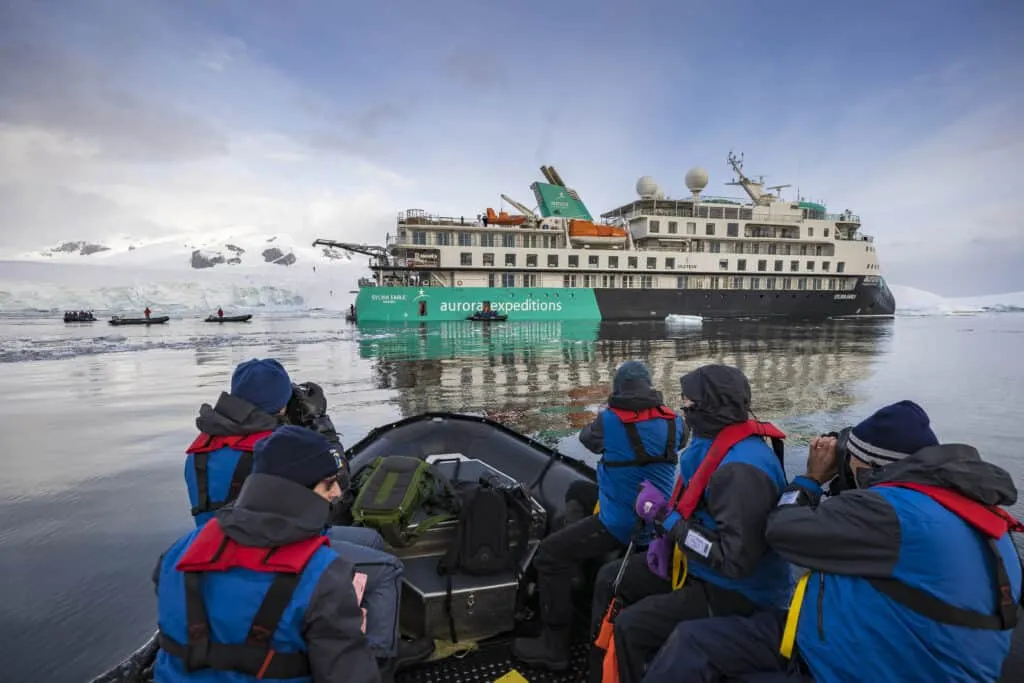
Seabourn’s argument is different. Founded in 1986 by Norwegian shipping magnate Atle Brynestad, the line combines a refined ocean fleet of three ships (Ovation, Encore, and Sojourn, carrying 450–600 guests) with a purpose-built expedition fleet of two ships (Venture and Pursuit, carrying 264 guests each). The ocean ships deliver intimate all-inclusive luxury with The Grill by Thomas Keller, Caviar in the Surf beach events, and the Dr. Andrew Weil Spa & Wellness programme. The expedition ships add PC6 ice-strengthened hulls, two custom-built submarines per ship, Zodiacs, kayaks, and 26-person expedition teams reaching Antarctica, the Arctic, the Amazon, and — critically for Australians — the Kimberley coast. Seabourn is owned by Carnival Corporation, the world’s largest cruise company.
For Australian travellers, both lines have genuine local presence. Regent offers approximately 24 sailings in Australian and New Zealand waters between 2026 and 2028, with roundtrip Sydney departures and included business-class air for international voyages. Seabourn deploys Pursuit to the Kimberley from Darwin and Broome annually, with ocean ships visiting on repositioning voyages. The choice is not about which line serves Australians — both do — but about what kind of luxury you are seeking.
What is actually included
Both lines market themselves as all-inclusive, and both genuinely are — but Regent’s definition of “all-inclusive” is measurably broader.
Regent includes in every fare: unlimited shore excursions at every port (Go Local immersive experiences, Regent Choice curated excursions, and free-roaming independent options); all dining at every restaurant without surcharges, caps, or reservation fees; premium spirits, wines, and cocktails; Starlink Wi-Fi; all gratuities; valet laundry; and 24-hour in-suite dining. From Concierge suites upward, you also receive roundtrip business-class air from international gateways (including Sydney, Melbourne, Brisbane, Perth, and Adelaide); airport-to-ship transfers; a pre-cruise luxury hotel night with breakfast; and a private chauffeur credit of up to USD $500 via Blacklane. Butler service is available from Penthouse Suites upward.
Seabourn includes: premium spirits, wines, champagne, and cocktails throughout the ship; all dining at all restaurants without surcharges; all gratuities; Wi-Fi (basic tier included, premium available); 24-hour in-suite dining; and personalised service from a nearly 1:1 crew ratio. On expedition ships, all Zodiac excursions, expert-guided landings, and expedition gear are included. Submarine dives are available at additional cost.
Seabourn does not include: flights (no air programme from any gateway); standard shore excursions on ocean ships (all at additional cost); airport-to-ship transfers; valet laundry (available for purchase); or pre-cruise hotel stays.
The Australian impact. For a couple flying business class from Sydney to a Mediterranean embarkation port, Regent’s included air is worth AUD $12,000–$24,000. Add unlimited excursions over a 10-night voyage (AUD $2,000–$5,000 if purchased separately) and the frictionless dining and laundry, and Regent absorbs AUD $15,000–$30,000 in costs that Seabourn guests must budget independently. This is the single largest practical differentiator between the two lines.
Where Seabourn has an inclusion Regent cannot match: expedition infrastructure. On Venture and Pursuit, Zodiac landings, kayaking, expert-led wildlife encounters, and expedition lectures are all included in the fare. When Seabourn Pursuit is anchored off King George Falls in the Kimberley and 264 guests board Zodiacs for a sunrise landing, that experience is included. Regent has no expedition capability whatsoever.
Dining and culinary experience
Both lines deliver excellent dining with no surcharges — a shared philosophy that distinguishes them from competitors who gate their finest restaurants behind supplements. The culinary styles, however, are distinctly different.
Seabourn’s culinary crown jewel is The Grill by Thomas Keller — the only Thomas Keller restaurant at sea. Keller, whose The French Laundry in Napa Valley holds three Michelin stars and is routinely named among the world’s finest restaurants, designed a menu centred on premium steaks, Dover sole, and classic American dishes elevated by his precision and sourcing philosophy. The restaurant is included for all guests with no supplement. Beyond The Grill, Seabourn offers The Restaurant (main dining with open seating and rotating menus), The Colonnade (Mediterranean and regional cuisines), Sushi (Japanese), and Earth & Ocean (on expedition ships, featuring destination-inspired cuisine). The signature Caviar in the Surf experience — a beach barbecue featuring champagne and caviar served at the water’s edge during select port calls — is one of the most memorable dining moments in luxury cruising. All dining is included without surcharges.
Regent offers seven to eleven dining venues depending on the ship, all included without restriction. On Explorer-class ships: Compass Rose serves refined French-Continental cuisine with open seating. Prime 7 is a premium steakhouse with dry-aged cuts. Pacific Rim delivers pan-Asian cuisine. Chartreuse provides intimate French fine dining. Sette Mari at La Veranda offers Italian trattoria. Coffee Connection serves all-day casual fare. The Pool Grill provides al fresco dining. You can dine at Prime 7 or Chartreuse every single evening of your voyage without restriction — no reservation cap, no surcharge, no supplement. The incoming Seven Seas Prestige (late 2026) expands to 11 dining experiences, adding Azure (Mediterranean mezze-style shared plates) and several new al fresco concepts.
The culinary verdict: Seabourn has the more prestigious single-restaurant partnership — Thomas Keller’s name carries weight that no individual Regent chef can match. Regent has greater breadth — more restaurants, more cuisines, more choice on any given evening. Both lines include everything without surcharges. If a single signature dining experience matters most, Seabourn’s Thomas Keller partnership is the stronger draw. If variety and unrestricted access across seven-plus venues matter more, Regent delivers.
Suites and accommodation
Regent claims the largest suites in luxury cruising at every category level — and against Seabourn, the claim holds convincingly.
Regent’s entry-level Deluxe Veranda Suite on Explorer-class ships is 361 square feet with an 88-square-foot balcony — the largest entry-level accommodation in ultra-luxury cruising. Penthouse Suites span 545–892 square feet. The Seven Seas Suite reaches 825–925 square feet. The Grand Suite offers up to 1,800 square feet. The Regent Suite on Explorer-class ships spans 4,443 square feet with a 1,417-square-foot balcony, a private in-suite spa, and a Steinway Grand piano. The incoming Seven Seas Prestige introduces the Skyview Regent Suite at 8,794 square feet — a two-storey private residence at sea with its own gym, sauna, bar, elevator, and 3,703-square-foot balcony. This is the largest all-inclusive suite in cruise history. Seven Seas Grandeur features original Picasso and Miro artwork in public spaces and a commissioned Faberge egg.
Seabourn’s entry-level Veranda Suite on ocean ships is approximately 269–295 square feet with a private veranda — comfortable but meaningfully smaller than Regent’s. The Penthouse Suite reaches approximately 436 square feet. The Grand Wintergarden Suite — Seabourn’s top ocean category — spans approximately 1,399 square feet with a solarium, dining area, and two bathrooms. On the expedition ships, suites are slightly more compact to accommodate the expedition infrastructure, with Veranda Suites from approximately 255 square feet.
The comparison: Regent’s entry-level suite is 22–34 per cent larger than Seabourn’s, depending on the specific ship. At the top end, the Regent Suite (4,443 square feet) is more than three times the size of Seabourn’s Grand Wintergarden Suite. For travellers who measure luxury partly in space — the ability to spread out, unpack fully, and live in the suite rather than merely sleep in it — Regent has a structural advantage at every price point.
Seabourn compensates with ship-wide intimacy. On a 450-guest Sojourn or 600-guest Ovation, the smaller guest count creates a more private atmosphere in public spaces. The pool is shared with fewer guests, the dining room is quieter, and the crew learn your preferences faster simply because there are fewer people to remember.
Pricing and value
Regent’s headline fares are higher, but total cost — the number that matters for Australians travelling internationally — frequently favours Regent once missing inclusions are added back.
Regent’s per-diem runs approximately USD $650–$1,140 per person per night depending on ship, itinerary, and suite category. A 10-night Mediterranean sailing in a Deluxe Veranda Suite on an Explorer-class ship starts from roughly USD $860–$1,140 per night. Seven Seas Prestige introductory pricing starts from approximately USD $650 per night.
Seabourn’s per-diem runs approximately USD $500–$900 per person per night for ocean ships. Expedition voyages command a premium, typically USD $700–$1,400 per night depending on destination and season. Kimberley expeditions on Pursuit run approximately AUD $800–$1,500 per night.
Total cost for an Australian couple on a 10-night Mediterranean voyage:
Regent (Deluxe Veranda Suite, all-inclusive): approximately AUD $22,000–$32,000 per couple. This covers the cruise, business-class flights from Australia, unlimited shore excursions, all dining, drinks, transfers, and a pre-cruise hotel night.
Seabourn (Veranda Suite): approximately AUD $16,000–$26,000 for the cruise fare. Add business-class flights from Sydney to Europe (AUD $10,000–$18,000), shore excursions at five to seven ports (AUD $1,500–$3,500), and airport transfers (AUD $500–$1,000). Total: approximately AUD $28,000–$48,500.
The pattern is consistent: Regent’s headline fare absorbs the cost of flights, excursions, and dining that Seabourn guests must pay separately. For Australians flying long-haul in business class, Regent’s total cost is typically comparable or lower — despite a per-diem that appears 20–40 per cent higher on paper.
Where Seabourn offers compelling value: Kimberley expeditions from Darwin and Broome. These require only domestic flights, eliminating the long-haul air cost that drives the total-cost calculation. A 10-day Kimberley expedition on Pursuit — with submarines, Zodiacs, expert naturalists, and all expedition landings included — represents an extraordinary experience that Regent simply cannot offer at any price.
Spa and wellness
Both lines invest heavily in wellness, but each takes a philosophically different approach.
Seabourn’s Spa & Wellness with Dr. Andrew Weil is the segment’s most distinctive wellness programme. Dr. Weil, the founder of integrative medicine at the University of Arizona and author of fifteen books on health and wellness, designed a programme that extends beyond the treatment room into daily life aboard. Mindful Living programmes include guided meditation, yoga with ocean views, wellness seminars on anti-inflammatory nutrition and healthy ageing, and destination-focused wellness excursions. The spa itself features thermal suites, treatment rooms, and a well-equipped fitness centre. The philosophy is holistic rather than transactional — wellness as a dimension of the voyage rather than an add-on service.
Regent’s Serene Spa & Wellness on Explorer-class ships occupies two decks connected by a dramatic circular staircase. The complimentary Hydrothermal Suite features an aromatherapy steam room, infrared sauna, chill room, and experiential showers — open to all guests without booking or time limits. Treatment rooms have ocean views. Products are by ELEMIS and Kerastase. The incoming Seven Seas Prestige will feature the most expansive Serene Spa at sea, with an infinity pool integrated into the spa complex, quartz crystal healing beds, and zero-gravity massage tables.
The comparison: Seabourn wins on wellness philosophy and integration — the Dr. Weil partnership creates a more cohesive, intellectually grounded approach. Regent wins on complimentary facilities — the Hydrothermal Suite on Explorer-class ships is available to all guests at no charge, a significant inclusion that Seabourn does not match. Treatment pricing is comparable on both lines (signature treatments USD $200–$400 for 75–100 minutes).
Entertainment and enrichment
Both lines favour enrichment over spectacle, but at different intensities.
Regent’s Constellation Theater on Explorer-class ships seats approximately 694 guests across two decks, with a dedicated 12-person production cast and seven-piece live orchestra. Productions are polished narrative-driven shows — Broadway in Concert, Diamond Run (an espionage-themed musical thriller), Bohemian Soul. The Culinary Arts Kitchen offers hands-on cooking classes with 18 individual stations (USD $89 — one of the very few items not included in the fare). Guest lecturers include former ambassadors, scientists, and international correspondents. The Observation Lounge at the bow is a social highlight with panoramic views and live music. Heritage-class ships feature the new Epicurean Enrichment Studio with destination-focused culinary lectures.
Seabourn takes a more intimate approach. The Grand Salon hosts live performances and guest speakers, but there is no two-storey theatre and no dedicated production cast. Entertainment leans toward acoustic musicians, small ensembles, themed evenings, and destination-focused enrichment. Seabourn Conversations brings thought leaders, authors, and experts aboard for talks and discussions. On expedition ships, the enrichment is the destination itself — daily expert-led briefings, wildlife lectures by naturalists and marine biologists, and the profound experience of landing in places most people will never visit. The atmosphere rewards guests who prefer conversation and the ship’s own rhythms over structured programming.
The philosophical difference: Regent believes a luxury cruise should offer a full programme — theatre, teaching kitchen, lectures, live music, and an Observation Lounge for pre-dinner cocktails. Seabourn believes the ship’s intimate scale and the quality of its crew create their own entertainment. On expedition voyages, Seabourn’s approach is unquestionably superior — no production show competes with a submarine dive beneath Antarctic ice. On ocean voyages, Regent offers more structured options for guests who want their evenings programmed.
Fleet and destination coverage
Both lines cover extensive territory, but the fleets differ dramatically in composition and ambition.
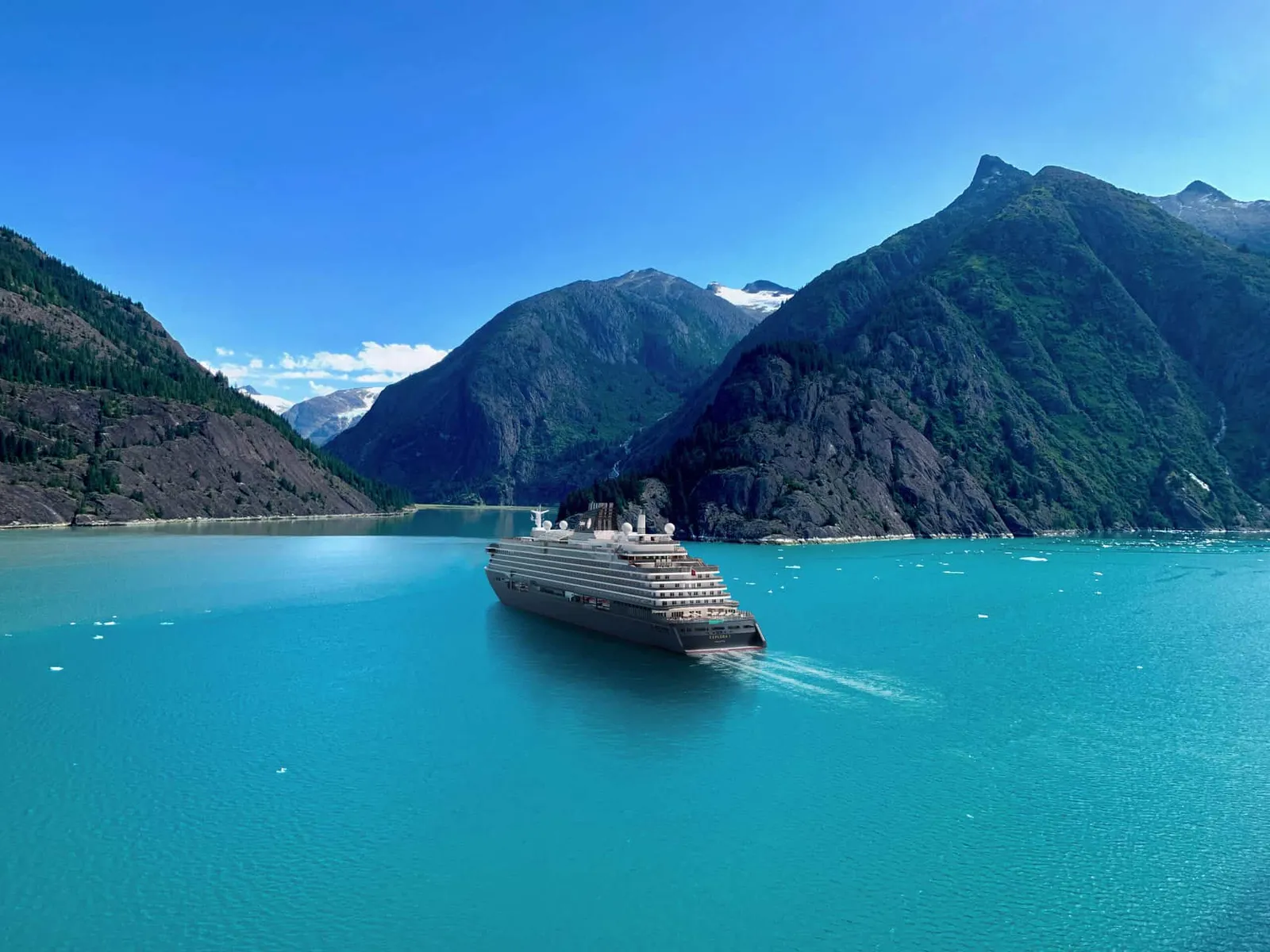
Regent operates six ships (becoming seven with Prestige in late 2026): Seven Seas Explorer (2016, 750 guests), Splendor (2020, 750 guests), Grandeur (2023, 746 guests), Mariner (2001, refurbished 2025, 700 guests), Voyager (2003, refurbishing 2026, 700 guests), and Navigator (1999, 490 guests). Seven Seas Prestige arrives late 2026 at 77,000 gross tonnes and 822 guests — a new ship class 40 per cent larger than Explorer. Destinations span the Mediterranean, Northern Europe, Alaska, Caribbean, Asia, South Pacific, Australia and New Zealand, Africa, South America, and annual world cruises of 130–154 nights. Regent’s fleet is exclusively ocean — no ice-class ships, no expedition infrastructure.
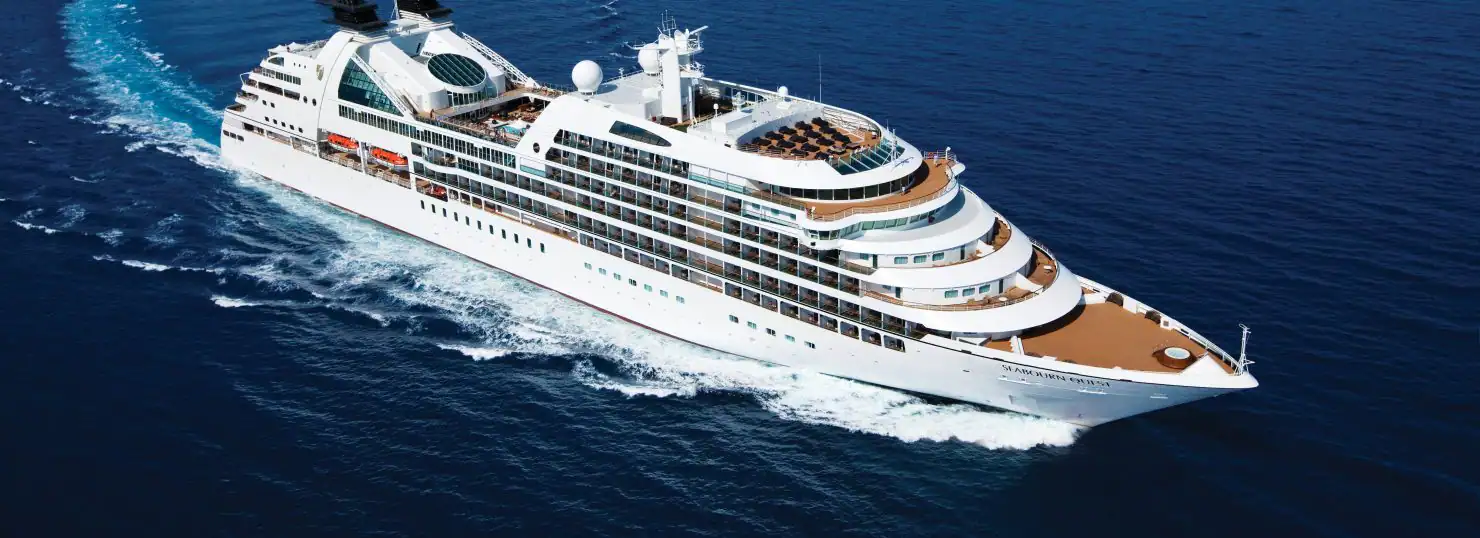
Seabourn operates five ships across two distinct product lines: three ocean ships — Ovation (2018, 600 guests), Encore (2016, 600 guests), and Sojourn (2010, 458 guests) — and two expedition ships — Venture (2022, 264 guests) and Pursuit (2023, 264 guests). The ocean fleet covers the Mediterranean, Caribbean, Northern Europe, Asia, and world cruises. The expedition fleet reaches Antarctica, the Arctic, the Amazon, West Africa, and the Kimberley. Having accumulated 45 industry awards in 2024, Seabourn’s dual-fleet model is unique among ultra-luxury lines — only Silversea also spans ocean and expedition, but Seabourn’s submarine programme sets it apart entirely.
What this means for Australians: Regent offers more frequent Australian deployments, more embarkation options, and included flights for international voyages. Seabourn offers the Kimberley — one of Australia’s most extraordinary wilderness regions — aboard an expedition vessel with submarines. The Kimberley programme alone makes Seabourn essential consideration for any Australian luxury traveller.
Where each line excels
Regent excels in:
- All-inclusive completeness. No other cruise line includes business-class air, unlimited shore excursions, all dining, drinks, transfers, pre-cruise hotel, and laundry in a single fare. The peace of mind this creates is a genuine luxury.
- Suite size. The largest suites at every category level in ultra-luxury cruising, from the 361-square-foot entry level to the incoming 8,794-square-foot Skyview Regent Suite on Prestige.
- Fleet modernity. Three ships built since 2016, a fourth arriving late 2026, and three more ordered through 2036.
- Australian accessibility. Approximately 24 sailings in AU/NZ waters between 2026 and 2028, roundtrip Sydney options, and included business-class air from Australian gateways.
- Dining variety. Seven to eleven included restaurants with no caps, no surcharges, and no reservation restrictions.
Seabourn excels in:
- Expedition capability. Two purpose-built PC6 expedition ships with custom submarines, Zodiacs, and 26-person expedition teams. Antarctica, the Arctic, the Amazon, and the Kimberley.
- Culinary prestige. The Grill by Thomas Keller — the only Thomas Keller restaurant at sea — and the signature Caviar in the Surf beach experience.
- Wellness philosophy. The Dr. Andrew Weil Spa & Wellness programme integrates mind-body wellness into the voyage rather than confining it to the spa.
- Intimate scale. Ocean ships carry 450–600 guests; expedition ships carry 264. Regent’s smallest ship carries 490 and the largest will carry 822.
- Submarine programme. Custom-built submarines on both expedition ships — a feature no other cruise line offers. Diving beneath Antarctic ice or exploring Kimberley reef systems from a submarine is a once-in-a-lifetime experience.
Standout itineraries for Australian travellers
Regent
Sydney roundtrip (10 nights, December 2026 on Seven Seas Explorer) — No flight required for NSW residents. Cruise to New Zealand and back. From approximately AUD $11,169 per person. The most convenient ultra-luxury option for Australians.
Bali to Sydney (16 nights on Seven Seas Explorer) — Via Komodo, Darwin, Cairns, Townsville, and Airlie Beach. Fly to Bali (approximately 6.5 hours via Denpasar), cruise home. Business-class flights included.
Auckland to Sydney (14–15 nights, January 2027 on Seven Seas Explorer) — Comprehensive New Zealand itinerary arriving in Sydney. Three-hour direct flight to Auckland, cruise home. Business-class flights included.
Grand Continental Sojourn (82 nights, Barcelona to Sydney) — Sail home from Europe through the Mediterranean, Middle East, Asia, and into Australian waters. Business-class air to Barcelona included in the fare.
Seabourn
Kimberley expedition (10–12 days, May–September on Seabourn Pursuit, Darwin to Broome or reverse) — The jewel in Seabourn’s Australian crown. Zodiac landings at King George Falls, Montgomery Reef, Horizontal Waterfalls, and Indigenous rock art sites. Optional submarine dives exploring Kimberley reef systems. Domestic flights only. An expedition experience Regent cannot offer at any price.
Antarctica expedition (12–22 days on Seabourn Venture, departing Ushuaia) — PC6 ice-strengthened hull, two submarines, Zodiac landings on the Antarctic Peninsula. Fly Sydney to Buenos Aires (approximately 14 hours on Qantas or LATAM via Santiago), then connect to Ushuaia. No included flights, but the expedition infrastructure justifies the journey.
Mediterranean ocean voyage (7–14 nights on Ovation or Encore) — Thomas Keller dining, Caviar in the Surf at a Greek island beach, and Dr. Weil spa programme. Seabourn’s intimate scale (600 guests versus Regent’s 750) creates a noticeably quieter atmosphere.
Ship-by-ship recommendations
Regent
Seven Seas Grandeur (746 guests, 2023) — The newest Explorer-class ship and the most refined. Features original Picasso, Miro artwork, and a commissioned Faberge egg. Excellent choice for a first Regent experience.
Seven Seas Explorer (750 guests, 2016) — The primary ship deployed to Australia and New Zealand. Choose for Australian-departing sailings.
Seven Seas Prestige (822 guests, arriving late 2026) — The largest Regent ship at 77,000 gross tonnes. Eleven dining venues. The Skyview Regent Suite at 8,794 square feet. A genuine game-changer for the segment — the most ambitious ultra-luxury new build since the line’s founding.
Seven Seas Mariner (700 guests, 2001, refurbished 2025) — Good value within the Regent fleet. Slightly smaller public spaces than Explorer-class but the same comprehensive inclusion package.
Seabourn
Seabourn Ovation (600 guests, 2018) — The newest and most refined ocean ship. The Grill by Thomas Keller, the Dr. Weil spa, and an intimate atmosphere. The recommended ocean ship for first-time Seabourn guests.
Seabourn Pursuit (264 guests, 2023) — The Kimberley and expedition specialist. Two custom submarines, 24 Zodiacs, kayaks, and a 26-person expedition team. Choose for Kimberley, Antarctica, or Amazon voyages.
Seabourn Venture (264 guests, 2022) — Near-identical to Pursuit. Choose based on itinerary — Venture tends to deploy to Antarctica and the Arctic while Pursuit covers the Kimberley and more diverse expedition routes.
Seabourn Sojourn (458 guests, 2010) — The most intimate ocean ship in the fleet. Smaller than Ovation and Encore, creating a notably quiet atmosphere. Best for world cruise segments and extended voyages where the smaller scale is appreciated over weeks rather than days.
For Australian travellers specifically
Both lines have genuine Australian relevance — a distinction that separates this comparison from many ultra-luxury pairings where one line has no local presence at all.
Regent’s Australian proposition is comprehensive. Approximately 24 sailings in Australian and New Zealand waters between 2026 and 2028. Seven Seas Explorer offers roundtrip Sydney sailings and Sydney-to-Bali voyages. The 2027–2028 collection introduces a new Seven Seas Navigator winter season covering Fremantle to Darwin, Darwin to Sydney, and circumnavigation options on Seven Seas Mariner. For international itineraries, included business-class air from Sydney, Melbourne, Brisbane, Perth, and Adelaide on Emirates, Qantas, or Singapore Airlines represents AUD $6,000–$12,000 per person in value. Regent has a dedicated Australian reservations line and strong distribution through Australian luxury travel agencies.
Seabourn’s Australian proposition is more focused but exceptionally distinctive. The Kimberley expedition programme on Pursuit is one of the most extraordinary cruise experiences available to Australians — a wilderness coastline accessible only by sea or air, explored from a purpose-built expedition vessel with submarines, Zodiacs, and naturalist guides. Darwin and Broome are reached by domestic flights. Ocean ships visit Australian waters on repositioning voyages but do not have the dedicated seasonal presence Regent maintains.
Loyalty pathways for Australians: Regent’s Seven Seas Society offers cross-brand status honouring with Norwegian Cruise Line and Oceania Cruises under the NCLH parent company — valuable if you sail those lines domestically or internationally. Seabourn’s loyalty programme is standalone within Carnival Corporation but does not currently offer formal cross-brand status honouring with sister lines like Holland America or Princess. Neither line has a direct Qantas Frequent Flyer partnership.
The practical question: If you want the most convenient, most inclusive ultra-luxury cruise from Australian shores — with flights handled, excursions included, and the largest suites in the segment — Regent is the clear choice. If you want to explore the Kimberley from a luxury expedition vessel with submarines and Zodiacs, or if the intimacy of a 450-guest ship and Thomas Keller’s cuisine speaks to you, Seabourn delivers experiences Regent structurally cannot.
The onboard atmosphere
These lines attract overlapping demographics but create distinctly different social environments.
Regent’s atmosphere is polished, relaxed, and quietly confident. The passenger base averages 58–65, predominantly American and British with strong Australian representation on southern hemisphere sailings. Many guests are experienced luxury cruisers on their fifth, tenth, or twentieth voyage. The all-inclusive model creates a particular kind of relaxation — there is never a moment of calculation about what costs extra. The dress code allows refined denim and dress trainers after 6 PM under “Elegant Casual,” with formal-optional evenings only on voyages of 16 nights or longer. The Observation Lounge is the social heart of the evening. The atmosphere is genteel, warm, and reassuringly consistent.
Seabourn’s atmosphere is intimate, understated, and exploration-minded. The passenger base is similar in age and affluence but often more intellectually curious — guests drawn to Seabourn tend to prioritise destination depth over onboard spectacle. The dress code is “Casual Elegance” — relaxed but polished, with no black-tie requirements. On expedition ships, the atmosphere shifts dramatically toward adventure: muddy boots by day, champagne and sunset by evening. The Caviar in the Surf ritual — guests wading into the shallows while white-gloved staff serve champagne and caviar from a surf-side bar — captures Seabourn’s personality perfectly: luxury without pretence, indulgence in unexpected places.
The key question: Do you want the most complete, friction-free luxury cruise experience with the largest suites and the widest dining variety? Choose Regent. Do you want intimacy, culinary prestige, wellness depth, and the possibility of diving beneath Antarctic ice in a submarine? Choose Seabourn.
The bottom line
Regent Seven Seas and Seabourn are both exceptional — and this is one of the few ultra-luxury comparisons where both lines serve Australian travellers with genuine local presence. The choice is not about quality; it is about what you want from a holiday at sea.
Choose Regent if your priority is the most complete all-inclusive fare afloat. The business-class flights from Australia, unlimited shore excursions, the largest suites in the segment, seven-plus included dining venues, and approximately 24 Australian sailings create the most convenient and comprehensive ultra-luxury experience available. Seven Seas Prestige, arriving late 2026, is the most ambitious ultra-luxury new build in years — 77,000 gross tonnes, 11 dining venues, and the 8,794-square-foot Skyview Regent Suite that redefines what is possible at sea. For Australians who want everything handled in a single fare, Regent has no peer.
Choose Seabourn if expedition capability, intimate scale, or culinary prestige matter most. The Kimberley programme on Pursuit — submarines, Zodiacs, naturalist guides, and one of Australia’s most spectacular wilderness coastlines — is an experience Regent cannot replicate. Thomas Keller’s restaurant at sea, the Dr. Weil wellness programme, and the Caviar in the Surf tradition deliver moments of genuine distinction. The ocean ships’ smaller scale (450–600 guests versus Regent’s 750–822) creates a tangibly more intimate atmosphere. Accept that flights, excursions, and transfers are your responsibility — and that the suites, while comfortable, are smaller at every category.
For Australians who can sail both: Regent for the convenience of Australian departures and the completeness of the international all-inclusive fare. Seabourn for the Kimberley expedition — a voyage that belongs on every Australian traveller’s lifetime list.