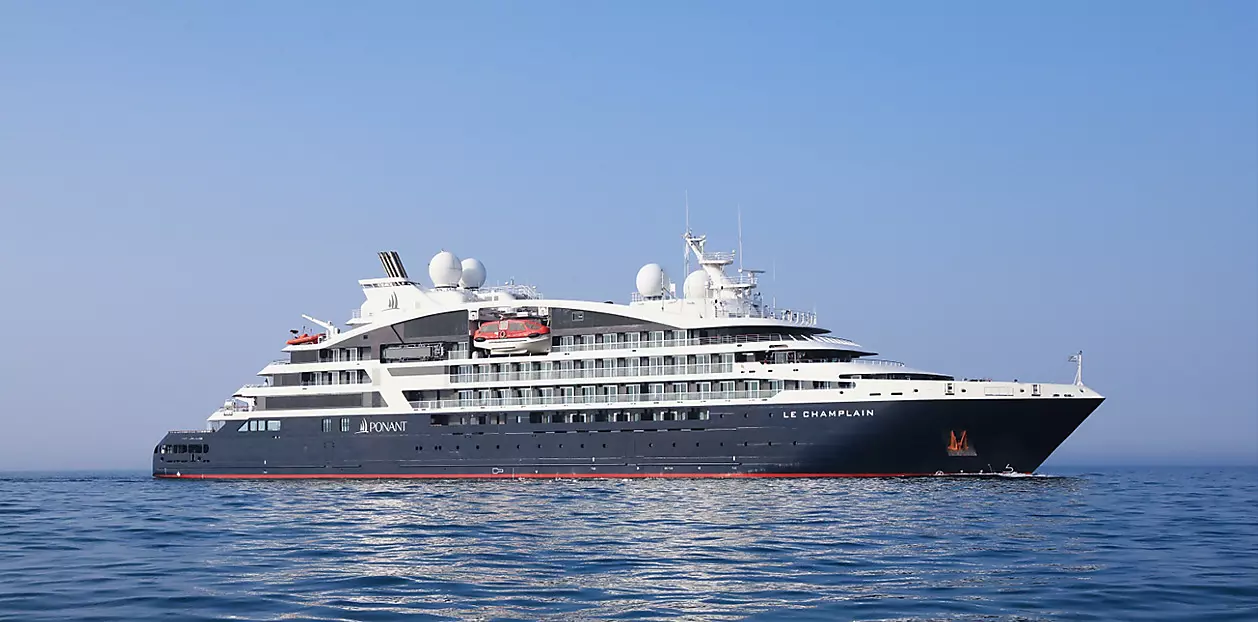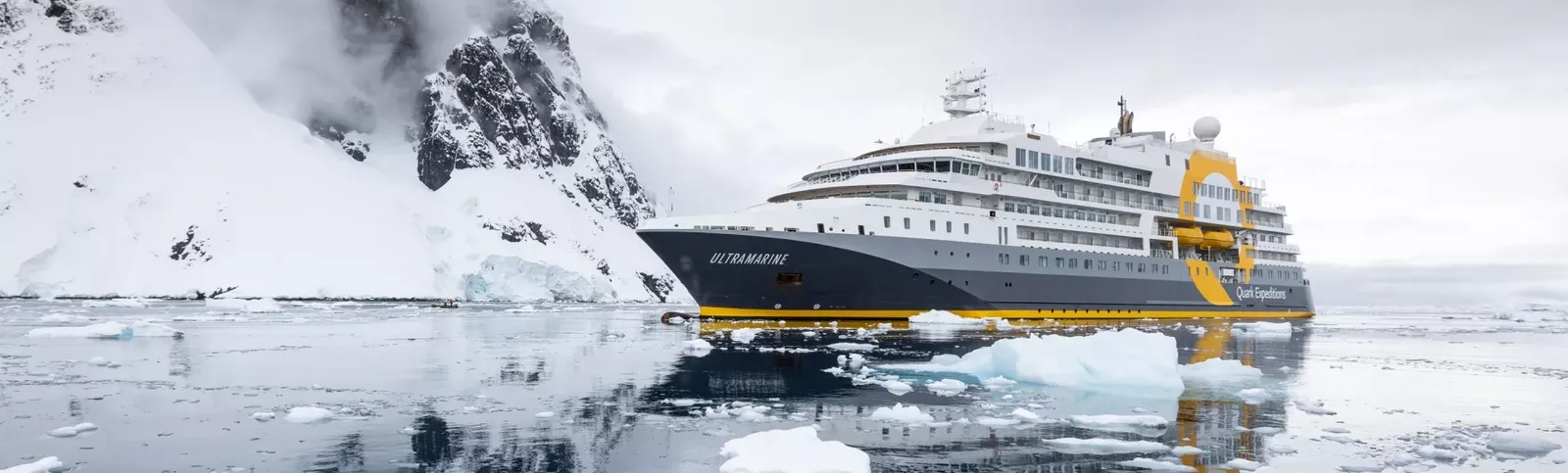
Quark Expeditions and Swan Hellenic are both sub-200-passenger expedition lines with serious polar credentials, yet they represent fundamentally different philosophies of exploration. Jake Hower compares these two distinctive operators — one a polar-only adventure specialist, the other a cultural-intellectual expedition line sailing seven continents — for Australian travellers weighing science, hardware, inclusions, and value.
| Quark Expeditions | Swan Hellenic | |
|---|---|---|
| Category | Expedition | Expedition |
| Rating | ★★★★☆ | ★★★★☆ |
| Fleet size | 4 ships | 3 ships |
| Ship size | Small (under 500) | Small (under 200) |
| Destinations | Antarctica, Arctic, Greenland, Svalbard | Polar, Mediterranean, South America, Asia |
| Dress code | Relaxed | Relaxed |
| Best for | Polar expedition adventure travellers | Cultural expedition and enrichment travellers |
Quark Expeditions is the polar purist — twin Airbus H145 helicopters on Ultramarine, a claimed 1:6 guide ratio, Snow Hill Emperor penguin access, North Pole voyages aboard a nuclear icebreaker, and complimentary drinks fleet-wide. Swan Hellenic is the cultural expedition line — SETI Institute partnership, JRE Maris culinary programme, Nikon binoculars and Illy espresso in every cabin, a fully all-inclusive fare covering shore excursions and pre-cruise hotels, and seven-continent itinerary coverage including a 2026 Asia-Pacific debut. Choose Quark when polar adventure and helicopter access are the priority. Choose Swan Hellenic when intellectual enrichment, broader destination choice, and comprehensive inclusions matter most.
The core difference
Quark Expeditions and Swan Hellenic both carry fewer than 200 passengers, both hold IAATO membership, and both deploy purpose-built expedition ships with Zodiac fleets into polar waters. On paper, they occupy the same market segment. In practice, they represent two fundamentally different answers to the question of what an expedition cruise should be.
Quark Expeditions is the polar purist. Founded in 1991 by Mike McDowell and Lars Wikander — who led the first commercial voyage to the Geographic North Pole aboard a nuclear icebreaker — Quark has operated exclusively in polar waters for over three decades. It goes nowhere else. No Mediterranean, no Asia-Pacific, no repositioning cruises through the tropics. The company was one of seven founding members of IAATO and sits on more than 30 of the organisation’s committees. Headquartered in Seattle and owned by Travelopia (itself backed by private equity firm KKR), Quark’s defining asset is Ultramarine — a 199-passenger purpose-built expedition ship carrying twin Airbus H145 helicopters that enable Snow Hill Emperor penguin colony access, included flightseeing over glacial landscapes, and heli-landings that no other sub-200-passenger polar ship can offer. The fleet also includes Ocean Explorer (138 passengers, X-BOW hull), World Voyager (168 passengers, hybrid-electric propulsion), and the nuclear icebreaker 50 Years of Victory for Geographic North Pole voyages. Since November 2024, all Quark voyages include complimentary drinks and Wi-Fi fleet-wide. The company’s entire identity is polar — and that single-minded focus has made it the most decorated polar expedition operator in the industry, winning World’s Leading Polar Expedition Operator at the World Travel Awards in both 2024 and 2025.
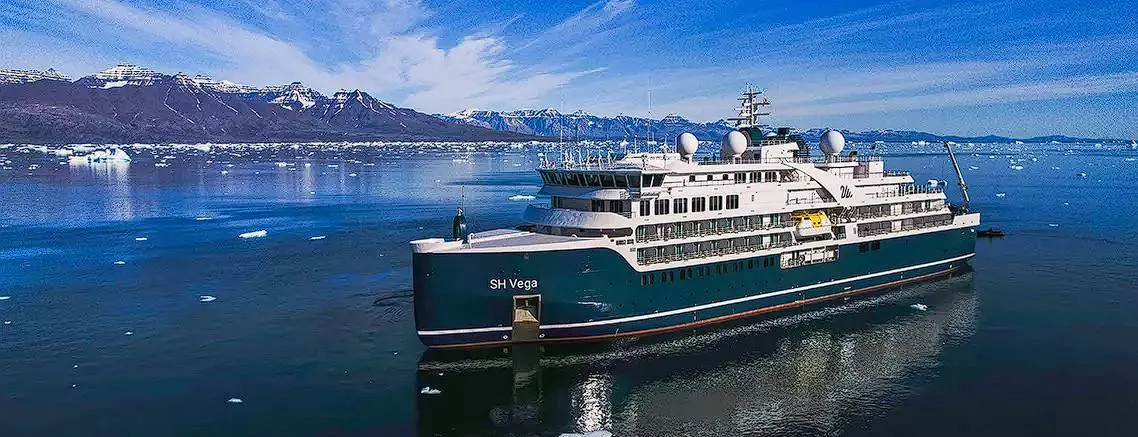
Swan Hellenic is the cultural expedition line. Its roots stretch back to 1954, when Swan’s Tours organised its first cruise — a voyage for members of the Hellenic Society to explore ancient Greek sites in the Aegean, accompanied by distinguished academics as guest lecturers. That model — combining culturally significant destinations with expert-led intellectual enrichment — has defined the brand for seven decades. After passing through multiple owners (P&O, Carnival Corporation, and G Adventures), Swan Hellenic was relaunched in 2020 by CEO Andrea Zito, formerly of Silversea Cruises. Three purpose-built ships were delivered from Helsinki Shipyard between 2021 and 2023: SH Minerva (152 passengers, PC5 ice class), SH Vega (152 passengers, PC5), and SH Diana (192 passengers, PC6). Swan Hellenic sails seven continents — Antarctica, the Arctic, the Mediterranean, West Africa, South America, the Red Sea, and Asia-Pacific (debuting in 2026). The brand’s signature is its partnership with the SETI Institute, which places scientists onboard designated voyages for lectures on astronomy, astrobiology, and the search for extraterrestrial life. Cruise Critic rates Swan Hellenic at 4.7 out of 5, and CEO Andrea Zito received the Seatrade Cruise Personality of the Year award in 2025.
For Australian travellers, the choice between these two lines is not a question of quality — both are excellent within their respective niches. The choice is a question of what you want from expedition travel. Quark delivers the deepest possible polar adventure, with hardware and expertise no one else in the sub-200-passenger segment can match. Swan Hellenic delivers a broader, more intellectually layered expedition experience that extends well beyond the poles, with the most comprehensive all-inclusive package in the expedition market. They are both expedition lines. They are not the same kind of expedition line.
Expedition team and guides
The expedition team determines the quality of every landing, every Zodiac cruise, and every evening lecture. Both Quark and Swan Hellenic invest seriously in their teams, but the composition and emphasis differ in ways that reflect each brand’s identity.
Quark’s expedition team claims a ratio of approximately 1:6 expedition staff to guests — on a reported Greenland voyage aboard Ultramarine, 37 guides sailed with approximately 199 passengers. This is among the best in the industry. The team draws from marine biologists, glaciologists, geologists, ornithologists, cetologists, polar historians, photographers, and outdoor educators, many holding PhD-level qualifications. Specialist whale researchers from the Friedlaender Lab at UC San Diego and HappyWhale join select itineraries. All staff must complete the Quark Academy — the only proprietary polar training programme in expedition cruising — and pass IAATO and AECO examinations before deployment. Expedition team members routinely dine with passengers, breaking down the hierarchy between expert and guest. Photography workshops are offered on most voyages, though Quark does not place a dedicated staff photographer on every sailing. The team’s depth in polar biology, glaciology, and cetacean research is genuinely unmatched in the sector.
Swan Hellenic’s expedition team numbers 12 to 15 members per ship, producing a ratio of approximately 1:10 to 1:12 based on typical sailing numbers of 120 to 150 guests. While this is lower than Quark’s ratio, it remains substantially better than larger expedition operators such as HX Expeditions at 1:25 to 1:30. What distinguishes Swan Hellenic’s team is its breadth. Beyond the standard naturalists and marine biologists, Swan Hellenic deploys historians, archaeologists, anthropologists, and regional cultural experts tailored to each specific itinerary. On Mediterranean voyages, the team includes classical scholars who can contextualise every ancient ruin. On Arctic sailings, they bring polar meteorologists and indigenous culture specialists. Most distinctively, nine designated voyages per season carry a SETI Institute scientist delivering lectures on astronomy, astrophysics, and astrobiology — a dimension of expedition enrichment no polar-only operator offers. Guest lecturers from leading universities, including Oxford, are a regular feature. Swan Hellenic’s lecture programme is not a supplementary amenity — it is the core product, inherited from 70 years of cultural cruising heritage.
The comparison in practice: On a shared Antarctic Peninsula itinerary, Quark will have more guides on the ground during each landing — more specialised naturalists pointing out behavioural nuances in penguin colonies, more cetologists identifying whale species from the Zodiac. Swan Hellenic will have fewer guides at each landing site but richer contextual programming onboard — the historical framework of Antarctic exploration, the science of glacial retreat, and potentially an astrophysicist connecting the polar landscape to planetary science. Quark’s team is deeper in polar biology. Swan Hellenic’s team is wider in intellectual range. Both are led by experienced expedition leaders who have spent careers in remote waters. The right choice depends on whether your appetite is primarily for natural history or for a broader intellectual canvas.
Ships and expedition hardware
Both lines operate purpose-built expedition ships that were delivered within the same narrow window — 2020 to 2023 — making them among the newest fleets in the expedition market. The hardware differences, however, are significant.
Passenger capacity and IAATO status: All ships from both lines carry fewer than 200 passengers, placing them within IAATO Category C1 — the most favourable classification for Antarctic landings, meaning all guests can go ashore without group rotation delays. Quark’s Ultramarine carries 199 passengers, Ocean Explorer carries 138, and World Voyager carries 168. Swan Hellenic’s SH Minerva and SH Vega each carry 152 passengers, while SH Diana carries 192. In practice, Swan Hellenic’s ships frequently sail below maximum capacity — often 100 to 120 guests on the smaller ships and 150 to 170 on Diana — producing an even more intimate atmosphere. The landing experience is functionally equivalent: both lines get all passengers ashore simultaneously under IAATO rules, and neither requires the frustrating group rotations that plague larger 500-passenger expedition ships.
Ice class: This is where Swan Hellenic holds a technical edge for polar operations. SH Minerva and SH Vega carry PC5 ice class — rated for year-round operation in medium first-year ice that may include old ice inclusions. This is a higher rating than most expedition cruise ships in the market. SH Diana carries PC6, the same as Quark’s Ultramarine. Quark’s Ocean Explorer also carries PC6, while World Voyager holds the lower 1B classification. The practical difference between PC5 and PC6 is marginal for standard Antarctic Peninsula voyages in summer, but PC5 provides a greater margin of safety in challenging ice conditions and technically allows access to more ice-intensive waters. It is worth noting that Quark’s 50 Years of Victory — the nuclear icebreaker used exclusively for North Pole voyages — can smash through 2.5 metres of multi-year ice, but this is a chartered vessel operating in a category of its own.
Hull design and propulsion: Quark’s fleet shows greater variety. Ultramarine features a conventional bow with diesel-electric propulsion meeting IMO Tier III emissions requirements. Ocean Explorer features the Ulstein X-BOW inverted hull — the same design used by Aurora Expeditions — which reduces bow slamming and seasickness in rough head seas. World Voyager uses hybrid-electric Rolls-Royce engines. Swan Hellenic’s three ships are all built on the same Helsinki Shipyard platform with hybrid diesel-electric propulsion and selective catalytic reduction for emissions. All three are battery-ready, designed to receive a 3 MW battery package, though this has not yet been installed. All three carry dynamic positioning technology, allowing them to hold station without dropping anchor — protecting fragile seabeds in sensitive marine environments.
Helicopters — Quark’s defining advantage: Ultramarine carries two twin-engine Airbus H145 helicopters — the fastest and most fuel-efficient in their category. Every passenger receives at least two complimentary 15-minute flightseeing excursions (where regulations allow), plus one heli-landing per voyage for groups of 12 (maximum 48 guests per landing). The helicopters unlock destinations no Zodiac can reach — most critically, the Emperor penguin colony at Snow Hill Island, accessible only by helicopter transfer across sea ice. Select Arctic itineraries offer heli-hiking and heli-skiing. This is Quark’s single most powerful differentiator — no other sub-200-passenger expedition operator offers twin helicopters as standard. Swan Hellenic does not carry helicopters on any ship. If aerial perspectives, helicopter landings on ice shelves, or Snow Hill Emperor penguins are priorities, Quark stands alone.
Zodiac fleet: Quark’s Ultramarine carries 20 Zodiacs stored in a water-level internal hangar with four embarkation points — a purpose-built system that enables ultra-rapid deployment, meaning more time at landing sites and less time in queues. Ocean Explorer carries 15, World Voyager carries 18. Swan Hellenic’s SH Minerva and SH Vega each carry 12 Zodiacs (10 MK5 plus 2 MK6 military-grade rigid inflatables), and SH Diana carries 14 MK5 Zodiacs plus two dedicated 48-seat tender boats for port transfers. Quark’s Zodiac deployment infrastructure on Ultramarine is a genuine engineering achievement and a tangible daily advantage.
Observation spaces — Swan Hellenic’s signature: Swan Hellenic’s ships feature the Swan’s Nest — a circular glass-enclosed observation platform at the very front of the bow, allowing guests to stand directly over the water. It is one of the most distinctive design features in expedition cruising, ideal for ice navigation viewing, wildlife spotting, and contemplative moments. Quark’s ships do not have a comparable bow observation space, though Ultramarine’s wraparound deck and Panorama Lounge offer excellent viewing.
Landing experience and shore programme
Both lines deliver the core expedition promise — multiple daily landings with expert guides in remote wilderness. The nuances matter for those choosing between them.
Landings per day: Both Quark and Swan Hellenic typically conduct two landings or Zodiac excursions per day when conditions permit — one morning, one afternoon. Both adjust the programme dynamically based on weather, ice, and wildlife sightings. With all ships under 200 passengers and within IAATO Category C1, every guest goes ashore simultaneously on both lines — no forced group rotations, no waiting aboard while others explore. Time ashore is typically 1.5 to 2.5 hours per landing on Quark and 2 to 3 hours on Swan Hellenic based on passenger reviews. Quark’s Ultramarine Zodiac hangar system enables faster embarkation and disembarkation, partially offsetting the time impact of carrying more passengers.
Activity options — Quark’s adventure breadth: Quark offers a wider range of adventure activities. Included in the base fare: Zodiac cruises, guided hikes, snowshoeing, polar plunge, expert lectures, and on Ultramarine, helicopter flightseeing and one heli-landing. Available at extra cost: sea kayaking (approximately USD 1,995 for the full voyage programme), stand-up paddleboarding (approximately USD 295), and Antarctic camping (approximately USD 295 for one night, limited to 50 participants, early season only). The kayaking programme is a voyage-length commitment with multiple outings; the paddling excursion is a single sit-on-top outing suitable for beginners.
Swan Hellenic’s shore programme — the cultural excursion advantage: Swan Hellenic includes one escorted shore excursion per port of call in the base fare — a meaningful inclusion that Quark does not match. In Antarctica, this translates to guided landings and Zodiac cruises (functionally similar to Quark). But on Swan Hellenic’s non-polar itineraries — the Mediterranean, Asia-Pacific, Africa — this included excursion covers guided visits to archaeological sites, cultural landmarks, and regional attractions. Kayaking is available on Swan Hellenic but not included — it must be pre-booked at additional cost. Swan Hellenic does not offer camping, stand-up paddleboarding, or helicopter activities. Hiking, snowshoeing (polar itineraries), and snorkelling (tropical itineraries) are included.
The activity trade-off: Quark offers more adventure hardware and more paid add-on options for the adrenaline-minded. Swan Hellenic offers fewer adventure activities but includes a shore excursion at every port — and on a Mediterranean or Asia-Pacific itinerary with 10 port calls, that included excursion programme represents substantial value. In polar waters specifically, Quark’s helicopter programme and camping option give it a clear adventure edge. In mixed or non-polar itineraries, Swan Hellenic’s included cultural excursion programme is the more valuable inclusion.
What is actually included
Inclusions are where Swan Hellenic and Quark diverge most sharply — and the differences compound meaningfully over the course of a voyage.
Parka and boots: Both lines provide a complimentary branded expedition parka on polar voyages — yours to keep. Both loan insulated waterproof muck boots for the duration of the voyage. Swan Hellenic additionally provides a branded waterproof backpack for protecting cameras and electronics on shore landings — a practical touch Quark does not include. Both provide a reusable water bottle.
Beverages — both inclusive, but different scope: Since November 2024, Quark includes complimentary beer, wine, spirits, and cocktails at all bars throughout the day. Swan Hellenic includes house wines, beers, selected spirits, coffee, tea, and soft drinks around the clock. Both lines charge extra for premium wines and spirits beyond the included selection. The drinks inclusions are functionally comparable for moderate consumption. Swan Hellenic’s inclusion of Illy espresso from in-cabin machines is a distinctive daily luxury — every cabin, from the entry-level Oceanview upward, has its own espresso machine.
Gratuities — Swan Hellenic’s edge: Swan Hellenic includes all onboard gratuities in the base fare. Quark does not — it recommends discretionary gratuities of USD 10 to 15 per person per day, collected at voyage end. On an 11-day voyage, that adds approximately USD 110 to 165 per person on Quark — a cost that Swan Hellenic absorbs entirely.
Shore excursions — Swan Hellenic’s defining inclusion: Swan Hellenic includes one escorted shore excursion per port of call. On a polar voyage with multiple landing sites, this may not feel dramatically different from Quark’s included landings. But on a Mediterranean or Asia-Pacific itinerary with 8 to 12 port calls, included excursions worth USD 50 to 150 each represent a significant value addition of USD 400 to 1,800 per person. Quark does not include shore excursions — its included programme covers Zodiac landings and guided hikes at wilderness sites, which are inherently part of the expedition rather than ticketed tours.
Charter flights and pre-cruise hotel: Swan Hellenic includes the charter flight between Buenos Aires and Ushuaia (both directions) and one night in a 4- or 5-star hotel with breakfast on Antarctic voyages — part of the Cruise Plus package. Quark does not include the Buenos Aires–Ushuaia flight or a pre-cruise hotel. Quark offers a post-voyage charter and hotel package from Ushuaia to Buenos Aires for approximately USD 595. This is a meaningful difference for Australian travellers who must fly halfway around the world to reach Ushuaia — Swan Hellenic absorbs two significant logistics costs that Quark passes on.
Wi-Fi: Both include complimentary Wi-Fi. Swan Hellenic’s included Silver Connect tier supports messaging apps only (WhatsApp, iMessage) at up to 1 Mbps, with paid upgrades for browsing (USD 25 per day) and streaming (USD 37 per day). Quark’s complimentary Wi-Fi supports messaging, email, social media, and light browsing — a broader base inclusion. Both are satellite-based and subject to polar degradation.
Helicopter flights — Quark only: On Ultramarine, complimentary helicopter flightseeing (minimum two 15-minute flights per guest) and one heli-landing per voyage are included in the base fare. This is a substantial value inclusion worth hundreds of dollars — comparable helicopter experiences with other operators carry significant surcharges. Swan Hellenic does not carry helicopters.
Room service — Swan Hellenic’s polish: Swan Hellenic includes 24-hour room service — the full restaurant menu during dining hours, a limited menu otherwise — at no additional charge. Quark does not specifically market or confirm room service availability, reflecting its expedition-first positioning over in-suite luxury.
The net picture: Swan Hellenic’s all-inclusive fare is the more comprehensive package: gratuities, shore excursions, charter flights, pre-cruise hotel, room service, and in-cabin espresso all included. Quark’s fare includes the singular value of helicopter flights (on Ultramarine) and a broader base Wi-Fi tier. For a like-for-like Antarctic voyage, Swan Hellenic includes more ancillary costs in the headline price. Quark includes more adventure hardware in the headline experience. The right answer depends on whether you define value as what is covered in the fare or what is possible on the ship.
Destination coverage and itinerary depth
This is the most dramatic difference between these two lines — and it may be the deciding factor for many Australian travellers.
Quark’s destination coverage is exclusively polar. The Arctic and Antarctic, full stop. No exceptions, no diversions, no repositioning cruises through tropical waters. In Antarctica: Peninsula voyages from Ushuaia, South Georgia and Falkland Islands combinations, Antarctic Circle crossings, Snow Hill Emperor penguin colony voyages (helicopter-accessed from Ultramarine), Essential Patagonia, Antarctic Express Fly-the-Drake from Punta Arenas, and the dedicated science-focused Antarctic Marine Mammals itinerary co-developed with the Friedlaender Lab. In the Arctic: Svalbard circumnavigation, East/West/South Greenland, Northwest Passage through the Canadian High Arctic, Iceland transits, and multi-destination Arctic voyages. The crown jewel: 14-day Geographic North Pole voyages aboard the nuclear icebreaker 50 Years of Victory — one of only two operators in the world offering this journey. Quark’s 2025-2026 Antarctic season features 41 departure dates across five destination regions. This single-minded polar focus is both Quark’s greatest strength and its limitation — unmatched expertise, but no off-season or non-polar options.
Swan Hellenic sails seven continents. Antarctica: Peninsula voyages from Ushuaia (9 to 11 nights), In Shackleton’s Footsteps voyages including South Georgia and the Falklands (18 to 19 nights), and Weddell Sea itineraries. Arctic: Svalbard circumnavigation, Iceland, Greenland, Norwegian coast and Lofoten Islands, and select Northwest Passage departures. Mediterranean: cultural expedition cruises following the brand’s 1950s heritage — Sicily, Croatia, Montenegro, Spain, Greece, and Turkey, with SH Diana small enough to dock directly in Venice city centre. Africa: West Africa (Ghana, Gabon, Angola) and South Africa — Swan Hellenic is the first cruise line to call at Hermanus. South America and Atlantic: Amazon River exploration, Atlantic crossings, Patagonia. Asia-Pacific (new for 2026): seven itineraries aboard SH Minerva covering the Solomon Islands, Papua New Guinea, Indonesia, Raja Ampat, the Philippines, and Japan — combinable into a 55-day grand voyage with no port repeated. The 2025-2026 programme features 34 maiden-call destinations that no other cruise line visits. Swan Hellenic also emphasises its heritage principle of never repeating an itinerary — each voyage offers a distinct route and set of ports.
For Australian travellers: Swan Hellenic’s 2026 Asia-Pacific debut is particularly significant. SH Minerva will sail Papua New Guinea (accessible from Brisbane or Sydney), the Solomon Islands, Indonesia, the Philippines, and Japan — bringing an expedition-capable vessel into Australia’s geographic neighbourhood for the first time under the Swan Hellenic flag. Quark has no presence in the Asia-Pacific and no plans to deploy ships to the region. Neither line currently departs from Australian ports for any itinerary.
The Fly-the-Drake question: Only Quark offers a dedicated Fly-the-Drake programme — the 8-day Antarctic Express uses charter flights between Punta Arenas and King George Island, eliminating the two-day Drake Passage crossing in each direction. This operates on Ocean Explorer and World Voyager (not Ultramarine, so no helicopter programme). Swan Hellenic does not offer a fly-cruise option — all Antarctic voyages cross the Drake by ship. For time-pressed Australian travellers who want to maximise Peninsula time and minimise sea days, Quark’s Fly-the-Drake is the only choice between these two lines.
Cabins and accommodation
Both lines offer comfortable, well-designed expedition cabins — but Swan Hellenic’s cabins carry amenities that lean toward luxury, while Quark’s emphasis is on space and functionality.
Swan Hellenic’s cabin programme across SH Minerva and SH Vega spans six categories: Oceanview (205 square feet, large fixed windows) through Premium Suite (527 square feet with 130-square-foot balcony and separate living area). SH Diana adds a Junior Suite category (376 square feet) and slightly larger Oceanview cabins at 215 square feet. Eighty per cent of cabins across the fleet feature private balconies. What distinguishes Swan Hellenic at every level is the in-cabin amenity set: every cabin, including the entry-level Oceanview, includes an Illy espresso machine, a faux holographic fireplace, a pillow menu, premium toiletries, a safe, minibar, individual climate control, and a flatscreen TV with media library. Select cabin categories include Nikon binoculars — a genuinely useful inclusion for an expedition voyage where wildlife spotting is a daily activity. The Scandinavian-inspired interiors, designed by Tillberg Design of Sweden, are consistently praised in reviews as elegant and thoughtfully appointed.
Quark’s cabin programme on Ultramarine spans nine categories: Solo Panorama (132 square feet, floor-to-ceiling windows) and Explorer Suite (285 square feet — among the largest entry-level cabins in polar expedition cruising) through the Ultra Suite (563 square feet with two walk-in closets and three distinct living zones). The Balcony Suite, at 226 square feet of interior plus a 52-square-foot balcony, is the most popular category. Ocean Explorer offers 72 cabins across eight categories with a Scandinavian design aesthetic and the distinctive X-BOW library at the bow. World Voyager provides 84 all-balcony cabins across five categories. Quark’s cabins are well-appointed and functional, but do not include espresso machines, fireplaces, or binoculars at any level — reflecting the adventure-forward positioning where what matters happens outside the cabin.
The space comparison: At entry level, Quark’s Explorer Suite at 285 square feet is substantially larger than Swan Hellenic’s Oceanview at 205 to 215 square feet. At the suite level, Quark’s Ultra Suite at 563 square feet exceeds Swan Hellenic’s Premium Suite at 505 to 527 square feet. Quark wins on raw square footage. Swan Hellenic wins on per-square-foot amenity density and finishing touches.
Solo cabins: Quark offers 6 Solo Panorama Suites on Ultramarine (132 square feet) and 7 solo cabins on Ocean Explorer (including one Studio Veranda Single with a balcony). Swan Hellenic does not have dedicated solo cabins on any ship — solo travellers book a double-occupancy cabin and pay a variable supplement ranging from 0 to 75 per cent, though Swan Hellenic frequently runs promotional sailings with no solo supplement at all. Quark also operates a cabin-share programme that waives the supplement if no match is found. For solo travellers, Quark’s dedicated solo cabins are a structural advantage; Swan Hellenic’s periodic zero-supplement promotions are an opportunistic one.
ADA accessibility: Swan Hellenic offers ADA-accessible cabins on all ships — Oceanview on Minerva and Vega, both Oceanview and Balcony on Diana — with two passenger lifts serving every deck except the stargazing top deck. Quark’s ships are generally not wheelchair accessible for expedition activities, and key areas on Ocean Explorer are reachable only via stairs. Swan Hellenic has a more thoughtful accessibility approach, though both lines share the inherent limitation that Zodiac boarding requires reasonable agility.
Pricing and value
Both lines sit in the upper-mid range of expedition cruising — more accessible than ultra-luxury operators like Silversea and Seabourn, but not budget by any measure. The pricing structures, however, produce different effective costs once inclusions are accounted for.
Quark’s directional pricing for an 11-day Antarctic Peninsula voyage on Ultramarine ranges from approximately USD 10,000 to 13,000 per person for an Explorer Triple or Explorer Suite (with early booking discounts of up to 30 per cent) to approximately USD 30,000 to 40,000 for the Ultra Suite. Ocean Explorer entry-level fares start from approximately USD 10,000 to 12,000. The 8-day Antarctic Express Fly-the-Drake starts from approximately USD 14,370. At current exchange rates, that translates to approximately AUD 16,000 to 20,000 per person for an entry-level Ultramarine sailing before promotional discounts.
Swan Hellenic’s directional pricing for a 9-night Antarctic Peninsula voyage starts from approximately USD 11,029 per person in an Oceanview cabin. Longer 18- to 19-night voyages including South Georgia and the Falklands range from approximately USD 22,000 to 25,000 per person. Mediterranean cultural expeditions typically start from approximately USD 5,000 to 7,000 per person. Asia-Pacific 2026 Cruise Plus voyages are expected in the USD 8,000 to 15,000 range. At current exchange rates, entry-level Antarctic Peninsula voyages start from approximately AUD 17,000 to 18,000 per person. Frequent promotional discounts of 20 to 30 per cent off brochure rates are available through Australian agents.
The true cost comparison for an Antarctic Peninsula voyage: Quark’s entry cabin is slightly cheaper at headline rate — approximately AUD 16,000 versus AUD 17,000 to 18,000 for Swan Hellenic. But Swan Hellenic’s fare includes charter flights between Buenos Aires and Ushuaia (saving approximately USD 300 to 500), a pre-cruise hotel night (saving approximately USD 150 to 250), gratuities (saving approximately USD 110 to 165 on an 11-day voyage), and a shore excursion at every port. Once these inclusions are factored in, the effective per-day cost is remarkably close — and Swan Hellenic’s total package arguably represents better value for the dollar when every ancillary is accounted for. Quark counters with included helicopter flights on Ultramarine, which carry significant experiential value that no dollar amount can precisely measure.
Per diem comparison: Quark’s entry-level Antarctic per diem runs approximately AUD 1,000 to 1,400 per day on an 11-day voyage. Swan Hellenic’s entry-level Antarctic per diem runs approximately AUD 1,900 to 2,000 per day on a 9-night voyage — higher per night, but including substantially more in the fare. If you normalised for inclusions, the per diem gap would narrow considerably.
Booking timing: Both lines offer the best selection 6 to 12 months before departure and the best discounts during wave season. Quark’s early-booking bonuses reach up to 30 per cent off select sailings. Swan Hellenic regularly offers 20 to 30 per cent promotional discounts plus onboard credit offers. Shoulder season departures — November and March for Antarctica — are cheaper on both lines.
Onboard enrichment and science
Both lines invest genuinely in onboard enrichment, but their scientific partnerships point in entirely different directions — one toward the ocean floor, the other toward the stars.
Quark’s enrichment programme is built around cetacean research and polar natural history. The exclusive Friedlaender Lab partnership with UC San Diego places whale researchers onboard select voyages, where portable hydrophones allow guests to listen to underwater whale sounds — an experience that reviewers consistently describe as transformative. HappyWhale research associates guide guests in fluke photography for global whale tracking databases. Seabird surveys run during Drake Passage crossings in collaboration with the Polar Collective, and Seabird Watch uses time-lapse cameras to monitor Arctic colonies. The dedicated Antarctic Marine Mammals itinerary, co-developed with the Friedlaender Lab, represents the most science-focused commercial polar voyage available. The Ambassador Theatre on Ultramarine features a high-resolution LED screen for lectures, documentaries, and daily recap presentations. Evening lectures from the expedition team — covering wildlife, glaciology, polar history, and upcoming landing sites — are the primary entertainment.
Swan Hellenic’s enrichment programme is broader in scope and more deeply woven into the daily experience. The SETI Institute partnership — announced in December 2022 and expanded through 2026 — places institute scientists on nine designated voyages per season. These scientists deliver approximately five lectures per voyage on astronomy, astrophysics, astrobiology, planetary science, and the search for extraterrestrial life. Guests participate in guided stargazing sessions using an advanced telescope installed on Deck 9 and contribute to citizen science projects. Beyond SETI, every Swan Hellenic sailing features a curated guest lecturer programme: university professors, authors, archaeologists, and subject-matter experts tailored to the specific itinerary. On Mediterranean voyages, classical scholars contextualise every ancient site. On polar voyages, polar historians and meteorologists add depth to the wildlife encounters. The Observation Lounge — panoramic, with a white baby grand piano — serves as the intellectual hub: lectures by day, cocktails and piano by evening. The enrichment programme is not supplementary to the expedition — it is the expedition.
The comparison: Quark’s Friedlaender Lab partnership offers one of the most intimate wildlife science experiences available to commercial passengers — listening to whales communicate through a hydrophone is genuinely extraordinary and available nowhere else. Swan Hellenic’s SETI partnership offers something equally unique but in a completely different dimension — connecting earthbound expedition travel to the science of the cosmos. Quark’s enrichment is polar-specific and naturalist-focused. Swan Hellenic’s enrichment is destination-agnostic and intellectually ecumenical — it works as compellingly on a Mediterranean cultural voyage as it does in Antarctic waters. For the natural historian, Quark’s programme is deeper. For the polymath, Swan Hellenic’s is broader.
Dining on expedition
Dining approaches reflect the broader positioning of each line — Quark’s expedition-forward practicality versus Swan Hellenic’s cultural-culinary ambition.
Swan Hellenic’s dining programme operates across three venues on all ships. The Swan Dining Room (Deck 5) serves breakfast and lunch as buffet and a la carte, transitioning to white-tablecloth seated dinner service with menus created by Chef Andrea Ribaldone (Italian) and Chef Sang Keun Oh (Korean). Open seating throughout — no fixed table assignments. The Club Lounge (Deck 6) functions as an all-day social space: early riser breakfasts, light lunches, Piemonte-style pizza, afternoon tea, and casual evening dining with a living-room atmosphere anchored by a feature fireplace. The Pool Grill and Bar offers al fresco grilled classics. On designated voyages, the JRE-Jeunes Restaurateurs Maris programme places a JRE chef onboard to create a nightly signature dish, host cooking demonstrations, and lead gastronomic excursions ashore — culminating in an extraordinary Gala Dinner. Room service is included 24 hours — the full restaurant menu during dining hours, a limited menu otherwise. Multiple Cruise Critic reviewers describe Swan Hellenic’s food as “the best on any cruise line,” though occasional complaints note limited vegetarian variety and food not always served warm.
Quark’s dining programme on Ultramarine features two venues: Balena Restaurant (main dining, open seating, floor-to-ceiling windows at the bow, international cuisine) and Bistro 487 (lighter fare, healthy options, afternoon tea, late-night snacks). Ocean Explorer adds a private dining room seating 36. The signature culinary experience is Tundra to Table — an Inuit culinary programme developed with Greenlandic collective Igapall, featuring a four-course modern fusion dinner hosted by Inuit or Icelandic chefs. Available on select Arctic voyages at additional cost, this is the only exclusively Inuit culinary experience in expedition cruising. All alcoholic beverages are complimentary throughout the day. Food quality is consistently praised as a highlight, with reviewers noting impressive variety and freshness given the extreme remoteness of operating environments.
The comparison: Swan Hellenic has the more polished dining programme — three venues versus two, a dedicated chef partnership with JRE-Jeunes Restaurateurs, included 24-hour room service, and the Club Lounge as an all-day casual dining alternative. Quark’s dining is expedition-comfortable and well-regarded, but operates with fewer options and without the culinary partnership programming that distinguishes Swan Hellenic. Quark’s Tundra to Table is a unique cultural dining experience, but it is limited to select Arctic voyages at additional cost — not a fleet-wide feature. On a head-to-head Antarctic Peninsula voyage, Swan Hellenic’s three dining options and included room service provide a noticeably more varied daily experience. The Illy espresso machine in every Swan Hellenic cabin is the kind of detail that shapes your morning ritual — on Quark, your first coffee comes from the Bistro or Balena, not from a personal machine.
Standout itineraries for Australian travellers
Quark Expeditions
Classic Antarctic Explorer on Ultramarine (11 days, Ushuaia round trip) — Quark’s signature voyage with the full helicopter programme. Twin H145 flightseeing over glaciers and penguin colonies (minimum two flights included), heli-landing on an otherwise unreachable site, plus standard Zodiac landings. Included drinks throughout. From approximately AUD 16,000 per person. Fly Sydney or Melbourne to Buenos Aires or Santiago, then to Ushuaia.
Emperor Penguin Quest: Snow Hill Island (14 days, Ultramarine) — The rarest wildlife encounter in expedition cruising. Helicopter transfer across Weddell Sea ice to the Emperor penguin colony — a destination no Zodiac can reach. Limited departures in October and November, sells out early. For the wildlife-obsessed Australian traveller, this is the holy grail.
Ultimate Arctic Adventure: North Pole (14 days, aboard 50 Years of Victory, June/July) — One of only two operators offering the Geographic North Pole. A 75,000-horsepower nuclear icebreaker smashing through 2.5 metres of Arctic ice. Bucket-list in the truest sense. Complex routing from Australia via Helsinki or Oslo.
Antarctic Express: Fly the Drake (8 days, Punta Arenas) — Time-efficient Antarctica on Ocean Explorer or World Voyager. Charter flights eliminate the Drake Passage, maximising Peninsula time in just 8 days. No helicopter programme. Ideal for time-pressed Australians. From approximately USD 14,370.
Swan Hellenic
In Shackleton’s Footsteps (18 to 19 nights, Buenos Aires to Ushuaia) — The comprehensive Antarctic voyage including the Falkland Islands, South Georgia’s cathedral king penguin colonies, and the Antarctic Peninsula. Charter flights, pre-cruise hotel, and a shore excursion at every port included. From approximately AUD 22,380 per person on SH Diana. SETI voyages may coincide with select departures.
Asia-Pacific Hidden Heritage (Spring 2026, SH Minerva) — Swan Hellenic’s debut in Australia’s region. Five sequential itineraries: Solomon Islands and Papua New Guinea (13 nights from Honiara), Papua New Guinea and Indonesia (10 nights), Raja Ampat and Philippines (11 nights), Philippines to Japan (11 nights), and Hiroshima to Otaru (10 nights). All five combinable into a 55-day grand voyage with no port repeated. Honiara is accessible from Brisbane or Sydney. The first three voyages are Cruise Plus packages with charter flights and hotels included.
Svalbard Circumnavigation (SH Vega, summer season) — Arctic expedition with PC5 ice class and the full cultural enrichment programme. Polar bears, walrus, glaciers, and SETI stargazing sessions under the midnight sun. Swan Hellenic’s higher ice class on Vega provides a margin of confidence in Arctic ice conditions.
Mediterranean Cultural Expedition (SH Diana, spring/autumn) — The brand’s heritage heartland. Sicily, Croatia, Montenegro, Venice, or the Spanish coast with archaeological and historical enrichment from guest lecturers. SH Diana can dock directly in Venice city centre. From approximately USD 5,000 to 7,000 per person. A completely different experience from polar — and one Quark cannot offer at any price.
For Australian travellers specifically
Getting to the ship: For Antarctic voyages with either line, Australian travellers fly to Buenos Aires (approximately 14 to 15 hours from Sydney on Qantas, LATAM, or Aerolineas Argentinas), then connect to Ushuaia. Swan Hellenic includes the Buenos Aires–Ushuaia charter flight and a pre-cruise hotel night in the fare — a meaningful logistics advantage. Quark passengers must arrange their own Ushuaia connection or purchase the post-voyage charter package for approximately USD 595. For Quark’s Fly-the-Drake, routing goes through Santiago to Punta Arenas. For Arctic voyages with either line, routing goes through European hubs to Longyearbyen or Reykjavik — 22 to 24 hours from Australia. For Swan Hellenic’s 2026 Asia-Pacific debut, Honiara (Solomon Islands) is accessible from Brisbane or Sydney, and Manila and Hiroshima are well served by direct or one-stop flights from Australian cities — dramatically simpler routing than any polar voyage.
Australian office presence: Swan Hellenic maintains a dedicated Sydney office at Suite 14b, Level 1, 123 Clarence Street, Sydney NSW 2000, serving both Australia and New Zealand. The company is actively expanding its local hiring and trade relationships. Quark has no Australian office — operations run from Seattle and Toronto, with Australian bookings handled through the global team or local specialists such as Expedition Cruise Specialists and Chimu Adventures. For Australian travellers who value local support, Australian booking hours, and a company actively investing in the Australian market, Swan Hellenic has the structural advantage.
Currency and pricing: Both lines price in USD on their websites. Australian travel agents — including Cruise Traveller, Expedition Cruise Specialists, and Antarctica Travel Centre — display AUD pricing for Swan Hellenic. Quark’s Australian agents similarly provide AUD conversions. For both lines, booking through an Australian specialist rather than the global website will simplify pricing, provide local support, and potentially secure competitive rates through agent allocations.
Travel insurance: Standard travel insurance policies often exclude Antarctic and expedition cruise activities. Specialist expedition insurance with minimum AUD 500,000 medical coverage and AUD 250,000 evacuation coverage is strongly recommended. Both lines require mandatory travel insurance. Adequate medical facilities can be 72 hours or more away from any Antarctic position.
Loyalty programmes: Quark’s Shackleton Club offers four tiers (Member, Bronze, Silver, Gold) with USD 750 off any expedition, USD 1,500 off if rebooked within 14 days of disembarkation, USD 150 shipboard credit, and automatic cabin upgrades 60 days before departure. The 14-day rebooking bonus is a clever incentive to commit while the expedition glow is still fresh. Swan Hellenic does not operate a formal loyalty programme as of February 2026 — a notable absence given competitors offer structured repeat-guest benefits. Repeat Swan Hellenic guests may receive preferential offers informally, and Virtuoso travellers can access up to USD 150 onboard credit per person through affiliated advisors. For the repeat expedition cruiser building a long-term relationship with one operator, Quark’s structured loyalty programme is a tangible advantage.
Pre and post extensions: For Antarctic voyages departing from Buenos Aires or Ushuaia, both lines offer natural connections to Patagonia — Torres del Paine, Perito Moreno Glacier, and the wine regions of Mendoza. Buenos Aires itself warrants two to three days of cultural immersion. For Swan Hellenic’s Asia-Pacific voyages, Papua New Guinea’s highlands, Bali, and Japan’s cultural circuit all connect naturally. These extensions transform an expedition cruise from a voyage into a comprehensive international adventure.
The onboard atmosphere
Both lines create the atmosphere that serious expedition travellers seek — intellectually stimulating, socially inclusive, and structured around shared discovery rather than onboard entertainment. But the texture of that atmosphere differs in character.
Swan Hellenic’s atmosphere is described by passengers as “refreshingly adult” and more akin to a “floating university” than a floating hotel. The Observation Lounge is the social and intellectual hub — lectures by day, cocktails and live piano by evening. The white baby grand piano sets a tone of understated elegance. Conversations naturally gravitate toward the day’s discoveries and the upcoming lecture programme. The demographic skews 55 and over — well-travelled, well-educated, intellectually curious. Passengers tend to be readers and museum-goers who prioritise learning over entertainment. Solo travellers report finding it easy to connect with like-minded passengers, drawn together by shared intellectual curiosity. The Club Lounge on Deck 6, with its feature fireplace, provides a more intimate alternative for quieter conversation. There is no casino, no theatre, no poolside games, and no formal dress code — smart casual in the evenings, expedition gear by day. The ship quiets early, as guests rise for morning landings. The overall feeling is civilised, intellectual, and unhurried.
Quark’s atmosphere is international and expedition-focused, with a slightly broader demographic. The age range spans 25 to 80 and beyond, with the strongest segments at 35 to 44 and 55 to 64 — a younger skew than Swan Hellenic. The Panorama Lounge on Ultramarine — glass-enclosed with unobstructed views and a dance floor — is the social hub, particularly after landings when passengers gather with complimentary drinks to share the day’s encounters. The Ambassador Theatre hosts daily recaps and lectures on a high-resolution LED screen. Expedition team members routinely dine with passengers, creating organic connections between experts and guests. Board games, polar-themed library books, and spontaneous wildlife-spotting announcements structure the evenings. The dress code is entirely informal — sweatpants, hoodies, and Gore-Tex pants at dinner are the norm. The energy is adventure-forward rather than intellectually rarefied — more “campfire stories after an epic day” than “post-lecture sherry.”
The difference in feel: Swan Hellenic feels like a scholarly expedition — the enrichment programme frames every destination within a broader intellectual context, and the onboard culture rewards curiosity and reflection. Quark feels like an adventure expedition — the hardware, the helicopters, and the sheer intensity of polar immersion create an atmosphere of shared exhilaration. Neither has production entertainment or formal nights. Both build genuine community through the daily rhythm of briefings, landings, lectures, and shared meals. The choice is between intellectual depth and adventurous intensity — and both are legitimate, rewarding approaches to expedition travel.
The bottom line
Quark Expeditions and Swan Hellenic are both excellent expedition lines that carry fewer than 200 passengers into remote and extraordinary places. They share more DNA than they might initially appear to — IAATO membership, purpose-built ships, dedicated expedition teams, and a genuine commitment to meaningful travel. But they are designed for different types of expedition travellers, and understanding which type you are is the key to making the right choice.
Choose Quark Expeditions when polar adventure is the singular priority. When helicopter access matters — Ultramarine’s twin Airbus H145s unlock Snow Hill Emperor penguins, included flightseeing over glacial landscapes, and heli-landings that no other sub-200-passenger ship can offer. When the Geographic North Pole aboard a nuclear icebreaker is on the bucket list. When complimentary drinks throughout the day, the industry’s best claimed guide ratio at 1:6, the fastest Zodiac deployment system in polar cruising, and over three decades of exclusively polar expertise define the experience you seek. When the largest entry-level cabin in polar cruising at 285 square feet matters. When a structured loyalty programme that rewards repeat voyages with meaningful discounts and upgrades is part of the long-term calculation. Accept that Quark operates only in polar waters, has no Australian office, does not include charter flights or pre-cruise hotels, and positions its onboard experience at expedition-comfortable rather than luxury-adjacent.
Choose Swan Hellenic when the expedition is intellectual as well as physical. When the SETI Institute partnership, university-calibre guest lecturers, and a 70-year heritage of cultural cruising define what exploration means to you. When seven-continent itinerary coverage — including a 2026 Asia-Pacific debut in Australia’s region — matters more than polar exclusivity. When the most comprehensive all-inclusive package in the expedition market is important: shore excursions, charter flights, pre-cruise hotels, gratuities, 24-hour room service, and Illy espresso in every cabin all covered in the fare. When the JRE Maris culinary programme, three dining venues, and in-cabin fireplaces signal the level of onboard refinement you expect. When a Sydney office providing local support and Australian booking hours adds confidence. When Cruise Critic’s 4.7 out of 5 rating and the newest purpose-built fleet in the market — three ships from Helsinki Shipyard delivered between 2021 and 2023 — validate the investment. Accept that Swan Hellenic does not carry helicopters, does not offer Fly-the-Drake, does not operate a formal loyalty programme, and carries a shorter operational track record as a relaunched brand.
For the Australian traveller who wants the deepest possible polar adventure with the most capable hardware afloat, Quark is the clear choice — and Ultramarine with its twin helicopters is the specific ship to book. For the Australian traveller who wants expedition travel that extends beyond the poles, wraps every destination in intellectual context, and includes virtually everything in the fare, Swan Hellenic is the more compelling package. Both lines deliver experiences that will rank among the most memorable journeys of a lifetime. The question is not which is better. The question is which kind of explorer you are.