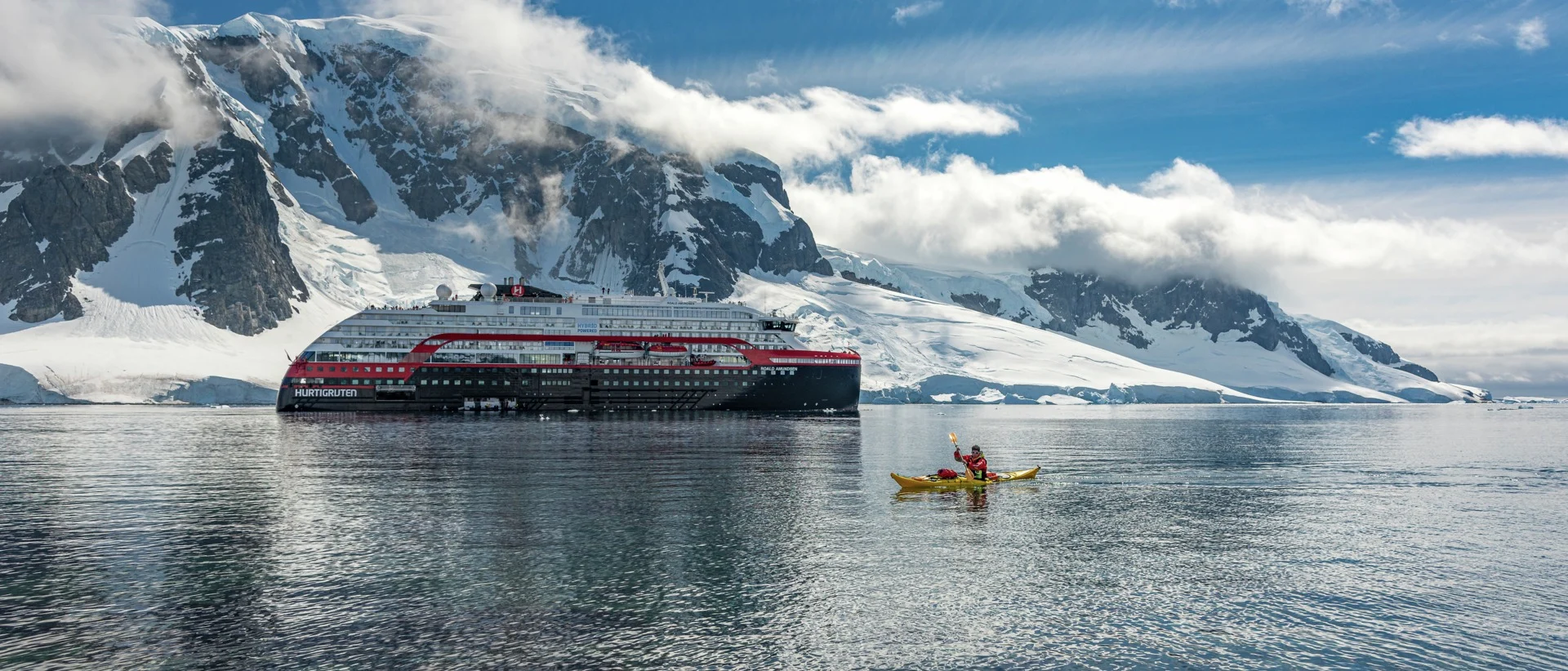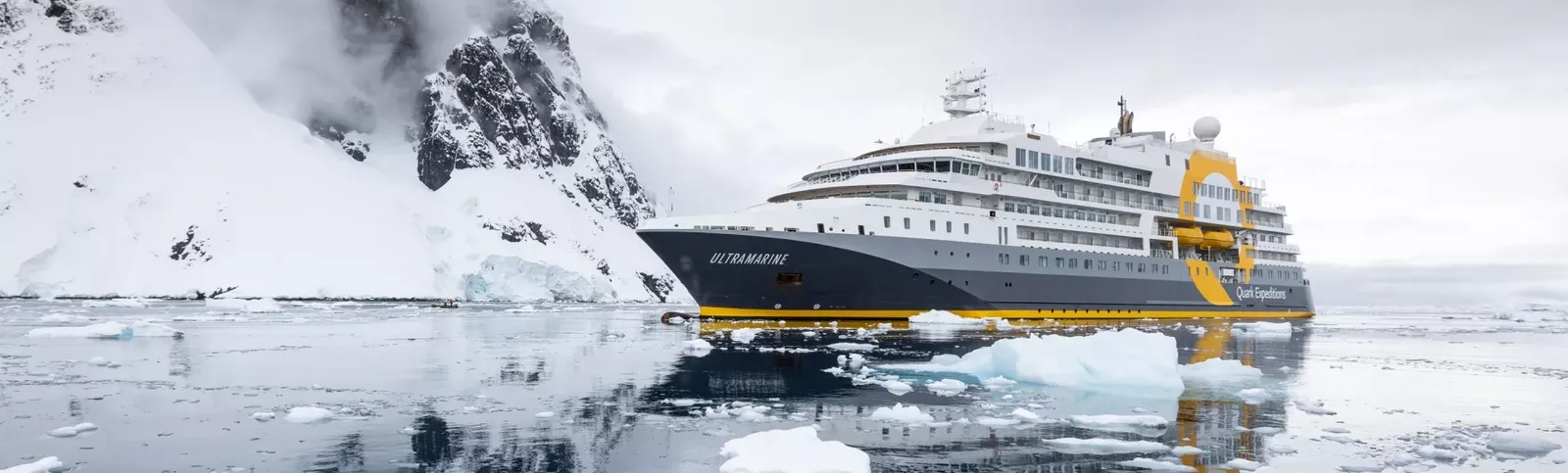
Quark Expeditions and Seabourn represent opposite ends of the expedition cruising spectrum — pure polar adventure versus ultra-luxury exploration. Both operate purpose-built PC6 ice-class ships in Antarctica and the Arctic, but their philosophies diverge fundamentally on what matters most aboard an expedition vessel. Jake Hower compares their ships, guide ratios, inclusions, hardware, and value for Australian travellers.
| Quark Expeditions | Seabourn | |
|---|---|---|
| Category | Expedition | Expedition / Ultra-Luxury |
| Rating | ★★★★☆ | ★★★★★ |
| Fleet size | 4 ships | 5 ships |
| Ship size | Small (under 500) | Small (under 1,000) |
| Destinations | Antarctica, Arctic, Greenland, Svalbard | Mediterranean, Caribbean, Antarctica, Northern Europe |
| Dress code | Relaxed | Casual elegance |
| Best for | Polar expedition adventure travellers | Ultra-luxury intimate ship enthusiasts |
Quark Expeditions is the polar purist — sub-200-passenger ships with twin Airbus H145 helicopters on Ultramarine, a 1:6 guide ratio, IAATO Category C1 landing advantage, included flightseeing, complimentary drinks fleet-wide, and the only commercial North Pole voyages aboard a nuclear icebreaker. Seabourn counters with the most luxurious expedition ships afloat — 264-passenger vessels designed by Adam Tihany, all-suite all-veranda accommodation, premium spirits and gratuities included, Swarovski binoculars loaned, Helly Hansen parka gifted, and an Australian office with Kimberley seasons from Broome. Choose Quark when expedition intensity, helicopter access, the best guide ratio in polar cruising, and the North Pole matter most. Choose Seabourn when five-star luxury, all-inclusive premium dining, the Kimberley from Australian ports, and refined onboard comfort are the priority.
The core difference
Quark Expeditions and Seabourn occupy opposite poles of the expedition cruising spectrum — and that is not a geographic pun. One company exists purely to put you in the ice. The other exists to surround you in luxury while the ice happens outside.
Quark Expeditions is the polar purist. Founded in 1991 by Mike McDowell and Lars Wikander — who led the first commercial voyage to the Geographic North Pole aboard a nuclear icebreaker — Quark has operated exclusively in polar waters for over three decades. One of the seven founding members of IAATO, headquartered in Seattle and owned by Travelopia (a KKR-backed company), Quark builds everything around the expedition: the best guide ratio in the industry, twin helicopters on its flagship, included flightseeing, complimentary drinks, ships capped under 200 passengers for IAATO C1 landing advantage, and the only commercial North Pole voyages on Earth. The ship is the platform. The ice is the product. Luxury is incidental — comfortable, well-fed, but incidental.
Seabourn is the luxury institution. Founded in 1986 by Norwegian industrialist Atle Brynestad, owned by Carnival Corporation, and positioned as the most prestigious brand in the world’s largest cruise group, Seabourn launched its expedition division in 2022 with purpose-built ships designed by Adam Tihany. Everything about Seabourn Venture and Pursuit communicates ultra-luxury first: all-suite all-veranda accommodation, marble bathrooms with heated floors, premium spirits included around the clock, complimentary caviar, gratuities covered, Swarovski binoculars loaned, and Helly Hansen parkas gifted. The expedition programme is genuine — PC6 ice class, 24 Zodiacs, a 23-person expert team — but the primary sell is the five-star onboard experience with expedition as the setting rather than the sole purpose.
For the Australian traveller weighing these two lines, the question is straightforward: are you choosing your expedition and accepting the ship, or choosing your ship and accepting the expedition? Quark delivers more time ashore, more guides per guest, helicopter access, and a deeper polar focus. Seabourn delivers more comfort, more refined dining, more inclusive luxury, and the Kimberley from Australian ports. Both reach Antarctica. Both employ serious expedition professionals. The experience of standing on Antarctic ice is identical. Everything else — from the wine in your glass to the number of people in your landing group — is different.
Expedition team and guides
The expedition team defines the quality of every polar voyage. A brilliant guide transforms a penguin colony into a three-hour education in behavioural ecology. A mediocre one counts heads and checks the time. Both Quark and Seabourn employ serious professionals — but the ratios and structures differ substantially.
Quark’s expedition team claims the best guide-to-guest ratio in polar cruising at approximately 1:6. On a reported Greenland voyage aboard Ultramarine, 37 expedition guides sailed with 199 passengers — nearly one specialist for every five or six guests. The team draws from marine biologists, glaciologists, geologists, ornithologists, cetologists, polar historians, photographers, and outdoor educators, many holding PhD-level qualifications. The Quark Academy — the only proprietary polar training programme in expedition cruising — ensures all staff pass both IAATO and AECO examinations before deployment. Specialist whale researchers from the Friedlaender Lab at UC San Diego and HappyWhale sail on select itineraries. Expedition team members routinely dine with passengers, breaking down the usual wall between expert and guest. Photography workshops run on most voyages, though Quark does not place a dedicated staff photographer on every sailing.
Seabourn’s expedition team comprises 23 experts per ship — ornithologists, marine biologists, historians, oceanographers, geologists, photographers, and kayak guides. With 264 passengers, this yields a guide-to-guest ratio of approximately 1:11. The team is well-credentialled — leaders like Luciano Bernacchi bring 15-plus years of polar experience, and Brent Houston has completed over 400 expeditions specialising in penguin ecology. Team members lead Zodiac landings, deliver enrichment lectures, and host fireside chats and daily expedition briefings. The atmosphere is warm and engaged — expedition staff mingle with guests rather than remaining siloed in briefing rooms.
The practical difference is real. On a shore landing with Quark, you might find yourself in a group of six or seven with a dedicated guide who can identify individual penguins by behaviour. With Seabourn, your group is more likely eleven or twelve. When Quark runs simultaneous activities — helicopter operations, Zodiac cruises, and shore hikes concurrently — the deeper bench of 37 guides means more programming can happen at once. Seabourn’s smaller team necessarily means fewer concurrent activities. Neither team is amateur, but Quark’s ratio advantage is not marketing spin — it is a structural difference that shows up at every landing site.
Ships and expedition hardware
This is where the comparison becomes most consequential — the hardware each line puts on the water shapes the entire expedition experience.
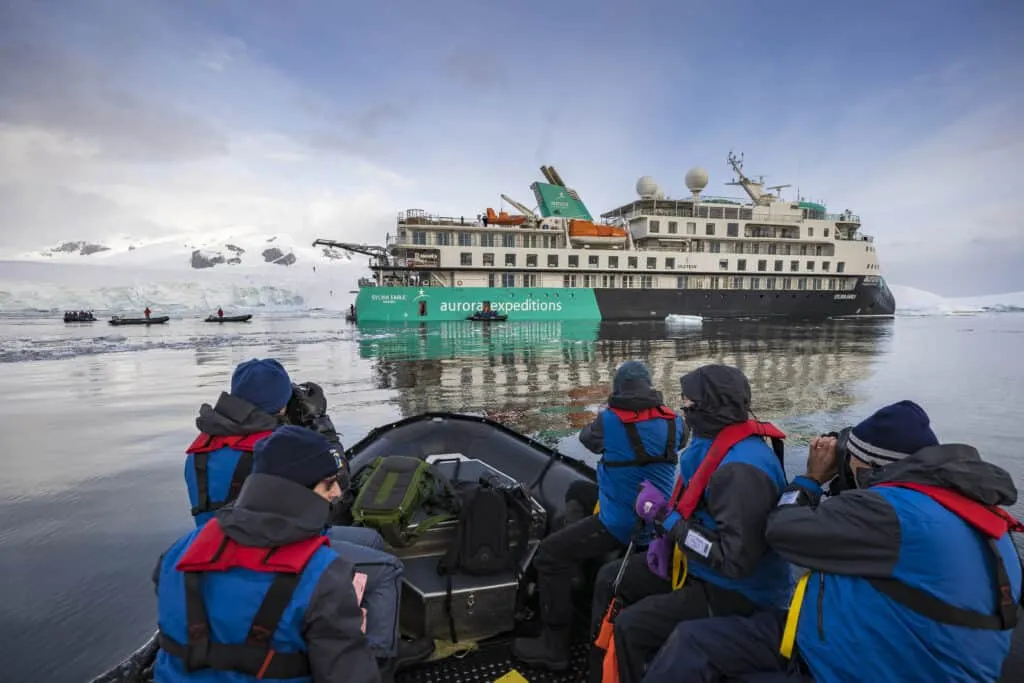
Passenger capacity and IAATO implications: Quark’s ships carry fewer than 200 passengers — Ultramarine at 199, Ocean Explorer at 138, World Voyager at 168. All fall within IAATO Category C1 (under 200 passengers). Seabourn’s Venture and Pursuit carry 264 passengers each, placing them in IAATO Category C2 (201 to 500). Both categories permit landings, but IAATO rules limit shore parties to 100 passengers at any one time. With 199 passengers, Quark’s Ultramarine requires two efficient rotations; with 264 passengers, Seabourn needs at least three, and landing operations must begin as early as 7:00 AM to give everyone adequate time ashore. The practical effect is significant — Quark passengers typically accumulate more total time on the ground per day.
Ship design and construction: Ultramarine (2021, 13,500 GT, built by Brodosplit in Croatia) is purpose-built for polar expedition with a conventional bow, diesel-electric propulsion meeting IMO Tier III emissions standards, and a 40-day operational range. The ship’s defining feature is twin helidecks with an advanced hangar system for two Airbus H145 helicopters. The Zodiac hangar sits at water level with four embarkation points for ultra-rapid deployment — 20 Zodiacs launch simultaneously from starboard, port, stern, and hangar doors. Quark’s Ocean Explorer (2021, 8,228 GT) features the Ulstein X-BOW inverted hull for smoother sailing in rough seas, while World Voyager (2020, 9,300 GT) offers hybrid-electric Rolls-Royce propulsion.
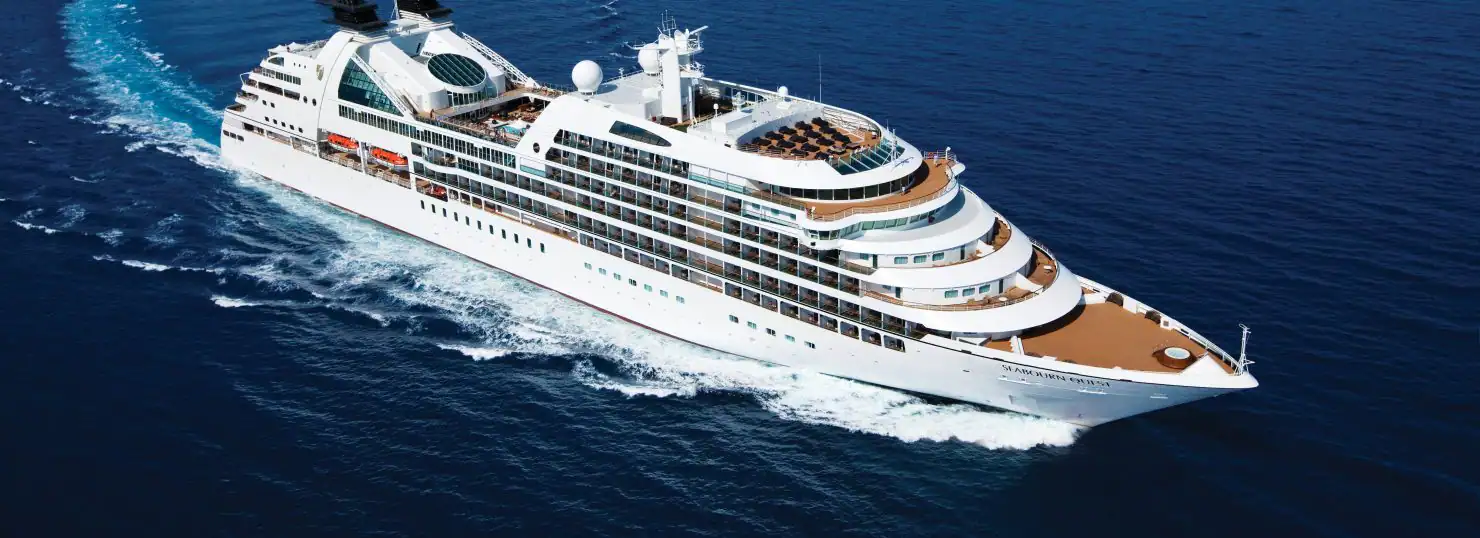
Seabourn Venture and Pursuit (2022 and 2023, 23,615 GT each, built by T. Mariotti in Italy) are substantially larger vessels — nearly twice Ultramarine’s tonnage. They feature ABB Azipod propulsion for superior manoeuvrability, a space ratio of 72 to 87 (among the highest in expedition cruising), and interiors designed by Adam Tihany in a lodge-style aesthetic with faux fireplaces, fur pillows, and green velveteen banquettes. The 24 Zodiacs are stored on the top deck rather than at water level — a design choice that slows deployment compared to Ultramarine’s hangar system.
Helicopters — Quark’s defining hardware advantage: Ultramarine carries two twin-engine Airbus H145 helicopters — the fastest and most fuel-efficient in their category. Every passenger receives at least two complimentary 15-minute flightseeing excursions (where regulations permit) plus one heli-landing per voyage for groups of 12 (maximum 48 guests per landing). The helicopters unlock destinations no Zodiac can reach — most critically, the Emperor penguin colony at Snow Hill Island, accessible only by helicopter transfer across sea ice. Heli-hiking and heli-skiing are available on select Arctic itineraries. This is Quark’s single most important differentiator — no other sub-200-passenger polar ship offers twin helicopters as standard. Seabourn does not carry helicopters on either expedition ship, though optional helicopter excursions are available on certain itineraries such as Mitchell Falls in the Kimberley at additional cost.
Submarines — Seabourn’s lost differentiator: Seabourn Venture and Pursuit were designed with two custom-built submersibles per ship, carrying six guests to depths of 300 metres. The submarines were central to the ships’ identity from before their launch. In February 2026, Seabourn confirmed the programme has ended — phased out by early March 2026 due to low guest participation, operational complexity, and regulatory restrictions. The submarines were always an additional charge at USD 900 to 1,000 per dive. No replacement programme has been announced. Their removal narrows the gap between Seabourn’s expedition offering and competitors who never offered submarines — and it shifts the hardware advantage firmly to Quark, whose included helicopters remain operational and central to the product.
Ice class: Both lines operate PC6 Polar Class 6 vessels suitable for summer polar operations. Ultramarine holds Ice Class 1A+ / PC6, slightly higher than Seabourn’s PC6 rating, though the practical difference for standard Antarctic Peninsula and Arctic operations is negligible. Quark’s chartered nuclear icebreaker 50 Years of Victory can smash through 2.5 metres of multi-year ice — but this is a separate vessel used exclusively for North Pole voyages.
Landing experience and shore programme
The landing experience is where the adventure-versus-luxury distinction becomes most tangible. Both lines deliver the core promise of daily Zodiac excursions and guided shore landings — but the execution differs in ways that compound over the course of a voyage.
Time ashore: Quark typically conducts two landings per day, weather permitting. IAATO permits a maximum of 100 people ashore at any time. With 199 passengers on Ultramarine, the rotation is relatively efficient — two groups, with each ashore for 1.5 to 2.5 hours. Ultramarine’s water-level Zodiac hangar with four embarkation points enables rapid deployment, meaning less time queuing and more time at landing sites. Seabourn also aims for two daily landings, but with 264 passengers, the rotation requires more cycles and earlier starts — landings can begin at 7:00 AM to ensure all guests get adequate time. The net effect is that Quark passengers typically accumulate more total minutes on Antarctic soil over the course of a voyage.
Activity options — Quark: Included in the base fare: Zodiac cruises, guided hikes, snowshoeing, polar plunge, expert lectures, and — on Ultramarine — helicopter flightseeing and one heli-landing per voyage. Available at extra cost: sea kayaking (approximately USD 1,995 for the voyage-length programme), stand-up paddleboarding (approximately USD 295), and Antarctic camping (approximately USD 295, once per voyage, early season only, maximum 50 participants).
Activity options — Seabourn: Included in the fare: Zodiac cruises, nature walks, guided hikes, snorkelling (in appropriate destinations), polar plunge, cultural experiences (such as the Wunambal Gaambera programme in the Kimberley), and expedition team lectures. Available at extra cost: kayaking (approximately USD 199 to 250 per session), Image Masters photography programme (USD 1,500 to 1,850 for a four-day masterclass limited to 10 participants), and optional helicopter flights on certain itineraries.
The kayaking comparison: Neither line includes kayaking in the base fare, but the structures differ. Quark offers a voyage-length programme with multiple outings for approximately USD 1,995 — serious paddlers get multiple days on the water. Seabourn charges per session at USD 199 to 250, carrying 8 double kayaks with limited capacity per voyage. For a dedicated kayaker, Quark’s programme offers more water time; for a casual paddler wanting one outing, Seabourn’s per-session pricing is more accessible.
Seabourn’s expedition extras: Swarovski Optik binoculars are loaned to every cabin for the duration of the voyage — a genuinely useful inclusion that most competitors do not offer. A Cineflex bow camera live-streams the forward view to suites. The Virtual Bridge provides interactive screens showing ice, weather, and landing site information. Open bridge access is complimentary for all guests. These touches reflect Seabourn’s approach — enhancing the expedition experience through high-quality equipment and technology rather than raw adventure hardware.
What is actually included
The inclusion models reflect each line’s philosophy. Quark includes what matters for the expedition. Seabourn includes what matters for the luxury experience. The total cost picture is more nuanced than headline fares suggest.
Drinks: Both lines now include alcoholic beverages. Seabourn has always offered premium spirits, fine wines, champagne, and cocktails at all bars and restaurants — all day, every day. This is the Seabourn hallmark: you never see a bill for a drink. Quark introduced complimentary beer, wine, spirits, and cocktails fleet-wide in November 2024. Both are genuinely all-inclusive on beverages, though Seabourn’s programme extends to premium labels and vintage selections that Quark’s complimentary range does not match.
Gratuities: Seabourn includes all crew gratuities in the fare — tipping is neither required nor expected (except an 18 per cent charge on spa treatments). Quark does not include gratuities; discretionary tips of USD 10 to 15 per person per day are recommended, collected anonymously at voyage end. On an 11-day voyage, this adds approximately USD 110 to 165 per person — a modest but real additional cost on Quark.
Parka: Both lines gift a complimentary expedition parka that passengers keep. Quark provides a 3-in-1 parka with waterproof outer shell and removable puffer liner. Seabourn provides a Helly Hansen PolarShield two-in-one parka co-developed with the outdoor brand, plus a Helly Hansen waterproof backpack and branded beanie. Seabourn’s gear package is more comprehensive and carries the Helly Hansen name recognition.
Boots and binoculars: Both loan insulated waterproof boots for polar landings. Seabourn additionally loans Swarovski Optik binoculars to every cabin — a meaningful expedition tool that Quark does not provide (guests must bring their own).
Charter flights and hotel: For Antarctic voyages, Seabourn includes a pre-cruise hotel night in Buenos Aires and round-trip charter flights from Buenos Aires to Ushuaia — a significant logistical and financial inclusion. Quark does not include flights or hotel as standard; a post-voyage charter and hotel package from Ushuaia to Buenos Aires is available for approximately USD 595.
Helicopter flights (Quark only): On Ultramarine, complimentary helicopter flightseeing (minimum two 15-minute flights per guest) and one heli-landing per voyage are included in the base fare. A comparable helicopter experience with other operators would cost USD 695 or more per flight. Seabourn does not carry helicopters, though optional helicopter excursions are available at additional cost on certain itineraries.
Wi-Fi: Both lines include complimentary satellite Wi-Fi. Seabourn has upgraded fleet-wide to SpaceX Starlink, providing significantly improved connectivity in polar regions. Quark introduced complimentary Wi-Fi in November 2024, using satellite-based systems subject to degradation at high latitudes. Seabourn’s Starlink infrastructure provides a noticeable connectivity advantage.
The net inclusion picture: Seabourn’s all-inclusive model is more comprehensive on the luxury axis — premium drinks, gratuities, charter flights, hotel, binoculars, and a higher-end gear package. Quark’s inclusions are more powerful on the expedition axis — helicopters, the best guide ratio, and faster Zodiac deployment. When you account for Seabourn’s included gratuities, flights, and hotel, the effective price gap between the two lines narrows considerably from the headline fare difference.
Destination coverage and itinerary depth
Both lines operate in Antarctica and the Arctic. Beyond those shared waters, their geographic scope diverges sharply — and one of them has a product that Australian travellers can reach without crossing an ocean.
Quark’s destinations are exclusively polar. In Antarctica: Peninsula voyages from Ushuaia, South Georgia and Falklands combinations, Antarctic Circle crossings, Snow Hill Emperor penguin expeditions via helicopter, Essential Patagonia, and Antarctic Express Fly-the-Drake from Punta Arenas. Quark’s science-focused itinerary — Antarctic Marine Mammals: The World of Whales and Seals, co-developed with the Friedlaender Lab at UC San Diego — represents the deepest science-expedition hybrid available commercially. In the Arctic: Svalbard circumnavigation, Greenland (east, south, and west coast), Northwest Passage through the Canadian High Arctic, Iceland transits, and multi-destination Arctic combinations. The crown jewel: North Pole voyages aboard the nuclear icebreaker 50 Years of Victory — 14 days to 90 degrees North, one of only two operators in the world offering this journey. Quark’s 2025-2026 Antarctic season features 41 departure dates across five destination regions. No Kimberley, no Amazon, no Mediterranean, no South Pacific. Polar, full stop.
Seabourn’s destinations span the globe. Both expedition ships deploy to Antarctica from November to March — Peninsula voyages, South Georgia and Falklands combinations, and extended South Atlantic crossings. In the Arctic, Seabourn Venture covers Svalbard, Iceland, Greenland, the British Isles including St. Kilda, and the Northwest Passage — with two 24-day crossings between Greenland and Alaska scheduled for 2026. Beyond the poles, Seabourn Pursuit sails the Kimberley (10-day voyages between Broome and Darwin from May to September), the Amazon from Manaus, and the South Pacific including Easter Island, Raja Ampat, and Vanuatu. An 82-day “Across Three Continents” voyage departs Broome in September 2026, connecting Oceania to Antarctica. The expedition ships also reposition through the Mediterranean and Caribbean between seasons.
The Kimberley — Seabourn’s Australian trump card: Seabourn Pursuit operates the Kimberley coast exclusively from Broome and Darwin — domestic flights only, no passport required, no international connections, no jet lag. The 2026 season features eight departures at expanding capacity, and the 2027 season has four departures confirmed. Entry pricing starts from AUD 17,799 per person twin share in a Veranda Suite. The Wunambal Gaambera people — traditional landowners of the Kimberley coast and godparents of the ship — offer cultural experiences included in the fare. For Australian travellers who want a luxury expedition without leaving the country, this is Seabourn’s most compelling product. Quark has no Australian waters, no Kimberley season, and no deployment south of Ushuaia that does not require a 20-plus hour international journey.
The North Pole — Quark’s exclusive: Quark’s North Pole voyage aboard the 50 Years of Victory nuclear icebreaker is one of the rarest journeys in commercial travel. Fourteen days from Murmansk to 90 degrees North, through 2.5 metres of multi-year Arctic ice, powered by 75,000 horsepower. Limited departures in June and July, capacity of 128 passengers. Seabourn does not offer the North Pole on any ship.
Cabins and accommodation
The cabin comparison is perhaps the starkest illustration of the philosophical gulf between these two lines. Quark provides expedition comfort. Seabourn provides expedition luxury.
Quark’s accommodation on Ultramarine spans 102 suites across nine categories. The entry-level Explorer Suite at 285 square feet is genuinely spacious — among the largest entry-level cabins in polar expedition cruising — with twin or double bed configuration, large windows, and clean expedition-appropriate design. The popular Balcony Suite offers 226 square feet of interior plus a 52-square-foot balcony. At the top end, the Ultra Suite at 563 square feet features two walk-in closets and three distinct living zones. Six Solo Panorama Suites at 132 square feet serve solo travellers. The cabins are comfortable, functional, and well-maintained — but they are expedition cabins, not luxury suites. No butler service, no marble bathrooms, no heated floors.
Seabourn’s accommodation on Venture and Pursuit is in a different category entirely. All 132 suites feature private verandas, ocean-front views, marble-lined bathrooms with heated floors, separate bathtubs, in-suite clothes dryers (extraordinarily practical on polar voyages), walk-in closets, and queen or twin bed configuration. The entry-level Veranda Suite at 355 square feet (including 75-square-foot veranda) is larger than Quark’s Balcony Suite. At the top, the Grand Wintergarden Suite is a two-storey apartment at 1,400 square feet with two verandas, a guest bedroom, a whirlpool tub, and a Swarovski spotting scope. Premium suites receive butler service, Bang and Olufsen sound systems, LG OLED televisions, and in-suite bars stocked to guest preferences. The Signature Suite includes a canopied whirlpool spa tub on a 592-square-foot curved veranda.
The bathtub factor: After a day of wet landings, Zodiac cruises in near-freezing spray, and hours of walking on ice and rock, the luxury that matters most is not champagne — it is a hot bath. Every Seabourn suite has a separate bathtub. Quark’s entry-level cabins have showers only; bathtubs appear only in higher categories (Deluxe Balcony Suite and above). This is a daily quality-of-life distinction that expedition travellers feel acutely.
In-suite clothes dryer: Seabourn provides an in-suite clothes dryer in every cabin — an inspired inclusion for expedition cruising, where waterproof trousers, base layers, and gloves are perpetually damp. Quark does not offer in-suite drying facilities; laundry service is available at additional cost.
Solo accommodation: Quark offers six Solo Panorama Suites on Ultramarine (132 square feet, floor-to-ceiling windows) and seven solo cabins on Ocean Explorer. A cabin-share programme waives the supplement if no match is found. Quark periodically waives solo supplements entirely on select sailings. Seabourn’s standard single supplement is 200 per cent of the double occupancy fare — effectively the full double price for one person — with reduced 125 per cent supplement available on select voyages. There are no dedicated solo cabins. For solo travellers on a budget, Quark is substantially more accessible.
Pricing and value
Quark and Seabourn operate at different price points, but the gap is smaller than the luxury differential might suggest — particularly when Seabourn’s comprehensive inclusions are factored into the total cost.
Quark’s directional pricing for an 11-day Antarctic Peninsula voyage on Ultramarine starts from approximately USD 10,000 to 13,000 per person for an Explorer Suite (with early booking discounts of up to 30 per cent). Mid-range Balcony Suites run USD 14,000 to 18,000. The Ultra Suite commands USD 30,000 to 40,000-plus. At current exchange rates, entry-level translates to approximately AUD 16,000 to 20,000 per person. The 8-day Fly-the-Drake programme on Ocean Explorer starts from approximately USD 14,370 per person. These fares include complimentary drinks and Wi-Fi but not flights, hotel, or gratuities.
Seabourn’s directional pricing for a 12-day Antarctic Peninsula voyage on Venture starts from approximately AUD 21,500 per person for an entry Veranda Suite. Penthouse Suites run AUD 30,000 to 32,000. Extended voyages including South Georgia and the Falklands start from AUD 48,000-plus. Kimberley 10-day voyages start from AUD 17,799 per person twin share. These fares include premium drinks, gratuities, charter flights from Buenos Aires, a pre-cruise hotel night, and Swarovski binoculars — a substantial package of inclusions.
The total cost comparison for Antarctic voyages: At headline rates, Quark’s entry cabin is approximately AUD 5,000 to 6,000 cheaper than Seabourn’s for a comparable duration. However, adding Quark’s excluded costs — gratuities (approximately AUD 250 per person for 11 days), flights to Ushuaia (if not self-arranged), and hotel — the gap narrows to approximately AUD 3,000 to 4,000. For that remaining premium, Seabourn delivers a markedly more luxurious cabin, marble bathrooms, included gratuities, premium beverages, butler service in higher categories, and Swarovski binoculars. Whether the premium is justified depends on how much weight you place on the onboard experience versus the expedition itself.
Value for money at each price point: Quark delivers exceptional expedition value — more guides per guest, included helicopter flights on Ultramarine (a genuine USD 1,000-plus equivalent inclusion), IAATO C1 landing advantage, and all-day drinks. Seabourn delivers exceptional luxury value — every aspect of the onboard experience is elevated, from the parka brand to the bathroom marble to the quality of the evening wine. Both represent fair value at their respective price points. Neither is overpriced for what it delivers.
Onboard enrichment and science
Both lines invest in onboard enrichment, but their approaches reflect fundamentally different guest expectations.
Quark’s enrichment programme centres on polar science and active research. The exclusive Friedlaender Lab partnership with UC San Diego embeds whale researchers on select voyages, equipped with portable hydrophones that allow guests to listen to underwater whale sounds — a genuinely transformative encounter that connects passengers to the living Antarctic ecosystem in real time. HappyWhale research associates guide guests in photographing whale flukes for global identification databases. Seabird surveys run during Drake Passage crossings in collaboration with the Polar Collective, and Seabird Watch deploys time-lapse cameras to monitor colonies in Arctic waters. The Ambassador Theatre on Ultramarine features a high-resolution LED screen for lectures, documentaries, and daily recap presentations. A media lab supports photograph downloading and processing. The dedicated Antarctic Marine Mammals itinerary — co-developed with the Friedlaender Lab — is the most science-focused commercial polar voyage available.
Seabourn’s enrichment programme does not include a structured citizen science programme — a notable absence in the current expedition market. The expedition team delivers lectures on wildlife, geography, history, and conservation, and individual team members bring research backgrounds spanning marine biology, ornithology, and geology. However, guests are not invited to participate in structured data collection or contribute to ongoing research projects. The enrichment focus is observational and interpretive rather than participatory. Seabourn’s Image Masters photography programme is a paid four-day masterclass (USD 1,500 to 1,850, limited to 10 participants) offering priority access to the onboard photographer, dedicated Photo Zodiac cruises, individual mentoring sessions, and access to The Studio — a purpose-built photography space with iMac desktops, 4K monitors, and Lightroom. It is premium and exclusive, but guests not enrolled in Image Masters receive no structured photography instruction. The Dr. Andrew Weil wellness programme — meditation, yoga, mindful living lectures — runs complimentary on expedition ships, adding a wellness dimension that Quark does not offer.
The comparison: Quark’s citizen science and research partnerships are substantially more developed. The Friedlaender Lab hydrophone experience and the dedicated marine mammals itinerary are genuinely unique in commercial expedition cruising. Seabourn’s absence of formal citizen science is a gap that competitors have filled. Seabourn’s Image Masters programme is the more polished photography offering, though at significant additional cost and limited to a tiny fraction of passengers. For guests who value contributing to scientific research as part of the expedition experience, Quark is the clear choice. For guests who value wellness programming and are willing to invest in a premium photography masterclass, Seabourn offers what Quark does not.
Dining on expedition
Dining is a secondary concern on adventure-first expedition ships but a primary one on luxury expedition vessels. This distinction shapes the entire comparison.
Quark’s dining on Ultramarine features two venues: Balena Restaurant (main dining, open seating, floor-to-ceiling windows at the bow, international cuisine for breakfast, lunch, and dinner) and Bistro 487 (lighter fare, healthy options, early riser breakfast, afternoon tea, late-night snacks). Ocean Explorer adds a private dining room for intimate meals. The cuisine is “expedition comfort” — a three-course dinner nightly with rotating menus, buffet breakfast and lunch with live cooking stations, and generous variety given the remoteness. Food quality is consistently praised in reviews, with freshness and creativity that surprise guests operating thousands of kilometres from the nearest fresh market. The signature culinary experience is Tundra to Table — a four-course modern Inuit fusion dinner hosted by Greenlandic chefs from the Igapall collective, available on select Arctic voyages at additional cost. This is the only exclusively Inuit culinary experience in expedition cruising. All alcoholic beverages are complimentary throughout the day.
Seabourn’s dining on Venture and Pursuit operates at a different level entirely, with five distinct venues. The Restaurant is the main dining room — designed by Adam Tihany, inspired by snowflake geometry, open seating, no reservations needed, with cuisine that reviewers consistently describe as fine-dining quality. The Colonnade serves buffet breakfast and lunch, then converts to Earth and Ocean for dinner — a waiter-served bistro with rotating themed nights including Singaporean, Indian, French, and American menus. The Club offers sushi and sashimi. Seabourn Square provides specialty coffees, artisan pastries, gourmet sandwiches, and gelato throughout the day. The Bow Lounge serves grab-and-go options between expedition activities. In-suite dining operates around the clock with the full menu, and butler-serviced suites receive personalised attention. All dining is complimentary with no surcharges at any venue. Complimentary caviar is available throughout the voyage. Fine wines are poured at lunch and dinner.
The gulf is real. Quark’s dining is very good for expedition cruising — well above what the remote operating environment should allow. Seabourn’s dining is very good, full stop — it would be credible in a fine-dining context ashore. The difference shows in venue count (two versus five), service style (buffet-heavy versus waiter-served options), and the quality ceiling on beverages and specialty items. Seabourn’s signature Caviar on Ice event — the polar adaptation of the brand’s famous Caviar in the Surf, with a bar crafted from ice serving champagne and rare caviars — has no equivalent on Quark. The daily souffles, the themed dinner nights, the around-the-clock in-suite dining: these are luxury-cruise standards transplanted to an expedition setting. If dining is a priority, Seabourn is in a different league.
Standout itineraries for Australian travellers
Quark Expeditions
Classic Antarctic Explorer on Ultramarine (11 days, Ushuaia round trip) — Quark’s signature voyage with the full helicopter programme. Twin H145 flightseeing over glaciers and penguin colonies (minimum two flights included), heli-landing on an otherwise unreachable peak or ice shelf, plus standard Zodiac landings with a 1:6 guide ratio. Included drinks throughout. From approximately AUD 16,000 per person. Fly Sydney or Melbourne to Buenos Aires or Santiago, then to Ushuaia — allow 20 to 24 hours each way with connections.
Emperor Penguin Quest: Expedition to Snow Hill (14 days, dedicated Ultramarine itinerary) — The rarest wildlife encounter in expedition cruising. Helicopter transfer across Weddell Sea pack ice to the Emperor penguin colony at Snow Hill Island — a destination no Zodiac can reach and no other operator under 200 passengers can access. Limited departures in October and November, sells out early. For the penguin-obsessed traveller, this is the holy grail.
Ultimate Arctic Adventure: North Pole (14 days, aboard 50 Years of Victory nuclear icebreaker, June and July) — One of only two operators offering the Geographic North Pole. A 75,000-horsepower icebreaker smashing through Arctic pack ice to 90 degrees North. Capacity 128 passengers. From Murmansk — complex routing from Australia via Helsinki or Oslo. Bucket-list in the truest sense.
Antarctic Express: Fly the Drake (8 days, Punta Arenas) — Skip the Drake Passage entirely with two-hour charter flights to King George Island, maximising Peninsula time in just eight days. From approximately USD 14,370. Uses Ocean Explorer or World Voyager, so no helicopter programme. Ideal for time-pressed travellers.
Seabourn
The Great White Continent (12 days, Ushuaia round trip) — Seabourn’s core Antarctic Peninsula voyage with all-inclusive luxury. Every suite has a veranda, every bar pours premium spirits, and charter flights from Buenos Aires plus a hotel night are included. From approximately AUD 21,500 per person. Twenty-four Zodiacs, 23-person expedition team, and Swarovski binoculars in every cabin.
Kimberley Coast: Broome to Darwin (10 days, May to September) — Seabourn Pursuit sails Australia’s last frontier without leaving the country. King George Falls, Montgomery Reef, Horizontal Falls, Hunter River, and Wunambal Gaambera cultural experiences — all from domestic departure points. From AUD 17,799 per person. No international flights, no jet lag, no passport required. The most accessible luxury expedition for Australian travellers.
Antarctica, South Georgia and Falklands (22 days, Ushuaia) — The comprehensive Antarctic voyage including the cathedral king penguin colonies of South Georgia and the windswept character of the Falkland Islands. Ultra-luxury for the full duration. From approximately AUD 48,000 per person. The ultimate Seabourn expedition for those with the time and budget.
Across Three Continents (82 days, Broome to Ushuaia via South Pacific and Antarctica, September 2026) — Seabourn Pursuit’s epic repositioning voyage connecting the Kimberley, South Pacific islands, and Antarctica in a single continuous journey. For travellers who want to see how a luxury expedition ship moves across the planet.
For Australian travellers specifically
Getting to the ship: Seabourn has a decisive structural advantage for Australian travellers. The Kimberley seasons operate from Broome and Darwin — domestic flights only, served by Qantas, Virgin Australia, and regional carriers from all major capitals. No international routing, no connections through Santiago or Buenos Aires, no 20-hour transit days. For Antarctic voyages, both lines depart from Ushuaia, requiring Australian travellers to fly to Buenos Aires or Santiago (approximately 14 to 16 hours from Sydney or Melbourne) and connect domestically to Ushuaia (approximately 3.5 hours). Seabourn includes the Buenos Aires to Ushuaia charter flight and a hotel night in Buenos Aires; Quark leaves these to the traveller. For Arctic voyages, both lines require routing through European hubs — 22 to 24-plus hours from Australia.
Australian office and support: Seabourn operates through Carnival Australia at 15 Mount Street, North Sydney, NSW 2060. Phone 13 24 02 within Australia. Monday to Friday 8:30 AM to 7:00 PM AEST, Saturday 9:00 AM to 5:00 PM. Dedicated Australian sales specialists, AUD pricing through local travel agents. Quark has no Australian office — operations run from Seattle and Toronto. Australian travellers book through the global team or Australian-based expedition specialists such as Expedition Cruise Specialists and Chimu Adventures. All Quark pricing is in USD. For travellers who value local phone support during Australian business hours and AUD pricing, Seabourn has the advantage.
Travel insurance: Both lines require mandatory travel insurance. Standard Australian policies often exclude Antarctic and expedition activities. Specialist expedition insurance with minimum AUD 500,000 medical coverage and AUD 250,000 evacuation coverage is strongly recommended. Adequate medical facilities can be 72-plus hours away from any Antarctic position — the insurance must cover helicopter evacuation from polar regions, not just a hospital transfer in Sydney.
Currency exposure: Seabourn’s Australian pricing through local agents is in AUD, providing cost certainty. Quark prices exclusively in USD, exposing Australian travellers to exchange rate movements between booking and final payment. At current rates (February 2026), the Australian dollar buys approximately USD 0.63 — meaning a USD 12,000 Quark fare translates to approximately AUD 19,000. Currency movements of even a few cents can shift the cost by hundreds of dollars.
Loyalty programmes: Quark’s Shackleton Club offers USD 750 off any expedition, USD 1,500 off if rebooked within 14 days of disembarkation, USD 150 shipboard credit, and automatic cabin upgrades 60 days before departure. The 14-day rebooking bonus is a clever incentive to commit while the polar glow is fresh. Seabourn’s six-tier Seabourn Club (updated October 2025) awards points per day sailed, with benefits escalating from choice-based perks at Silver through complimentary laundry at Gold to dedicated concierge at Platinum and all benefits automatically at Diamond. Award cruises of seven to fourteen days can be redeemed on expedition sailings — potentially the most valuable loyalty redemption in expedition cruising. For repeat cruisers already in the Seabourn ecosystem, Club benefits apply identically on expedition ships.
The onboard atmosphere
The atmosphere on each line tells you immediately which end of the spectrum you have chosen.
Quark’s atmosphere is expedition through and through. The dress code is entirely informal — sweatpants, hoodies, and Gore-Tex at dinner are the norm. No formal nights, no dress-up evenings. A jacket is suggested for the Captain’s Welcome toast (first night) and Captain’s Dinner (final evening), but not required. The passenger demographic skews 35 to 64, well-travelled, educated, and united by polar ambition — an international mix of North Americans, Europeans, and Australians with a strong contingent of dedicated expedition cruisers and repeat polar travellers. Evenings centre on the Panorama Lounge (glass-enclosed, unobstructed views, board games, dance floor for later evenings) and the Ambassador Theatre (lectures, documentaries, recaps). Expedition team members dine with passengers, creating organic social connections. The energy is informal, intellectually stimulating, and structured around shared adventure. There is no casino, no production show, no traditional cruise entertainment. The entertainment is Antarctica itself — and the stories you swap over included whisky after a day in the ice.
Seabourn’s atmosphere is refined elegance in an expedition setting. Described as “a smaller, more adventurous version of a typical Seabourn ship,” the Adam Tihany-designed interiors feature warm lodge-style aesthetics — faux fireplaces, fur pillows, green velveteen banquettes. No formal nights on expedition ships (eliminated January 2023), but after 6:00 PM, “elegant casual” applies — slacks with a collared shirt or sweater for men, jacket optional. Elegant jeans are welcome in all dining venues. The core audience is experienced luxury cruisers — many are Seabourn loyalists who have sailed the ocean fleet and expect the same service standards. The demographic skews older affluent (60-plus), though expedition offerings attract younger adventure-luxury travellers. The evening atmosphere is quiet contemplation rather than buzzing energy: the Expedition Lounge for cocktails and shared stories, live music in The Club, enrichment lectures and fireside chats, stargazing from deck. Staff learn guest names within 48 hours. The feeling is “private club” — elegance that feels natural and relaxed rather than performed.
The difference in feel: Quark feels like an expedition with a good ship. Seabourn feels like a luxury ship with a good expedition. On Quark, you will share a table with a geologist in a hoodie who just finished a lecture on glacial retreat. On Seabourn, you will share a table with a retired surgeon in a cashmere sweater who has sailed Seabourn twelve times. Both conversations will be fascinating. Both experiences are valid. The question is which version of yourself you want to be when you stand on Antarctic ice — the adventurer who lives for the cold, or the traveller who loves the contrast between the wild shore and the warm suite.
The bottom line
Quark Expeditions and Seabourn represent the clearest adventure-versus-luxury choice in expedition cruising. Neither is trying to be the other. Neither should be.
Choose Quark when the expedition is the reason for the trip. Choose Quark when twin helicopters that unlock Snow Hill Emperor penguins and included flightseeing over glacial landscapes matter more than marble bathrooms. Choose Quark when a 1:6 guide ratio — nearly twice as favourable as Seabourn’s — means you want the smallest possible landing group with the deepest possible interpretation. Choose Quark when IAATO Category C1 landing advantage, with fewer than 200 passengers and faster Zodiac rotation from a water-level hangar, means more cumulative time on Antarctic soil. Choose Quark when the Geographic North Pole aboard a nuclear icebreaker is on the bucket list. Choose Quark when polar exclusivity — over three decades operating in nothing but ice — is the credential that matters. Choose Quark when the entry price of approximately AUD 16,000 for an 11-day Antarctic voyage with included drinks and helicopter flights represents the value benchmark. Accept that the cabins are comfortable rather than luxurious, the dining is very good rather than exceptional, and reaching any Quark ship from Australia requires international travel.
Choose Seabourn when the onboard experience is as important as the destination. Choose Seabourn when every suite has a veranda, a marble bathroom, a bathtub, heated floors, and an in-suite clothes dryer. Choose Seabourn when five dining venues, premium spirits at all hours, complimentary caviar, and a service team that knows your name by the second morning represent the standard you expect from expedition travel. Choose Seabourn when the Kimberley coast — 10 days between Broome and Darwin from AUD 17,799, domestic flights only, no international travel required — is the most compelling expedition accessible from Australia. Choose Seabourn when included charter flights, a Buenos Aires hotel night, Swarovski binoculars, and a Helly Hansen gear package mean you arrive at the ice with everything arranged. Choose Seabourn when an Australian office in North Sydney with local phone support and AUD pricing through your travel agent simplifies the booking process. Accept that the guide ratio is less favourable, the passenger count is higher, the IAATO landing category is less advantageous, and the submarine programme that was once a headline differentiator has ended.
For the Australian traveller who wants both, the most rewarding combination may be a Seabourn Kimberley voyage — the luxury expedition you can reach by domestic flight — followed by a Quark Ultramarine Antarctic Peninsula voyage for the helicopter programme, the world-class guide ratio, and the purest polar experience afloat. Between them, you will have experienced the full spectrum of expedition cruising, from Adam Tihany interiors to Zodiac hangars, from Montgomery Reef to the Antarctic Peninsula, from caviar on ice to whisky in the Panorama Lounge while a glacier calves outside the window.