Ponant and Seabourn both bridge luxury cruising and genuine expedition capability — each operating dual fleets that span ocean voyages and polar exploration. One is French, fleet-diverse, and built around the world's only luxury icebreaker. The other is American ultra-luxury refined into expedition context. Jake Hower compares the full picture for Australian travellers.
| Ponant | Seabourn | |
|---|---|---|
| Category | Luxury / Expedition | Expedition / Ultra-Luxury |
| Rating | ★★★★★ | ★★★★★ |
| Fleet size | 13 ships | 5 ships |
| Ship size | Small (under 500) | Small (under 1,000) |
| Destinations | Antarctica, Mediterranean, Arctic, South Pacific | Mediterranean, Caribbean, Antarctica, Northern Europe |
| Dress code | Smart casual | Casual elegance |
| Best for | French-inspired luxury expedition travellers | Ultra-luxury intimate ship enthusiasts |
Ponant is the choice when fleet diversity, French culinary excellence, and unmatched polar reach matter most. Le Commandant Charcot accesses the Geographic North Pole and deep Weddell Sea emperor penguin colonies — destinations no other luxury vessel can reach. Ducasse-curated dining, the Blue Eye lounge, waived solo supplements on 160-plus voyages, and a Sydney-based APAC headquarters make Ponant the stronger Australian proposition at a lower price. Seabourn is the choice when cabin perfection and no-tipping simplicity are priorities — marble bathrooms, heated floors, in-suite clothes dryers, and Adam Tihany interiors set a standard Ponant does not match at entry level. For the Kimberley, both compete directly: Ponant offers more departures; Seabourn offers larger suites and the Wunambal Gaambera cultural programme.
The core difference
Ponant and Seabourn are rare among cruise lines in that both genuinely straddle two worlds — luxury ocean cruising and purpose-built expedition travel. Both operate fleets that include ships designed for Antarctic ice and ships designed for Mediterranean sunshine. Both pour champagne freely. Both maintain the kind of service standards where staff learn your name within a day. But the DNA is entirely different, and that DNA shapes everything from the dining room to the destinations you can reach.
Ponant is the French luxury company. Founded in 1988 by Jean-Emmanuel Sauvée and a dozen fellow French Merchant Navy officers in Nantes, it is the only major cruise line headquartered in France and the only one flying the French flag across its entire fleet. Owned since 2015 by Groupe Artémis — the private holding company of the Pinault family, which also controls Kering (Gucci, Yves Saint Laurent, Balenciaga) — Ponant sits within a luxury goods ecosystem that informs its design, its culinary programme, and its distinctly European atmosphere. The fleet spans 13 core vessels: from the 32-passenger sailing yacht Le Ponant, through six identical Explorer-class expedition ships and four Boreal-class ships, to the extraordinary Le Commandant Charcot — the world’s only luxury PC2 icebreaker. Beyond expedition, Ponant covers the Mediterranean, Northern Europe, French Polynesia, Caribbean, Alaska, Japan, and Papua New Guinea. No other line offers this combination of expedition capability and ocean-cruise breadth across such a diverse fleet.
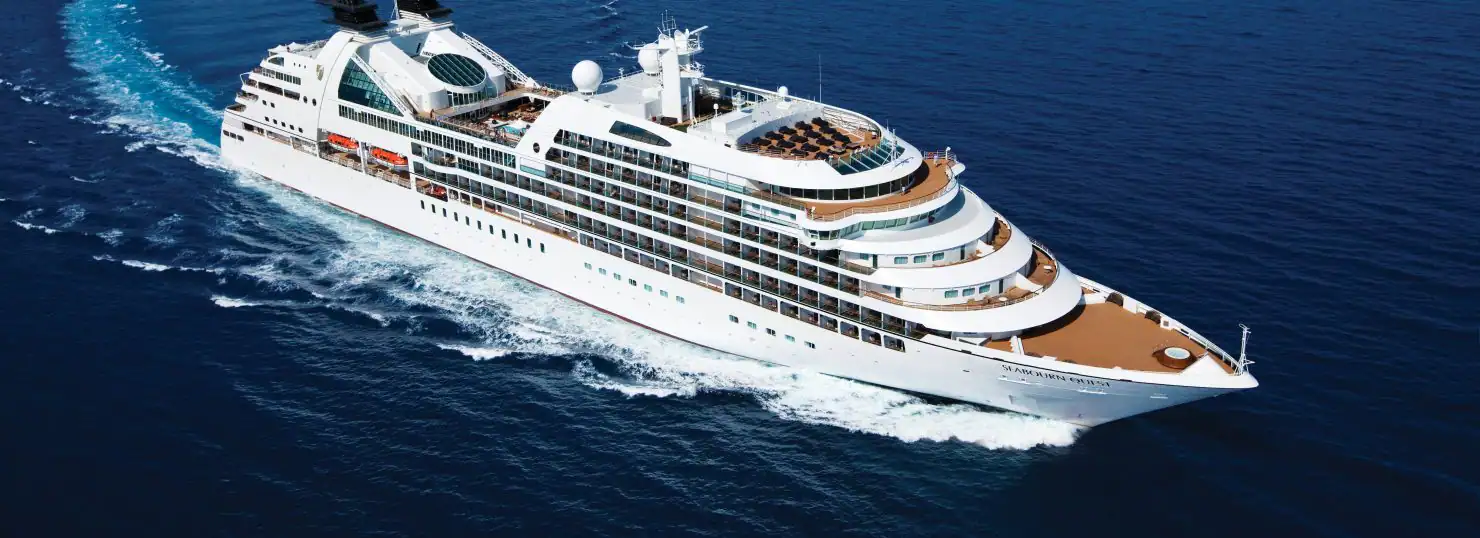
Seabourn is the American ultra-luxury standard, now extended into expedition territory. Founded in 1986 by Norwegian industrialist Atle Brynestad and now wholly owned by Carnival Corporation, Seabourn has defined intimate ultra-luxury ocean cruising for nearly four decades — all-suite ships, open bars, no-tipping policies, and a service culture so personalised that butlers anticipate your preferences before you voice them. The fleet comprises five ships: three ocean vessels (Encore, Ovation, and the chartered Sojourn) carrying 458 to 604 guests, and two purpose-built expedition ships — Seabourn Venture and Seabourn Pursuit — each carrying 264 passengers with PC6 ice class, 24 Zodiacs, Adam Tihany interiors, and marble bathrooms with heated floors. These are the most luxurious expedition cabins afloat.
For Australian travellers, the choice comes down to this: Ponant offers fleet scale, French culinary excellence, the unmatched Charcot icebreaker, the Blue Eye underwater lounge, lower entry pricing, outstanding solo traveller policies, and a deeply committed APAC presence based in Sydney. Seabourn offers the most refined cabin experience in expedition cruising, the simplicity of included gratuities, a relaxed no-formal-nights elegance, and a proven ultra-luxury service culture that translates seamlessly from ocean voyaging to polar exploration.
What is actually included
Both lines operate genuinely all-inclusive models — among the most comprehensive in the cruise industry, whether at sea in the Mediterranean or anchored off an Antarctic penguin colony. The differences are in the details.
Ponant includes: all meals at all onboard restaurants, an open bar at all hours (wines, spirits, beer, Henri Abelé Brut champagne, cocktails, soft drinks, mineral water), a daily-restocked minibar, unlimited Starlink Wi-Fi, all Zodiac excursions and shore landings on expedition voyages, expert-led lectures, port taxes, and on polar voyages a complimentary Ponant-branded parka (yours to keep) and expedition boots (on loan). Antarctic voyages include an overnight hotel stay in Buenos Aires and charter flights to Ushuaia. Kimberley Fly-Stay-Cruise packages include return economy airfares from Australian and New Zealand cities, a hotel night, and transfers. On ocean voyages in the Mediterranean and beyond, the same all-inclusive bar and dining model applies.
Seabourn includes: all dining at every restaurant with no surcharges, premium spirits and fine wines at all bars, welcome champagne and an in-suite bar stocked to personal preferences, complimentary caviar throughout the voyage, gratuities (tipping neither required nor expected), Starlink Wi-Fi, all Zodiac excursions and landings on expedition voyages, expedition team lectures, a Helly Hansen PolarShield parka and WaterShield backpack (both gifted), expedition boots (loaned), Swarovski Optik binoculars (loaned), open bridge access, live entertainment, and Dr Andrew Weil wellness classes. Antarctic voyages include a Buenos Aires hotel night and charter flights to Ushuaia. On ocean ships, the same all-inclusive drinks, dining, and gratuities model applies.
The gratuities difference: Seabourn includes gratuities across its entire fleet — tipping is officially neither required nor expected (aside from an 18 per cent charge on spa treatments). Ponant’s gratuities are optional but expected, with a recommended guideline of approximately EUR 10 to 12 per person per day. Over a 10-night voyage, that adds roughly EUR 100 to 120 per person — a modest amount on a voyage of this calibre, but a difference in both cost and simplicity that favours Seabourn.
The expedition gear difference: Seabourn’s Helly Hansen parka and backpack are both gifted — genuinely useful, well-made expedition gear that guests keep. Ponant’s parka is also gifted but is Ponant-branded rather than a recognised outdoor brand. Seabourn additionally loans Swarovski binoculars to every guest — a thoughtful inclusion that Ponant does not match.
What is not included — Ponant: international flights (unless specified in a package), travel insurance, gratuities, spa treatments, premium-label wines and spirits beyond the included range, personal laundry (free for upper loyalty tiers), and some optional activities such as kayaking on select itineraries.
What is not included — Seabourn: kayaking (approximately US$199 to US$250 per session — a consistent criticism), helicopter flights, the Image Masters photography programme (US$1,500 to US$1,850), spa treatments beyond complimentary wellness classes, laundry (complimentary for Gold-plus Seabourn Club members), and optional Ventures by Seabourn shore excursions at non-expedition ports.
Dining and culinary experience
Cuisine is a genuine differentiator between these two lines, and it favours Ponant — particularly on Le Commandant Charcot. French gastronomic DNA runs through every meal aboard a Ponant ship, whether docked in Marseille or navigating Weddell Sea pack ice.
Ponant’s culinary programme is built on classical French technique. French chefs prepare all meals across the fleet, with quality ingredients, refined presentation, and a wine programme that reflects genuine French viticultural traditions. Henri Abelé Brut is the house champagne. A French cheese course at dinner is standard. The crown jewel is Le Commandant Charcot’s NUNA restaurant — the first Alain Ducasse restaurant at sea, with menus personally designed by Ducasse Conseil, included in the cruise fare at no extra charge. Shore-side Ducasse restaurants command several hundred dollars per person; receiving this standard at sea within the fare is remarkable value. Charcot also offers Sila (buffet and themed dinners) and Inneq (casual poolside grill). Explorer-class ships feature Le Nautilus (main restaurant with French and European cuisine), Le Nemo (poolside casual), and the Blue Eye underwater lounge serving drinks in its subaquatic setting. On ocean voyages in the Mediterranean and beyond, the same French culinary standards apply — Pierre Hermé macarons and Kaviari caviar appear fleet-wide.
Seabourn’s dining programme on both expedition and ocean ships delivers polished international cuisine across multiple venues. The expedition ships feature The Restaurant (designed by Adam Tihany, inspired by snowflake geometry, with open seating and fine-dining quality), The Colonnade (buffet by day, converting to Earth and Ocean for waiter-served themed dinners in the evening), The Club (sushi bar and lounge), Seabourn Square (specialty coffees, pastries, artisan gelato), The Bow Lounge (grab-and-go), and 24-hour in-suite dining. The ocean ships add further venue variety. All dining is complimentary with no surcharges across the entire fleet. Complimentary caviar is available throughout every voyage. The famous Seabourn breadsticks and daily soufflés continue on both expedition and ocean ships. It is worth noting that the Thomas Keller partnership ended in spring 2024 — The Grill by Thomas Keller has been removed from all Seabourn ships. The expedition ships were never part of the Keller programme, having launched with their own dining concept. The replacement venue, Solis, operates on ocean ships only.
The comparison: Ponant’s French culinary pedigree — particularly the Ducasse involvement on Charcot — places it at the top of cruise dining, expedition or otherwise. The cheese course, the wine programme, and the classical French preparation are a notch above Seabourn’s very capable international cuisine. Seabourn’s dining is well-reviewed, with more venue variety and the signature touches (breadsticks, soufflés, caviar) that loyal guests love. On the Explorer and Boreal class ships, however, the gap narrows — the Ducasse standard is specific to Charcot, and food quality on Ponant’s older ships does not always match that benchmark consistently. Both lines include all dining without surcharges across their entire fleets — a rarity even among luxury operators.
Suites and accommodation
This is where Seabourn asserts its clearest advantage. The cabin experience on Venture and Pursuit is, by most measures, the finest in expedition cruising — and the ocean fleet maintains a similarly high standard.
Seabourn’s all-suite, all-veranda concept applies across the entire fleet. On the expedition ships, every one of 132 suites features a private veranda, a marble-lined bathroom with heated floors, a separate bathtub (exceptional after cold polar landings), an in-suite clothes dryer (extraordinarily practical for expedition), a walk-in closet, and an in-suite bar stocked to personal preferences. The entry-level Veranda Suite at 355 square feet including veranda is larger than many competitors’ mid-range cabins. The range extends through Panorama Veranda (420 square feet), Penthouse (527 square feet with separate bedroom), Owners Suite (1,023 square feet), Wintergarden Suite (1,044 square feet with glass-enclosed solarium), Signature Suite (1,378 square feet), and the two-storey Grand Wintergarden Suite at 1,400 square feet with a Swarovski spotting scope and Shackleton Blended Malt Scotch in the wet bar. Adam Tihany’s interiors channel a sophisticated lodge aesthetic — faux fireplaces, fur pillows, green velveteen, and warm tones that feel expedition-appropriate without sacrificing elegance. Butler service applies from Penthouse level upward. On the ocean ships — Encore and Ovation — the same all-suite, all-veranda philosophy applies with similarly refined accommodation.
Ponant’s cabin range varies considerably across its diverse fleet. Explorer-class ships carry 92 all-balcony staterooms, from the entry Prestige Stateroom at approximately 200 square feet interior plus a 43-square-foot balcony, through Deluxe and Privilege Suites, to the Owner’s Suite at approximately 580 square feet plus an 85-square-foot balcony. Le Commandant Charcot’s 135 all-balcony staterooms are more generous — Prestige Staterooms start at 215 square feet interior with a 53-square-foot balcony, and the range escalates through the extraordinary Duplex Suite (1,010 square feet with private Jacuzzi terrace and separate dining room seating six) to the Owner’s Suite at 1,240 square feet of interior plus a 2,000-square-foot private terrace with Jacuzzi and personal telescope — the most extravagant suite in the expedition cruise industry. The Boreal-class ocean ships carry 132 staterooms with 95 per cent private balconies. Butler service is available from Privilege Suite level upward on both Explorer class and Charcot.
The comparison at entry level: Seabourn’s Veranda Suite at 355 square feet total is substantially larger than Ponant’s Explorer-class Prestige Stateroom at approximately 243 square feet total. Seabourn provides a separate bathtub and heated bathroom floors at the entry level — features Ponant reserves for suites. The in-suite clothes dryer on Seabourn is a genuinely practical advantage after wet expedition days. At the top end, Charcot’s Owner’s Suite at 3,240 square feet total (including the 2,000-square-foot terrace) dwarfs anything in Seabourn’s range — but at a price point to match. If the cabin is a priority — and for many luxury travellers, it is — Seabourn wins at entry and mid-range across both expedition and ocean ships.
Pricing and value
Both lines sit firmly in the luxury bracket, but Ponant’s fleet scale creates a wider pricing range and a lower entry point for both expedition and ocean cruising.
Ponant’s directional pricing: Explorer-class Antarctic Peninsula voyages (10 to 11 nights) start from approximately A$11,000 to A$13,000 per person for an entry Prestige Stateroom with balcony, including a Buenos Aires hotel night and charter flight to Ushuaia. Le Commandant Charcot Antarctic voyages start from approximately A$18,000 to A$22,000. Charcot North Pole voyages start from approximately US$46,450 per person. Kimberley cruise-only fares start from approximately A$11,340, with the Fly-Stay-Cruise package from A$13,670. Mediterranean and warm-water ocean voyages are priced competitively within the luxury segment. Early-bird savings of up to 30 per cent apply on advance bookings across the fleet.
Seabourn’s directional pricing: Antarctic expedition voyages start from approximately A$21,500 for a 12-day itinerary in a Veranda Suite, escalating to A$24,099 for 14 days and A$47,999-plus for 22-day South Georgia and Falklands combinations. Kimberley 10-day voyages start from A$17,799 in a Veranda Suite. Ocean voyages on Encore and Ovation are priced in the ultra-luxury bracket — typically USD $500 to $900 per person per night depending on itinerary and suite category.
The expedition price gap: For a standard Antarctic Peninsula voyage, Ponant’s entry price on an Explorer-class ship is approximately A$10,000 to A$11,000 less per person than Seabourn. For the Kimberley, the gap is approximately A$4,000 to A$6,000 per person. Seabourn delivers a larger suite, included gratuities, Swarovski binoculars, Helly Hansen gear, and heated bathroom floors at its higher price. Whether those amenities justify the premium depends on whether your priority is the cabin or the overall expedition experience.
Solo traveller pricing: This is where Ponant’s advantage becomes overwhelming. With waived single supplements on more than 160 voyages — across expedition and ocean itineraries alike — a solo traveller on Ponant pays the double-occupancy rate. Seabourn’s standard solo supplement is 200 per cent of the double-occupancy fare, with a reduced rate of 125 per cent on select voyages. On a Kimberley voyage, the difference for a solo traveller can exceed A$17,000.
Spa and wellness
Both lines offer spa and wellness facilities across their fleets, though the emphasis differs between the two brands.
Seabourn’s Spa and Wellness with Dr Andrew Weil is the more distinctive programme. Dr Weil, the founder of integrative medicine at the University of Arizona, designed a holistic approach that extends beyond the treatment room — Mindful Living programmes include guided meditation, yoga with ocean views, wellness seminars on anti-inflammatory nutrition, and destination-focused wellness practices. These classes are complimentary across both ocean and expedition ships. The spa features treatment rooms, thermal suite access, and a fitness centre. Thai Poultice massages using traditionally prepared herbs are a signature offering. On expedition ships, the wellness programme integrates with the expedition rhythm — yoga on deck before a morning landing, meditation after an afternoon Zodiac cruise.
Ponant’s spa programme is present across all ships but operates with less philosophical cohesion than Seabourn’s Dr Weil partnership. Le Commandant Charcot features a spa with treatment rooms, a heated seawater pool, and a sauna — all welcome after a day on Antarctic ice. Explorer-class ships offer a heated pool on Deck 3, a fitness centre, and a spa with standard treatment menus. The overall wellness offering is competent but not a primary differentiator for the brand in the way that cuisine and expedition capability are.
The comparison: Seabourn wins on wellness philosophy and integration — the Dr Weil programme creates a genuinely thoughtful approach to wellbeing at sea that extends beyond paid treatments. Ponant’s spa is serviceable but unremarkable. For travellers who value structured wellness programming, Seabourn has the clear edge on both its ocean and expedition ships.
Entertainment and enrichment
Both lines favour enrichment over spectacle — neither operates Broadway-style production shows — but the cultural character of that enrichment differs significantly.
Ponant’s enrichment programme draws on an expanding network of partnerships. The Explorers Club partnership (established 2024) brings scientists, filmmakers, and explorers onto 15-plus Ponant voyages in 2026 to 2027, with notable speakers including mountaineer Peter Hillary and filmmaker John Heminway. The Smithsonian Journeys partnership places geologists, museum curators, and archaeologists on 30-plus itineraries annually. On Le Commandant Charcot, citizen science is substantial — 70 scientists participated in a recent season across 23 research projects, with guests invited to help set up ice-floe research stations, deploy satellite transmitters, and collect microplastic samples. On ocean voyages, the bilingual lecture programme brings a distinctly European intellectual tradition, and the evening atmosphere centres on live music, cocktails, and the Blue Eye underwater lounge on Explorer-class ships. Photography workshops are offered on select departures but are not a standard fleet-wide inclusion.
Seabourn’s enrichment programme centres on the expedition team delivering daily lectures, fireside chats, and wildlife interpretation on expedition ships. Seabourn Conversations brings expert speakers aboard on select ocean and expedition voyages. The Image Masters photography programme (US$1,500 to US$1,850 for four days, maximum 10 participants) offers dedicated Photo Zodiac cruises, private lab hours in a purpose-built studio, and individual mentoring — a premium offering, but one that excludes the majority of guests who do not enrol. On ocean ships, entertainment includes live music, themed evenings, and the intimate Constellation Lounge with 270-degree views. Seabourn does not operate a structured citizen science programme — a notable gap compared to Ponant’s Charcot programme. The Dr Andrew Weil wellness lectures add an enrichment dimension unique to Seabourn.
The comparison: Ponant’s enrichment partnerships — Explorers Club, Smithsonian Journeys — add intellectual depth and celebrity speakers that Seabourn does not match. Charcot’s science programme is genuinely substantive. Seabourn’s Image Masters is polished but paid and exclusive to a handful of participants. On expedition ships, Seabourn’s team excels at informal enrichment — naturalists dining with guests and sharing stories over cocktails — creating organic connections that Ponant’s more structured, bilingual approach does not always replicate with the same ease.
Fleet and destination coverage
This is where Ponant’s structural advantage is most dramatic. Fleet scale creates itinerary diversity, seasonal flexibility, and availability that a two-ship expedition division simply cannot match.
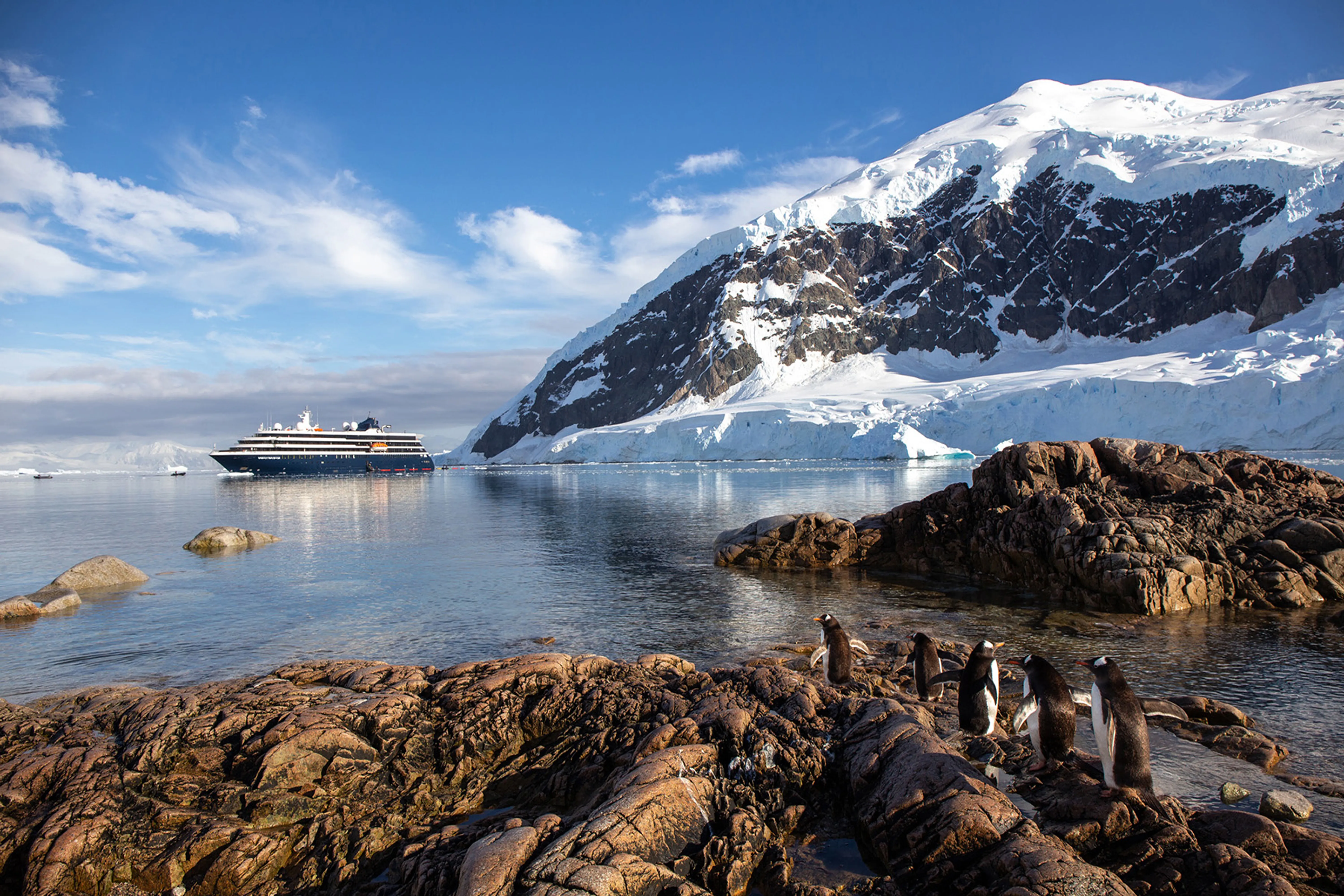
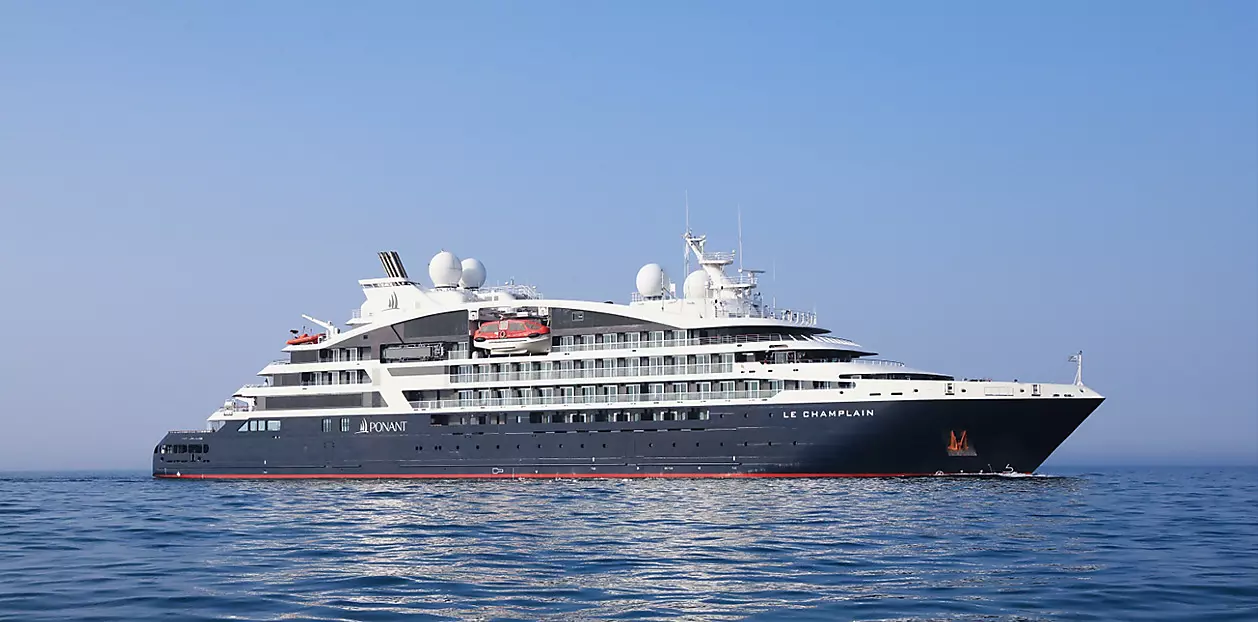
Ponant’s 13-ship fleet spans four distinct classes. For expedition: six Explorer-class vessels (Le Lapérouse, Le Champlain, Le Bougainville, Le Dumont d’Urville, Le Bellot, Le Jacques-Cartier — each carrying 184 passengers with Ice Class 1C), four Boreal-class vessels (Le Boréal, L’Austral, Le Soléal, Le Lyrial — each carrying 264 passengers), and Le Commandant Charcot (200 to 245 passengers with PC2 ice class). Beyond expedition: the 32-passenger sailing yacht Le Ponant and the 30-passenger Paspaley Pearl superyacht. The Ponant Yachting brand adds intimate catamarans for Mediterranean and tropical destinations. This fleet deploys simultaneously across Antarctica, the Arctic, the Kimberley, the Mediterranean, French Polynesia, Papua New Guinea, Northern Europe, Caribbean, Alaska, and Japan.
Seabourn’s five-ship fleet comprises two expedition vessels — Venture and Pursuit (264 passengers each, PC6 ice class) — and three ocean ships: Encore (604 guests), Ovation (604 guests), and the chartered Sojourn (458 guests, departing the fleet mid-2026 following sale to Mitsui O.S.K. Lines). The expedition ships cover Antarctica, the Arctic, the Kimberley, the Amazon, and South Pacific. The ocean ships cover the Mediterranean, Caribbean, Northern Europe, and Asia. Two expedition ships must be split between Antarctica, Arctic, Kimberley, and repositioning — limiting the number of departures in any single destination.
The ice class hierarchy matters: Le Commandant Charcot holds PC2 polar class — the world’s first and only luxury passenger vessel at this rating. The PC2 hull can break through multiyear ice up to 2.5 metres thick, giving Charcot access to the Geographic North Pole, the North Pole of Inaccessibility, deep Weddell Sea emperor penguin colonies, Peter I Island, East Antarctic coast, and the McClure Strait. Seabourn’s Venture and Pursuit hold PC6 — a capable rating that handles first-year ice and is perfectly adequate for standard Antarctic Peninsula and Arctic operations but cannot approach deep pack ice or the North Pole. However, Ponant’s Explorer and Boreal class ships hold only Ice Class 1C — significantly lower than Seabourn’s PC6. For standard Antarctic Peninsula voyages, Seabourn’s ships are technically more ice-capable than Ponant’s non-Charcot fleet.
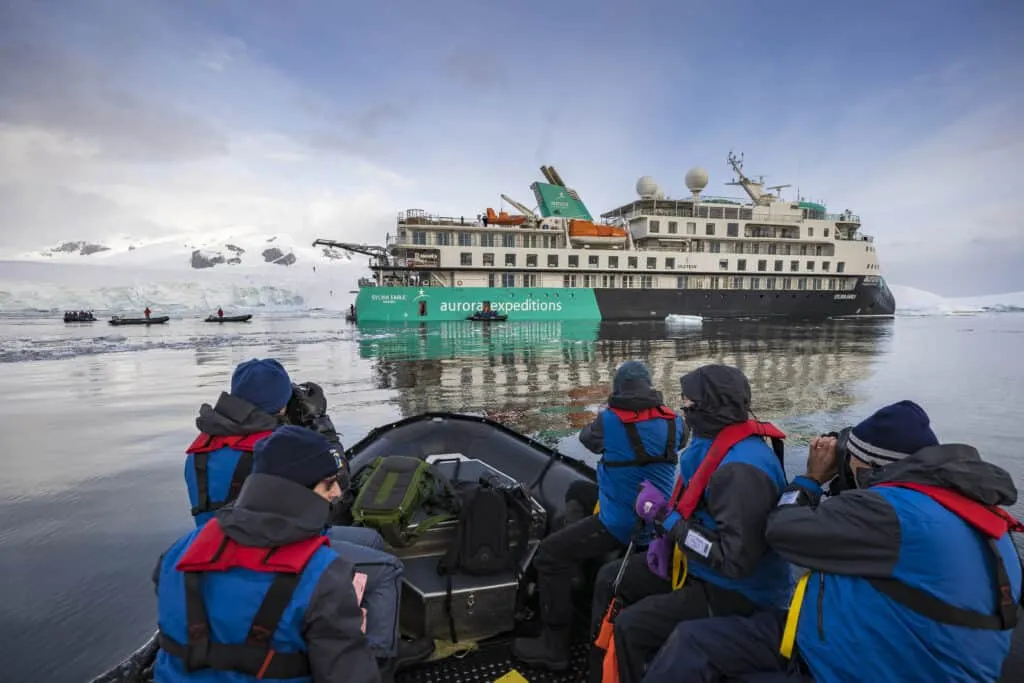
Expedition hardware comparison: Ponant’s Blue Eye underwater lounge (on all six Explorer-class ships) is entirely unique in the cruise industry — an observation room 2.5 metres below the waterline with whale-eye-shaped glass portholes, hydrophone audio, and Body Listening Sofas that vibrate with underwater acoustics. Charcot carries a helicopter (operations only), Sherp all-terrain vehicle, hovercraft, tethered hot-air balloon, snowmobiles, kayaks, and two purpose-built scientific laboratories. Seabourn’s expedition ships each carry 24 Zodiac RIBs, loan Swarovski binoculars to every guest, and offer a Cineflex bow camera live-streaming to suites. The submarine programme — two custom-built submersibles per ship — ended in March 2026 due to low participation, operational complexity, and regulatory restrictions.
Where each line excels
Ponant excels in:
- Fleet diversity and destination breadth. Thirteen ships across four classes covering every major expedition and ocean cruise region. More departures, more destinations, and more itinerary options than any single competitor.
- Unmatched polar reach. Le Commandant Charcot accesses the Geographic North Pole, deep Weddell Sea pack ice, emperor penguin colonies, Peter I Island, and East Antarctica from Hobart — destinations no other luxury vessel can reach.
- French culinary excellence. Ducasse-curated dining on Charcot, French chefs fleet-wide, the cheese course, the wine programme, Henri Abelé champagne.
- The Blue Eye underwater lounge. A feature no competitor offers on any ship, adding a dimension to Explorer-class voyages that cannot be replicated.
- Solo traveller value. Waived single supplements on 160-plus voyages make Ponant the strongest luxury line globally for solo travellers.
- Lower entry pricing. Approximately A$10,000 less per person for a standard Antarctic Peninsula voyage compared to Seabourn.
Seabourn excels in:
- Cabin perfection. The most luxurious expedition suites afloat — marble bathrooms, heated floors, separate bathtubs, in-suite clothes dryers, and Adam Tihany interiors. This standard carries across both expedition and ocean ships.
- Included gratuities. The simplicity of a true no-tipping culture — tipping neither required nor expected — removes friction on both expedition and ocean voyages.
- Wellness programme. The Dr Andrew Weil partnership creates a holistic approach to onboard wellbeing that is more philosophically grounded than any competitor.
- Expedition team integration. Staff routinely dine with guests, creating organic connections that enhance the expedition experience.
- Caviar on Ice. The polar adaptation of Seabourn’s signature Caviar in the Surf — champagne and caviar served from an ice bar on deck — captures the brand’s personality perfectly.
- Ultra-luxury service culture. Staff who know your name within 48 hours, butlers who anticipate your needs, and a private-club atmosphere refined over nearly four decades.
Standout itineraries for Australian travellers
Ponant
Kimberley: Broome to Darwin (10 nights, Explorer-class Le Jacques-Cartier, 184 passengers, May to September) — Ponant’s most accessible Australian product. Blue Eye underwater lounge, French cuisine, all-inclusive with champagne, 16 departures in 2026. Fly-Stay-Cruise from A$13,670 with return flights from Australian cities. The smaller ship at 184 passengers lands more efficiently than any 264-passenger competitor at Kimberley sites. The Paspaley Pearl superyacht offers an ultra-intimate 30-guest alternative on the same coastline.
Le Commandant Charcot: Emperor Penguins of the Weddell Sea (approximately 14 nights from Punta Arenas) — The voyage only Charcot can do. PC2 hull punches through heavy Weddell Sea pack ice to approach the emperor penguin colony at Snow Hill Island — a destination no other luxury ship can reach. Ducasse-curated dining, tethered hot-air balloon rides, hovercraft excursions. From approximately A$18,000 per person. Fly Sydney or Melbourne to Santiago, connect to Punta Arenas.
Le Commandant Charcot: Geographic North Pole (approximately 15 nights from Longyearbyen) — The ultimate polar voyage. The only luxury passenger vessel capable of reaching 90 degrees North. Five departures in 2026. From approximately US$46,450 per person. For the Australian traveller with the budget and the ambition, this is the voyage that sits at the very top of the bucket list.
Explorer-class Antarctic Peninsula (10 to 11 nights from Ushuaia) — The entry point to Ponant’s Antarctic programme. All-balcony, Blue Eye, French cuisine, included Buenos Aires hotel and Ushuaia charter flight. From approximately A$11,000 per person — substantially less than Seabourn’s comparable product. The 184-passenger capacity sits within the IAATO 200-passenger threshold for efficient landings.
East Antarctica from Hobart aboard Charcot — Charcot’s Australian debut in Hobart in February 2026 opened a new gateway. Voyages through Adélie Land, Wilkes Land, Shackleton Ice Shelf, and Queen Mary Land. Domestic flights from Australian cities to Hobart make this the most accessible deep-Antarctic voyage for Australian travellers.
Seabourn
Kimberley: Broome to Darwin (10 nights, Seabourn Pursuit, 264 passengers, May to September) — Seabourn’s flagship Australian product. All-suite, all-veranda, marble bathrooms, included gratuities, Wunambal Gaambera cultural experiences with the traditional landowners who serve as godparents of the ship. Optional helicopter flights to Mitchell Falls. Eight departures in 2026 with four confirmed for 2027. From A$17,799 per person. The most luxurious cabin experience on the Kimberley coast.
The Great White Continent (12 days, Seabourn Venture, roundtrip Ushuaia) — Seabourn’s Antarctic introduction. PC6 ice class, 24 Zodiacs, Buenos Aires hotel and charter flights included. All-suite accommodation with separate bathtubs and clothes dryers — particularly welcome after cold Antarctic landings. From approximately A$21,500 per person.
Antarctica, South Georgia and Falklands (22 days, Seabourn Venture) — The comprehensive Antarctic programme including South Georgia’s cathedral king penguin colonies and the British character of the Falklands. From approximately A$48,000 per person. A significant investment, but 22 days delivers a depth of Antarctic immersion that shorter voyages cannot match.
Across Three Continents (82 days, Seabourn Pursuit, departing Broome September 2026) — An extraordinary linked voyage from the Kimberley through Oceania to Antarctica. For the Australian traveller with the time and budget, this is the ultimate grand expedition — beginning in familiar Australian waters and ending among Antarctic icebergs.
Northwest Passage (24 days, Seabourn Venture, two departures August 2026) — One of expedition cruising’s legendary routes, crossing from Greenland to Alaska through the Arctic archipelago. Complimentary economy airfare from home cities and full-service laundry included on these sailings — an unusually generous inclusion for Seabourn.
Ship-by-ship recommendations
Ponant — which ship for which traveller
Explorer-class (Le Lapérouse, Le Champlain, Le Bougainville, Le Dumont d’Urville, Le Bellot, Le Jacques-Cartier) — The ideal introduction to Ponant. At 184 passengers, these identical sisters are intimate without being cramped. The Blue Eye underwater lounge is the standout feature no competitor can match. The retractable marina platform enables water sports in warmer destinations. Best for first-time expedition travellers, the Kimberley, and standard Antarctic Peninsula voyages. The 184-passenger capacity falls below the IAATO 200-passenger threshold — a meaningful advantage for Antarctic landing efficiency.
Le Commandant Charcot — The ship for experienced expedition travellers who have sailed the Peninsula and want to go deeper. The PC2 icebreaker capability opens destinations that are genuinely exclusive — the North Pole, emperor penguin colonies, deep East Antarctica. Ducasse-curated dining at NUNA elevates the culinary experience above the rest of the fleet. Best for bucket-list polar voyages, couples seeking the ultimate expedition luxury, and travellers who value the intersection of science and exploration.
Boreal-class (Le Boréal, L’Austral, Le Soléal, Le Lyrial) — The oldest ships in the fleet (2010 to 2015), offering a more affordable entry point at 264 passengers. No Blue Eye lounge. These ships deploy to the Kimberley (Le Soléal), Mediterranean, and seasonal polar itineraries. Best for budget-conscious luxury travellers who want the Ponant experience without the premium of Charcot. Note that the 264-passenger capacity exceeds the IAATO 200-passenger threshold for Antarctic operations.
Seabourn — which ship for which traveller
Seabourn Pursuit — The Kimberley specialist and the more diverse expedition ship. Named with the Wunambal Gaambera people as godparents. Deploys to the Kimberley (May to September), South Pacific, and Antarctica. Best for Australian travellers — the Kimberley programme is Pursuit’s signature product, and its 2026 season offers eight departures. Also the ship for the extraordinary 82-day Across Three Continents voyage.
Seabourn Venture — The primary Antarctic and Arctic vessel. Deploys to the Antarctic Peninsula, South Georgia, Svalbard, Greenland, and the Northwest Passage. Near-identical to Pursuit in every specification. Choose based on itinerary rather than ship preference. Best for polar-focused travellers and those drawn to the legendary Northwest Passage route.
Ocean fleet (Encore, Ovation) — For travellers who want Seabourn’s ultra-luxury service culture without the expedition context. Mediterranean, Caribbean, Northern Europe, and Asia itineraries. The same all-suite, all-veranda, all-inclusive model in a larger, more traditional luxury cruise setting. Best for couples seeking refined ocean cruising, repeat Seabourn loyalists, and those who appreciate the Dr Weil wellness programme in a warm-water context.
For Australian travellers specifically
Australian market presence: Ponant maintains its APAC headquarters in Sydney with dedicated leadership — CEO Asia Pacific Deb Corbett and Chief Commercial Officer APAC Maxime Farrenq. The APAC region contributes approximately 20 per cent of Ponant’s global revenue, making Australian travellers a strategically important market. Ponant runs annual Discovery Sessions across five Australian cities with exclusive booking offers and regularly prices in Australian dollars through local trade partners. The company’s contact number is 1300 737 178. Seabourn operates through Carnival Australia in North Sydney with Director of Sales Tony Archbold, accessible via 13 24 02. Both have competent Australian operations, but Ponant’s dedicated APAC structure and revenue commitment run deeper.
Getting to the ships — Kimberley: Identical for both lines. Broome and Darwin are served by domestic flights from Perth, Sydney, Melbourne, and Brisbane. No international travel required. This is the most accessible expedition product for Australian travellers from either line — and the destination where the two lines compete most directly.
Getting to the ships — Antarctica: Both lines embark from Ushuaia, with Buenos Aires as the gateway. Fly from Sydney or Melbourne via Santiago or Auckland (approximately 15 to 20 hours), then take the included charter flight to Ushuaia. Ponant also offers Charcot departures from Hobart for East Antarctica — a unique Australian advantage eliminating the South American routing entirely. Domestic flights from Australian cities to Hobart make this the most accessible deep-Antarctic voyage available.
Le Commandant Charcot’s Australian debut: Charcot arrived in Hobart on 14 February 2026 — the first visit to Australia by the world’s only luxury PC2 icebreaker. This positions Hobart as a gateway to East Antarctica for the Australian market and signals Ponant’s commitment to building an Australian departure programme for its most extraordinary ship.
Getting to the ships — ocean voyages: Both lines deploy to the Mediterranean, where Australians typically fly via Singapore, Dubai, or European hubs. Ponant additionally deploys ships to French Polynesia (accessible via Auckland or direct from Sydney to Papeete), the Caribbean, Alaska, and Japan. Seabourn’s ocean fleet covers similar Mediterranean and Northern European ground from its smaller three-ship base.
Currency and booking: Ponant regularly offers AUD pricing through Australian agents and its APAC office. Seabourn offers AUD pricing through Australian travel agents including Clean Cruising, TripADeal, and Qantas Tours. Both can be booked in Australian dollars without exchange rate exposure.
Brand stability considerations: Ponant, owned by Groupe Artémis (the Pinault family’s private holding company), operates with the long-term investment horizon typical of family-controlled luxury groups. The March 2025 rebrand to Ponant Explorations and formation of the Ponant Explorations Group (absorbing Paul Gauguin Cruises and Aqua Expeditions) signals expansion rather than contraction. Seabourn, owned by Carnival Corporation, faces persistent industry speculation about its future within the group. Carnival has sold two Seabourn ocean ships (Odyssey in 2024, Sojourn in 2025), and unconfirmed rumours about potential sale of the expedition ships continue to circulate. Seabourn’s president was appointed in a dual role shared with Holland America Line. The onboard product remains excellent, and schedules are published through 2027 — but travellers booking well in advance should ensure comprehensive travel insurance with supplier insolvency coverage.
The onboard atmosphere
Both lines create an atmosphere of refined exploration — but the cultural DNA produces distinctly different onboard experiences, whether on an expedition ship navigating polar waters or an ocean ship cruising the Aegean.
Ponant’s atmosphere is distinctly French and European. French officers command the bridge. French chefs run the kitchens. All announcements, menus, signage, and lectures are bilingual French and English — a genuine differentiator for travellers who value the European cultural dimension, though it roughly doubles the duration of every presentation. The passenger mix skews French and European, with a growing Australian contingent. The design aesthetic channels understated Parisian elegance with muted tones and quality materials — more Left Bank salon than American country club. After 6 PM, Casual Chic applies: men in long trousers and collared shirts, women in smart casual. One or two gala evenings per sailing call for dark suits or cocktail dresses. The Soirée Blanche (White Party) on warmer-water itineraries has guests dressing all-white for deck-party music. French passengers tend to dress more formally than Anglo guests — an Australian traveller in smart casual will be comfortable but may feel slightly underdressed beside the French women in heels. On ocean voyages in the Mediterranean or French Polynesia, this atmosphere is even more pronounced. The overall feel is intellectually engaged, aesthetically conscious, and conversational rather than programmed.
Seabourn’s atmosphere is American ultra-luxury translated into every context — expedition or ocean. Adam Tihany’s lodge-style interiors on the expedition ships feature faux fireplaces, fur pillows, and green velveteen banquettes. On ocean ships, the aesthetic is polished contemporary luxury. No formal nights on expedition ships — eliminated in January 2023. After 6 PM, elegant casual applies: slacks with a collared shirt or sweater, jacket optional. Elegant jeans are welcome in all dining venues. The passenger mix is international but weighted toward North American, British, and Australian guests — experienced luxury cruisers, many of them Seabourn loyalists who know the service culture and expect it replicated whether the ship is in Antarctica or the Mediterranean. Staff know guests by name within 48 hours. Evenings are quiet contemplation — the Expedition Lounge or Constellation Lounge serves as the social hub for sharing stories and photographs over cocktails, with live music and enrichment lectures. The feel is private club in the wilderness — or private club in the harbour — elegant, relaxed, and naturally refined.
The bilingual factor: Ponant’s bilingual operations are either a selling point or a friction point depending on the guest. For travellers who enjoy the European cultural dimension — French language adding texture to a polar briefing or a Mediterranean port talk — it enriches the experience. For travellers who find every presentation doubled in length, it is a persistent mild frustration. Seabourn operates exclusively in English across its entire fleet.
The bottom line
Ponant and Seabourn represent two distinct philosophies of luxury cruising — both capable of taking you from the Mediterranean to the Antarctic, both pouring champagne freely, both staffed by people who genuinely care about the experience they deliver. The choice between them reveals what you value most.
Choose Ponant when you want Le Commandant Charcot — the only luxury vessel capable of reaching the North Pole, deep Antarctic pack ice, and emperor penguin colonies through heavy multiyear ice. Choose Ponant when fleet diversity matters — 13 ships across four classes offering more departures, more destinations, and more itinerary options than any competitor, from polar exploration to Mediterranean cruising to French Polynesian island-hopping. Choose Ponant when French culinary excellence, Ducasse-curated dining on Charcot, and the Blue Eye underwater lounge are priorities. Choose Ponant when you are a solo traveller, because the waived single supplement on 160-plus voyages can save tens of thousands of dollars. Choose Ponant when the lower entry price shapes the decision — approximately A$11,000 for an Antarctic Peninsula voyage versus Seabourn’s A$21,500. And choose Ponant when a deeply invested Australian APAC headquarters, Hobart departures on Charcot, and AUD pricing through local trade partners matter.
Choose Seabourn when the cabin experience is the priority — the most luxurious suites in expedition cruising, with marble bathrooms, heated floors, separate bathtubs, in-suite clothes dryers, and Adam Tihany interiors that set a standard no competitor matches at entry level. Choose Seabourn when included gratuities and the simplicity of a true no-tipping culture appeal across both expedition and ocean ships. Choose Seabourn when the refined American ultra-luxury service tradition — staff who know your name, butlers who anticipate your needs, a private-club atmosphere — is what you seek. Choose Seabourn when the Dr Andrew Weil wellness programme adds a dimension of onboard wellbeing that Ponant does not match. Choose Seabourn when the relaxed dress code, English-only operations, and international-but-Anglo passenger mix create a more comfortable social environment. Choose Seabourn for the Kimberley when the Wunambal Gaambera cultural programme and the option of helicopter access to Mitchell Falls add dimensions that matter to you.
For the Australian traveller who wants it all, the ideal cruise career might begin with a Ponant Explorer-class Kimberley voyage for the Blue Eye and French cuisine at A$13,670, continue with a Seabourn Pursuit Kimberley for the suite experience and cultural programme, advance to a Ponant Charcot East Antarctica from Hobart for a journey no other luxury ship can undertake, and circle back to Seabourn’s ocean fleet for a Mediterranean voyage in the refined comfort of an Ovation or Encore Veranda Suite. Together, these two lines cover the entire luxury cruise spectrum — expedition and ocean, French and American, boutique and ultra-luxury — and for Australian travellers with the ambition to explore both, the combination is not excess. It is simply taking full advantage of two companies that each do something genuinely extraordinary.