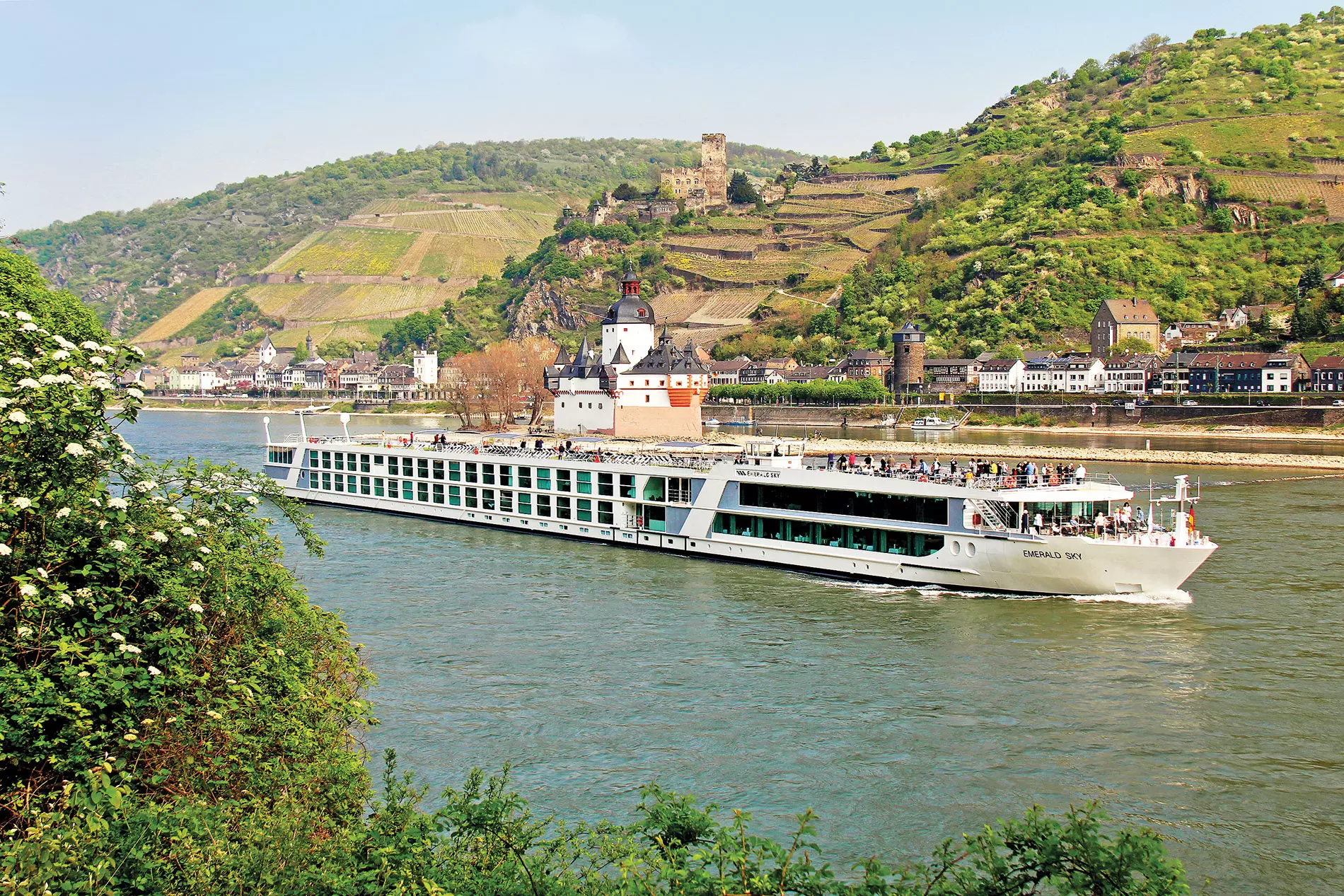
Oceania Cruises and SeaDream Yacht Club both reject the mega-ship model, but they define intimacy at radically different scales — one is the finest mid-size culinary cruise line afloat, the other a twin-yacht operation carrying just 112 guests with a near-perfect crew ratio. Jake Hower unpacks their inclusions, dining, fleet, and value for Australian travellers.
| Oceania Cruises | SeaDream Yacht Club | |
|---|---|---|
| Category | Luxury | Yacht-Style / Ultra-Luxury |
| Rating | ★★★★☆ | ★★★★☆ |
| Fleet size | 8 ships | 2 ships |
| Ship size | Mid-size (1,000-2,500) | Yacht (under 120) |
| Destinations | Mediterranean, Asia, South Pacific, Caribbean | Caribbean, Mediterranean, Northern Europe |
| Dress code | Country club casual | Casual elegance |
| Best for | Food-focused culturally curious cruisers | Ultra-intimate yacht lifestyle travellers |
Oceania is the best-value upper-premium line at sea — Jacques Pepin's culinary programme across up to ten dining venues, included speciality restaurants, and an approachable Country Club Casual atmosphere on mid-size ships carrying 684 to 1,250 guests. SeaDream counters with genuine mega-yacht intimacy on just two 112-guest vessels, an open bar with premium wines and spirits, complimentary water sports from the marina platform, and the kind of first-name service that only a 1:1 crew ratio can deliver. For Australians wanting culinary breadth, veranda staterooms, and classic itineraries at a competitive per-diem, choose Oceania. For Australians drawn to ultra-intimate yachting with all-inclusive drinks, Balinese Dream Beds under the stars, and small harbours no cruise ship can reach, choose SeaDream.
The core difference
Oceania Cruises and SeaDream Yacht Club are rarely shortlisted together — and that itself reveals the nature of the choice. They occupy fundamentally different positions within luxury cruising, separated not by quality but by scale, philosophy, and the kind of holiday each delivers.
Oceania’s identity is culinary. The line’s trademarked claim to “The Finest Cuisine at Sea” is backed by Jacques Pepin — former personal chef to three French heads of state including Charles de Gaulle, author of thirty cookbooks, host of thirteen PBS television series, and Oceania’s Executive Culinary Director since 2003. On the O-class ships (Marina, Riviera, and the incoming Allura), guests choose from up to ten dining venues — Jacques (French bistro), Polo Grill (American steakhouse), Red Ginger (pan-Asian), Toscana (Italian), Aquamar Kitchen (wellness), and more — all included without surcharges. The mid-size format (684 to 1,250 guests) creates a relaxed, Country Club Casual atmosphere where jackets and ties are never required. Under Norwegian Cruise Line Holdings alongside Regent Seven Seas and Norwegian, Oceania operates a growing fleet focused on the Mediterranean, Caribbean, Alaska, Asia, and increasingly Australian waters.
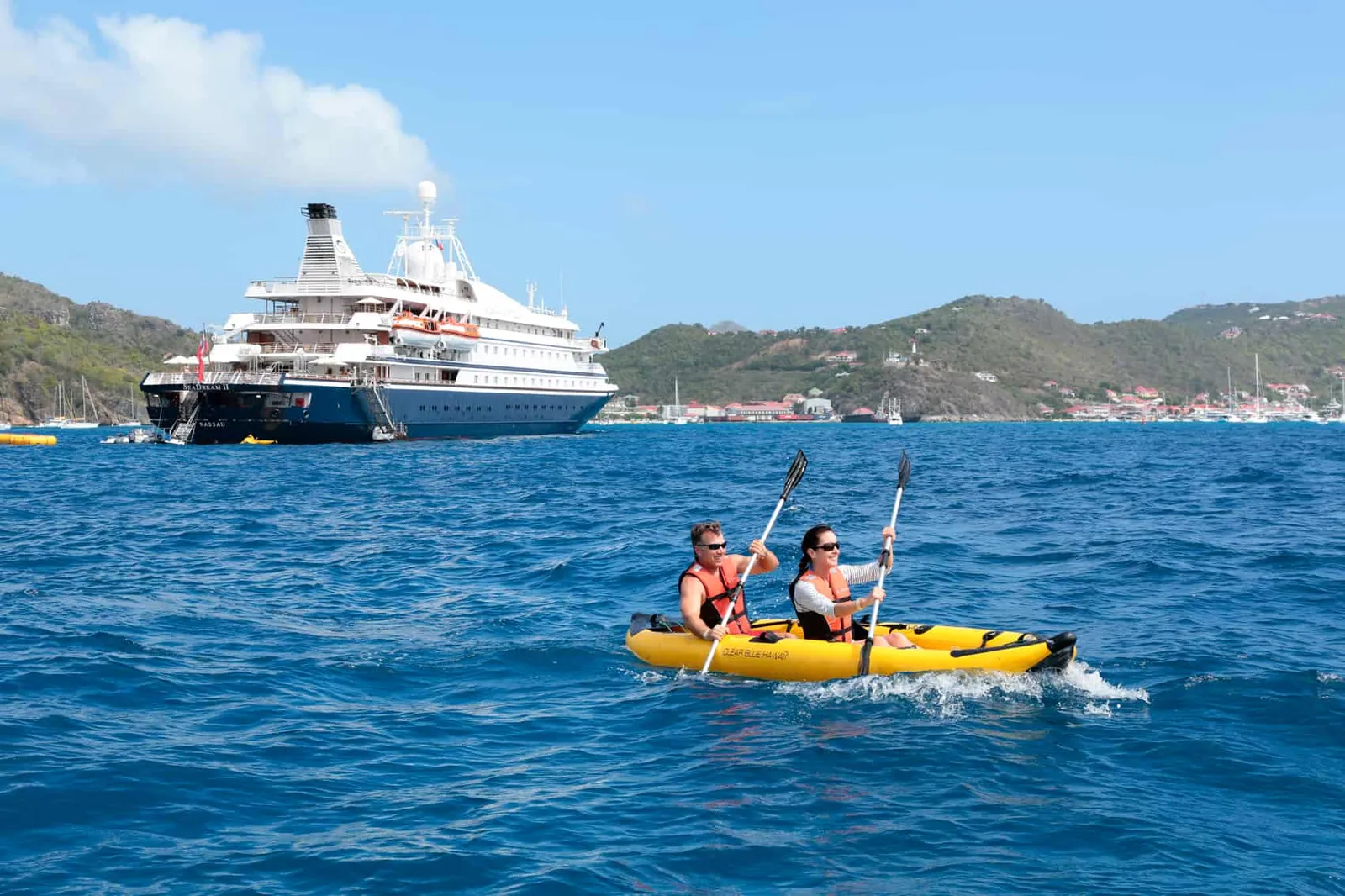
SeaDream’s identity is yachting. The line’s founding principle — “It’s yachting, not cruising” — is not a marketing conceit but an operational reality. Two twin mega-yachts, SeaDream I and SeaDream II, each carry a maximum of 112 guests served by 95 crew, delivering a near-perfect 1:1 crew-to-guest ratio. Founded in 2001 by Atle Brynestad — the Norwegian entrepreneur who also founded Seabourn — SeaDream purchased the former Sea Goddess I and Sea Goddess II from Carnival Corporation and reimagined them as floating private yachts. The result is something genuinely different from cruising: no fixed itineraries carved in stone, no production shows, no formal nights, no queues, no announcements over the PA system. The marina platform drops down at anchor for kayaking, paddleboarding, jet skiing, and the signature Champagne and Caviar Splash. Balinese Dream Beds on the top deck invite guests to sleep under the stars as the yacht sails through the night.
For Australian travellers, the practical question is often straightforward. If you want classic ocean cruising with the widest restaurant choice in the luxury segment, veranda staterooms, Australian departures, and a competitive per-diem, Oceania delivers exceptional value. If you want the most intimate luxury experience afloat — 112 guests maximum, an open bar from morning to night, water sports off the stern, and access to harbours that no cruise ship can enter — SeaDream delivers something no other line replicates.
The ships share no ports and almost no passengers. They complement each other perfectly.
What is actually included
Both lines market inclusivity, but the specifics differ in ways that matter when calculating total cost — and the details reveal different philosophies about what a luxury fare should cover.
Oceania’s “Your World Included” programme (launched October 2024) covers all speciality restaurant dining without surcharges, shipboard gratuities, unlimited Starlink Wi-Fi, speciality coffees and non-alcoholic beverages, still and sparkling Vero Water, gourmet ice cream, laundry services, in-stateroom dining, and group fitness classes. From September 2025 bookings, guests choose one amenity: either complimentary wine and beer by the glass during lunch and dinner hours, or a shore excursion credit scaled by voyage length (up to USD 600 per guest). If neither is selected, a non-use credit applies. Notably, premium spirits, cocktails, wines by the bottle, spa treatments, and shore excursions beyond any credit remain additional costs. La Reserve by Wine Spectator and the Privee Dom Perignon experience carry surcharges.
SeaDream’s all-inclusive model takes a different approach. The fare covers an open bar available at all hours — premium wines, champagne, spirits, cocktails, beer, and soft drinks served anywhere on the yacht from the Top of the Yacht Bar’s 360-degree panorama to your sun lounger by the pool. All dining is included without restriction. Crew gratuities are fully covered — tipping is neither required nor expected. The marina platform’s full complement of water sports equipment — jet skis, kayaks, paddleboards, wakeboards, Hobie Cat catamarans, snorkelling gear, and the floating trampoline — is complimentary. What SeaDream does not include: Wi-Fi (charged at USD 35 per day or USD 99 per week for unlimited satellite access), shore excursions (Yachting Land Adventures are priced separately), spa treatments, premium reserve wines beyond the standard open bar, and flights.
The net effect for Australian travellers: SeaDream’s open bar represents genuine, tangible value — champagne, spirits, and cocktails from dawn to the small hours without signing a single chit. On a seven-night voyage, a couple ordering freely could easily consume AUD 1,500 to 2,500 in beverages that SeaDream includes but Oceania would charge for (unless the beverage amenity is selected). Oceania counters with included Wi-Fi worth approximately AUD 400 per couple per week, included laundry services (a meaningful benefit on longer voyages), and the widest range of complimentary speciality dining in the segment. The calculation is not simple, and the “better” inclusion model depends entirely on how you travel.
For drinks-inclusive peace of mind, SeaDream wins. For digital connectivity, dining breadth, and laundry, Oceania wins. Both include gratuities. Neither includes spa treatments or flights.
Dining and culinary experience
Both lines boast genuine culinary credentials — and both can credibly claim to serve some of the finest food at sea. The experience, however, is as different as a ten-restaurant precinct and a private chef’s table.
Oceania is a restaurant ship. On O-class vessels, guests choose nightly from Jacques (French bistro, named for Pepin), Polo Grill (premium American steakhouse), Red Ginger (pan-Asian, praised for its lobster tempura and Thai curries), Toscana (Italian heritage with handmade pastas), Aquamar Kitchen (wellness-inspired with calorie-conscious and plant-forward menus), The Grand Dining Room (main restaurant with over 270 rotating recipes developed under Pepin’s direction), Terrace Cafe (a buffet that converts to themed evenings — Tuscan, Asian, Middle Eastern), and Waves Grill (casual poolside, transforming to a pizzeria after dark). On R-class ships (Regatta, Insignia), the count drops to six venues but the quality holds. The Culinary Center on O-class ships offers hands-on cooking classes at eighteen individual workstations — a genuine professional teaching kitchen that is unique in the luxury segment. Critically, every restaurant except La Reserve and Privee is included without surcharges. The breadth of choice is unmatched: if you want French bistro tonight, Italian tomorrow, and Asian the night after, Oceania is the only line offering that range at this fare level.
SeaDream is a private kitchen. The yacht carries a single culinary team preparing everything a la minute — made to order, fresh, with no pre-preparation or batch cooking. The Dining Salon (Deck 2, seating 110) serves multi-course dinners with amuse-bouche, and the Topside Restaurant offers al fresco dining where all 112 guests can eat outdoors simultaneously — a claim no cruise ship can make. SeaDream holds the distinction of being rated the “Highest Rated Restaurant at Sea” by Conde Nast Johansens and ranks among Berlitz’s top five lines for food lovers. The signature Le Menu de Degustation presents a multi-course tasting menu with wine pairings — highlights include Terrine de Foie Gras with pear compote and port wine sauce, grilled halibut with gingered white asparagus and caviar beurre blanc, and the celebrated 24-Carat Gold Leaf-Topped Fondant au Chocolat with vanilla ice cream. SeaDream also offers the only raw food or “living food” menu at sea — entirely plant-based dishes prepared with raw, organic ingredients, none heated above 48 degrees Celsius. Dietary accommodations span vegetarian, vegan, gluten-free, pescatarian, keto-friendly, and high-protein menus. Wine pairings at dinner are included, drawn from a thoughtfully curated list of Old and New World selections. An exclusive 12-tea selection prepared by a master blender in Kent rounds out the beverage programme.
The verdict is clear by purpose. Oceania delivers the widest variety of complimentary dining venues in the luxury segment — you could eat at a different restaurant every night for over a week without repeating. SeaDream delivers the most intimate culinary experience afloat — a single kitchen cooking everything to order for 112 guests, with wine included, in a setting that feels like a private dinner party rather than a restaurant. For food-motivated travellers who want nightly variety and choice, Oceania. For those who value made-to-order precision, included wine, and the intimacy of a yacht galley cooking for fewer guests than most restaurant sittings, SeaDream.
Suites and accommodation
This comparison is shaped by the fundamental difference between a mid-size cruise ship and a mega-yacht — and by the fact that SeaDream’s vessels predate the balcony revolution in cruise design.
Oceania’s O-class ships (Marina, Riviera, Allura) offer Veranda staterooms from 282 to 291 square feet including a private veranda — generous for the segment and larger than entry-level cabins on most luxury lines. Penthouse Suites reach 440 square feet. The Owner’s Suites span approximately 2,000 square feet. All accommodation features Prestige Tranquility Beds, Bulgari bath amenities, and twice-daily housekeeping. Butler service is available from Penthouse level upward. On the smaller R-class ships (Regatta, Insignia, carrying 684 guests), staterooms are tighter at 165 to 216 square feet in standard categories, though still functional and well-appointed.
SeaDream’s accommodation reflects the yacht’s 1984 and 1985 origins and its 2022 USD 10-million refurbishment. Yacht Club Staterooms average 195 square feet across Decks 2, 3, and 4 — no balconies, but ocean views through picture windows (Decks 3 and 4) or twin 17-inch round portholes (Deck 2). The 2022 renovation stripped staterooms back to bare steel and rebuilt everything: new 55-inch flat-screen televisions, USB charging, Nespresso machines in suites, marble-lined bathrooms with multi-jet showers, Elm Organics bath products, and luxury robes and slippers. Commodore Suites are created by combining two Yacht Club Staterooms, averaging 390 square feet with two full bathrooms — a practical option for those wanting space. The Admiral’s Suite (375 square feet, Deck 4) features three picture windows, a separate living and dining area, and a soaking tub. The Owner’s Suite (447 square feet, mid-ship Deck 3) includes a separate master bedroom, a soaking tub with ocean views, and a dining area for entertaining.
The tradeoff is intentional and philosophical. SeaDream’s compact cabins reflect a yacht way of life where the communal decks — the pool, the Balinese Dream Beds, the Top of the Yacht Bar, the marina platform — are the primary living spaces. Guests spend their days on deck, in the water, or ashore, returning to the stateroom primarily to sleep and shower. Oceania’s larger staterooms suit a classical cruising model where sea days, in-suite dining, veranda breakfasts, and evening relaxation in your private space are central to the experience. The absence of balconies on SeaDream is the single most discussed limitation in guest reviews — and it is also the single clearest signal that this is a yacht, not a cruise ship.
For travellers who consider a private veranda non-negotiable, the choice is made. Oceania. For travellers who would rather have an open bar and a marina full of jet skis than a private balcony, SeaDream’s yacht philosophy delivers.
Pricing and value
The pricing gap between these lines is significant on paper but narrows substantially when comparing total cost — and the calculation depends heavily on how you drink, connect, and explore ashore.
Oceania’s per-diem on classic itineraries runs approximately AUD 600 to 800 per person per night for entry-level Veranda staterooms on O-class ships. A 10-night Mediterranean voyage costs roughly AUD 8,000 to 10,000 per person including gratuities, all dining, and unlimited Wi-Fi. Add the beverage amenity (included wine and beer at meals) or shore excursion credit, and the value proposition strengthens further. Oceania is consistently described as offering luxury dining at premium prices — a positioning that resonates strongly with value-conscious Australian travellers.
SeaDream’s per-diem runs approximately AUD 900 to 1,200 per person per night for Yacht Club Staterooms, with seven-night Caribbean voyages starting from roughly USD 4,500 to 7,000 per person and Mediterranean sailings from approximately USD 5,500 per person. Commodore Suites command roughly AUD 1,300 per night; the Owner’s Suite approximately AUD 2,300 per night. These fares include the open bar, all dining, gratuities, and water sports — a genuinely comprehensive package.
The total-cost calculation for a 10-night Mediterranean comparison: Oceania in a Veranda stateroom costs roughly AUD 8,000 to 10,000 per person. SeaDream in a Yacht Club Stateroom costs roughly AUD 9,000 to 12,000 per person. SeaDream’s open bar inclusion saves approximately AUD 750 to 1,250 per person in drinks. SeaDream’s included water sports add further value. Oceania’s included Wi-Fi saves roughly AUD 200 to 350 per person. The net premium for SeaDream after adjusting for inclusions is often AUD 500 to 1,500 per person — buying a dramatically different experience: 112 guests versus 1,250, a 1:1 crew ratio versus roughly 1.7:1, and access to ports that mid-size ships cannot enter.
For Australian travellers, additional costs matter. SeaDream’s embarkation ports (Barcelona, Athens, Dubrovnik, San Juan, Barbados) require international flights from Australian gateways. Oceania offers Sydney departures, eliminating airfare entirely for some itineraries. When flights are factored in — typically AUD 2,000 to 4,000 per person return to Europe or the Caribbean — SeaDream’s total holiday cost increases meaningfully. Oceania’s domestic departure advantage is significant for price-sensitive travellers.
Neither line is cheap. But Oceania delivers arguably the best dining-per-dollar in luxury cruising, while SeaDream delivers arguably the most intimate all-inclusive experience at sea. Both represent genuine value within their respective categories.
Spa and wellness
Both lines offer spa facilities, but at scales that reflect their very different ship sizes — and with philosophies that mirror their broader identities.
Oceania’s Canyon Ranch SpaClub operates across the fleet in partnership with the renowned Tucson-based wellness brand. On O-class ships, the spa spans approximately 5,000 square feet with treatment rooms, a thalassotherapy pool, an aromatic steam room, a Finnish sauna, and a relaxation lounge. The fitness centre features Technogym equipment with panoramic ocean views. Signature treatments include the Canyon Ranch Intensive Massage (80 minutes) and Elemis facial therapies. The partnership brings onshore Canyon Ranch expertise to sea — health consultations, nutrition counselling, and fitness assessments are available alongside standard spa services. The dedicated Aquamar Kitchen restaurant serves spa-inspired cuisine, extending the wellness philosophy from the treatment room to the plate. Group fitness classes are complimentary; spa treatments carry additional charges.
SeaDream’s Asian Spa and Wellness Centre is the only Thai-certified spa service at sea — a distinction that reflects the line’s commitment to authentic technique over branded product. Highly trained Thai-certified therapists offer Traditional Thai Massage, Sisley Paris facial treatments, detoxifying body wraps, and soothing aroma massages for individuals and couples. The spa houses two treatment rooms, three steam showers, a sauna, and an open-air private massage area on deck where treatments are delivered with ocean breezes — weather permitting. The Fitness Centre on Deck 4 carries treadmills, elliptical and recumbent bikes, and free weights with ocean views. Complimentary sunrise yoga and tai chi sessions are offered daily on deck. Sixteen laps around Deck 6 equals one mile for walking or running. Spa treatments carry additional charges.
The difference mirrors the broader comparison. Oceania offers the more comprehensive facility in partnership with an established wellness brand — Canyon Ranch’s name carries weight, and the 5,000-square-foot footprint on O-class ships provides genuine resort-spa scale. SeaDream offers something more personal — a Thai-certified spa where the therapist-to-guest ratio is remarkable, where you can receive a massage on deck watching the sea pass, and where the daily yoga session might have six participants rather than sixty. For spa-motivated travellers who want variety of treatments and a dedicated wellness restaurant, Oceania. For those who value authenticity, intimacy, and the unique pleasure of an open-air massage on a yacht, SeaDream.
Entertainment and enrichment
Neither line is a floating theatre — and both attract travellers who consider that a feature rather than a flaw. The evening philosophies, however, differ in ways that matter.
Oceania’s enrichment programme centres on culinary education. The Culinary Center on O-class ships offers hands-on cooking classes at eighteen individual workstations — a professional teaching kitchen where guests learn regional cuisines relevant to the itinerary under expert instruction. Guest lecturers cover history, science, culture, and destination-specific topics. The Martini Bar hosts live piano and cocktail gatherings each evening. The atmosphere after dinner is quiet, social, and unhurried — a jazz trio, a well-made cocktail, conversation. There are no production shows, no theatre company, no cabaret cast. The dress code is Country Club Casual at all times — no formal nights, ever. There is a casino — unusual for a line at this level. Some travellers find the evenings understated; others appreciate the absence of forced programming.
SeaDream’s evening atmosphere is even quieter — deliberately so, and by design. Entertainment is intentionally minimal: a pianist in the Piano Bar, occasional guitarists and singers at the Top of the Yacht Bar bringing their own distinctive beat, and late-night DJ sets that add a lively vibe on warmer evenings. Trivia games appear in the daily programme, and the Casino offers a blackjack table and modest gaming. But the signature SeaDream evening is unstructured — conversation over champagne at the Top of the Yacht Bar with its 360-degree views, stargazing from the open deck, or retreating to a Balinese Dream Bed with a nightcap and falling asleep under the stars while the yacht sails to her next port. There are no production shows, no enrichment lectures in a formal sense, no scheduled programming that demands attendance. The daily programme is delivered to your stateroom each evening, but the unspoken message is clear: your time is your own.
The distinction is one of degree rather than kind. Oceania makes the kitchen the stage — the Culinary Center is genuinely engaging, and the cooking classes are a highlight for many guests. SeaDream makes the setting the entertainment — the yacht, the sea, the company of 111 other guests and 95 crew who know your name. If evening enrichment and structured programming matter to you, Oceania provides more. If your ideal evening is an open bar, open deck, and open sky, SeaDream provides the setting.
Fleet and destination coverage
The fleet comparison reveals two fundamentally different scales of operation — Oceania’s multi-ship global programme versus SeaDream’s focused twin-yacht deployment.
Oceania operates six ships across two primary classes. The O-class flagships — Marina (2011, 1,250 guests) and Riviera (2012, 1,250 guests) — carry the full ten-venue dining programme, the Culinary Center, and Canyon Ranch SpaClub. The A-class Allura (arriving 2025, approximately 1,200 guests) brings the newest hardware with potential design updates. The R-class ships — Regatta (1998, 684 guests), Insignia (1998, 684 guests), and their siblings — offer a more intimate experience with fewer restaurants but genuine charm and devoted followings. Oceania’s deployment is global and prolific: over 230 Mediterranean cruises in a single season, plus the Caribbean, Alaska, Asia, Australasia, and world voyages. The fleet carries no expedition capability — no Zodiacs, no ice-class ratings, no water sports platforms.
SeaDream operates two ships — and only two. SeaDream I (launched 1984 as Sea Goddess I) and SeaDream II (launched 1985 as Sea Goddess II) are identical twins: 4,253 gross tonnes, 355 feet long, 56 suites, 112 guests maximum, 95 crew. Both received a comprehensive USD 10-million refurbishment in 2022, stripping staterooms to bare steel and rebuilding with modern amenities. The yachts deploy seasonally: Caribbean from November through April (33 itineraries covering 39 destinations in the 2026 season), Mediterranean from May through September (27 voyages visiting 82 ports in 14 countries for 2026), and Norwegian fjords in summer — a programme that sold out more than two years in advance, prompting doubled capacity for 2026. Transatlantic repositioning voyages connect the seasons. SeaDream’s small size — just 4,253 tonnes versus Oceania Marina’s 66,084 tonnes — allows access to harbours, anchorages, and marina berths that no cruise ship can approach: downtown Venice, Capri overnight, St Barts’ Gustavia harbour, and the intimate coves of the Grenadines.
For Australian travellers, Oceania’s fleet breadth means more options and more departure flexibility — including, critically, Australian departures from Sydney. SeaDream’s twin-yacht model means fewer sailings, higher demand, and the need to book early for popular deployments like Norway. But it also means something no fleet of six ships can replicate: the feeling that you have boarded a private yacht rather than a passenger vessel.
Where each line excels
Oceania excels in:
- Culinary breadth. Ten complimentary dining venues spanning more cuisines than any other luxury line. The Culinary Center’s professional teaching kitchen with eighteen workstations has no equivalent on SeaDream or, indeed, any yacht.
- Mediterranean depth. Over 230 cruises per season across the region, with itineraries from seven to fifty-six nights and frequent overnight port stays. The mid-size O-class ships access most major and secondary ports while still feeling manageable.
- Stateroom size and amenities. Veranda staterooms from 282 square feet with private balconies, Prestige Tranquility Beds, Bulgari amenities, and butler service from Penthouse level upward. Significantly larger than anything SeaDream offers.
- Australian departures. Riviera sails from Sydney for the 2025-2026 season — no international flights required. For price-sensitive or time-limited Australian travellers, this advantage is decisive.
- Value positioning. The lowest per-diem of any luxury line with this calibre of dining — consistently cited as the best value in the upper-premium segment.
SeaDream excels in:
- Intimacy and service ratio. Ninety-five crew for 112 guests creates a 1:1 ratio that no cruise ship matches. Crew learn your name on the first day, remember your drink preference by the second, and greet you as family by the third. Seventy to eighty per cent of guests on any given voyage are repeat travellers — a loyalty rate unmatched in the industry.
- All-inclusive beverages. The open bar is genuinely premium and genuinely all-hours — champagne with breakfast, cocktails by the pool, wine with dinner, a nightcap at the Top of the Yacht Bar. No signing, no packages, no limits on what is “included.”
- Water sports and the marina platform. Jet skis, kayaks, paddleboards, wakeboards, Hobie Cat catamarans, snorkelling gear, a water slide, and a floating trampoline deployed from the stern marina — all complimentary. No Oceania ship carries any water sports equipment.
- Small-harbour access. At 4,253 gross tonnes and 355 feet, SeaDream’s yachts access ports that are physically impossible for Oceania’s mid-size fleet: downtown Venice, Capri overnight, the Corinth Canal (eight transits in the 2025 Mediterranean season), the Grenadines’ anchorages, and Norwegian fjord villages.
- Sleeping under the stars. The Balinese Dream Beds on the top deck — with custom-embroidered pyjamas and linens — are unique in cruising. No other line offers the experience of falling asleep on deck as the yacht sails through the night.
Standout itineraries for Australian travellers
Oceania
Riviera: Sydney to Bali (14 nights, February 2026) — Oceania’s Australian debut sailing. Departs Sydney via Brisbane, Cairns, Cooktown, and Darwin to Bali. No international flights needed. Ten dining venues, the Culinary Center cooking programme, and Canyon Ranch SpaClub throughout. The easiest entry point for Australians wanting to experience the Pepin culinary programme.
Marina: Mediterranean Grand Voyage (28-42 nights, multiple segments combinable) — The best Oceania experience for food-motivated Australians. Extended sea days between Mediterranean ports allow proper exploration of all ten restaurants without repetition. Included Wi-Fi, gratuities, and laundry make lengthy voyages financially practical. Fly to Rome or Barcelona via Emirates, Singapore Airlines, or Qantas.
Regatta: Polynesian Dreams (15 nights, Honolulu to Papeete) — A rare luxury-line deployment to the South Pacific. The intimate R-class format (684 guests) suits French Polynesia’s smaller harbours beautifully. Air New Zealand connects Australian capitals to Honolulu via Auckland.
SeaDream
SeaDream I or II: Grand Mediterranean and Adriatic Explorer (14 nights, 2026) — SeaDream’s first-ever two-week Mediterranean itineraries, visiting St Tropez, Corsica, Taormina, Valletta, Dubrovnik, an overnight in Capri, and calling directly in downtown Venice. The extended format allows deeper immersion in the yacht experience. Fly to Barcelona or Athens from Australian gateways via Singapore Airlines, Emirates, or Qatar Airways.
SeaDream II: Best of the Secluded Caribbean (10 nights, San Juan to Barbados, January-April 2026) — The quintessential SeaDream voyage through the islands the mega-yachts were designed for. The US and British Virgin Islands, Anguilla, St Barts (with an overnight in Gustavia), St Kitts and Nevis, and the Grenadines. Marina platform water sports at virtually every stop. Fly to San Juan via Dallas or Miami from Australian east coast cities.
SeaDream II: Yachting the Norwegian Fjords (7 nights, July-August 2026) — The programme that sells out years in advance. Oslo, Bergen, Alesund, and the secluded fjord villages of Maloy, Kalvag, and Olden. Kayaking through Ulvesundet, RIB adventures in the Sognefjord, and fjord fishing. At 112 guests, the yacht penetrates deep into fjords where larger vessels simply cannot follow. Fly to Oslo via a single connection in the Middle East or London from Australian capitals.
Ship-by-ship recommendations
Oceania
Riviera or Marina (1,250 guests, 2012/2011) — The flagship experience with all ten dining venues, the Culinary Center cooking school, Canyon Ranch SpaClub, and the La Reserve wine experience. Start here for the definitive Oceania voyage. Riviera is deployed to Australian waters for 2025-2026 — the lowest-friction entry point for Australians wanting to test the line without international flights.
Regatta (684 guests, 1998) — The most intimate Oceania ship. Fewer dining venues than O-class but a devoted following who prefer the smaller format. Best suited to travellers who want Oceania’s culinary standards on a more personal scale. The French Polynesia deployment suits the R-class format perfectly.
Allura (approximately 1,200 guests, arriving 2025) — The newest ship, bringing the O-class experience with refreshed design and the latest hardware. Worth watching for introductory pricing, which often represents the best value in a ship’s early seasons.
SeaDream
SeaDream I or SeaDream II (112 guests each, 1984/1985, refurbished 2022) — The twin yachts deliver an identical experience. Both carry the same 56 suites, the same crew-to-guest ratio, the same marina platform, the same Dining Salon and Topside Restaurant. Choose by itinerary rather than ship: typically one yacht covers the Caribbean while the other covers the Mediterranean, with both offering Norwegian fjord deployments in summer. For a first SeaDream experience, the Caribbean is the ideal testing ground — calmer seas suit the yacht’s smaller displacement, the marina platform gets maximum use in warm waters, and the Champagne and Caviar Splash on a beach in the Grenadines is the signature experience the line is built around.
For travellers considering the Owner’s Suite (447 square feet, mid-ship Deck 3) or Admiral’s Suite (375 square feet, near the Library), note that these are the only accommodations with soaking tubs and substantially more living space. The Commodore Suite option — combining two Yacht Club Staterooms into 390 square feet with two full bathrooms — is a practical choice for couples wanting additional space without the premium of the named suites.
For Australian travellers specifically
Both lines are accessible from Australia, but the depth of local presence and the ease of booking differ meaningfully — and for a market that sits 24 hours of flying from most embarkation ports, these practical details matter.
Oceania’s Australian presence operates through the Norwegian Cruise Line Holdings Sydney office (1300 355 200). The operation benefits from NCLH’s regional infrastructure, trade partnerships, and established relationships with Australian travel advisors. Riviera’s Australian debut for 2025-2026 signals genuine commitment to the market, with Sydney as the primary embarkation port and itineraries to New Zealand, Bali, and the South Pacific. For Australians who want a luxury cruise without an international flight, this is the simplest path to the Pepin culinary experience. Oceania’s broader Mediterranean programme — over 230 cruises per season — is accessible via Qantas, Emirates, Singapore Airlines, or Qatar Airways from Australian east coast and Perth gateways, with major embarkation ports in Rome, Barcelona, Athens, Venice, and Istanbul all served by one-stop connections.
SeaDream’s Australian presence is smaller but growing. The line offers a freephone number for Australia (+61 1800 290 785) and has appointed dedicated APAC sales leadership — most recently Jarrod Zurvas as APAC Director of Sales, following earlier appointments to expand a market that currently represents slightly over one per cent of global business with ambitions to reach five per cent or more. SeaDream does not sail in Australian waters — every voyage requires international flights. Caribbean embarkation from San Juan, Barbados, or Palm Beach means connecting through the United States (typically Dallas, Los Angeles, or Miami). Mediterranean embarkation from Barcelona, Athens, Dubrovnik, or the French Riviera connects through the Middle East or London. Norwegian fjord voyages embark from Oslo or Bergen. Australian specialist cruise agents — including Pan Australian Travel — are the recommended booking channel, offering expertise in itinerary selection, flight routing, and pre- and post-cruise hotel arrangements that the line’s Miami headquarters may not provide with the same Australian-specific knowledge.
The loyalty pathway matters differently for each line. Oceania’s Club integrates with Norwegian Cruise Line Holdings — status earned on Norwegian or Regent carries to Oceania, and vice versa. This creates a natural pathway for Australian travellers to progress from Oceania’s upper-premium positioning to Regent Seven Seas’ ultra-luxury experience within the same parent company, accumulating status along the way. SeaDream’s Club is standalone with no cross-brand partnerships, but the programme’s simplicity — automatic enrolment after your first voyage, with USD 500 savings on select sailings, 10 to 15 per cent onboard booking discounts, and early access to new itineraries — reflects the line’s family-owned character. The most telling loyalty statistic: seventy to eighty per cent of guests on any SeaDream voyage are repeat travellers. That is not a programme metric — it is a testament to the experience.
Flights from Australia are a practical consideration that favours Oceania. Sydney departures eliminate airfare entirely for Australian-water sailings. For Mediterranean itineraries, both lines embark from similar European ports, so flight costs are comparable. For Caribbean itineraries — where SeaDream excels — Australians face longer, more complex routings through the United States, typically adding 24 to 30 hours of travel each way. The Caribbean yacht experience is exceptional, but the journey to reach it is not trivial from Australian gateways.
The onboard atmosphere
These two lines feel as different as their ship sizes suggest — and choosing correctly on atmosphere matters as much as choosing correctly on destination.
Oceania’s atmosphere is the Country Club. The passenger base averages 55 to 70 years, predominantly American and Canadian with growing Australian representation on southern hemisphere sailings. The dress code is permanently Country Club Casual — slacks, polo shirts, sundresses, resort wear. No formal nights, no jackets required, no gala evenings. The evening energy is conversational and quiet: a jazz trio in the Martini Bar, aperitifs in the library, a lingering five-course dinner in Jacques or Toscana. Service is warm, efficient, and professional rather than ceremonial. The mid-size format means you see familiar faces without feeling crowded — 1,250 guests is large enough for anonymity but small enough for recognition. There is a casino. The cultural tone is comfortable, American, English-speaking, and food-obsessed. Travellers who have sailed Celebrity, Azamara, or Viking Ocean will find Oceania a natural step up in culinary quality without a dramatic shift in formality.
SeaDream’s atmosphere is the private yacht. With a maximum of 112 guests, the intimacy is immediate and inescapable — in the best possible way. The Captain dines with guests, walks with them ashore, and is a visible daily presence. Crew call you by name from the first morning. The passenger mix is well-travelled and international — predominantly American and European with a notable Scandinavian contingent — and skews slightly younger than most luxury lines, with a core demographic of couples aged 40 to 60 alongside older repeat guests. The dress code is “resort casual” — even more relaxed than Oceania’s Country Club standard. No formal evenings, no jacket expectations, no dress codes beyond the reasonable request to avoid denim and flip-flops at dinner. The evening rhythm is organic: champagne at the Top of the Yacht Bar as the sun sets, dinner al fresco under the stars, a nightcap with new friends who were strangers two days ago, and — for the adventurous — a Balinese Dream Bed on the top deck for the night. The atmosphere is often described as a house party on a yacht owned by a very generous friend. Easy onboard camaraderie is the primary reason SeaDream commands such extraordinary loyalty. People naturally congregate on the open decks, where space is plentiful, the bar is always open, and the sense of shared experience is genuine and unforced.
For Australians specifically, both lines operate entirely in English with no language barriers. Oceania’s larger passenger base means a wider social mix but potentially fewer opportunities for deep connection. SeaDream’s 112-guest format means you will know most people aboard by name before the second evening — and that level of intimacy is either exactly what you want or exactly what you do not.
The bottom line
Oceania and SeaDream occupy different segments, serve different traveller motivations, and compete for different holiday budgets — but for Australians weighing one against the other, the choice clarifies around a single, honest question: what kind of experience do you value most?
Choose Oceania for the finest culinary cruise experience at a competitive per-diem. Choose it for ten dining venues, a professional cooking school, classic Mediterranean and world itineraries, and a relaxed English-speaking atmosphere where the food is the centrepiece. Choose it for larger staterooms with private verandas, the Canyon Ranch spa partnership, Australian departures from Sydney, and the straightforward value of included dining and gratuities. Choose it for the loyalty pathway that connects through Norwegian Cruise Line Holdings to Regent Seven Seas. Accept that the fleet has no water sports capability, that alcoholic drinks require the beverage amenity selection or carry additional cost, and that with 1,250 guests aboard you are on a ship — an excellent ship, but a ship.
Choose SeaDream for the most intimate luxury experience afloat. Choose it for 112 guests maximum, a 1:1 crew ratio, an open bar from morning to midnight, and the kind of first-name recognition that only a yacht can deliver. Choose it for the marina platform with jet skis and kayaks, the Champagne and Caviar Splash on a Caribbean beach, the Balinese Dream Beds under a canopy of stars, and the small harbours — downtown Venice, Capri overnight, the Corinth Canal, the Norwegian fjords — that no cruise ship can reach. Choose it for a line founded by Atle Brynestad, the man who also created Seabourn, and now celebrating twenty-five years of redefining what luxury at sea means at the smallest possible scale. Accept that staterooms are compact with no balconies, that Wi-Fi costs extra, that you must fly internationally from Australia to reach every embarkation port, and that with only two ships and programmes selling out years in advance, availability rewards the decisive.
For many Australian travellers, these lines do not compete — they complement. An Oceania Mediterranean aboard Riviera followed by a SeaDream Caribbean on SeaDream I is not an unusual progression. It is, in fact, the journey from discovering that luxury cruising is about food and service — to discovering that the most luxurious thing of all is being one of 112 guests on a yacht that feels like it belongs to you.